
Creating a beautiful garden when you share your home with a dog does not mean choosing between pretty landscaping and muddy-pawed fun. With a thoughtful layout, the same outdoor space can feel calm and stylish for you while giving your dog room to sniff, explore, play, rest, and enjoy the sunshine.
The best dog friendly garden ideas work with your pet’s natural habits instead of constantly trying to stop them. A dog that loves running may benefit from an open route around the lawn. A curious sniffer can enjoy an herb-filled sensory corner, while an enthusiastic digger might be much happier with a designated digging bed than unrestricted access to your flower borders.
You are reading: 19 Dog Friendly Garden Ideas For A Beautiful And Pet-Safe Backyard
Safety should influence the design from the beginning. Secure boundaries, shade, fresh water, carefully chosen plants, comfortable surfaces, and protected storage for gardening products can make an enormous difference. Plant choices deserve particular attention because common garden favorites such as sago palms, azaleas, daffodils, yew, and other species can be toxic to dogs. Even plants classified as non-toxic are not intended to become unlimited snacks, so identifying plants accurately and discouraging chewing is still sensible.
Whether you have a tiny courtyard, a traditional lawn, or a generous country garden, these ideas offer plenty of ways to create an outdoor space that feels polished without forgetting the four-legged family member who uses it every day.
Beautiful And Practical Dog Friendly Garden Ideas
Secure Cedar Perimeter With A Hidden Dig-Proof Border
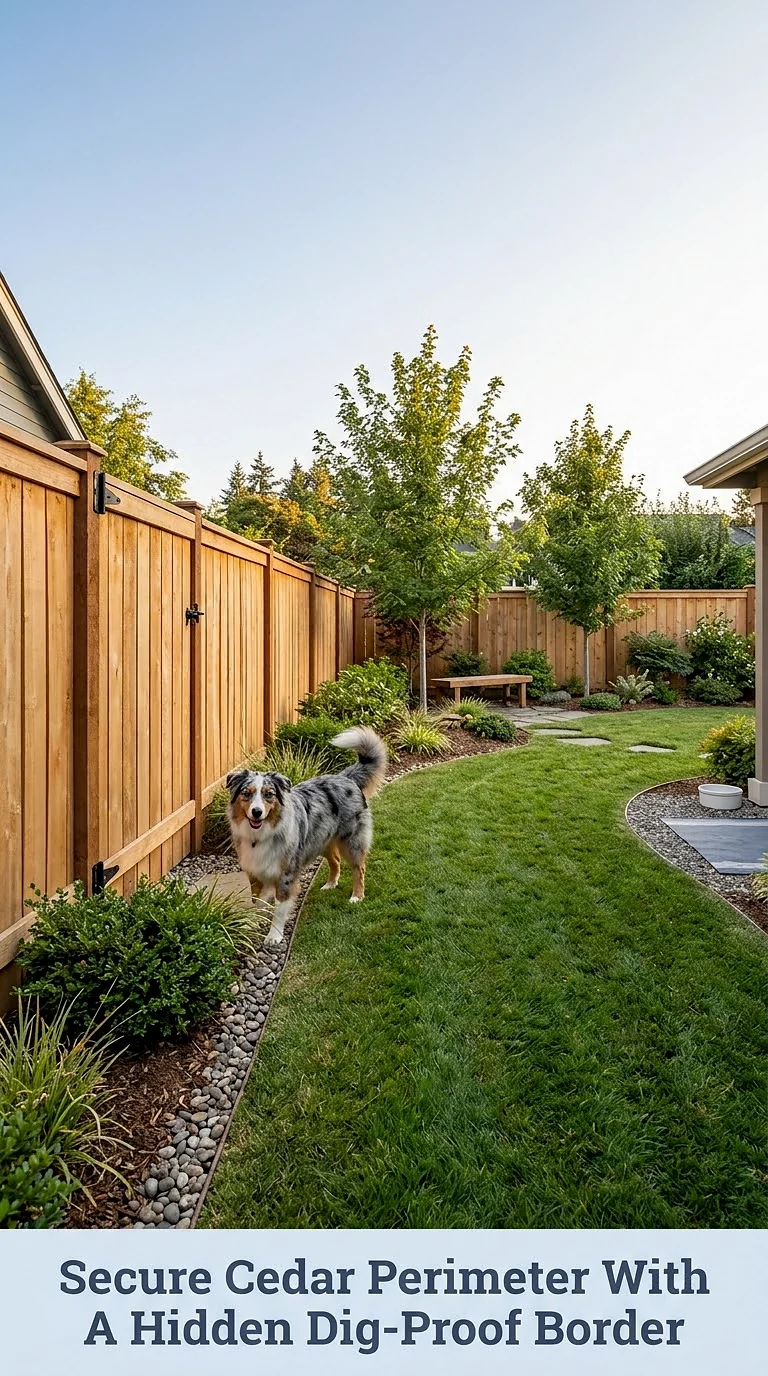
Start with the feature that makes every other garden idea easier to enjoy: a dependable boundary. A warm cedar fence can look much softer and more residential than industrial pet fencing while still creating a clearly enclosed garden.
Choose a height and construction appropriate for your dog’s size, jumping ability, and behavior. Check carefully for gaps around gates, underneath panels, and beside sheds where an adventurous dog could squeeze through.
For dedicated diggers, reinforce vulnerable areas beneath the fence using a properly installed buried barrier or hard landscaping rather than simply placing decorative objects against the fence.
Soften the structure visually with raised planting beds, dog-safe shrubs, or large containers positioned without creating convenient climbing platforms.
Matching timber gates and matte black hardware give this practical feature a polished finish. Secure boundaries are particularly important for puppies because dogs may dig as well as climb when investigating escape routes.
Curving Paw-Friendly Garden Path With Grass And Smooth Pavers
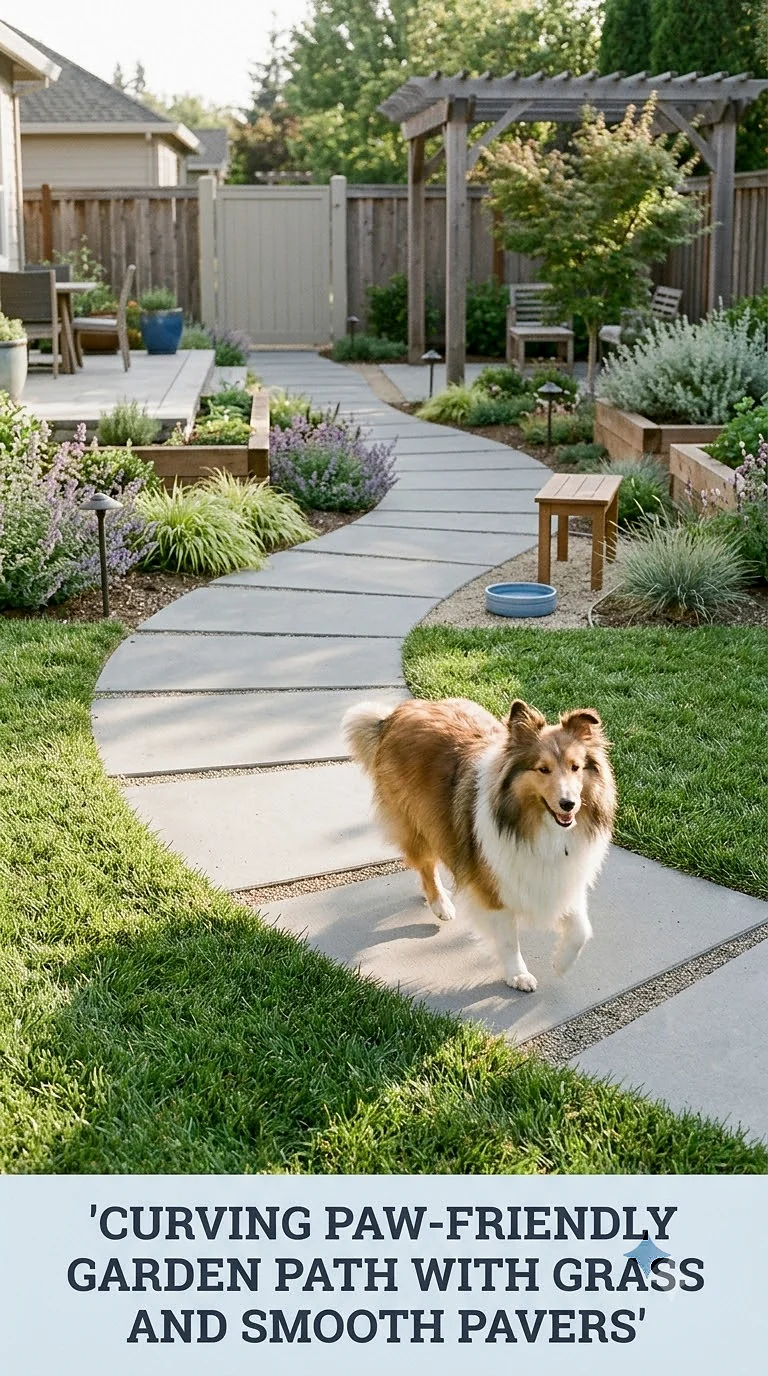
A gently curving pathway can transform an ordinary lawn into a garden that feels deliberately landscaped while creating a natural route your dog can follow.
Use broad stepping stones, textured outdoor pavers, short grass, or another stable surface with good traction. Avoid sharp gravel and jagged edging where paws frequently travel.
Rather than forcing plants into every inch of the garden, leave enough width beside the pathway for your dog to comfortably turn, sniff, and pass without constantly brushing through delicate flowers.
Low planting along the outer edge can make the path feel beautifully integrated. Rounded corners also work particularly well in energetic households because they create a flowing route instead of narrow dead ends.
Different walking surfaces can add sensory interest, but comfort comes first. On hot days, check hard surfaces before allowing prolonged play because some paving can become uncomfortably warm in strong sunshine.
Shaded Pergola Dog Lounge With Washable Outdoor Bedding
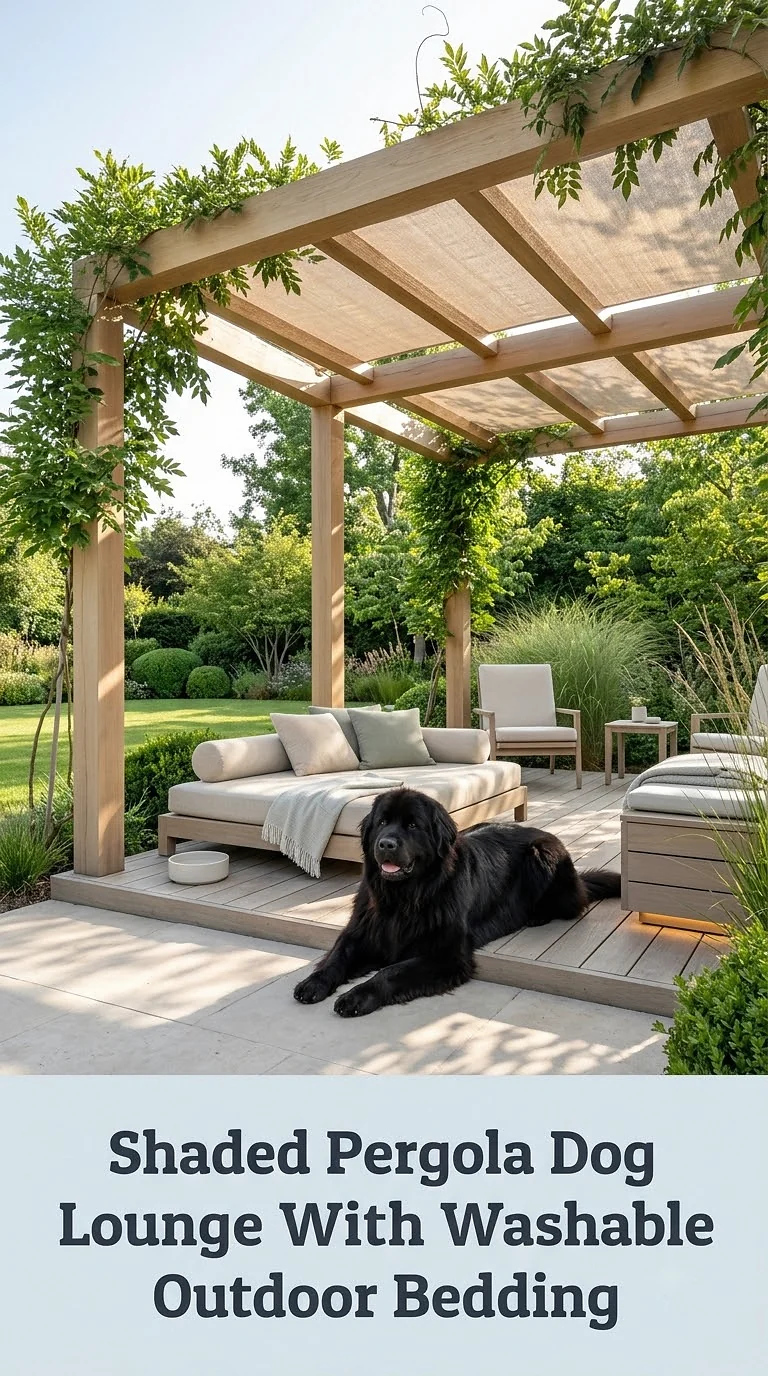
Create a destination where your dog actually wants to relax by turning one corner into a sheltered outdoor lounge.
A simple timber pergola can frame the area beautifully. Add a washable outdoor dog bed, water bowl, weather-resistant rug, and perhaps a bench so people and pets can enjoy the space together.
For a soft contemporary look, combine pale timber, creamy cushions, terracotta pots, and muted green planting. A more rustic version could use reclaimed-looking wood and stone paving.
Position the retreat where it receives reliable shade during the hottest part of the day. Remember that a spot shaded in the morning may be exposed later as the sun moves.
Fresh drinking water should remain readily available whenever your dog spends time outside. A stable heavyweight bowl or sheltered water station can prevent enthusiastic paws from tipping it over.
Shade is not simply decorative. Dogs need places where they can retreat from direct sun and reduce the risk of overheating.
Sensory Herb Garden With Rosemary, Basil, Thyme And Lemon Balm
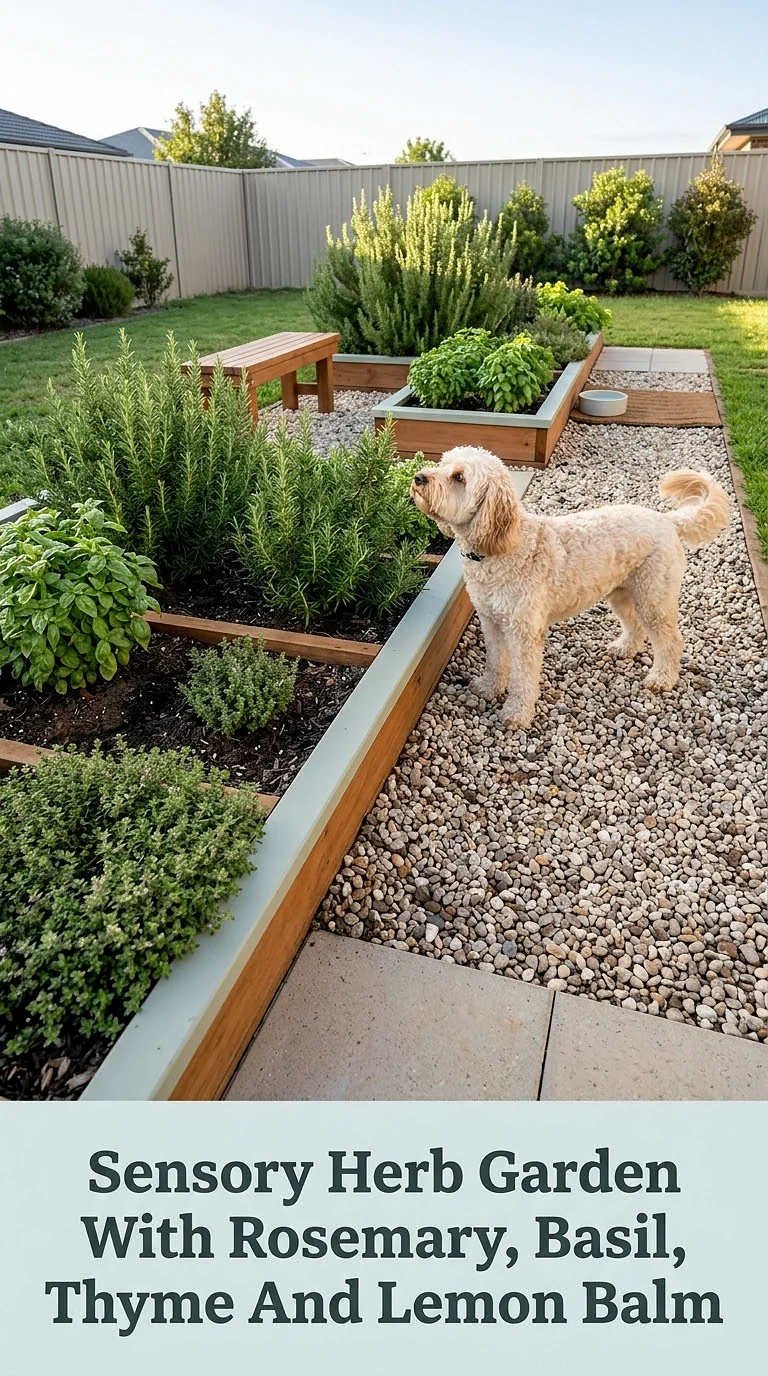
A fragrant sensory border brings another layer of interest to the garden without requiring elaborate equipment.
RHS guidance created with Battersea suggests plants such as rosemary, basil, thyme, and lemon balm for dog-friendly sensory areas. Dogs naturally explore their surroundings through scent, so grouping aromatic plants along a walking route can turn an ordinary garden corner into a more engaging place to investigate.
For a charming cottage-inspired design, place herbs in wide terracotta pots at different heights. In a modern garden, use one long raised planter made from warm timber or powder-coated metal.
Keep enough distance between plants that your dog can sniff without trampling directly through them. You can also hide a favorite toy nearby during supervised games.
Always verify the exact plant species before purchasing because similar common names can sometimes refer to different plants. Treat the herbs as sensory landscaping rather than an invitation for your dog to eat freely from the garden.
Blue And Yellow Flower Border With Sunflowers And Asters
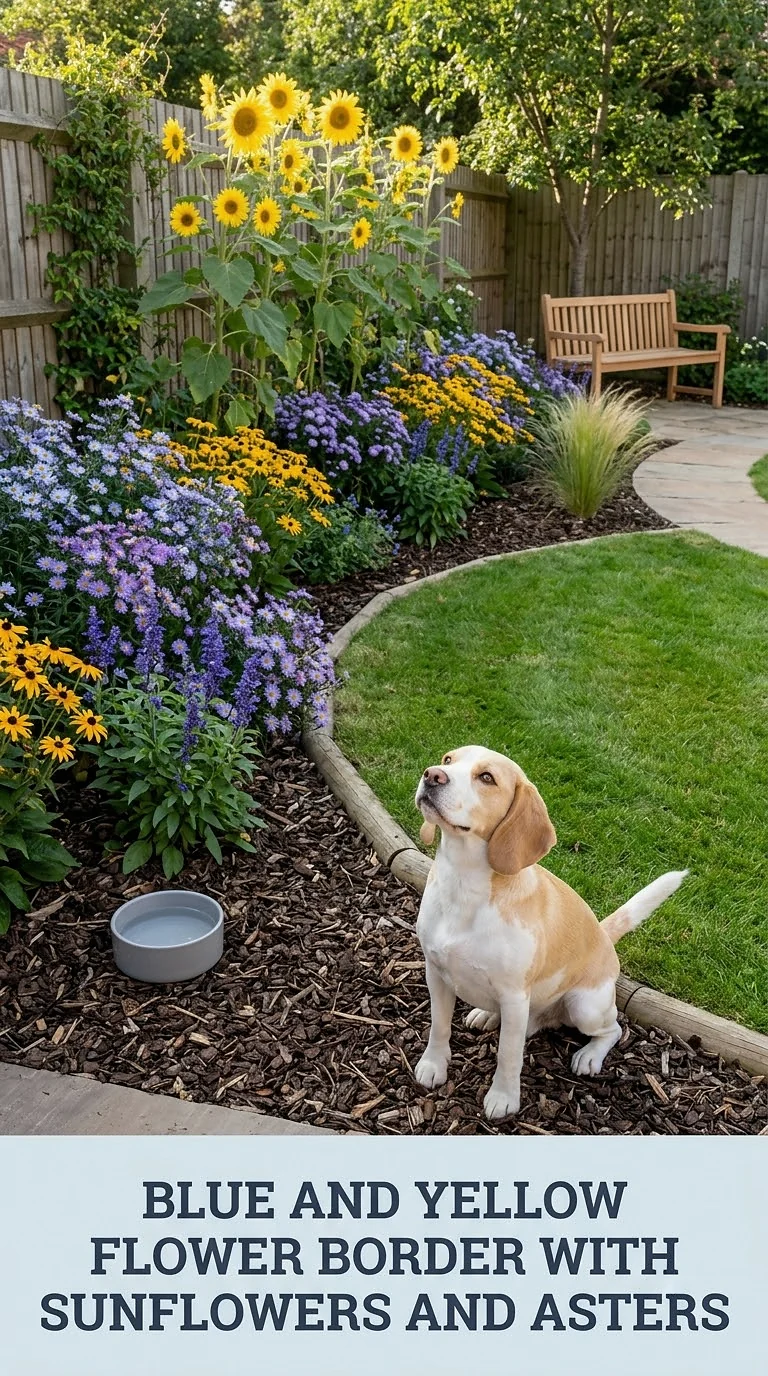
A pet-conscious garden certainly does not need to look plain.
Create a cheerful border around shades that dogs can distinguish particularly well, using blue and yellow as the visual inspiration. RHS dog-garden guidance specifically highlights blue and yellow planting and suggests flowers including cornflowers, pansies, asters, and sunflowers.
Tall sunflowers can form a sunny backdrop, while lower flowering plants create color closer to pathway level. Add natural timber edging and generous spacing to keep the arrangement relaxed rather than overcrowded.
Because plant safety depends on correct identification, check the botanical name of every variety against a reputable pet-toxicity database before planting. Garden centers sometimes use broad common names that can make identification confusing.
A limited palette also makes maintenance easier. Repeating two or three flower colors around the garden produces a coordinated designer look without requiring dozens of different species.
Dedicated Digging Corner With Sand And Natural Timber Edging
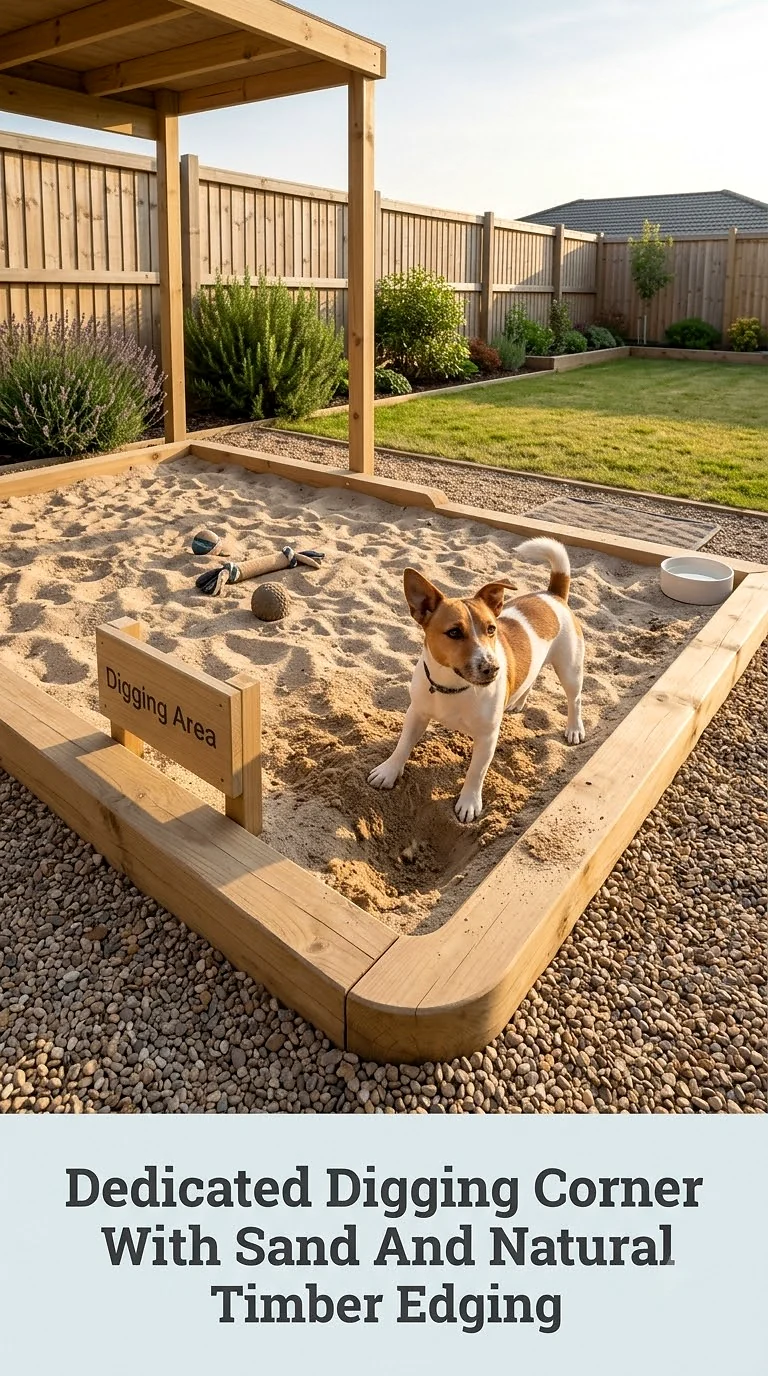
If your dog considers digging a serious hobby, create a place where that enthusiasm is welcome.
Choose a quiet corner and build a shallow digging bed using untreated, pet-appropriate timber edging. Fill it with clean digging material suitable for your local environment and keep it free from sharp stones, garden chemicals, and plant roots.
Introduce the area through supervised play. Bury a favorite toy just beneath the surface, encourage your dog to investigate, and reward interest in the correct location.
The surrounding garden can remain surprisingly sophisticated. Frame the digging area with ornamental pots, a small timber sign, or taller dog-safe landscaping so it feels like an intentional feature instead of an unfinished flower bed.
A dedicated digging zone is particularly useful beside prized planting because it gives you somewhere positive to redirect the behavior rather than repeatedly repairing holes throughout the garden.
Shallow Stone Splash Pool Beneath A Shady Tree
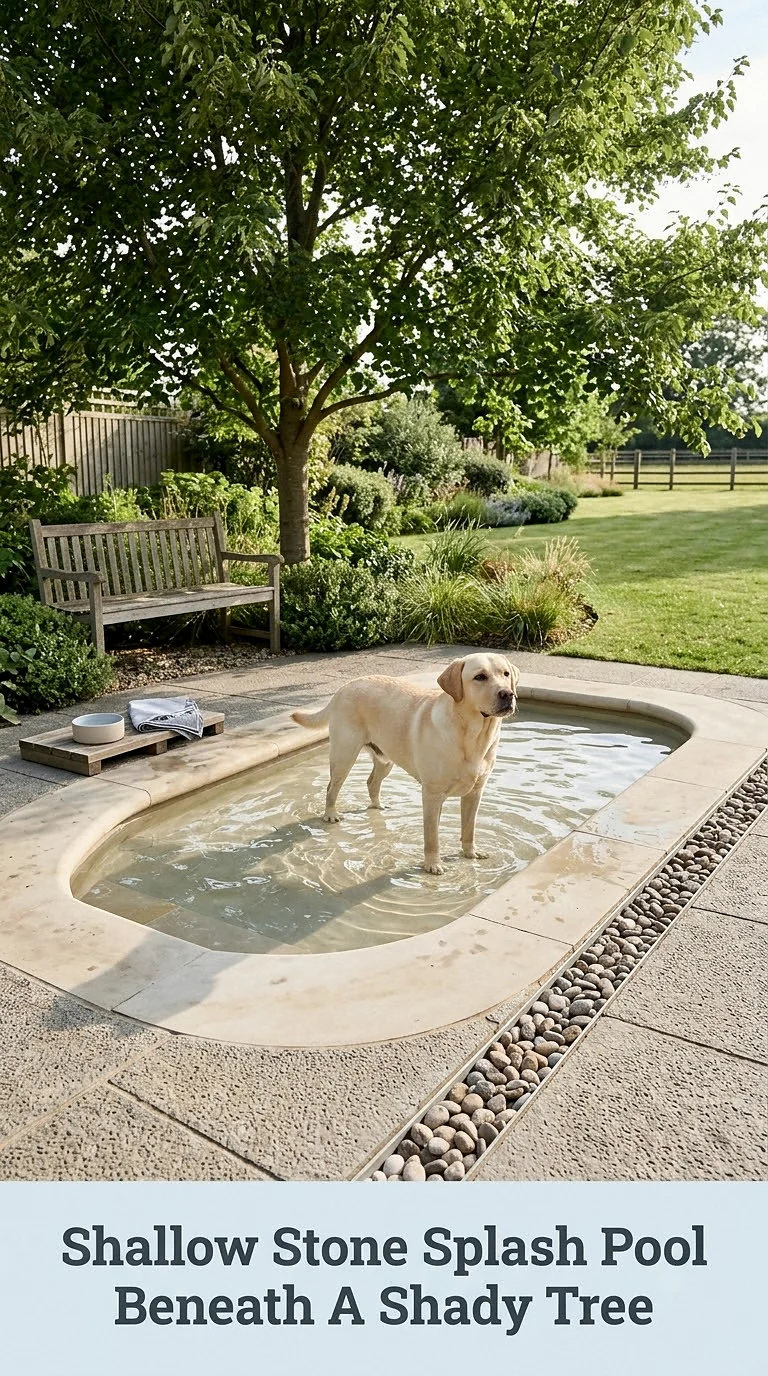
For dogs that enjoy water, a shallow splash area can become the happiest corner of the backyard.
Keep the design low and easy to enter, with a broad edge rather than steep sides. A removable dog pool is the simplest budget option, while a professionally designed shallow rill can integrate water into a more luxurious landscape.
Surround it with non-slip paving and provide nearby shade. Empty and clean small pools regularly so stagnant water, dirt, and debris do not accumulate.
Avoid creating deep ornamental ponds specifically for unsupervised pet play. The goal is an accessible cooling and enrichment feature rather than a dramatic water garden.
Read more : 19 Dog Gym Ideas For A Stylish And Practical Home Fitness Space
You can make the surrounding area feel elegant with smooth stone, timber seating, and sturdy planting positioned far enough away to avoid constant splashing.
RHS garden guidance includes shallow water among useful pet-friendly garden features, alongside shade and sensory elements.
Small Urban Courtyard With Raised Planters And Pea Gravel Zones
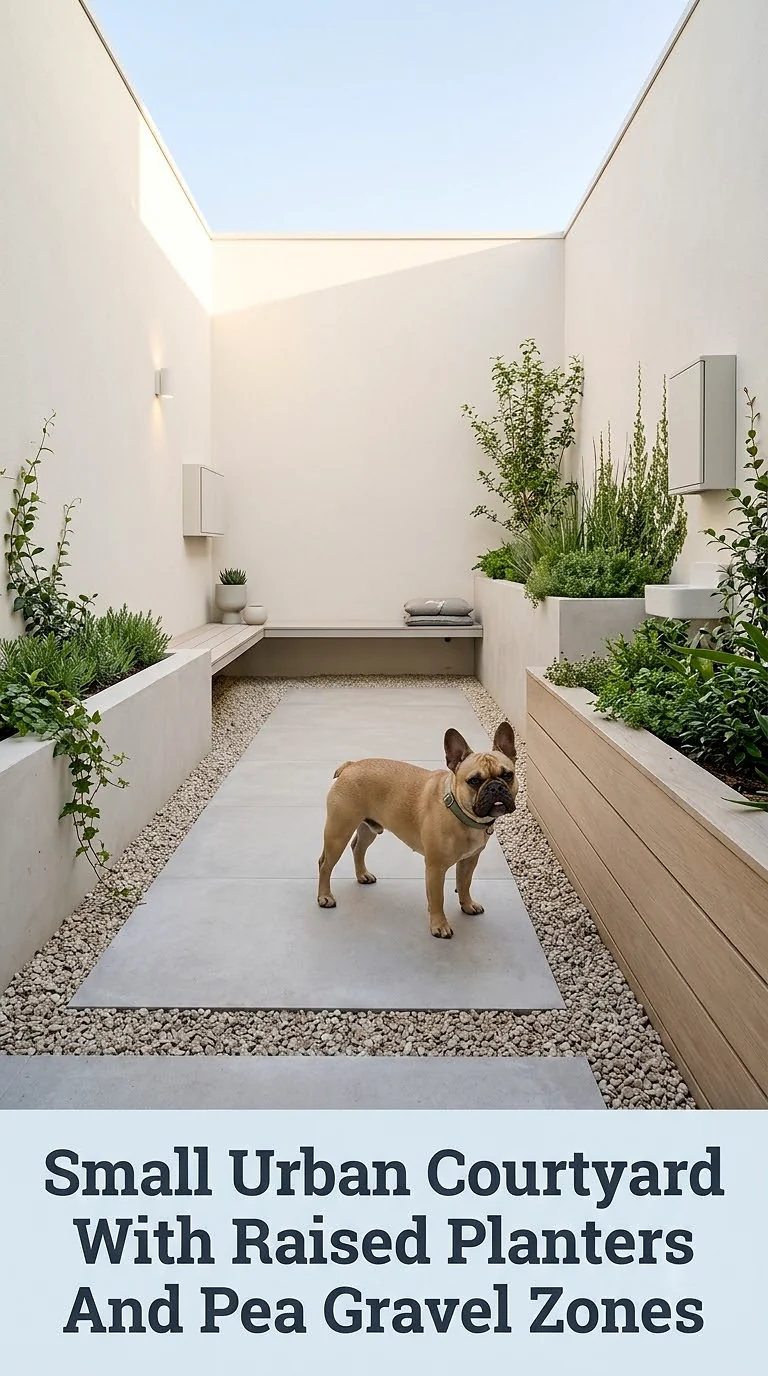
Limited outdoor space can actually make thoughtful dog-friendly design easier because every square foot can have a clear purpose.
Start with an uncluttered central area for movement. Position raised planters around the perimeter so vulnerable flowers sit above the busiest paw traffic. A slim bench against one wall adds seating without consuming valuable floor space.
Combine smooth pavers with a carefully selected gravel or other drainage-friendly surface in appropriate areas. If your dog tries to swallow stones, choose another material entirely.
Large containers add greenery without creating complicated beds that are difficult to clean around. Select dog-safe plants and avoid thorny specimens beside narrow pathways.
For evening atmosphere, add wall-mounted outdoor lighting rather than freestanding lanterns that can easily be knocked over.
Keeping the palette simple, such as warm wood, charcoal planters, cream walls, and lush green foliage, makes even a very small courtyard feel intentionally designed.
Modern Grass-Free Garden With Smooth Paving And Raised Greenery
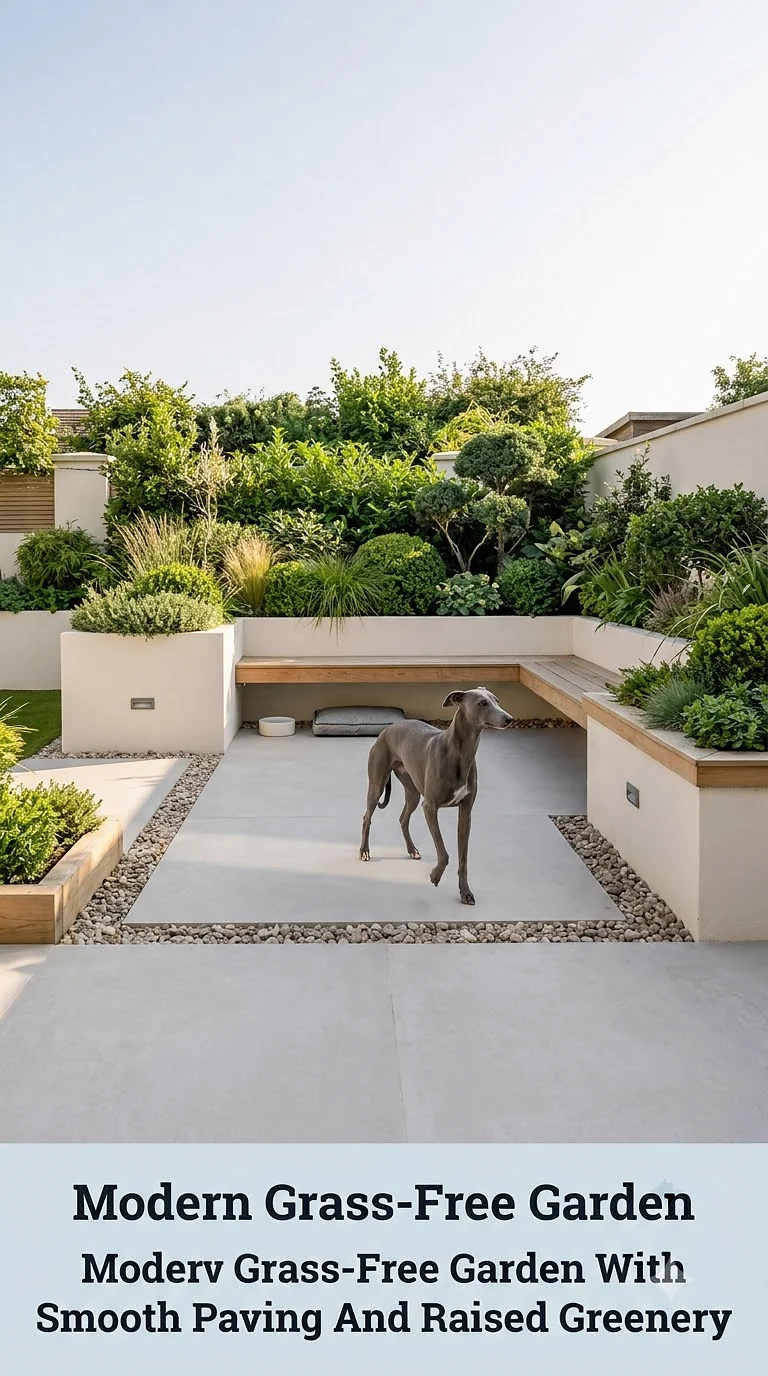
A traditional lawn is not essential for a beautiful dog garden.
For a contemporary alternative, combine textured paving, areas of pet-appropriate aggregate, raised beds, and strategically positioned greenery. The result can feel crisp and architectural while reducing worn patches caused by repeated running.
Drainage deserves careful planning, particularly where your dog toilets regularly. Hard surfaces should be easy to rinse, and artificial turf requires thorough cleaning because urine can otherwise contribute to odor.
Break up large expanses of paving with timber platforms, planted borders, or a small shaded lounge so the garden does not feel stark.
During warm weather, provide cooler walking choices because dark paving and other hard landscaping can absorb considerable heat.
This style is especially appealing beside modern homes where simple lines, black-framed doors, timber fencing, and architectural planting already form part of the exterior design.
Gated Raised Vegetable Garden With A Dog-Free Growing Zone
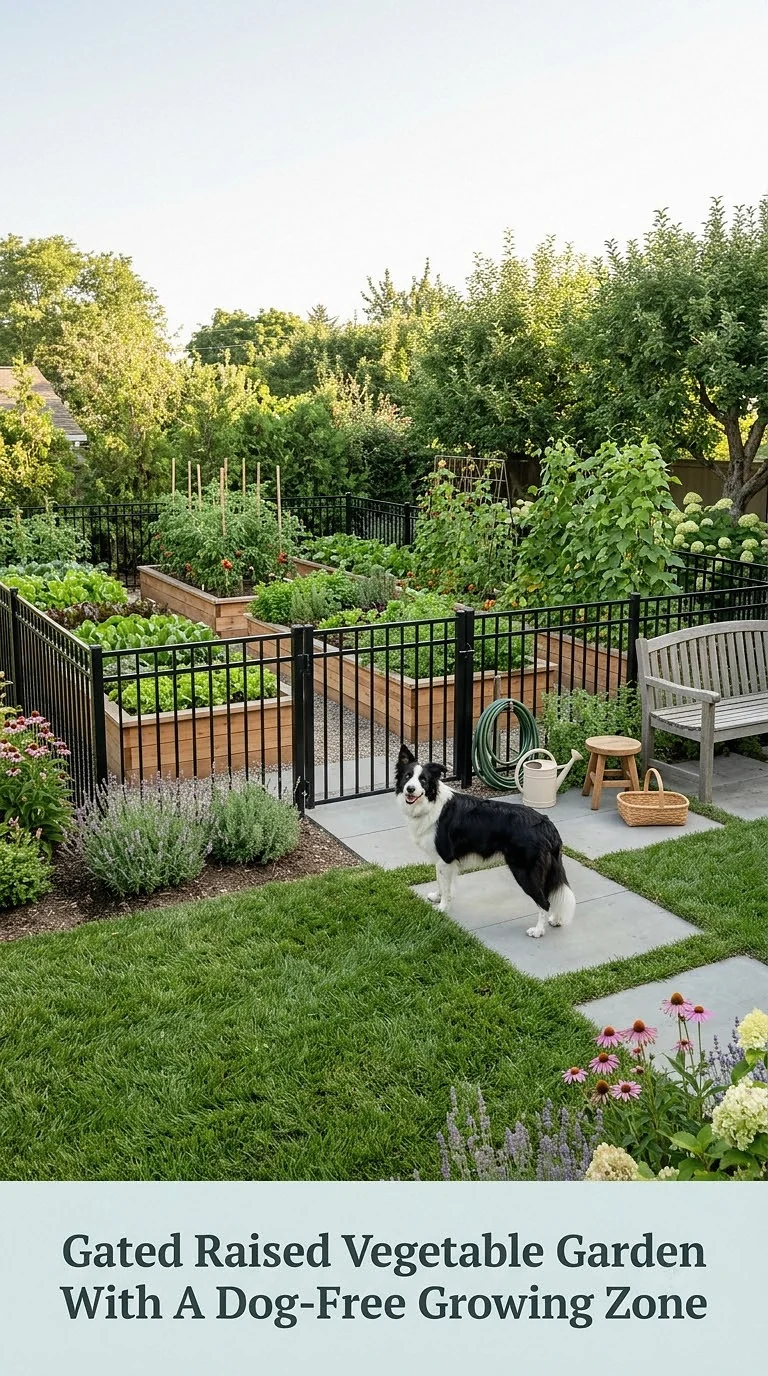
Sometimes the most dog-friendly solution is giving certain plants their own protected area.
Surround vegetable beds with a low decorative fence and secure gate so your dog can enjoy the rest of the backyard without wandering through seedlings or helping with the harvest.
Raised timber beds create a neat cottage-garden appearance and make vegetables easier to organize. Gravel or pavers between beds provide practical access for gardening.
Keeping dogs away also prevents them from treating edible plants as an unrestricted outdoor buffet. Even when individual foods are considered suitable for dogs, different plant parts, quantities, treatments, and individual dietary needs can complicate things.
Store fertilizers, pesticides, gardening chemicals, and tools securely rather than inside an accessible open potting station.
For a particularly charming layout, place the enclosed vegetable patch along the back of the property while leaving the main lawn and lounging areas open for everyday dog activity.
Fence-Side Dog Run Lane With Durable Planting Borders
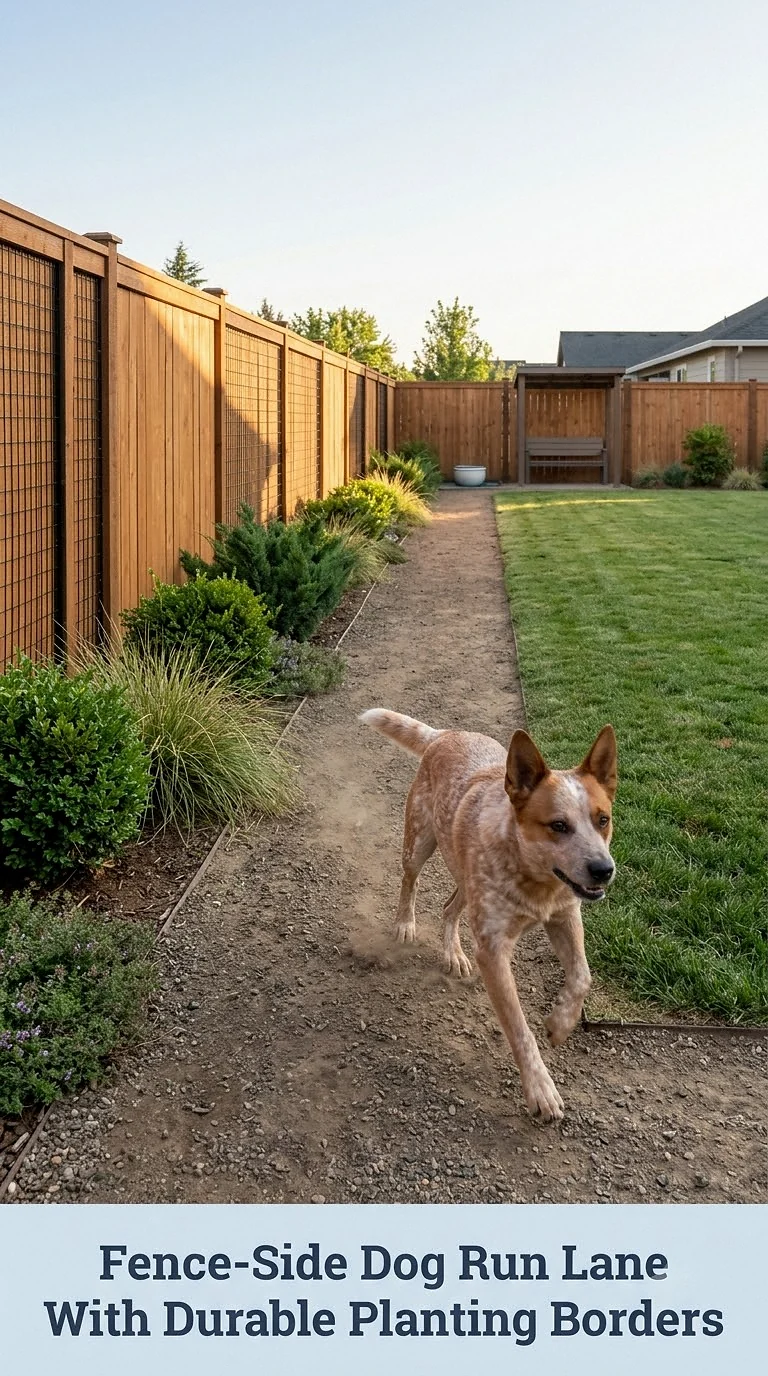
Does your dog already race repeatedly along the same fence line? Instead of continually repairing that area, incorporate the route into the design.
Leave a generous open lane along the boundary using durable grass, paw-friendly ground material, or a stable path. Move delicate flower beds slightly inward and protect them with low edging.
At the corners, give your dog enough turning space rather than squeezing the route between furniture and planters.
You can disguise the practical pathway by creating layered greenery on one side. Use sturdy, verified dog-safe plants that will tolerate occasional contact rather than fragile flowers with brittle stems.
A handsome timber fence, curved route, and repeated planting can make the area look intentionally landscaped.
This approach works particularly well for medium and large energetic dogs because it accepts an existing movement pattern instead of designing a beautiful border directly across their favorite running track.
Rustic Farmhouse Garden With Timber Fencing And Tough Green Borders
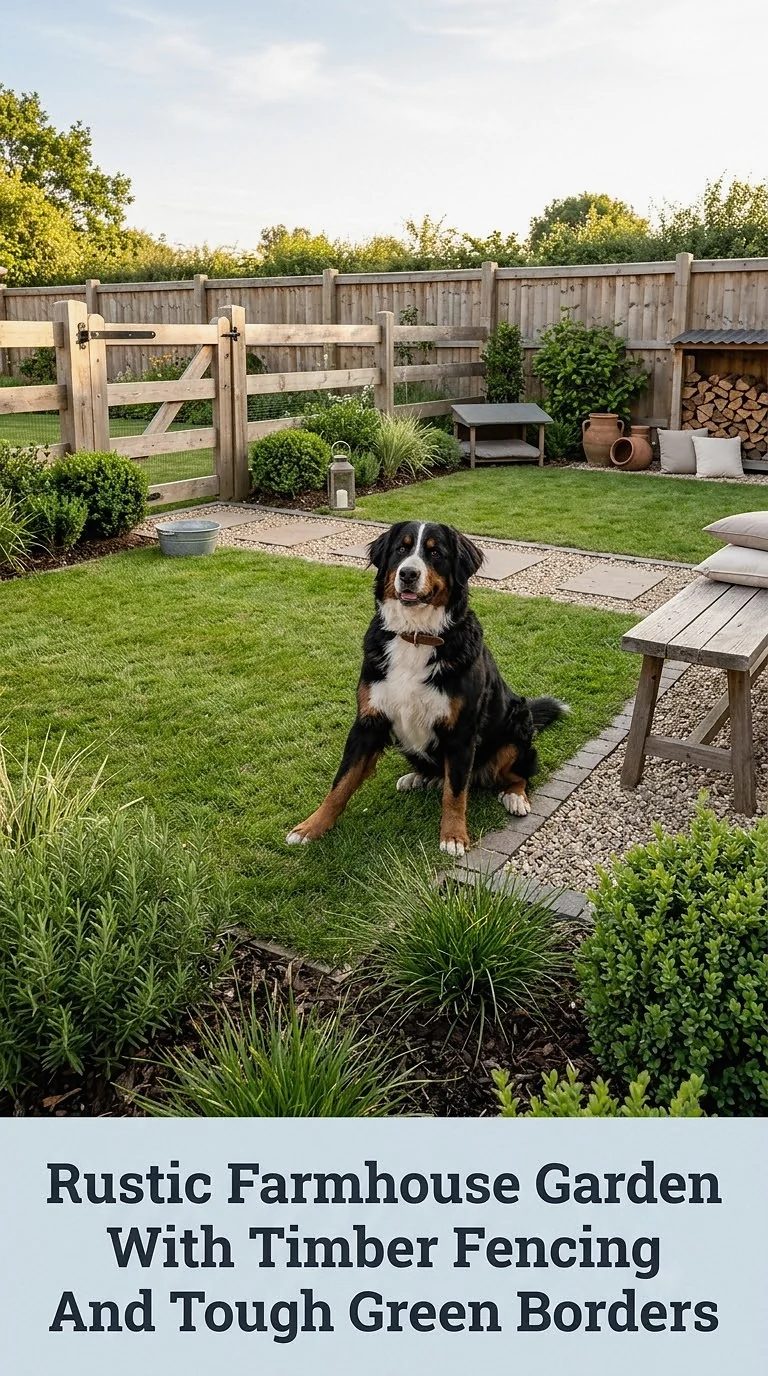
For a cozy country look, combine practical dog features with materials that become more charming as they weather.
Think warm timber fencing, broad stone paths, galvanized planters, simple benches, and informal green borders surrounding an open patch of lawn.
Keep the plants nearest running areas sturdy and reserve delicate seasonal flowers for raised containers or protected beds.
A covered water station can sit beside the porch, while a lidded storage bench holds washable towels, outdoor toys, and spare leads.
Be selective with mulch. Cocoa-bean mulch should be avoided around dogs because it may contain theobromine and caffeine, while swallowing other types of mulch can also cause gastrointestinal problems or obstruction. Choose landscaping materials with your particular dog’s chewing habits in mind.
The result can still have the dreamy appearance of a cottage garden, just with more durable details placed where paws actually travel.
Minimalist White And Oak Garden With Hidden Pet Storage
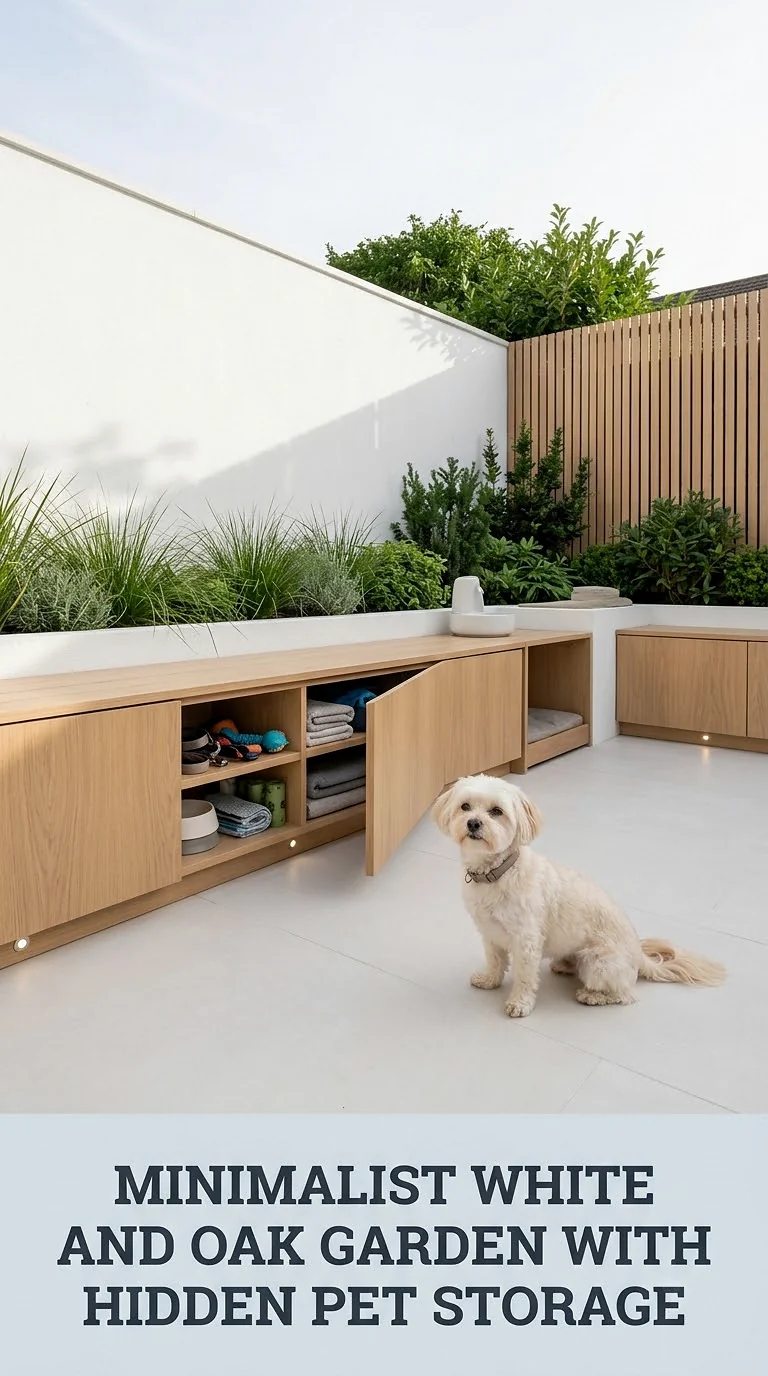
If you prefer calm contemporary spaces, let the dog-friendly features disappear quietly into the architecture.
Use white rendered walls or fencing, pale oak details, large-format outdoor pavers, and restrained evergreen planting. Instead of leaving toys, hoses, and pet supplies scattered around, build a weather-resistant storage bench beneath a covered section of the patio.
One compartment can hold outdoor toys, another can store clean towels and grooming supplies. Gardening products should remain separately secured where pets cannot access them.
Include an open lawn or activity zone so the minimalist aesthetic does not reduce usable space for your dog.
Rounded planter corners and broad paths keep circulation comfortable while preserving the streamlined appearance.
A raised water station integrated beside the seating area can look almost like custom cabinetry while keeping fresh water conveniently available.
This is a particularly attractive approach for modern townhouses and newly renovated homes.
Garden Wash Station With Warm Timber Decking And Handheld Rinse
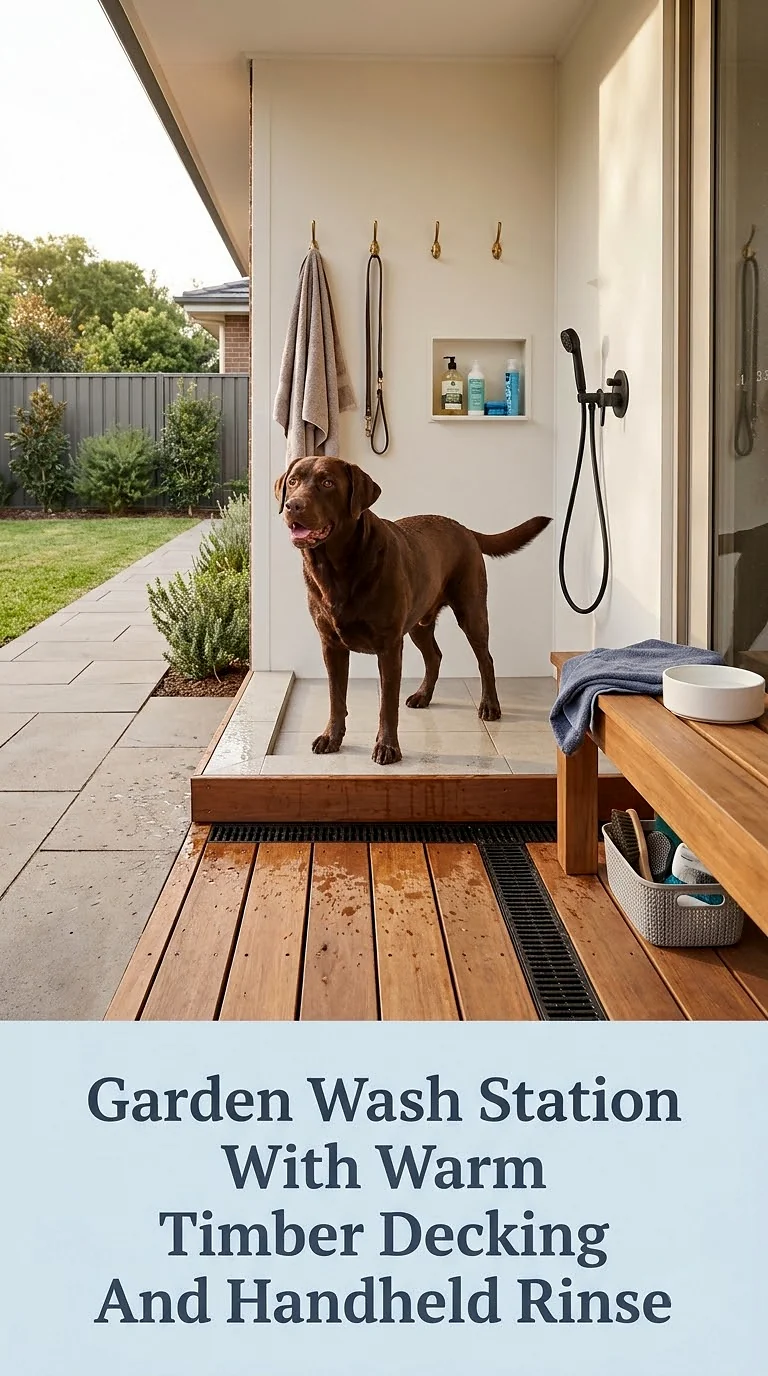
A compact outdoor wash station can save your floors during muddy weather while becoming a stylish feature in its own right.
Read more : 18 Private Dog Park Ideas For A Beautiful And Pet-Friendly Backyard
Position it near the door your dog normally uses. Add a handheld rinse attachment, non-slip floor, drainage, hooks for towels, and perhaps a narrow shelf for pet-safe grooming supplies.
Warm timber screening makes the station feel softer, while stone-effect tiles create an easy-clean surface. Choose fixtures with rounded edges and keep shampoos or cleaning products secured when not in use.
You do not need a permanent dog bath to achieve the idea. A simple covered rinse area with a washable mat can work perfectly for paws after rainy walks.
Surround the station with a small patch of hard landscaping so freshly cleaned paws do not immediately return to mud.
This multifunctional concept works especially well where the garden connects directly to a utility room, laundry room, or mudroom.
Multi-Dog Garden With Separate Play, Rest And Toilet Zones
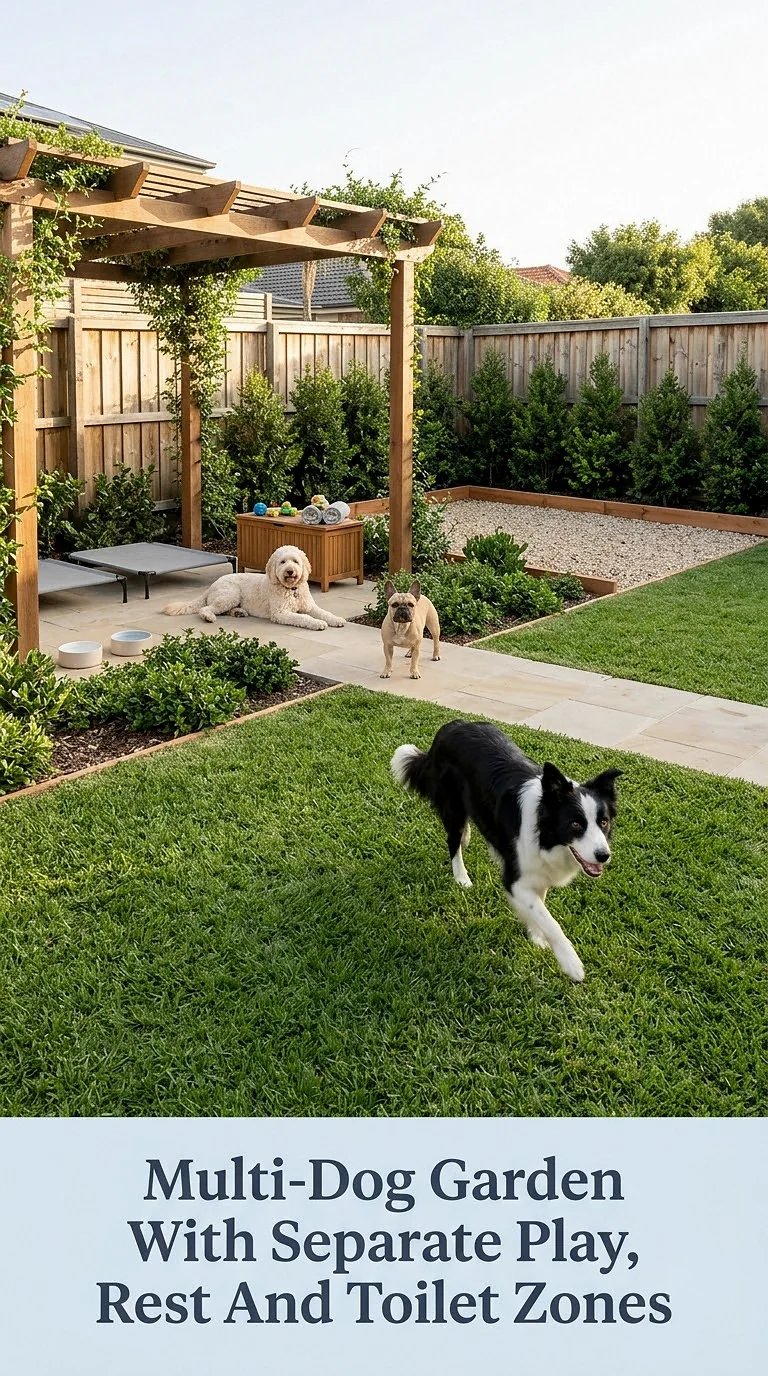
A household with several dogs benefits from generous circulation and more than one useful destination.
Keep the center relatively open for shared play, then create smaller zones around the perimeter. One might contain a shaded resting platform with several washable beds, while another includes water bowls positioned so dogs do not crowd a single container.
A designated toilet area can simplify daily cleanup and protect the most decorative part of the garden. Select a surface that drains well, suits your dogs, and is easy to maintain.
Avoid narrow passages where dogs can become trapped behind furniture or large planters. Broad routes allow everyone to move naturally around the space.
For visual cohesion, repeat the same timber, paving, and planter finishes throughout all the zones.
This layout can look surprisingly elegant because organizing activities prevents bowls, toys, beds, and worn lawn patches from appearing randomly across the entire backyard.
Puppy-Friendly Garden With Enclosed Lawn And Protected Planting
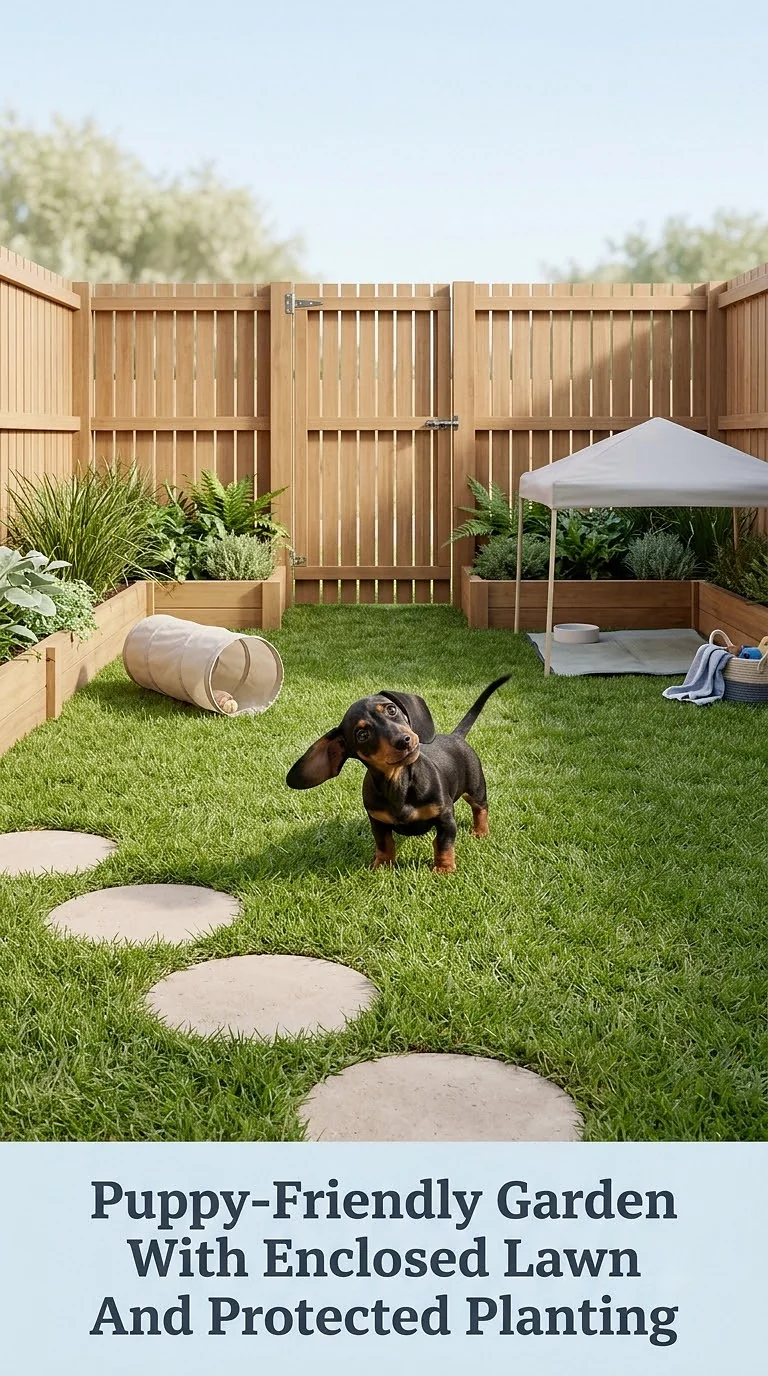
Puppies investigate practically everything, so simplicity is your friend during this stage.
Create a clearly enclosed lawn or play area that is easy to inspect before each outing. Secure gaps beneath fences and gates, protect valuable planting with temporary barriers, and remove small objects that could become tempting chew toys.
Keep compost inaccessible and safely store weed killers, slug products, fertilizers, tools, and other garden supplies. Blue Cross specifically recommends secure fencing, protection from toxic plants, locked-away garden chemicals, and a secure compost container when puppy-proofing outdoor spaces.
Use washable toys and lightweight enrichment equipment that can be removed when supervision ends.
Visually, temporary puppy protection does not have to be unattractive. Black metal garden panels paired with matching planters look cleaner than an assortment of improvised barriers.
As your puppy matures and training improves, the layout can gradually evolve into a more open adult dog garden.
Budget DIY Garden With Simple Pavers And Raised Planter Barriers
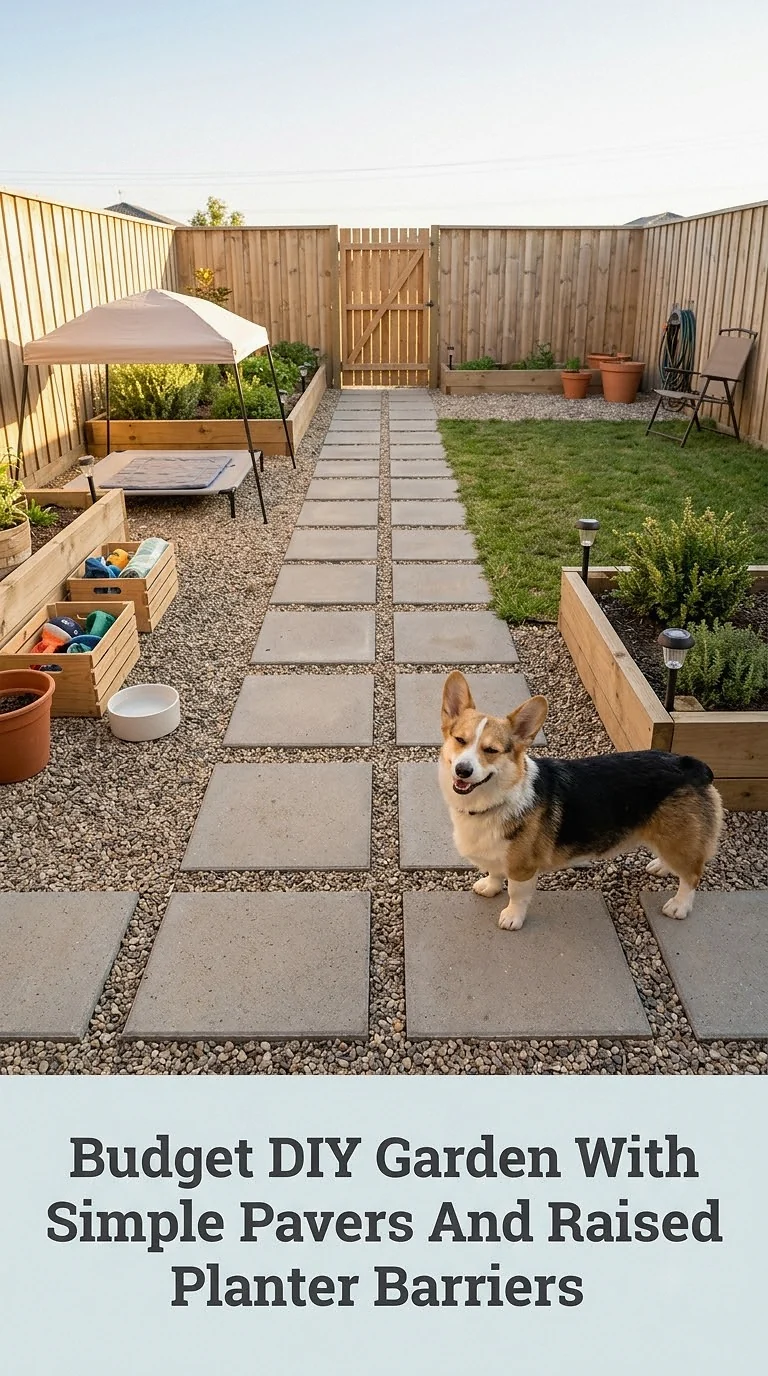
A thoughtful dog-friendly garden does not require expensive landscaping.
Start by observing where your dog already walks, rests, toilets, and digs. Spend money only where solving those patterns will make the biggest difference.
Inexpensive pavers can reinforce a muddy route. Basic timber boards can create raised planting beds, while large affordable planters can protect flowers from enthusiastic paws.
Use existing shade before purchasing a pergola. Move an outdoor bench beneath a tree, add a washable dog mat, and place a sturdy water bowl nearby.
Instead of replacing the entire lawn, repair only the most worn areas and create an intentional pathway where repeated traffic makes grass difficult to maintain.
Paint mismatched containers in one coordinated neutral shade to make inexpensive materials look intentional.
DIY projects should still be checked for protruding screws, splinters, sharp wire, unstable structures, or chemical treatments before your dog has access to them.
Cozy Evening Garden With Soft Lighting And A Covered Dog Bed
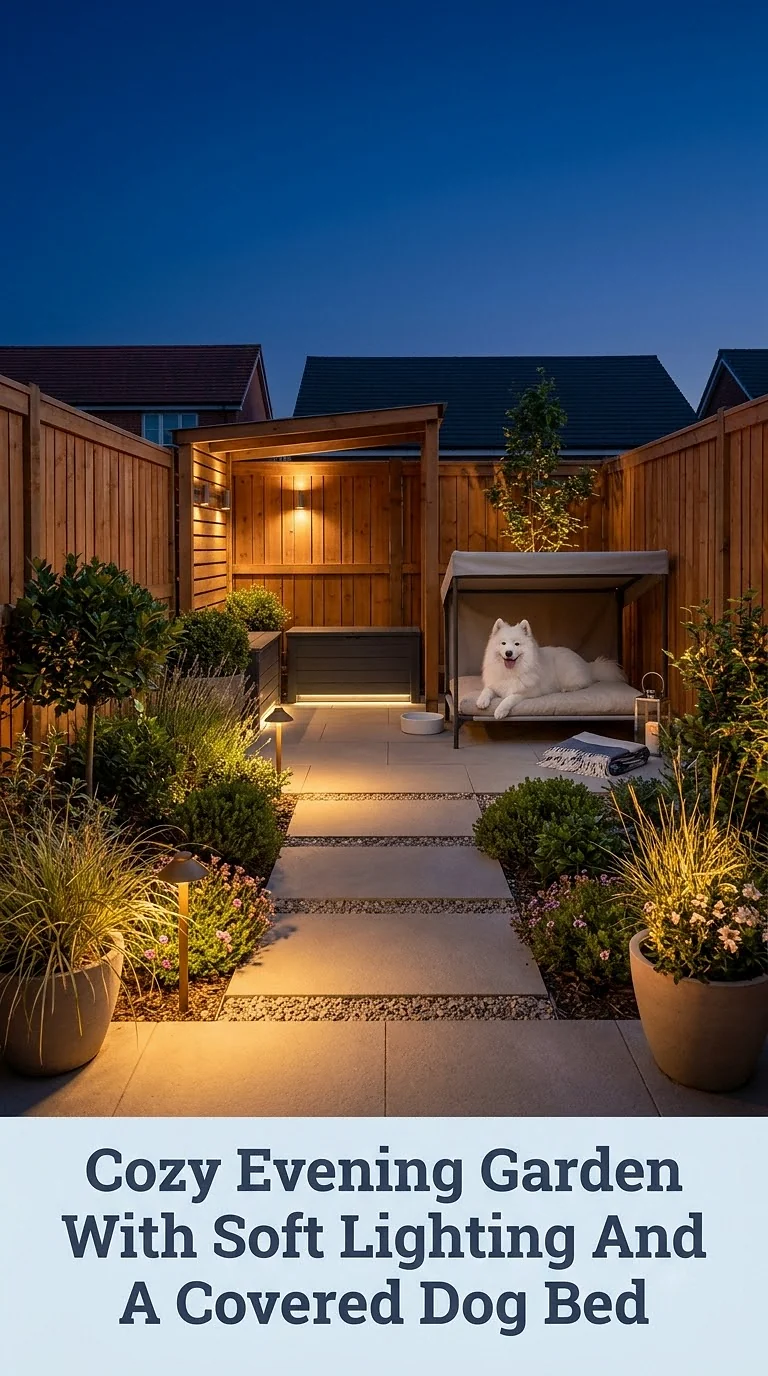
A garden can remain inviting long after afternoon playtime ends.
Create a quiet evening corner beside the house using comfortable seating, a covered dog bed, warm outdoor lighting, and fragrant dog-safe planting set far enough back that curious chewing is discouraged.
Use wall lights, fixed low-voltage landscape lighting, or securely installed exterior fixtures rather than loose cords running through areas where your dog plays.
A small pergola or covered porch helps the retreat remain useful when the grass is damp. Add a basket of washable blankets that can be brought indoors after use.
Choose pale paving around the seating area to create a calm, relaxed atmosphere and leave enough open floor space for your dog to stretch out beside you.
This idea works especially well for people who want the backyard to feel like another living room rather than purely a daytime exercise area.
Luxury Garden Retreat With Stone Terrace, Pergola And Integrated Dog Zone
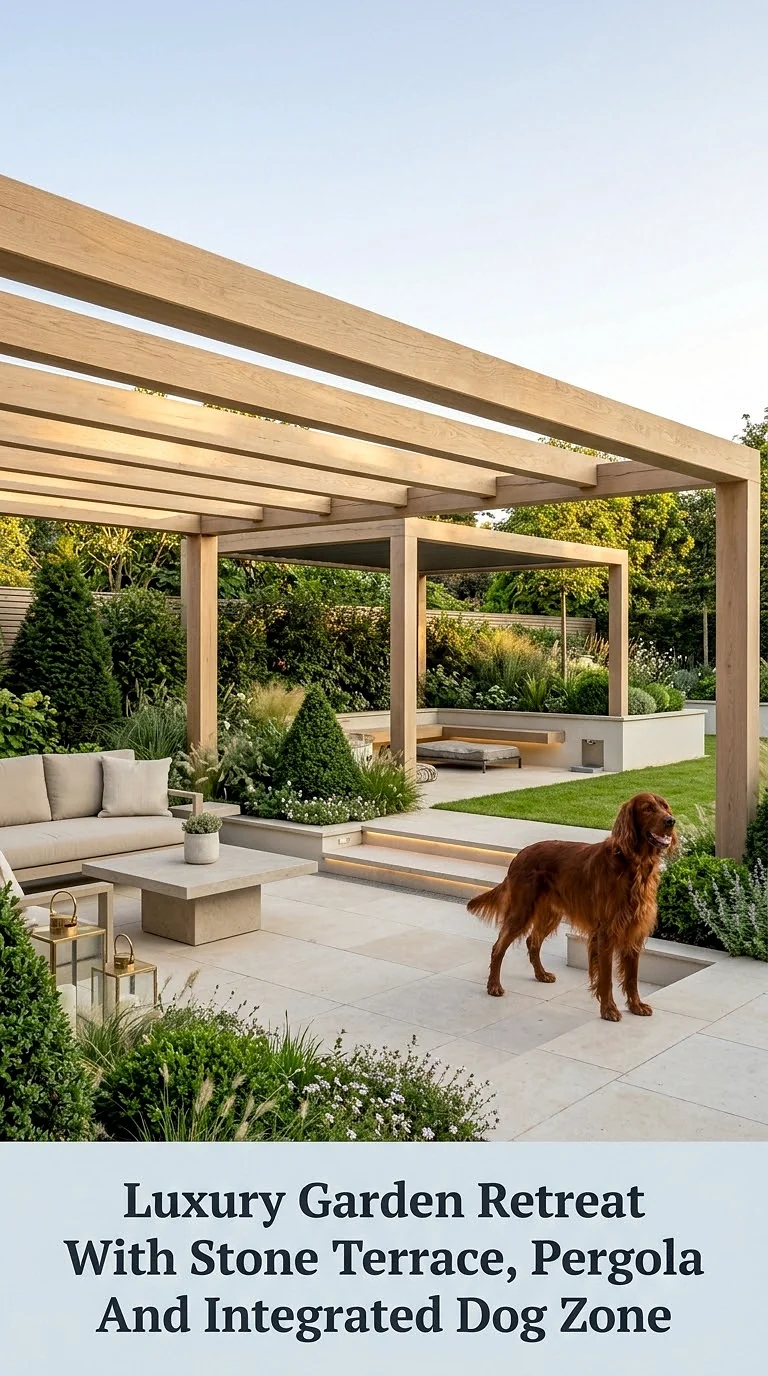
For a high-end interpretation, make dog-friendly features part of the landscape architecture from the beginning.
Create a broad stone terrace beneath a timber pergola, surrounded by layered dog-safe planting and connected to the lawn through wide curved paths. Incorporate a discreet water station into an outdoor cabinet and conceal toy storage beneath built-in seating.
A shallow splash feature can sit toward one side of the lawn, while another corner contains a designated activity or digging zone screened with greenery.
Use raised planting beds to protect more delicate displays without making the garden feel divided by obvious pet barriers.
Choose durable surfaces and washable outdoor textiles so the sophisticated appearance remains realistic for daily life with a dog.
The luxury comes from thoughtful integration rather than fragile decoration. Every feature has a purpose, yet the final garden still feels relaxed enough for muddy paws, afternoon naps, and spontaneous games.
Creating Dog Friendly Garden Ideas That Work For Your Home
The most successful dog friendly garden ideas are rarely the ones with the greatest number of special features. They are the gardens that respond thoughtfully to the dog who actually lives there.
Watch how your pet naturally uses the space before making major changes. Their favorite running route might become a beautiful curved path. The shady corner where they already nap could become a pergola lounge. A troublesome digging spot might be transformed into a dedicated activity area rather than becoming an endless landscaping battle.
You can also adapt these ideas gradually. Begin with secure boundaries, shade, water, safe planting, and comfortable surfaces. Then introduce the details that make the garden feel personal, whether that means rustic timber planters, sleek contemporary paving, an herb-filled sensory corner, or a luxurious built-in dog retreat.
A dog-friendly garden can still be stylish, colorful, peaceful, and beautifully organized. With materials and layouts chosen for both human enjoyment and canine habits, your outdoor space can become somewhere the whole household genuinely wants to spend time.
Source: https://petstutorial.com
Category: DOGS
