
A muddy dog bounding through the door is often a sign of a day well spent, but the paw prints, damp towels, and tangled leashes left behind are less charming. A thoughtfully designed dog mud room creates a welcoming pause between outdoor adventures and the clean, comfortable heart of your home. It gives you a practical place to wipe paws, hang wet gear, store food, and help your dog settle before coming inside.
You are reading: 18 Dog Mud Room Ideas Farmhouse Homes Can Beautifully Embrace
The best dog mud room ideas farmhouse style combine hardworking materials with warm, familiar details. Think painted paneling, sturdy hooks, woven baskets, vintage-inspired hardware, washable rugs, and cozy resting spots. Whether you have an entire room, a shared laundry space, or only a slim wall beside the back door, these ideas can help you create an organized entry that feels intentional rather than purely utilitarian.
Beautiful And Practical Farmhouse Dog Mud Room Ideas
Soft Sage Dog Mud Room With White Oak Cabinetry
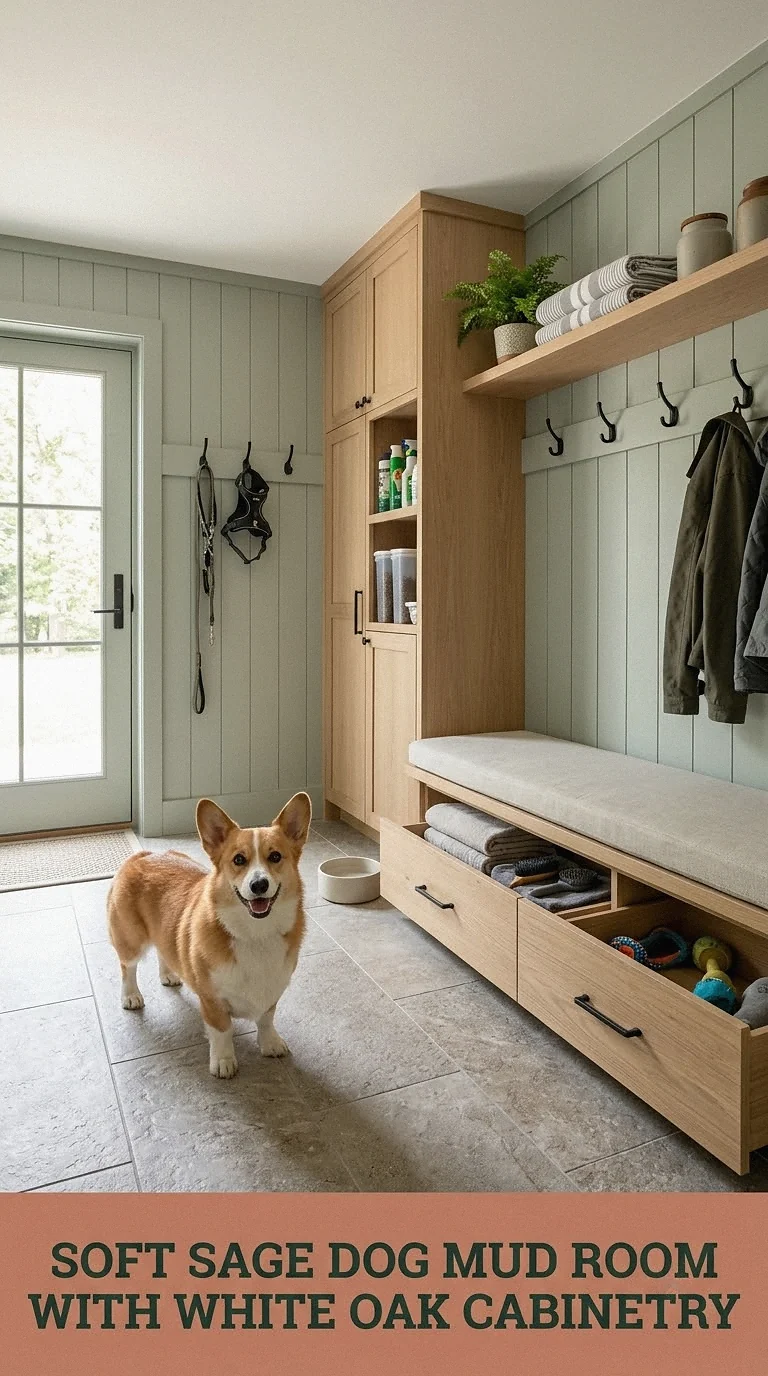
Soft sage walls and natural white oak cabinetry create a calm transition from the backyard to the rest of the house. Use the green on wipeable paneled walls, then introduce oak through a bench, floating shelves, or full-height storage. A warm white ceiling and simple black hardware keep the room fresh without losing its farmhouse character.
Plan the cabinetry around your daily routine. Deep lower drawers can hold folded towels, grooming tools, and outdoor toys, while a tall cupboard keeps food containers and cleaning products concealed. Place hooks near the exterior door so wet leads and harnesses never need to cross the room.
Choose a durable semi-gloss or satin finish for painted woodwork because it is easier to wipe after a wet dog shakes. Finish natural wood with a moisture-resistant sealer, and secure tall cabinets to the wall. A textured porcelain floor in a stone look completes the scheme while offering better grip than highly polished tile.
White Shiplap Dog Wash With Charcoal Slate Tile
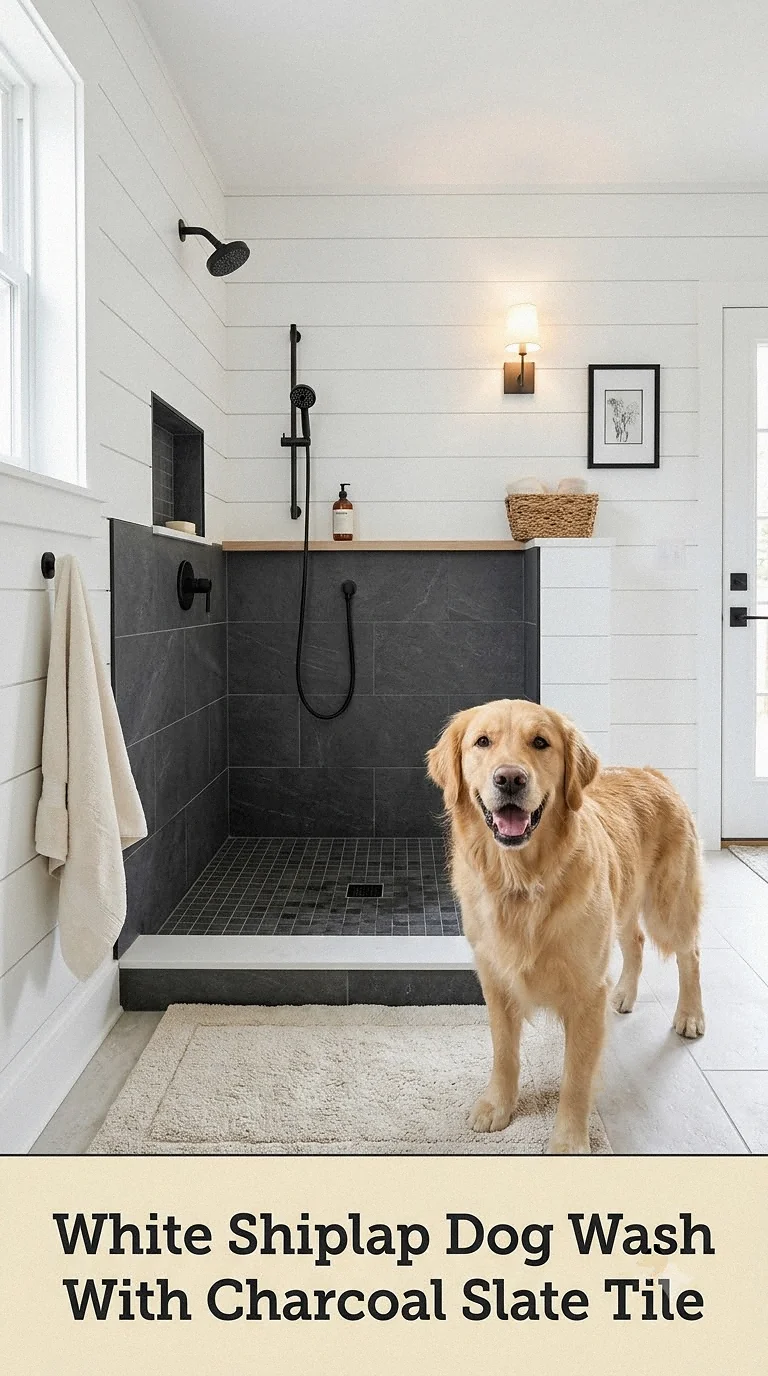
A charcoal-tiled dog shower framed by white shiplap makes a strong farmhouse focal point. The deep tile color disguises everyday splashes, while the pale wall treatment keeps the surrounding room bright. Add an aged-brass or matte-black handheld sprayer for a polished finish that remains easy to control during paw rinses.
For a large or older dog, a floor-level shower is usually easier to enter than a raised tub. Include a low curb to contain water, a nonslip shower floor, and a ledge where shampoo can sit beyond your dog’s immediate reach. Waterproof the entire wet zone professionally, including corners and the junction between the curb and floor.
If real slate is outside the budget, textured porcelain can provide a similar appearance with simpler upkeep. Use moisture-resistant paneling outside the shower and tile inside it rather than exposing ordinary wood to repeated soaking. Keep an absorbent mat and towel hook close enough to reach without leaving a wet dog unattended.
Warm Wood Bench With A Built-In Dog Bed Nook
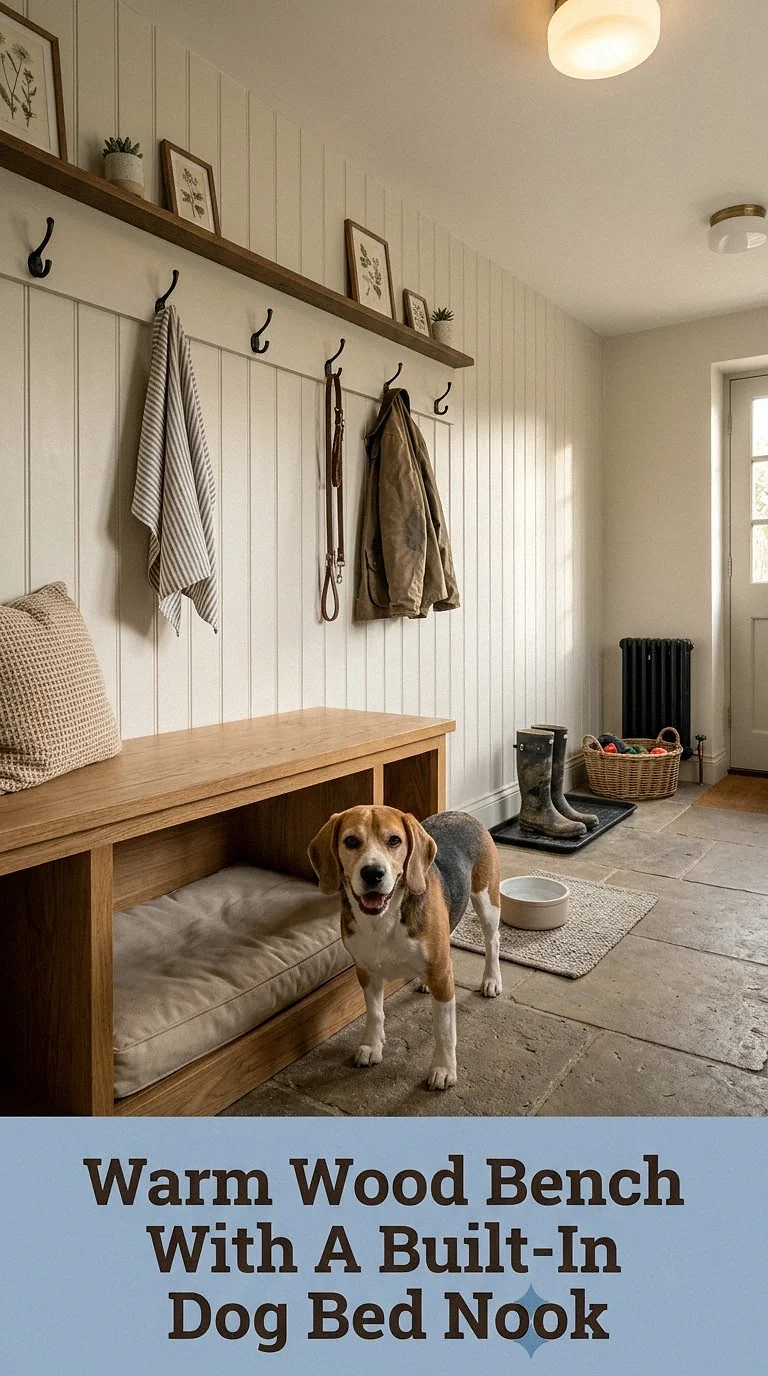
Turn the space beneath a farmhouse bench into a snug sleeping nook instead of filling every inch with shoes. A warm oak or sealed pine surround, neutral cushion, and small paneled back create a den-like retreat where your dog can dry off or nap. The bench above remains useful for removing boots and fastening a leash.
Size the opening so your dog can stand, turn, and stretch comfortably. Ventilation is essential, so leave the front fully open and avoid enclosing the nook beside a heat vent or radiator. A removable mattress cover and washable inner pad make muddy-day cleanup far easier than a fixed upholstered cushion.
Finish the bench with durable trim and softened edges, especially around the opening. For a budget-friendly version, adapt a sturdy freestanding bench and slide a correctly sized bed underneath. Wall-mounted coat hooks and a narrow picture ledge can complete the composition without taking floor space away from your pet.
Vintage Farmhouse Hutch For Leashes Treats And Towels
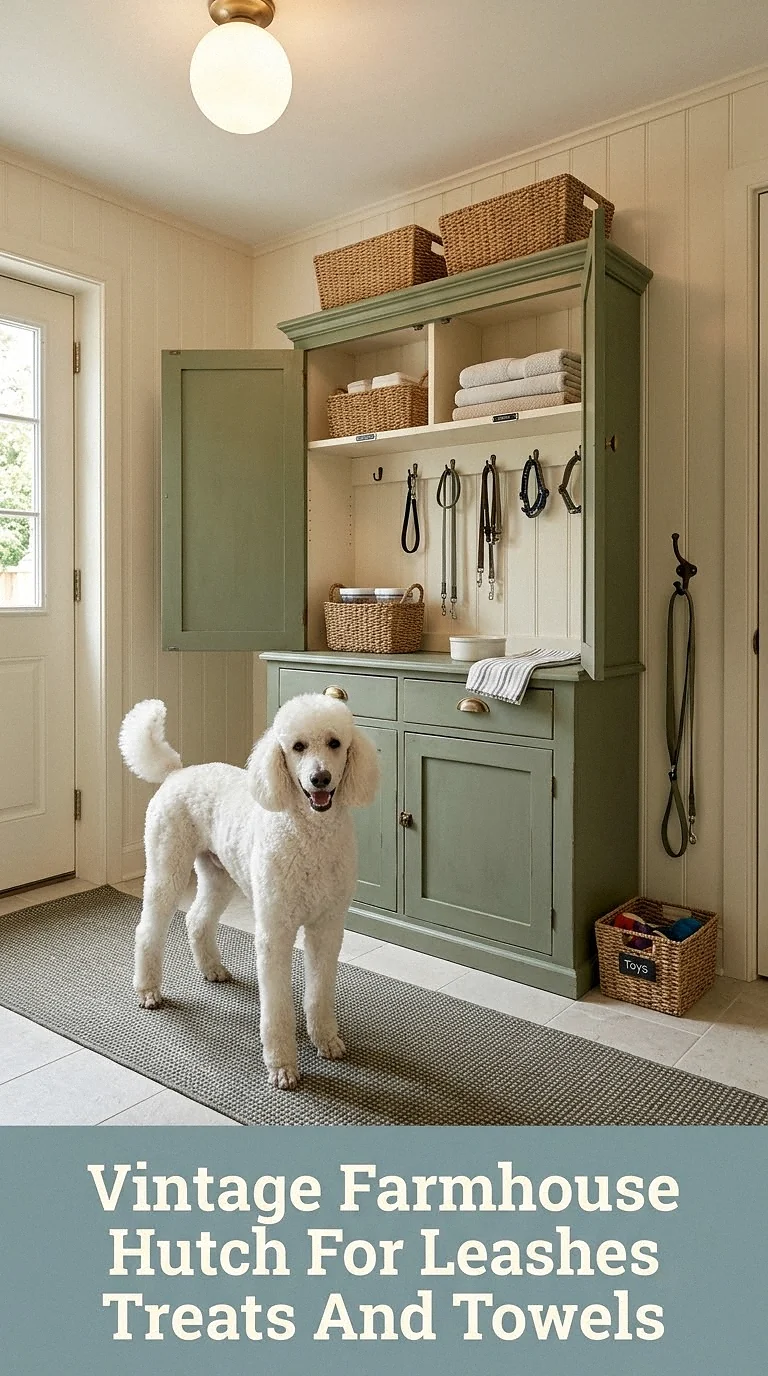
A freestanding hutch can turn an ordinary back entry into a characterful dog station without the cost of custom cabinetry. Paint a secondhand piece muted blue, moss green, or warm white, then use its upper shelves for matching baskets and its lower cupboards for bulky supplies. Vintage cup pulls and simple labels reinforce the collected farmhouse look.
Install hooks inside the doors for leads and spare collars so they remain untangled but hidden. Store treats and kibble in sealed, food-safe containers rather than loose decorative bins, and reserve a washable basket for clean towels. Medicines, pest treatments, and cleaning products belong in a latched compartment beyond a dog’s reach.
Choose a hutch with a shallow footprint if the entry is narrow, and anchor it securely to wall studs. A washable runner in front protects the floor while visually defining the station. This approach is especially practical for renters because the main transformation can move with you.
Black Framed Dog Shower With White Subway Tile
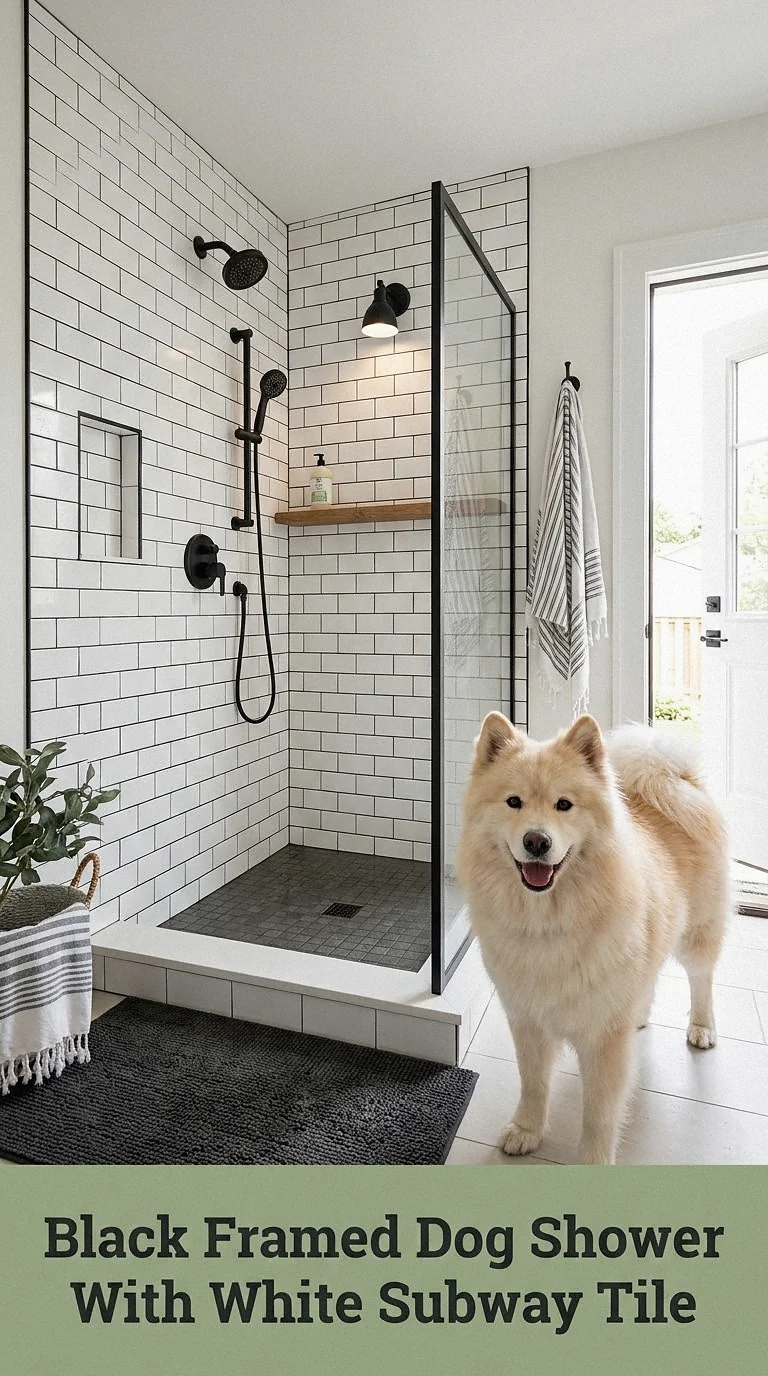
For a cleaner modern-farmhouse interpretation, pair white subway tile with a slim black shower frame and matching plumbing fixtures. Dark grout adds graphic definition and is more forgiving than bright white grout in a hardworking wash area. A small frameless or black-framed splash panel can help contain water while preserving an open appearance.
Build the shower close to the outside entrance so mud is removed before your dog walks across the room. A handheld sprayer with a sufficiently long hose lets you rinse legs and underbellies with control. Include a thermostatic or pressure-balanced valve where possible, and always test the water temperature before washing.
Use a textured mosaic on the shower floor because the additional grout lines can improve traction. Seal grout where required and clean it with pet-appropriate products that will not leave a slippery residue. A black sconce, striped towel, and simple wooden shelf provide contrast without adding clutter.
Rustic Brick Floor Entry With Double Doormat Layers
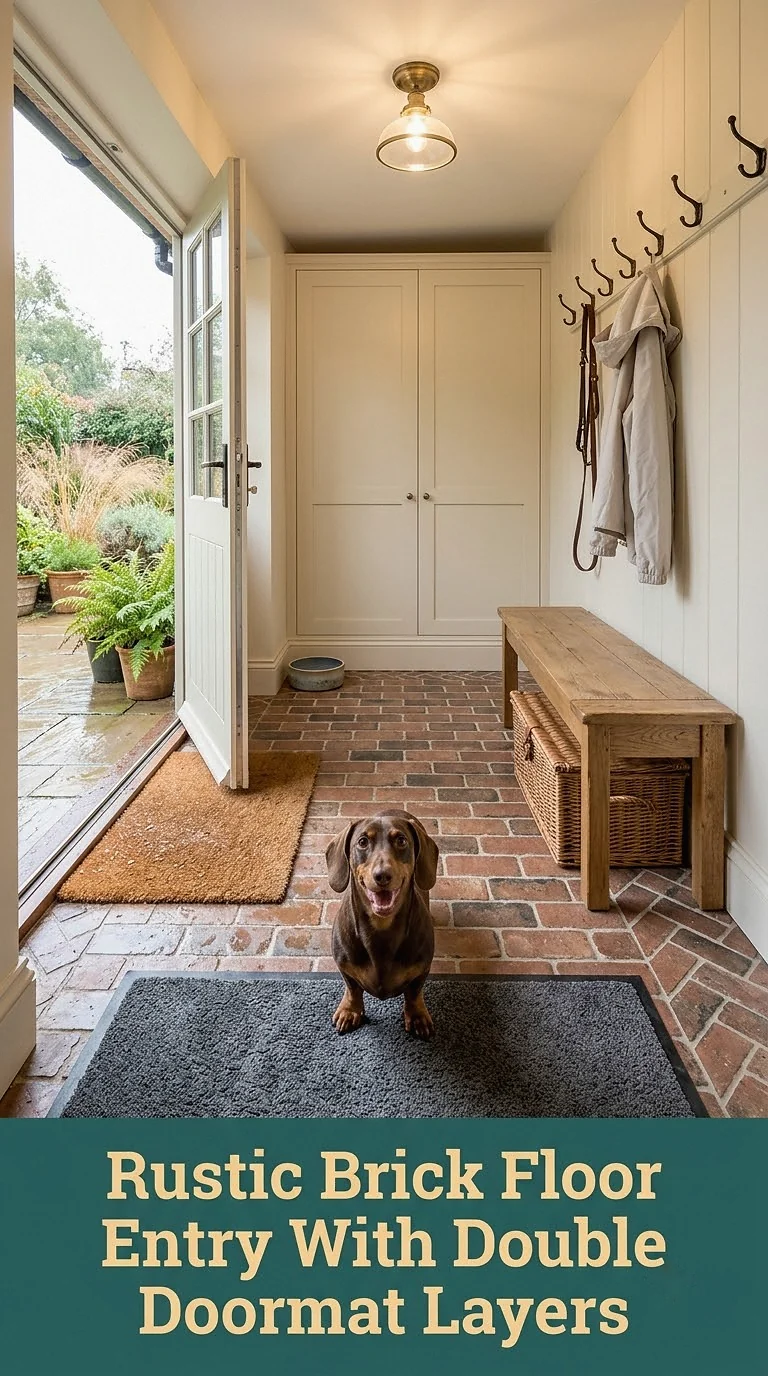
Brick-look flooring brings instant country warmth to a dog-friendly entrance, particularly when paired with creamy cabinetry and old-fashioned iron hooks. Porcelain brick tile offers the appearance of reclaimed brick with a surface that is generally easier to clean and more predictable around moisture. Lay it in a herringbone or running-bond pattern for a distinctive farmhouse foundation.
Read more : 19 Dog Treadmill DIY Ideas For A Safe And Stylish Home Workout Space
Create two stages of dirt control: place a rugged outdoor mat beyond the exterior door and a heavy-duty absorbent mat just inside. This gives paws and boots more than one opportunity to shed water and grit. Choose low-profile mats with nonslip backings so doors can open freely and no curled edge becomes a trip hazard.
Dark or mid-toned grout will be easier to live with than pale grout in a high-traffic dog zone. Vacuum grit frequently before it scratches nearby finishes, and wash removable mats according to their care instructions. A lidded hamper for dirty towels keeps the brick floor clear and prevents damp textiles from collecting under the bench.
Cream Laundry Mud Room With A Tiled Dog Bath
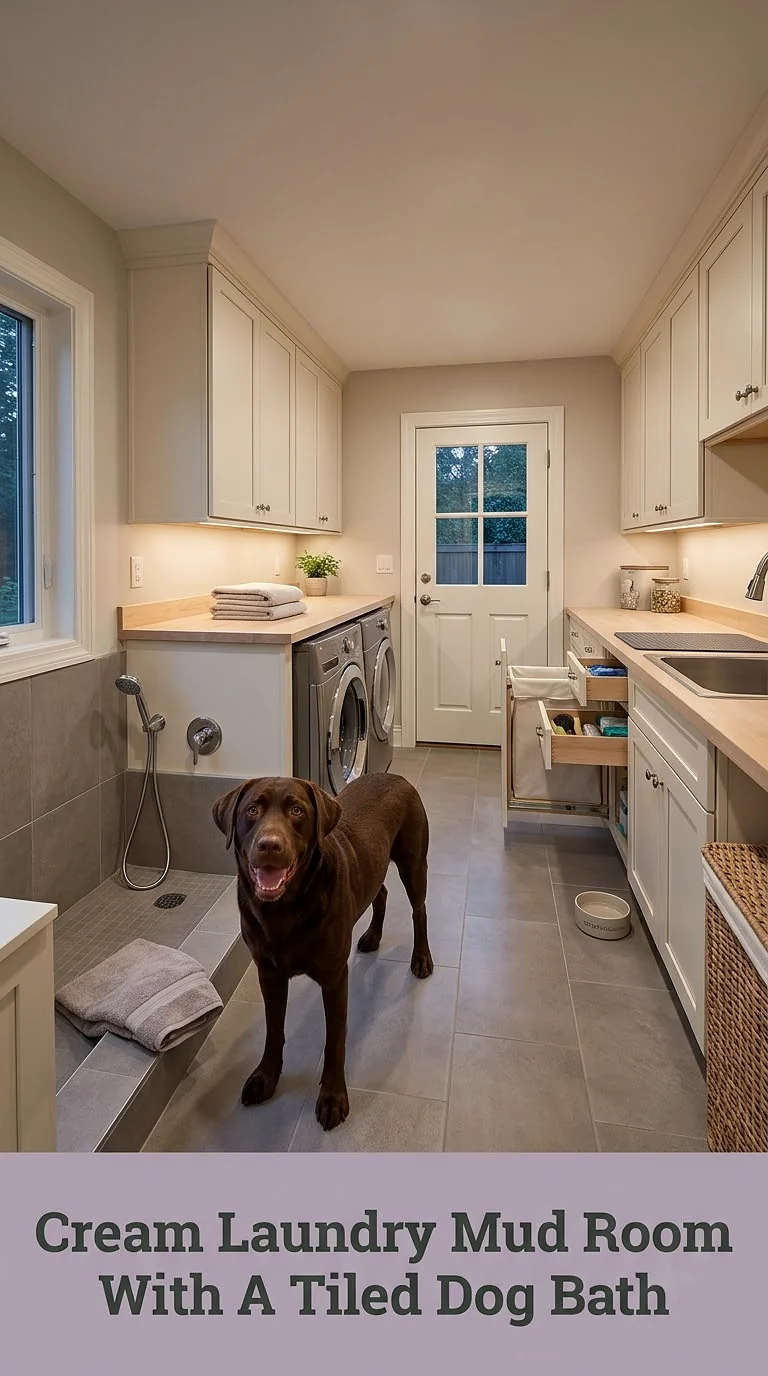
Combining laundry and dog care makes practical sense when plumbing is already available. Cream shaker cabinets, a warm gray tile floor, and a compact dog bath can make the shared room feel cohesive rather than crowded. Continue one countertop over the washer and dryer to create a folding surface for household laundry and clean pet towels.
Keep the dog bath near the entrance and leave an unobstructed route to it. A pull-out hamper can separate damp dog towels from regular washing, while a shallow drawer holds brushes, wipes, and nail-care supplies. Closed cupboards prevent bottles and detergent pods from becoming hazards to curious pets.
Use water-resistant finishes behind both the sink and dog bath, and provide effective ventilation to help damp fabrics dry. If a full shower is not feasible, a deep utility sink can work for a small dog, provided the base is stable and fitted with a nonslip mat. Never leave a dog unattended on a raised surface.
Narrow Farmhouse Entry With Vertical Dog Gear Storage
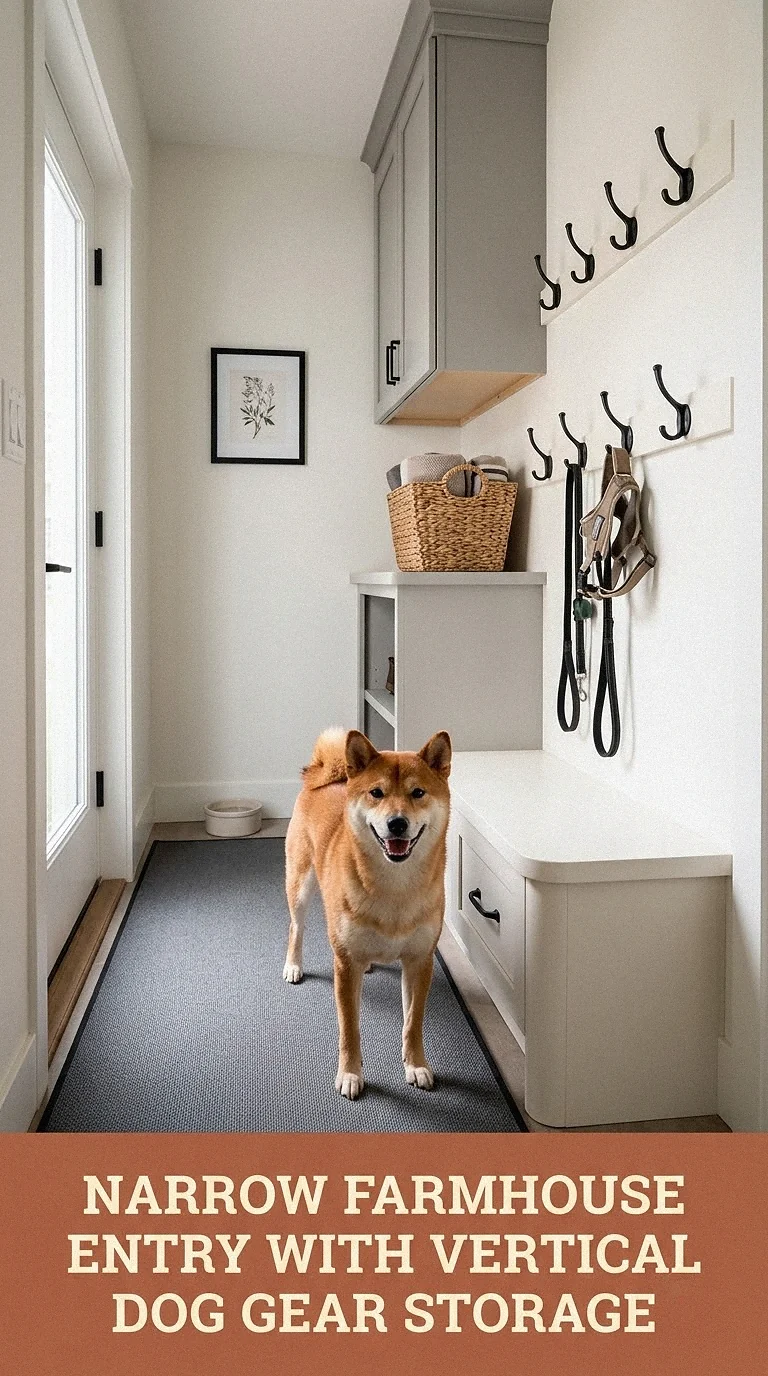
A slim entrance can function like a miniature mud room when storage climbs the wall instead of spreading across the floor. Start with a narrow shoe bench, then add a vertical rail of sturdy hooks, a shallow shelf, and one closed wall cabinet. Paint everything the same warm white or soft gray to reduce visual busyness.
Give each category a defined home: frequently used leash and harness on the lowest practical hooks, folded towels in a basket, and seasonal coats in the upper cabinet. Position hooks where hanging loops cannot brush against food or water bowls. A small drawer can contain waste bags, paw balm, and grooming wipes without cluttering the shelf.
Maintain a comfortable path between the door and the interior, accounting for the door swing and your dog’s body size. Rounded bench corners are helpful in tight circulation zones. A long washable runner protects the floor, but it should have a secure nonslip backing and remain flat at every edge.
Forest Green Cabinets With Brass Hooks And Woven Baskets
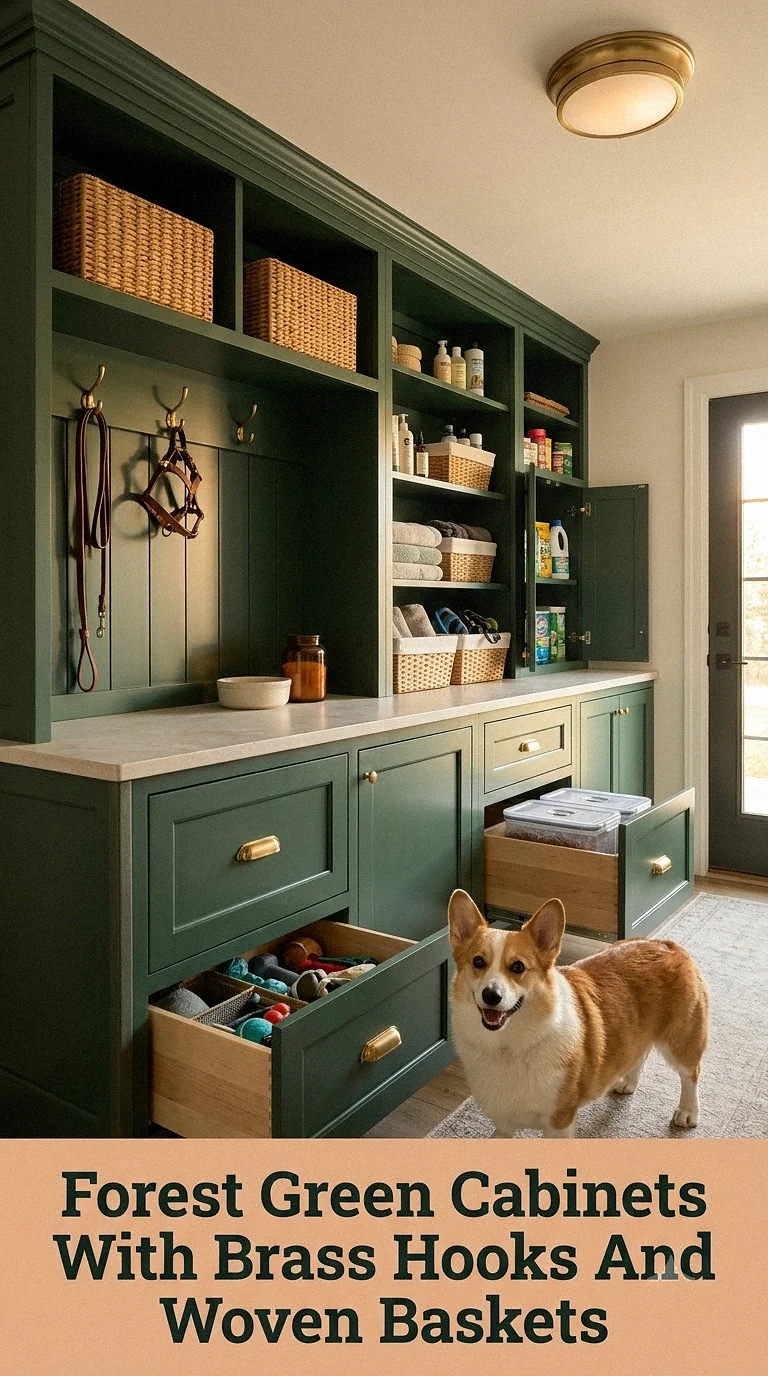
Deep forest green cabinetry gives a farmhouse mud room a grounded, furniture-like presence. Pair it with unlacquered-look brass hardware, pale stone counters, and honey-colored baskets for a layered palette that feels cozy but refined. Use the green selectively if the room lacks natural light, balancing it with a warm white ceiling and backsplash.
Create a low drawer for toys, a deep pull-out for a sealed food bin, and adjustable shelves for supplies that change over time. Woven baskets soften the cabinetry, but washable fabric liners are useful when they hold towels or outdoor gear. Keep chewed toys and damp items out of natural baskets, where moisture and debris can become trapped.
Select tough cabinet paint in a washable finish, and protect vulnerable corners with durable trim. Latches can discourage dogs that have learned to open doors or nose into food storage. Complete the space with a simple flush-mount light so the room remains bright enough for checking paws, ears, and coats after a walk.
Reclaimed Wood Wall With Galvanized Farmhouse Storage
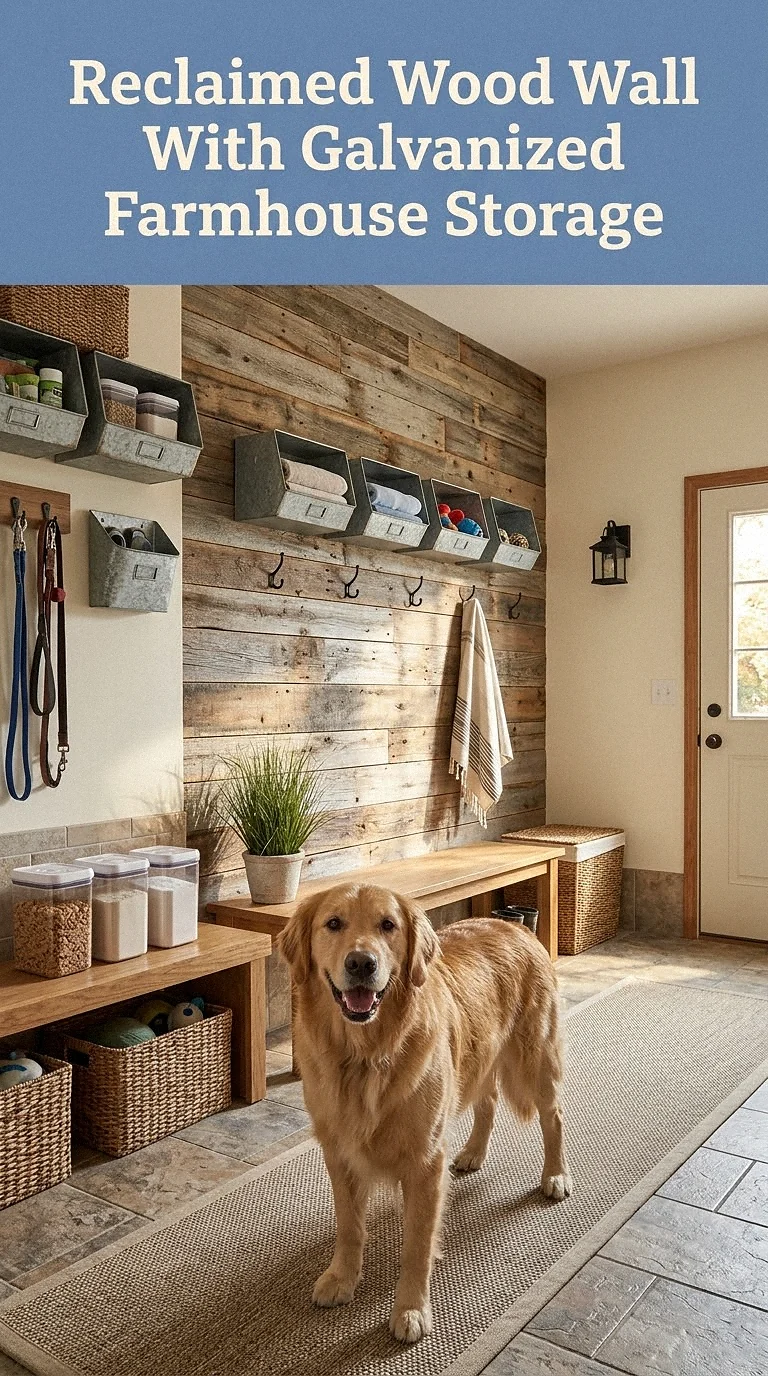
A reclaimed wood accent wall, galvanized bins, and dark iron hooks create an unmistakably rustic dog station. Use the wood behind a simple bench or above a tiled baseboard, where it adds texture without covering every surface. Cream walls and a pale floor prevent the collection of rugged materials from feeling heavy.
Reclaimed boards should be cleaned, checked for protruding nails, sanded smooth, and sealed before installation. Keep rough wood away from the immediate splash zone because deep grain and gaps can hold moisture and dirt. New tongue-and-groove boards finished to resemble aged timber offer a lower-maintenance alternative.
Choose galvanized containers with smooth rolled edges for toys and clean towels, but use food-safe, airtight bins for kibble. Attach any wall bins securely and place heavy items low. This look is easy to assemble gradually with salvaged pieces, making it a useful option when the budget favors thoughtful DIY work over custom joinery.
Window Seat Dog Retreat With Gingham Cushions
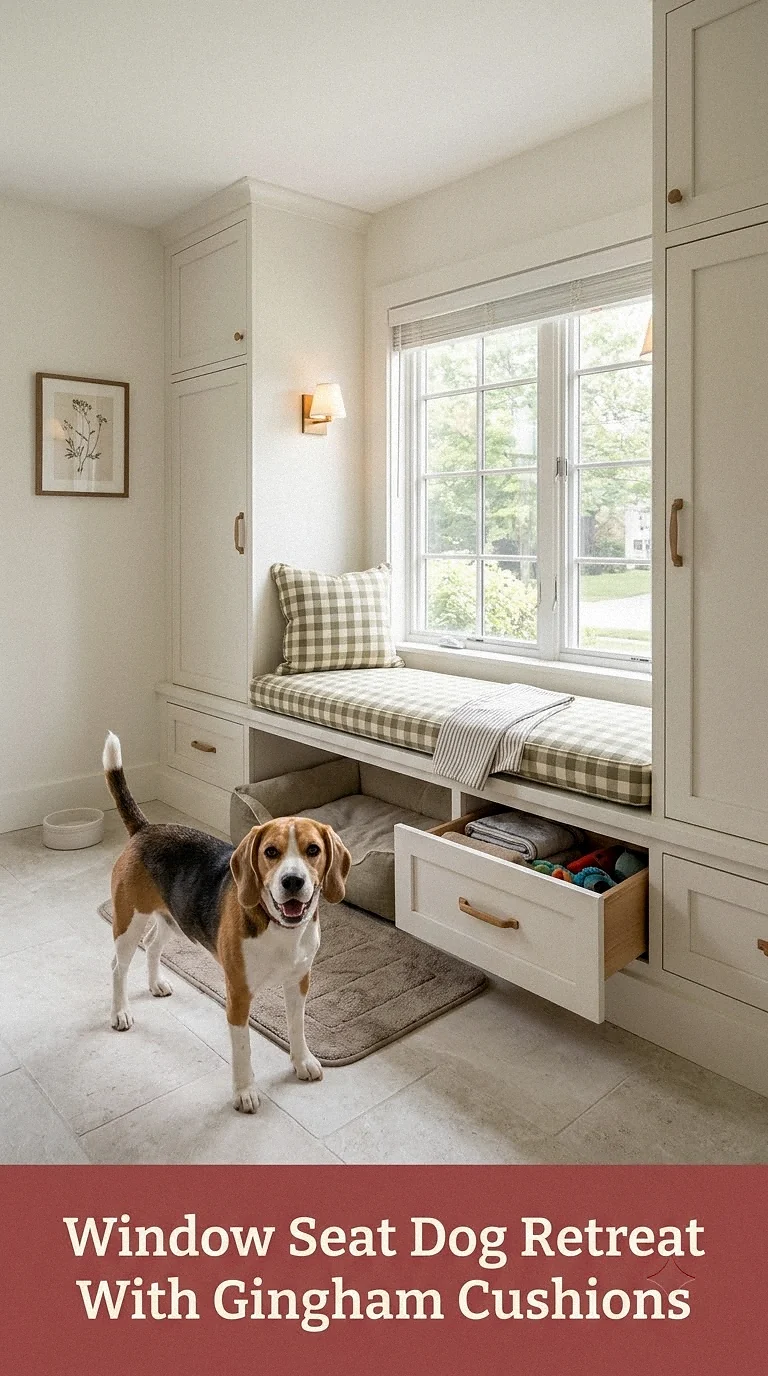
A low window seat gives a dog a comfortable place to watch the yard while bringing cottage warmth to the mud room. Frame the nook with painted storage towers, then add a washable gingham or ticking-stripe cushion in olive, charcoal, or muted red. Natural daylight makes the room feel generous even when its footprint is modest.
Use drawers below the seat for towels, toys, and walking accessories rather than creating inaccessible deep cupboards. The cushion should have a zip-off performance-fabric cover and a moisture-resistant inner liner. Keep blind cords secured well out of reach, and confirm that the window and screen latch safely if your dog becomes excited by outdoor activity.
Avoid making the seat so high that an older dog must jump repeatedly. A floor-level bed positioned under the window can create the same visual effect for a pet with limited mobility. Add a nearby mat for damp paws so the upholstered perch stays cleaner between washes.
Farmhouse Feeding Alcove With Pull-Out Food Drawers
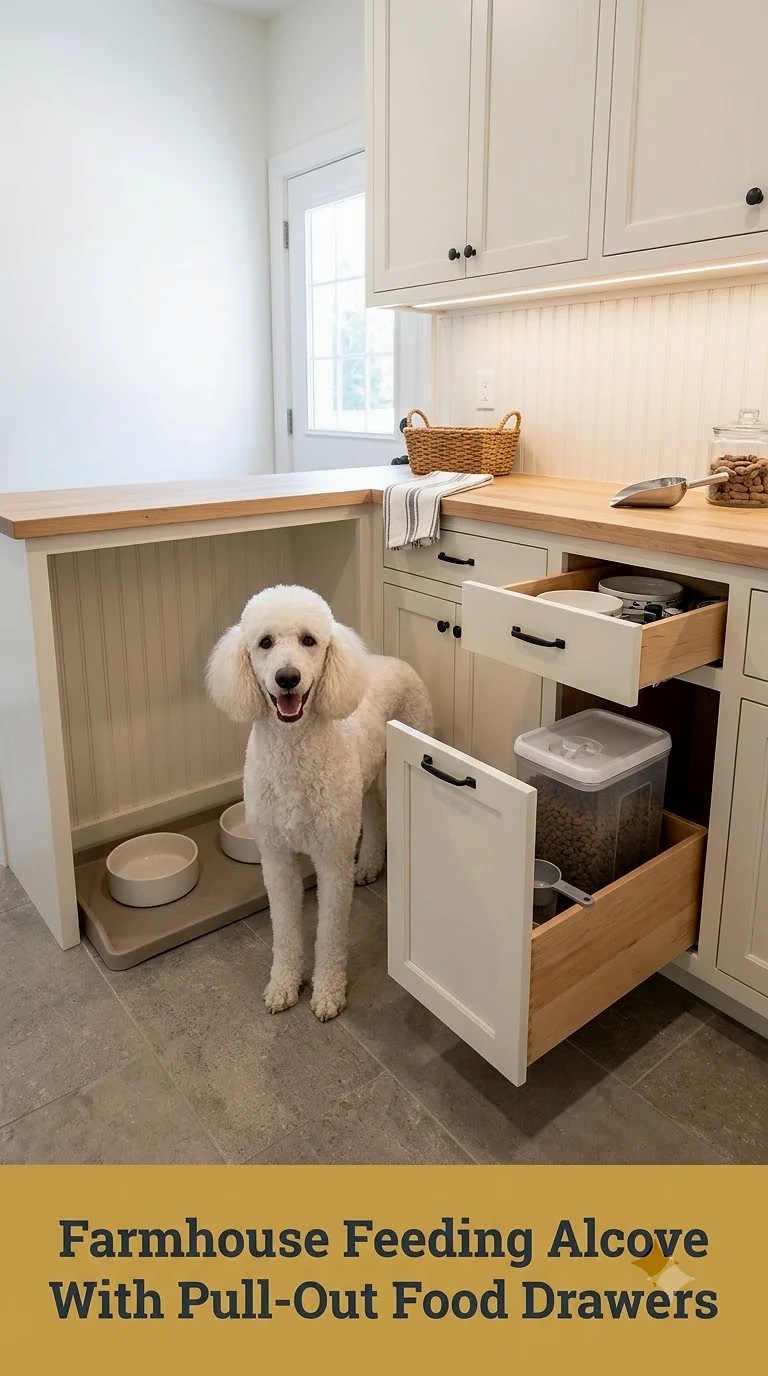
A dedicated feeding alcove keeps bowls out of the main walkway while giving mealtime a tidy architectural frame. Set the niche between lower cabinets and finish the back with washable beadboard, ceramic tile, or a single slab of easy-clean surface. A natural wood counter above can serve as a landing place for scoops and treat jars.
Store dry food in a sealed container inside a full-extension pull-out rather than pouring it directly into an unlined cabinet. This helps protect food from moisture and pests while making the container easier to remove and wash. Add a separate drawer for clean bowls, measuring cups, and feeding accessories.
Place the bowls on a waterproof tray with a raised edge to catch drips, especially for enthusiastic drinkers. Recessed bowls can look streamlined, but removable freestanding bowls are usually simpler to wash and replace. Discuss feeding height with your veterinarian if your dog has mobility or medical needs rather than assuming that every pet benefits from a raised station.
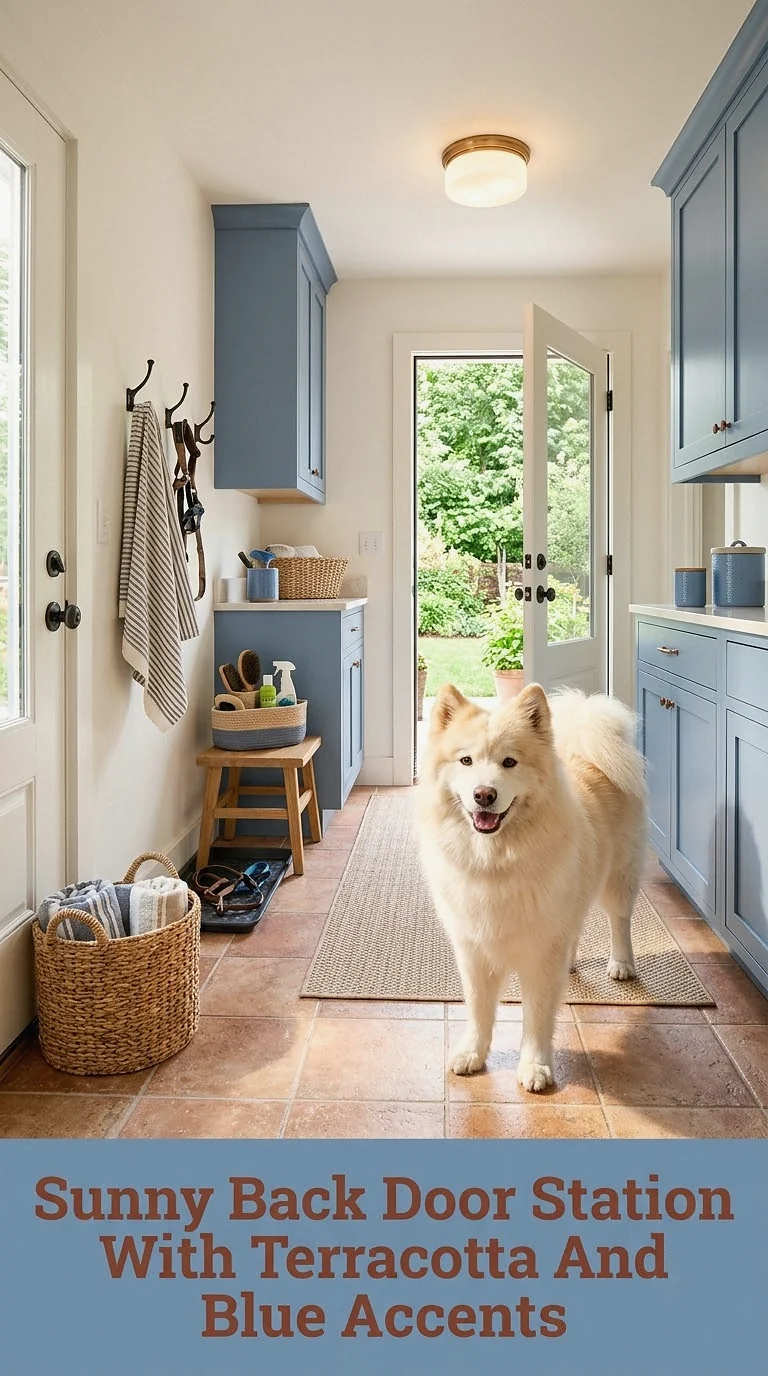
Sunny Back Door Station With Terracotta And Blue Accents
Read more : 19 Dog Deck Ideas For A Cozy, Stylish, Pet-Friendly Outdoor Space
A sunlit back entry feels cheerful with terracotta-colored floor tile, dusty blue cabinetry, and natural woven accents. This palette has the warmth of a farmhouse kitchen while remaining practical enough for garden soil and wet paws. A half-glazed door brings in light and keeps the route to the yard visually connected.
Arrange the cleanup sequence beside the door: towel hook first, then a bench or stool, followed by storage for brushes and paw-cleaning supplies. A sturdy tray beneath the hooks catches drips from wet harnesses. Keep the central route clear so you are not stepping over bowls or baskets while guiding an excited dog inside.
Choose textured, sealed tile and a washable runner that will not fade quickly in direct sun. If the door becomes hot or the room overheats, use a securely fitted shade and ensure your dog can move to a cooler area. Blue ceramic accessories and striped cotton towels add color without filling valuable surfaces with fragile decor.
Compact Closet Conversion With Peg Rails And A Paw Station
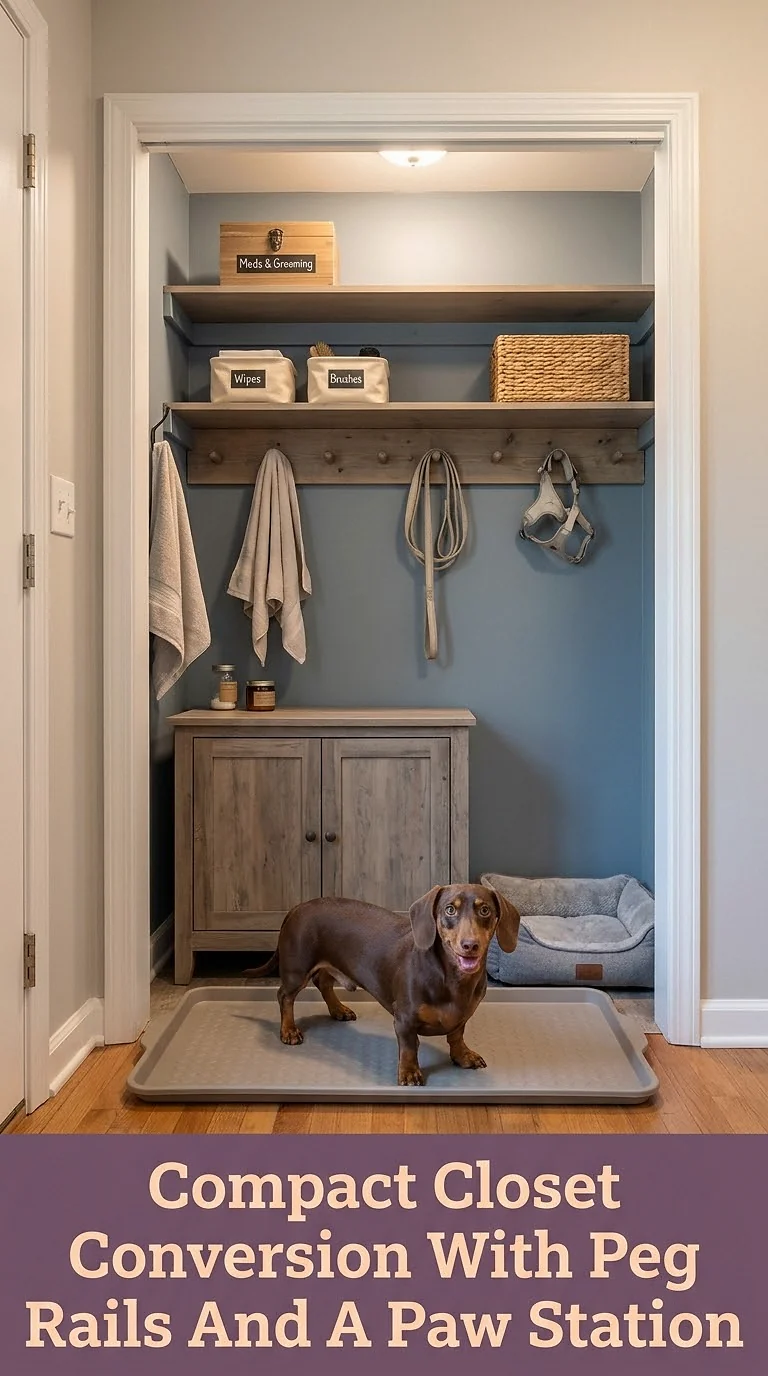
An underused coat closet can become a compact dog mud room without changing the home’s footprint. Remove the door if it obstructs traffic, paint the interior a contrasting muted color, and install a farmhouse peg rail above a low cabinet. A small washable bed or boot tray can occupy the open space below.
Use the peg rail for a towel, leash, and harness, keeping enough distance between items for damp gear to dry. Shallow shelves can hold wipes and brushes in labeled bins, while a latched upper box secures medicine and grooming products. Battery-operated or wired closet lighting makes it easier to inspect paws after evening walks.
Protect the closet floor with a fitted vinyl remnant, tile, or a waterproof tray. Ventilation matters if wet coats are stored there, so avoid closing damp items in an unventilated cupboard. This conversion works well for apartments and small homes because removable shelves, hooks, and a freestanding cabinet can deliver most of the function.
Natural Stone Dog Wash With Aged Brass Fixtures
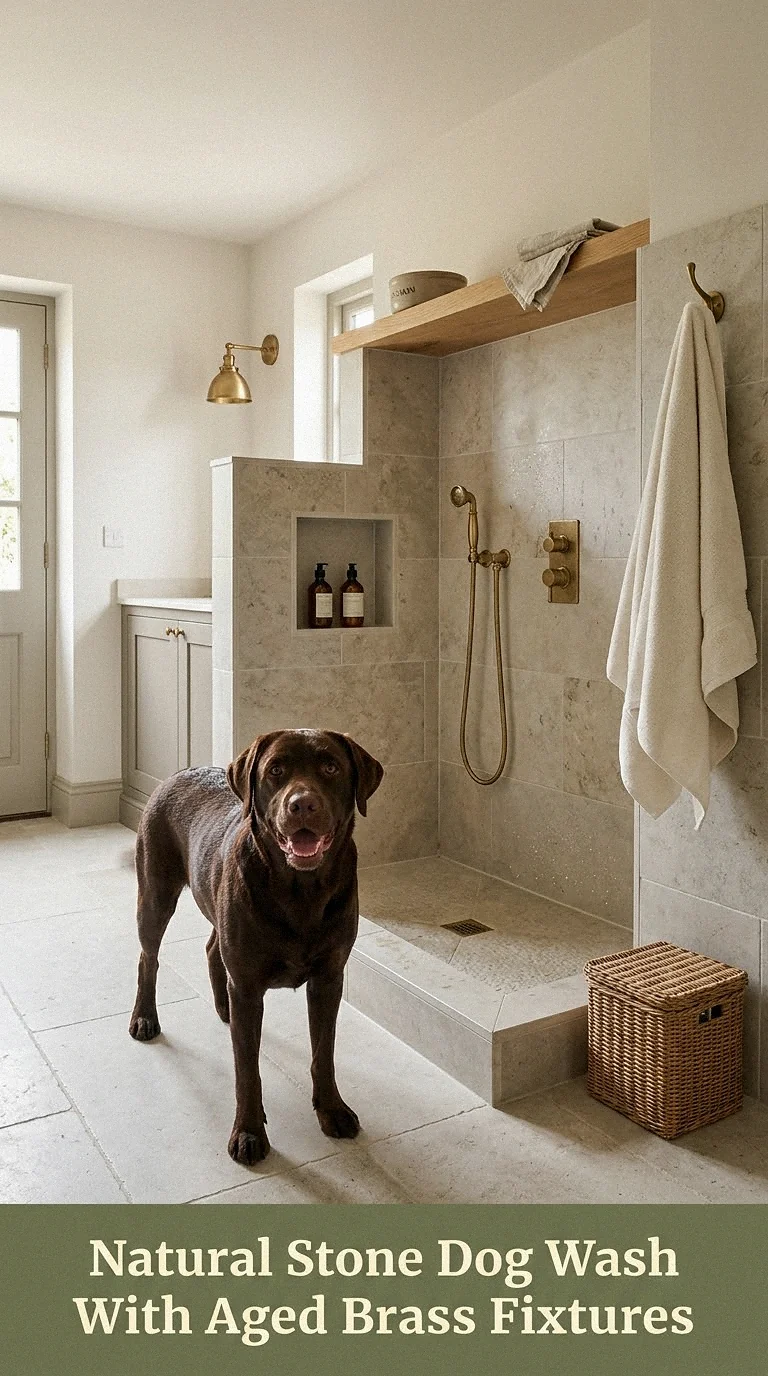
A natural stone dog wash can give a generous mud room the quiet luxury of an old country house. Combine softly varied stone-look wall tile, aged brass fixtures, painted cabinetry, and a thick oak shelf. The materials feel substantial and timeless, making the practical wash zone part of the room’s design rather than something to conceal.
True stone may require sealing and specialized care, so porcelain with a limestone or marble appearance is often the easier choice in a frequently wet area. Select a nonslip shower floor and avoid sharp-edged ledges at dog height. A recessed niche keeps bottles contained without projecting into the washing space.
Include a handheld sprayer, convenient temperature controls, and a nearby hook for towels. A floor-level layout suits heavier dogs, while a raised wash may reduce bending for small breeds if safe steps or a ramp are provided. Budget for proper waterproofing and drainage first; decorative fixtures can be upgraded later without rebuilding the enclosure.
Red Barn Door Mud Room With Built-In Dog Crates
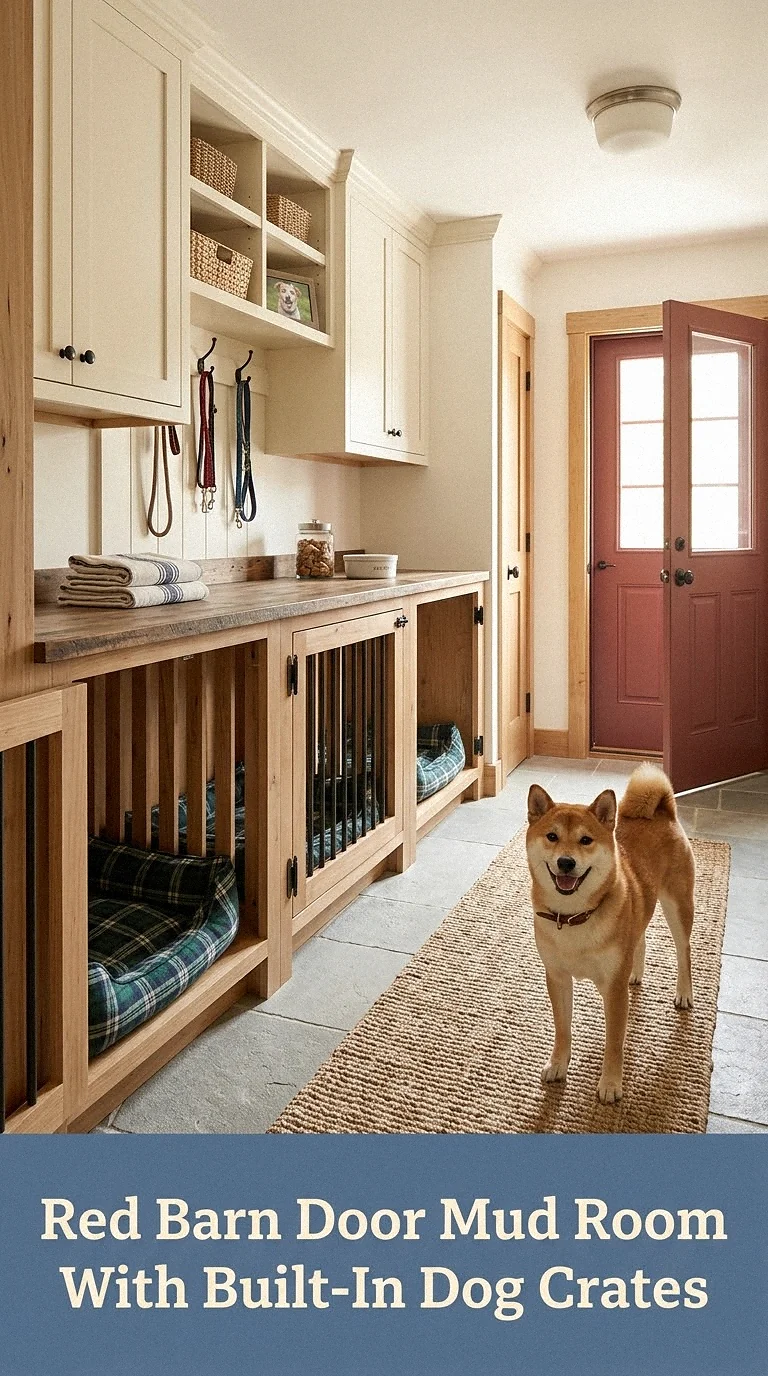
A muted barn-red door creates a spirited farmhouse accent against warm white walls and black hardware. Along one side, built-in crate bays can be integrated beneath a durable countertop so the enclosures read as part of the cabinetry. Natural wood trim and plaid washable bedding add comfort without turning the space into a themed display.
Each crate must be correctly sized for its dog, well ventilated, and free from projecting hardware or loose cords. Use purpose-built crate components or work with an experienced cabinetmaker rather than enclosing a standard crate too tightly. Doors should open fully without blocking the main walking route or exterior exit.
Upper cabinets can hold spare bedding and travel supplies, while an open section allows air to circulate around damp items. Choose removable crate trays and machine-washable pads for straightforward cleaning. If using sliding barn-door hardware on the room itself, install secure stops and confirm the door cannot be pushed open by a determined pet.
Gray Beadboard Mud Room With A Folding Interior Gate
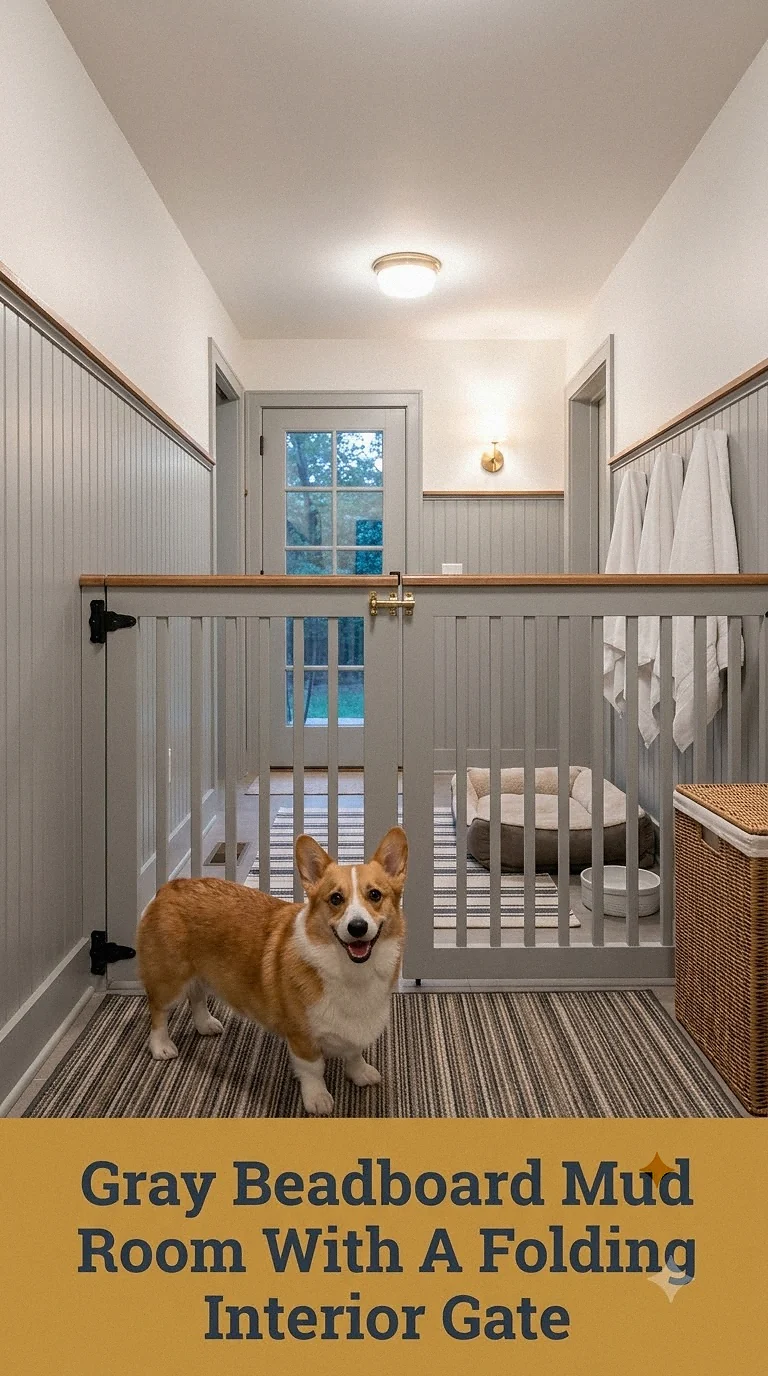
Soft gray beadboard and a fitted interior gate create a polished way to contain a wet dog while allowing airflow and household visibility. Paint the gate to match the wall paneling so it feels architectural, then add black hinges or brass hardware that coordinates with nearby hooks. A warm wood cap rail keeps the gray scheme from feeling cool.
Position the gate to create a useful drying zone with a bed, water bowl, and absorbent mat. It should be tall and strong enough for your dog, with narrow, safe spacing and a latch the pet cannot operate. Avoid accordion-style products with pinch points unless they are specifically designed and installed for pet safety.
Beadboard made from moisture-resistant material is preferable near wet floors, and a durable paint finish makes splashes easier to remove. Store clean towels on one side of the gate and a ventilated hamper for used ones on the other. This setup is especially helpful when several dogs arrive home together and need to be cleaned one at a time.
Budget Farmhouse Corner With A Painted Bench And Boot Tray
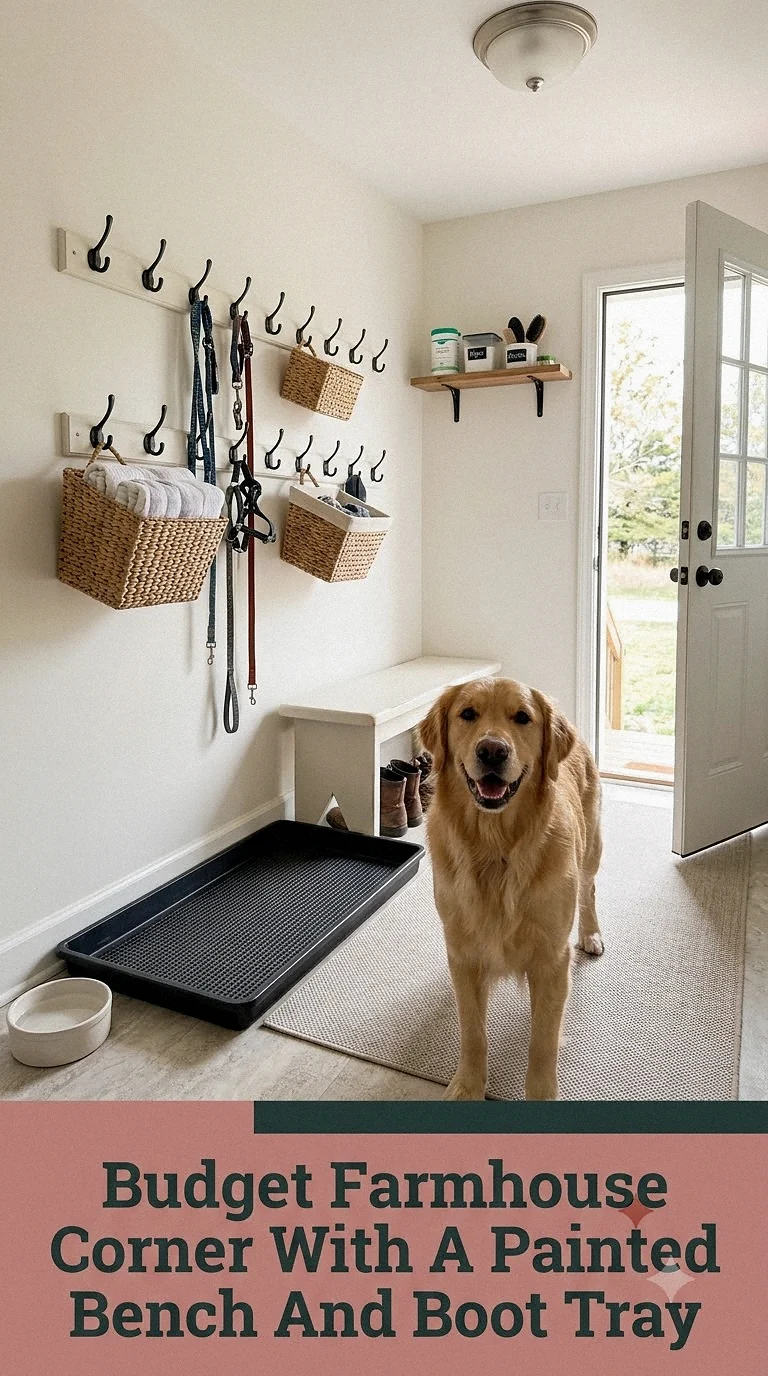
A practical dog landing zone does not require built-ins or plumbing. Define one corner beside the entry with a painted secondhand bench, a large boot tray, two rows of hooks, and matching baskets. Warm white, black, and natural wood create a simple farmhouse palette that works with pieces gathered over time.
Use the boot tray as a contained paw-wiping station, placing a washable absorbent mat inside or immediately beside it. One basket can hold clean towels, while a washable bag or lidded hamper collects dirty ones. Add a narrow wall shelf for wipes and brushes, but place anything chewable or potentially harmful out of reach.
Sand and seal the bench so its surface can withstand wet clothing and scratches. Screw hooks into studs or secure anchors, particularly if large dogs pull against hanging leads. A sample pot of hardwearing paint, thrifted baskets, and simple labels can make the arrangement feel coordinated while keeping the project achievable on a modest budget.
Creating A Farmhouse Mud Room That Works For Your Dog
The most successful dog mud room is shaped by the way you and your pet actually come home. Start with the essentials your routine demands, whether that means a serious doormat, reachable towels, secure food storage, a comfortable bed, or a fully tiled washing station. Then bring in farmhouse warmth through wood, practical paneling, woven texture, and a color palette that connects naturally with the rest of your home.
Even a small bench or converted closet can make muddy days calmer when every item has a logical place. Choose durable, washable finishes, keep walking routes clear, and adapt heights and layouts to your dog’s size, age, and mobility. The result can be hardworking and beautiful: a welcoming room where outdoor adventures end comfortably and your clean home begins.
Source: https://petstutorial.com
Category: DOGS
