
A thoughtfully designed dog run can transform an ordinary backyard into a space where your pup can stretch, sniff, play, relax, and enjoy the outdoors while you keep the rest of the garden a little more organized. The best part is that a dog run does not have to look like a plain wire enclosure. With attractive fencing, comfortable surfaces, greenery, shade, and a few clever details, it can become one of the prettiest and most useful areas in your yard.
When exploring dog runs ideas backyard designs, start with your individual dog rather than choosing a layout based on appearance alone. A tiny senior dog has very different needs from an athletic dog that climbs, jumps, or digs. Secure fencing and gates are especially important for escape-prone dogs, and dogs that dig may require reinforcement along the bottom of the enclosure.
You are reading: 19 Dog Runs Ideas Backyard Designs For A Beautiful And Practical Outdoor Space
Climate matters too. A beautiful run that sits in full afternoon sun may be uncomfortable during warm weather. Dogs spending time outdoors need reliable shade and access to fresh drinking water, and outdoor activity should be limited when temperatures become dangerously hot.
From narrow side yards and inexpensive DIY enclosures to covered pergolas and landscaped play spaces, these ideas offer plenty of ways to create a backyard dog run that feels intentional, stylish, and genuinely enjoyable for your pet.
Dog Runs Ideas Backyard Designs For Stylish And Pet-Friendly Outdoor Spaces
Warm Cedar Dog Run With Black Wire Fencing And Gravel Path
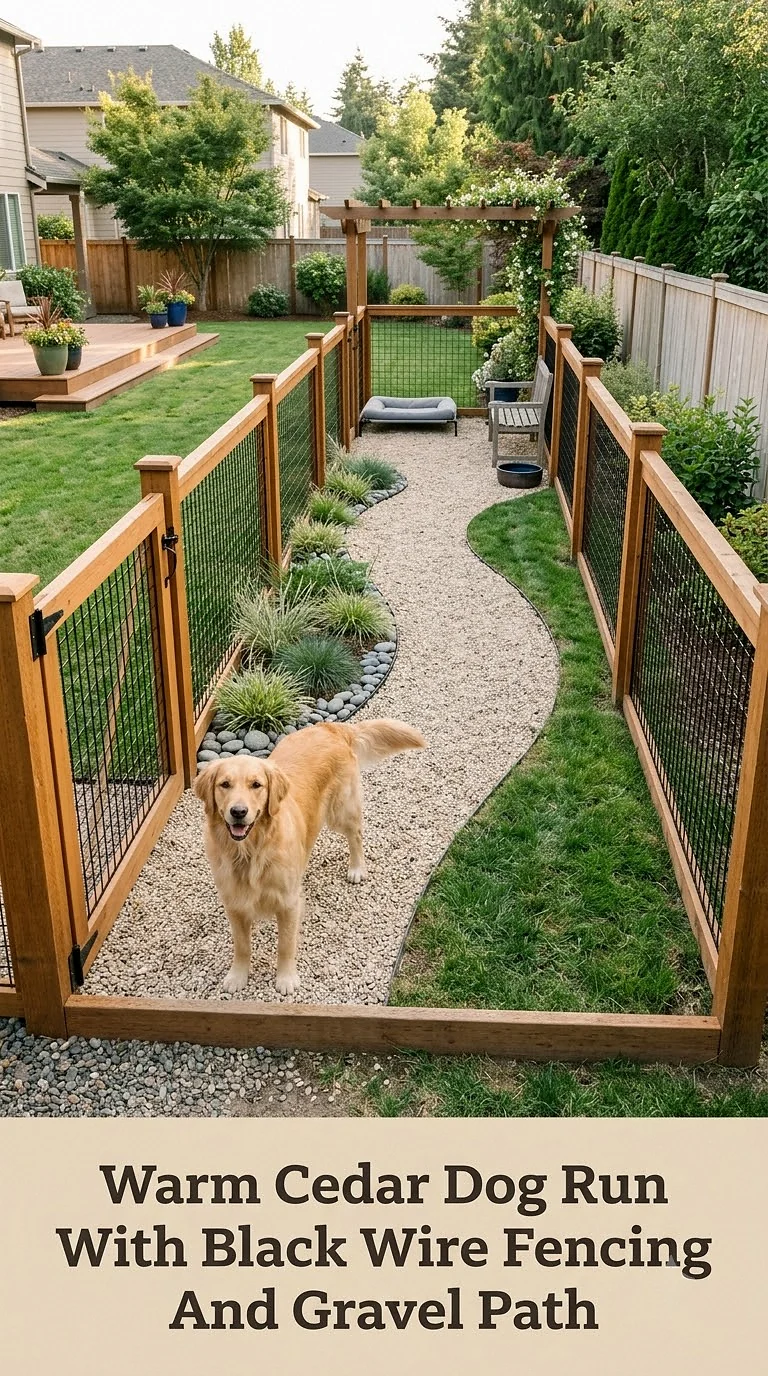
Warm cedar posts paired with black welded-wire panels create a dog run that feels much softer and more residential than a traditional chain-link enclosure. This combination works especially well beside contemporary, farmhouse, or cottage-style homes because the wood visually connects the run with decks, fences, and garden structures already in the yard.
Create a long rectangular enclosure with enough open space for your dog to trot comfortably from one end to the other. A firm, well-draining gravel surface can reduce worn grass and muddy patches, particularly around gates and water bowls.
Add large stepping stones through the center for visual interest and easier human access after rain. A covered corner with a raised outdoor bed gives your dog a comfortable resting area.
Keep the fence line visually clear so adventurous dogs cannot use nearby furniture, planters, or stacked objects as climbing aids. A secure, easy-to-latch gate near the house makes everyday trips into the run much simpler.
Modern White Slat Dog Run With Soft Green Artificial Turf
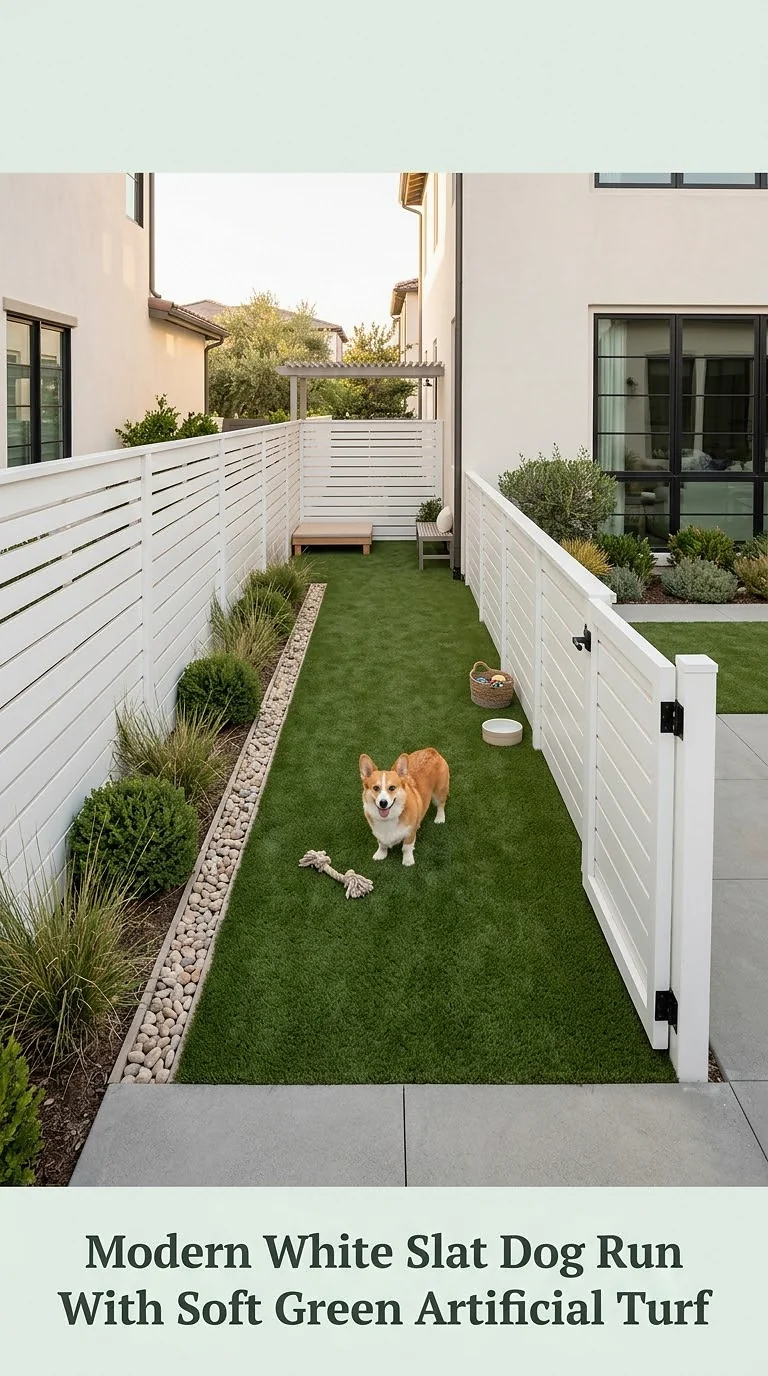
For a clean contemporary backyard, combine white or pale neutral fencing with a lush green surface and simple architectural details.
A narrow horizontal or vertical slat fence can visually coordinate with modern siding, patios, and outdoor kitchens. Where additional security is needed, reinforce decorative fencing with appropriately sized pet-safe mesh so your dog cannot squeeze between openings.
Pet-friendly artificial turf can create the appearance of a manicured miniature lawn without the worn pathways that active dogs often create in natural grass. Choose a system designed for drainage and plan how you will rinse and clean the area regularly.
Artificial surfaces can become hot in direct sunshine, so include overhead shade and check surface temperature before allowing your dog to play.
Finish the space with a matte black water bowl, weather-resistant storage box, and one or two simple planters placed safely outside the fence.
Covered Pergola Dog Run With Pavers And A Shaded Lounge Corner
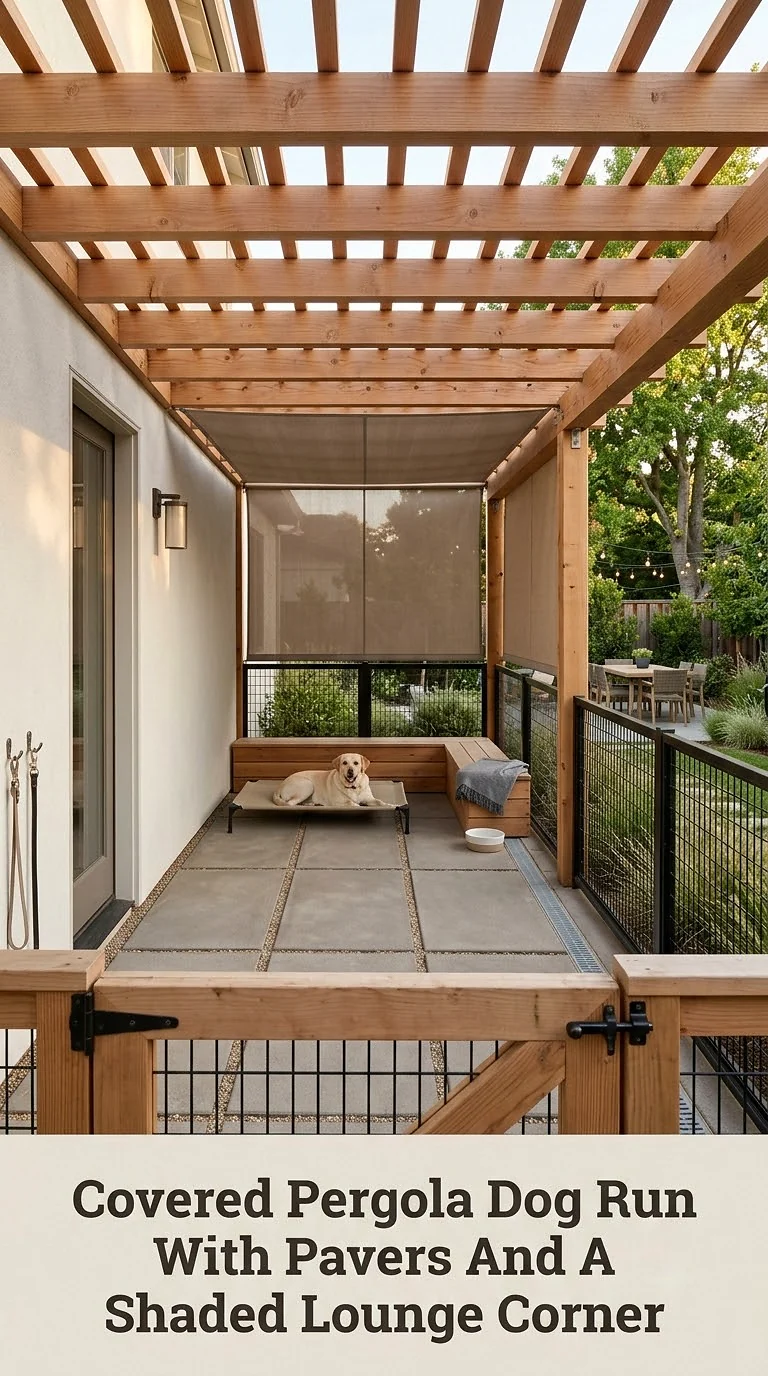
A pergola can make a dog run feel like a miniature outdoor room rather than a utility enclosure.
Build the structure over one section instead of covering the entire run. Your dog can then choose between open sunshine and a protected resting area. Timber beams, climbing greenery positioned safely out of reach, and a breathable shade panel create a warm garden atmosphere.
Under the covered portion, install outdoor pavers that are easy to sweep and rinse. Avoid highly polished finishes that become slippery when wet.
Add a washable raised dog bed beneath the pergola, along with a securely positioned water bowl that remains shaded.
Because shade changes throughout the day, observe the space during morning and afternoon before deciding exactly where the covered area should go. During hot weather, reliable shade and cool drinking water are particularly important for dogs outdoors.
Narrow Side-Yard Dog Run With Stepping Stones And Wood Fencing
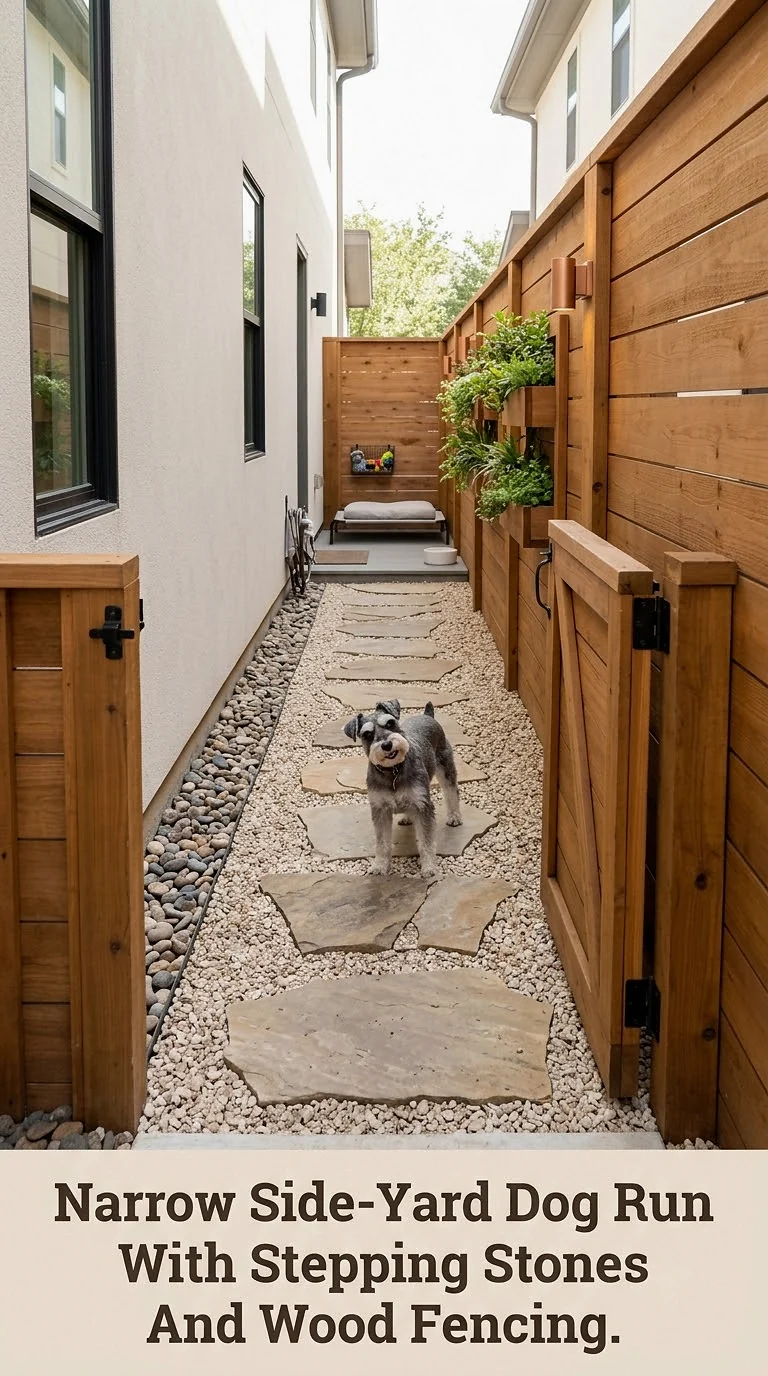
That awkward strip between the house and property fence can become one of the most practical locations for a dog run.
A long, narrow layout naturally creates a corridor where your dog can walk, sniff, and move around without taking over the main entertaining area of the backyard. Use durable fencing at both ends to turn the existing side yard into a contained space.
Create a pathway using oversized concrete or natural-stone stepping slabs surrounded by compacted, well-draining ground material. Leaving small planting pockets along the outer edges can soften the corridor, but keep plants protected if your dog enjoys chewing or digging.
Wall-mounted leash hooks and a small weatherproof storage cabinet near the entrance make the run even more functional.
If the side yard is enclosed by the house on one side, check airflow and sun exposure carefully. Narrow spaces can become surprisingly warm during summer.
Cozy Under-Deck Dog Run With Gravel Flooring And Warm Wood Posts
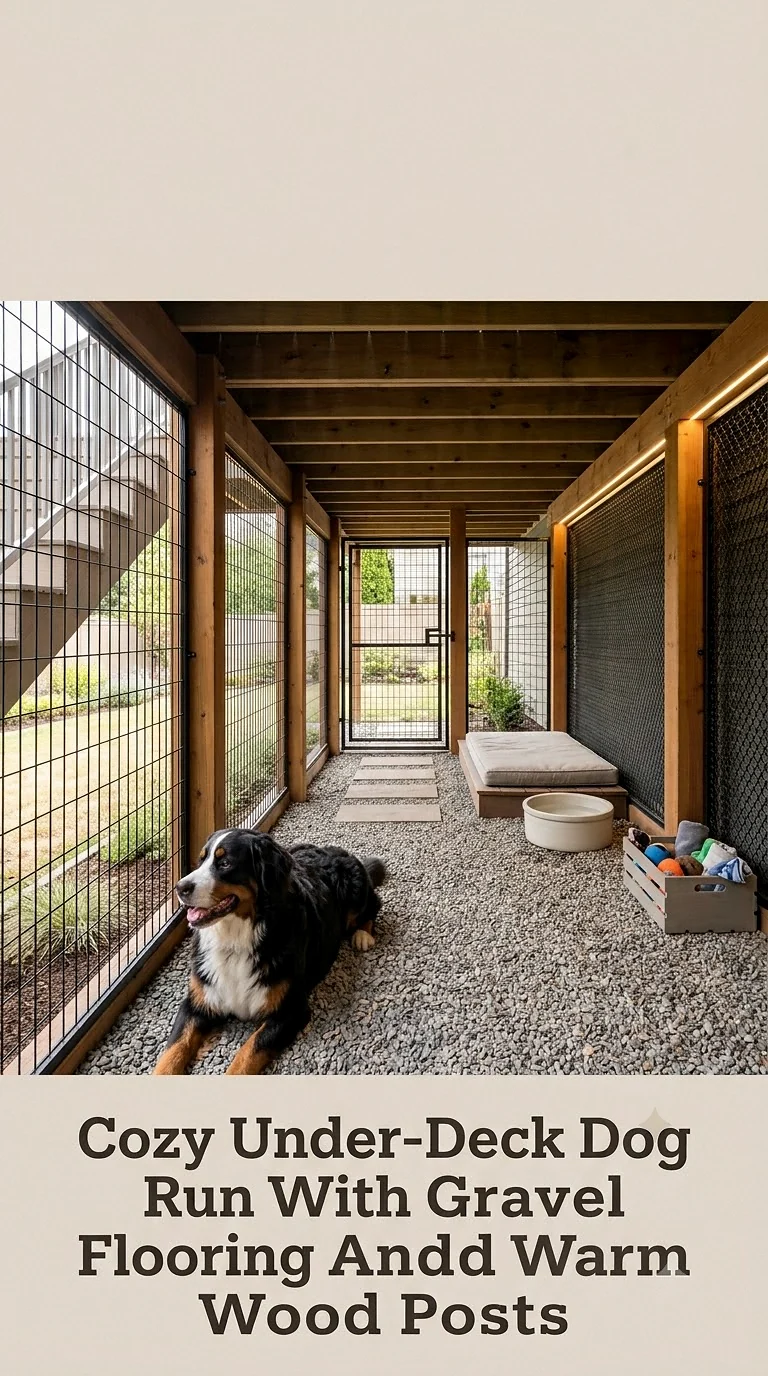
The unused area underneath an elevated deck can provide naturally sheltered space for a backyard dog run.
Frame the perimeter with sturdy wooden posts and dark wire panels that allow airflow and visibility. The deck above provides protection from direct overhead sun and light rain while preserving valuable open lawn elsewhere.
Gravel or another properly drained surface works particularly well underneath decks where grass often struggles because of limited sunlight. Add larger flat pavers between the entrance and resting area so you can walk inside comfortably.
For a polished look, stain the structural posts to match the deck. A weather-resistant bed, simple water station, and a few enrichment toys complete the setup without making the space cluttered.
Check the underside of the deck carefully for protruding nails, sharp hardware, dripping chemicals, or objects that could fall into the enclosure before allowing your dog access.
Cottage Garden Dog Run With Pet-Safe Flowers And Curved Borders
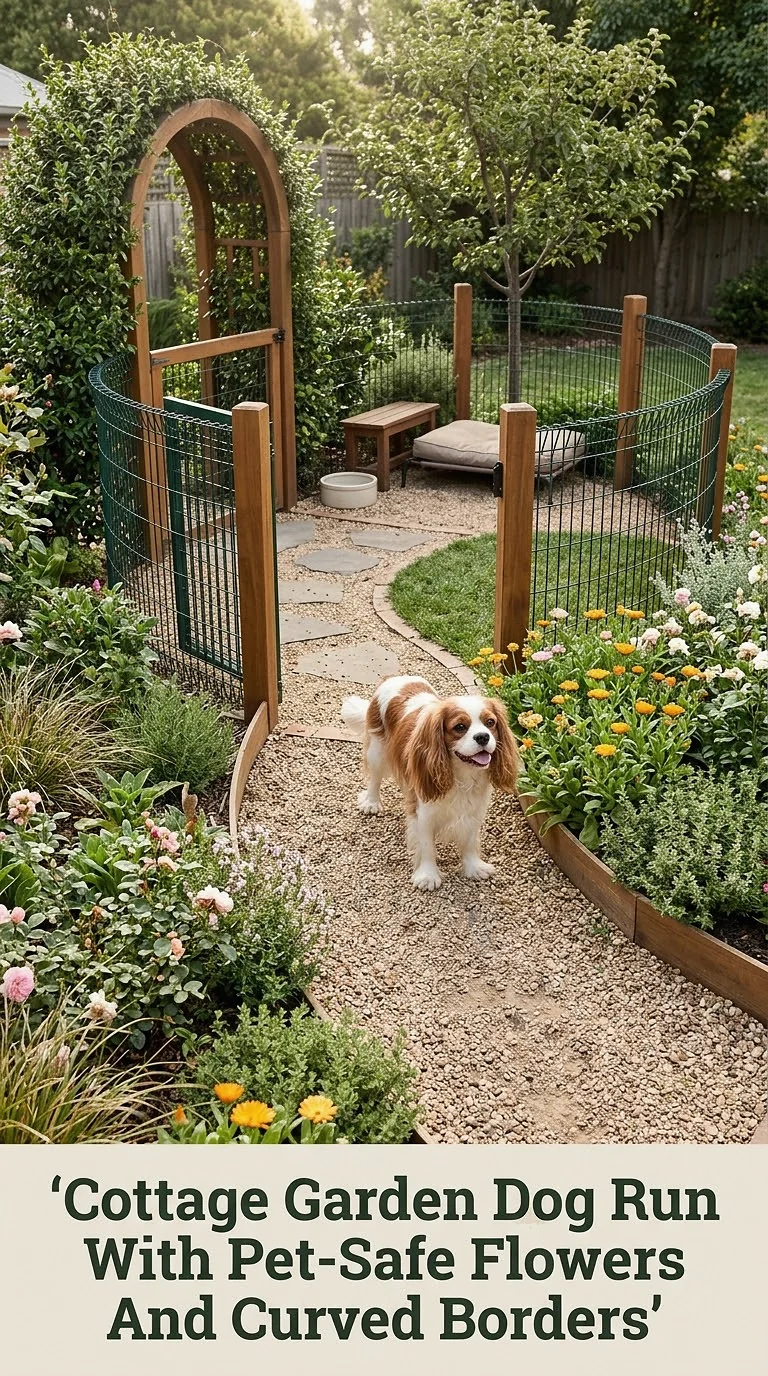
A dog run can sit beautifully beside a romantic cottage garden when landscaping is incorporated thoughtfully.
Instead of creating one harsh rectangular enclosure, introduce gently curved planting beds outside the fence. Use pale timber fencing, black mesh, gravel pathways, and soft greenery to blend the run into the surrounding garden.
Choose plants only after confirming they are appropriate around dogs. Some popular landscaping plants can cause illness when eaten, and fertilizers, certain pesticides, compost, and cocoa mulch can also present hazards.
Keeping decorative plants outside the enclosure is often the easiest solution for dogs that chew greenery.
Inside the run, place one attractive planter only if your dog reliably leaves plants alone. Add a simple wooden bench outside the fence so you can sit nearby while your pup explores.
The result feels more like a charming garden feature than a conventional kennel.
Rustic Farmhouse Dog Run With Timber Posts And Welded Wire Panels
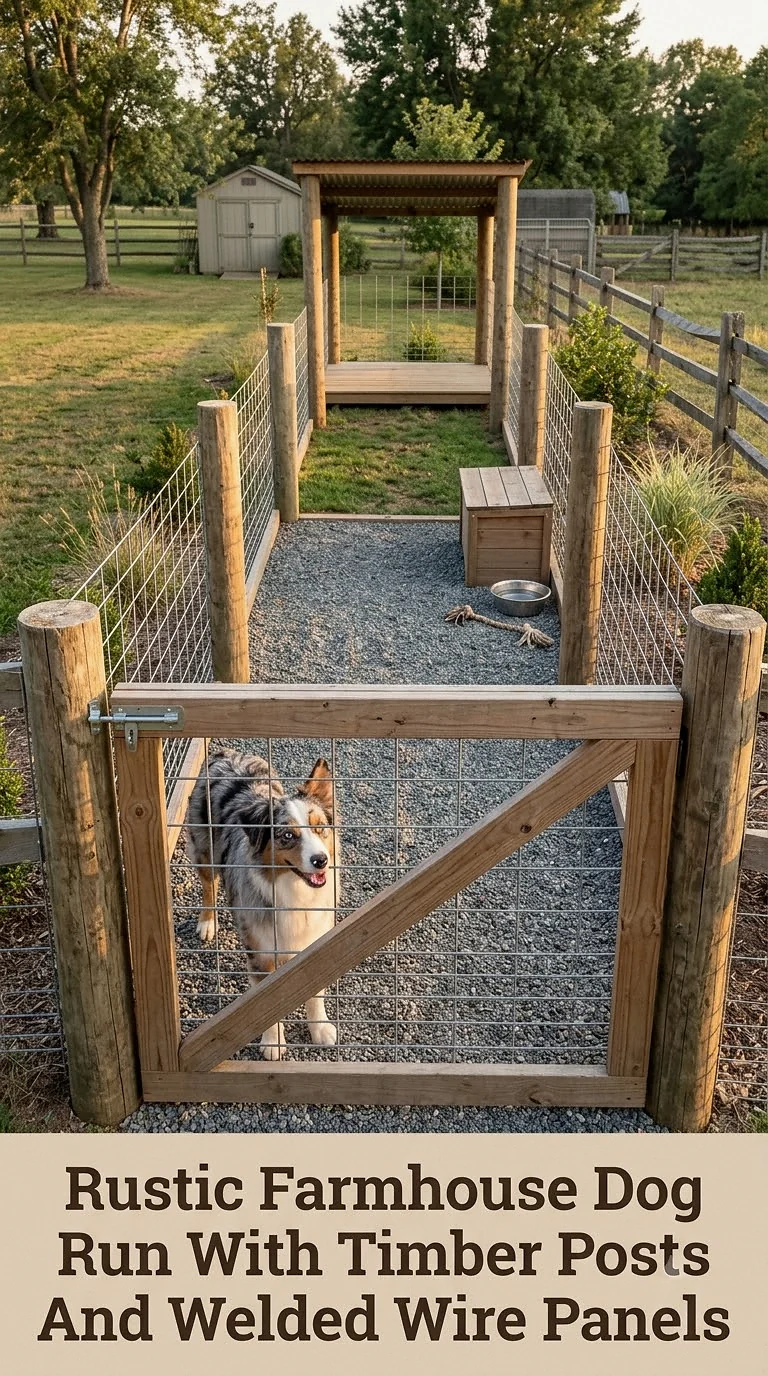
A farmhouse-style dog run pairs beautifully with vegetable gardens, barns, sheds, and rustic landscaping.
Use substantial natural timber posts with dark welded-wire panels between them. The wire preserves views across the backyard while the heavy wood framing gives the enclosure a handcrafted appearance.
A simple wooden gate with black hinges and hardware completes the look. Avoid purely decorative latches that a clever dog could nudge open.
Inside, divide the floor between a durable walking surface and a comfortable resting section. Natural grass can work for light-use runs, while high-traffic areas around gates may benefit from pavers or another easy-to-maintain surface.
Add a covered water station, raised cot, and rustic weatherproof toy box.
Read more : 18 Private Dog Park Ideas For A Beautiful And Pet-Friendly Backyard
If your dog regularly digs along boundaries, consider reinforcing the lower fence area rather than waiting for an escape route to appear. Dogs that persistently dig may need physical barriers beneath the fence combined with additional exercise and enrichment.
Minimalist Black Metal Dog Run With Light Stone Flooring
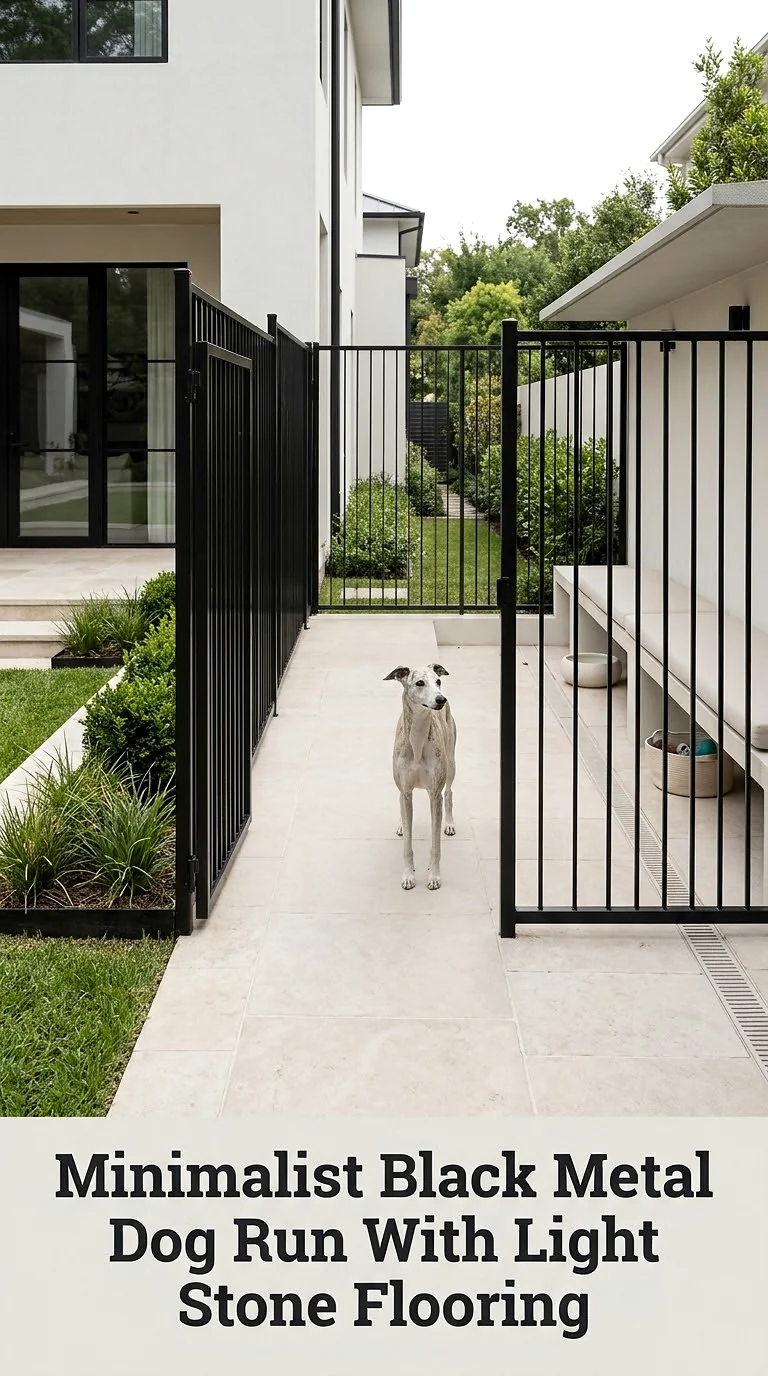
Black fencing and pale ground materials create a sophisticated dog run that complements modern landscaping without dominating it visually.
Choose slim black metal panels or sturdy black-coated mesh mounted between simple posts. Keep unnecessary ornamentation to a minimum and use matching hardware throughout.
Underfoot, consider a stable, well-draining light stone or paved surface appropriate for your dog. Avoid sharp pieces, and reconsider loose small gravel if your dog has a habit of picking up or swallowing rocks.
A slim black shade canopy positioned over the resting corner continues the monochromatic look. Add a raised taupe or charcoal dog bed and a stainless-steel water bowl for an understated finish.
This style works particularly well when the dog run sits near concrete patios, modern garden beds, or black-framed exterior doors.
For easier cleaning, keep the layout open rather than filling it with excessive decorative accessories.
Budget-Friendly DIY Wood And Wire Backyard Dog Run
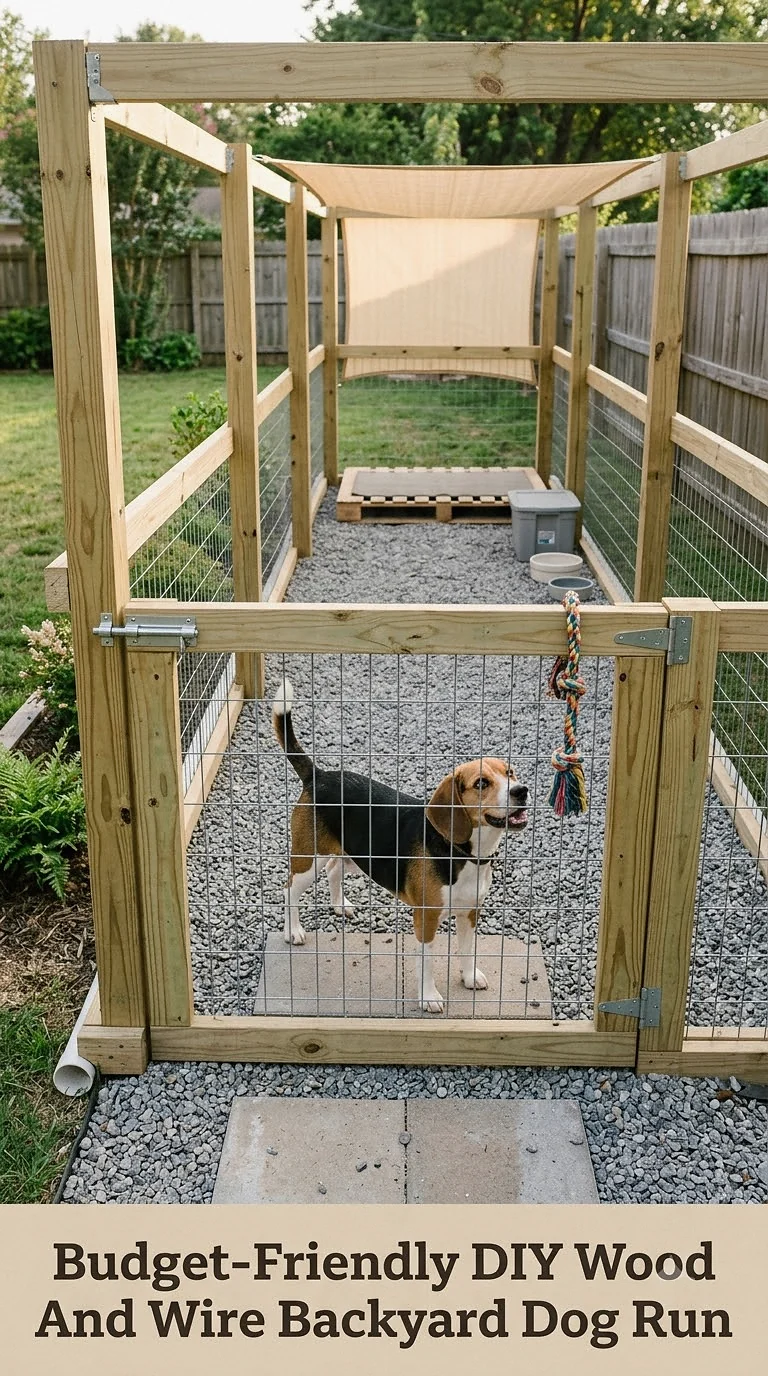
You do not need elaborate landscaping to create an attractive dog run.
A straightforward frame built from exterior-grade lumber and durable wire fencing can provide a practical enclosure while keeping costs manageable. Keeping the run rectangular also simplifies measuring and construction.
Spend more of the budget on the components that directly affect safety, including secure fencing, solid posts, reliable gates, and appropriate hardware. Decorative details can always be added later.
Instead of covering the entire floor, concentrate durable materials around the entrance, water station, and other areas that experience the most wear. Existing grass can remain in sections that stay healthy.
Add an inexpensive outdoor shade sail and a washable elevated bed to make the space more comfortable.
Before digging posts or constructing permanent fencing, check property boundaries, underground utility requirements, local regulations, and any neighborhood rules that apply to your home.
Small Backyard Corner Dog Run With Raised Deck And Green Turf
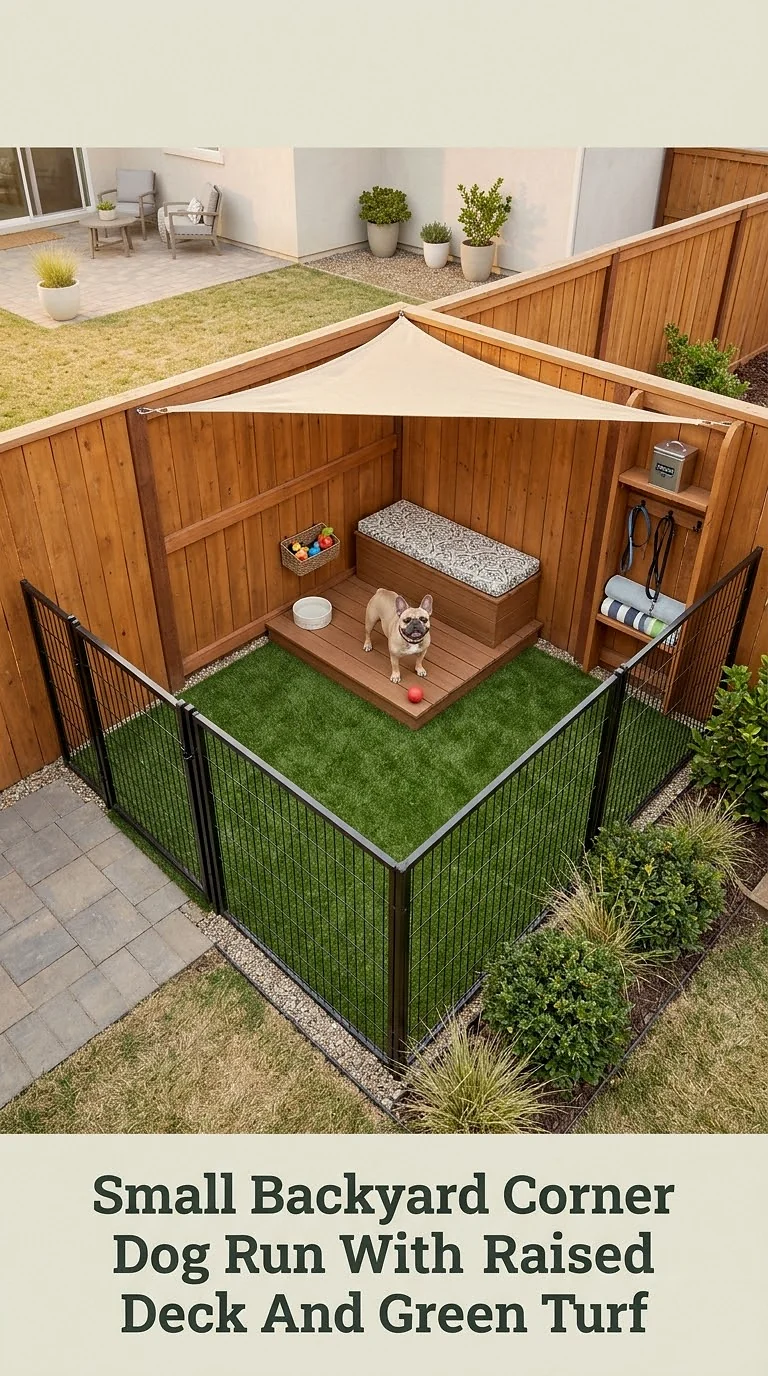
When lawn space is limited, dedicate one carefully planned corner instead of sacrificing the entire backyard.
A compact square or L-shaped enclosure can fit against existing fencing while still leaving room for a patio, garden, or play area.
Create a small raised wooden platform in one corner where your dog can lounge above damp ground. Beside it, use grass or a suitable turf system to soften the run visually.
The raised platform can also support a simple roof or shade panel. Add a low step for smaller dogs and seniors rather than requiring them to jump onto the deck.
Using fencing similar in color to your existing backyard fence helps the enclosure visually disappear.
Keep the center relatively open. In small runs, too many ramps, beds, baskets, and decorations quickly reduce usable movement space.
A wall-mounted water bowl or securely placed bowl station can also help preserve floor space.
Luxury White Oak Dog Run With Pergola And Built-In Storage Bench
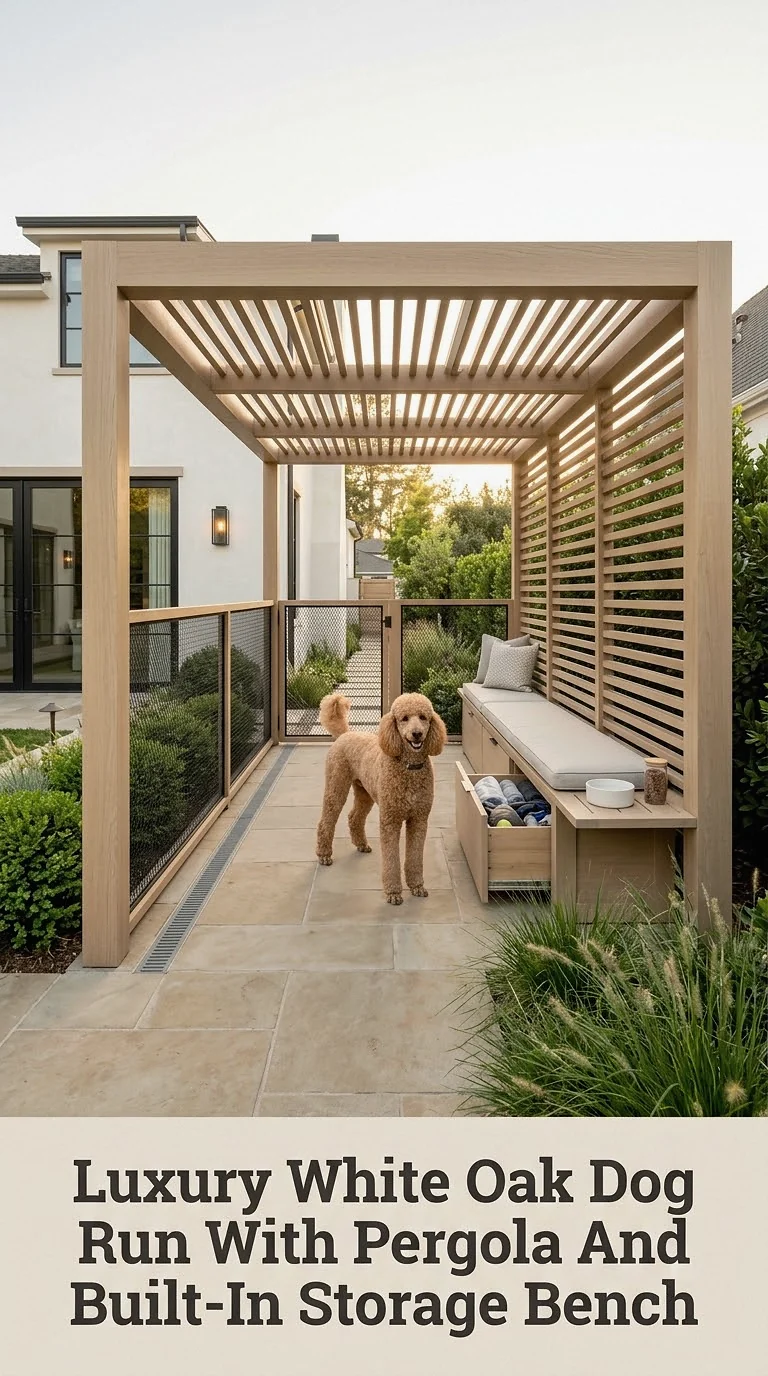
For a backyard where every architectural detail matters, design the dog run as an extension of the outdoor living area.
Use warm white-oak-toned fencing, elegant black mesh, large-format stone pavers, and a slatted pergola overhead. A built-in bench outside the enclosure can conceal leashes, towels, toys, waste bags, and grooming supplies.
Inside, dedicate one corner to lounging with a raised orthopedic outdoor bed. Another section can remain open for movement and play.
A stylish water station can be incorporated into a sheltered wall or cabinet, provided it stays easy to clean.
Resist the temptation to overdecorate. Dogs generally benefit more from usable floor space, shade, enrichment, and comfortable resting areas than delicate accessories.
Repeating finishes from a nearby deck or patio helps the entire design feel intentional, making the dog run look like part of the landscape architecture instead of an addition installed afterward.
Dog Run With Dedicated Sand Digging Pit And Natural Wood Border
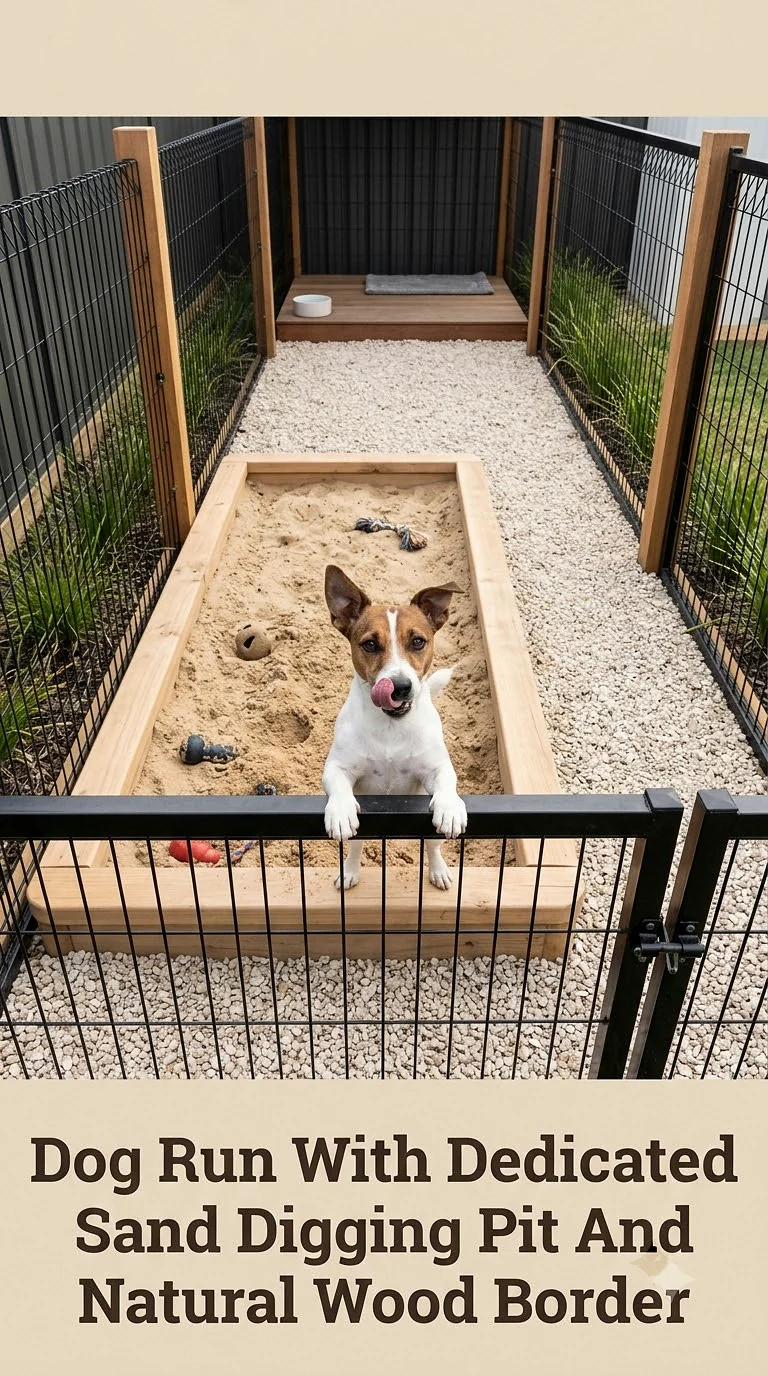
For a dog that adores excavation, consider giving that behavior an appropriate place instead of trying to eliminate every bit of digging.
Create a shallow designated digging area framed with smooth timber edging and filled with a dog-appropriate material. Position it away from the perimeter fence so digging does not accidentally become an escape project.
You can occasionally hide durable toys just beneath the surface to encourage your dog to investigate the approved digging zone.
Surround the pit with a different surface so the boundaries are visually obvious. A gravel or paved pathway around the sand also makes cleanup easier.
Place a small storage container nearby for digging toys, balls, and outdoor enrichment items.
Supervision remains important, particularly if your dog tends to eat non-food materials.
This concept can save flower beds while also creating a backyard feature that actually accommodates one of your dog’s natural behaviors.
Multi-Dog Backyard Run With Separate Play And Rest Zones
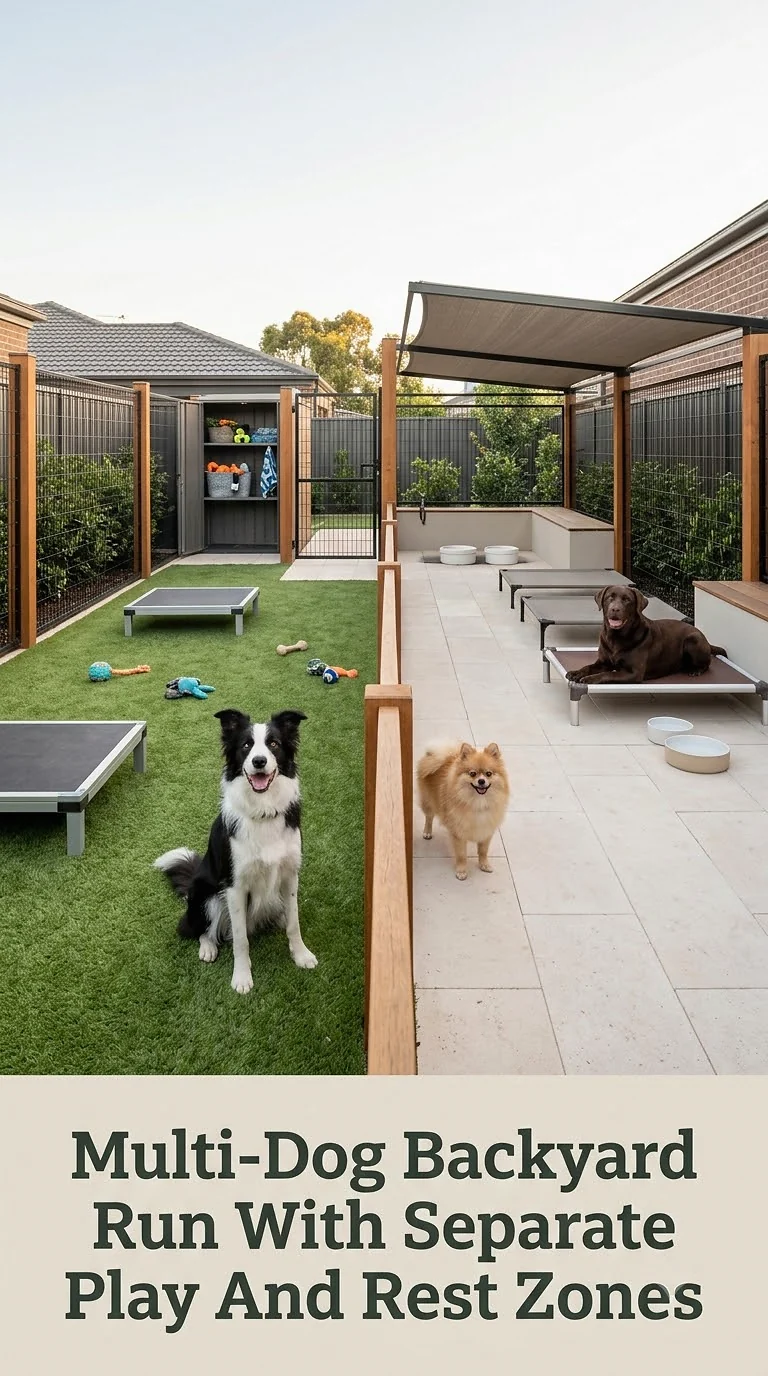
Homes with multiple dogs may benefit from a larger run divided into flexible zones.
Instead of creating several tiny permanent pens, build one generous enclosure with an internal gate or removable divider. The dogs can share the complete area when appropriate, while the divider provides separation during feeding, resting, training, or introductions.
Use matching fencing throughout so the structure still feels cohesive.
Create duplicate resting areas with separate water access, particularly when dogs prefer personal space. Shade should extend across more than one location so everyone can find a comfortable spot without competing for the same corner.
A wider entrance or double-gate arrangement can make it easier to move dogs, cleaning equipment, and outdoor furniture in and out.
Observe how your own dogs interact before choosing the final arrangement. Some companions happily lounge together, while others benefit from clearly defined individual spaces.
Sensory Dog Run With Logs, Platforms And Sniffing Stations
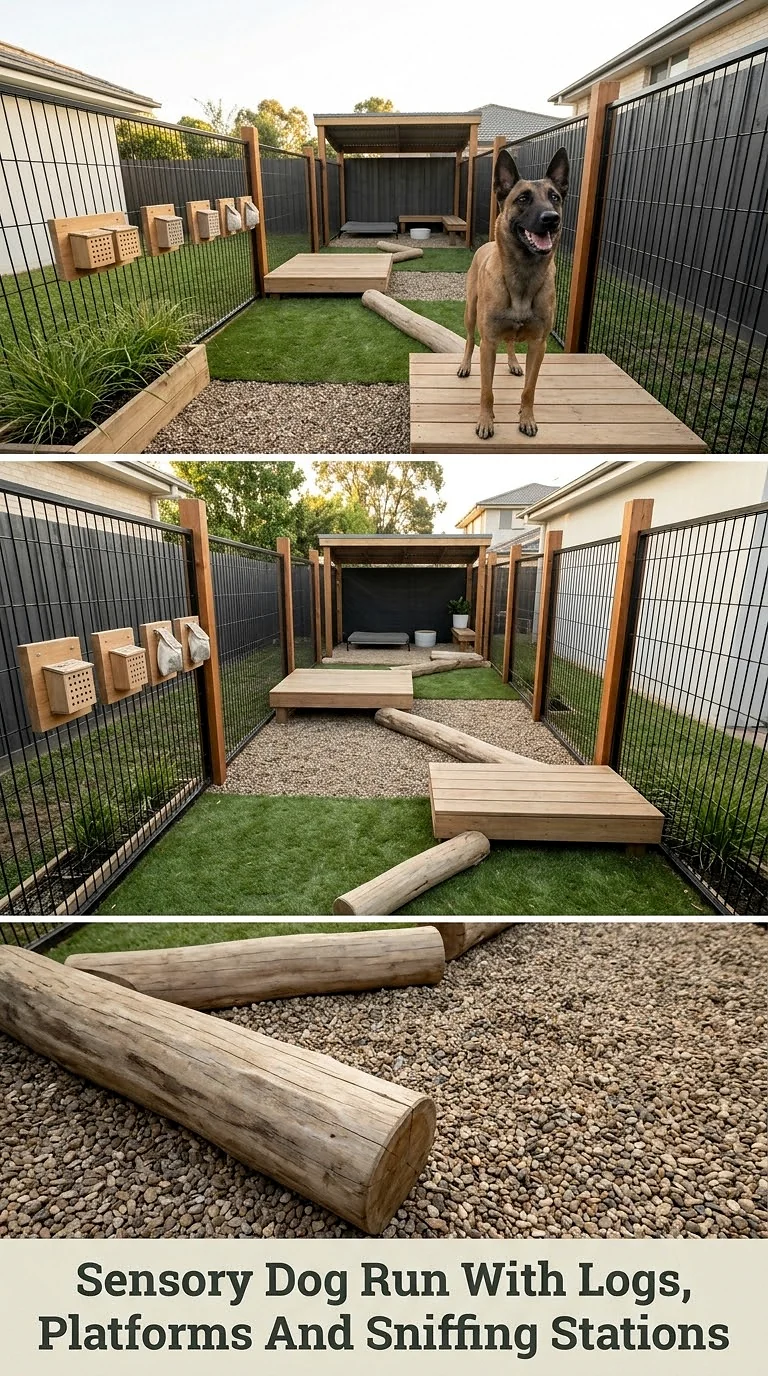
A dog run becomes much more interesting when it offers opportunities to explore rather than simply providing empty fenced space.
Read more : The Top 11 Dog Breeds That Look Like Bears
Create a sensory-inspired layout with low wooden platforms, sturdy logs, different walking textures, and designated sniffing areas. Keep structures low and stable unless you are intentionally building equipment for a dog that is physically suited to climbing.
A few scattered scent activities can encourage slower exploration. Rotating toys is often more engaging than leaving the same collection outdoors permanently.
You might include a low platform for watching the garden, a tunnel large enough for comfortable passage, and an open area for short training games.
Avoid filling every inch. Dogs still need clear pathways for walking and running.
Keep all surfaces smooth and inspect wooden features regularly for splinters, loose screws, sharp edges, rot, or instability.
This style is particularly attractive when built with natural wood and understated earth-toned materials.
Rain-Friendly Dog Run With Pavers And Concealed Drainage
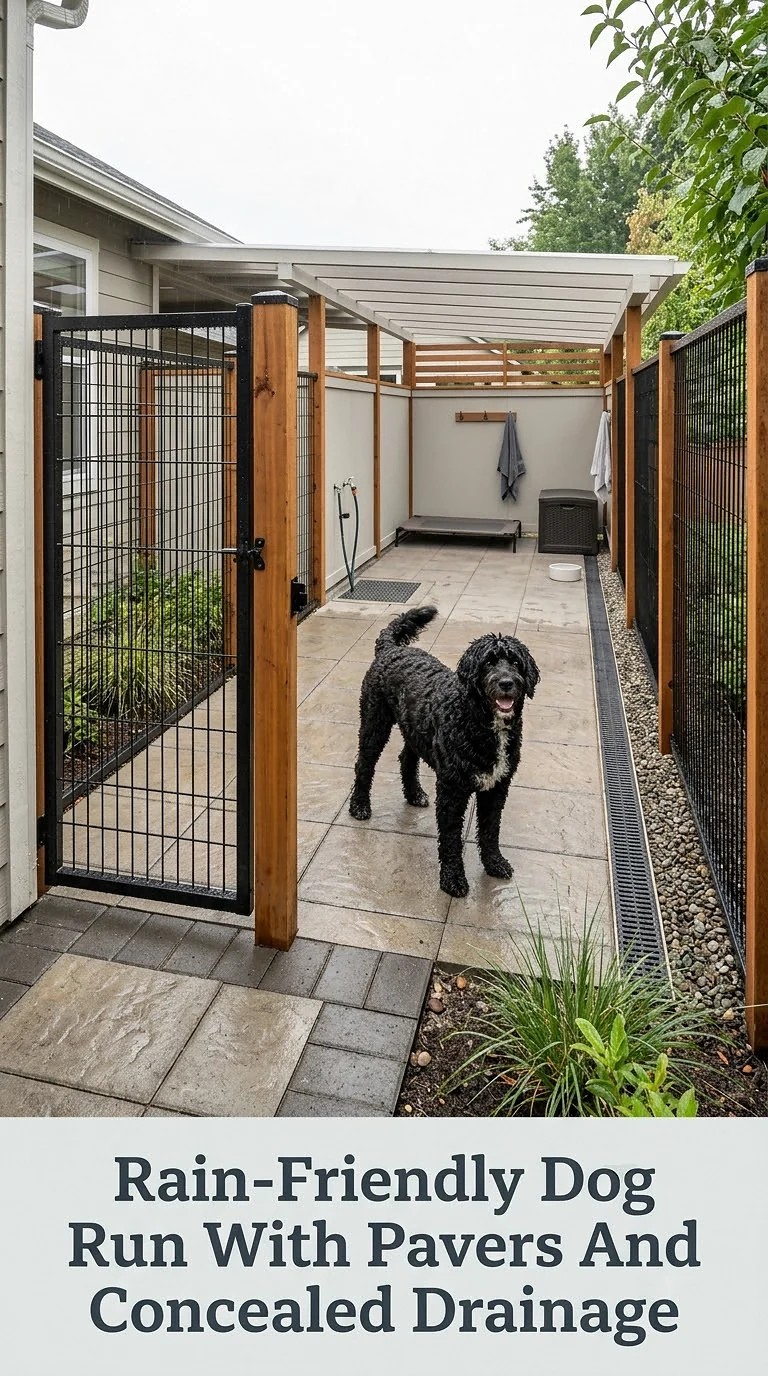
In wet climates, drainage may matter more than almost any decorative feature.
Design the run so water moves away from the house and does not collect around gates, beds, or feeding areas. Depending on your property, that may involve professional grading, drainage channels, permeable materials, or other site-specific solutions.
Large outdoor pavers create a tidy contemporary appearance and are easier to clean than a permanently muddy patch of lawn. Add textured surfaces to improve footing when the ground is damp.
A roofed section near the entrance provides somewhere dry to wipe paws before returning indoors. Wall hooks can hold an outdoor towel, while a small sealed box stores waste bags and cleaning supplies.
Use washable rather than absorbent furnishings inside the run.
For particularly rainy properties, investing in proper drainage at the beginning can make the space dramatically easier to maintain over time.
Sloped Backyard Dog Run With Terraced Timber Platforms
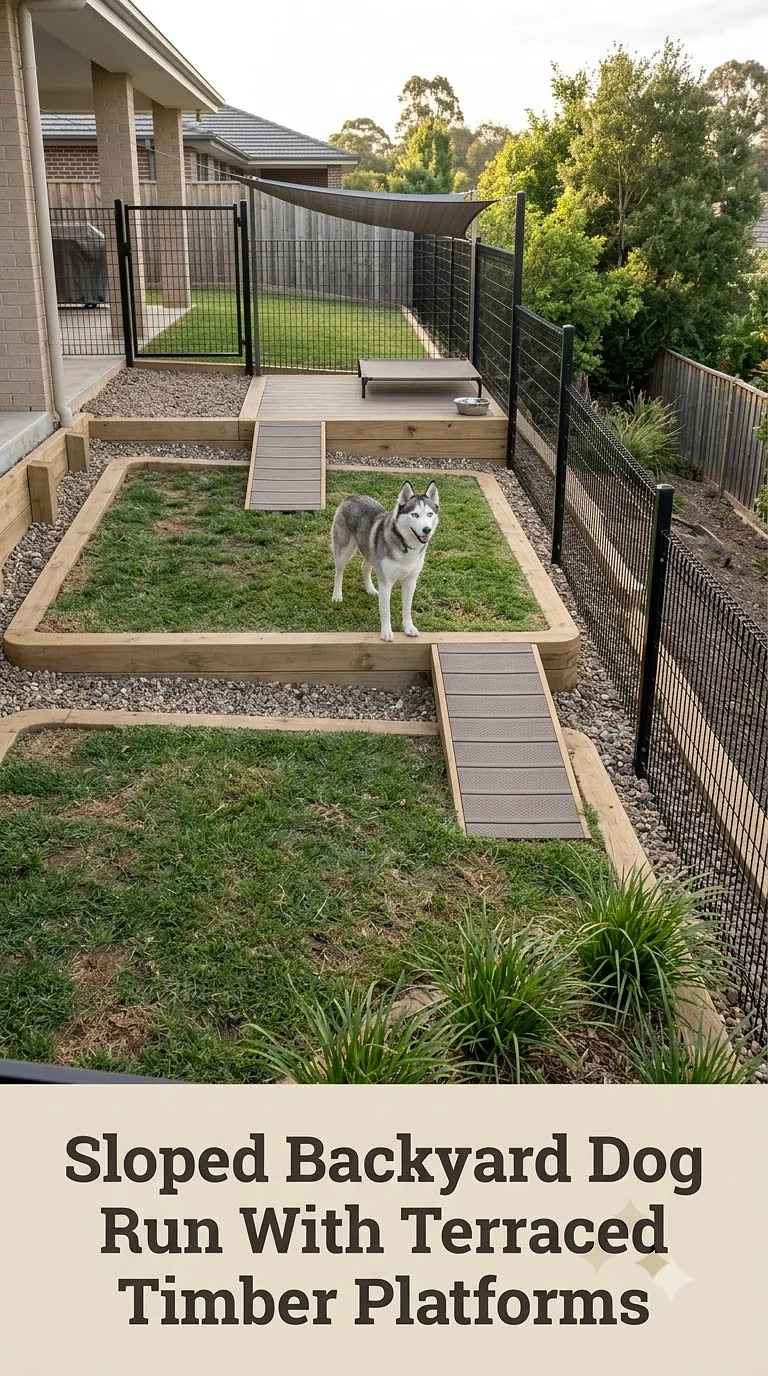
A sloping yard does not automatically rule out a comfortable dog run.
Instead of forcing the entire space into one flat level, work with the terrain by creating broad terraces connected with gentle transitions. Retaining edges should be sturdy, smooth, and designed appropriately for the site.
Use level resting platforms where your dog can comfortably lie down without constantly balancing on a slope. A combination of compact ground cover, pavers, and timber decking can visually define the different areas.
Install fencing with special attention to the changing ground level. Gaps beneath fence panels that seem small from one side may become surprisingly large as the grade drops.
Keep high platforms away from the enclosure perimeter so they do not accidentally give an athletic dog extra height for jumping.
A terraced layout surrounded by mature landscaping can become one of the most distinctive dog-run designs in the entire backyard.
Shaded Dog Run With Sail Canopy And Cooling Rest Area
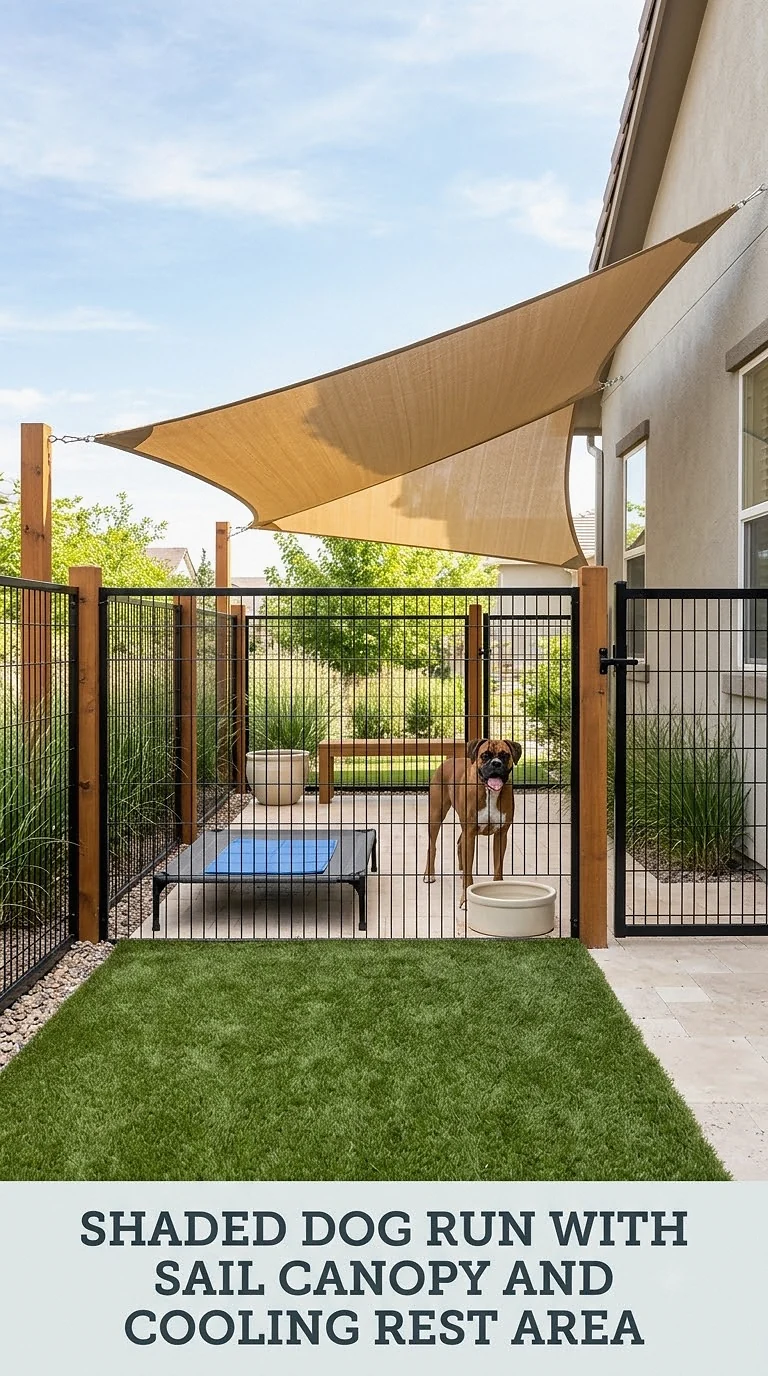
In sunny backyards, shade can become the central design feature.
Stretch a high-quality outdoor shade sail over part of the enclosure, anchoring it securely according to the manufacturer’s installation requirements. Choose a soft neutral such as sand, cream, taupe, or muted sage so the canopy blends naturally with the landscape.
Below it, create a calm resting area with a raised breathable cot and fresh water. A second shaded spot is useful in larger runs because the sun’s position changes through the day.
Avoid assuming that a small enclosed doghouse is automatically the coolest summer retreat. Poorly ventilated shelters can trap heat, so airflow, shade, and actual temperature conditions matter.
Observe your dog carefully on warm days and bring them indoors when conditions are too hot for comfortable outdoor activity.
Backyard Dog Run With Shallow Splash Pool And Non-Slip Pavers
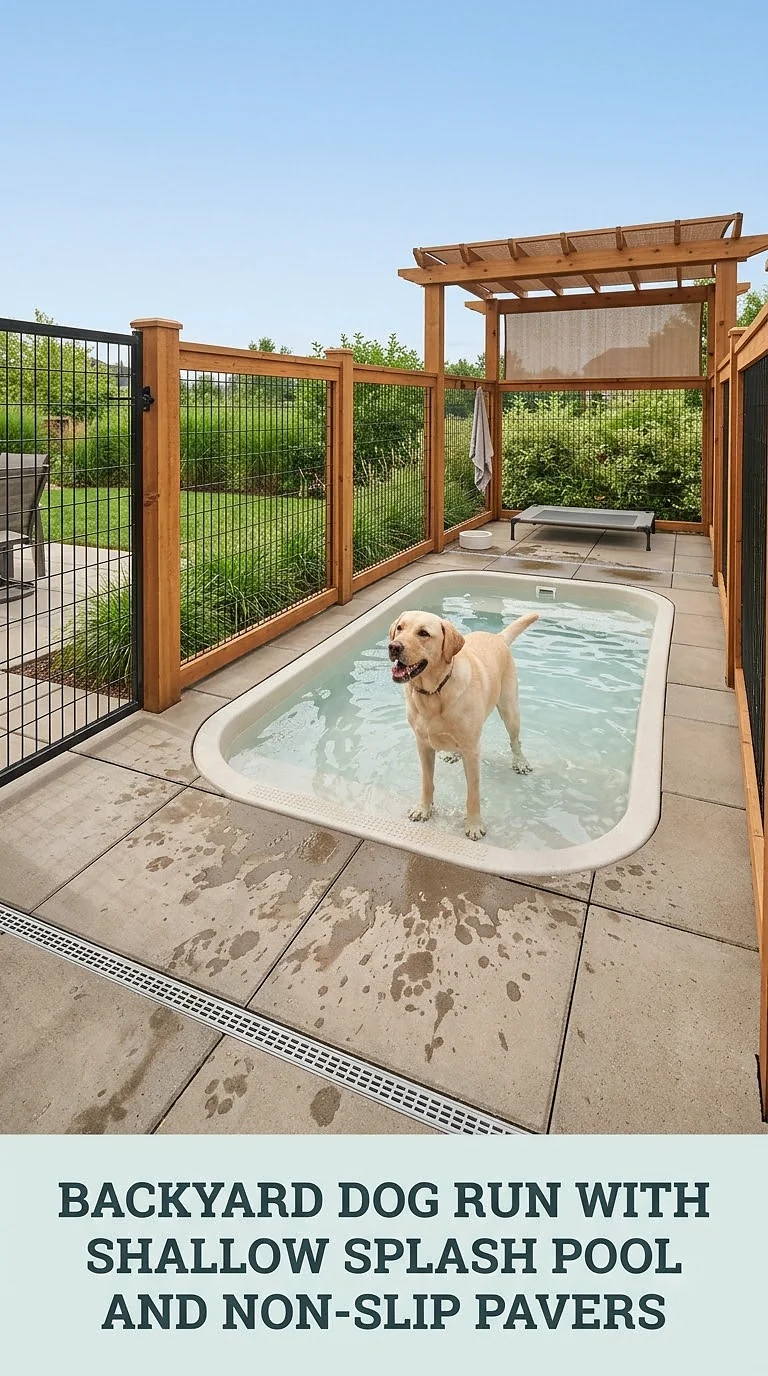
Water-loving dogs may enjoy a seasonal splash area incorporated into their run.
Place a shallow, durable dog pool on a stable surface with good drainage rather than directly on a frequently muddy lawn. Textured outdoor pavers around the pool provide cleaner access while helping reduce slippery conditions.
Position the pool beneath partial shade and keep a separate container of fresh drinking water available. Pool water should not be treated as the dog’s primary drinking source.
Choose a pool that can be emptied and cleaned easily. Standing water quickly becomes less appealing when leaves, dirt, fur, and toys accumulate.
Keep the remaining run open so your dog can move away from the wet area whenever desired.
This setup can look especially cheerful with pale stone, natural wood fencing, and a soft blue or sage-green pool rather than brightly mismatched plastic accessories.
Supervise water play and store the pool when seasonal conditions make it unnecessary.
Hidden Side Garden Dog Run With Privacy Screening And Pet-Safe Greenery
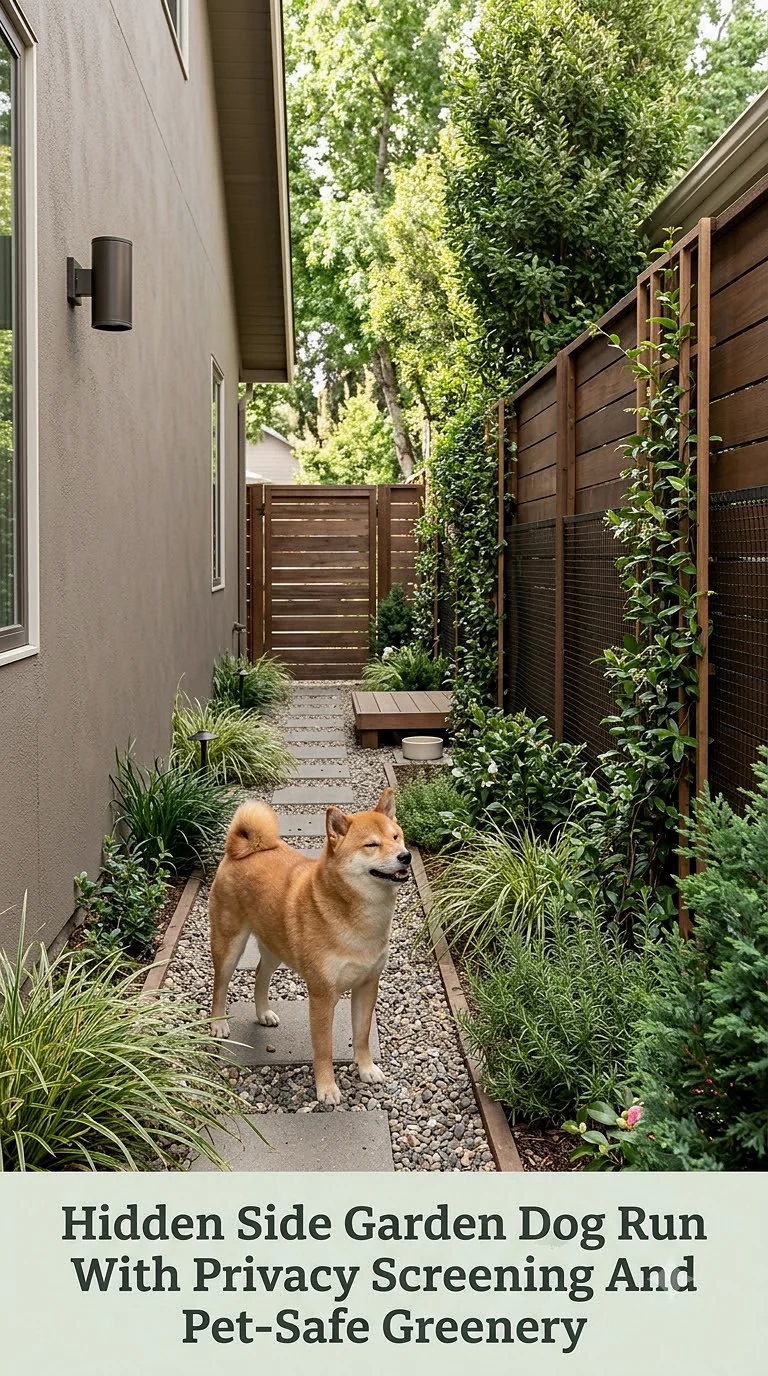
If you prefer the main backyard to remain visually open, tuck the dog run into a landscaped side section and screen it subtly from the patio.
Tall timber fencing or privacy panels can conceal part of the enclosure, while secure mesh sections maintain airflow and allow your dog to see selected areas of the garden.
Create a gently curving path leading from the house to the gate so the run feels integrated with the landscaping.
Outside the enclosure, use layered greenery to soften the fencing. Always verify plant safety before placing vegetation where dogs can reach it, particularly if your pet likes chewing leaves or digging around roots.
Inside, keep the design simpler with an open surface, shaded bed, water station, and a few rotating enrichment items.
This approach provides practical containment without allowing the dog run to dominate the entire backyard view.
Creating Dog Runs Ideas Backyard Spaces Your Pet Will Love
The most successful backyard dog run is not necessarily the biggest or most expensive one. It is the design that suits your dog’s habits, your climate, your available space, and the way your family actually uses the yard.
A narrow side-yard corridor may be perfect for one home, while another dog might thrive in a larger landscaped enclosure with a digging pit, shaded platform, and room for enrichment games. Start with the essentials first: secure boundaries, a dependable gate, comfortable footing, fresh water, shade, drainage, and enough room for your dog to move naturally. Then layer in the beautiful details.
Materials and landscaping should also reflect your dog’s personality. Persistent diggers need different boundaries from relaxed seniors, energetic dogs may appreciate more open movement space, and enthusiastic chewers require particularly careful material and plant choices.
Most importantly, think of the run as an additional outdoor living space for your dog rather than a place where they should simply be left for long periods. Add comfort, rotate activities, keep it clean, spend time there together, and adjust the setup as your dog’s needs change. With a little thoughtful planning, these dog runs ideas backyard designs can create a space that feels attractive to you, practical for everyday life, and genuinely enjoyable for your four-legged companion.
Source: https://petstutorial.com
Category: DOGS
