
Tiny sweaters, colorful raincoats, cozy fleece jackets, special-occasion outfits, and adorable bandanas have a funny way of multiplying once you start building a wardrobe for your dog. Before long, what began as one favorite sweater can turn into a pile of pet clothes tucked into drawers, baskets, and random corners of the house.
The good news is that organizing your pup’s wardrobe can be just as charming as collecting it. The best dog clothes storage ideas make everyday outfits easy to find while protecting fabrics from dust, moisture, wrinkles, and unnecessary wear. They can also turn practical pet supplies into a thoughtfully styled part of your home.
You are reading: 18 Dog Clothes Storage Ideas For A Neat, Stylish Pet Wardrobe
You do not need a dedicated dog room or an enormous walk-in closet to make it work. A narrow wall, unused cabinet, laundry room corner, dresser drawer, or even the back of a door can become an efficient little wardrobe.
Before storing clothing, make sure each piece is clean and completely dry. Damp raincoats, sweaters, and muddy jackets should never be packed directly into baskets or bins. It is also helpful to separate frequently worn pieces from seasonal outfits and to fold heavier knits rather than leaving them stretched on thin hangers.
Whether your style is modern and minimal, warm farmhouse, cozy cottage, or polished and luxurious, these storage ideas offer plenty of inspiration for creating a beautiful wardrobe that works for both you and your pup.
Beautiful And Practical Dog Clothes Storage Ideas For Every Home
The most successful pet wardrobes combine visibility, accessibility, and enough breathing room for fabrics. Consider how frequently each item is used before deciding where it belongs. Everyday walking jackets should be easy to grab, while holiday costumes and winter sweaters can live in less accessible seasonal storage.
These ideas range from simple DIY projects to custom built-ins, giving you plenty of ways to adapt the concept to your available space, budget, and decorating style.
Warm White Built-In Dog Wardrobe With Mini Hanging Rail And Drawers
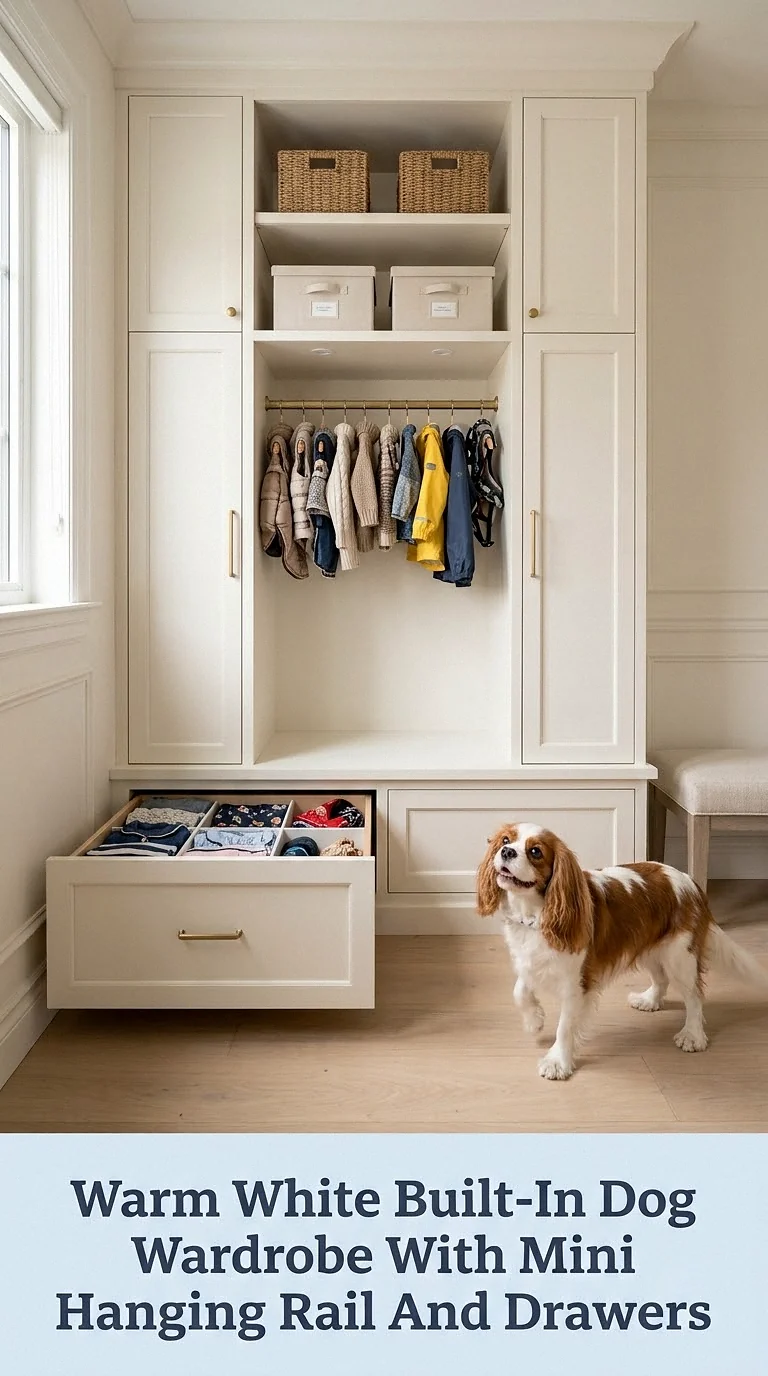
A small built-in wardrobe can make your dog’s clothing collection feel like a charming extension of the room rather than extra clutter.
Design the cabinet with a short hanging rail at eye level, allowing jackets, structured coats, dresses, and lightweight shirts to hang neatly. Beneath the rail, shallow drawers can hold folded sweaters, pajamas, bandanas, and accessories.
Warm white cabinetry works especially well because it feels clean without looking clinical. Add small brass or matte black knobs for a polished finish.
Use appropriately sized pet hangers so clothing does not slide off or become distorted. Heavier knitted sweaters are better folded inside drawers instead of hanging for long periods.
A narrow built-in can fit into an unused hallway alcove, mudroom corner, or spare section of a larger closet.
Modern White Oak Dog Clothing Rack With Open Shelves And Woven Baskets
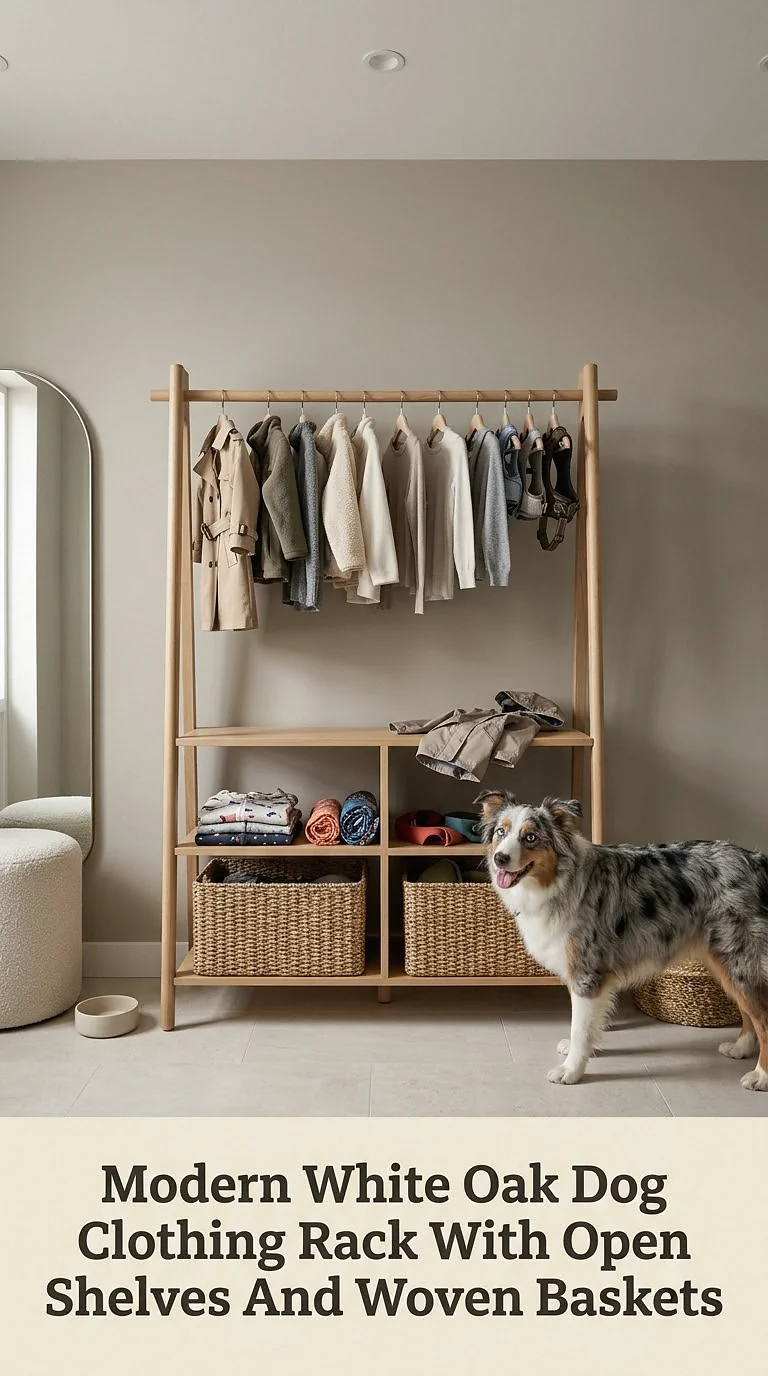
For a modern organic home, combine a slim white oak clothing rail with open shelving and natural woven baskets.
Hang your dog’s most frequently used jackets and shirts along the rail, then use baskets below for folded clothing. Small baskets can separate categories such as sweaters, pajamas, bandanas, and seasonal accessories.
Keep the styling calm by choosing matching hangers and limiting the visible clothing palette. Natural wood paired with cream, beige, sage, or charcoal accessories creates a sophisticated look.
Because the shelving is open, this setup works best when everything has a clearly assigned location.
Place rarely used outfits inside the baskets while leaving daily walking gear visible. The result feels more like a miniature boutique than traditional pet storage.
Soft Sage Mudroom Cubby With Dog Coats And Walking Accessories
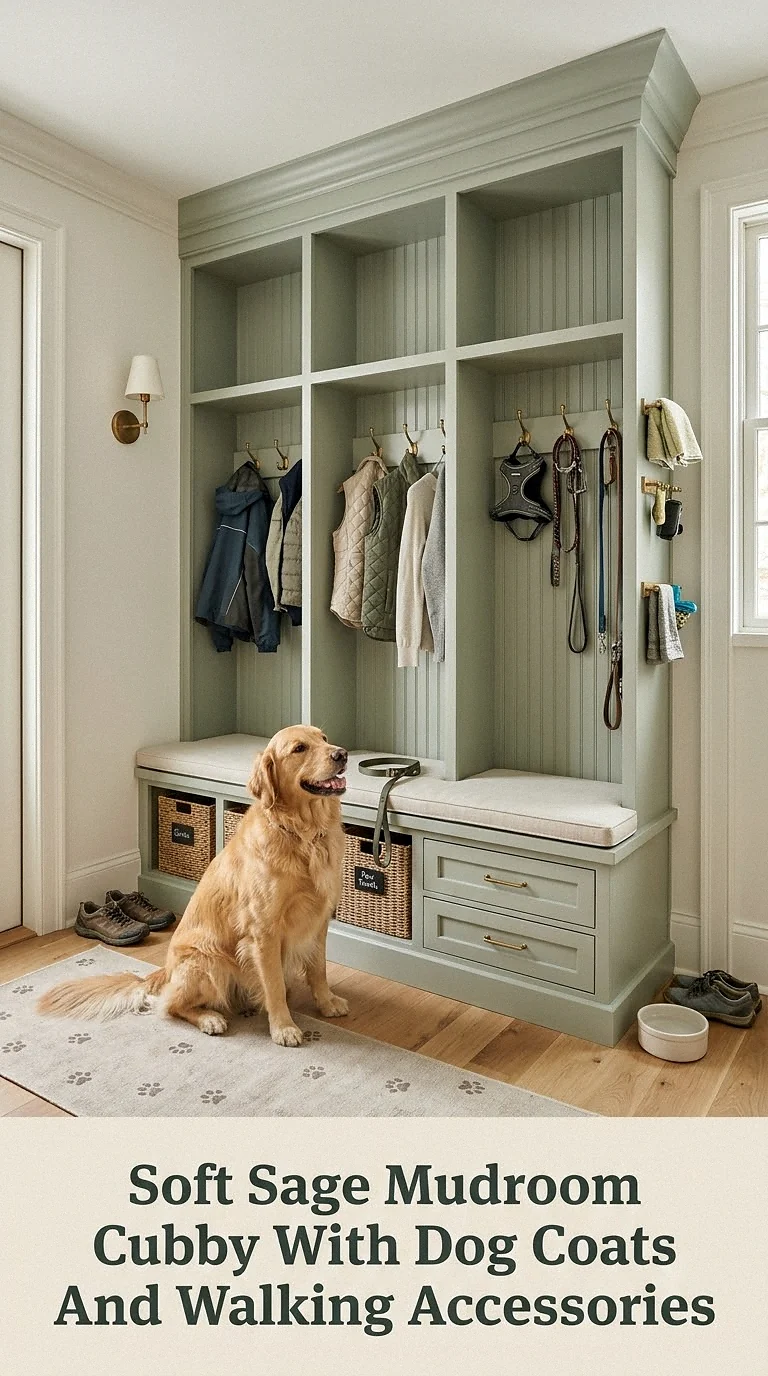
A mudroom is one of the most practical places to organize clothing used outdoors.
Create a dedicated dog cubby painted soft sage green and install a short rail for raincoats, winter jackets, and lightweight walking sweaters. Underneath, add a removable tray or basket for boots and other outdoor accessories.
A small upper shelf can hold folded bandanas, towels, or grooming supplies.
The biggest advantage of this location is convenience. Wet-weather clothing can be removed close to the entrance rather than carried through the house. Allow damp garments to dry completely before placing them inside enclosed cabinets or baskets.
Pair sage cabinetry with warm wood hooks and natural baskets for a cozy look that feels intentionally integrated into the rest of the mudroom.
Minimalist Over-The-Door Dog Wardrobe With Fabric Pockets
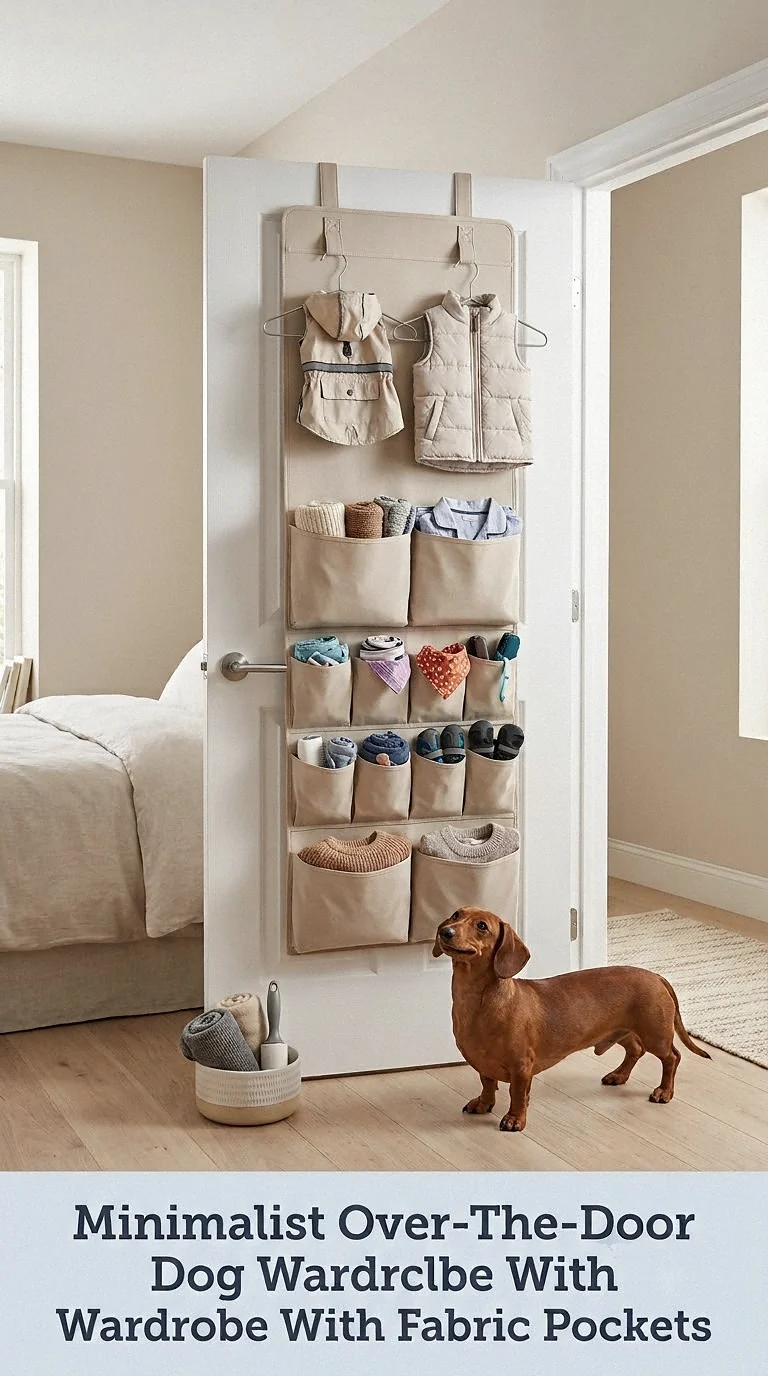
When floor space is limited, the back of a door can become surprisingly useful storage.
Choose a neutral hanging organizer with several fabric pockets and assign each section to a different clothing category. Lightweight T-shirts and pajamas can be folded into larger pockets, while bandanas, bows, socks, and accessories fit neatly into smaller compartments.
You can also attach a few lightweight hooks above or beside the organizer for harness-compatible jackets.
This solution works particularly well in apartments because it requires little or no permanent installation.
Avoid overloading the organizer with heavy items that might pull against the door. Cream, taupe, or light gray fabric organizers tend to blend naturally into bedrooms and laundry rooms without making the area feel busy.
Cozy Farmhouse Peg Rail With Neutral Dog Sweaters And Wicker Baskets
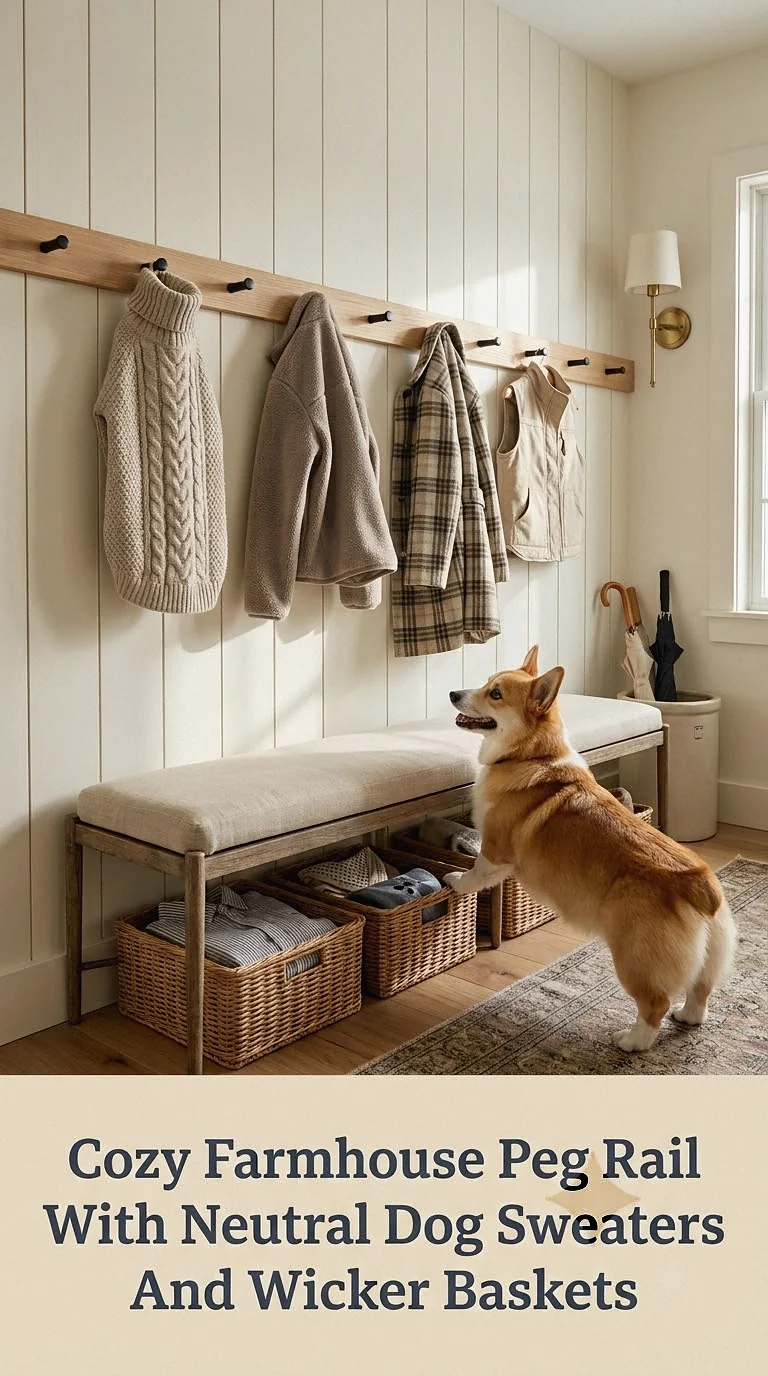
A traditional wooden peg rail creates simple, beautiful storage for a small collection of dog clothes.
Install one along a mudroom, hallway, or laundry room wall and hang lightweight jackets, bandanas, and tote bags from the pegs. Below it, place two or three wicker baskets for folded sweaters and seasonal outfits.
For a cozy farmhouse look, choose warm oak or painted cream wood and pair it with soft neutral fabrics.
Avoid hanging heavy knits directly from narrow loops for long periods because the weight may stretch the fabric. Fold substantial sweaters into baskets instead.
A small framed dog portrait or simple name plaque above the rail can make the area feel personalized without overwhelming the design.
Small-Space Rolling Cart With Folded Dog Clothes And Labeled Bins
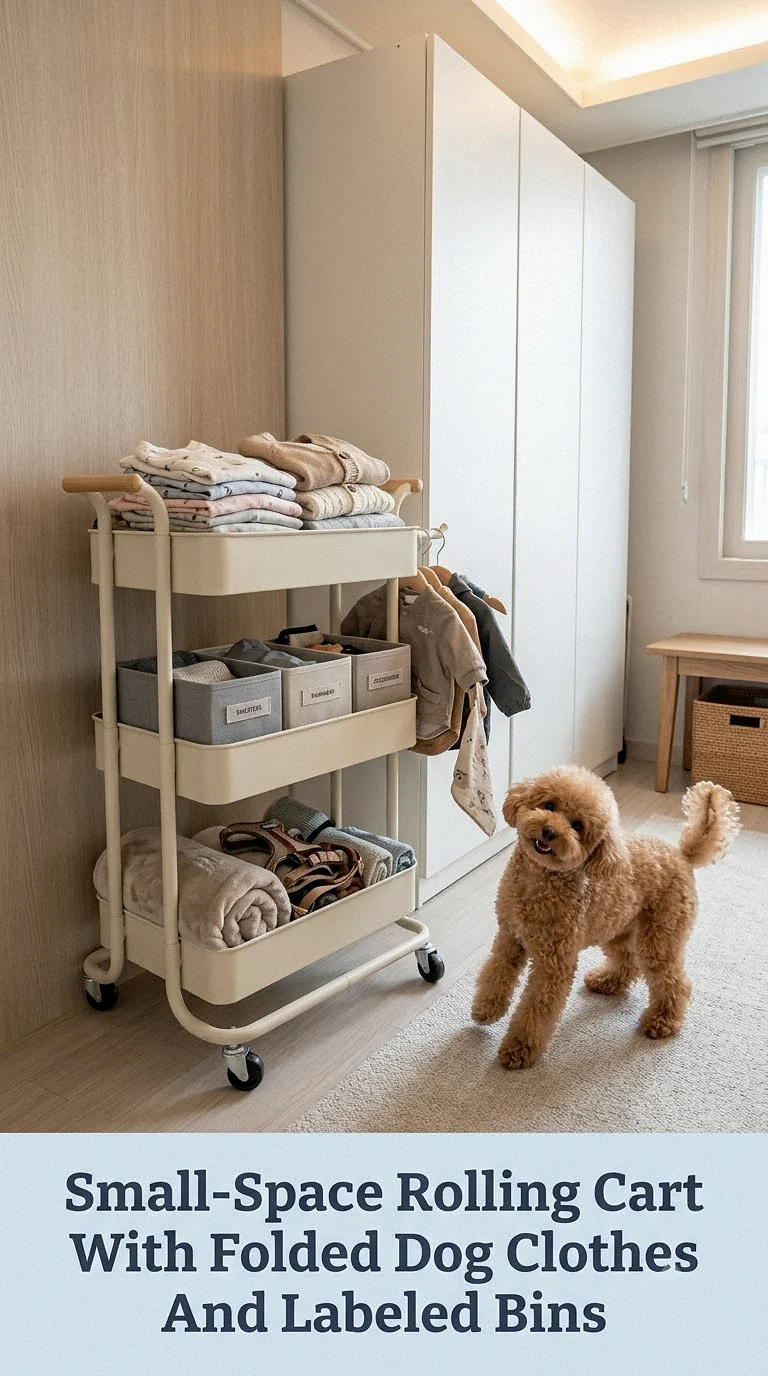
A narrow rolling cart is ideal when you need flexible storage rather than a permanent installation.
Choose a cart with several tiers and divide clothing by function. Everyday shirts can fill the top tier, sweaters the middle, and seasonal accessories the bottom.
Small washable bins prevent tiny pieces from disappearing between larger garments. Labels make the system especially useful if your dog has a large wardrobe or if several dogs share the same storage area.
Because the cart is movable, it can live beside a dresser, inside a closet, or tucked into the laundry room.
Read more : 19 Cute Dog Bowl Ideas For A Beautiful And Practical Feeding Space
Choose a simple white, black, or wood-tone design so the cart complements your existing furniture. This is also one of the easiest options for renters.
Light Wood Dresser Drawer With Adjustable Dog Clothing Dividers
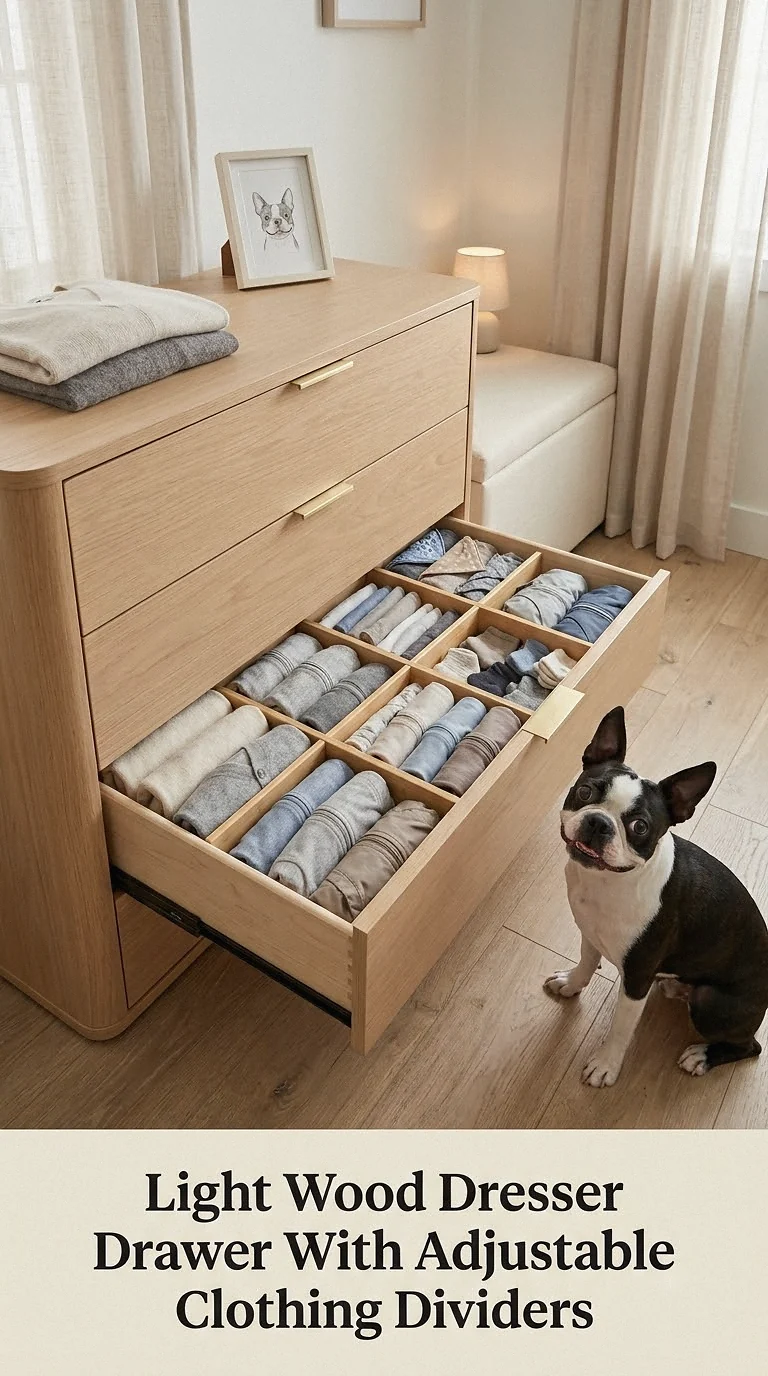
Sometimes the best storage solution is hiding in furniture you already own.
Dedicate one dresser drawer to your dog’s wardrobe and add adjustable dividers to create neat sections. Fold small shirts vertically so you can see several designs at once instead of stacking everything on top of each other.
Separate sweaters, pajamas, lightweight shirts, and special outfits into their own compartments.
A shallow container inside the drawer can hold bandanas and tiny accessories.
This system keeps visual clutter completely out of sight while making excellent use of existing furniture. It is particularly practical for people who prefer minimalist interiors where pet supplies are stored discreetly.
Place frequently worn garments toward the front and seasonal pieces farther back.
Clear Seasonal Storage Bins With Neatly Folded Dog Sweaters
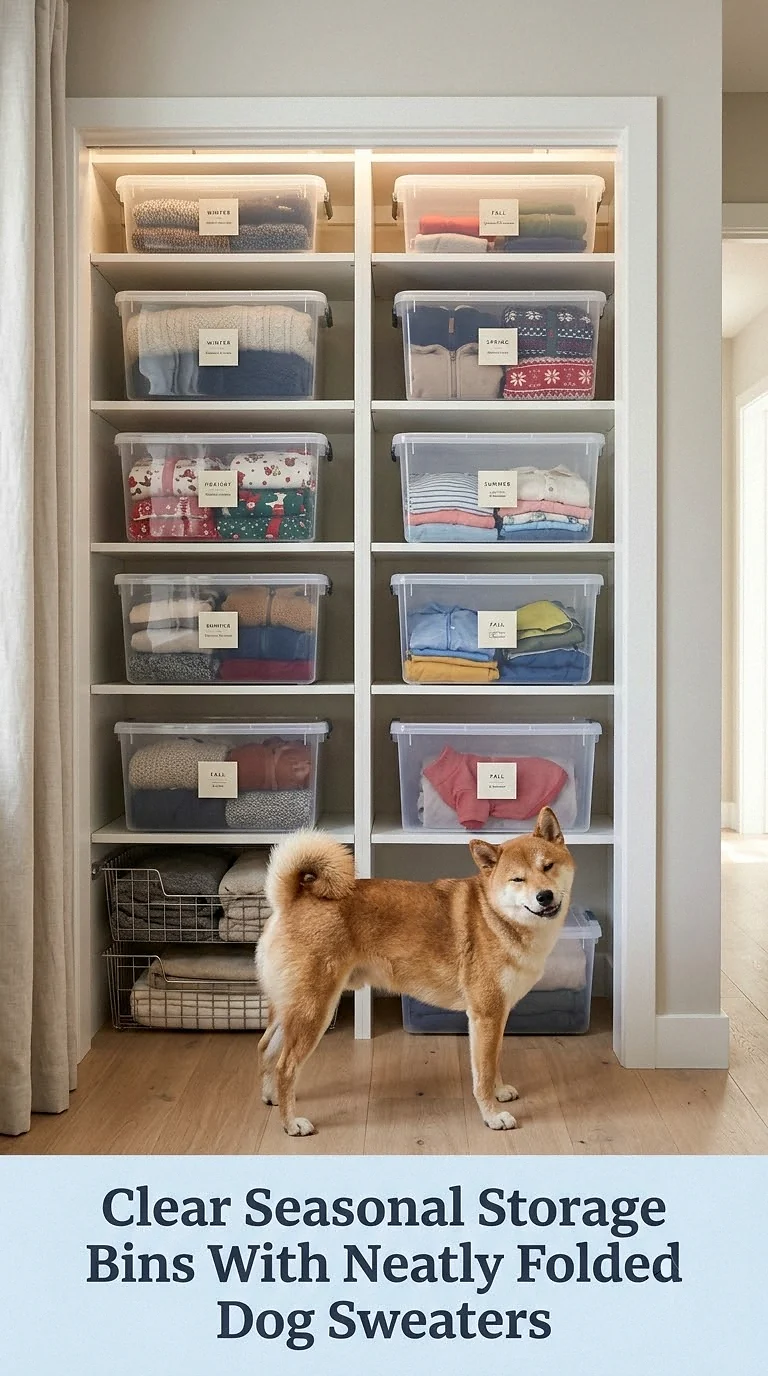
Dogs may have seasonal wardrobes just like people, especially in climates where winter coats are only needed for part of the year.
Use clear lidded bins for clean, fully dry off-season clothing. Visibility helps you identify the contents without opening every box.
Fold sweaters gently instead of compressing them tightly. Place delicate or embellished pieces where decorations will not rub against rough fasteners or heavier garments.
Add simple labels such as “Winter,” “Rain Gear,” or “Holiday” rather than sorting everything by arbitrary clothing sizes.
Store the bins in a cool, dry interior closet rather than somewhere prone to major moisture or temperature changes. Periodically checking stored clothing also gives you an opportunity to catch musty odors or other problems early.
Slim Closet Cabinet With Double Mini Hanging Rails
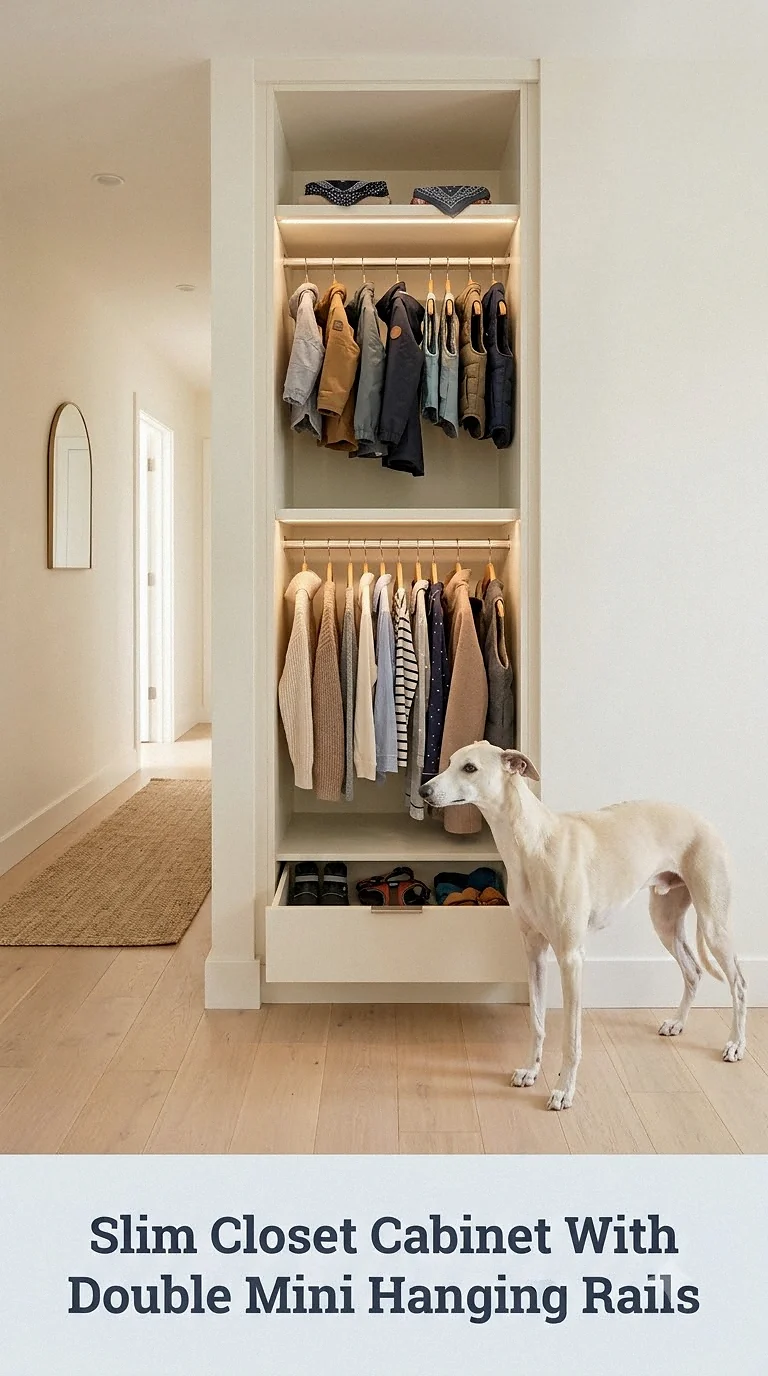
If your dog’s wardrobe contains lots of lightweight shirts, dresses, and jackets, two short hanging rails can dramatically increase usable space.
Install one rail above another inside a narrow cabinet, leaving enough clearance between them for each garment.
The upper level might hold coats and special-occasion clothes while the lower rail stores everyday shirts.
Keep a small shelf at the bottom for folded sweaters that could stretch if hung for extended periods.
Matching mini hangers help the cabinet look organized while keeping clothing easier to browse.
This vertical arrangement is particularly useful in small apartments because dog garments are short enough to take advantage of stacked hanging space that would be impractical for most human clothing.
Neutral Hanging Closet Organizer With Sweaters And Pajamas
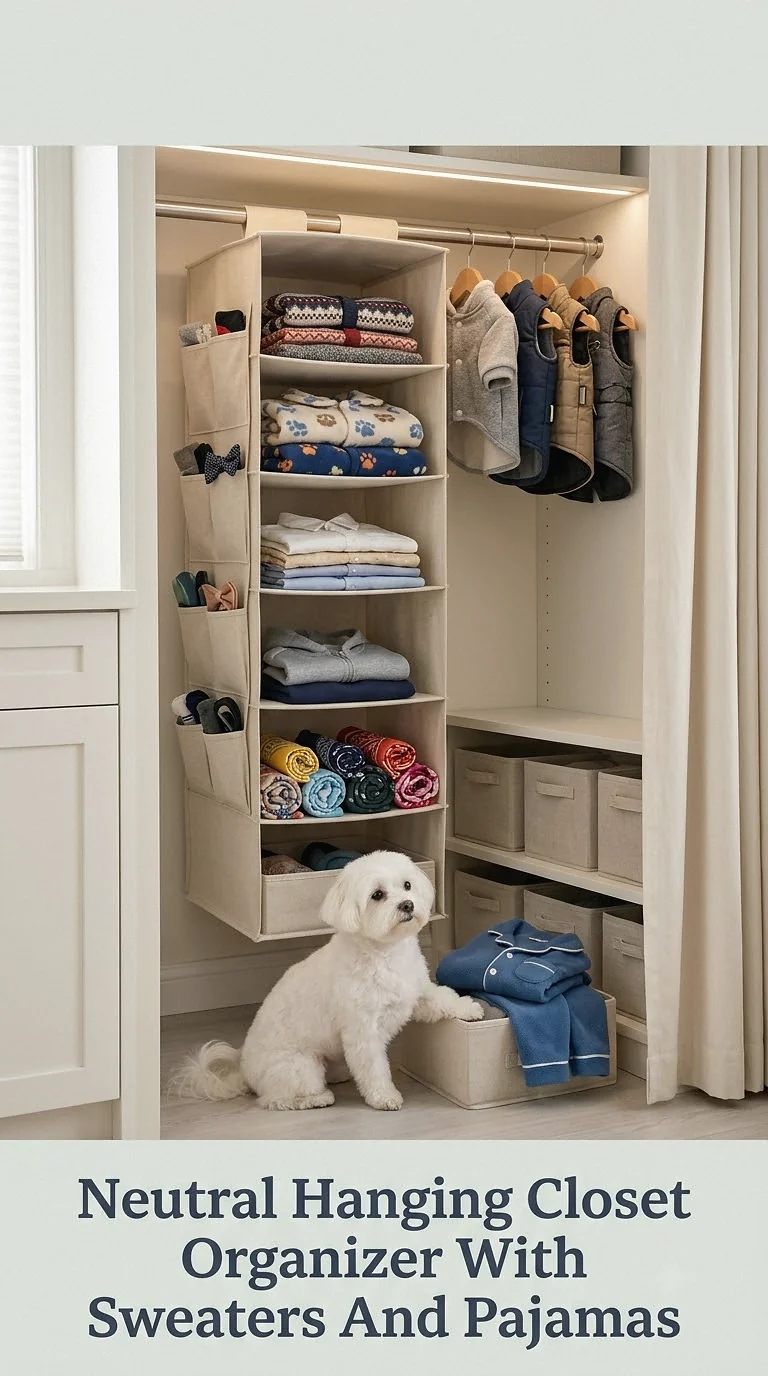
A fabric shelf organizer suspended from an existing closet rod provides an instant dog wardrobe without requiring additional furniture.
Assign individual shelves to categories such as sweaters, pajamas, T-shirts, rain gear, and costumes. Because the compartments are open, you can quickly see what is available.
Choose a sturdy organizer in cream or beige so it blends into your existing closet.
Avoid packing shelves too tightly. Clothing that has been washed should be completely dry before being folded away, and giving garments a little space makes them easier to remove without disturbing the entire stack.
Small labeled fabric bins can occupy the lowest shelves for bandanas and other tiny accessories.
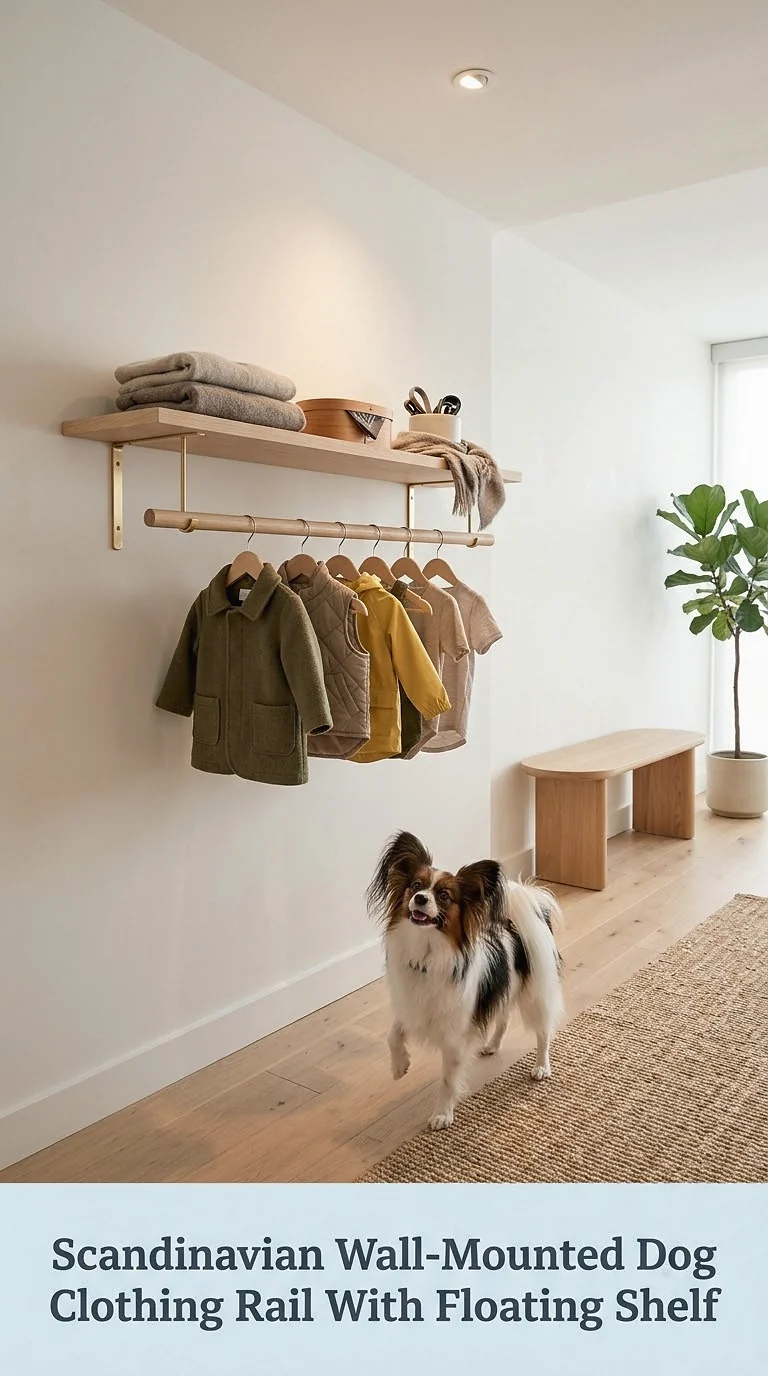
A minimalist wall rail can turn everyday dog clothes into part of your decor.
Mount a simple light-oak or matte metal rail below a narrow floating shelf. Display only a carefully selected group of frequently worn coats or shirts on matching hangers.
The shelf above can hold a small basket for folded accessories, a leash container, or a framed photograph.
This design works beautifully in Scandinavian-inspired interiors because it keeps the materials and colors restrained.
Leave enough space around the rail so clothing is not pressed against furniture or piled together.
If your dog has many outfits, treat this as a rotating display for current favorites and keep the rest folded elsewhere. The limited collection prevents a small wall from becoming visually cluttered.
Vintage Mini Armoire With Charming Dog Dresses And Coats
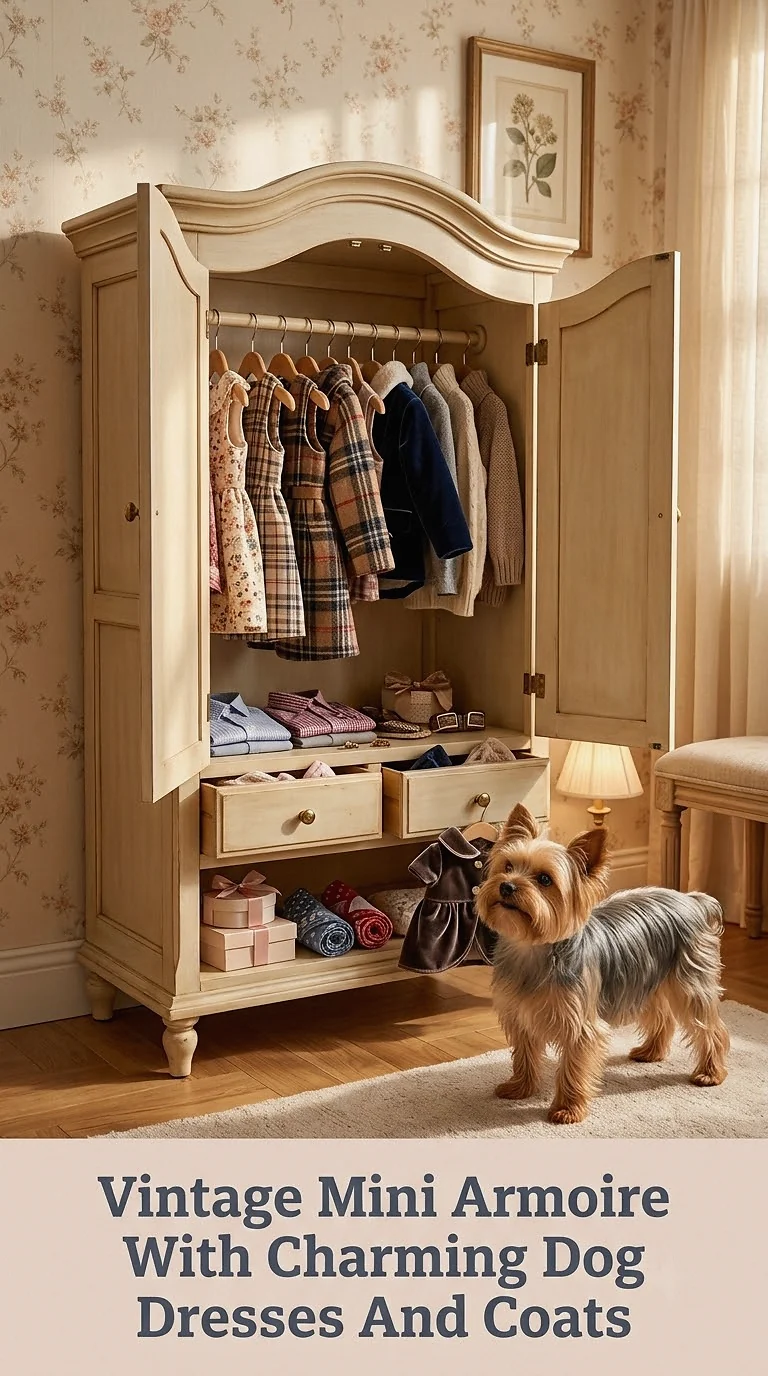
A miniature vintage cabinet can become an adorable focal point in a bedroom, dressing room, or dedicated pet corner.
Look for a small armoire, doll wardrobe, or repurposed side cabinet with enough internal height for dog garments. Add a short wooden rail and line the bottom with removable fabric or a washable mat.
Paint the exterior warm cream, dusty blue, blush, or muted sage depending on your decor.
Delicate dresses and structured coats can hang inside, while drawers or baskets hold folded sweaters and accessories.
Check old furniture carefully for rough edges, protruding nails, or unfinished surfaces that could snag fabric. A little sanding and a fresh interior finish can transform an inexpensive secondhand piece into beautiful customized storage.
Modern Pegboard Dog Accessory Wall With Clothing Hooks And Baskets
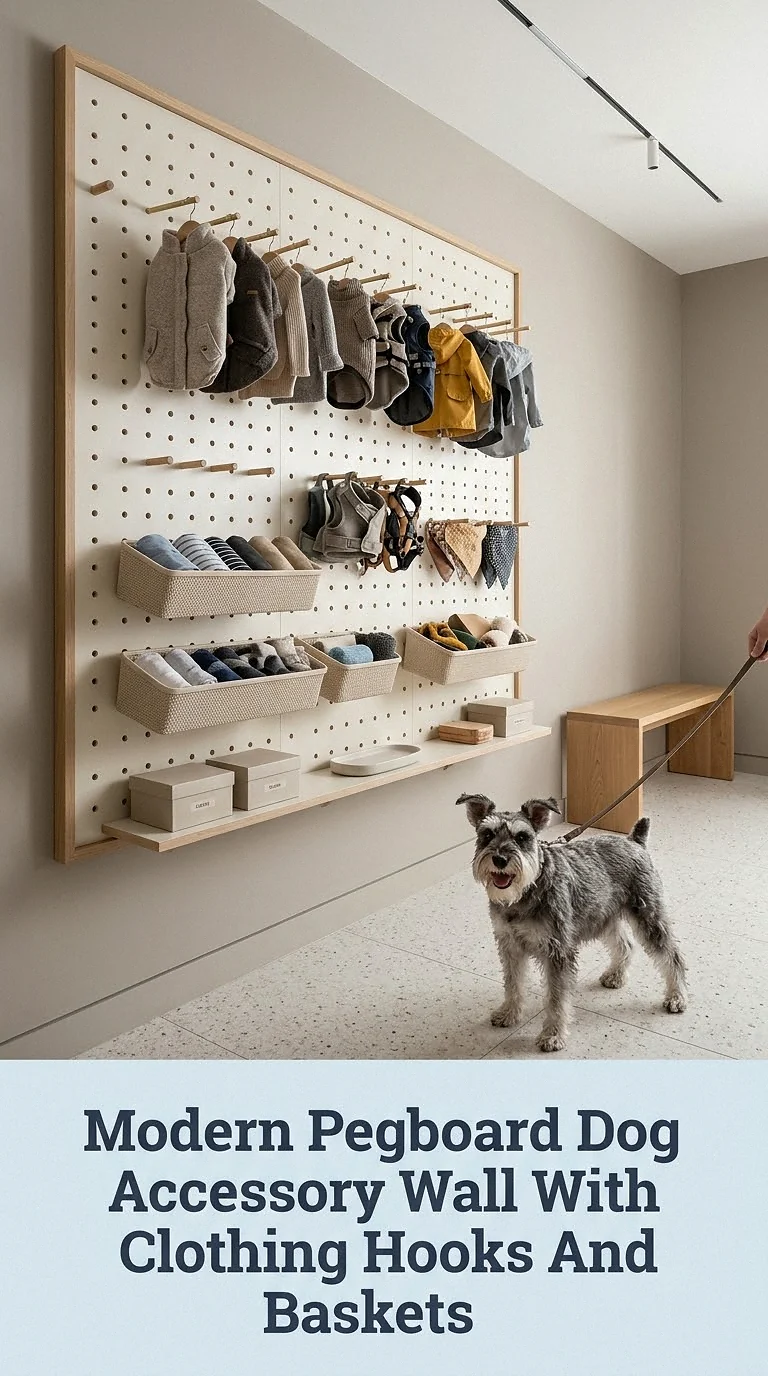
For households with many different pet accessories, a pegboard offers impressive flexibility.
Install one above a low cabinet or bench and arrange hooks, shelves, and baskets according to your dog’s wardrobe.
Lightweight coats can hang from hooks, while small baskets organize bandanas and other accessories. Fold heavier sweaters into the cabinet below.
Read more : 10 Types Of Dogs With Curly Hair
A warm beige, white, or pale wood pegboard keeps the design looking residential rather than workshop-like.
The layout can evolve as your dog’s collection changes, making this particularly useful for puppies whose clothing needs and sizes may change quickly.
Keep detachable hooks firmly secured, and place small components where curious pets cannot reach and chew them.
Bright Laundry Room Cabinet With Dog Clothes And Cleaning Station
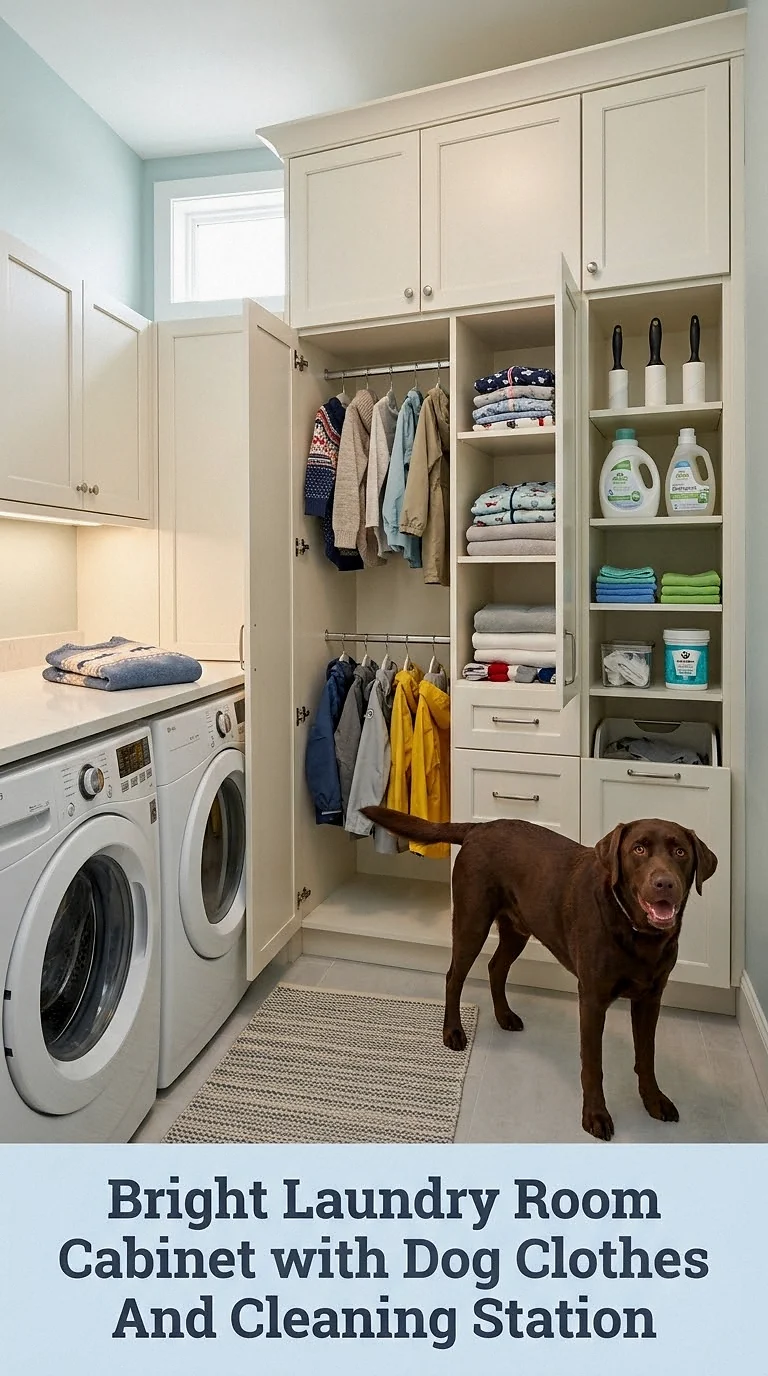
Combining clothing storage with laundry supplies creates an efficient care station.
Dedicate one section of a laundry room cabinet to clean dog clothing and leave another small area for pet-safe washing supplies and towels.
Use open shelves for folded everyday garments and a short hanging section for raincoats and structured jackets.
A pull-out hamper can collect dirty dog clothing until wash day, keeping worn garments separate from clean pieces.
Never place wet or muddy clothing directly into the clean wardrobe. Hang it to dry or clean it first.
White cabinetry paired with light wood baskets creates a fresh, cheerful look, while washable shelf liners make it easier to handle stray fur or dirt.
Repurposed Bookcase Dog Wardrobe With Mini Tension Rod
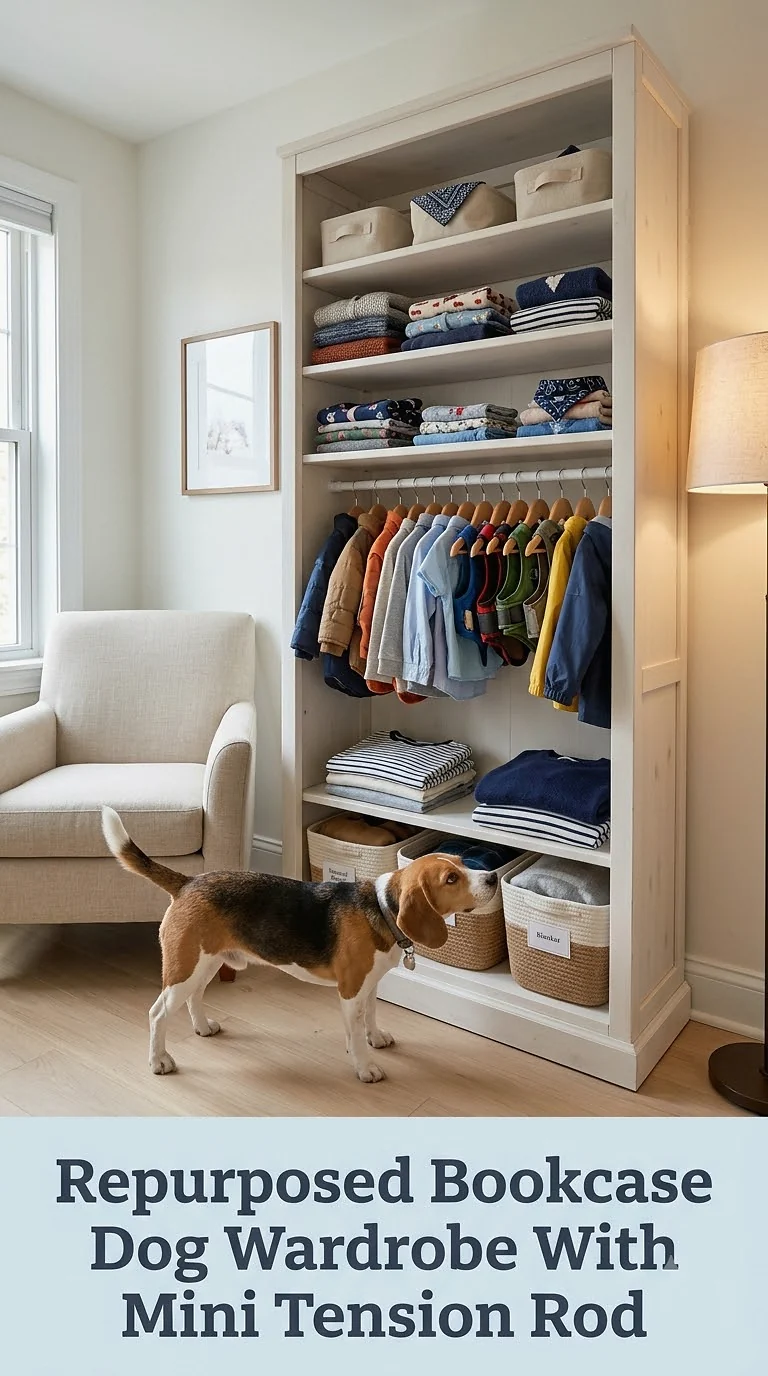
An unused bookcase can become an inexpensive dog wardrobe with just a few adjustments.
Remove one shelf and install a small tension rod or securely fitted rail across the opening. The new hanging area can hold jackets and shirts, while the remaining shelves store folded pieces in matching baskets.
This is an easy DIY project because you can often work with furniture already in your home.
Paint the bookcase to coordinate with your decor or leave natural wood visible for a warmer feel.
For safety, make sure tall freestanding furniture is properly secured when necessary, especially in homes where pets or children could bump or climb against it.
The finished piece offers the appearance of custom storage without custom-cabinet pricing.
Under-Bed Dog Clothing Storage With Low Profile Fabric Cases
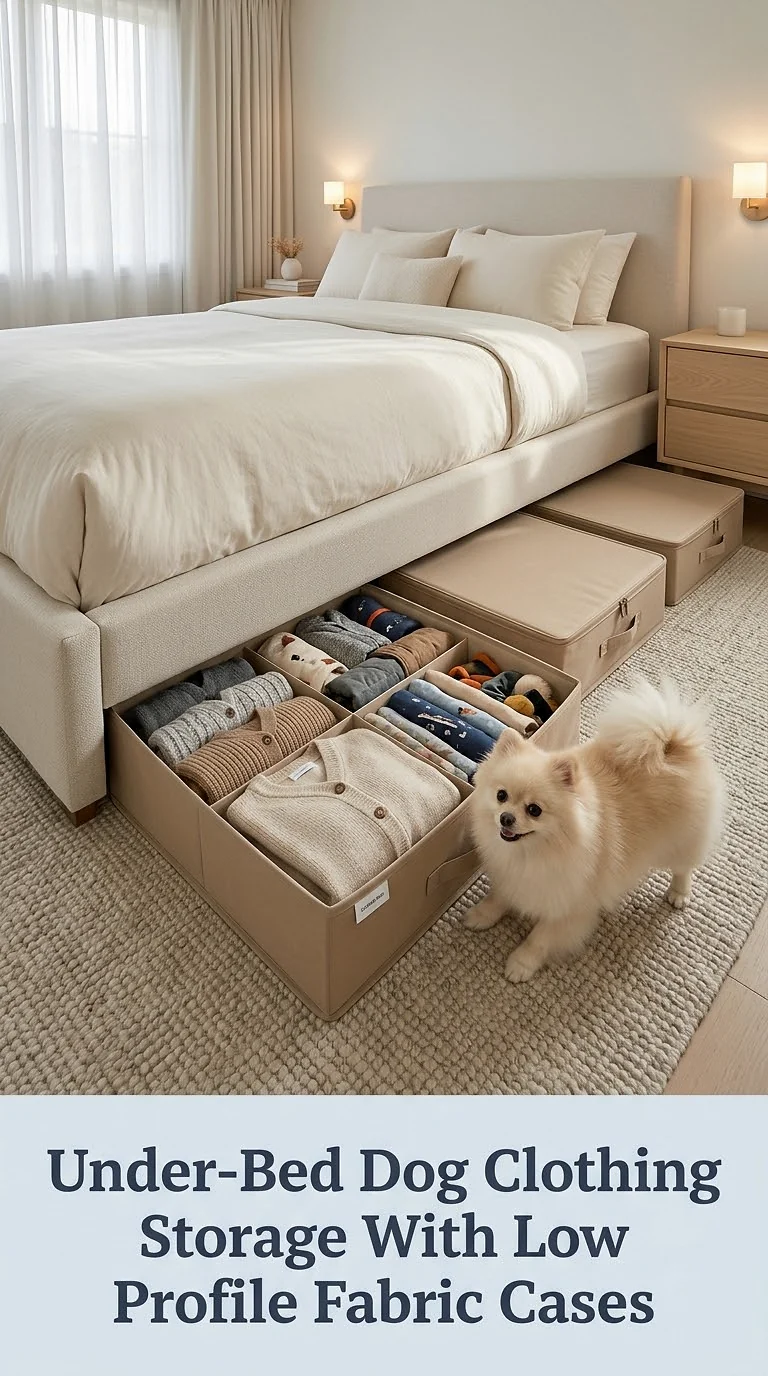
The area beneath a bed can provide valuable hidden storage for seasonal dog wardrobes.
Choose low-profile fabric cases with zippered covers to protect clothing from household dust while allowing the containers to slide easily in and out.
Use this space for holiday costumes, winter sweaters, or occasional outfits rather than clothing you reach for every day.
Fold everything clean and completely dry before storage. Avoid stuffing the cases so tightly that garments become heavily compressed.
Simple labels on the handles let you identify each category before pulling the case out.
This setup is especially useful in small bedrooms and apartments where adding another cabinet or dresser would make the room feel crowded.
Decorative Lidded Basket Station With Rolled Dog Shirts And Bandanas
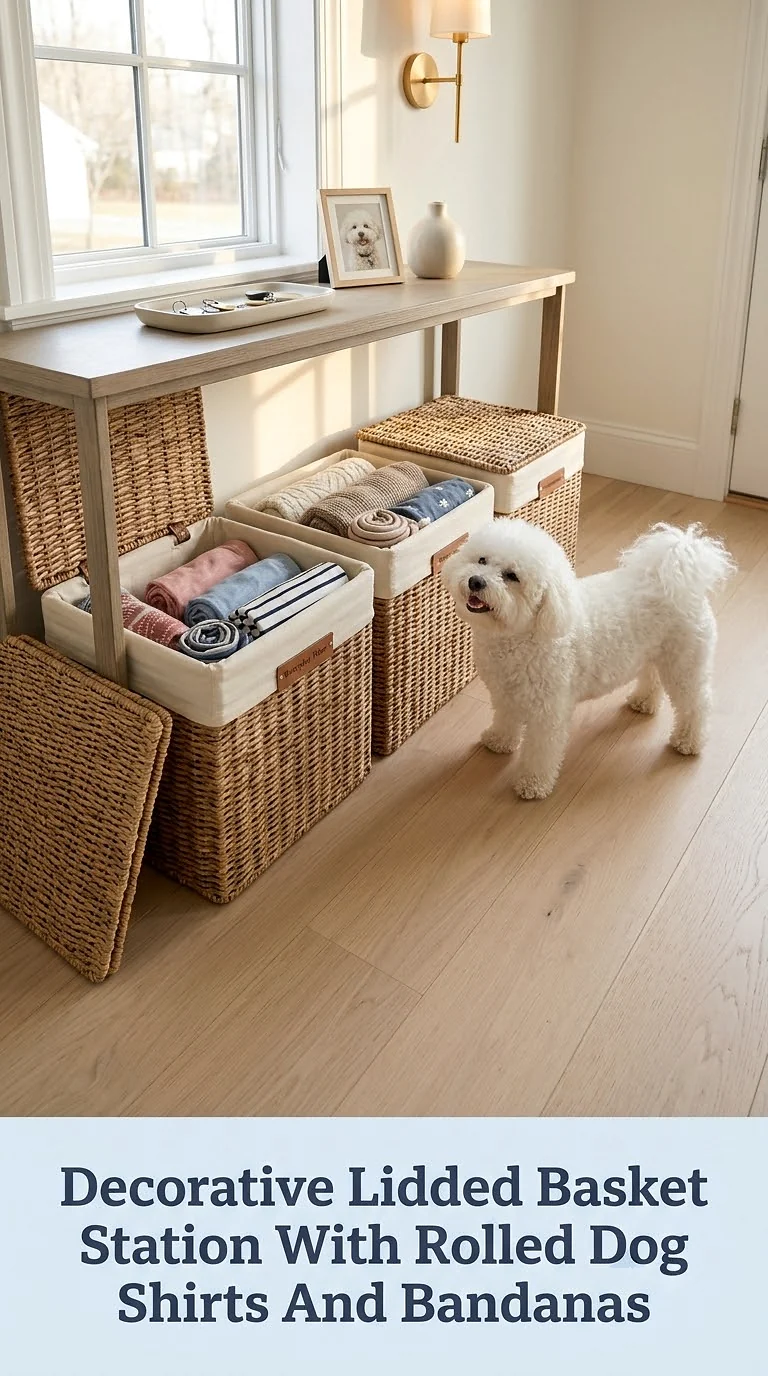
Storage can be attractive enough to leave in the living room.
Choose two or three decorative lidded baskets made from woven fiber or fabric and place them beside a console, bench, or pet station. Use one for lightweight shirts, another for bandanas, and a third for seasonal pieces.
Soft garments can be gently folded or loosely rolled so they remain easy to browse.
A lid keeps the collection visually tidy while helping reduce dust.
Make sure the baskets stay dry and clean, particularly if they sit near an entrance where wet shoes or umbrellas are common.
Choosing baskets that coordinate with your rugs, furniture, and wall colors makes the dog wardrobe feel like part of the overall room design.
Luxury Glass-Front Dog Wardrobe With Brass Hardware And Display Lighting
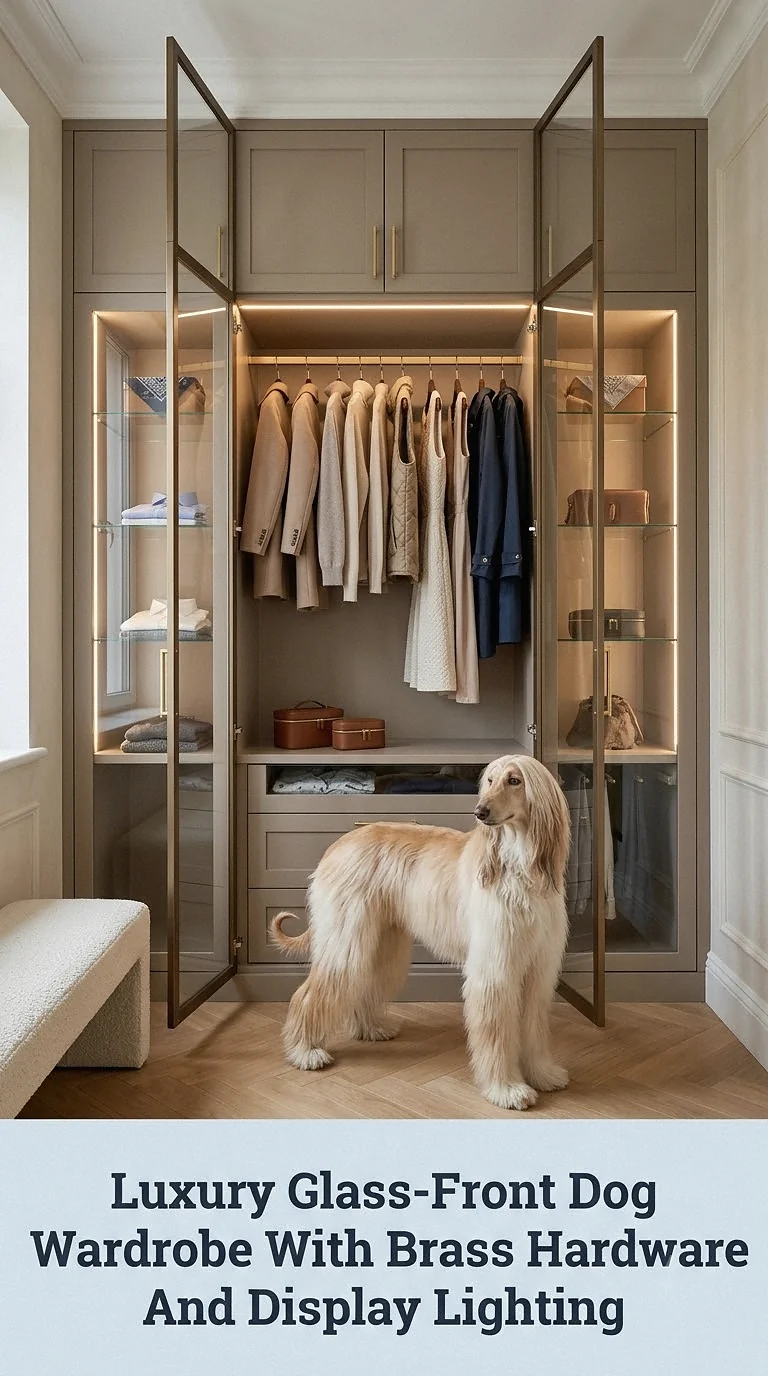
For the dog with a truly impressive wardrobe, a glass-front cabinet can turn clothing storage into a beautiful display.
Use warm white or walnut cabinetry, slim brass hardware, and a carefully arranged hanging rail. Shallow drawers beneath the display can hide casual clothing while the visible section showcases favorite coats, dresses, and special outfits.
Soft interior lighting can elevate the boutique effect, although the cabinet should not generate heat around stored fabrics.
Arrange garments by color for an especially polished appearance and use consistent hangers throughout.
Keep heavily embellished, stretchy, or delicate pieces properly supported rather than hanging everything simply for appearance.
A setup like this works wonderfully in a dedicated dog room, spacious dressing area, or thoughtfully designed mudroom where pet storage is intended to become part of the decor.
Creating A Dog Clothes Storage System You’ll Love
The best dog clothes storage ideas are not necessarily the largest or most elaborate. A simple drawer with thoughtful dividers can work just as beautifully as a custom wardrobe when it matches the way you actually care for and dress your dog.
Start by sorting what you already own. Keep everyday clothing within easy reach, move occasional outfits into seasonal storage, and let go of pieces that no longer fit comfortably or serve a useful purpose. Because clothing sizes can vary between brands, keeping your dog’s current neck, chest, and back measurements nearby can also be more useful than relying entirely on size labels.
Most importantly, create a system that is easy to maintain. Give wet clothing somewhere to dry, keep clean garments protected, fold pieces that might stretch, and avoid overcrowding your storage.
Whether you choose a cozy wicker basket, a clever over-the-door organizer, a tiny vintage armoire, or a luxurious built-in wardrobe, a little organization can turn your pup’s growing clothing collection into a charming and functional part of your home.
Source: https://petstutorial.com
Category: DOGS
