
A thoughtfully designed dog entrance can make everyday life feel so much easier. Instead of constantly opening the back door for potty breaks, garden patrols, and spontaneous squirrel investigations, your dog gets a little more independence while your home stays organized and beautiful.
The best dog door entrance ideas do much more than add a flap to an exterior door. They make the entrance feel intentional. Think warm wood trim that coordinates with your cabinetry, a washable tile landing for muddy paws, a covered porch outside the opening, or a smart pet door tucked neatly into a modern mudroom.
You are reading: 19 Dog Door Entrance Ideas For A Stylish And Pet-Friendly Home
Before choosing a design, think about where the entrance leads. A secure fenced yard or enclosed dog run is usually more practical than giving a pet direct access to an unrestricted front yard. Measure your dog carefully and follow the specific sizing instructions for the pet door you choose. The opening should allow your dog to pass comfortably without squeezing, crouching excessively, or struggling with a heavy flap.
Weather matters too. Exterior pet doors can become sources of drafts, heat, rain, or moisture when they are poorly fitted, so good seals and weather-resistant materials are worth prioritizing.
With those practical details covered, you can have much more fun with the design. From cottage-inspired entrances to sleek smart doors, these ideas prove that a dog door can actually become a charming feature of your home.
Beautiful And Practical Dog Door Entrance Ideas For Every Home
Warm White Oak Mudroom Dog Entrance With Built-In Bench
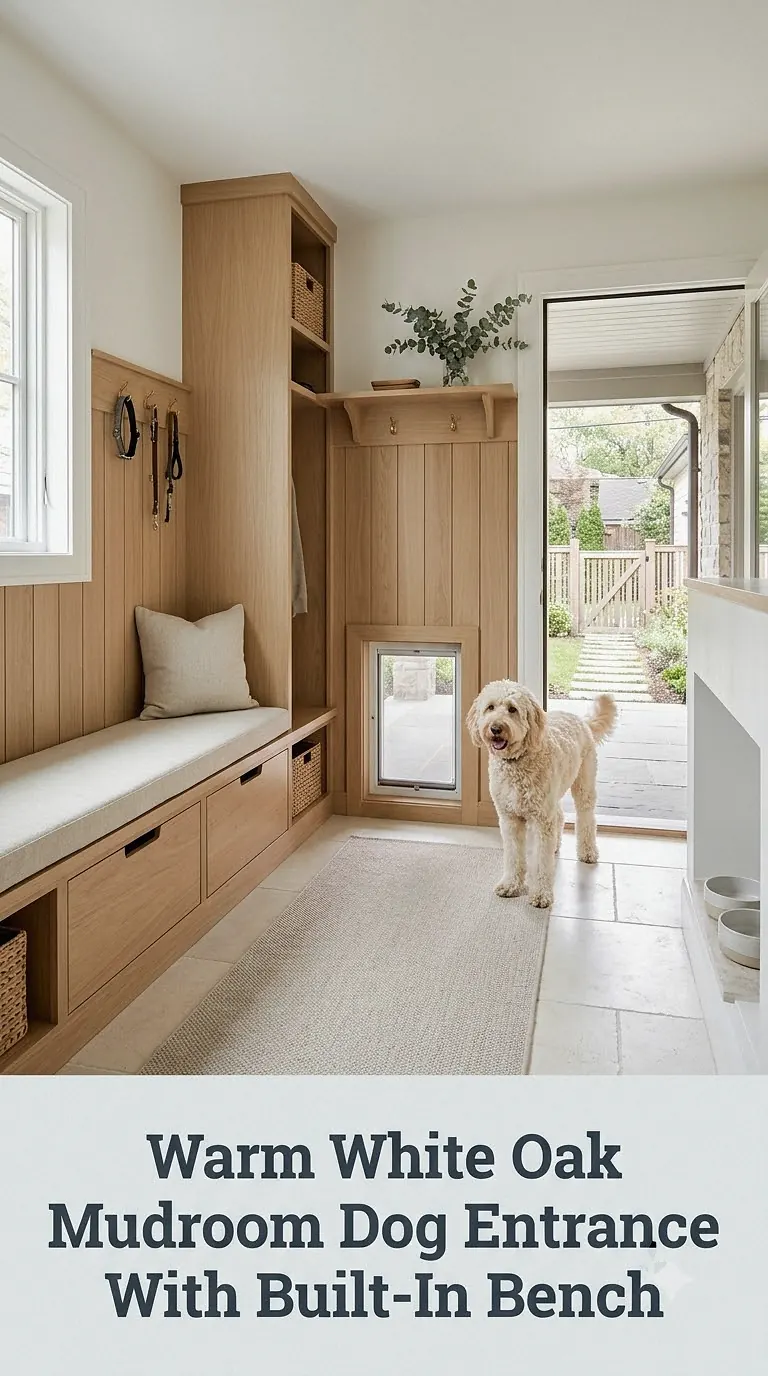
Turn an ordinary mudroom into a polished pet entrance by incorporating the dog door directly beneath a warm white oak bench.
The bench visually anchors the space while giving you somewhere to sit when putting on shoes or clipping on your dog’s leash. Install the pet opening at one end rather than directly underneath the main sitting area so your dog has an unobstructed path.
Pair pale oak with soft white walls, black hooks, woven baskets, and a durable stone-look tile floor. A small washable runner can soften the room while catching wet paw prints.
Inside the bench, add drawers for leashes, grooming supplies, poop bags, towels, and seasonal dog gear.
This setup works especially well when the mudroom opens directly into a secure backyard. The result feels more like custom cabinetry than a traditional pet door.
Soft Sage Green Dog Door With Brass Trim And Cottage Details
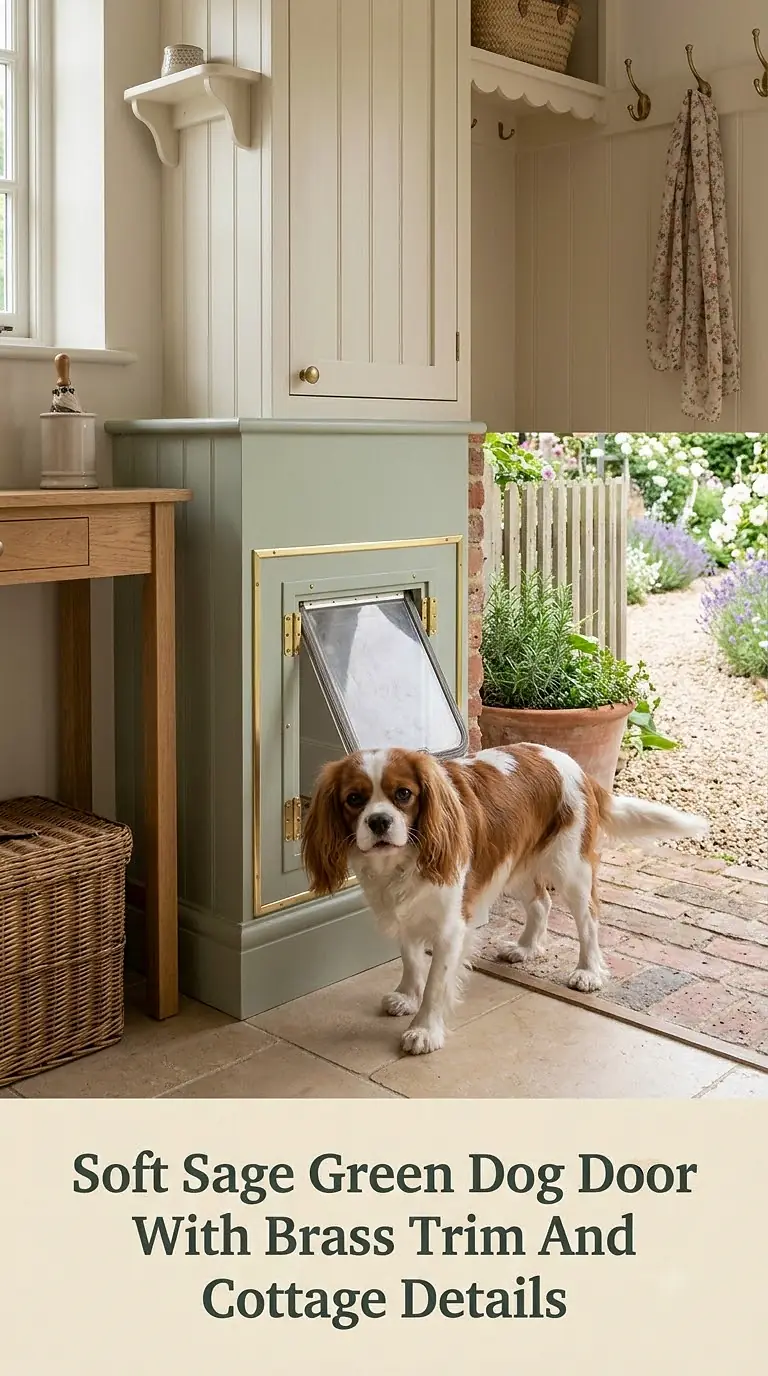
A pet entrance can become part of the decorating scheme instead of something you try to hide.
For a cozy cottage look, paint the surrounding door soft sage green and pair it with warm brass or antique bronze hardware. Cream walls, natural wood flooring, botanical artwork, and a woven basket nearby complete the gentle color palette.
Choose a pet door with a simple frame that can coordinate with the main door rather than a bulky contrasting surround.
Outside, continue the cottage feeling with terracotta pots, herbs, flowering plants, or a small stone landing. Keep plants safely away from the actual passage so leaves and stems do not obstruct the flap.
This is a particularly charming choice for a kitchen, mudroom, or side entrance that already uses traditional finishes.
Modern Black-Framed Dog Entrance With Large Neutral Tile
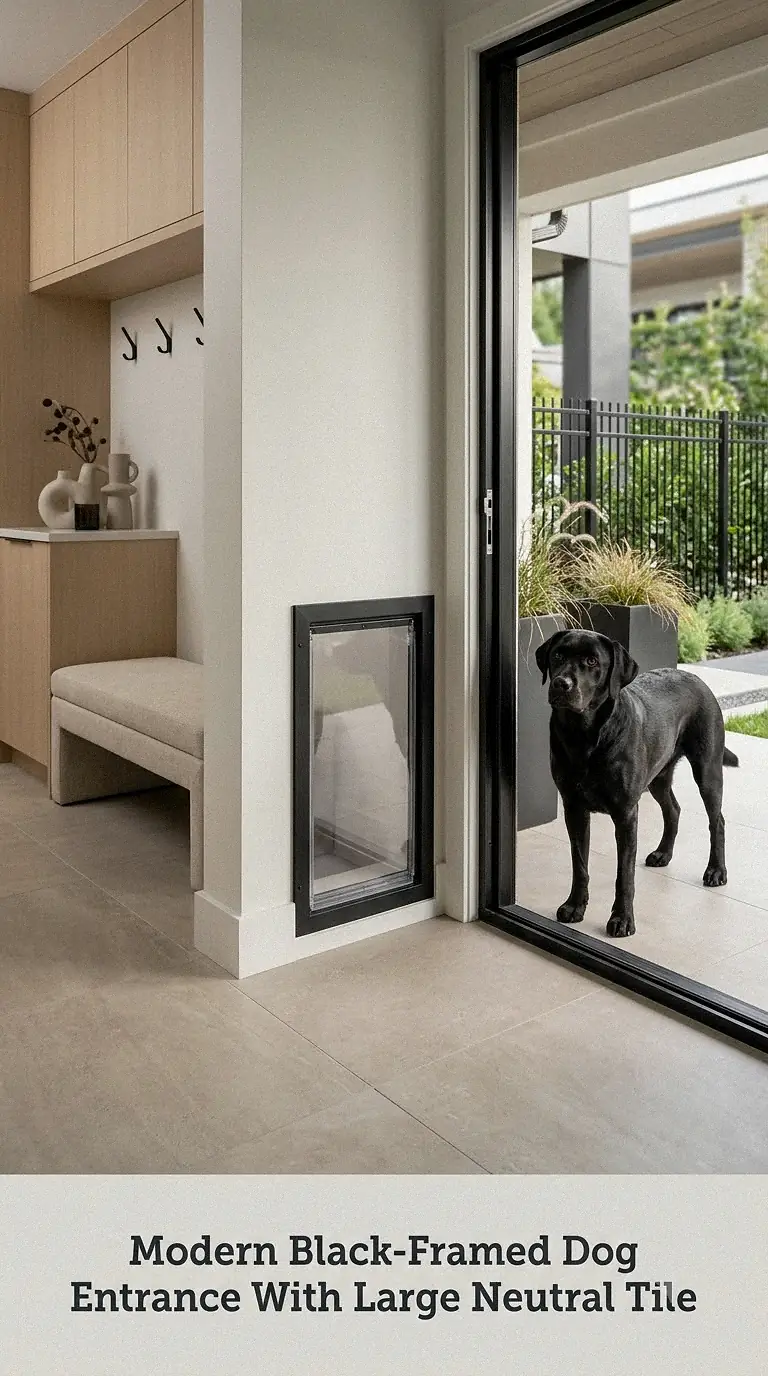
For a cleaner contemporary look, make the dog entrance feel architectural.
A slim black pet-door frame against a white, charcoal, or warm greige wall creates a striking contrast without making the space overly busy. Large-format porcelain tile underneath keeps the entrance practical and visually streamlined.
Add a narrow black wall hook for the leash and perhaps a small floating shelf above the opening for treats or waste-bag rolls.
Keep decorations minimal so your dog has a completely clear path through the entrance.
A dark frame can also disguise the everyday marks that appear around a frequently used pet opening. Choose surfaces around the entrance that can be wiped down easily, especially if your dog enjoys returning home after rainy garden adventures.
Farmhouse Shiplap Dog Entrance With Rustic Boot Bench
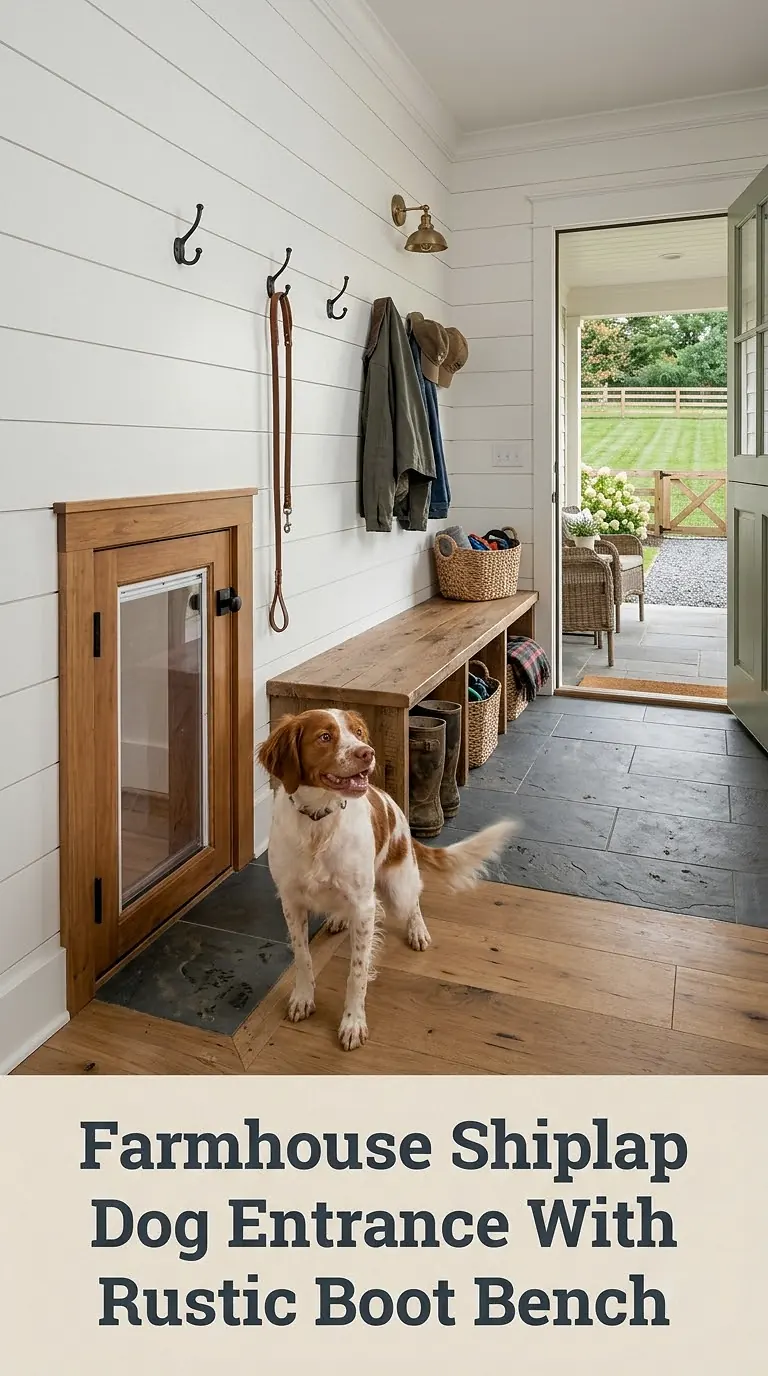
A farmhouse-style dog entrance feels especially natural in a mudroom or back hallway.
Cover the surrounding wall with white or warm cream shiplap and position the dog door beneath or beside a rustic wood boot bench. Add matte black coat hooks, galvanized containers, and a sturdy woven basket for towels.
A slate-look or brick-look floor helps disguise dirt while reinforcing the farmhouse feeling.
For the exterior side, a small covered landing can provide extra protection from rain and give your dog a dry place to pause before coming inside.
Avoid filling the floor around the entrance with decorative objects. A farmhouse space can still look collected and cozy while leaving a wide, safe travel path for your dog.
Finish the area with a washable indoor mat rather than a delicate rug.
Compact Side-Wall Dog Entrance Beside Entryway Cabinets
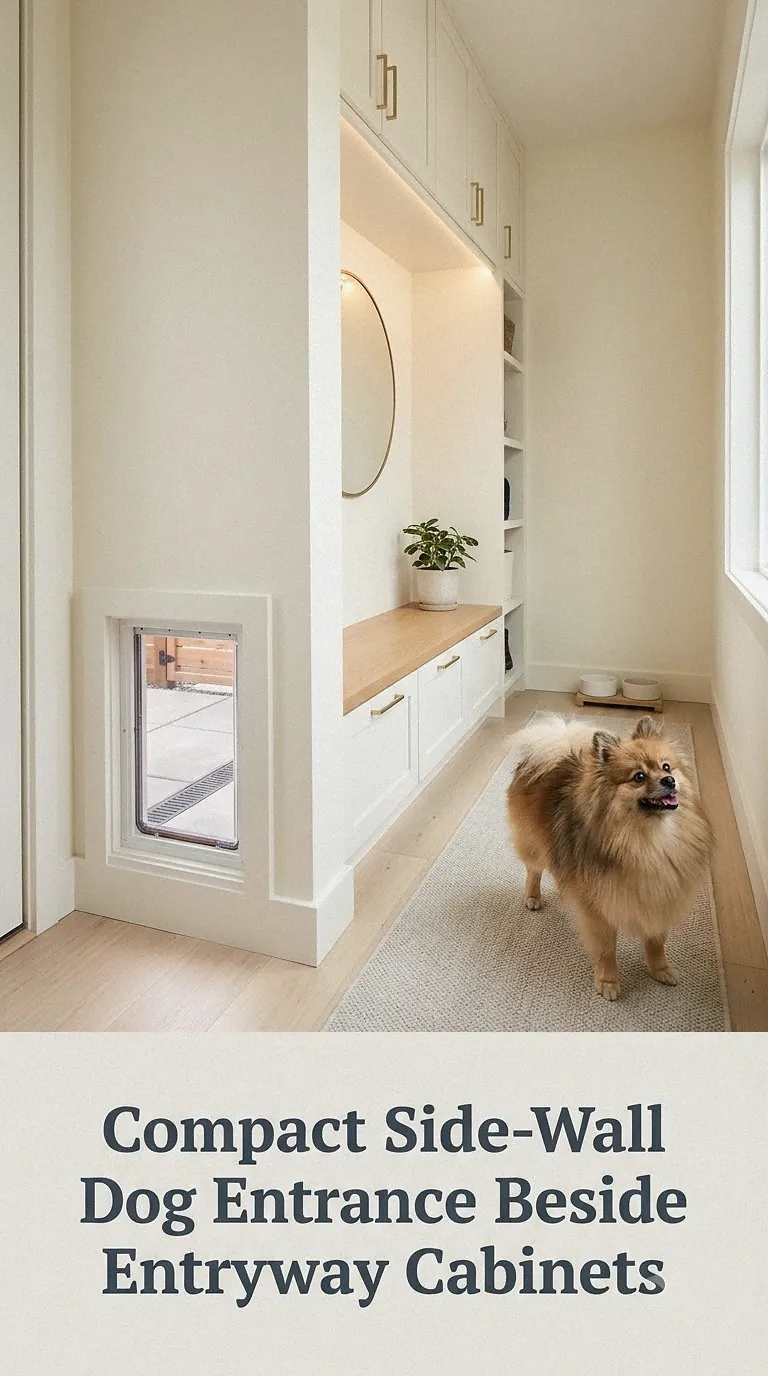
Small homes often do not have room for a dedicated pet station, but an unused section of exterior wall can become an efficient dog entrance.
Position the opening beside a slim bank of entryway cabinets rather than cutting into the cabinetry itself. This keeps the passage clear while letting you use the neighboring vertical space for storage.
Choose cabinets in white, light oak, or muted taupe to prevent the narrow area from feeling crowded. Closed storage keeps leashes, towels, food containers, and cleaning supplies out of sight.
A compact wall-mounted pet door can be especially helpful when the existing exterior door is unsuitable for modification.
Wall installations are more involved than standard door installations, so utilities, wall construction, moisture protection, and structural considerations should be checked before cutting.
Arched Dog Door Entrance With Painted Decorative Trim
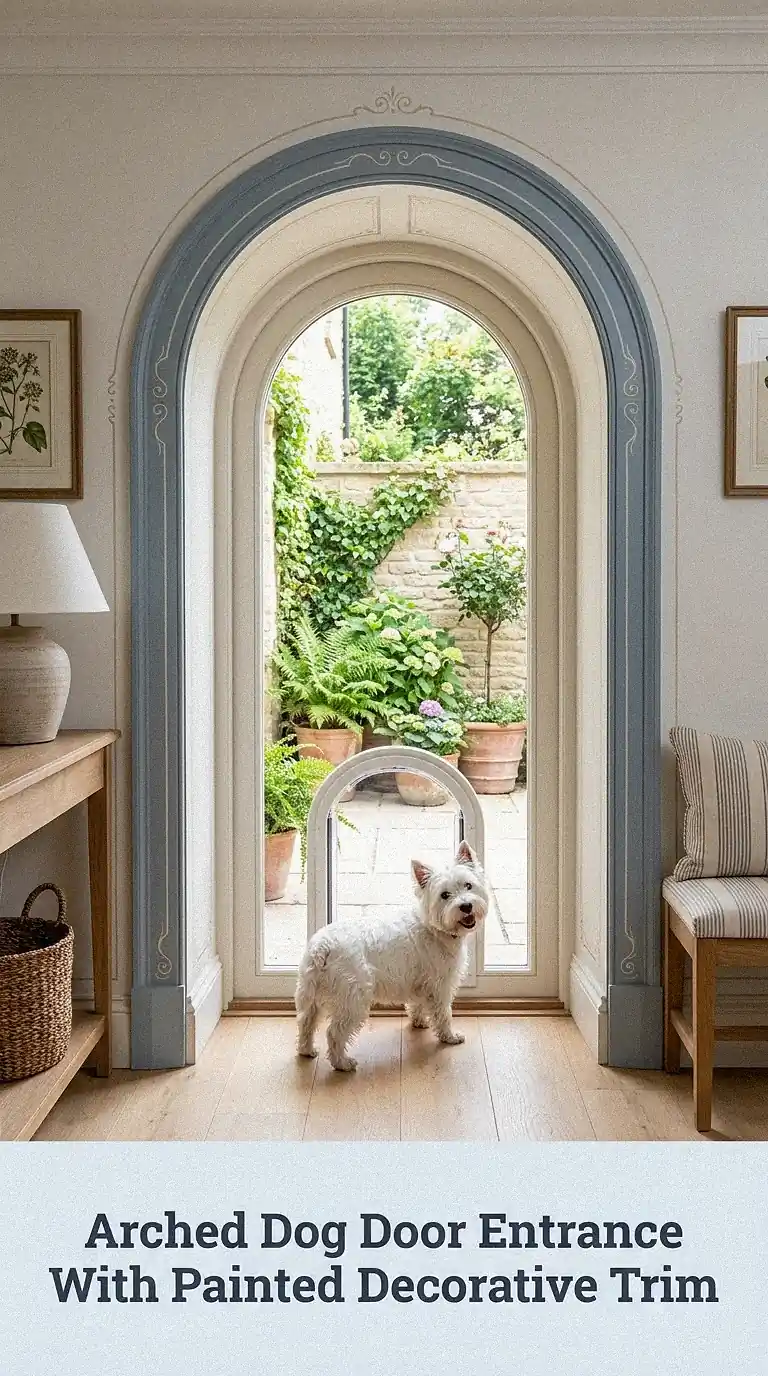
Give a basic pet entrance an unexpectedly elegant makeover by visually framing it with an arch.
The pet door itself can remain rectangular, but decorative wood trim or painted molding around it can create the appearance of a miniature arched doorway.
Try dusty blue, muted terracotta, forest green, or warm cream for a playful feature that still feels sophisticated.
This works beautifully in eclectic, cottage, Mediterranean, or English-inspired interiors. Add a small piece of artwork above the entrance and a simple washable mat below it.
Keep the trim fairly shallow so collars and harnesses cannot catch on projecting decorative details.
The finished entrance feels customized without requiring an expensive fully custom pet-door system, making it a fun weekend upgrade for confident DIY decorators.
Minimal Sliding Glass Dog Door With Woven Entry Runner
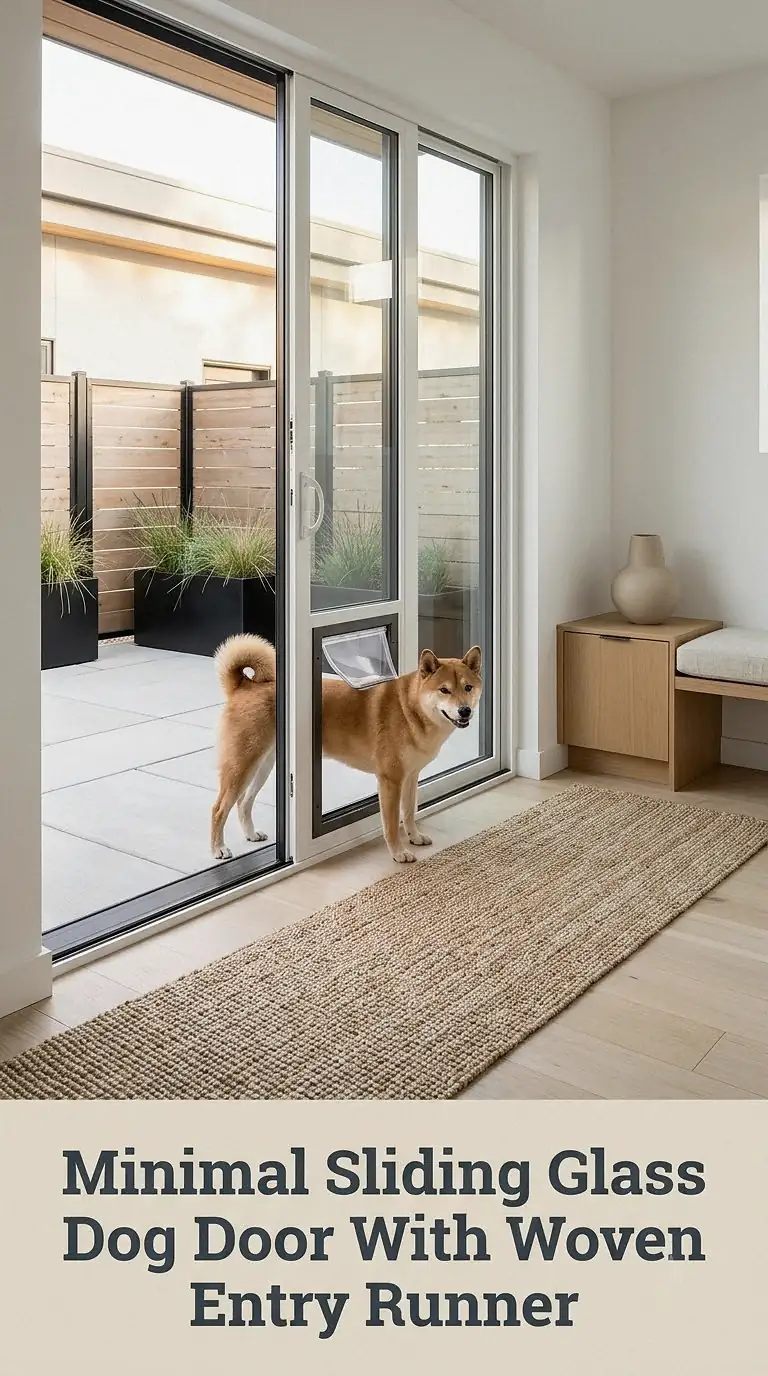
A sliding-glass pet-door insert is one of the most flexible ways to create outdoor access without cutting a permanent opening into a wall or door.
Read more : 19 Halloween Dog Costume Ideas That Are Cute, Creative, And Surprisingly Easy
These tall vertical panels fit into the sliding-door track and include a pet opening near the bottom.
They are particularly appealing for apartments, rentals, sunrooms, and homes where permanent alterations are undesirable, provided the landlord or property rules allow them.
Style the indoor area with a simple woven washable runner, a slim ceramic container for dog towels, and one understated plant placed safely away from the opening.
Make sure the remaining human doorway is wide enough for comfortable daily use.
Carefully seal the panel according to its installation instructions because sliding-door inserts can otherwise create unwanted air gaps around the glass and frame.
Bright Storm Door Entrance With Integrated Pet Door
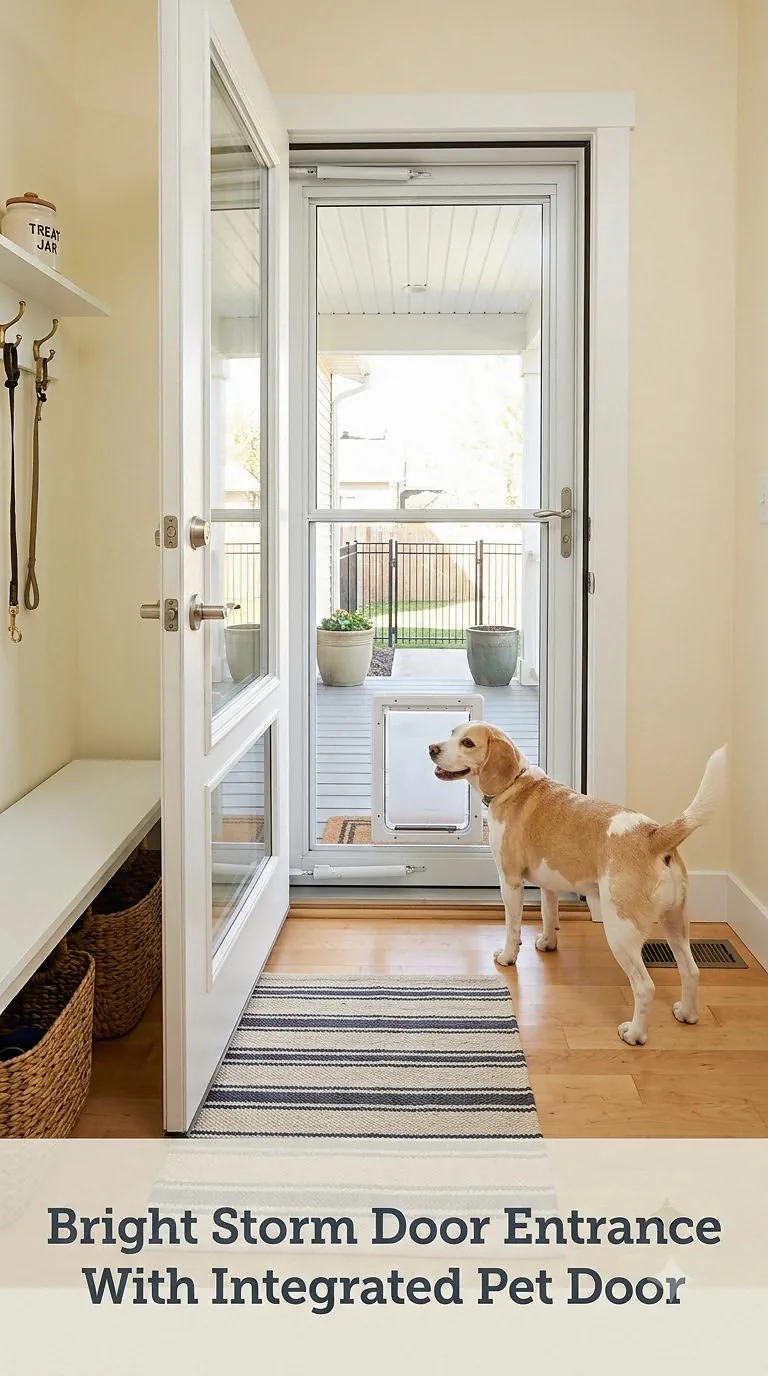
If your existing exterior door needs extra weather protection anyway, consider a storm door designed with an integrated pet opening.
This creates a much more unified appearance than modifying multiple layers of doors separately.
A white storm door looks airy against blue, sage, gray, or natural wood siding, while a dark bronze or black frame provides a more contemporary finish.
Use the surrounding porch as part of the design. A simple outdoor mat, wall lantern, and weather-resistant planter can make the entrance feel like a miniature version of your main entryway.
Measure both the storm-door opening and your dog carefully before buying.
An integrated design can be especially appealing when you want more outdoor visibility and ventilation while still creating a designated passage for your pet.
Laundry Room Dog Entrance With Washable Tile And Towel Storage
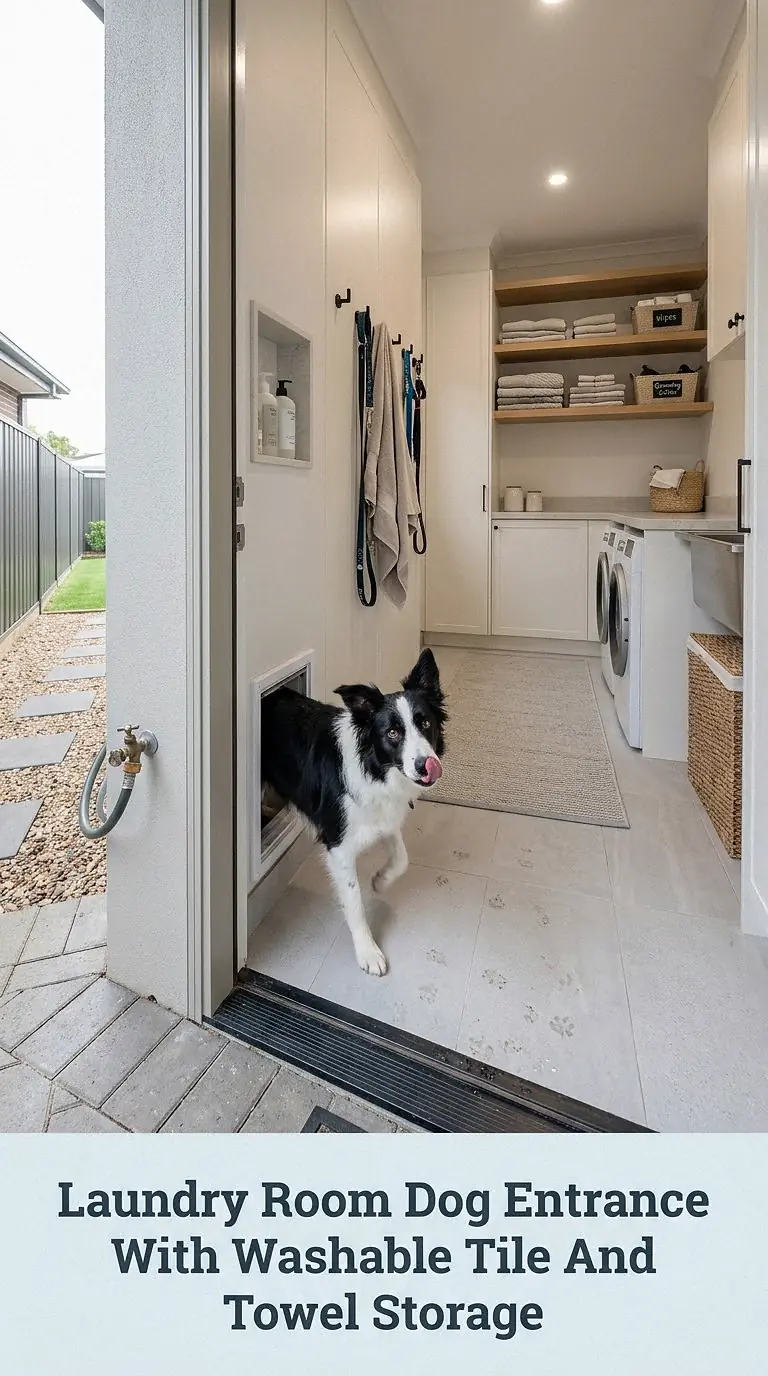
The laundry room is one of the most practical places for a dog entrance because cleaning supplies and washable surfaces are already nearby.
Install the pet door on an exterior wall or suitable back door, then surround the area with durable porcelain tile.
A stack of neatly rolled dog towels in an open cubby makes muddy-paw cleanup easy. Add wall hooks for leashes and harnesses, plus a lidded hamper for dirty pet blankets.
For a polished look, repeat the cabinetry color around the dog-door area. Deep green cabinets with brass pulls feel rich and traditional, while pale oak with white quartz creates a lighter modern style.
If space allows, pair the entrance with a small dog-washing station so everything needed after wet outdoor play stays in one hardworking room.
Covered Porch Dog Entrance With A Dry Paw Landing
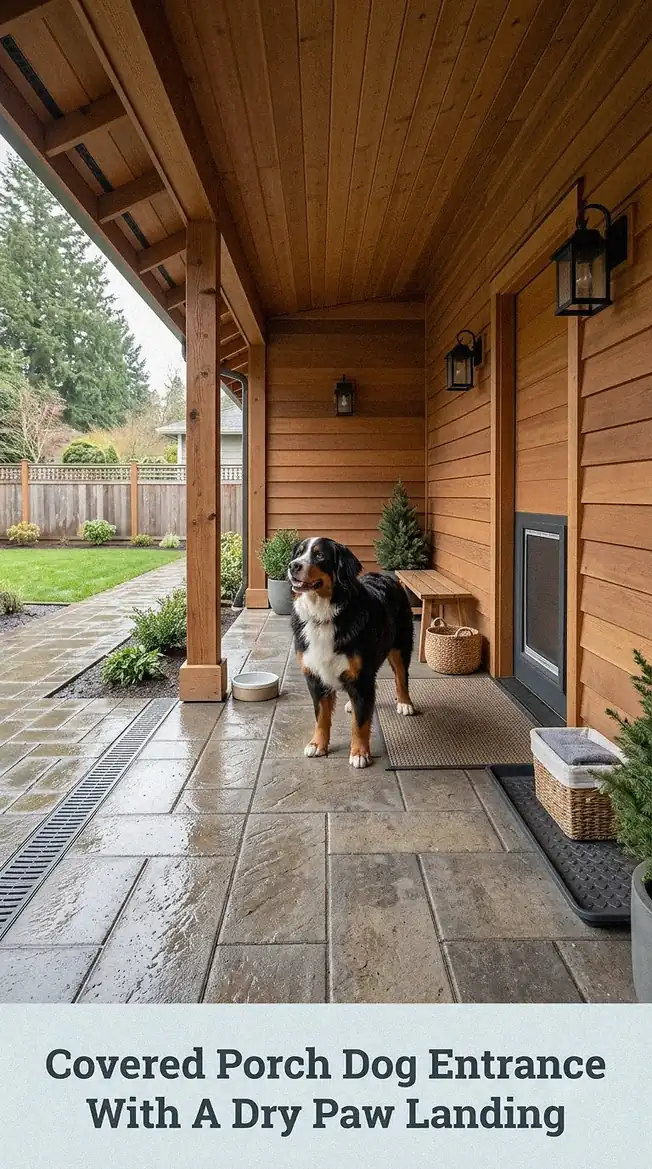
Sometimes the best dog-door upgrade happens outside the house.
A small covered porch or roof extension over the entrance helps create a protected transition between the yard and interior. Your dog gets a sheltered place to pause during light rain, and the immediate doorway is less exposed to direct weather.
Use weather-resistant decking, textured exterior tile, or another nonslip surface for the landing.
Add a subtle outdoor mat where your dog naturally steps before entering. Keep the area open rather than filling it with furniture or pots that could block the route.
For a charming cottage look, coordinate the pet-door trim with the home’s window trim and add a small exterior light above.
The entrance will look intentionally incorporated into the architecture rather than added as an afterthought.
Smart Microchip Dog Door In A Clean Minimalist Entryway
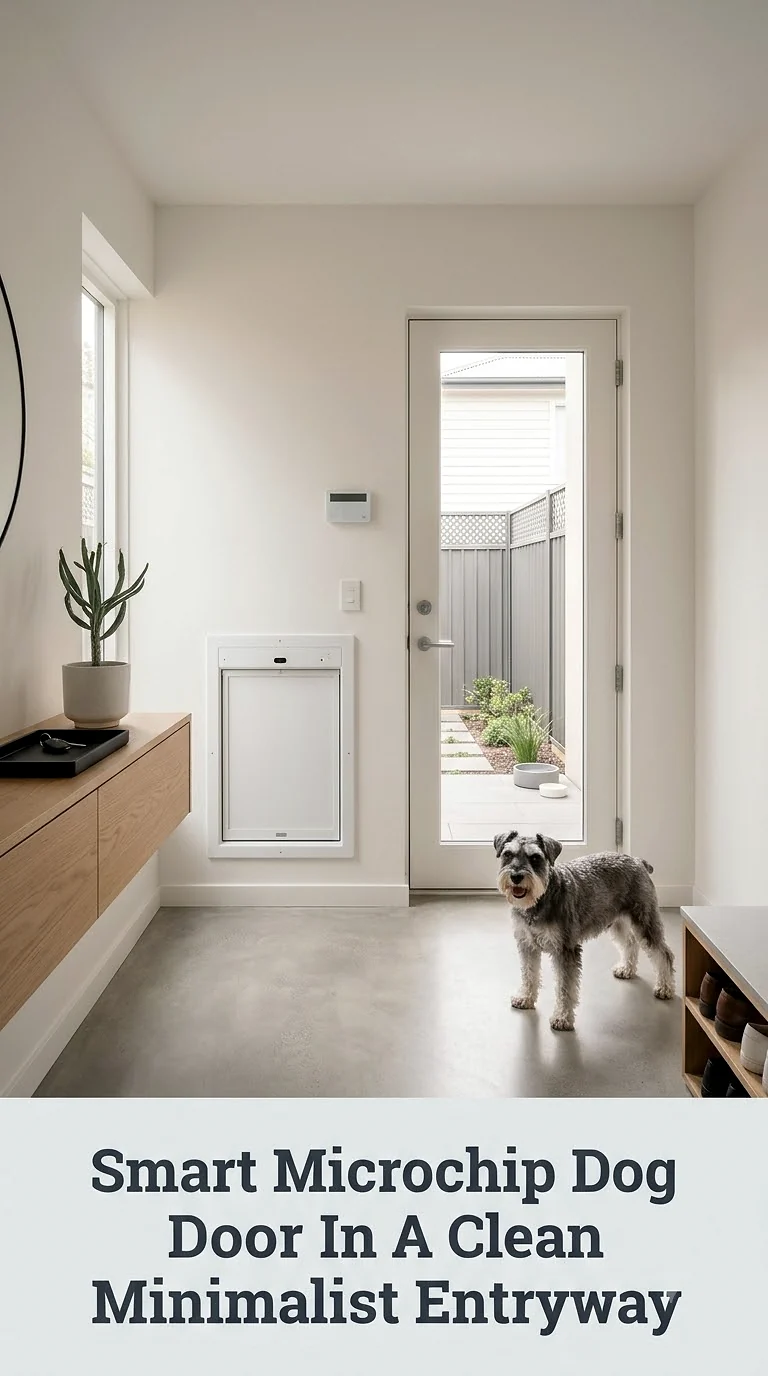
Technology can be useful when you want more control over which animals can use the entrance.
Selective-entry pet doors can recognize an electronic key or compatible identification system and unlock for approved pets. Depending on the model, additional features may include scheduling, locking controls, or activity notifications.
Keep the surrounding interior simple so the technology blends quietly into the room. Warm white walls, pale oak cabinetry, beige porcelain flooring, and matte black accents create a calm minimalist setting.
Before choosing a smart model, consider battery requirements, power availability, flap size, and what happens during a power interruption.
Electronic access does not replace a secure yard, but it can provide another layer of control and may help discourage uninvited neighborhood animals from wandering indoors.
Insulated Double-Flap Dog Entrance With Cozy Winter Styling
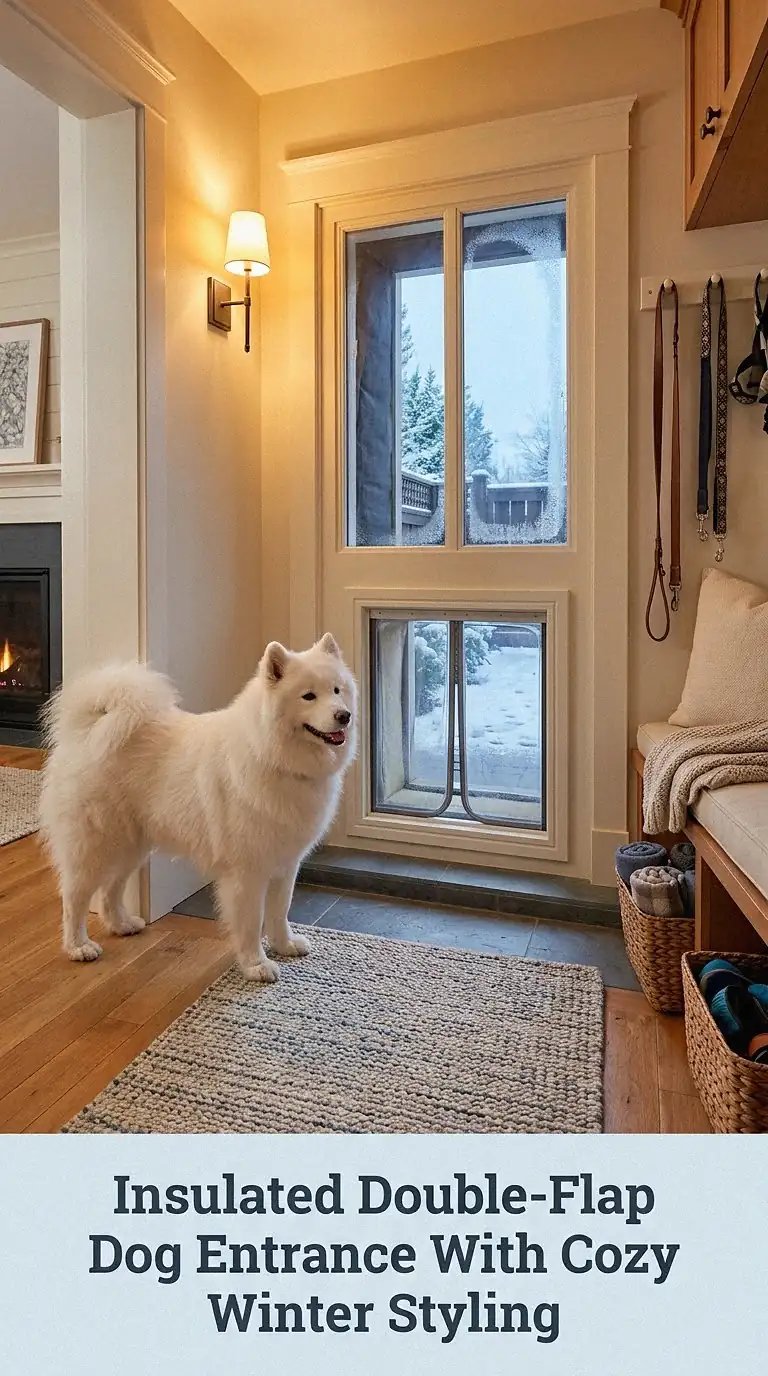
Homes exposed to cold winters, strong wind, or hot summers need to pay extra attention to insulation.
Instead of a lightweight single flap, consider a weather-resistant pet door designed with multiple flaps, magnetic closures, insulated panels, or additional sealing features.
Then make the surrounding entrance feel warm and inviting with natural wood, soft cream walls, a washable wool-look runner, and a basket of dog towels.
A locking cover can also be useful when the door will not be used overnight or during extreme weather.
Check the exterior seal periodically for cracking or gaps, especially after seasonal temperature changes.
A beautiful dog entrance is much more enjoyable when it does not create an uncomfortable draft across the kitchen every time the wind starts blowing.
Brick Wall Dog Entrance With A Finished Tunnel Passage
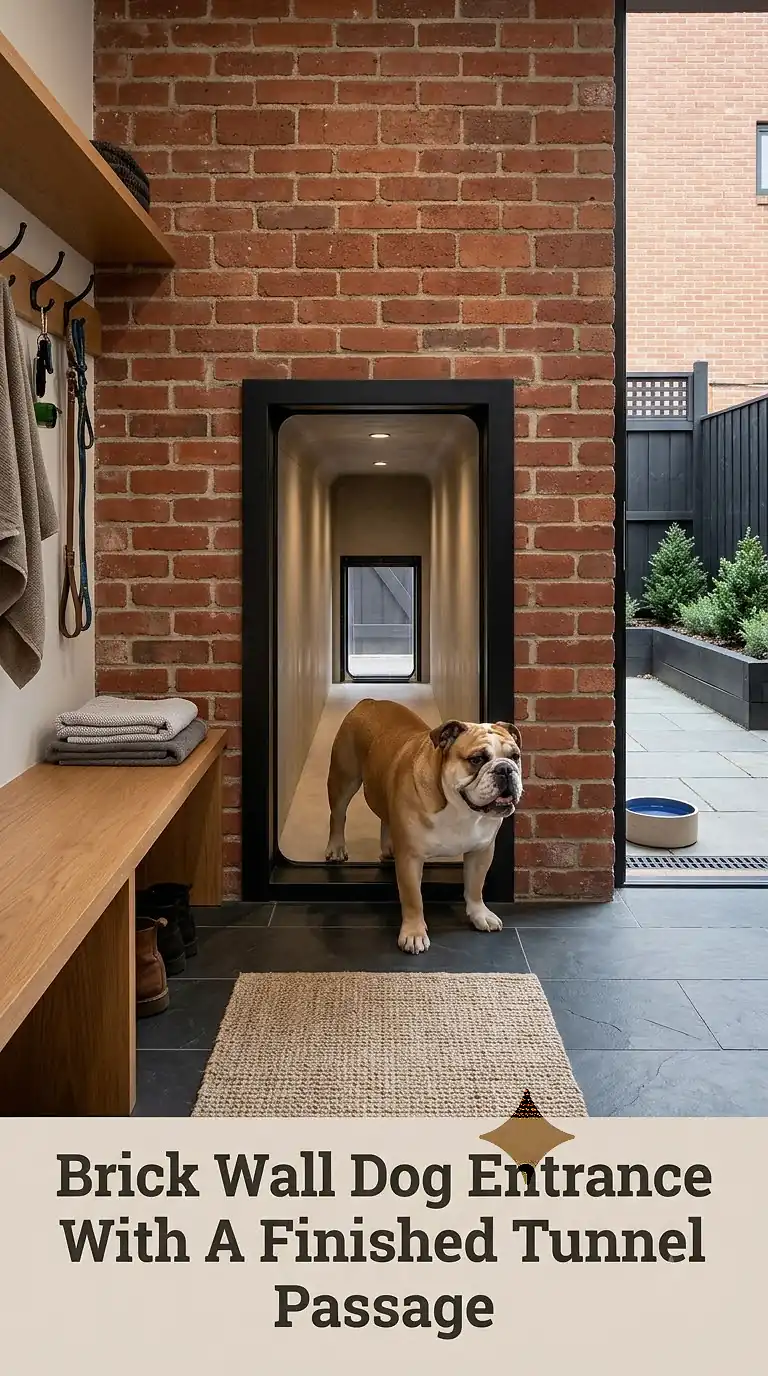
A dog door installed through an exterior wall gives you more flexibility when the main door is inconveniently positioned.
In a brick home, the result can look especially attractive when the opening is neatly integrated with the masonry outside and finished with simple trim inside.
Wall-mounted pet doors typically create a deeper passage, so the interior tunnel should be smooth, properly sealed, and designed for the wall thickness.
Inside, coordinate the frame with nearby cabinetry or wall paint. Outside, a dark bronze or black surround can blend beautifully with traditional red brick.
This is not usually the best beginner DIY project. Exterior walls can contain wiring, plumbing, insulation, and structural components, and masonry requires suitable tools and waterproofing.
Professional installation can be worth considering for a clean, weather-tight result.
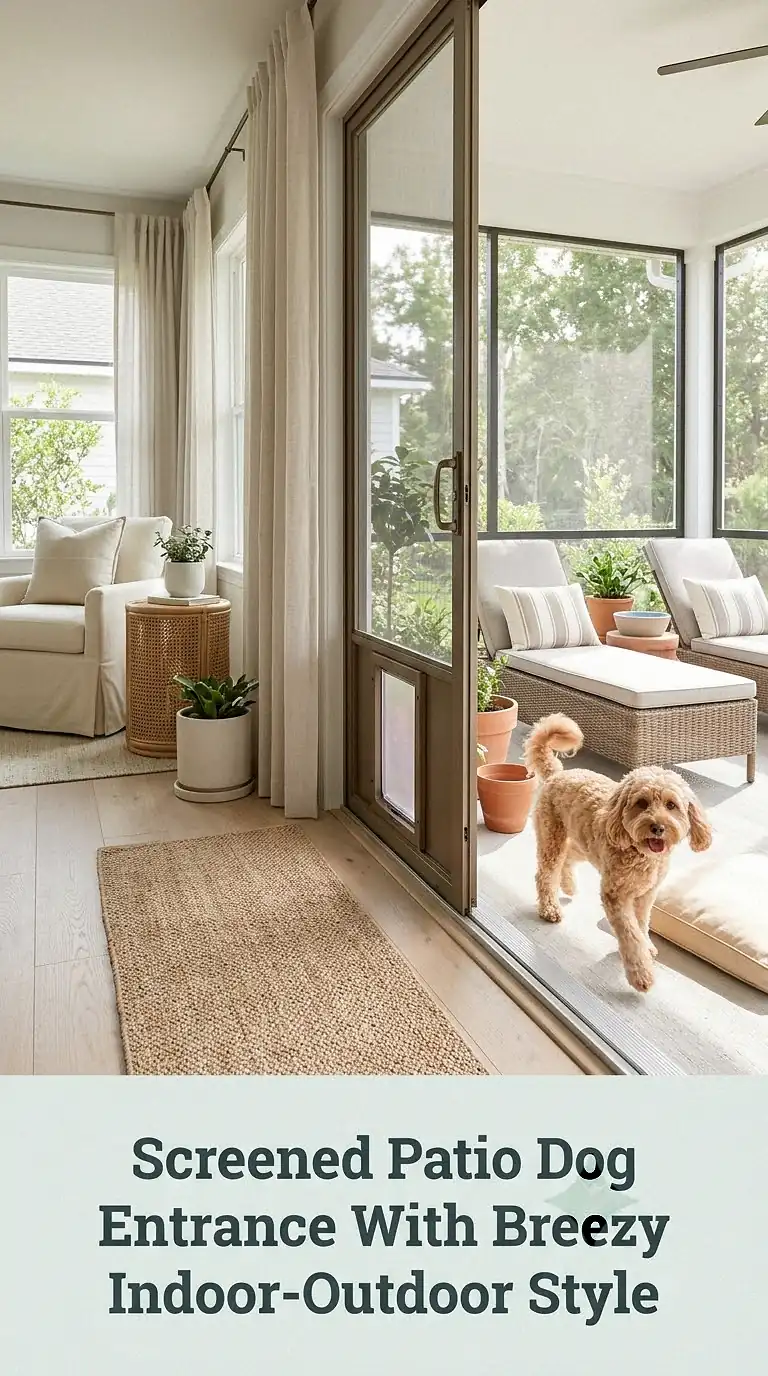
Screened Patio Dog Entrance With Breezy Indoor-Outdoor Style
Read more : 19 Small Dog Fence Ideas For A Safe, Stylish, And Beautiful Yard
A screened patio, lanai, or enclosed porch can become a lovely intermediate zone between the house and yard.
Adding a pet entrance here allows your dog to move between spaces without turning the main living area into the immediate outdoor transition point.
Keep the design light and relaxed with natural rattan textures, cream outdoor cushions, pale wood, and stone-look flooring.
Choose a pet opening designed for the actual material you are modifying rather than improvising a standard door into fragile screening.
If the porch then leads into the yard, create a second secure access point as needed so the entire route remains controlled.
This layered setup can be especially attractive in warm climates where indoor-outdoor living is part of everyday life.
Hidden Dog Entrance Beside A Custom Built-In Console
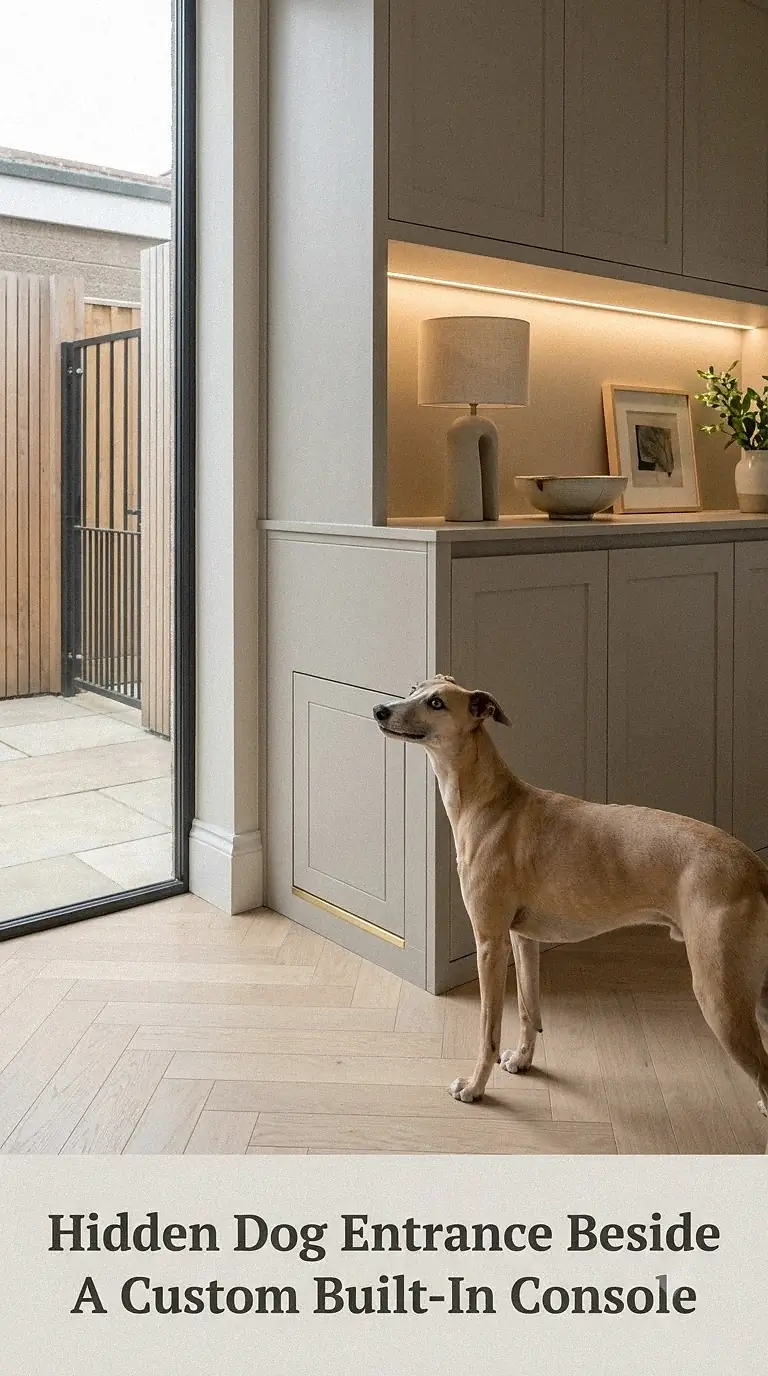
A beautifully designed pet entrance does not have to dominate the room.
Create a discreet version by placing it at the far end of a built-in console or wall of cabinetry. Paint the dog-door frame the same color as the surrounding wall so it visually recedes.
A warm taupe built-in paired with limestone-look flooring creates a sophisticated neutral backdrop. Style the console above with baskets, framed artwork, and a small table lamp while keeping the actual pet route clear.
Storage drawers can hold leashes, treats, paw wipes, and grooming accessories.
Just avoid placing the dog opening where an open cabinet door or drawer could block it.
This approach works particularly well in polished interiors where you want all the convenience of a pet door without making it the focal point.
Secure Dog Run Entrance With Gravel Path And Black Fencing
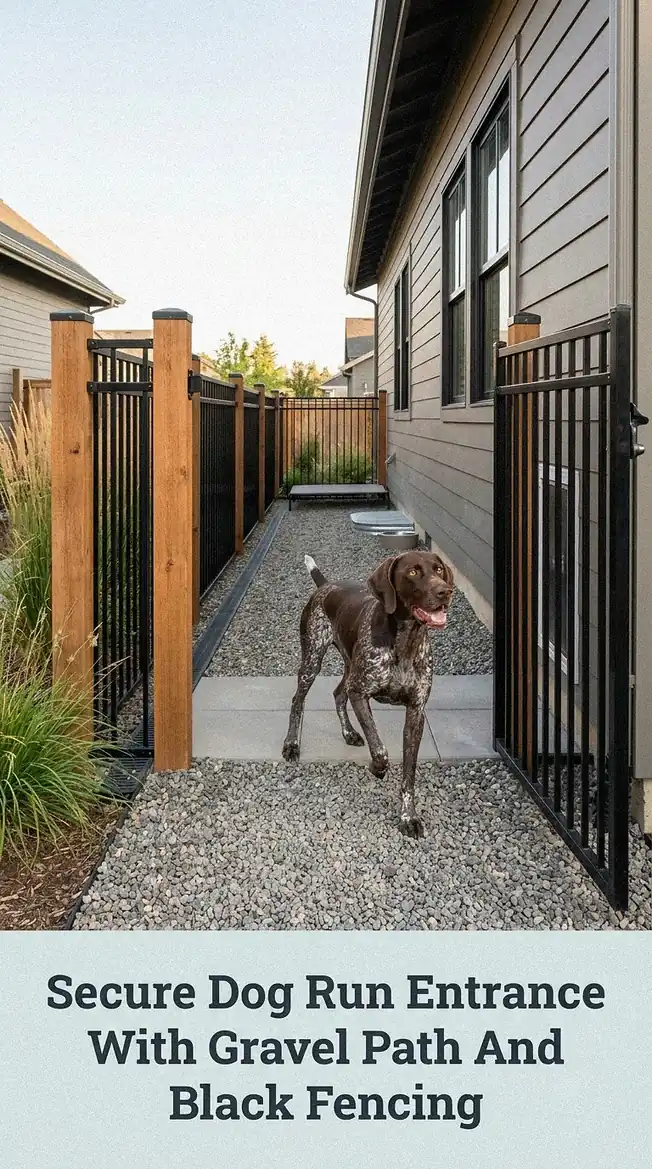
Instead of letting the dog door open onto an entire backyard, create a dedicated outdoor dog run immediately outside it.
Use attractive black metal or dark welded-wire fencing combined with wood posts for an enclosure that feels more intentional than a basic kennel.
A compacted gravel or permeable paved path can help manage mud in high-traffic areas. Add a shaded resting spot and access to fresh water when appropriate for your climate and supervision routine.
The enclosure should suit your dog’s size and behavior, including whether your dog is likely to jump, climb, squeeze through openings, or dig under fencing.
This setup can be particularly helpful on large properties because it gives your dog a defined outdoor zone close to the house while keeping landscaping and garden areas separate.
Extra-Wide Multi-Dog Entrance With Durable Neutral Finishes
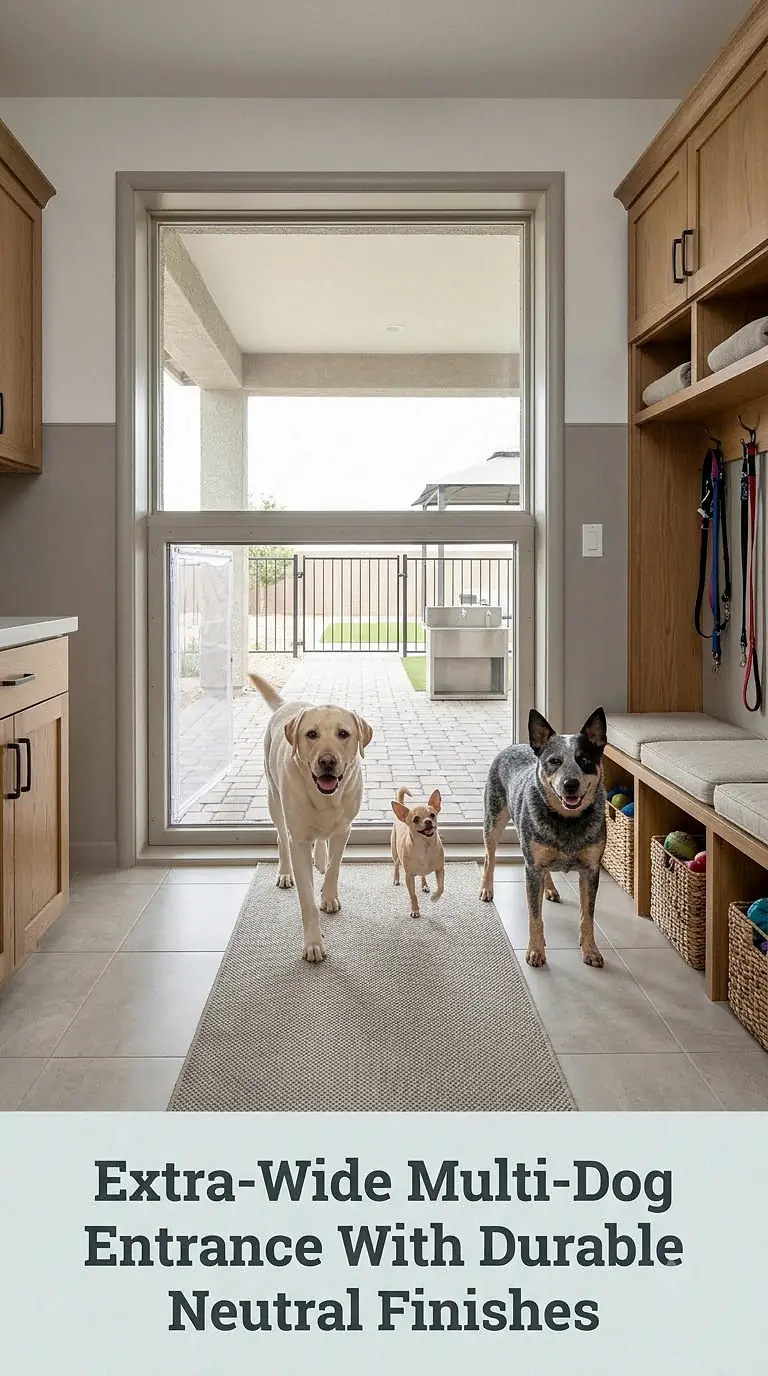
Households with several dogs need to design around the largest pet rather than assuming one small opening will work for everyone.
Choose an appropriately sized door that allows the biggest dog to move comfortably through it, then make the surrounding area durable enough for frequent traffic.
Large stone-look porcelain tiles, warm gray walls, and a charcoal pet-door frame create a practical yet attractive palette.
Place two washable runners nearby so dirty paws have more surface area to cross before reaching the main living spaces.
Keep food bowls and beds away from the opening to prevent congestion when several dogs want to use the entrance at once.
If your dogs have very different sizes or mobility needs, watch how each pet navigates the threshold before settling on the final installation height.
Budget-Friendly Painted Dog Door With DIY Wood Trim
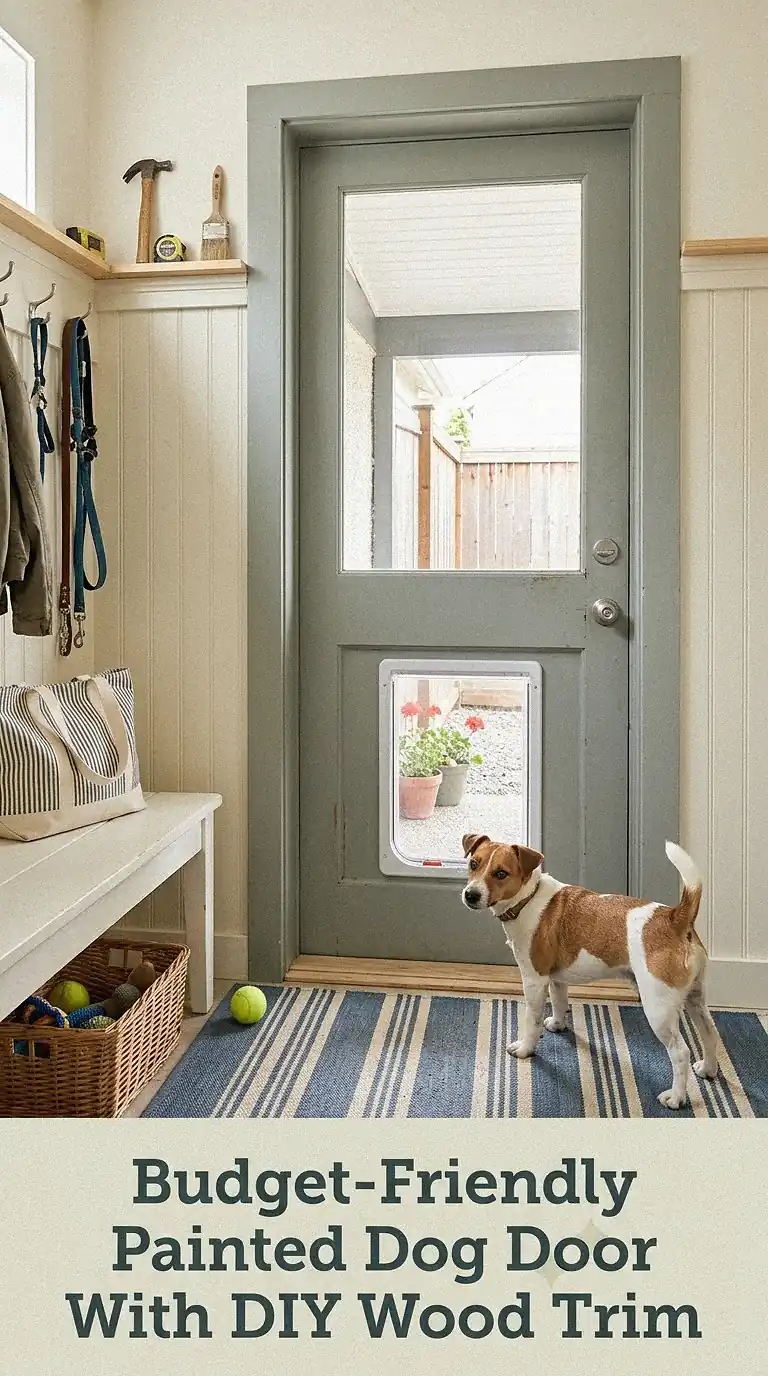
You do not need custom cabinetry to make a basic dog door look intentional.
One of the most affordable transformations is to paint the existing surrounding door and add simple wood trim around the pet opening.
Try a warm mushroom exterior door with creamy trim, a navy door with crisp white details, or a muted green door paired with natural wood.
Use moisture-resistant materials suitable for the location and keep all edges smooth.
A coordinating washable mat and inexpensive wall hook for the leash can complete the mini makeover.
If you are installing the pet door yourself, use the manufacturer’s template rather than estimating the opening dimensions. Seal exterior edges with the recommended weather-resistant product so the decorative upgrade does not compromise the practical performance of the door.
Natural Wood Dog Entrance With Stone Step And Garden Path
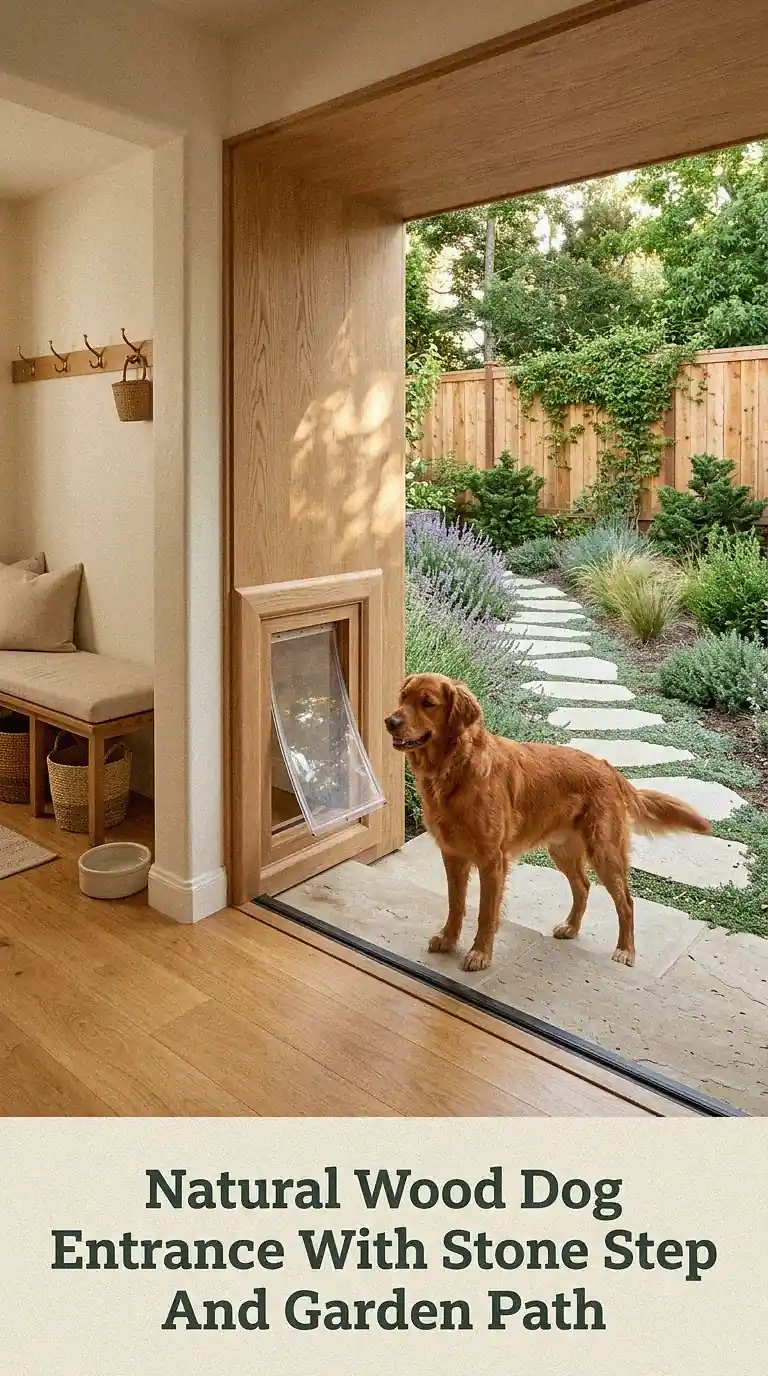
Create a dog entrance that feels connected to the landscape by pairing a natural wood exterior door with a simple stone landing.
Cedar, oak-toned finishes, or wood-look materials coordinate beautifully with gravel pathways, ornamental grasses, low garden borders, and neutral stone.
Inside, continue the earthy feeling with warm beige tile and a woven washable runner.
Make sure the outdoor step is stable, nonslip, and comfortably positioned below the pet door. An awkwardly high threshold can be difficult for smaller dogs, senior pets, or dogs with reduced mobility.
Keep landscaping trimmed well away from the entrance so your dog always has a clear line of travel.
This natural design works especially well for garden-facing kitchens, rustic homes, cabins, and relaxed modern houses surrounded by greenery.
Choosing The Right Dog Door Entrance Ideas For Your Home
The most successful dog door entrance ideas balance three things: your dog’s comfort, your home’s practical needs, and the style you genuinely enjoy living with.
A tiny apartment might benefit from a removable sliding-glass insert, while a busy family home could make better use of a mudroom entrance surrounded by storage. Cold climates may call for a heavily insulated design, and households with several pets might prioritize a larger opening and easy-clean flooring. If security is important, locking covers or selective-entry technology may deserve a place near the top of your list.
Whatever style you choose, start with your dog. Measure carefully, provide a comfortable route through the opening, keep the outdoor destination secure, and give your pet time to learn how the new door works without pressure.
Once those essentials are handled, the entrance can become a surprisingly charming part of your home. A little paint, warm wood, beautiful tile, thoughtful storage, or a sheltered outdoor landing can turn a purely functional feature into a space that feels completely intentional and wonderfully pet-friendly.
Source: https://petstutorial.com
Category: DOGS
