
A muddy walk can be one of your dog’s happiest moments, but the trail of damp paw prints, tangled leashes, and wet towels left behind is rarely as delightful. A thoughtfully designed dog mud room creates a welcoming pause between outdoor adventures and the rest of your home, giving you a comfortable place to clean paws, store supplies, and settle an excited pup.
You are reading: 19 Dog Mud Room Ideas For A Beautiful, Clean, And Organized Home
The best dog mud room ideas combine durable materials with the warmth and character of a beautifully decorated entryway. Whether you have an entire room, half of a laundry area, a narrow hallway, or simply a corner beside the back door, you can build a practical routine around the space you already have. These ideas offer inspiration for large and small dogs, generous renovations, affordable updates, and decorating styles ranging from crisp modern cabinetry to cozy farmhouse finishes.
Beautiful And Practical Dog Mud Room Ideas
Soft Sage Green Mud Room With A Tiled Dog Wash
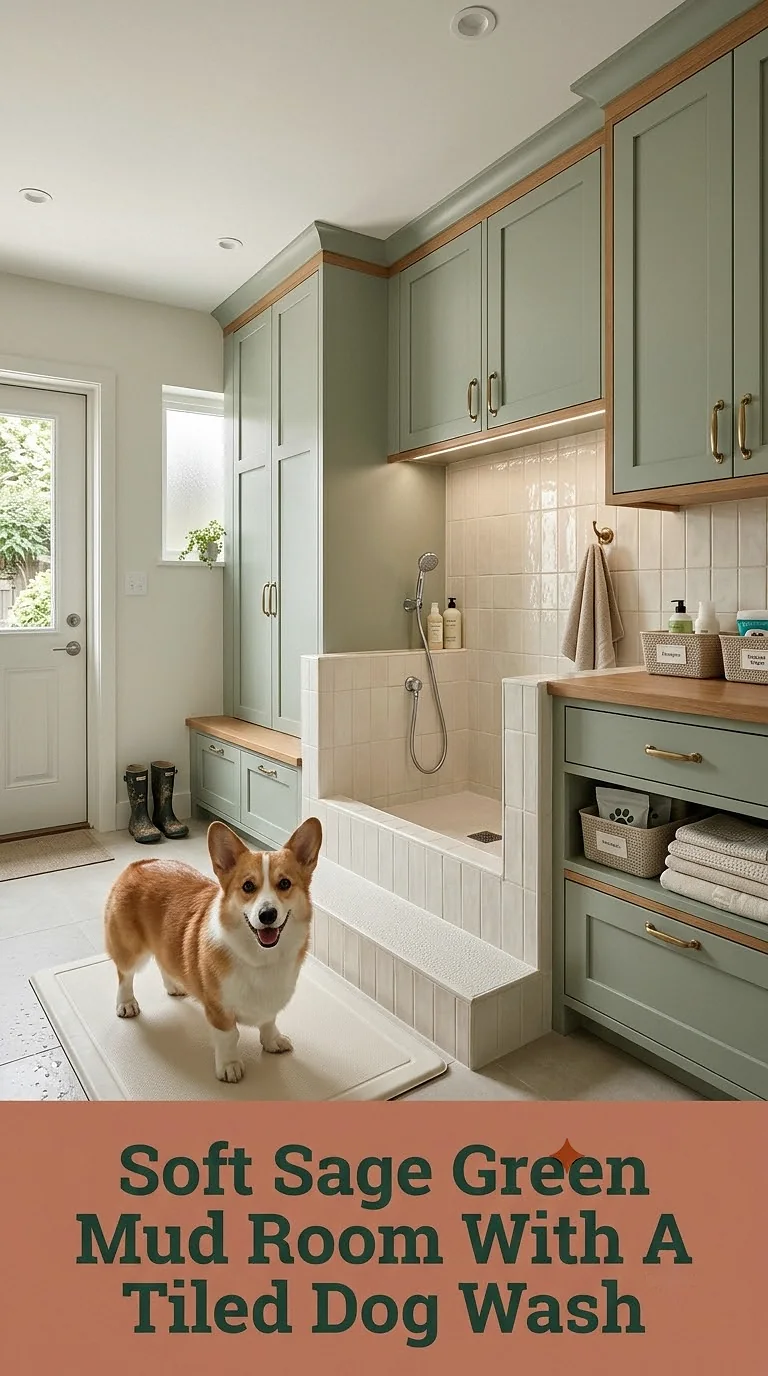
Soft sage cabinetry and creamy tile give a hardworking dog wash the relaxed character of a country home. Position the bathing station near the exterior door so muddy paws reach it before crossing the room. A raised basin can make washing a small or medium dog more comfortable, while a floor-level shower is often easier for a large, older, or mobility-limited dog to enter.
Cover the surround with porcelain or ceramic tile and choose a textured, slip-resistant surface underfoot. A handheld sprayer lets you direct water toward paws and fur without soaking the entire room. Include a ledge for shampoo, a hook for the drying towel, and a nearby waterproof mat where your dog can stand after rinsing.
Finish the look with aged brass or dark metal hardware, warm wood accents, and washable cream textiles. Proper waterproofing, drainage, and plumbing are important, so this feature is worth discussing with a qualified contractor early in a renovation.
Modern White Oak Dog Nook With Hidden Storage Drawers
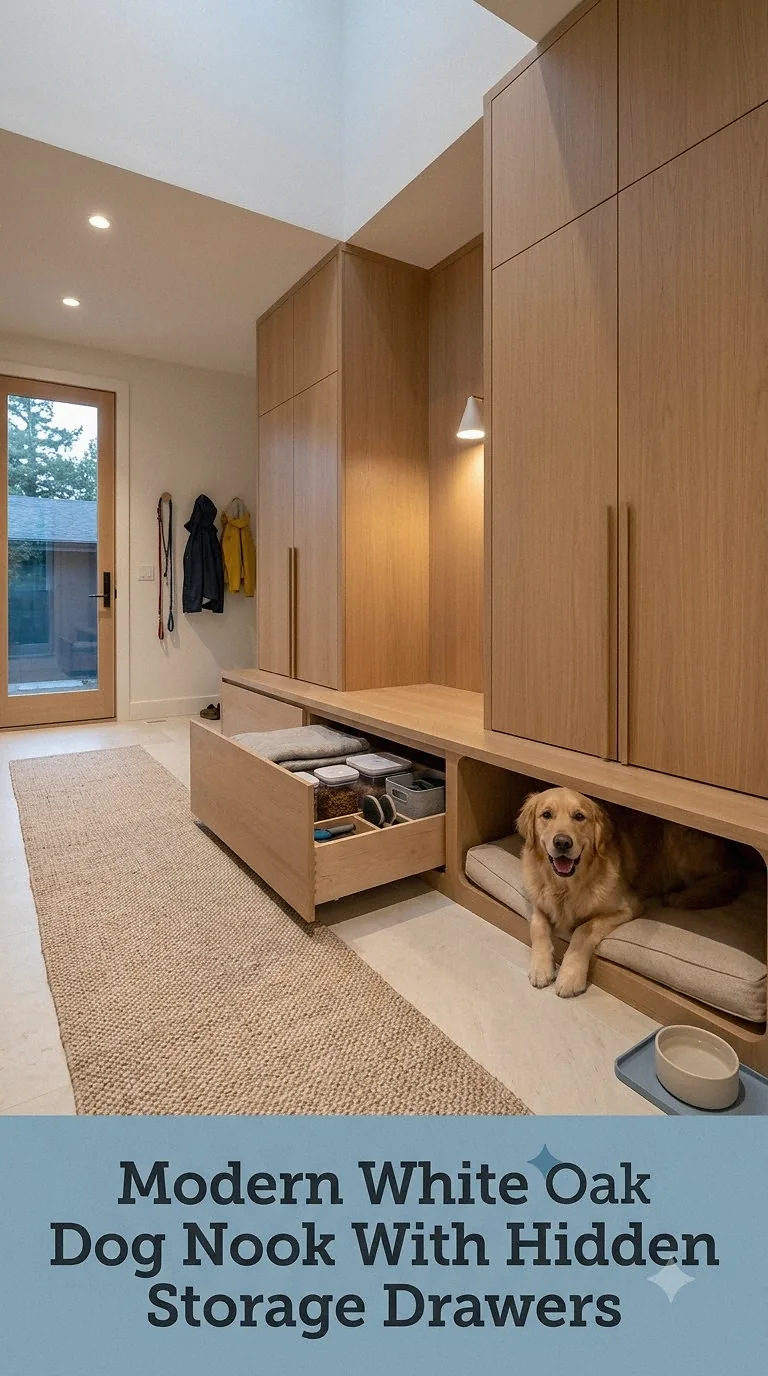
A streamlined white oak built-in can turn one wall of the mud room into an elegant dog headquarters. Create a low sleeping nook beneath a bench or counter, then frame it with full-height cabinets and deep drawers. The warm grain keeps the room inviting, while simple doors conceal food, grooming products, spare bedding, and less attractive everyday supplies.
Fit the nook with a washable cushion that can be removed without scraping against the cabinetry. Leave generous ventilation around the bed, avoid exposed cords, and round or soften sharp projecting corners. A small wall light can create a cozy evening glow, provided its fixture and wiring remain safely beyond chewing range.
For a more affordable version, place a sturdy ready-made bench over a rectangular dog bed and slide lidded bins underneath. A clear protective finish will help wood resist damp paws, but spills should still be wiped promptly to prevent staining or swelling.
Black And White Mud Room With A Raised Hexagon-Tile Shower
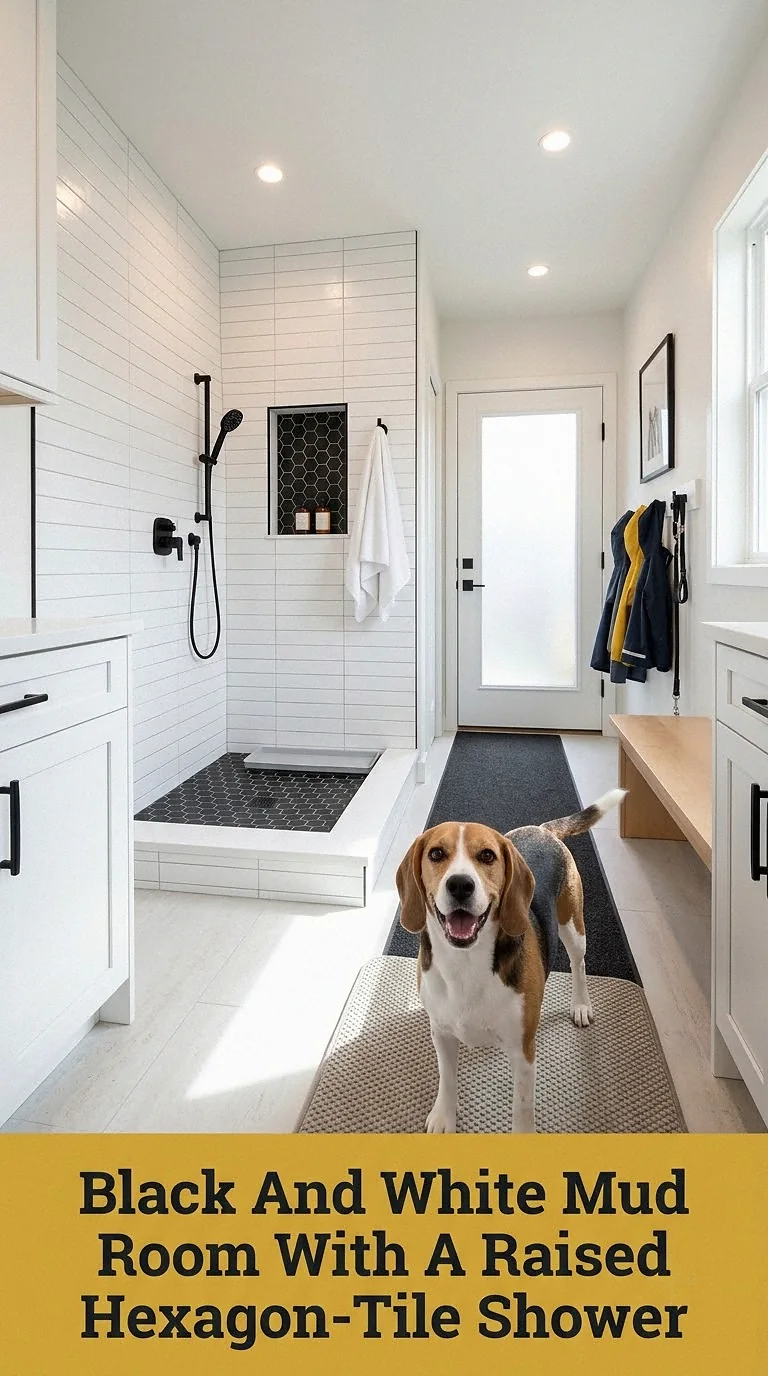
A black-and-white dog shower feels polished without becoming precious. Use white stacked wall tile to brighten the washing area, then add black hexagon tile inside the niche or across the shower floor for graphic contrast. Matte black hardware, hooks, and cabinet pulls tie the composition together and disguise the small marks that develop in a busy entry.
A raised platform reduces bending while bathing a smaller dog, but it should have a secure step or ramp if your pet cannot be safely lifted. Choose textured tile rather than a glossy floor, and place a nonslip mat wherever your dog will jump down. A short curb helps contain water, while a sufficiently deep surround catches the spray from a vigorous shake.
Keep the rest of the room simple with white cabinetry and a warm timber bench. Dark grout may be easier to live with visually, although every tiled wet area still needs routine cleaning to prevent residue from collecting along corners and joints.
Narrow Entryway With Low Leash Hooks And A Slim Bench
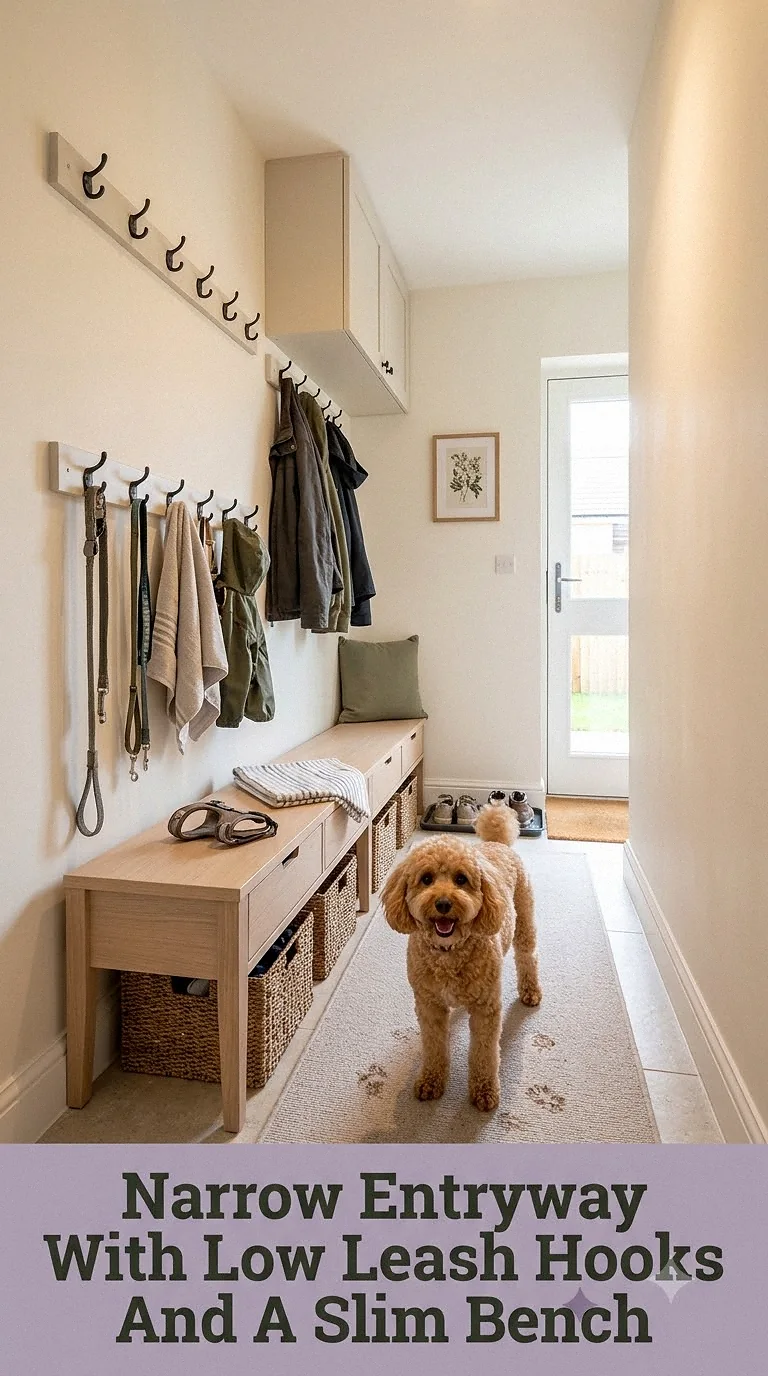
A narrow entry can function like a miniature mud room when storage stays shallow and vertical. Mount several sturdy hooks near the door for leads, harnesses, and lightweight towels, placing human coats higher and dog-walking gear at a comfortable grabbing height. A slim bench offers a place to sit while fastening a harness without obstructing the walkway.
Choose a bench with drawers or baskets beneath it for poop bags, paw wipes, brushes, and seasonal accessories. Keep medicines, cleaning products, and anything edible inside a secure upper cabinet rather than an open basket. A washable runner with a low pile will catch moisture without becoming a trip hazard or trapping as much fur as a thick rug.
Paint the walls a warm off-white and introduce color through olive cushions, striped towels, or a small framed print. Renters can create a similar setup with an over-door organizer, a freestanding shoe bench, and removable hooks rated for the weight of the gear.
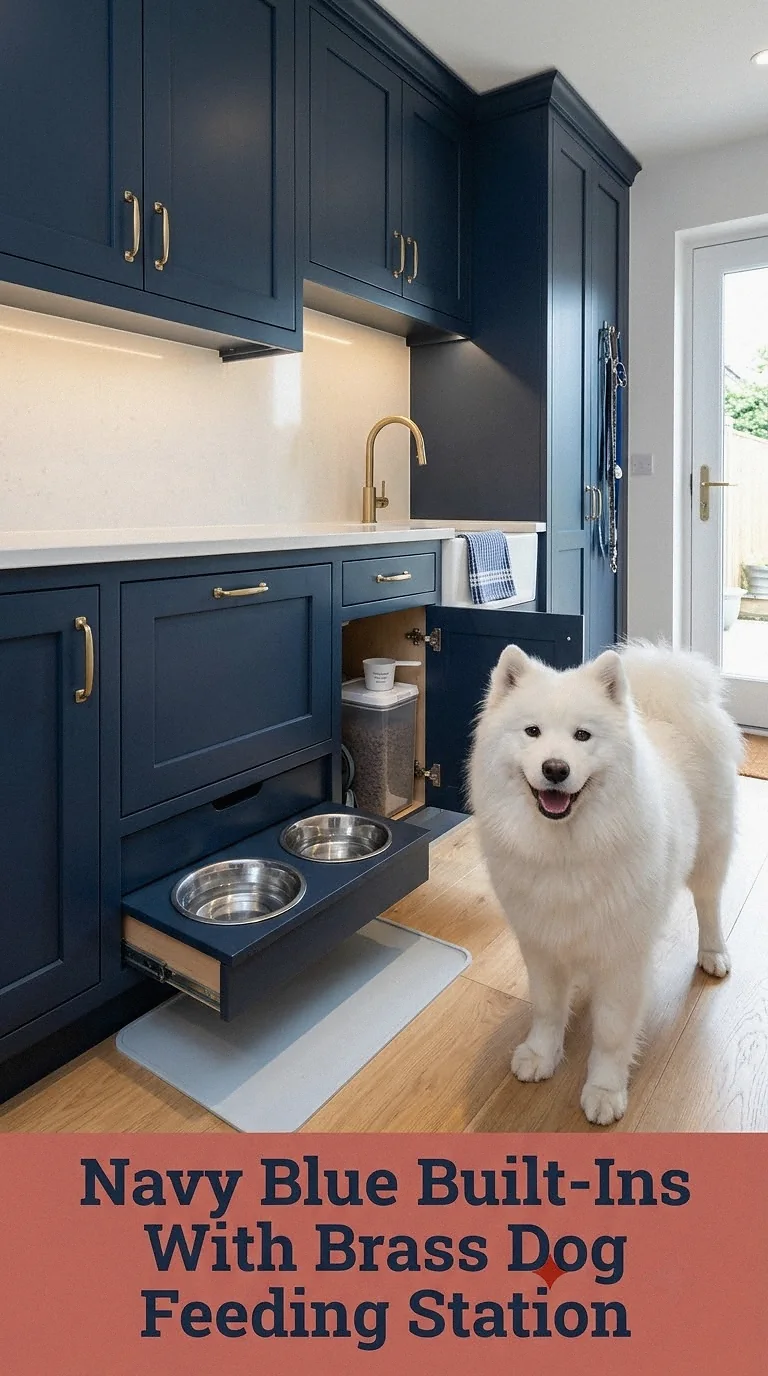
Deep navy cabinetry makes a feeding station look intentional, especially when paired with brass-toned hardware and a pale, easy-clean backsplash. Recess the bowls into a pull-out or fixed platform so they cannot slide across the floor, and place food storage in the cabinet directly above or beside them. A shallow drawer can hold scoops, lids, and feeding accessories.
Select removable stainless-steel bowls that can be washed separately from the cabinet. Surround the station with tile, quartz, or another wipeable surface, and protect the floor with a washable silicone mat if the platform does not catch drips. Elevated bowls are not automatically right for every dog, so choose the height according to your pet’s individual needs and veterinary guidance.
Use an airtight, dog-resistant container for kibble and add cabinet latches if your pet investigates doors. A built-in water tap can be convenient during a major renovation, but a simple carafe or nearby utility sink delivers much of the same practicality on a smaller budget.
Rustic Farmhouse Mud Room With Reclaimed Wood Cubbies
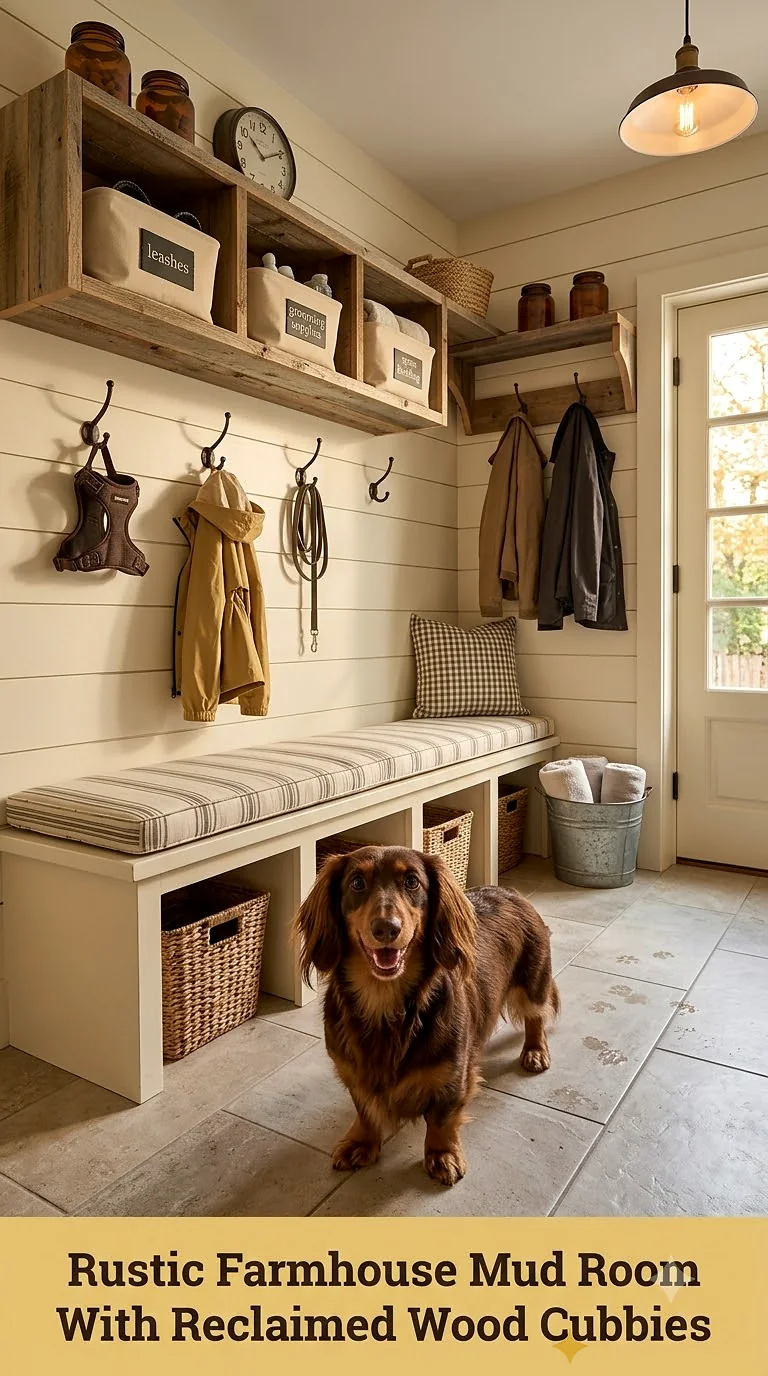
Reclaimed-looking timber, creamy shiplap, and iron hooks create a farmhouse mud room that feels collected rather than clinical. Build a row of open cubbies above a sturdy bench for folded towels and attractive baskets, then reserve lower storage for shoes and outdoor dog gear. A vintage metal pail can hold clean rolled towels close to the garden door.
Real reclaimed wood should be checked for splinters, flaking finishes, and protruding nails before it enters a pet space. Seal porous boards so damp fur and muddy splashes can be wiped away, or use new wood with a weathered finish for more predictable maintenance. Pair it with porcelain stone-look flooring to capture rustic texture without the upkeep of a highly porous floor.
Read more : 18 Dog Fathers Day Gift Ideas DIY Projects He Will Treasure
Keep the styling edited so practical items remain easy to reach. Gingham or striped cushion covers, an old-fashioned wall clock, and amber glass treat jars can complete the look, but food should stay sealed and out of your dog’s reach.
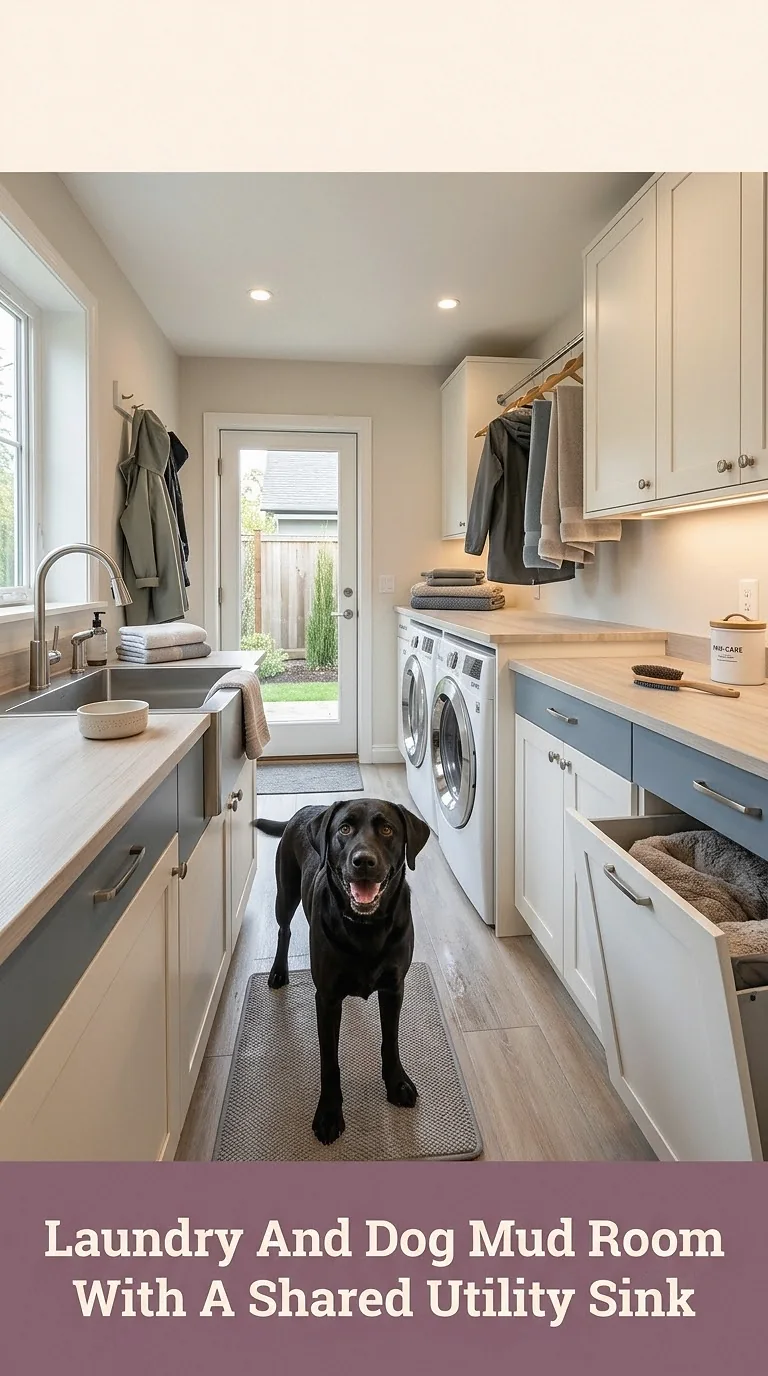
Combining laundry and pet care makes excellent use of plumbing, cabinetry, and cleaning supplies already concentrated in one place. Arrange the washer and dryer along one wall, then place a deep utility sink and dog-cleaning counter nearby. The exterior door should open onto a clear path to the sink or paw-wiping mat rather than through piles of laundry.
Use closed cabinets to separate detergents and stain removers from towels, leads, and grooming tools. Household chemicals should be latched or stored high enough that a curious dog cannot reach them. Add a hanging rail for damp coats and towels, but leave space between items so they can dry instead of remaining bunched together.
Warm white cabinets, blue-gray accents, and a wood-look waterproof floor can make this multipurpose room feel calm and cohesive. Counter space above front-loading machines is useful for folding, while a pull-out hamper keeps furry dog linens separate until wash day.
Compact Closet Conversion With Pegboard Gear Storage
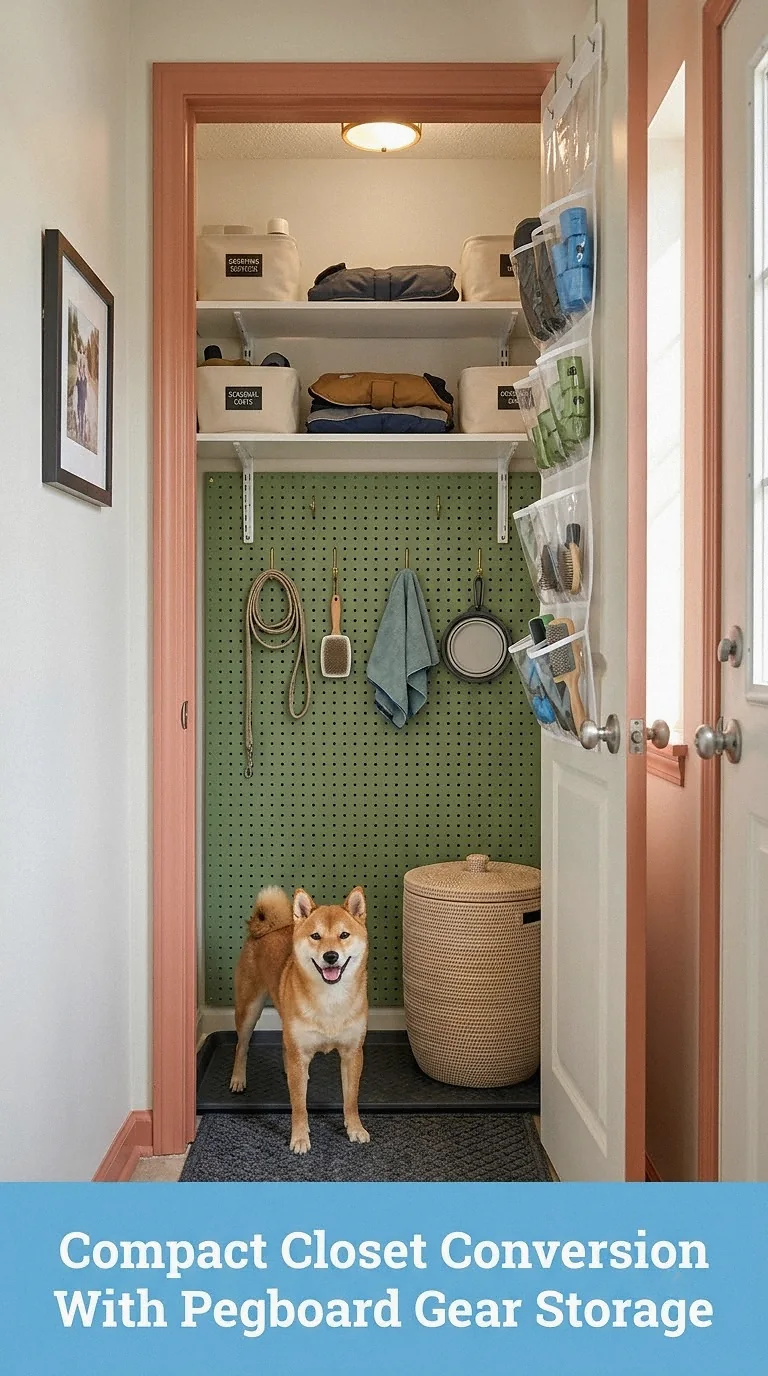
An underused coat closet can become an efficient dog station without requiring a separate room. Remove the hanging rod, install a painted pegboard or adjustable wall rail, and give each leash, harness, and towel a defined place. Shallow shelves above can hold labeled bins for grooming tools, travel supplies, and seasonal coats.
Place a washable mat on the closet floor and keep a lidded basket of clean towels within easy reach. Clear pocket organizers on the inside of the door work well for small nonhazardous items such as spare waste-bag rolls, brushes, and collapsible bowls. Avoid overloading the door or leaving loops where an unattended pet could become tangled.
A cheerful interior color, such as muted coral or leafy green, makes opening the closet feel special while allowing the surrounding hall to remain neutral. This is a manageable weekend project using paint, modular shelving, and standard hardware, and the doors can close when you want the entry to look quiet.
Warm Terracotta Paw-Cleaning Corner With Woven Baskets
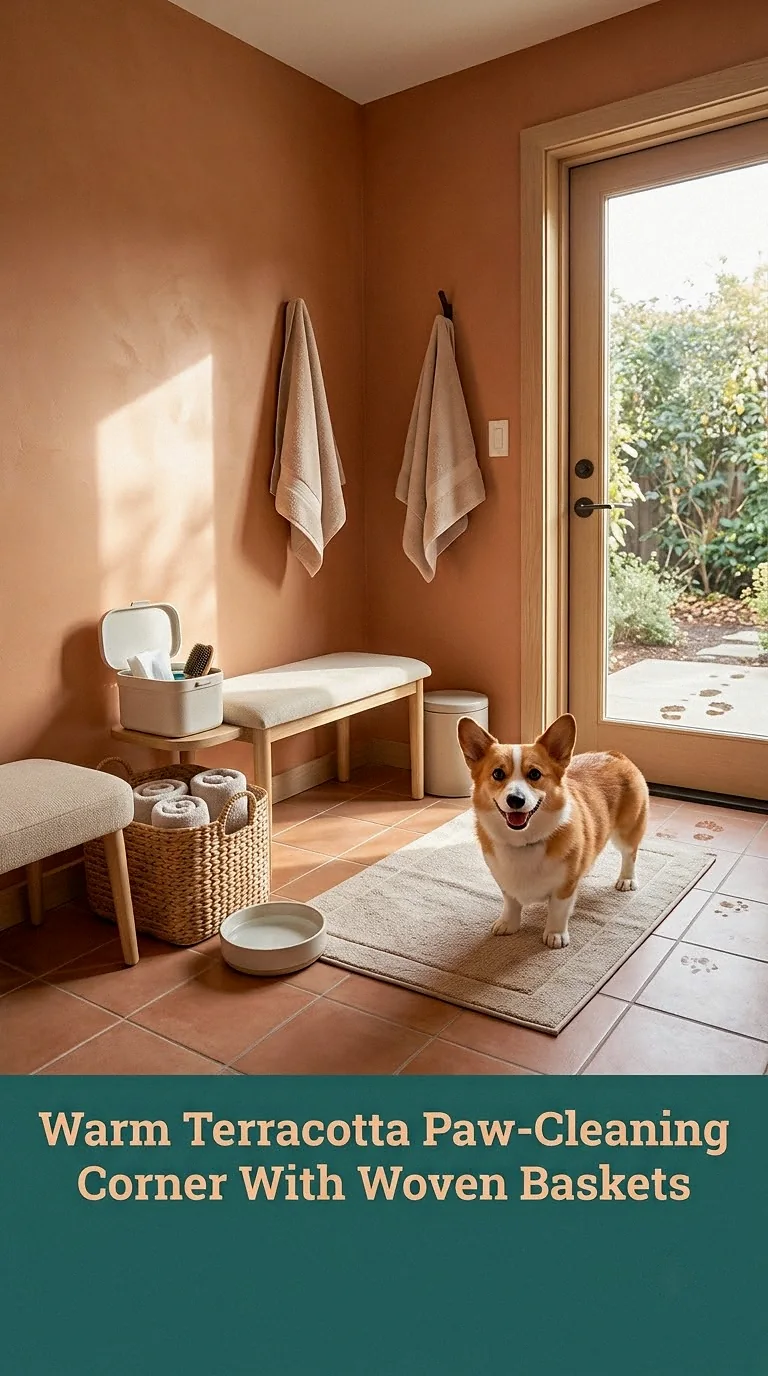
A dedicated paw-cleaning corner can transform everyday walks without the cost or space required for a full shower. Set a large absorbent mat beside the door and add a small washable stool or bench where you can sit comfortably. Store clean towels in an open woven basket and keep wipes and a paw brush in a wipeable lidded container.
Terracotta-colored walls, natural baskets, and cream textiles create a sunny Mediterranean mood. Because genuine terracotta tile can be porous, use properly sealed material or choose porcelain tile that reproduces its warm, varied appearance. Select baskets with a smooth weave and place them where an enthusiastic tail will not knock them over.
Teach your dog to pause on the mat after coming inside, rewarding calm behavior while you inspect and dry each paw. Rotate damp towels immediately, vacuum loose grit often, and launder the mat according to its care label so this small station remains fresh and inviting.
Window Bench Dog Retreat With Washable Botanical Cushions
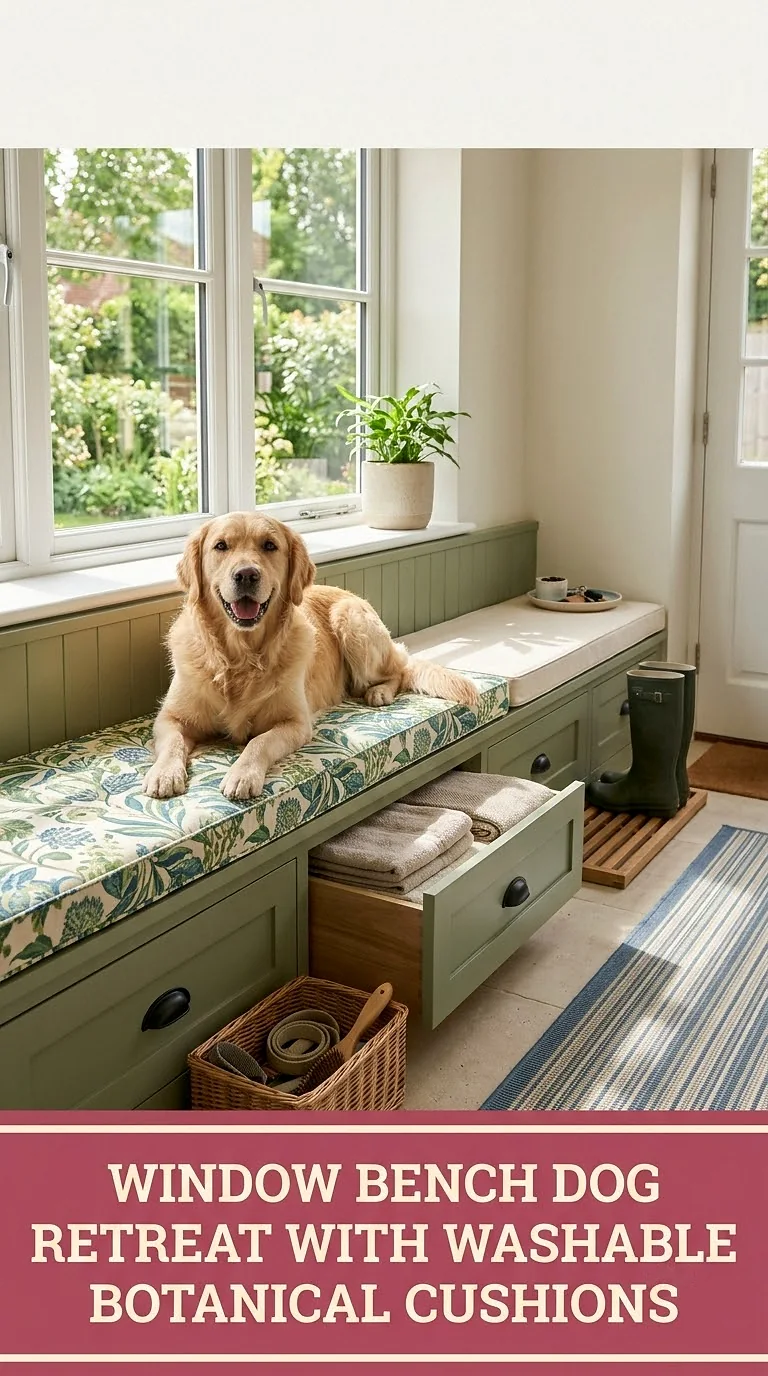
A window bench brings comfort and charm to a mud room while giving your dog a sunny place to watch the garden. Extend the seat from wall to wall, add drawers beneath, and reserve one end for a fitted dog cushion. Botanical fabric in green, blue, and cream can introduce pattern without making the practical room feel busy.
Choose a tightly woven, washable cover with a zip so fur and muddy marks are easy to remove. The bench should be stable, low enough for your dog to access comfortably, and free from blind cords or fragile objects on the sill. If strong sun heats the window, add a safe shade and make sure your dog can move to a cooler resting place.
The human side of the bench can hold a firmer seat pad for putting on boots or sorting outdoor gear. Deep drawers provide discreet storage for spare blankets, but damp items should be dried fully before being enclosed.
Charcoal Gray Mud Room With Double Built-In Dog Crates
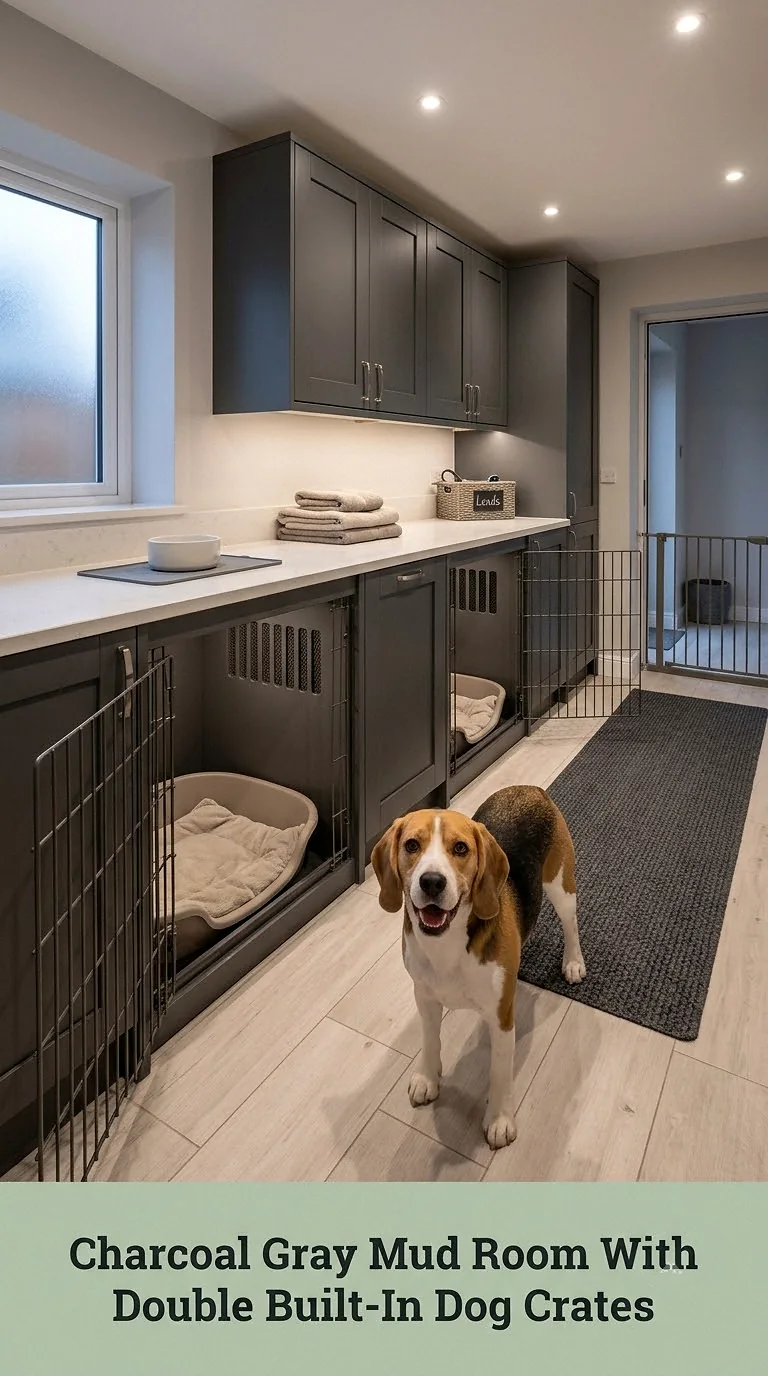
For a multi-dog household, two built-in crates beneath a long counter create an orderly resting area while preserving valuable floor space. Charcoal gray cabinetry, pale quartz-look counters, and simple metal doors produce a tailored appearance that suits a contemporary home. Give each dog an appropriately sized compartment rather than dividing one cramped cavity.
Ventilation must come before visual neatness. Use open, secure crate fronts and incorporate airflow at the sides or back, keeping the units away from hot appliances and direct heat sources. Select smooth, durable interior surfaces, removable bedding, and hardware without sharp edges or pinch points.
Crates should remain positive, comfortable spaces and should never be treated as decorative cabinets with insufficient air. Work with an experienced fabricator when integrating them into joinery, and consider freestanding crates placed neatly under an existing counter as a flexible, lower-cost alternative.
Sunlit Garden Entry With A Dog Door And Gated Zone
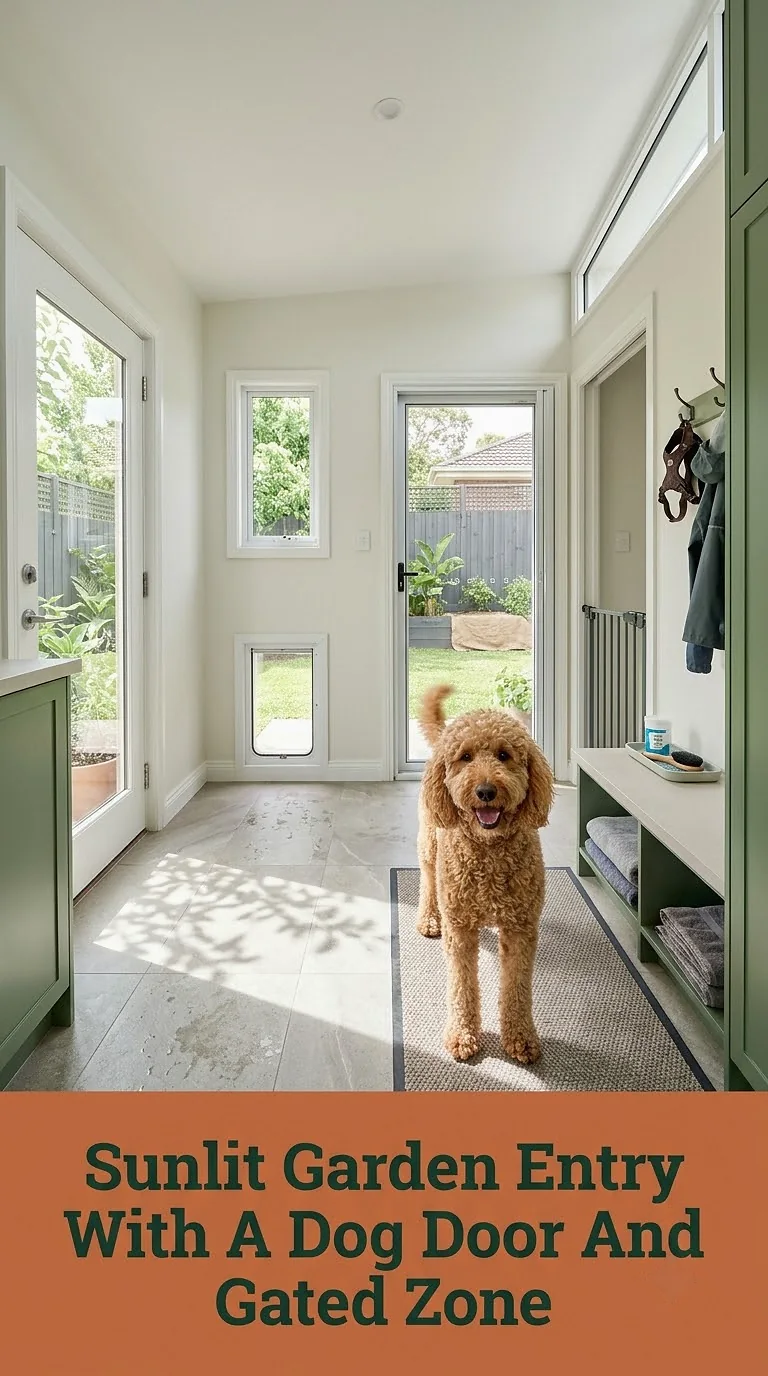
A mud room connected directly to a fenced garden can manage traffic beautifully. Position a suitable dog door along the exterior wall, then create a washable landing zone with a textured mat, towel hooks, and a low bench. A glass-paneled back door or generous window keeps the area bright and allows you to check outdoor conditions easily.
Add a secure interior gate so your dog can pause in the mud room before entering the rest of the house. The gate should suit your dog’s size and jumping ability, latch reliably, and have openings that will not trap a head or paw. Outdoor access still requires a secure yard, supervision appropriate to your dog, and attention to weather and temperature.
Use leafy green cabinetry, pale walls, and stone-look porcelain flooring to echo the garden without sacrificing practicality. Check the pet door seals regularly for drafts and wipe the threshold often, since this transition point will collect the greatest amount of dirt.
Minimalist Concrete-Floor Mud Room With Matte Black Storage
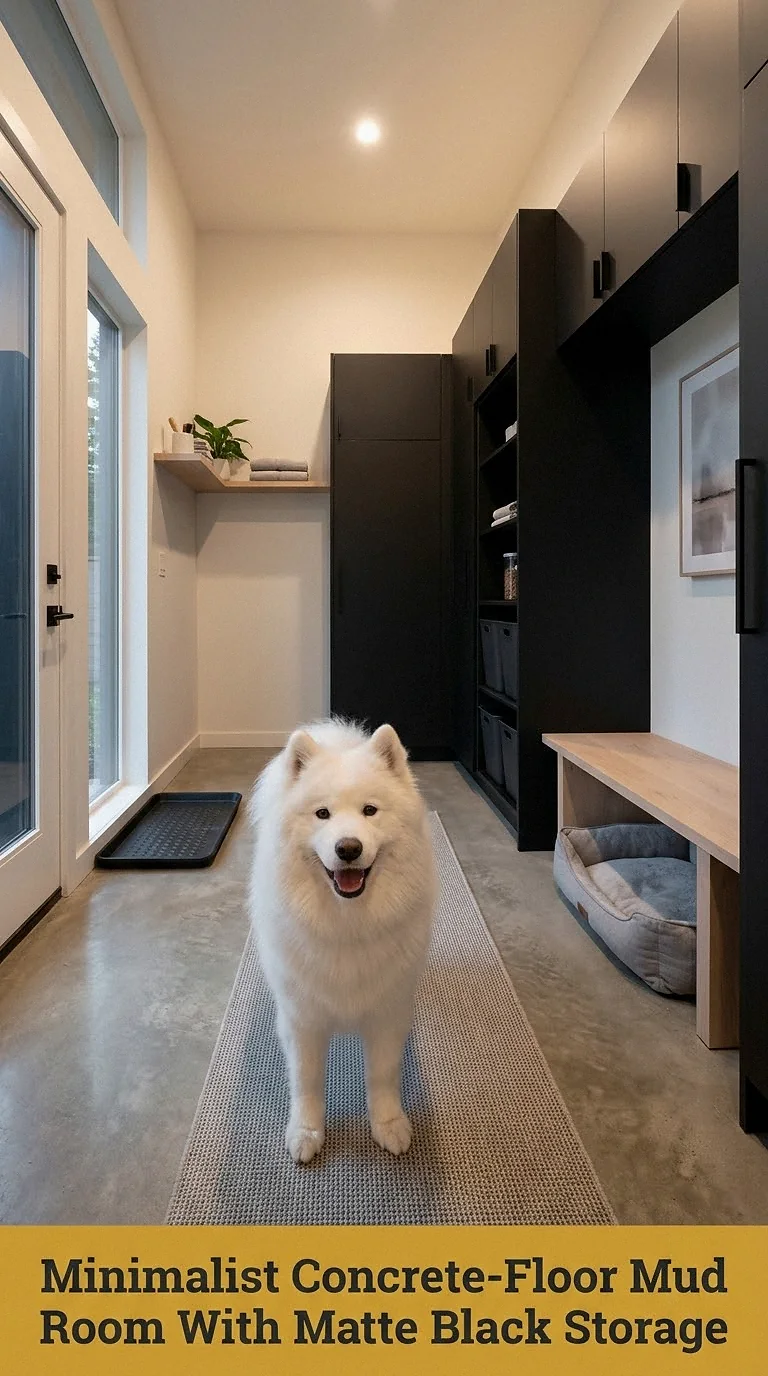
Sealed concrete and matte black storage create a clean, architectural dog mud room that tolerates visible signs of daily life. Run tall cabinets along one wall and leave the opposite side open for an uncluttered route from the door. A pale timber bench and soft gray dog bed prevent the palette from feeling cold.
Concrete should be properly finished and sealed to resist moisture and stains. Because a very smooth surface may be slippery for wet paws, discuss traction with the installer and use stable, nonslip runners in key areas. Matte cabinet finishes hide fingerprints and minor scuffs more gracefully than high-gloss surfaces.
Read more : 20 Cheap Dog Bed Ideas That Look Cozy, Stylish, and Expensive
Limit open display to a few practical objects, such as folded towels and a ceramic container for brushes. This style depends on disciplined storage, so fit cabinets with pull-out bins, adjustable shelves, and secure compartments for food and cleaning products.
Patterned Tile Mud Room With A Hidden Roll-Out Food Bin
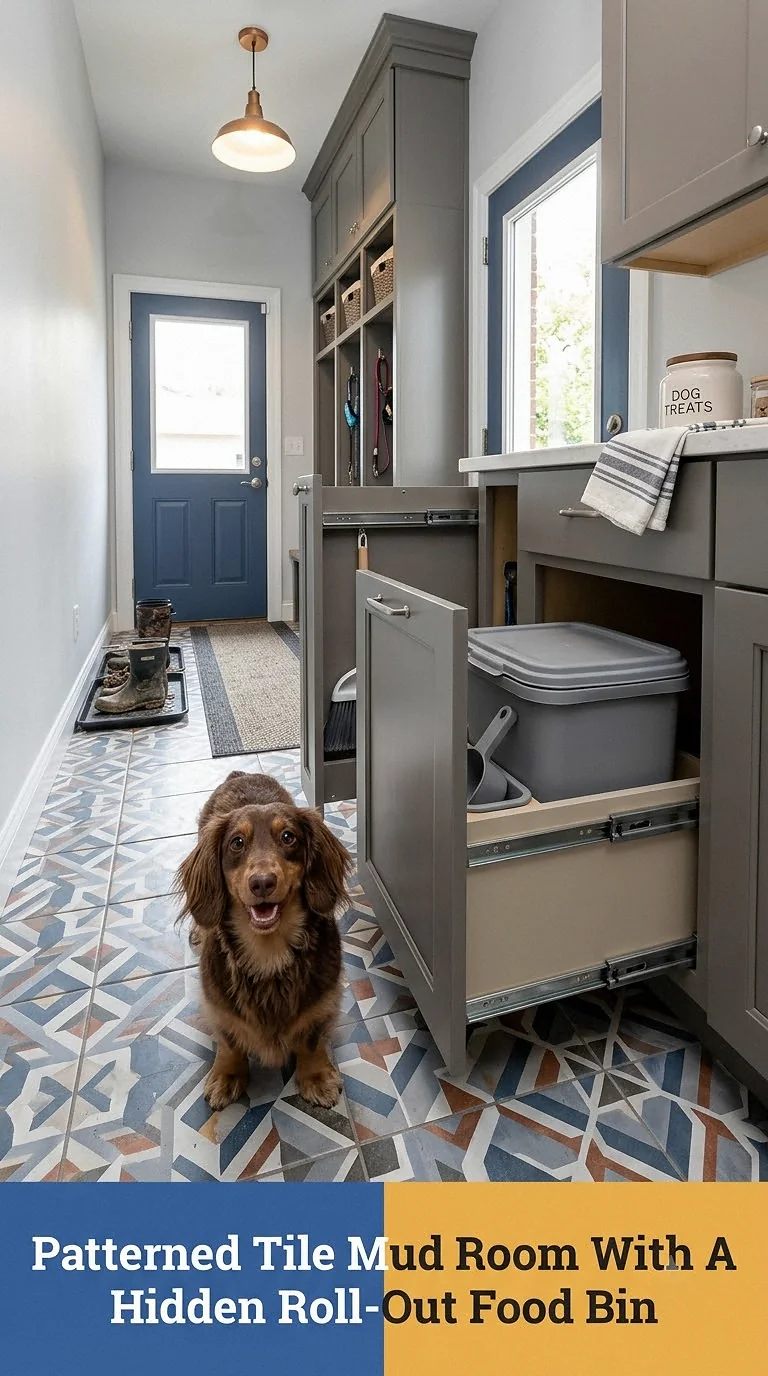
A patterned floor can disguise everyday specks of dirt while giving a compact mud room a memorable focal point. Choose a restrained geometric tile in blue, gray, rust, and white, then repeat one shade on the cabinets. Plain walls and counters will balance the lively floor and keep the room from looking crowded.
Install a deep pull-out cabinet with an airtight food container that can be lifted out for washing. The mechanism should support the full weight of the food, close securely, and remain inaccessible to a determined pet. Place the scoop in a separate washable holder rather than leaving it buried inside the kibble.
Porcelain tile is a practical choice for a busy entrance, but traction matters more than shine. Use grout suited to the application, clean spills promptly, and keep a small vacuum or broom nearby for crumbs and tracked-in grit.
Under-Stair Dog Retreat With Warm Wood Paneling
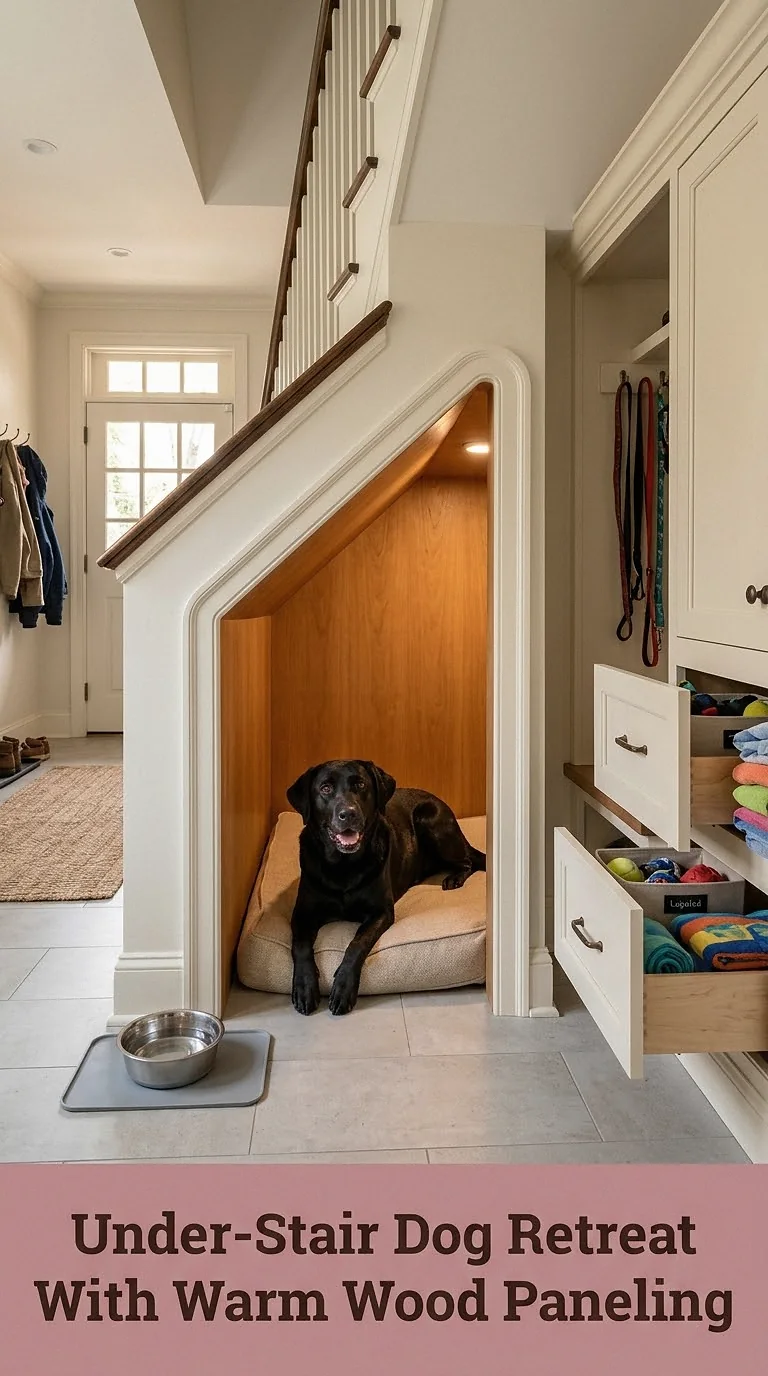
The space beneath a staircase can become a snug dog retreat when it is dry, ventilated, and safely finished. Line the interior with smooth warm wood paneling, frame the opening with painted trim, and add a fitted washable bed. Nearby drawers can hold toys and walking gear without taking space from the sleeping area.
Measure the nook around your dog’s standing and turning height rather than designing only for visual symmetry. Provide airflow, avoid enclosing heating equipment, and keep electrical cables inaccessible. An open entrance is often simplest, though a secure ventilated gate can be added if the nook is intended to function like a crate.
A small rechargeable or professionally wired light can brighten a deep space, but your dog should also have a quiet, dim place to rest. This project can range from a simple bed beneath open stairs to custom carpentry that matches the home’s existing millwork.
Coastal Blue Mud Room With A Towel-Drying Rail
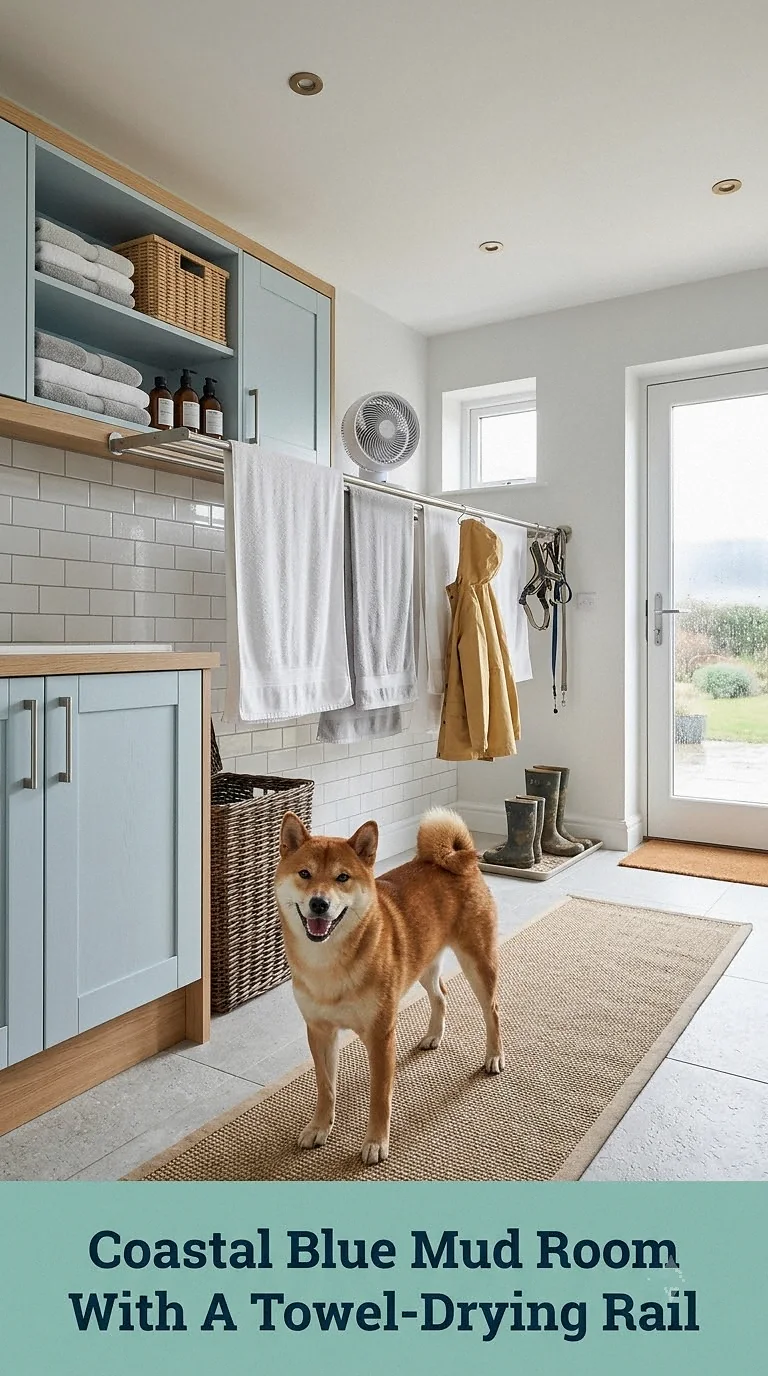
Pale blue cabinetry, white tile, and light oak create an airy coastal mud room that feels fresh even on rainy days. Dedicate one wall to a long rail with widely spaced hooks for wet towels, raincoats, and harnesses. Position it over a tiled splashback or other wipeable wall finish where drips will not damage paint.
Include open shelving or a ventilated basket for clean towels, and place a hamper nearby for used ones. Damp fabrics need airflow, so avoid stuffing them immediately into closed cupboards. A compact circulating fan or effective room ventilation can help manage humidity, especially when the space also contains a dog wash.
Finish with navy stripes, brushed metal fixtures, and a durable woven-look runner. Avoid delicate fringes that collect dirt or tempt chewing, and choose machine-washable fabrics so the light palette remains realistic for everyday life.
Small Apartment Entry With An Olive Dresser And Boot Tray
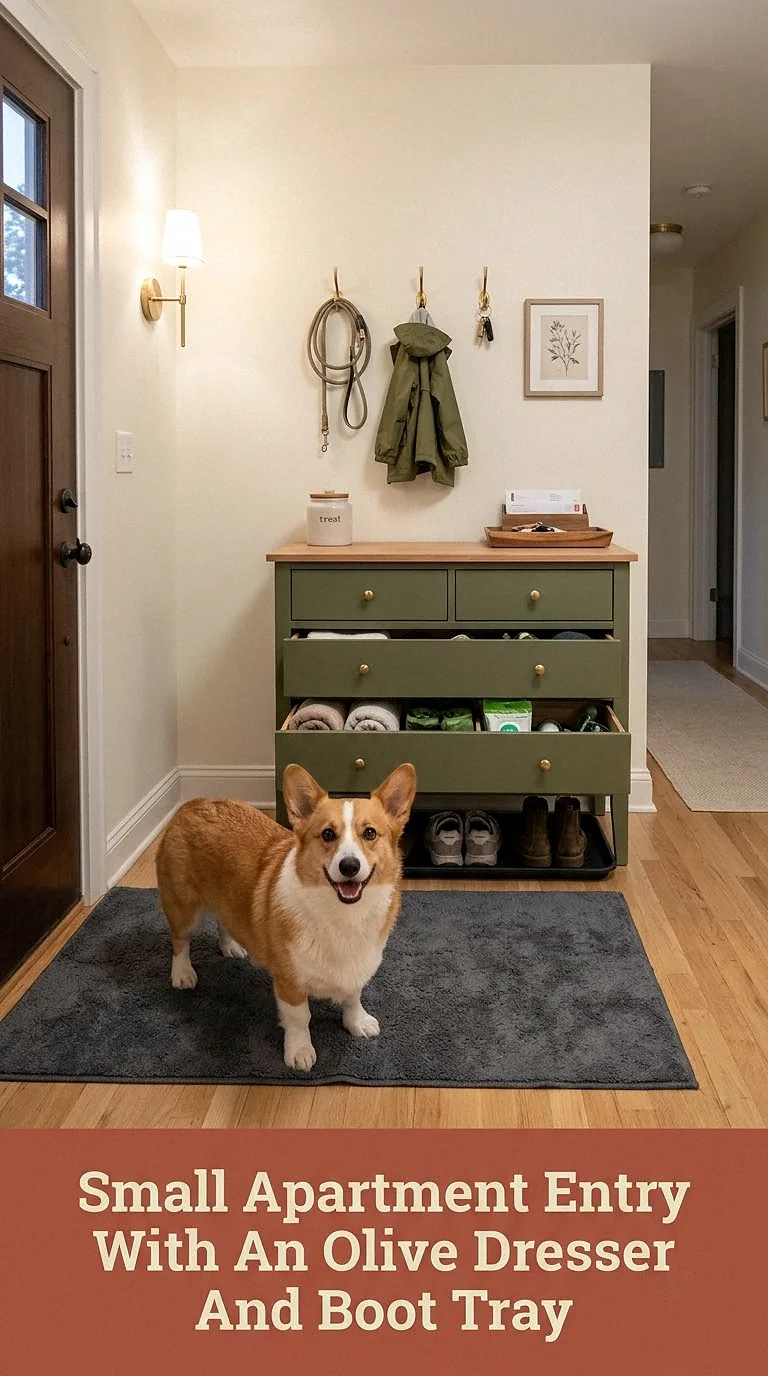
A small apartment does not need a formal mud room to support an organized dog-walking routine. Place a narrow olive green dresser beside the entry, mount hooks above it, and set a waterproof boot tray below. The dresser can hold towels, waste bags, grooming wipes, and weather-specific gear while doubling as an attractive hallway piece.
Use the top for a lidded treat jar and a small tray for keys, keeping both far enough back that your dog cannot reach them. A washable microfiber mat beside the door creates a defined waiting and paw-drying spot. Add nonslip backing if the mat moves on hard flooring.
Renters can use a freestanding hook rack or an over-door system where wall mounting is restricted. Thrifted furniture keeps the project affordable; simply check that the dresser is stable, anchor it when permitted, and protect its top with a wipeable tray.
Luxury Quartz Dog-Wash Wall With Glass-Front Cabinets
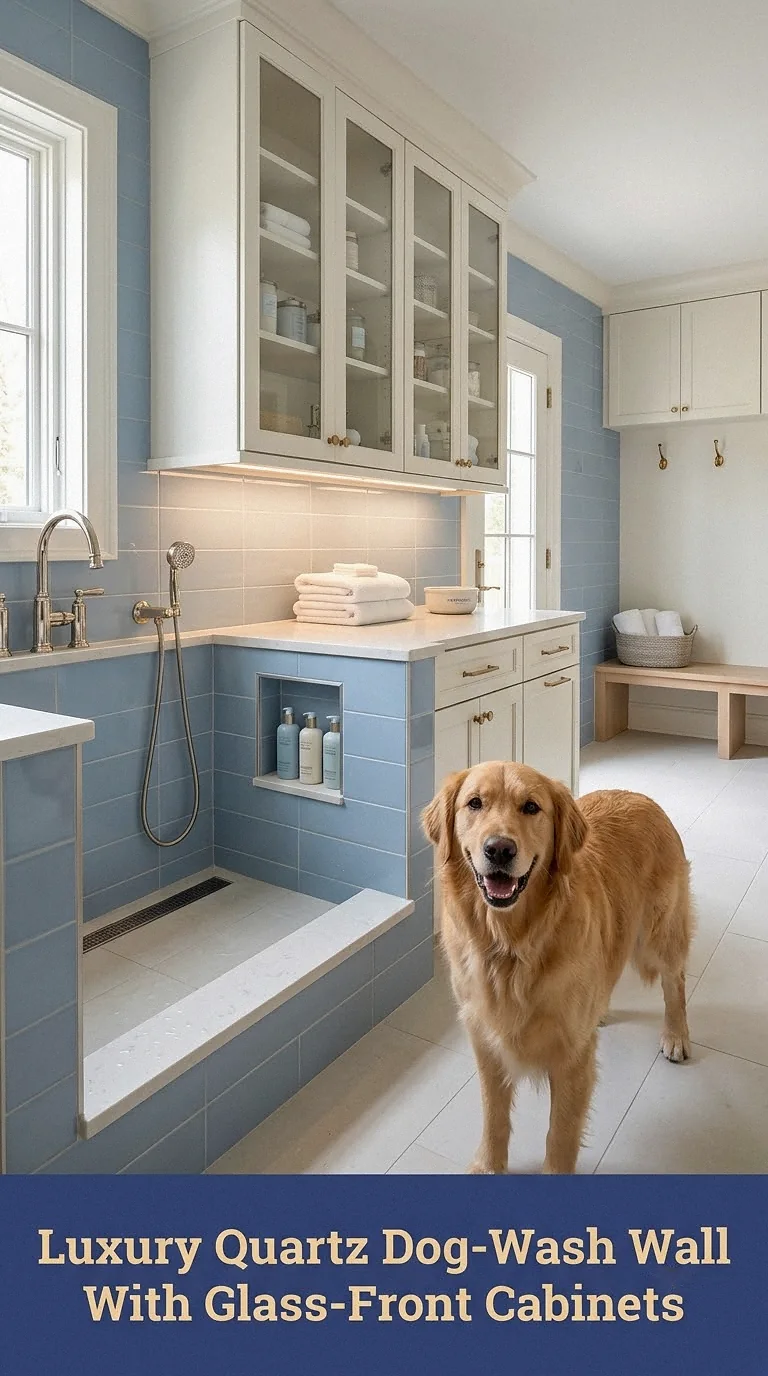
For a high-end mud room, combine a tiled dog wash with quartz surfaces and elegant glass-front upper cabinets. Soft blue tile, warm white cabinetry, and polished nickel or aged brass fixtures create a refined room that still works hard. Use the glass cabinets for neatly folded towels and attractive containers while hiding bulk supplies behind solid lower doors.
Quartz is useful on grooming counters because its nonporous surface is easy to wipe, although care requirements vary by manufacturer. Extend durable material around splash-prone areas, include a handheld sprayer, and provide a niche for bathing products. A floor-level wash with a broad entrance is especially practical for large dogs.
Plan the plumbing, drain, waterproofing, ventilation, and cabinetry as one coordinated project. Luxe details should never compromise traction or access, so use slip-resistant flooring, secure fittings, and a layout that lets you handle your dog without awkward reaching.
Colorful Family Mud Room With Labeled Pet Cubbies
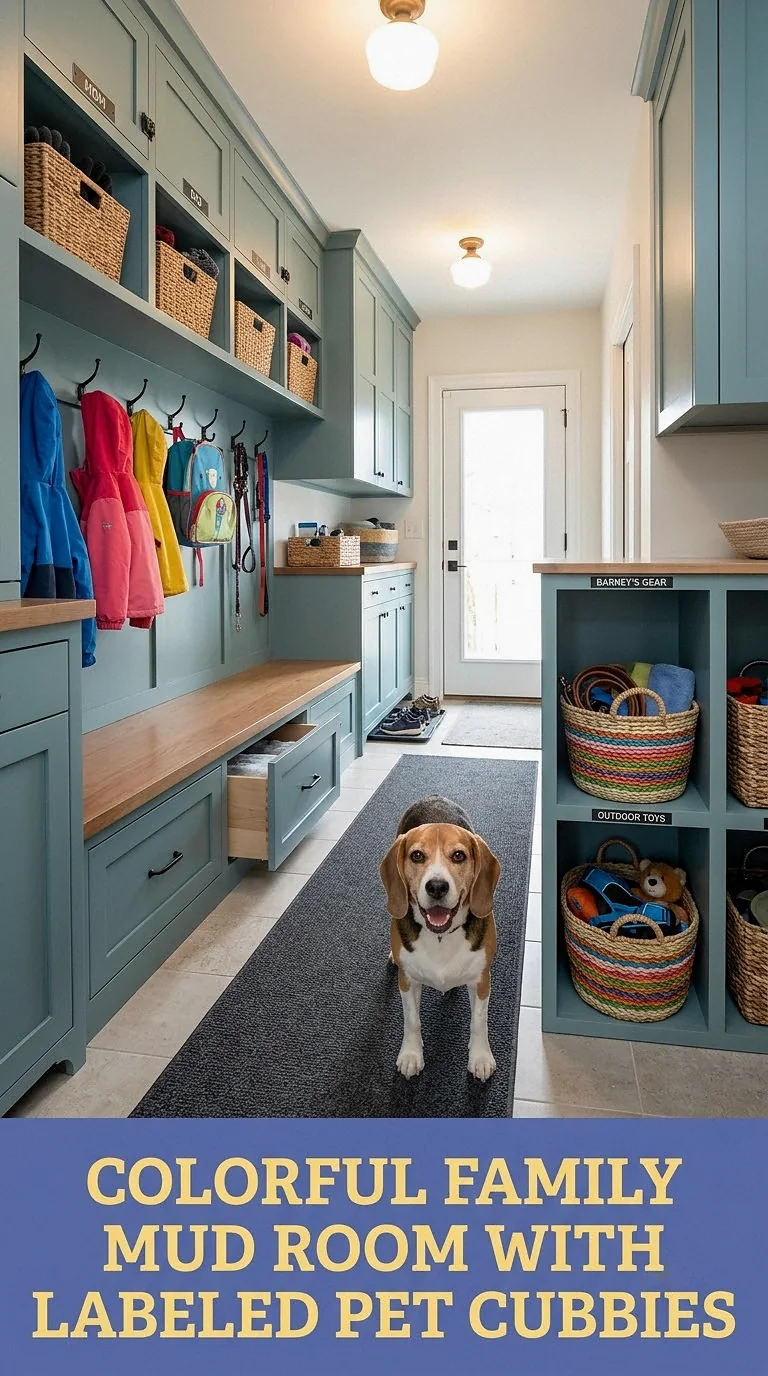
A busy family mud room can give every person and pet a clearly defined zone. Paint the main cabinetry a cheerful muted teal, then use labeled cubbies, colored baskets, and rows of hooks to separate school bags, coats, dog leads, and outdoor toys. Assign each dog a basket for frequently used gear so nothing becomes tangled during a rushed departure.
Keep dog equipment low enough for adults to grab easily, but store treats, medication, and cleaning supplies in latched upper cabinets. A wide bench supports shoe changes and leash fastening, while durable drawers underneath contain toys and spare towels. Choose labels that can be updated as routines and seasons change.
Ground the colorful cabinetry with neutral porcelain tile and a washable charcoal runner. This layout works best when the center aisle remains clear, so use wall storage generously and return each item to its designated cubby after walks.
Creating A Dog Mud Room That Works For Your Home
The most successful dog mud room ideas begin with your real routine: the door you use after walks, the amount of mud your dog brings home, the gear you reach for daily, and the kind of resting space your pet enjoys. Start with essentials such as a washable mat, reachable towels, secure storage, and durable flooring, then add a wash station, built-in bed, feeding area, or custom cabinetry if space and budget allow.
Choose colors and finishes that feel connected to the rest of your home, but let easy cleaning, safe access, and your dog’s comfort guide every decision. Even one thoughtfully arranged corner can make arrivals calmer, keep mess contained, and give your beloved companion a welcoming place of their own.
Source: https://petstutorial.com
Category: DOGS
