
Imagine opening the back door to a cheerful outdoor retreat where your dog can run, sniff, splash, climb, and rest—all while you enjoy a garden that still feels stylish and welcoming. A thoughtfully designed play area can bring more movement and enrichment into your pet’s day without turning your yard into a cluttered obstacle course.
You are reading: 18 Dog Park Ideas For A Beautiful, Safe, And Playful Outdoor Space
The best dog park ideas balance beauty with practical details such as secure fencing, comfortable surfaces, shade, drainage, fresh water, and clear sightlines. Whether you have a compact patio, a long side yard, or a spacious lawn, you can borrow features from well-designed public parks and adapt them to your home. Start with the elements that suit your dog’s age, size, confidence, and favorite activities, then add new features gradually as you discover what they genuinely enjoy.
Beautiful And Practical Dog Park Ideas To Inspire Your Space
Modern Backyard Dog Park With Black Fencing And Green Turf
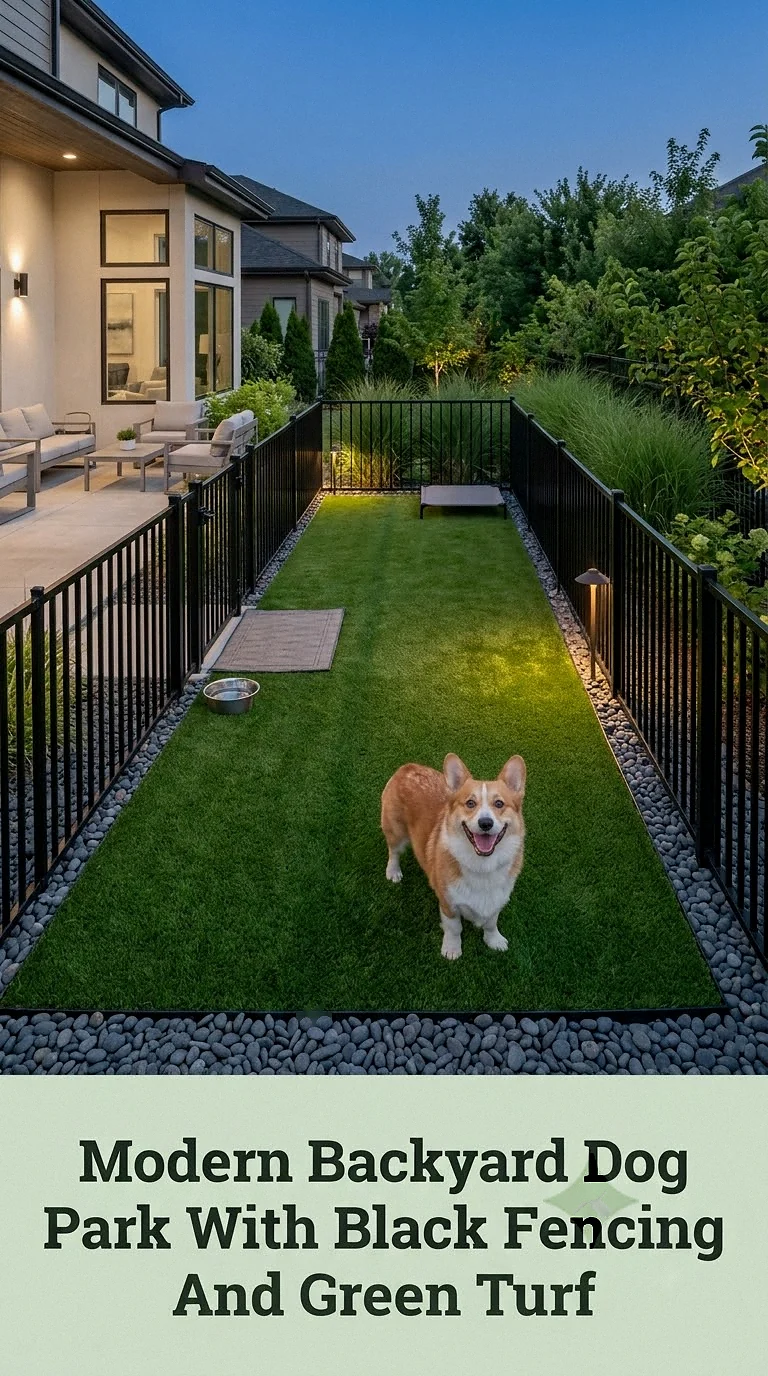
Turn a section of your yard into a polished play zone with matte-black fencing, neatly edged turf, and a simple gravel border. The dark framework creates a modern contrast against greenery while helping the enclosure blend with contemporary patios and garden furniture. Keep the layout open so you can supervise your dog from the house or seating area.
Choose a surface that fits your climate and maintenance routine. Natural grass feels cool but may become patchy in busy areas, while dog-appropriate synthetic turf offers a consistently green appearance when installed over a properly draining base. Gravel can work along fence lines, although pieces should be smooth and large enough not to lodge between paws.
Include a secure double-gate entrance if space allows. Check fence height, gate latches, and gaps against your dog’s jumping, climbing, and digging habits, and avoid placing benches or play structures close enough to become escape platforms.
Cottage-Style Small Dog Garden With White Picket Fencing
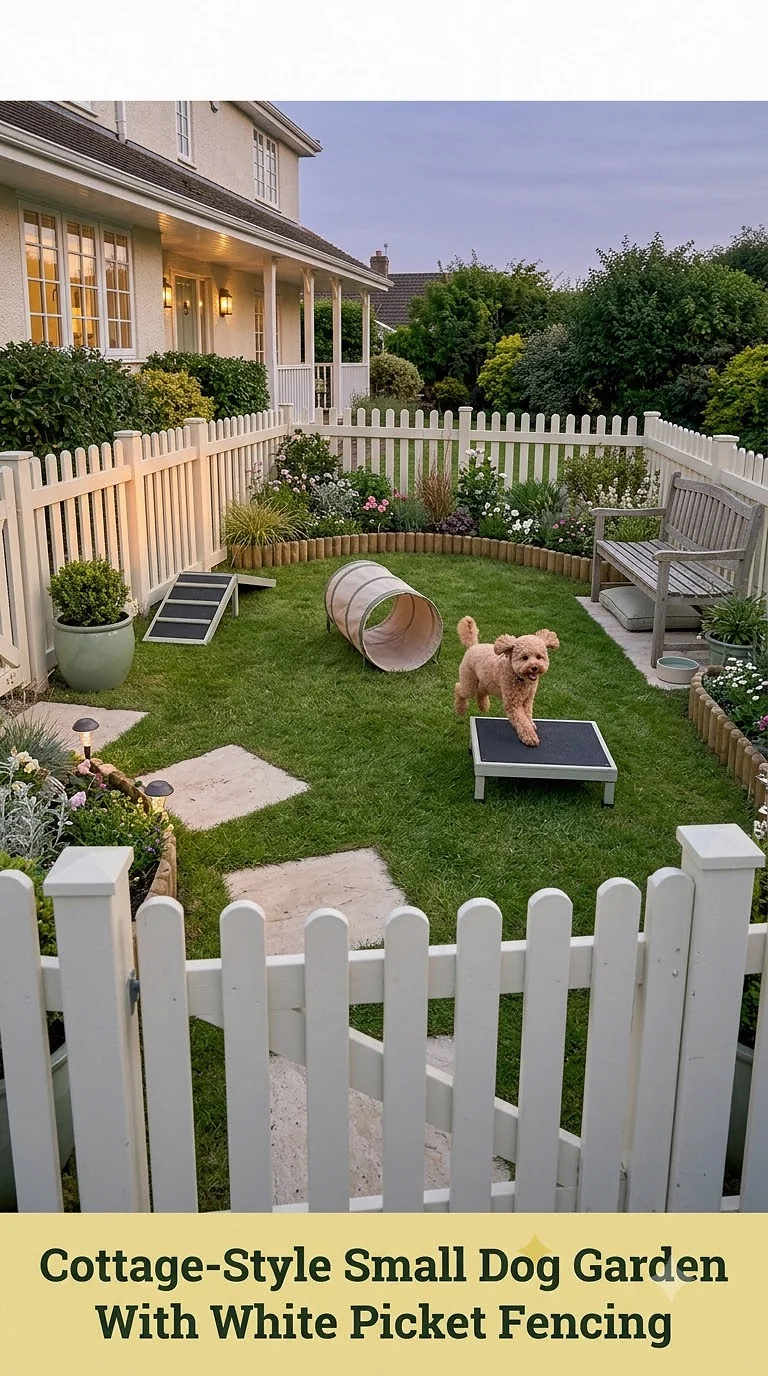
For petite dogs, create a sweet cottage-inspired enclosure with white fencing, curved planting borders, and a miniature lawn. Soft sage planters, pale stepping stones, and a small wooden bench make the area feel like a charming garden room rather than a utilitarian pen. Choose closely spaced fence pickets so little heads and bodies cannot slip through.
Keep plants in raised beds or behind low decorative barriers to prevent trampling. Every variety should be confirmed as non-toxic to dogs, including the flowers, leaves, berries, roots, and mulch surrounding it. Skip cocoa mulch and thorny plants, and avoid chemical lawn treatments that are not intended for pet areas.
A low ramp, short tunnel, and stable platform can provide appropriately scaled enrichment without overwhelming a tiny dog. Leave generous open space between features, and add a shaded resting spot where your pet can retreat when playtime becomes tiring.
Natural Woodland Run With Curving Paths And Log Stepping Posts
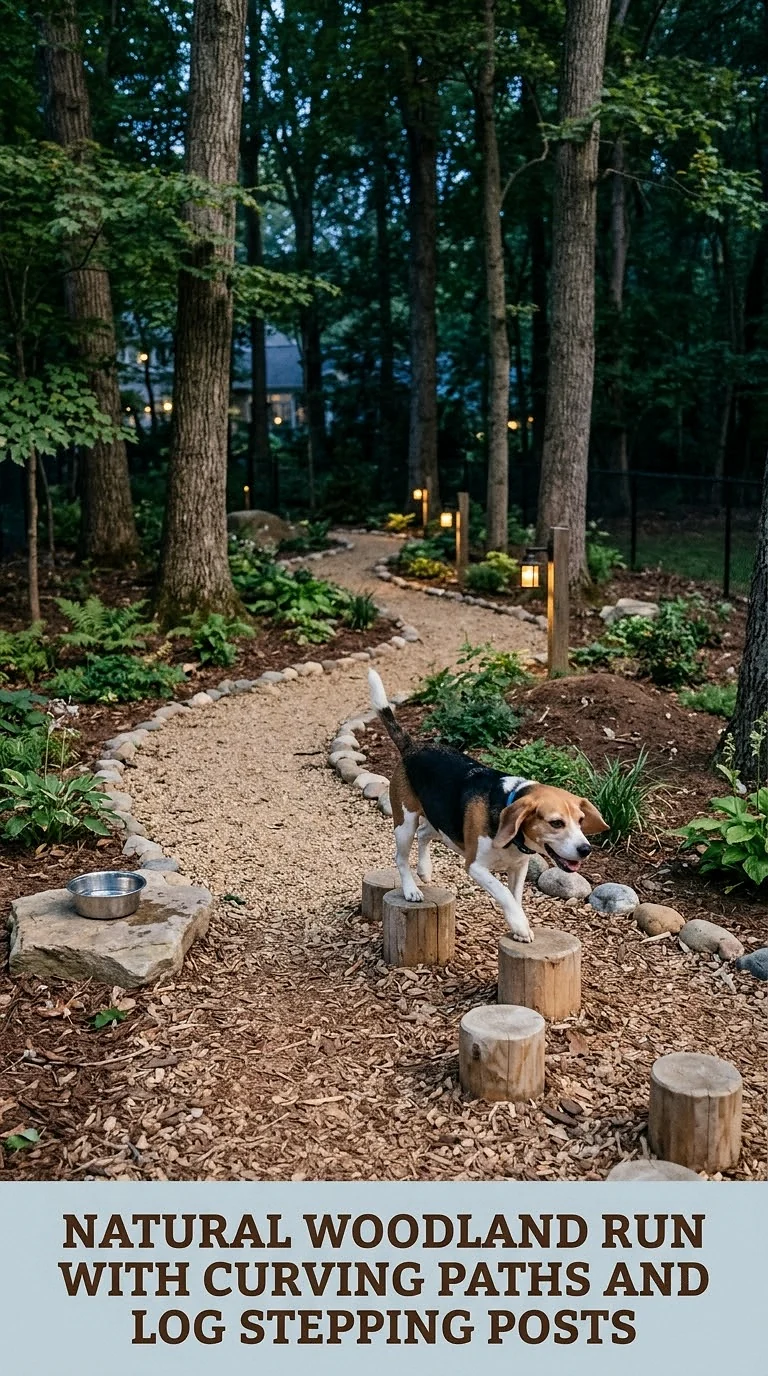
A woodland-inspired dog run feels relaxed and organic, making it especially attractive beneath mature trees or along a shaded property edge. Form a looping path around clusters of sturdy logs, low mounds, and native-looking planting beds. The curves invite exploration while giving you a pleasant route for short training walks.
Use smooth, stable log rounds as stepping posts, selecting different widths and modest heights rather than creating risky jumps. Sand rough surfaces, remove loose bark and splinters, and anchor every piece so it cannot roll. Avoid pressure-treated scraps or unknown salvaged wood that may contain unsuitable chemicals.
Cover paths with compacted fine gravel, pet-safe wood chips, or another locally appropriate permeable surface. Inspect the area regularly for mushrooms, fallen branches, sharp seed heads, and wildlife waste. Woodland shade is lovely, but good visibility remains essential, so prune dense undergrowth and keep tunnels or barriers open at both ends.
Pastel Agility Garden With Adjustable Jumps And Weave Poles
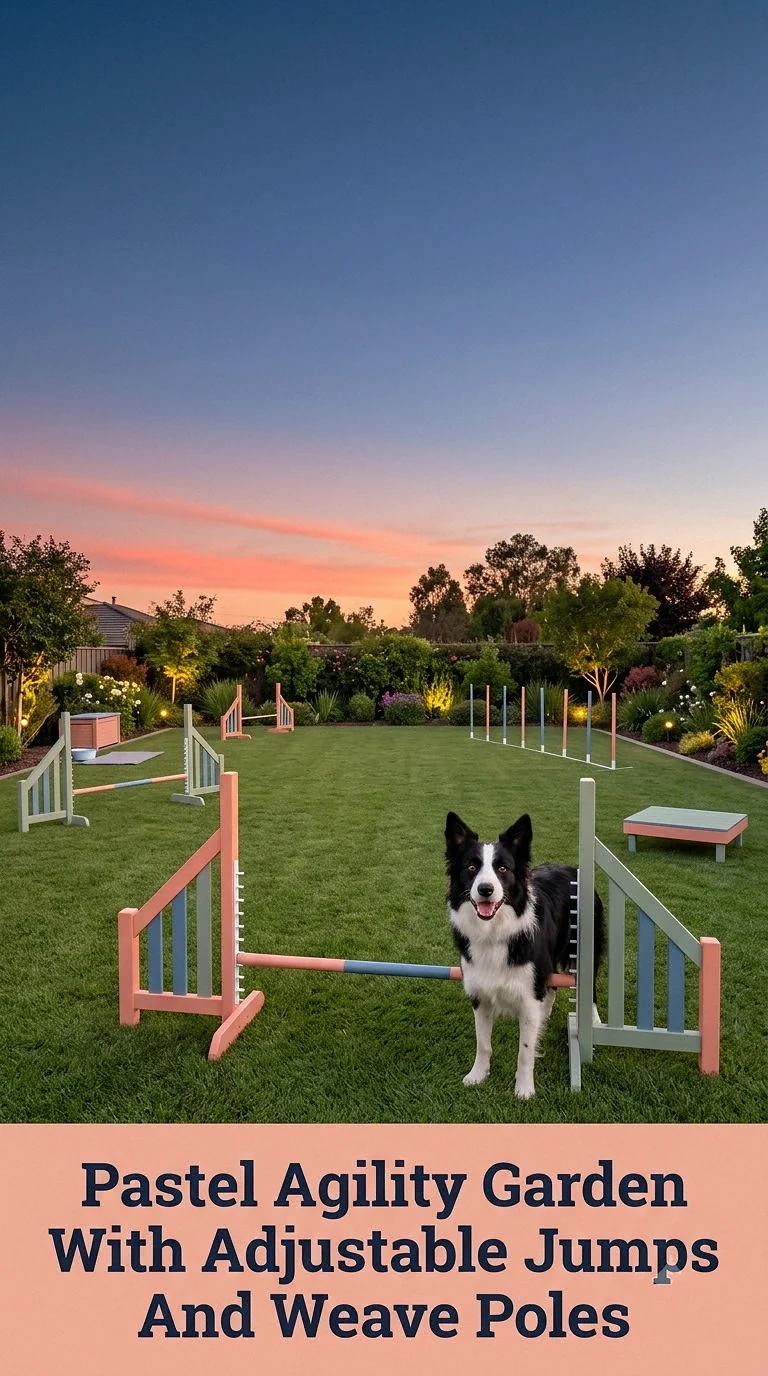
Create a cheerful training garden with adjustable jumps, weave poles, and a low pause platform painted in soft coral, dusty blue, or sage green. Arranging the pieces around the edge of the lawn preserves an open center for fetch and makes the equipment feel intentional rather than crowded. Weather-resistant exterior finishes help the colors stay fresh.
PVC can be an affordable material for removable jumps, but the crossbar should dislodge easily if struck. Secure weave poles firmly, space them consistently, and introduce them slowly with rewards rather than forcing your dog through. Agility should be tailored to your pet’s health and structure; puppies, senior dogs, and dogs with joint or spinal concerns may need low-impact alternatives approved by a veterinarian.
Store lightweight equipment in a deck box when it is not being supervised. This prevents chewing, weather damage, and accidental entanglement while keeping the yard visually tidy.
Shaded Pergola Lounge With Washable Dog Beds And Woven Baskets
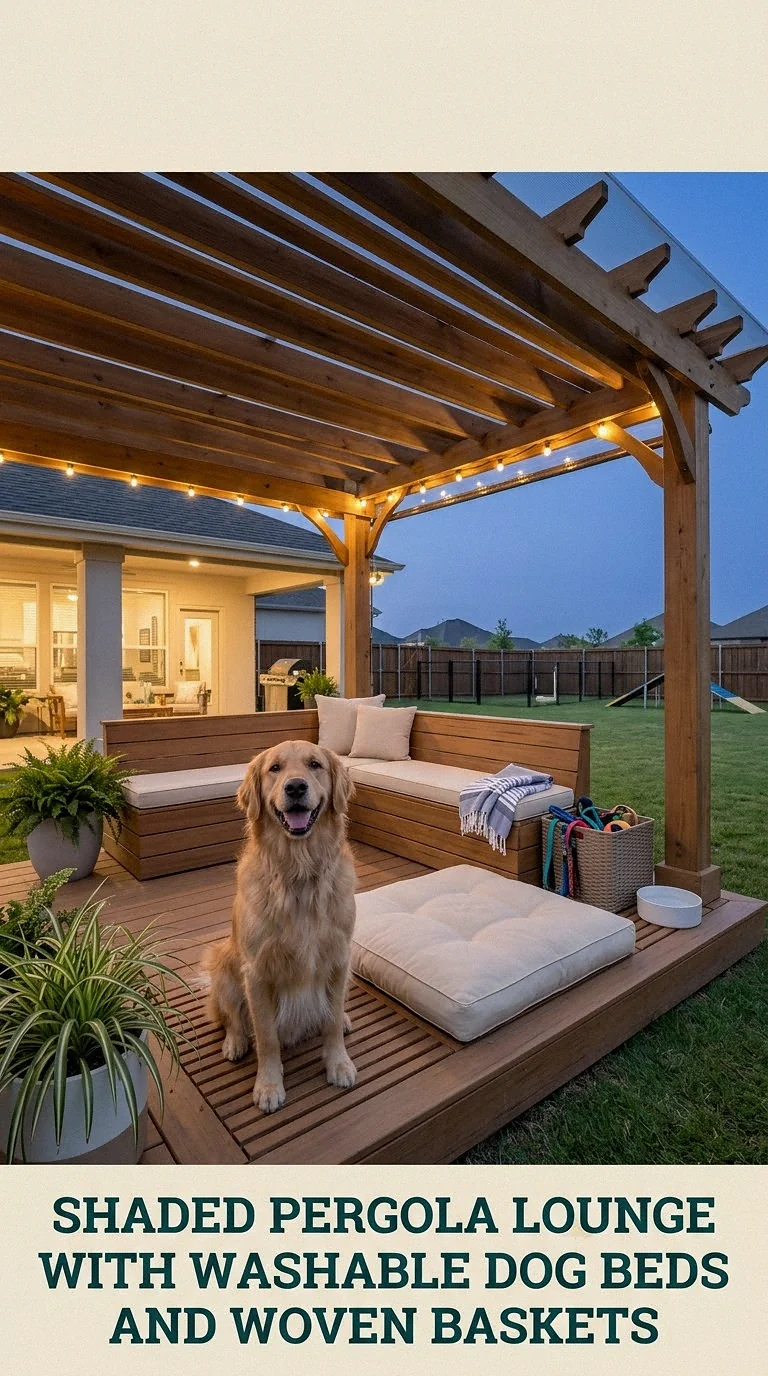
Not every dog wants to run continuously. A timber pergola can become a calm shared lounge with an outdoor bench for you, washable floor cushions for your dog, and woven-look resin baskets for leashes and toys. Warm wood, cream textiles, and potted greenery give the corner the cozy character of an outdoor living room.
Position the pergola where it provides useful afternoon shade, and consider a solid or waterproof roof in rainy climates. If you add climbing plants, confirm that the species is dog-safe and keep dropped berries or pods cleaned up. Outdoor fabrics should resist moisture and be easy to remove for washing.
Place beds on a raised, ventilated platform rather than damp soil. Keep water nearby and maintain an unobstructed view of the active play space. Fans or misters may help in suitable climates, but cords, motors, and hoses must remain protected from chewing and playful paws.
Beach-Inspired Digging Cove With Sand And Driftwood-Style Edging

Give enthusiastic diggers an approved place to excavate with a defined sand cove bordered by smooth, driftwood-style timbers. Pale sand, weathered wood, and a striped shade canopy create a breezy coastal look that can fit into even a modest corner. Bury washable toys just beneath the surface to teach your dog where digging is encouraged.
Read more : Top 8 Strangest Dogs
Use clean play sand intended for recreational use, and install a permeable base with drainage beneath it. The border should be splinter-free, firmly anchored, and low enough to step over safely. Cover the pit when it is not in use to discourage neighborhood cats, wildlife, and windblown debris.
Rake the sand frequently, remove waste immediately, and replace contaminated material as needed. A paw-rinsing mat beside the exit helps keep sand out of the house. Supervise dogs that eat sand or destroy toys, since a digging zone should encourage natural behavior without becoming an ingestion hazard.
Blue-Tiled Splash Pad With Gentle Ground-Level Sprayers
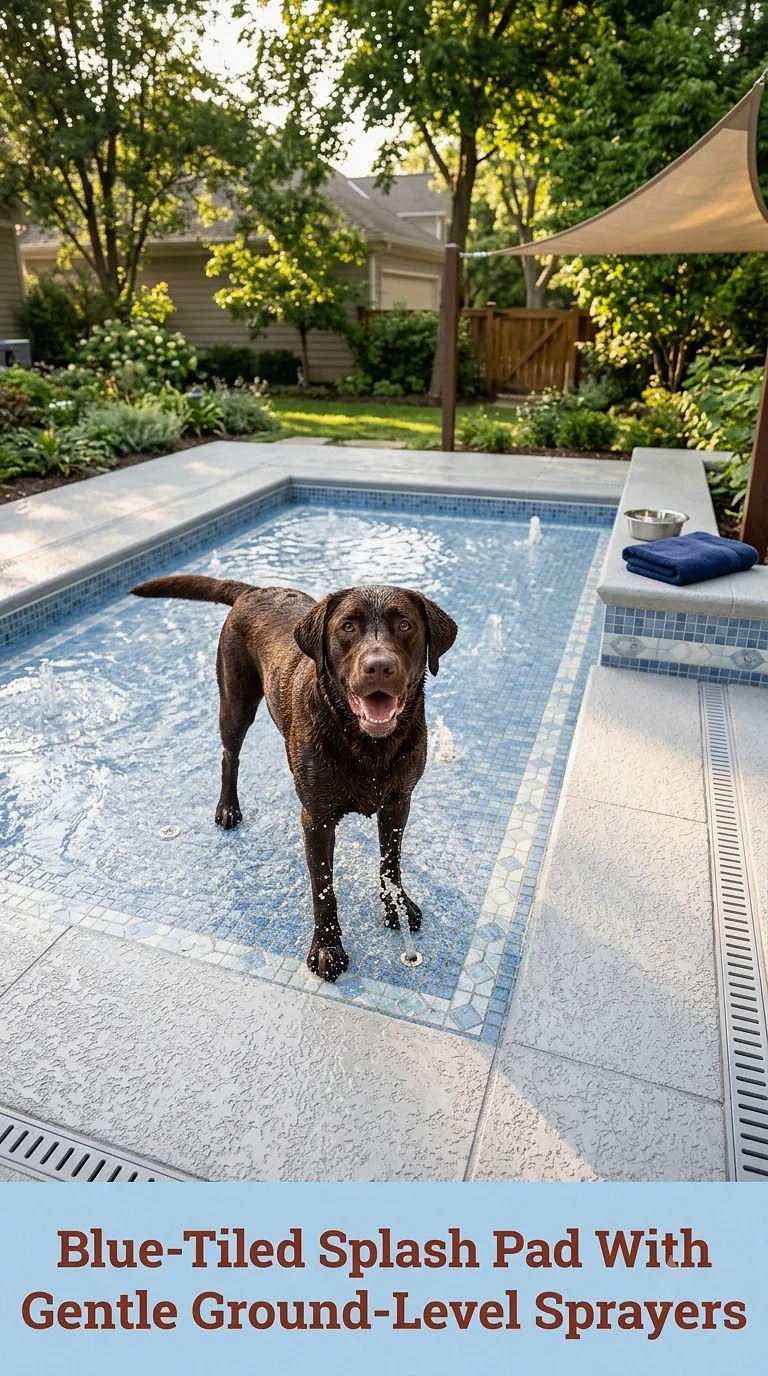
A compact splash pad can turn a hot-weather play session into a joyful backyard event. Use pale blue and white accents, gentle ground-level jets, and a broad non-slip surface with no deep basin. Position the water zone away from the gate and main walking route so wet dogs do not create a slippery entrance.
Proper drainage is more important than decorative styling. The surface should slope toward an approved drain or landscape area without sending water toward foundations or neighboring property. Avoid standing water, harsh pool chemicals, exposed plumbing, and powerful jets aimed at a dog’s face. Fresh potable water is the safest choice for drinking and play.
For a budget version, use a sturdy shallow dog pool on a level surface and empty it after each session. Rinse the pad regularly, remove algae before it becomes slippery, and store hoses neatly. Provide shade and limit strenuous play during hot conditions even when water is available.
Rustic Farmhouse Play Yard With A Two-Level Timber Platform
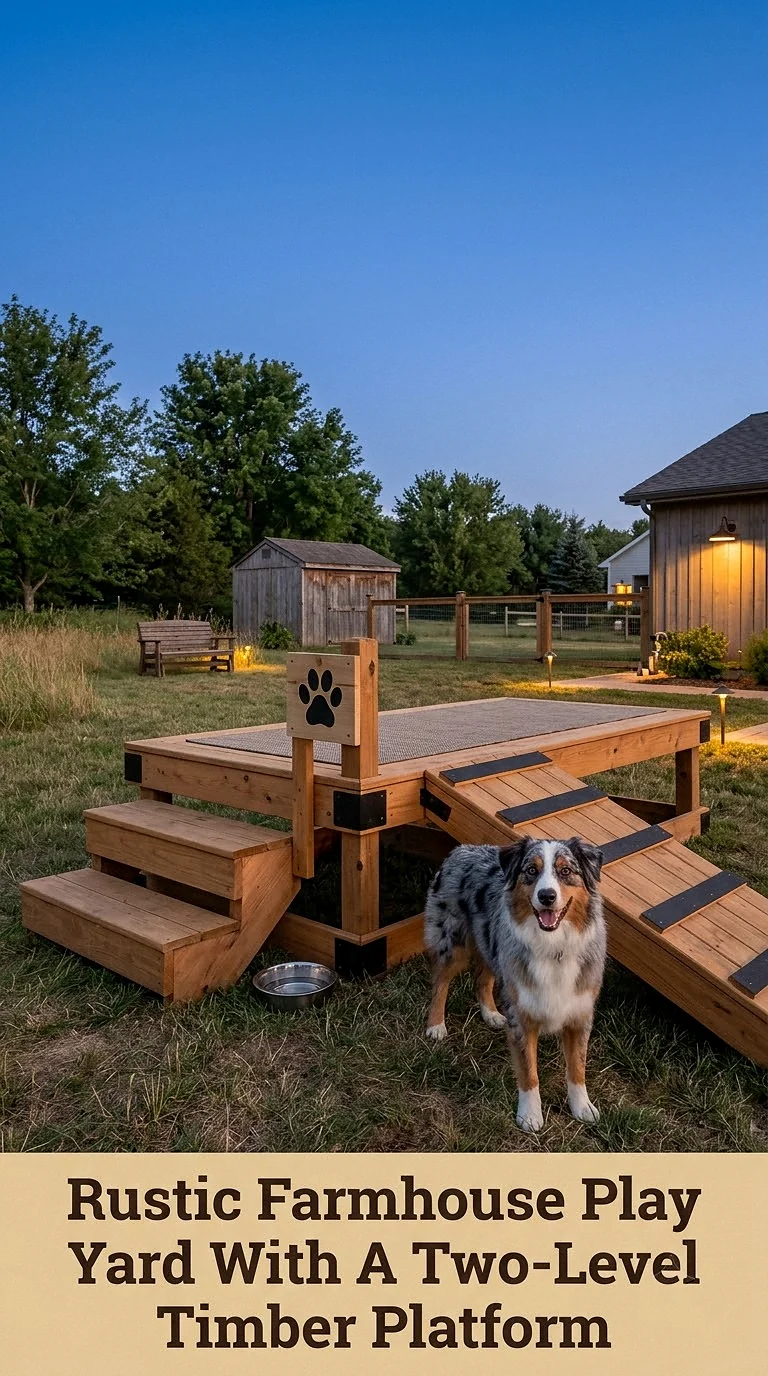
A broad timber platform gives curious dogs a place to climb, observe, and sunbathe while adding rustic farmhouse character to the yard. Build it with two low levels, wide steps, and a gently sloped ramp, then finish it in a warm natural stain suitable for outdoor pet spaces. Black hardware and a simple paw-print sign can complete the look without making it overly themed.
Use structural lumber appropriate for exterior construction, countersink hardware, smooth every edge, and add traction strips to the ramp. The platform should be stable under your dog’s weight and low enough to minimize fall risk. Railings or raised edges may be helpful for small, elderly, or less coordinated pets.
Place the structure well away from the perimeter fence so it cannot assist an escape. Leave the underside open for cleaning or enclose it completely to prevent animals from nesting. A removable outdoor mat on top makes the surface more comfortable and easier to refresh.
Sensory Sniff Garden With Raised Herb Beds And Winding Stones
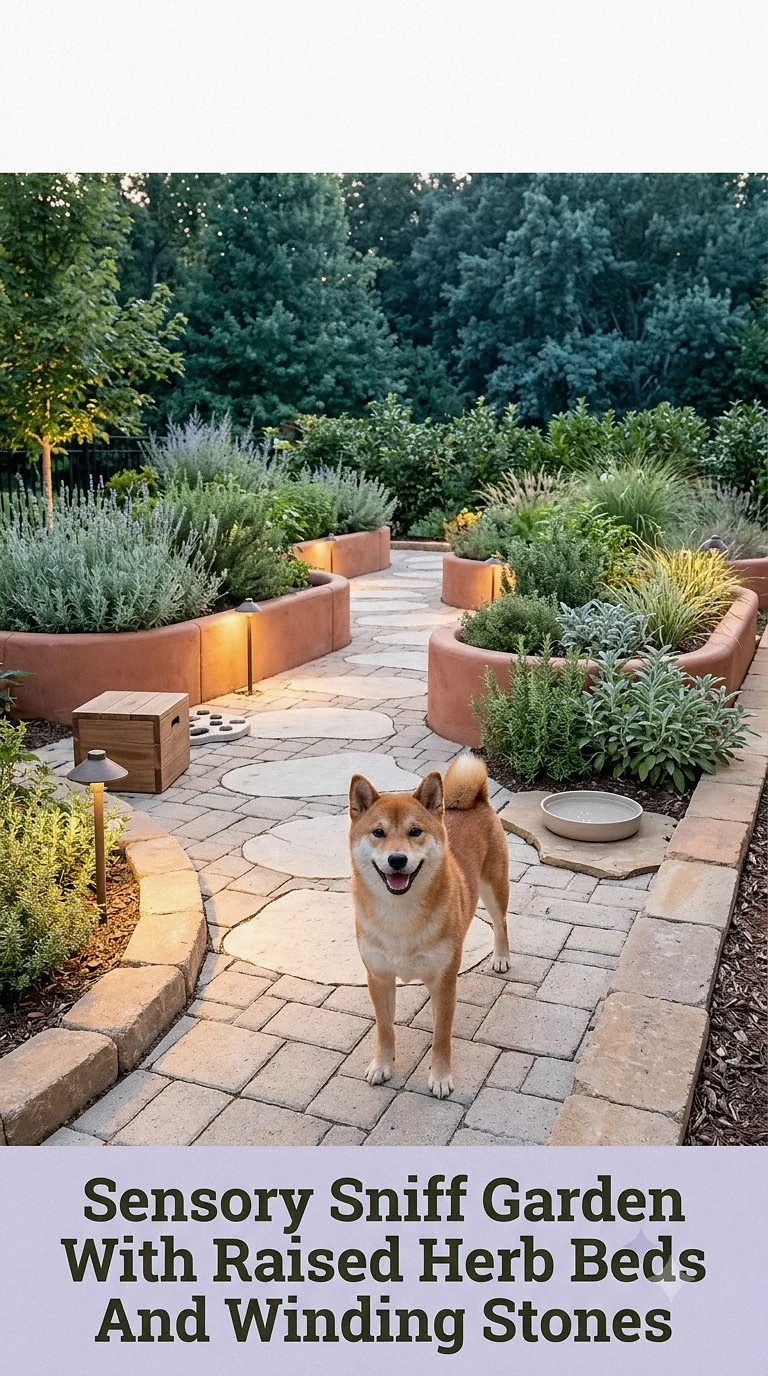
Design a slow-paced enrichment corner around scent rather than speed. Winding stepping stones can pass between raised planters filled with veterinarian-approved, dog-safe herbs and grasses, allowing your pet to investigate changing aromas without trampling the roots. Terracotta, warm stone, and silvery green foliage create an elegant Mediterranean mood.
Keep edible rewards in weatherproof scent boxes or supervised puzzle stations rather than scattering food where it can spoil or attract wildlife. Introduce one scent at a time and allow your dog to explore voluntarily. Fragrance products and concentrated essential oils are not substitutes for living plants and may be unsafe around pets.
Raised beds make planting easier to protect and maintain, but corners should be rounded and sturdy. Avoid pesticides, toxic fertilizers, sharp decorative gravel, and plants with thorns or irritating sap. Add a simple gravel or paver path so muddy paws do not damage the garden after rain.
Compact Side-Yard Dog Run With Vertical Storage And Folding Equipment
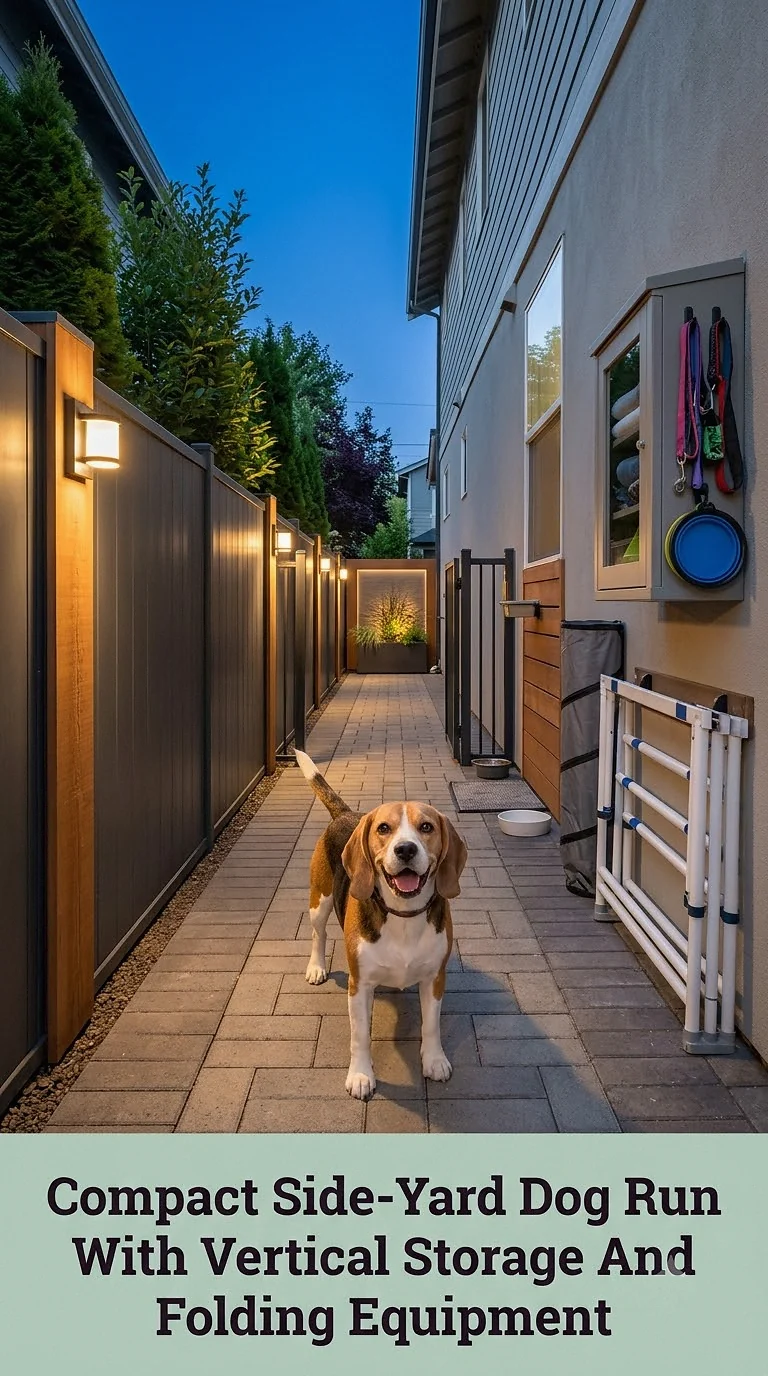
A narrow side yard can become an efficient exercise lane with slim fencing, a durable path, and wall-mounted storage. Paint the fence charcoal or muted green, then add a few warm wood details to soften the corridor effect. At the far end, a focal planter or painted panel makes the long layout feel thoughtfully designed.
Mount hooks and a weatherproof cabinet for leashes, towels, waste bags, and collapsible bowls, keeping everything above chewing height. Folding hurdles or a fabric tunnel can be brought out for supervised sessions and packed away afterward. Avoid permanently filling the passage with equipment, as dogs need room to turn and move without collisions.
Good drainage and lighting are particularly important in a tight run. Use slip-resistant pavers or compacted permeable material, illuminate the gate without trailing cords, and maintain clear access for cleaning. Check local setback and drainage requirements before installing permanent fencing or hardscape.
Quiet Zen Retreat With Bamboo Screens And A Pebble-Look Path
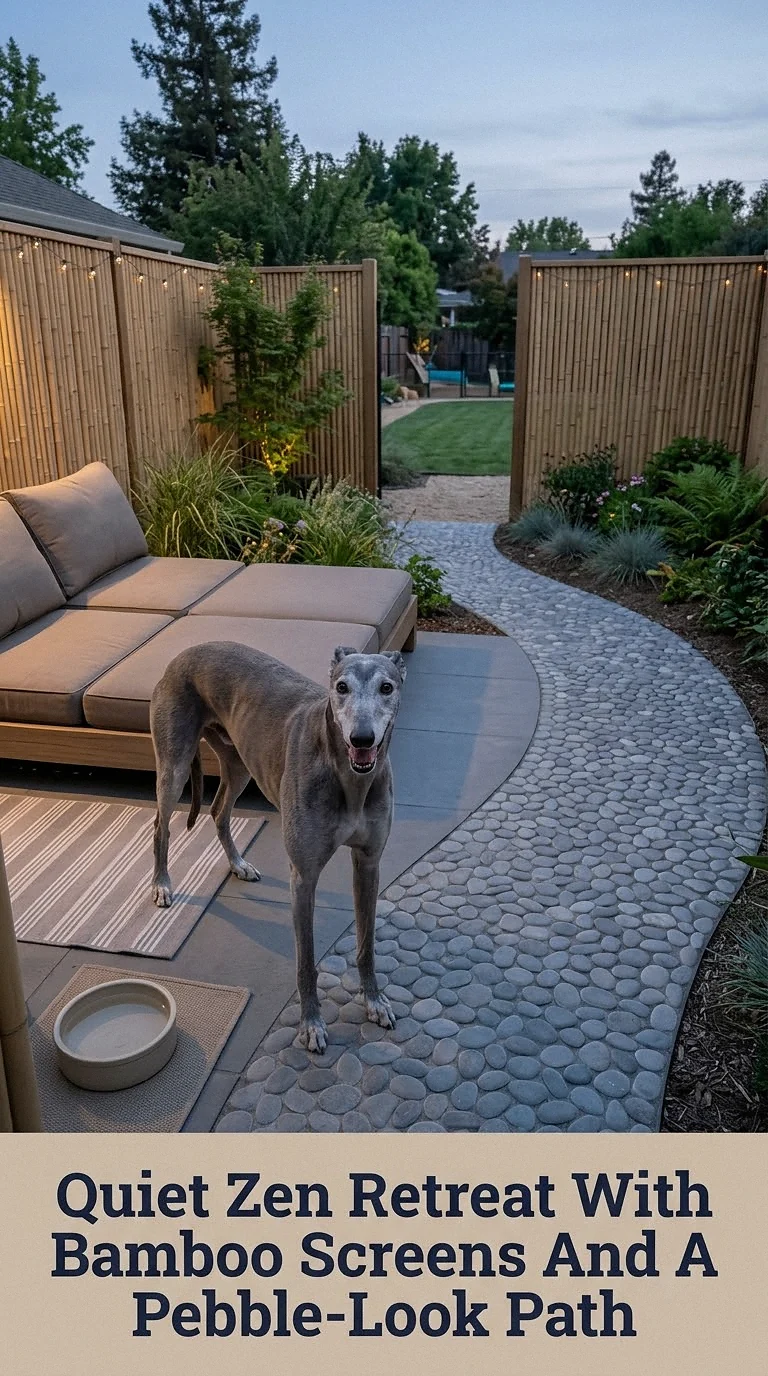
For shy, senior, or easily overstimulated dogs, create a peaceful retreat separated from active play by screens and soft planting. A low platform bed, muted taupe cushions, and a curved pebble-look path establish a soothing, spa-like atmosphere. Use bamboo-style composite screens if live bamboo would spread aggressively or create hard-to-maintain debris.
The retreat should offer privacy without blocking supervision. Leave two generous routes in and out so a dog never feels cornered, and position the space away from gates, bouncing balls, and noisy water features. Soft groundcover or washable outdoor mats provide a more comfortable resting surface than loose stones.
Keep styling restrained and secure every decorative object. Skip candles, incense, essential-oil diffusers, and delicate pottery that can break or irritate pets. This zone works best as a voluntary decompression space where dogs can observe activity from a comfortable distance and rejoin when ready.
Colorful Tunnel Hill With Grassy Mounds And Multiple Openings
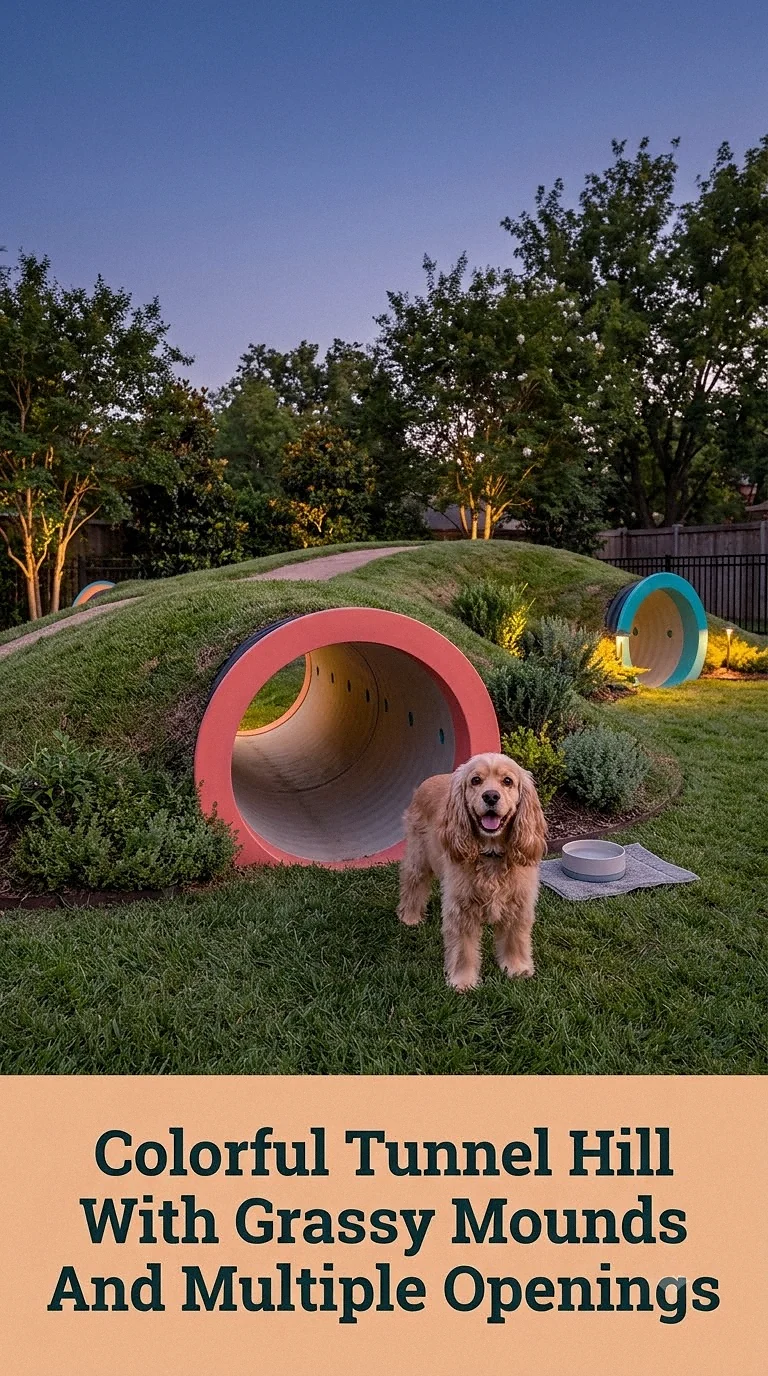
Transform a flat lawn into a playful landscape with a low grassy mound and a wide tunnel running through it. Rounded contours, bright tunnel rims, and hardy greenery create a storybook playground while preserving a natural garden feel. Multiple openings make chase games more fluid and reduce the chance of one dog blocking another inside.
Choose a rigid, outdoor-rated tunnel with a diameter suitable for your dog, smooth edges, ventilation, and enough length to feel adventurous without becoming difficult to inspect. Secure it so it cannot shift, and ensure the mound drains well rather than collecting water. Artificial turf may be easier to maintain on heavily used slopes than natural grass.
Keep the hill modest and provide a gentle route over it for dogs that prefer climbing to tunneling. Inspect the interior for insects, debris, and damage before play. If several dogs use the space, supervise closely to prevent crowding or ambush-style behavior around the entrances.
Minimalist Training Lawn With Hidden Toy And Treat Stations
Read more : 18 Charming Dog Collar Ideas For Stylish Pups And Cozy Homes
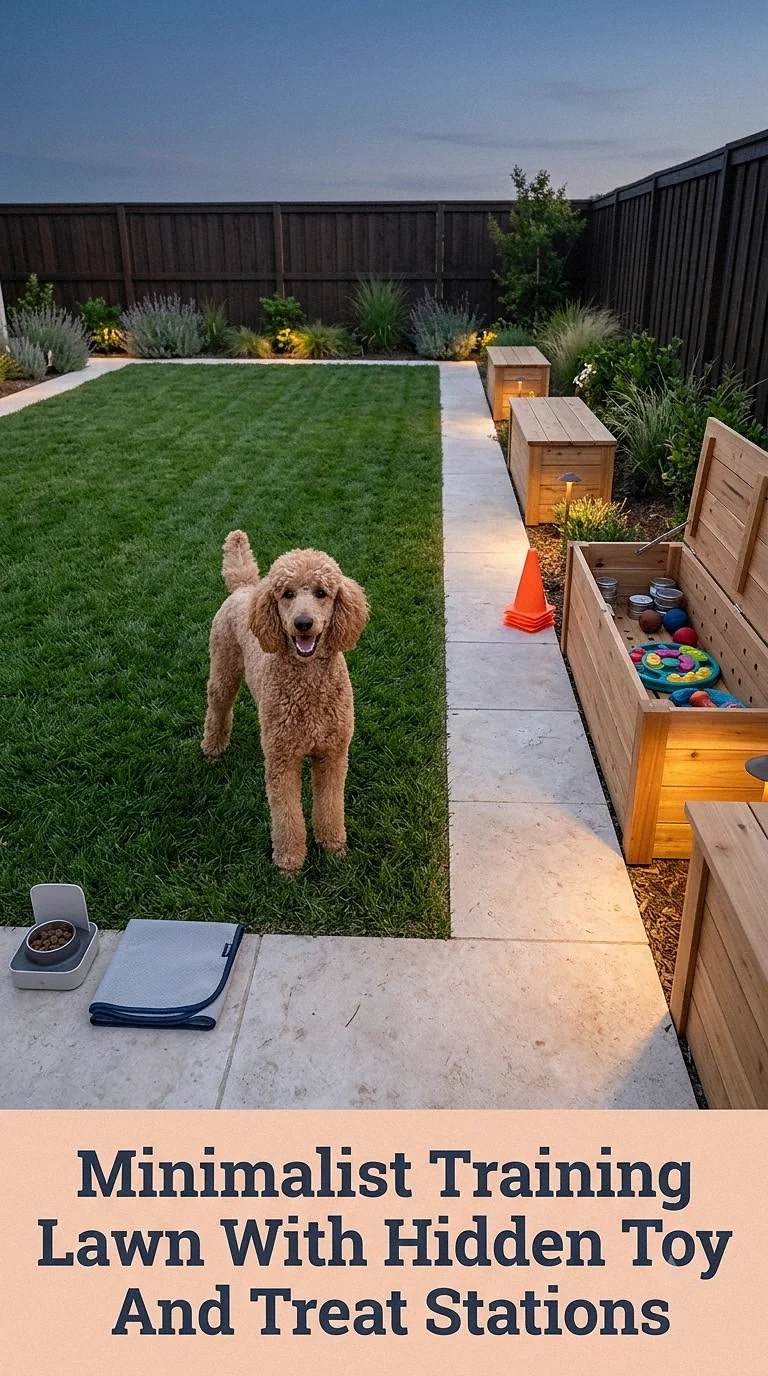
A minimalist park can be enriching without being visually busy. Begin with an open rectangular lawn framed by pale pavers and simple cedar boxes with flush-fitting lids. The boxes can hold cones, scent tins, retrieval toys, and washable puzzle feeders, allowing the yard to return to a calm, uncluttered setting after each session.
Use the open area for recall practice, fetch, short obedience games, and supervised scent searches. Rotate activities rather than leaving every toy outside, which keeps sessions interesting and reduces weather damage. Food games should be offered separately when multiple dogs might guard resources.
Select storage with ventilation and drainage, and clean toys before returning them to the box. Avoid airtight containers for damp items, which can develop odor or mildew. The restrained layout is ideal for smaller gardens because the same patch of lawn can support training, relaxation, entertaining, and everyday family use.
All-Weather Covered Run With Clear Roofing And Rubber Flooring
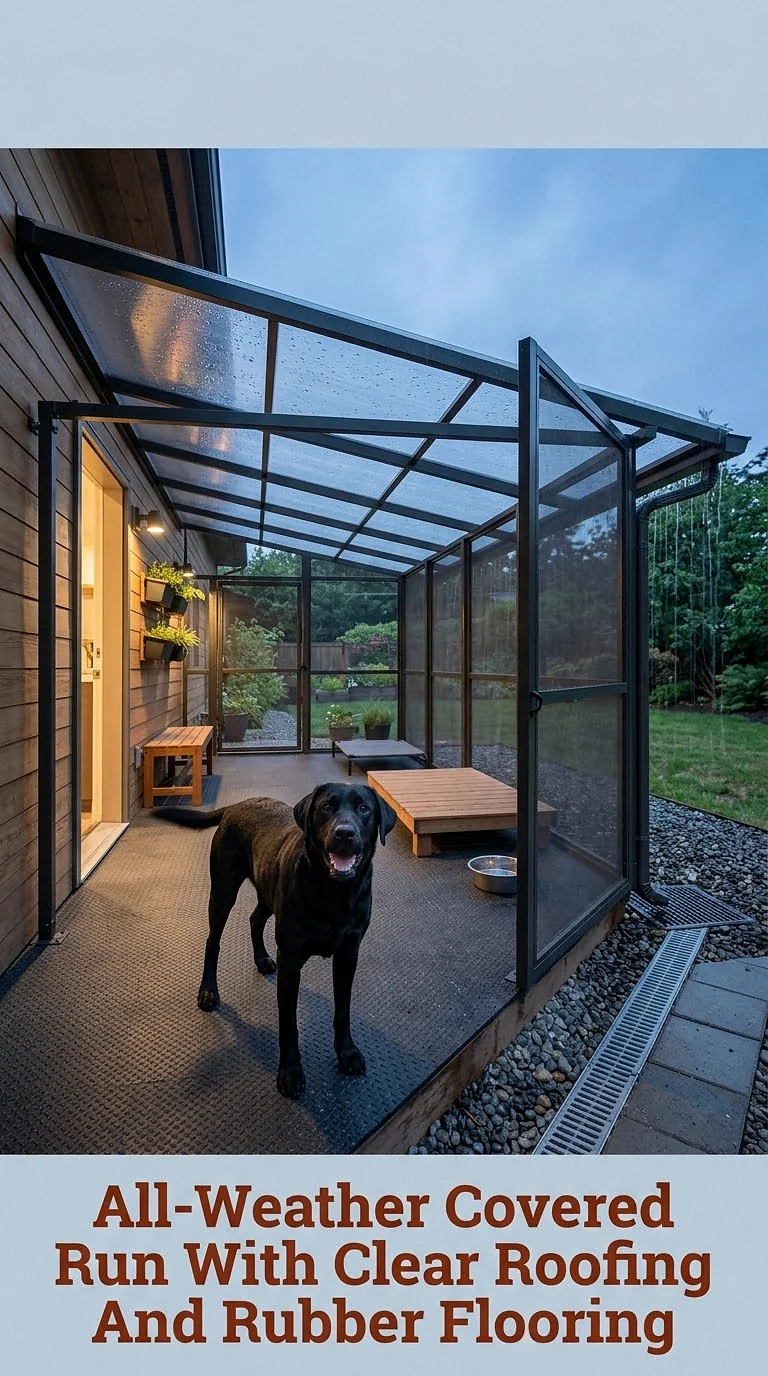
A covered run provides a reliable place for bathroom breaks and gentle exercise during rain, snow, or intense sun. Pair a slim timber or powder-coated frame with translucent roofing so the space remains bright. Neutral rubber surfacing, wall-mounted planters, and a tidy bench can make the structure feel integrated with the home.
Use exterior-rated, paw-friendly flooring with texture for traction and install it over a professionally planned drainage base. Roofing should direct runoff away from the run, while open or screened sides maintain ventilation. In windy regions, the structure and panels may require engineered anchoring rather than a lightweight DIY frame.
Include a dry resting platform and a fresh-water bowl, but do not treat the run as a place for prolonged unsupervised confinement. Rinse the floor routinely with pet-appropriate products, remove waste promptly, and check corners for trapped moisture. Transparent materials also need occasional cleaning to preserve their bright appearance.
Fresh Paw-Wash Station With Sage Cabinetry And Brass Details
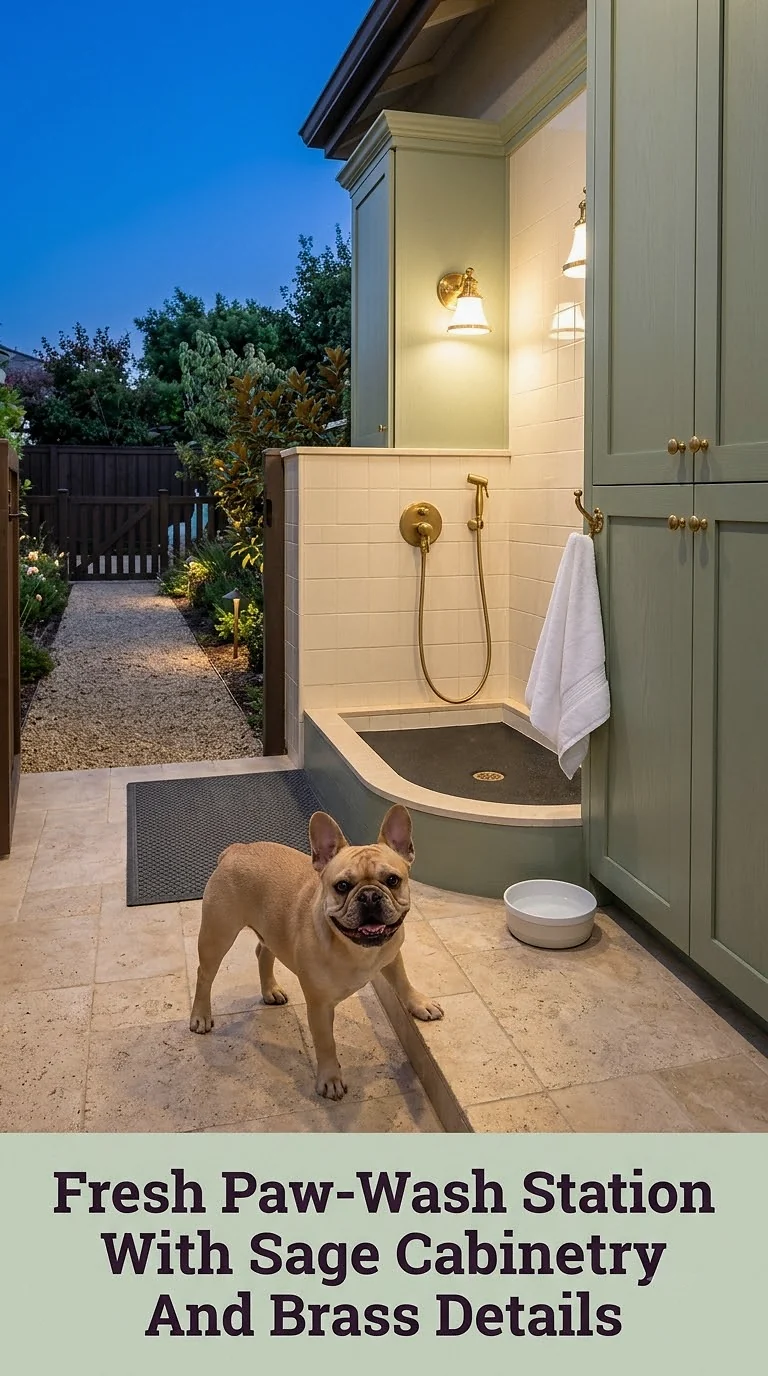
Place a compact wash station near the yard exit to stop mud before it reaches rugs, floors, and furniture. A sage-green cabinet, warm brass-tone hardware, and cream tile can turn a practical utility into a beautiful garden feature. Include closed storage for towels, shampoo, a grooming brush, and cleaning supplies.
The basin or platform should have a low step, slip-resistant surface, rounded edges, and a secure attachment point used only under direct supervision. A handheld sprayer offers control, but the water pressure and temperature should remain gentle. If plumbing is not possible, a simple hose connection, drainage mat, and raised rinse platform can provide an affordable alternative.
Plan where dirty water will flow and confirm local rules before directing it into landscaping or drains. Keep products locked away, dry the area after use, and launder towels frequently. A hook for a clean robe or absorbent dog towel adds both charm and convenience.
Courtyard Dog Park With Terracotta Pavers And Built-In Benches
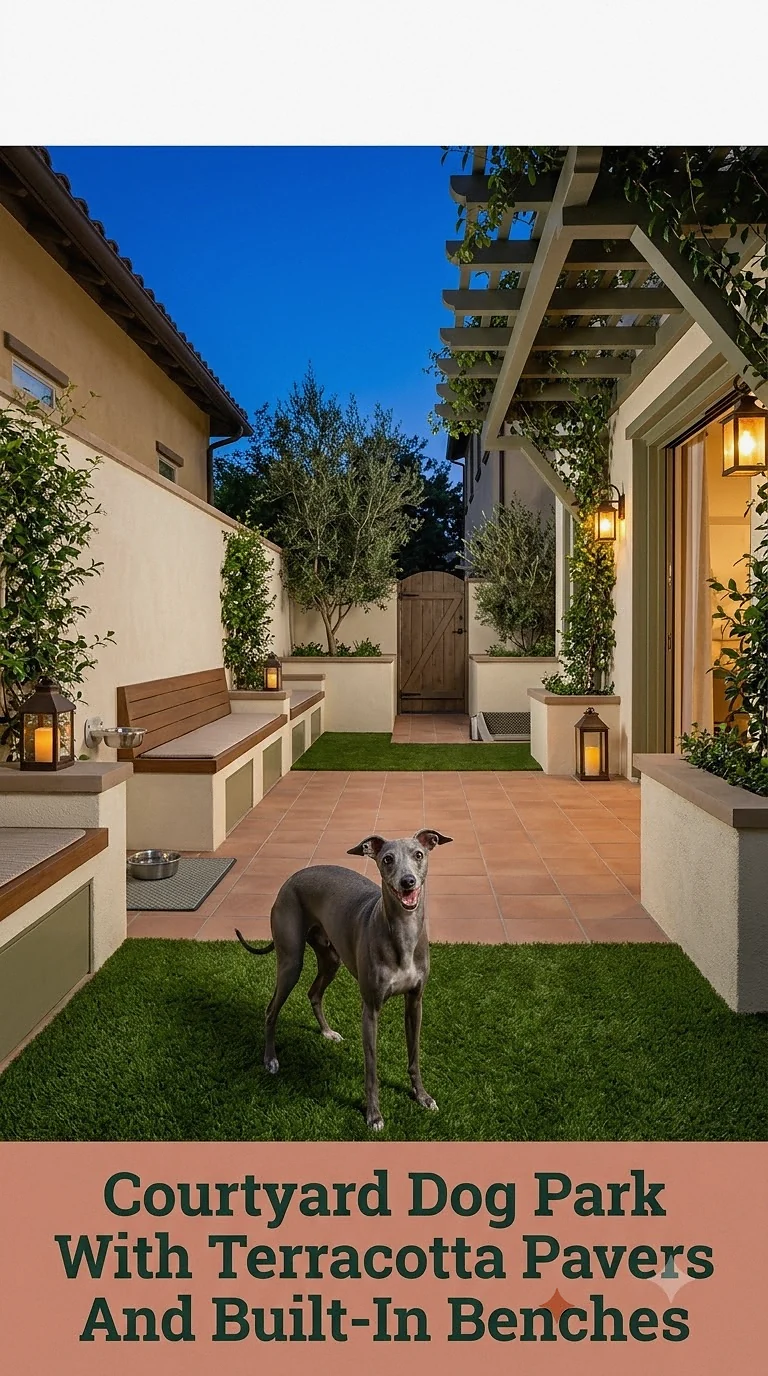
An enclosed courtyard can serve as a sophisticated mini dog park when every feature works twice. Built-in benches provide human seating while concealing storage for toys and garden supplies. Terracotta-look pavers, cream walls, and olive-green accents create a warm European-inspired palette that feels like an extension of the living room.
Choose sealed, slip-resistant paving and soften it with removable outdoor runners or a patch of real or dog-suitable synthetic grass. Because paved courtyards can become hot, include substantial shade and test surface temperature with your hand before allowing play. A wall-mounted drinking bowl saves floor space but still needs fresh water and daily cleaning.
Use vertical planting to preserve the open center, selecting only dog-safe species and anchoring every container. Provide a designated toilet area with excellent drainage, then rinse and deodorize it consistently. Even a small courtyard benefits from a short clear path for movement and training.
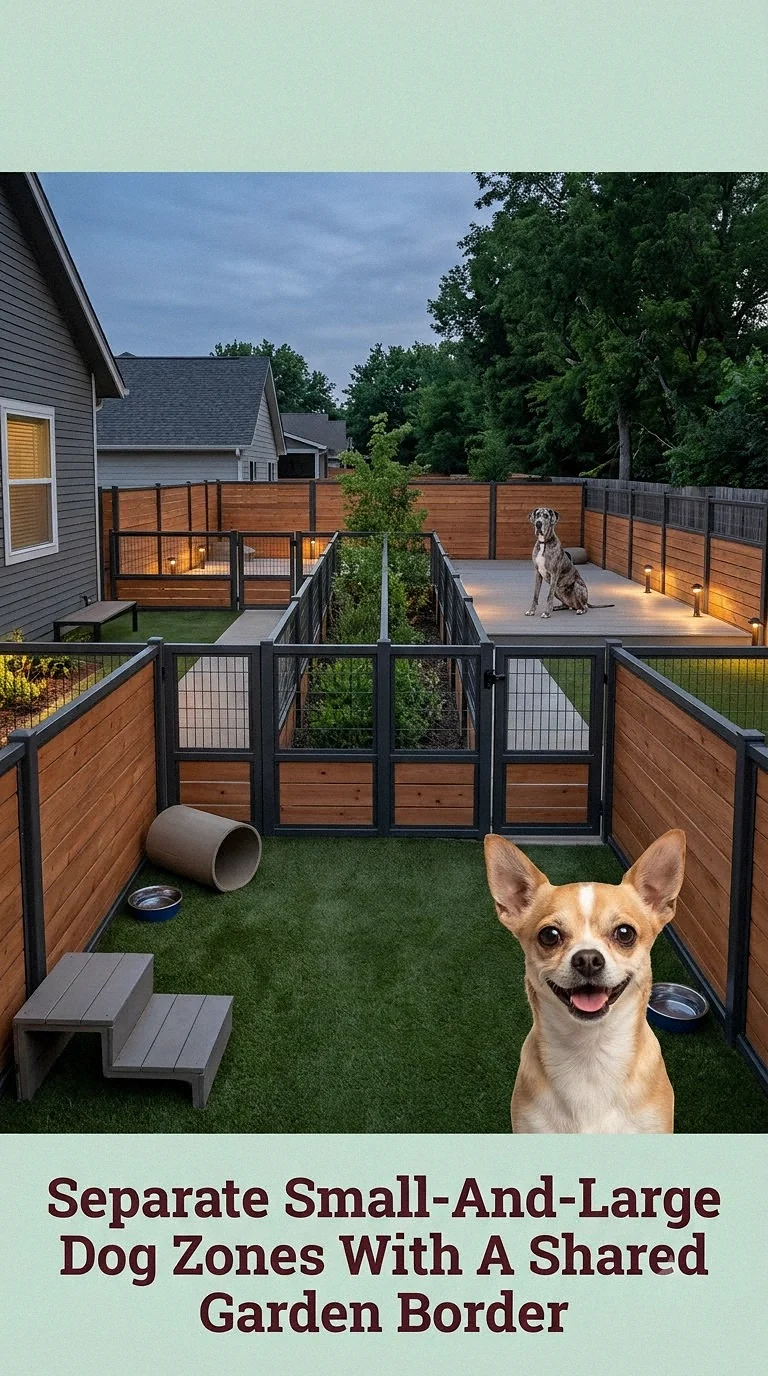
Households with dogs of very different sizes or play styles may benefit from two adjoining zones. Use attractive see-through fencing between the areas so the yard remains visually connected, then repeat the same materials and colors on both sides. A shared central planting border can soften the division while remaining protected from paws.
Each section needs its own water, shade, resting place, and enough room to move comfortably. Scale equipment appropriately: low steps and short tunnels for smaller dogs, with broader platforms and more generous turning space for larger companions. Separation can also help elderly or recovering pets enjoy outdoor time without being knocked over by exuberant housemates.
Add a secure transition area so one dog cannot rush through while another enters. Compatibility still matters across a fence, as visual access can excite or frustrate some dogs. If fence-line running or barking develops, add partial screening and schedule calmer, individual sessions.
Community-Style Play Garden With Circular Seating And Cleanup Stations
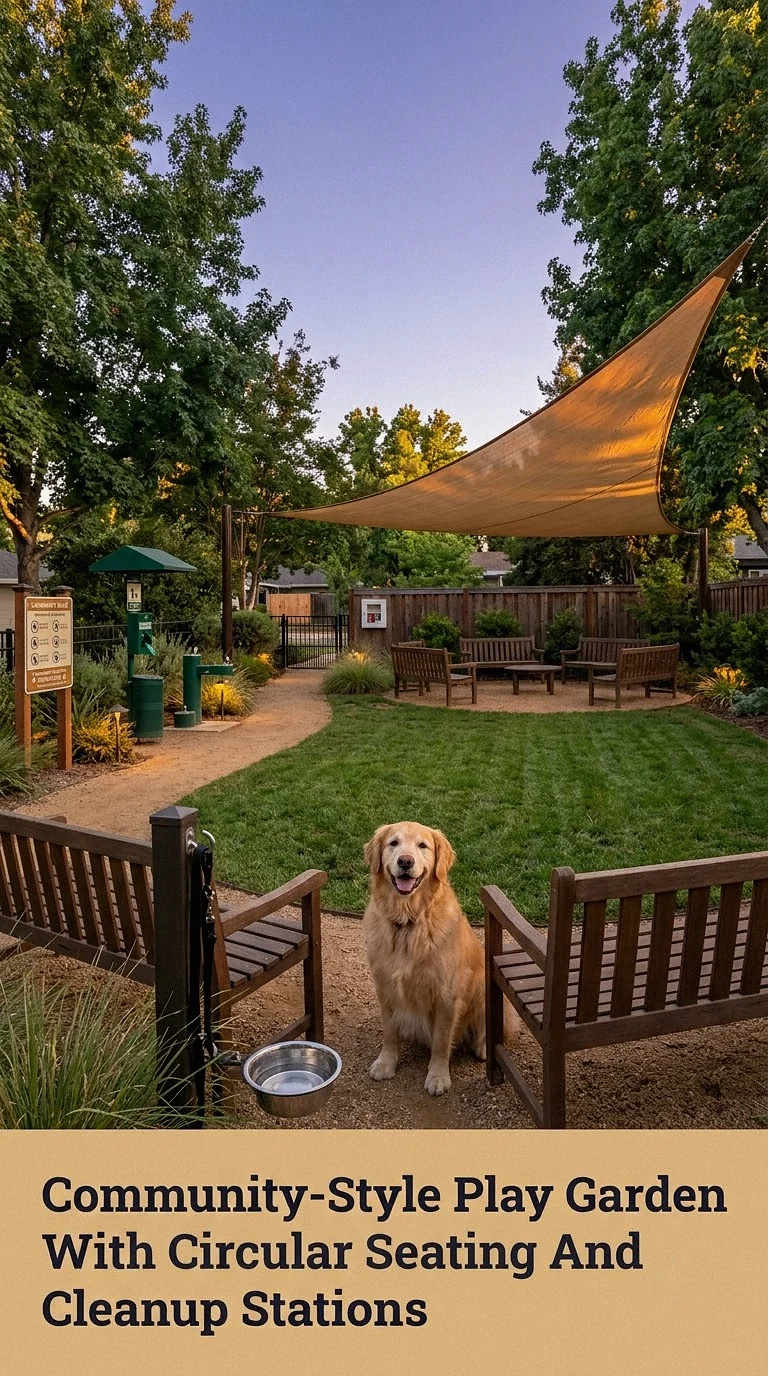
Bring the welcoming feel of a thoughtfully planned community park into a large home garden, shared residential yard, or pet-friendly gathering space. Arrange durable benches in a loose circle beneath a shade sail, maintaining broad sightlines across the play area. Coordinated waste stations, leash hooks, and a drinking point keep necessities easy to find without dominating the design.
Place seating outside fast running routes and away from gates, tunnels, and splash areas. Benches should resist weather, scratching, and occasional marking, while any shade structure needs secure anchoring and adequate clearance. Covered waste bins and readily available bags make prompt cleanup more convenient and help the space remain pleasant.
For shared use, post friendly rules covering supervision, gate etiquette, toys, food, and cleanup. Keep a pet first-aid kit accessible to adults and display emergency contact information where appropriate. Regularly inspect fences, surfaces, water fixtures, and equipment rather than waiting for visible failure.
Creating Dog Park Ideas That Fit Your Pet And Home
The most successful dog park ideas begin with your dog rather than a decorative theme. Watch where your pet naturally runs, rests, digs, or seeks shade, then choose a few features that support those preferences while preserving the beauty and function of your outdoor space.
You might begin with secure fencing, water, shade, and a washable resting area before adding a tunnel, sensory garden, or splash zone. Whether your finished space is a tiny cottage enclosure or a generous woodland playground, thoughtful materials, routine maintenance, and loving supervision will make it a place both you and your dog can enjoy.
Source: https://petstutorial.com
Category: DOGS
