
A beautiful backyard feels even better when your dog can enjoy it right alongside you. The right fence can turn an ordinary patch of grass into a peaceful outdoor retreat where your pup can sniff around, stretch out in the sunshine, chase a favorite toy, and explore without you constantly worrying about an open boundary.
The best dog yard fence ideas are about much more than putting a barrier around the property. A thoughtfully designed fence can add privacy, complement your landscaping, define different outdoor zones, and become an attractive part of the yard itself. From warm cedar and contemporary black metal to cottage-inspired pickets and budget-friendly wire mesh, there are options for almost every home style.
You are reading: 18 Dog Yard Fence Ideas For A Beautiful, Safe, And Pet-Friendly Backyard
Safety should always guide the design. A dog that digs needs a different solution from one that jumps, climbs, squeezes through narrow openings, or becomes highly excited when it sees wildlife beyond the yard. Fence height, spacing, gate hardware, ground reinforcement, and maintenance all deserve attention.
The following ideas combine practical containment with inviting backyard style, giving you plenty of inspiration whether you are starting from scratch or simply improving a fence you already have.
Beautiful And Practical Dog Yard Fence Ideas
Warm Cedar Privacy Fence With Black Gate Hardware
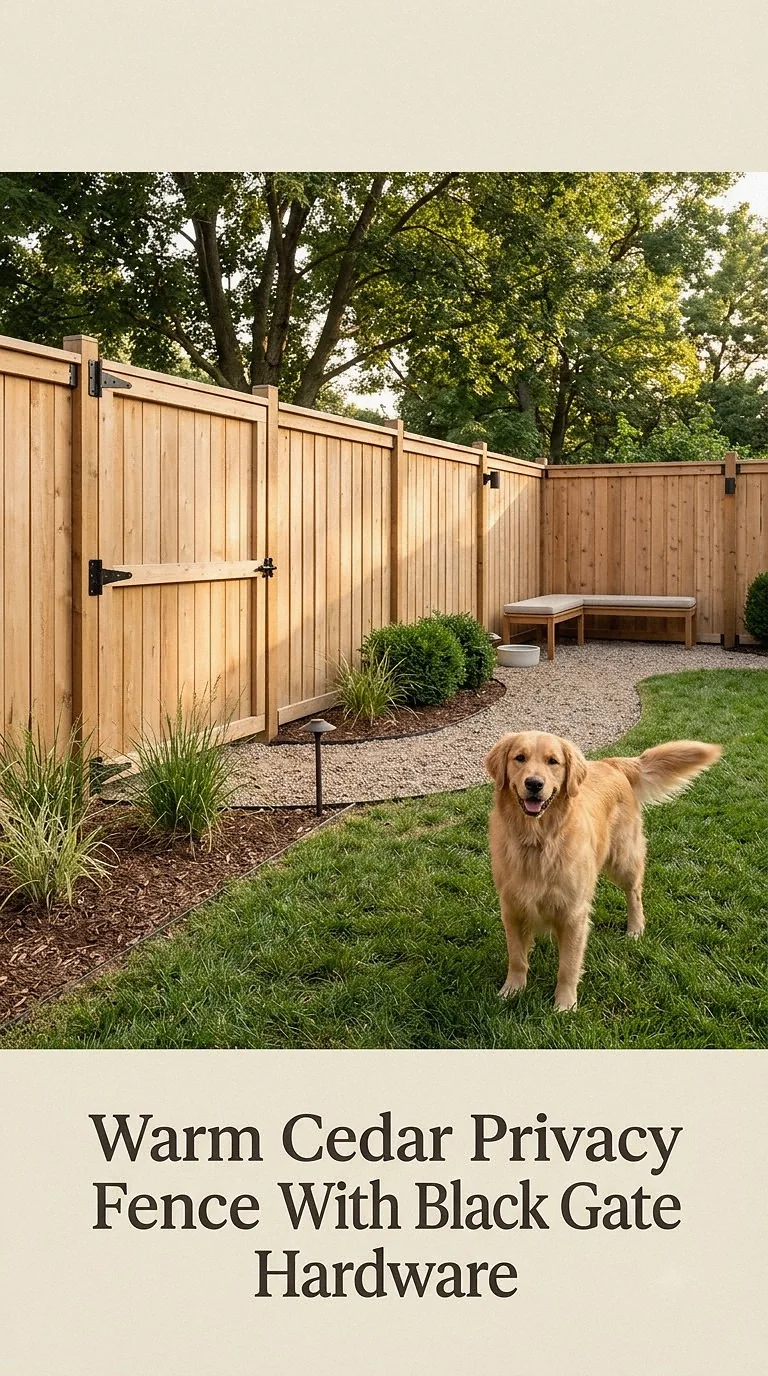
A tall cedar privacy fence creates one of the coziest backyard settings for dogs while also giving the entire yard a polished, finished appearance. Natural cedar tones pair beautifully with green grass, flowering borders, stone patios, and neutral outdoor furniture.
Solid vertical boards are particularly useful for dogs that become overstimulated by pedestrians, neighboring pets, or movement outside the property. Limiting the view can create a calmer atmosphere than an open fence for some dogs.
Choose smooth boards and regularly inspect them for loose nails, splinters, warped panels, or openings along the bottom. Matte black hinges and a sturdy latch add a modern accent without making the design feel overly contemporary.
For a softer finish, plant dog-safe greenery a short distance inside the fence instead of directly against it. Keeping plants slightly separated also makes inspections and maintenance much easier.
Modern Black Metal Fence With Narrow Vertical Bars
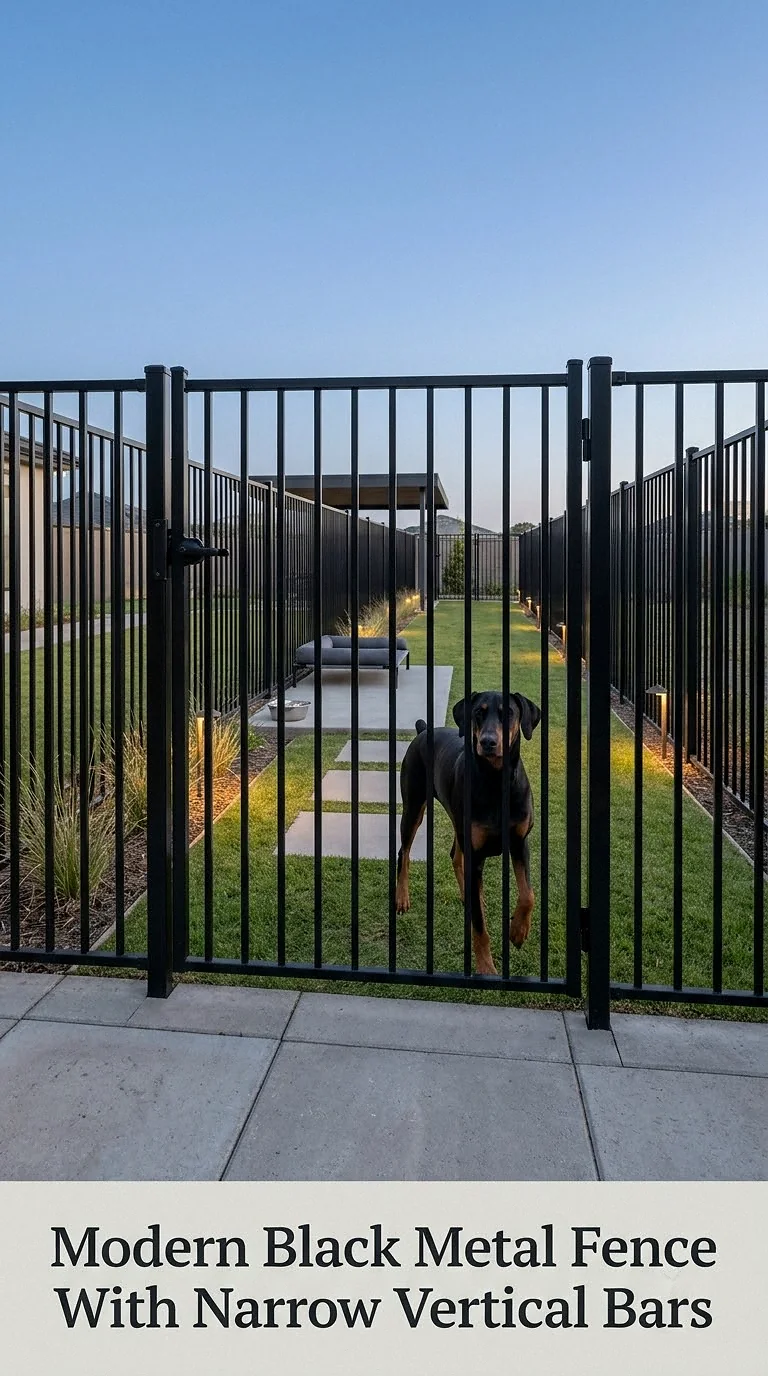
A black metal fence is ideal when you want secure boundaries without visually closing off a beautiful landscape. Slim vertical bars feel sophisticated and work especially well around modern homes, landscaped lawns, poolside gardens, and properties with attractive views.
Spacing is one of the most important details. The openings need to be narrow enough that your dog cannot push its head or body between the bars. This is particularly important for puppies and small breeds.
Look for a design with vertical rather than horizontal elements on the dog-facing side because horizontal rails may provide footholds for determined climbers.
Black fencing almost disappears visually against greenery, allowing colorful flowers and ornamental grasses to become the focus. Pair it with stone edging and a matching black gate for a clean, cohesive look.
Dogs that become excited by everything they see outside may be better suited to a partially or fully solid fence.
Natural Wood Frame Fence With Black Welded Wire Panels
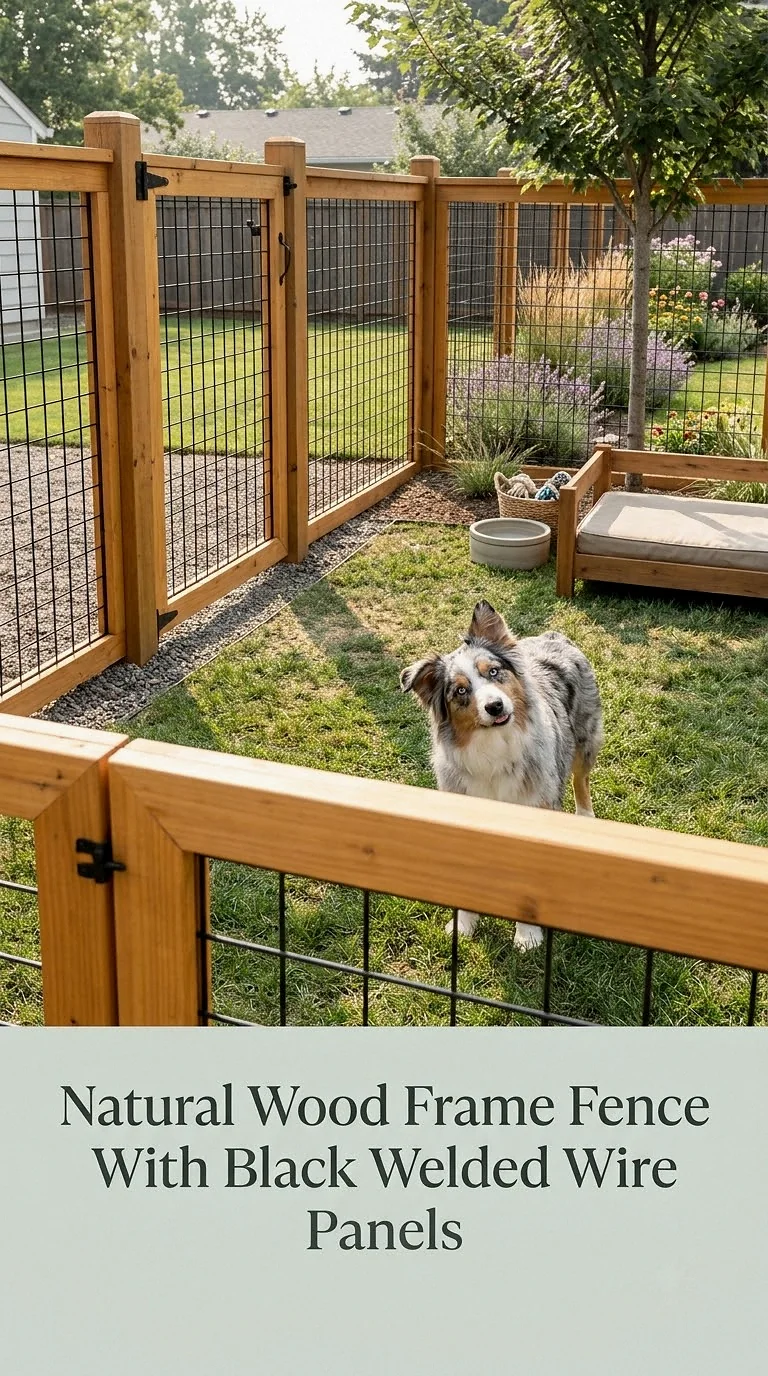
For a relaxed farmhouse or modern rustic backyard, combine chunky wooden posts with black welded wire panels. The warm wood softens the industrial appearance of the mesh, creating a fence that feels airy without looking temporary.
This design works beautifully around garden-style dog yards because it maintains sightlines across the property. Flowers, vegetable beds, mature trees, and neighboring scenery remain visible rather than disappearing behind solid panels.
Choose mesh openings based on your dog’s size so paws, heads, and shoulders cannot become trapped or slip through. Inspect cut edges carefully during installation and cover or frame them so no sharp pieces are exposed.
A matching timber gate can make the enclosure look custom-built. Add crushed stone or pavers beneath high-traffic areas near the gate to reduce mud and wear.
The result feels functional enough for everyday dog life but stylish enough to become a genuine landscaping feature.
Soft White Vinyl Privacy Fence With Clean Garden Borders
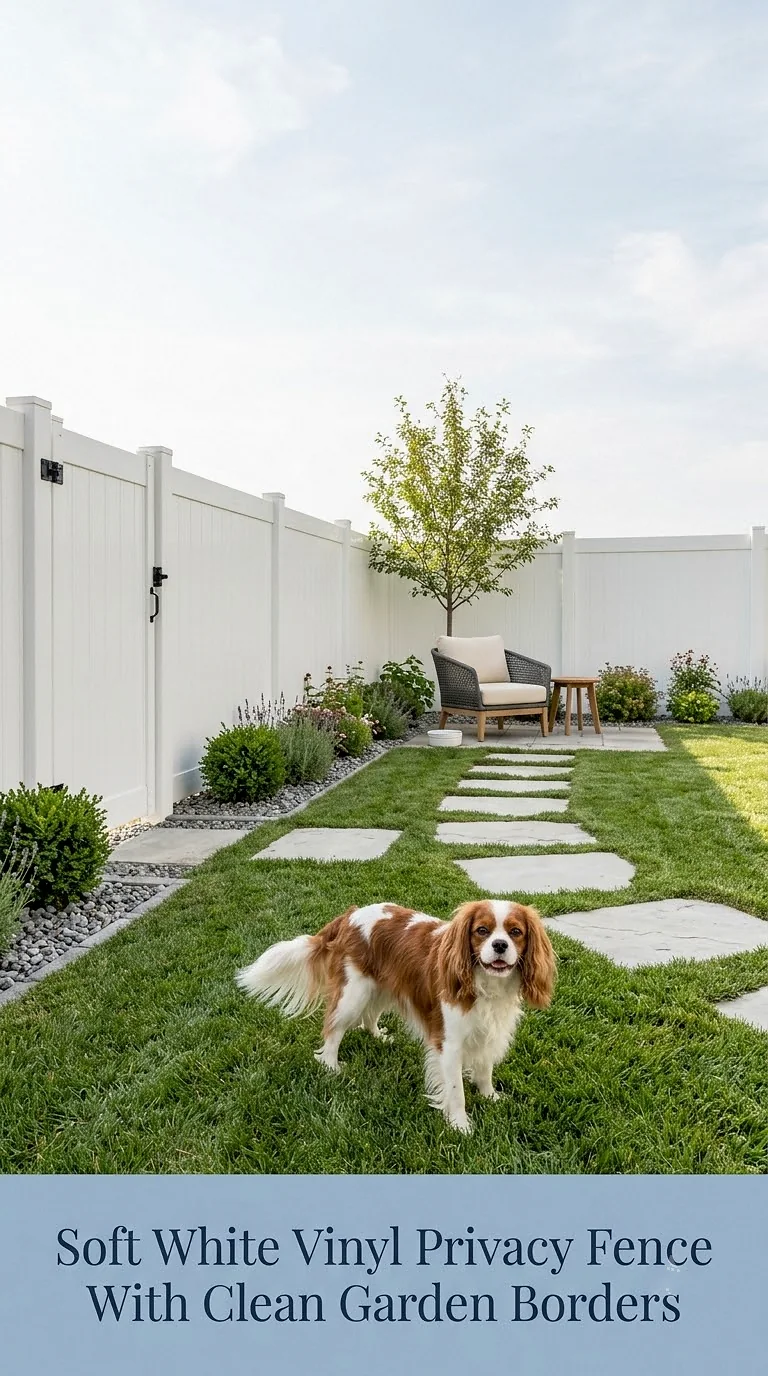
White vinyl creates a bright, tidy backdrop that works especially well with cottage, coastal, and traditional homes. It also offers a smooth surface without obvious footholds, making it an appealing option for dogs inclined to climb.
A solid-panel version provides additional visual privacy, which can be helpful when your dog regularly reacts to people, bicycles, neighborhood animals, or passing vehicles.
Keep the landscaping simple so the fence remains the clean visual backdrop. Boxwood-style shrubs, lavender-colored flowers, pale stone edging, and a neatly maintained lawn create an elegant look.
Vinyl is relatively straightforward to clean compared with painted wood, although muddy paw splashes will naturally be more noticeable on light panels.
Check the bottom periodically for soil erosion that could create gaps. A beautiful solid fence is only useful for containment when the boundary remains secure all the way down to ground level.
Rustic Farm Fence With Timber Posts And Secure Wire Mesh
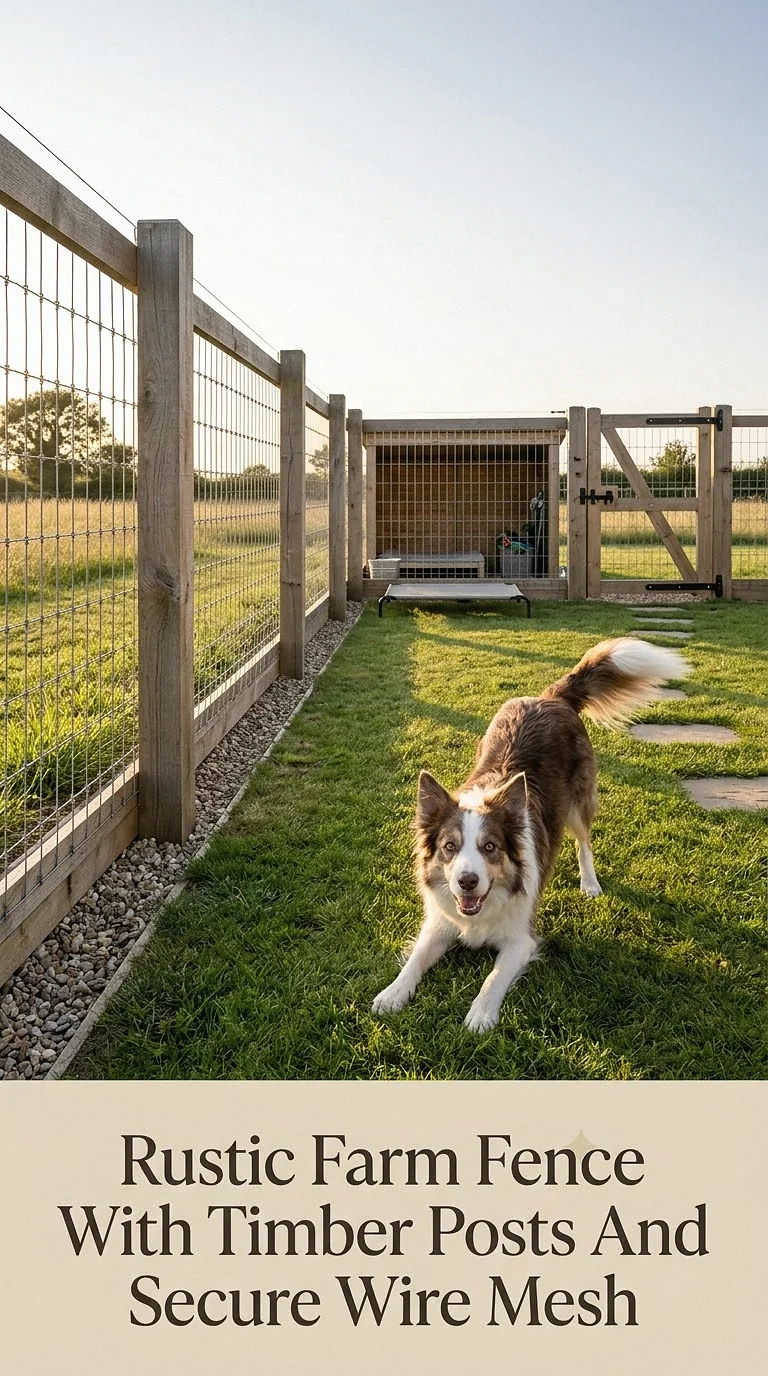
A farm-inspired fence is perfect for larger properties where enclosing a substantial area with solid wood could feel visually heavy or become expensive.
Use sturdy natural timber posts with durable wire mesh extending between them. From a distance, the wire blends into the landscape while the wooden posts provide warmth and rustic character.
This design looks particularly charming beside wildflower beds, mature shade trees, gravel paths, vegetable gardens, and informal lawns. It can also define a generous exercise area without making the backyard feel divided into tiny sections.
Make sure the bottom of the mesh is properly secured rather than leaving loose edges a dog could push beneath. Avoid relying on wire that has become bent, rusty, or damaged.
You can finish the gate with heavier timber framing and black hardware, creating a welcoming entrance while keeping the working-farm aesthetic consistent throughout the yard.
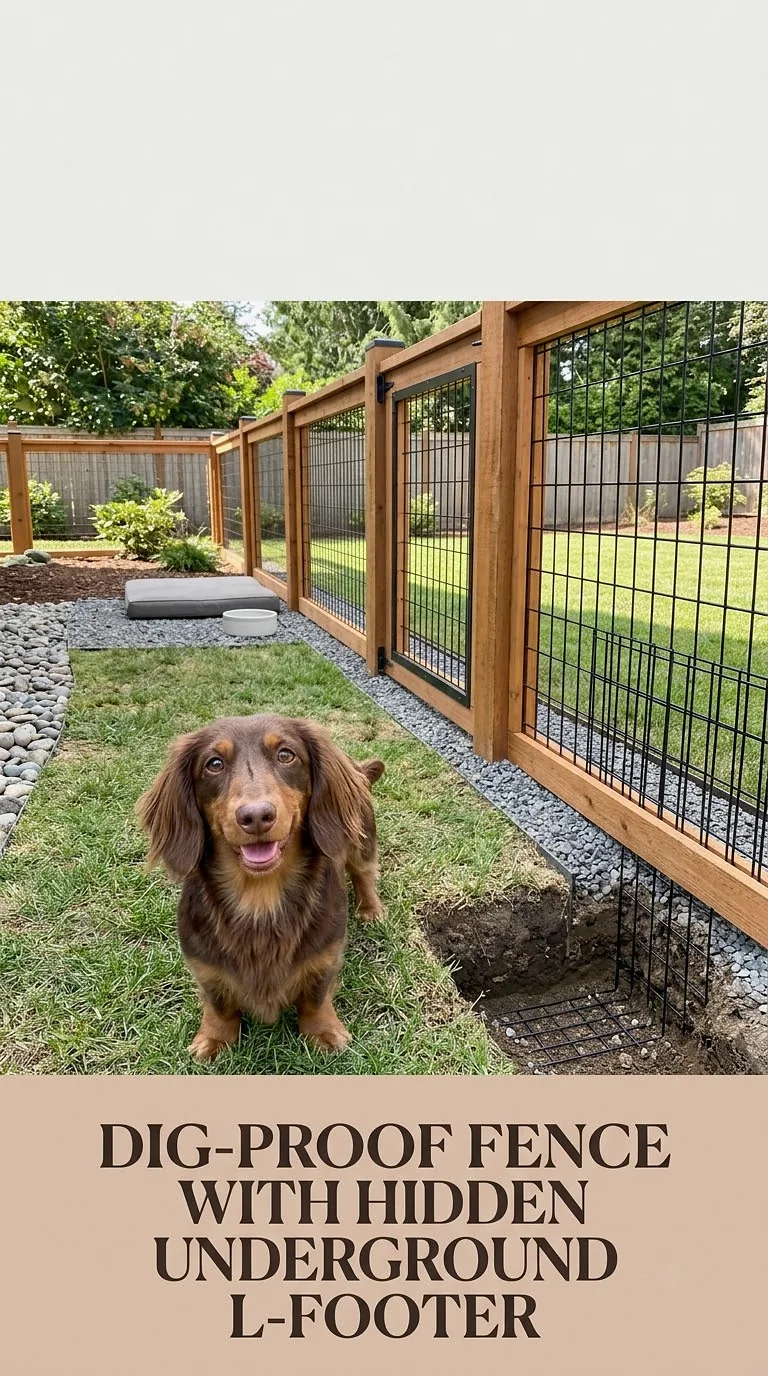
Some dogs rarely look over a fence because they are too busy investigating what is underneath it.
For enthusiastic diggers, the smartest design feature may be almost invisible. An L-shaped barrier attached along the base of the fence can extend inward beneath or just under the ground surface, making it much harder for a dog to tunnel directly below the boundary.
Wire mesh is commonly used for this type of reinforcement, although exposed edges should always be securely finished and positioned so paws cannot encounter sharp material.
Once installed, conceal the reinforced zone with soil, lawn, smooth stones, or another dog-appropriate surface. Visually, the yard can still have a classic wood, vinyl, or metal fence.
This is especially useful when upgrading an existing fence that looks perfectly good above ground but has already become a favorite excavation site for your dog.
Contemporary Horizontal Wood Fence With Pet-Safe Interior Barrier
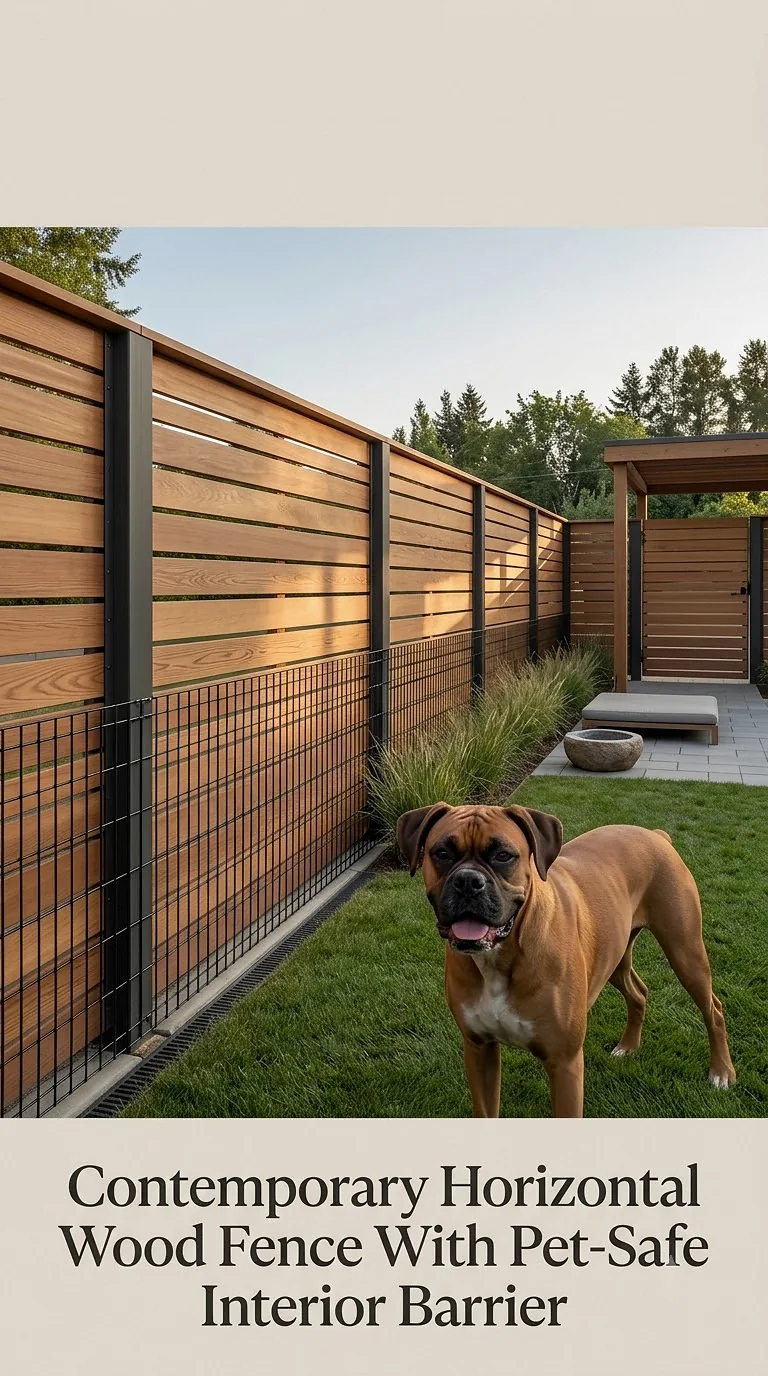
Horizontal wood fencing has become a favorite for contemporary backyards because the long clean lines make even compact outdoor spaces feel wider and more architectural.
For a dog yard, however, the design needs careful planning. Open horizontal boards can act like steps for a dog that enjoys climbing.
One solution is to preserve the horizontal look from the outside while installing a smooth, secure inner layer or modifying the dog-facing surface so there are no useful footholds.
Read more : Why Does My Dog Burp In My Face?
Choose closely spaced boards for additional privacy and stain the wood in warm oak, walnut, charcoal, or natural cedar tones. Pair the fence with concrete pavers, minimalist planters, and simple ornamental grasses.
This approach is particularly attractive around modern patios where the fence becomes part of the overall outdoor-room design rather than simply a functional boundary.
Inspect wooden boards regularly because weather can eventually create warped sections or unexpected openings.
Cottage-Style Picket Fence With Discreet Mesh Backing
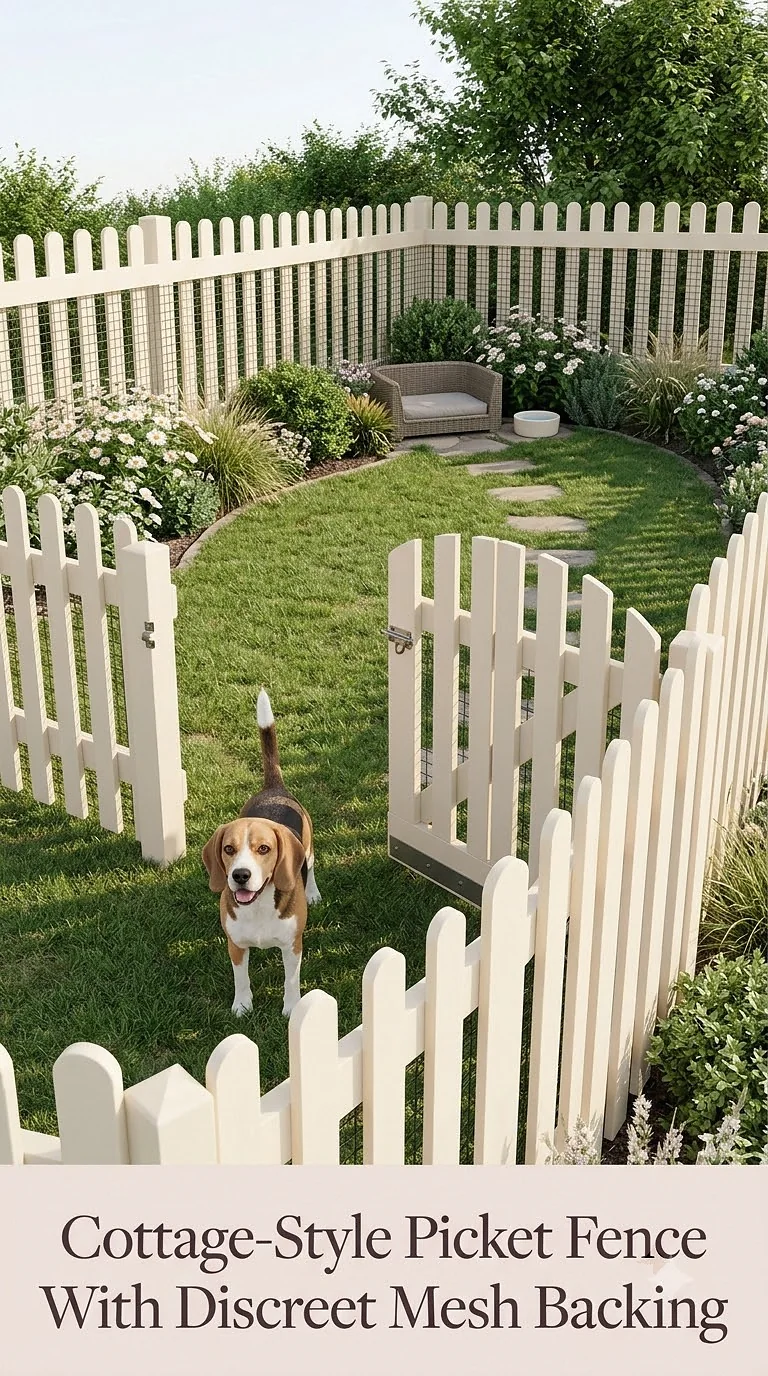
Few fences feel as sweet and welcoming as a white or natural wood picket fence surrounding a flower-filled lawn. Traditional pickets, however, may have openings that are too generous for small dogs and puppies.
You can preserve the charming cottage appearance by adding discreet mesh along the interior side. When the mesh is carefully installed and coordinated with the fence color, it can be surprisingly subtle from a distance.
This design works best for calmer dogs when the overall fence height is appropriate for their jumping ability. Determined jumpers or climbers may need a different solution entirely.
Complete the cottage atmosphere with curving garden beds, dog-safe flowering plants, a stepping-stone pathway, and a small shaded bench.
The finished yard feels decorative rather than kennel-like while still providing an additional layer of containment that a purely ornamental picket fence may lack.
Stone Base Fence With Elegant Black Metal Upper Panels
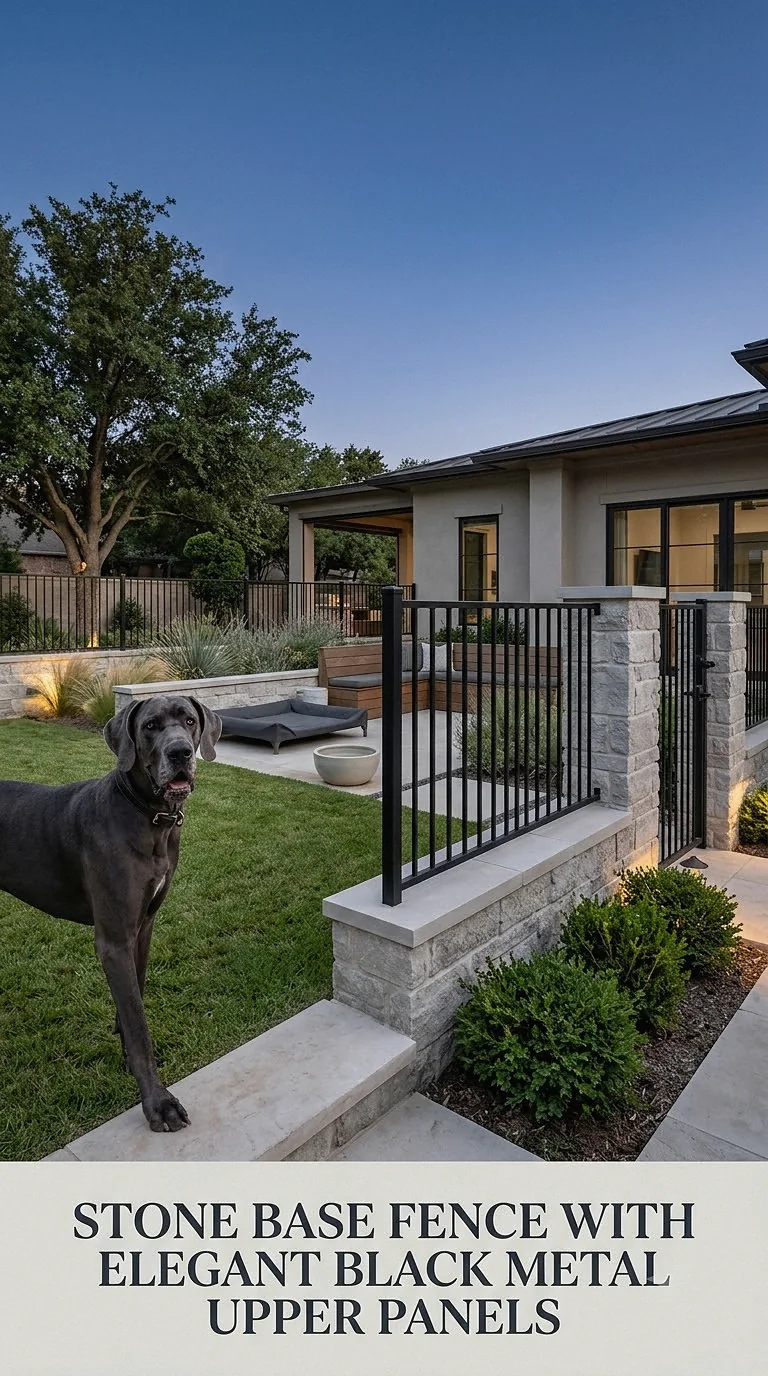
Combining masonry and metal creates a luxurious fence that feels like a permanent part of the landscape.
A low stone or masonry base provides a substantial boundary near ground level, while slender black metal panels above preserve light and visibility. The contrast between textured stone and smooth metal works especially well with traditional, Mediterranean, transitional, and upscale modern homes.
The solid base can also reduce opportunities for digging directly beneath the fence when properly constructed.
Choose an upper section with sufficiently narrow bar spacing for your dog. The total height should reflect your dog’s size and behavior as well as local fencing requirements.
Repeat the same stone around nearby planters, retaining walls, or patio edges for a beautifully coordinated yard.
Although this design generally requires a larger budget than lightweight fencing, it can function simultaneously as landscaping architecture, privacy definition, and a durable dog boundary.
Budget-Friendly Black Mesh Fence With Simple Wood Posts
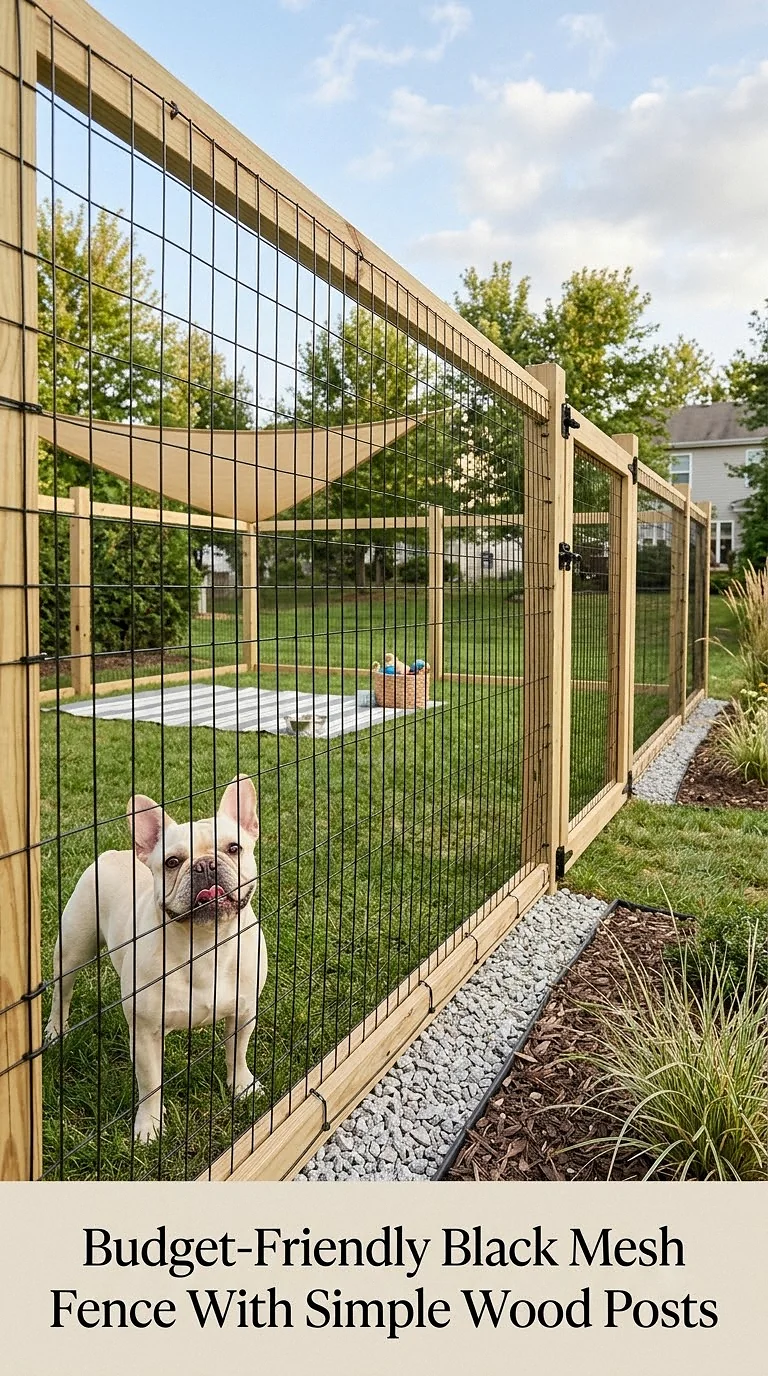
Creating a secure dog area does not necessarily mean redesigning the entire backyard.
A straightforward mesh fence supported by simple wooden posts can provide a practical enclosure while keeping material costs relatively manageable. Painting or staining the posts in one consistent finish instantly makes the structure feel more intentional.
Black mesh is often less visually noticeable than bright metallic wire, especially when placed against grass and shrubs.
Use the enclosure to create a dedicated dog area rather than fencing the entire property if budget or rental restrictions make a larger project unrealistic. Include enough room for movement, shade, fresh water, and comfortable resting areas.
Pay special attention to the gate and base because inexpensive materials still need secure installation. Loose mesh or large gaps can defeat the purpose of the enclosure.
Add a few simple landscaping details outside the fence to soften the functional appearance.
Small Side Yard Dog Run With Cedar Slat Fencing
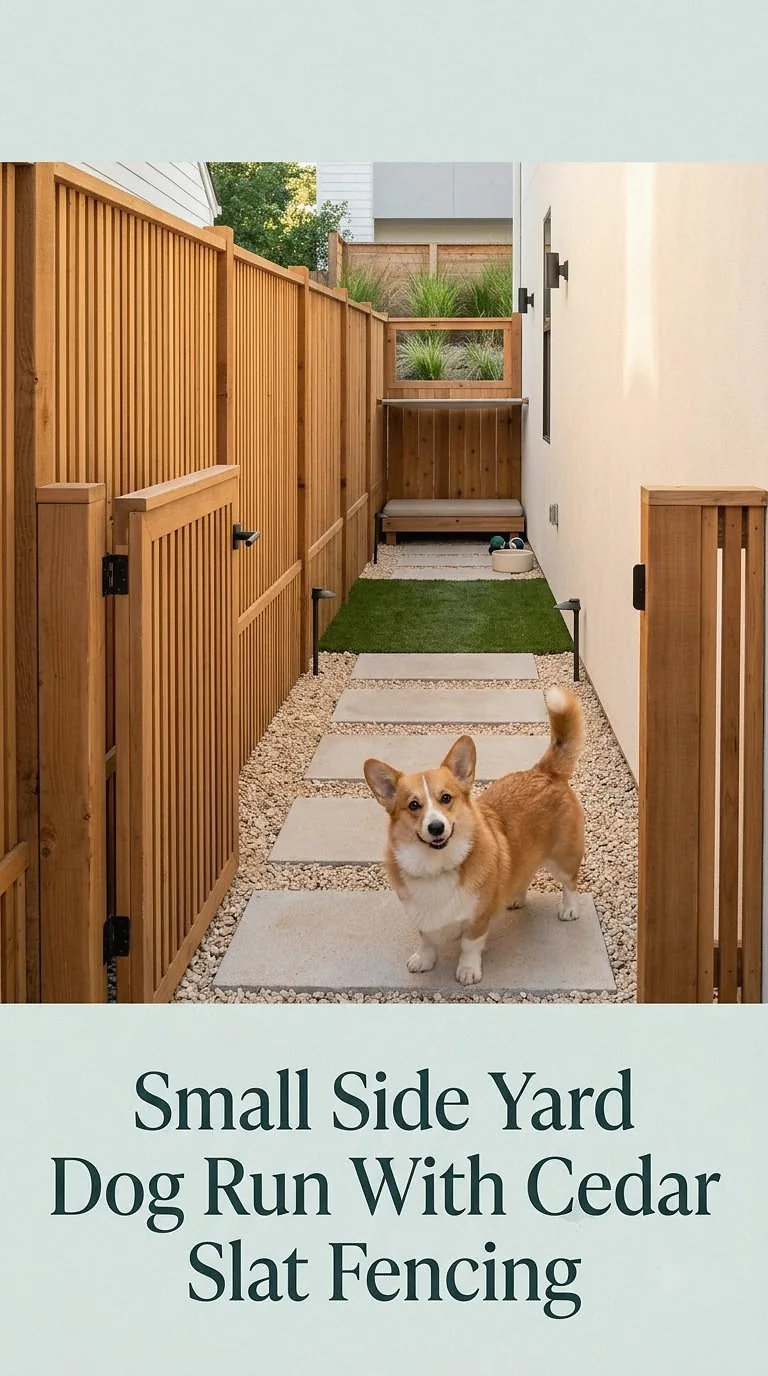
A narrow side yard can become surprisingly valuable when transformed into a dedicated dog run.
Use tall cedar fencing along the exposed boundary and connect it to the house or existing backyard fence to create a long, secure corridor. The linear shape provides room for sniffing and movement without sacrificing the primary lawn or entertaining area.
For the ground, consider materials that are easy to maintain, such as pavers, appropriately selected gravel, artificial turf designed for pets, or a combination of surfaces with good drainage.
Include a shaded resting spot and access to fresh water, especially if the area receives strong afternoon sun.
A wall-mounted storage box near the entrance can hold waste bags, outdoor toys, and cleaning supplies without taking up floor space.
Because side yards can become hot or poorly ventilated, evaluate sunlight and temperature carefully rather than assuming the narrow location automatically makes an ideal dog space.
Double-Gate Entry Fence With A Secure Dog Safety Zone
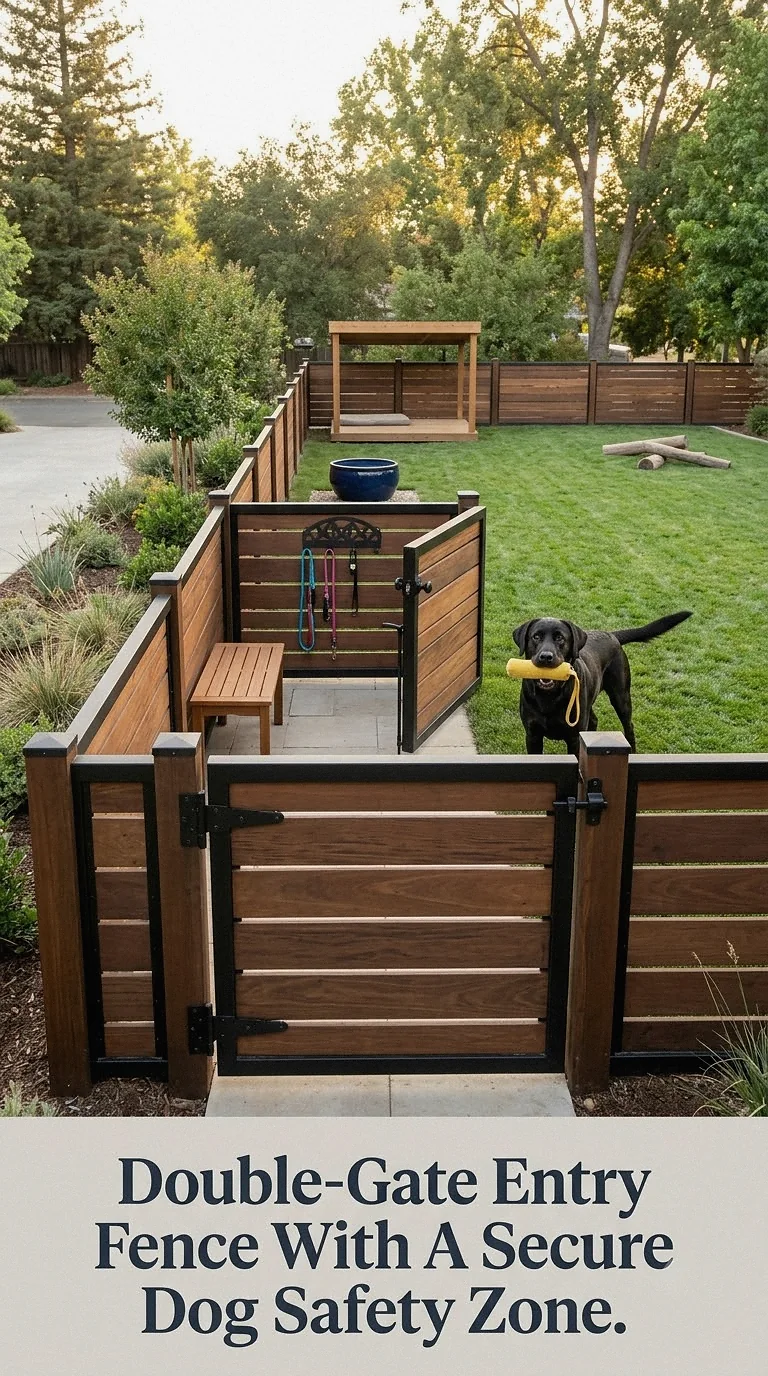
Dogs that love rushing through an opening can make even a well-fenced yard stressful at arrival time.
A small double-gate entry creates a buffer between the main yard and the outside world. You enter through one gate, close it, and then open the second gate into the dog’s main area.
The concept is similar to a tiny outdoor vestibule and can be especially practical near driveways, garden entrances, and frequently used side gates.
Make the feature attractive by using the same materials as the primary fence. Cedar boards with black hardware, white vinyl panels, or matching metal fencing can make the safety zone look completely intentional.
Self-closing hardware may provide additional convenience, but every gate and latch should still be checked regularly.
Keep bins, furniture, stacked firewood, and other climbable objects away from this area so they cannot become accidental escape aids.
Garden Fence With Raised Flower Beds Along The Exterior
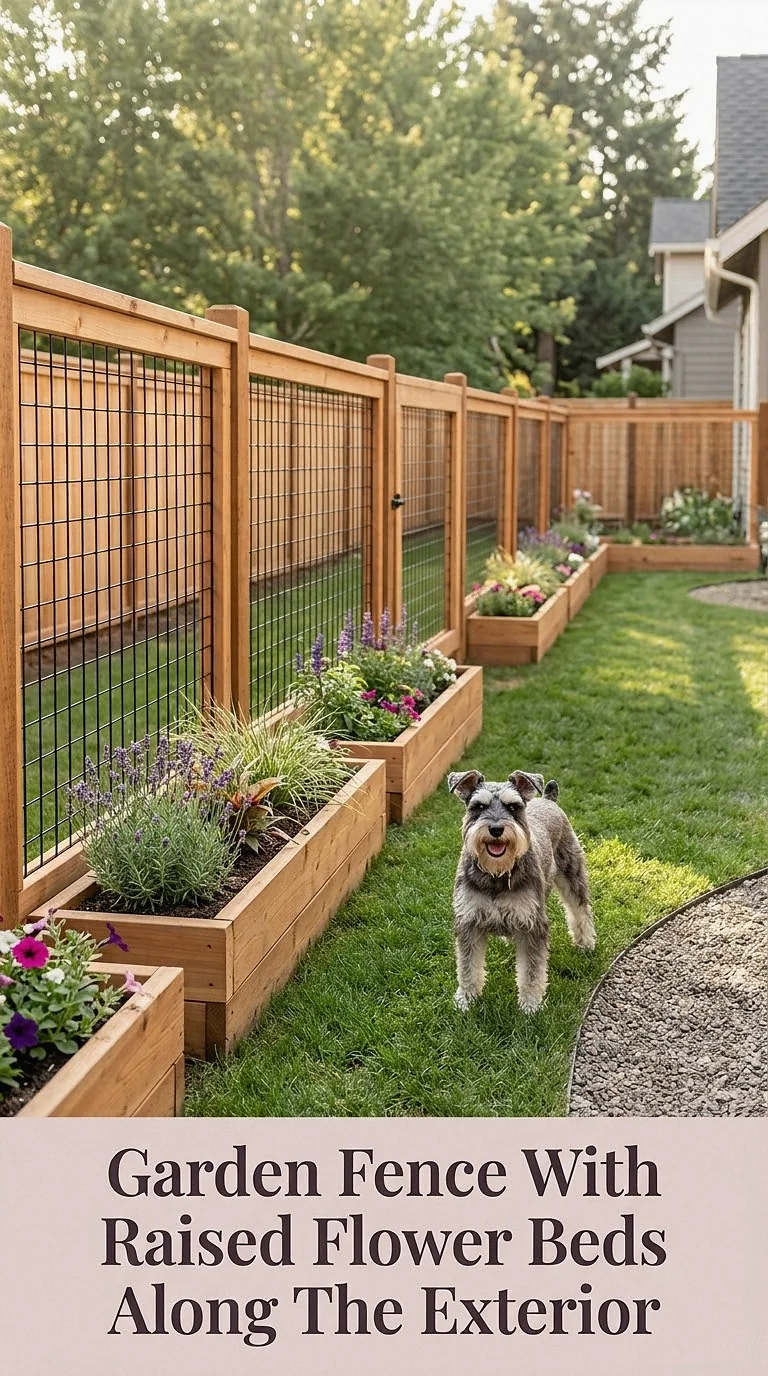
If you love lush landscaping, position the decorative garden outside the dog’s fenced space rather than trying to protect every plant individually inside it.
A simple black metal or wire fence can separate the lawn from raised beds filled with colorful dog-safe plants. The flowers soften the fence while remaining less accessible to curious paws.
This layout also reduces the chance of your dog repeatedly charging through delicate planting beds while patrolling the property line.
Choose raised beds in cedar, stone, or painted timber to coordinate with the fence. Leave enough access on the garden side for pruning, watering, and fence inspections.
Read more : 18 Dog Mud Room Ideas Farmhouse Homes Can Beautifully Embrace
Avoid planting anything simply because it looks beautiful. Dogs sometimes chew leaves, berries, mulch, or fallen plant material, so plant selection deserves the same attention as the fence itself.
The finished space can feel like a charming enclosed garden rather than a utilitarian dog yard.
Natural Privacy Fence With Layered Dog-Safe Greenery
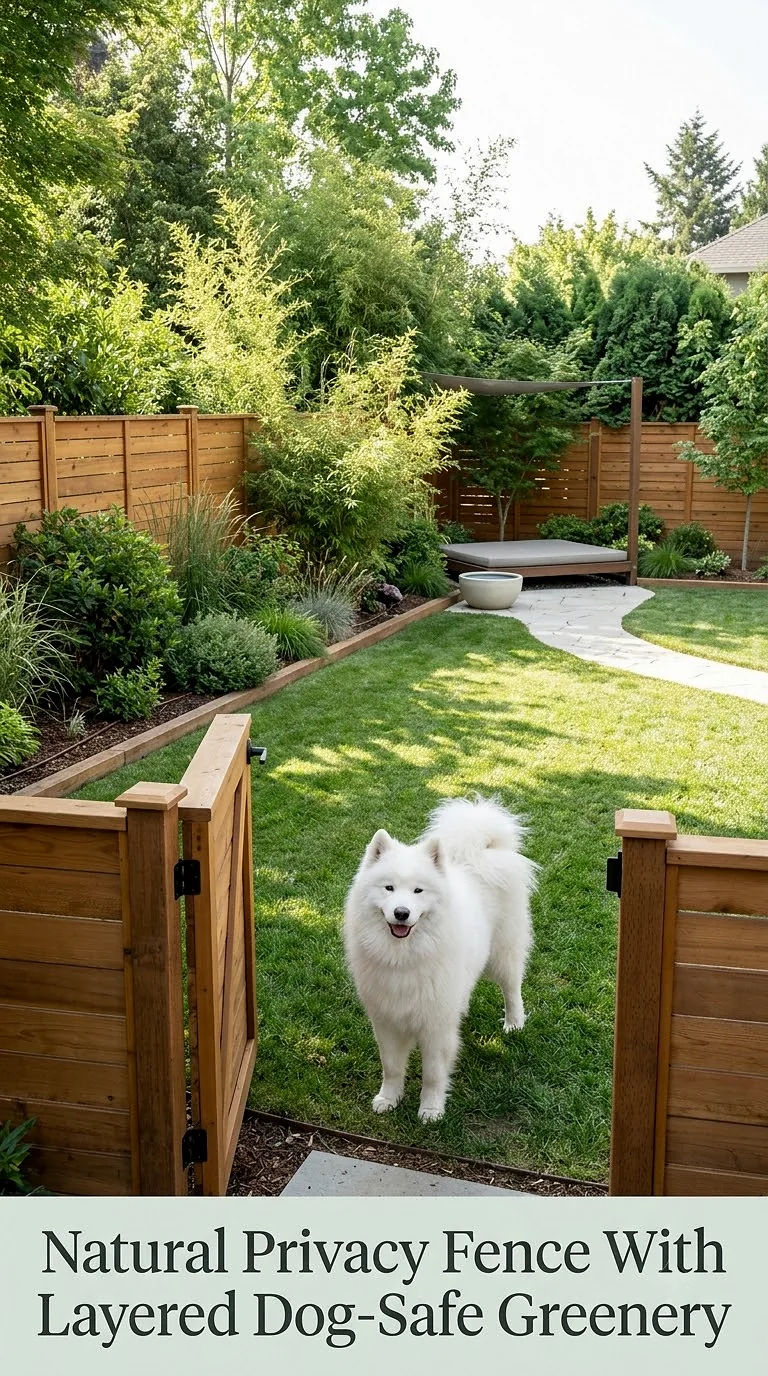
A solid fence can become much softer when paired with carefully planned planting.
Start with a simple wood or vinyl privacy fence, then create layers of greenery using low groundcovers, medium-height shrubs, and taller plants suitable for your climate and household.
Keep vegetation far enough from the fence that your dog cannot use thick shrubs, planters, or raised structures as a boost for climbing. A narrow maintenance strip also makes it easier to spot loose boards and digging activity.
Natural wood tones combined with soft green foliage create an especially calming backyard palette. Add a small bench, shaded dog bed, or water station to turn the area into a peaceful shared retreat.
Always verify that individual plants are safe for dogs before introducing them to an accessible yard.
This design is ideal for homeowners who want privacy without feeling surrounded by an uninterrupted wall of fencing.
Curved Black Fence Around A Dedicated Dog Play Lawn
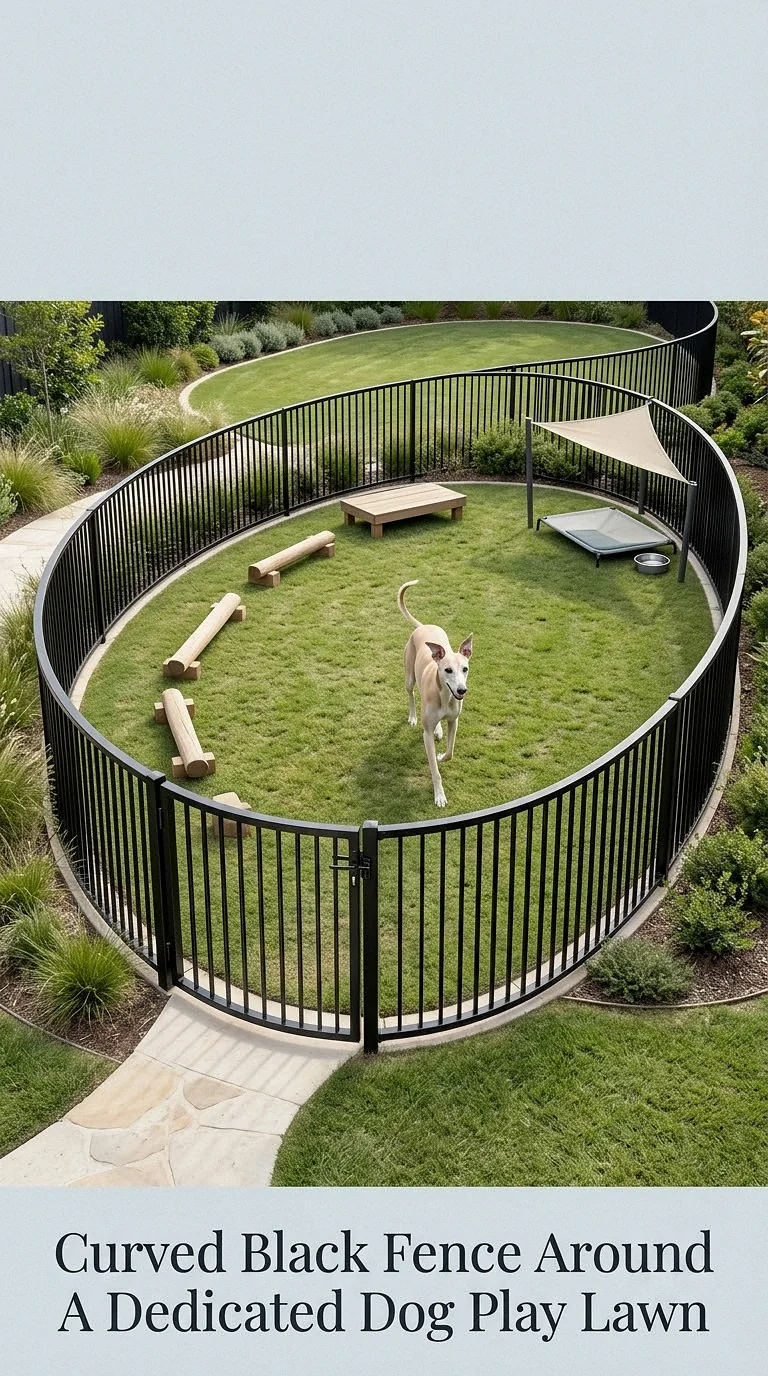
A fence does not always need to follow perfectly straight lines.
Using gently curved boundaries around a dedicated dog lawn can make a backyard feel more like a thoughtfully landscaped garden. Black metal or flexible mesh fencing works particularly well because it visually recedes against plants.
Create a generous central area of grass or another comfortable surface, then surround the outside of the fence with softly curved planting beds.
Inside the enclosure, keep permanent structures minimal so your dog has space to run. A shaded corner, sturdy water bowl, and washable outdoor mat may be all you need.
This setup is useful when you want the dog to have a defined play zone while preserving other parts of the property for gardening, entertaining, or children’s activities.
A wide, securely latched gate makes maintenance and lawn equipment access much easier.
Mixed Wood And Corrugated Metal Privacy Fence
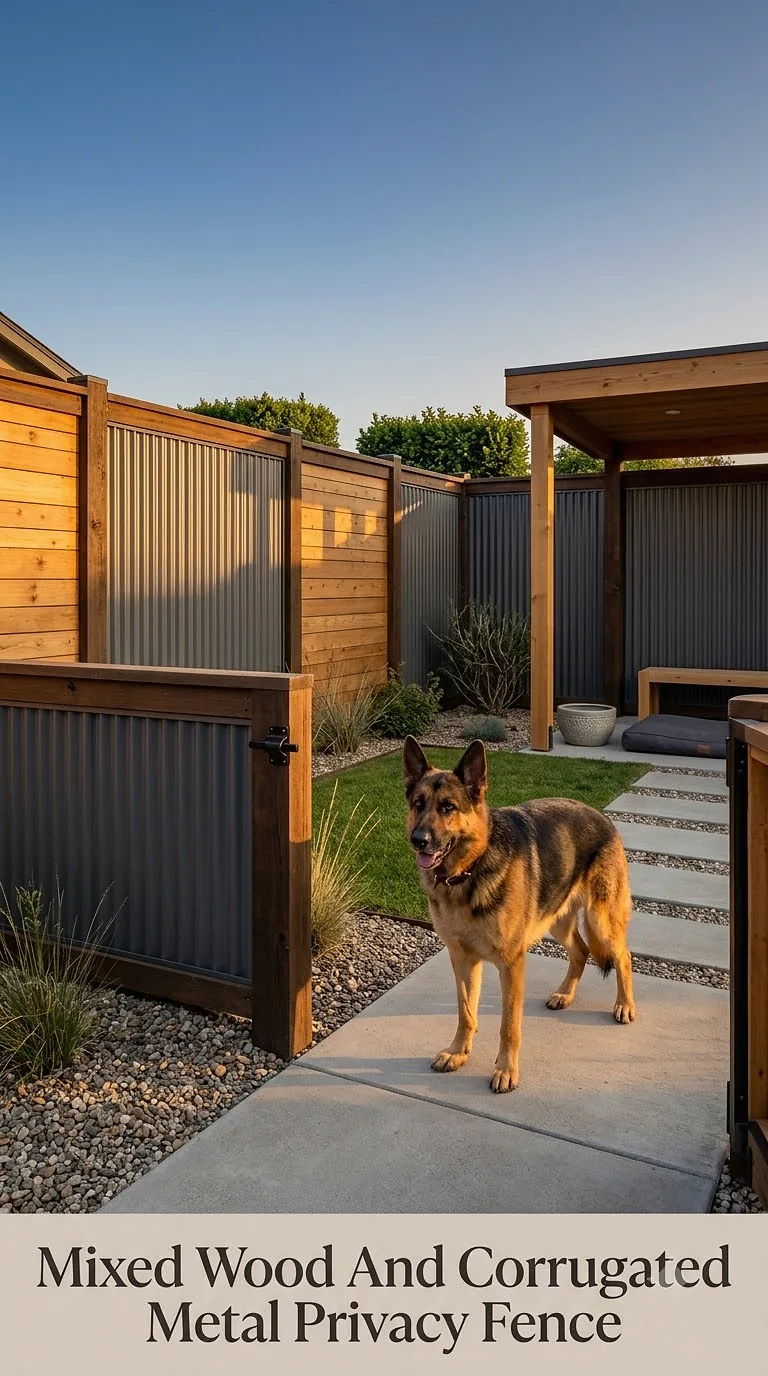
For a backyard with modern farmhouse character, combine stained timber framing with corrugated metal panels.
The metal introduces texture and durability while the wood keeps the fence warm and residential. Charcoal, muted galvanized gray, or dark bronze panels can look particularly sophisticated beside natural cedar posts.
Because the panels are solid, this style provides strong visual screening for dogs that become excited by activity outside the property.
Carefully finish every edge and connection so there are no exposed sharp areas. Panels should also be securely attached to prevent rattling or movement during storms.
Pair the fence with gravel borders, oversized timber planters, string lights, and simple outdoor furniture for a cozy evening atmosphere.
Before using metal extensively in a hot climate, consider how much direct sunlight the surface receives and where your dog will rest. Plenty of shade and fresh water remain essential.
Reinforced Existing Fence With A Neat Stone Border
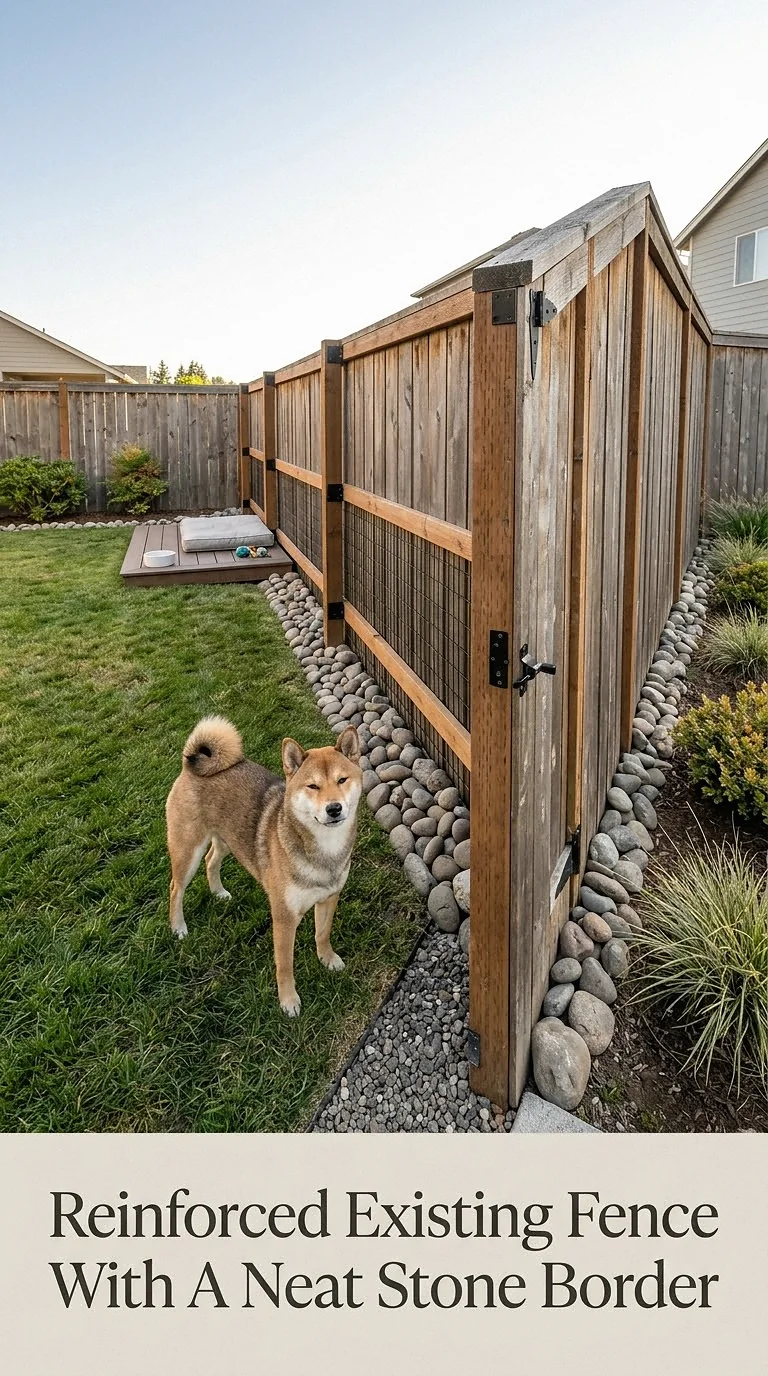
Sometimes the most practical dog fence idea is improving what you already have.
If your existing fence is structurally sound but your dog repeatedly investigates the bottom edge, create a tidy perimeter using large, stable stones or an appropriately constructed hardscape border.
The goal is to make vulnerable ground-level areas harder to excavate while giving the fence line a finished landscaping appearance.
Choose stones that are too substantial for your dog to move and avoid sharp, unstable pieces. A narrow gravel or paver maintenance strip can also keep weeds from growing directly against the fence and make inspections easier.
Repair loose boards, damaged mesh, leaning posts, and gate gaps at the same time rather than treating the border as a substitute for fence maintenance.
This project can dramatically improve both the appearance and function of an older yard without requiring a complete fence replacement.
Luxury Dog Courtyard With Privacy Fence And Matching Pergola
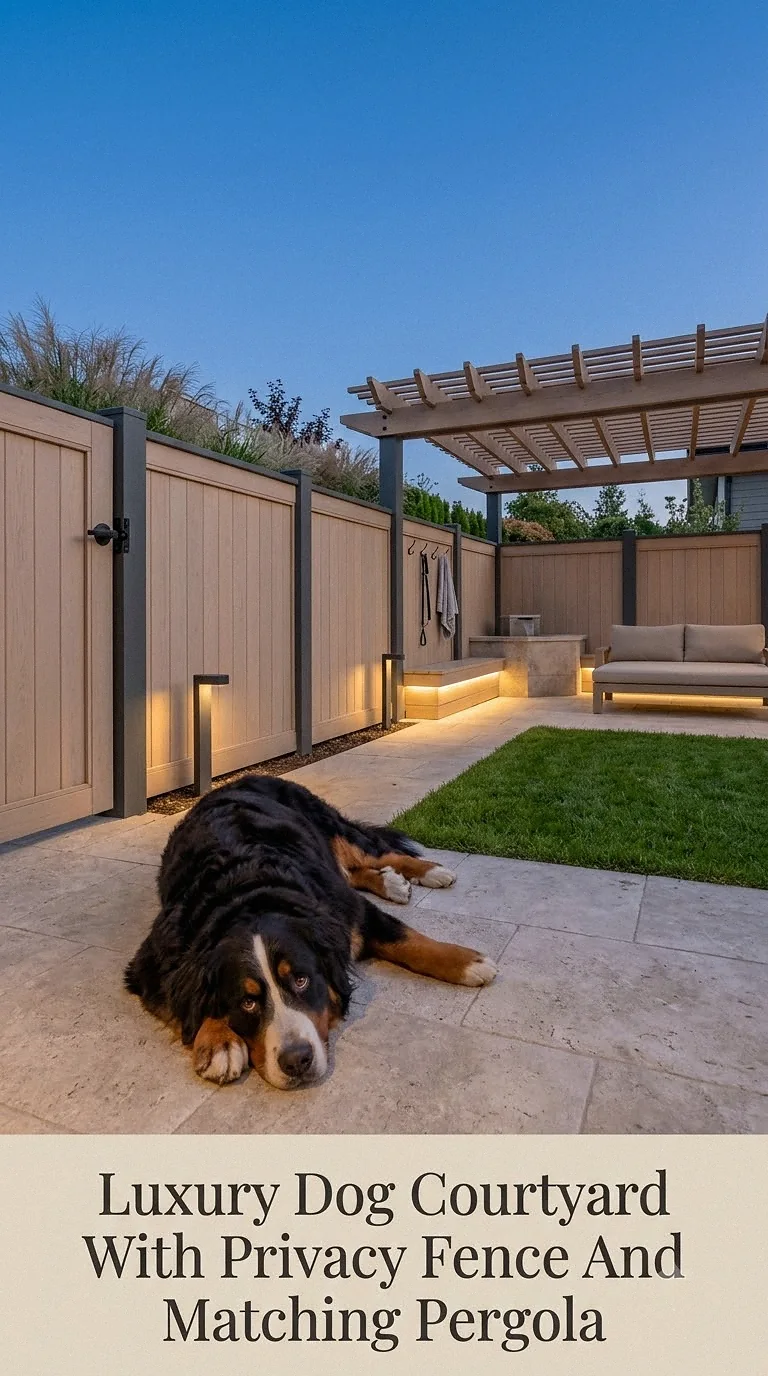
For a truly polished outdoor retreat, design the fence as part of an entire dog-friendly courtyard.
Surround the space with warm wood privacy panels, then repeat the same material overhead in a partial pergola. The structure can create visual continuity while providing valuable shade over a resting area.
Use large-format pavers for the main pathway and retain a softer lawn or pet-appropriate surface for play. Add a built-in water station, washable outdoor bed, discreet toy storage, and a few carefully chosen dog-safe plants.
A matching gate with high-quality hardware completes the tailored appearance.
Even in a luxury setup, safety details remain more important than decorative extras. Check the fence base, gate latch, board condition, and any furniture positioned near the perimeter.
The finished courtyard can feel like an extension of the home’s living space while giving your dog a comfortable outdoor area of their own.
Choosing The Right Dog Yard Fence Ideas For Your Home
The most successful dog yard fence ideas balance three things: the character of your home, the practical realities of your yard, and the habits of the dog who will actually use the space.
A calm small dog may be perfectly comfortable behind a charming reinforced picket fence, while an athletic jumper, persistent digger, or highly curious large dog may need a taller, stronger, and more enclosed design. There is no single fence style that works equally well for every pet.
Before building, watch how your dog behaves outdoors. Look for digging, climbing, chewing, squeezing, gate rushing, or intense reactions to things beyond the property. Then design the fence around those real behaviors rather than appearance alone.
You also do not need the biggest budget to create a beautiful result. Thoughtful materials, a secure gate, clean landscaping, regular maintenance, and a few cozy finishing touches can transform even a simple enclosure into a backyard both you and your dog will love spending time in.
Source: https://petstutorial.com
Category: DOGS
