
Giving your dog the freedom to step outside for a sunny stretch, a quick bathroom break, or a little backyard exploring can make everyday life easier for everyone. But a pet door does not have to look like an awkward plastic flap added as an afterthought. With thoughtful materials, trim, landscaping, and weather protection, it can become a surprisingly attractive part of your home’s exterior.
The best exterior dog door ideas combine convenience with good design. Some disappear neatly into siding or brick, while others become charming architectural features surrounded by cedar trim, tiny awnings, planters, or covered porch details. You can create something modern and minimal, cozy and cottage-inspired, rustic and practical, or even luxurious enough to look custom-built.
You are reading: 19 Exterior Dog Door Ideas That Look Beautiful And Work Brilliantly
Function matters just as much as appearance. An exterior pet door should suit your dog’s size and mobility, open into a secure outdoor area, and be protected from heavy rain and persistent drafts. Wall installations also require more planning than simple door-mounted versions because framing, wiring, plumbing, insulation, and water management may be hidden inside the wall.
Whether you are renovating your backyard, improving a side entrance, or simply trying to make your existing pet door feel more intentional, these ideas offer plenty of inspiration for creating an entrance both you and your dog can enjoy.
Exterior Dog Door Ideas For A Beautiful And Practical Pet-Friendly Home
Warm Cedar Dog Door With A Mini Sloped Rain Awning
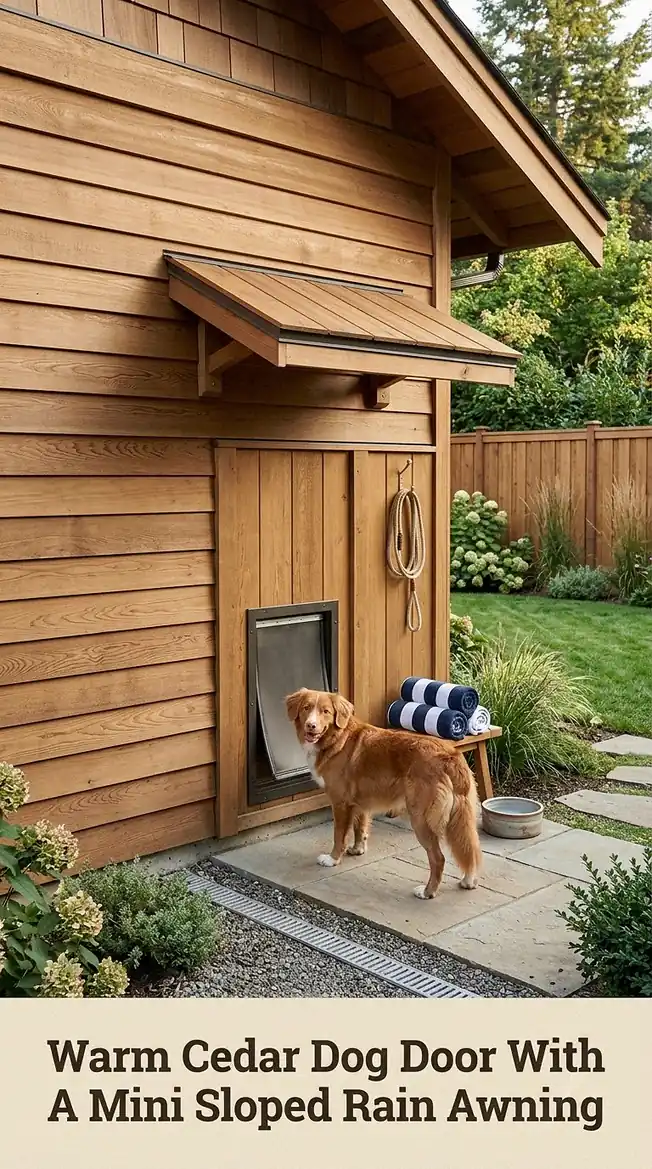
Turn a basic wall-mounted dog door into a charming exterior feature by framing it with warm cedar boards and adding a small sloped awning above the opening. The natural wood creates a cozy contrast against white, cream, charcoal, or sage siding while making the pet entrance feel like part of the architecture.
Keep the awning relatively simple so water can move away from the opening instead of collecting near the frame. A narrow metal cap or weather-resistant roofing material can provide additional protection.
Add two small planters nearby for an especially inviting look. Hardy greenery, ornamental grasses, or pet-safe herbs soften the structure without blocking your dog’s path.
Because cedar naturally suits outdoor settings, this style works beautifully with rustic homes, cabins, modern farmhouses, and backyard garden designs. Seal or finish the wood appropriately for your climate so it remains attractive through changing seasons.
Modern Black Dog Door Set Into Charcoal Siding
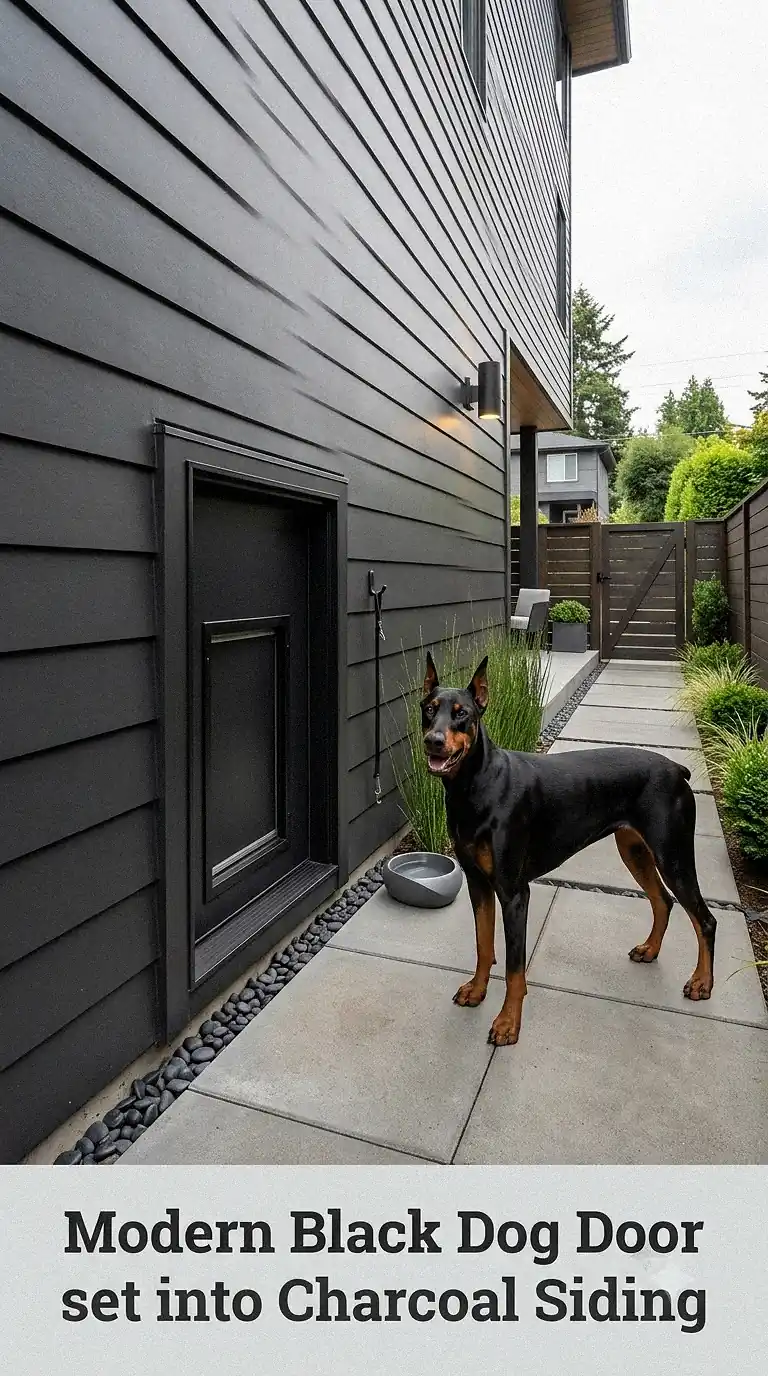
For a clean contemporary exterior, choose a dark pet-door frame that blends almost seamlessly into charcoal, black, or deep gray siding. Instead of highlighting the opening, this approach intentionally minimizes it.
Keep surrounding details simple. Matte black exterior lighting, streamlined planters, pale concrete pavers, and ornamental grasses create an elegant modern setting without distracting from the architecture.
A flush-looking wall-mounted model works particularly well because there is no need to cut into an attractive main entry door. Position the opening along a protected side or rear wall where your dog can move directly into a secure yard.
Dark frames also tend to hide everyday dirt more effectively than bright white finishes. Just remember that very dark surfaces can become hot in strong direct sunlight, so a shaded location or covered area may be more comfortable in particularly warm climates.
White Farmhouse Dog Door With Crisp Board-And-Batten Trim
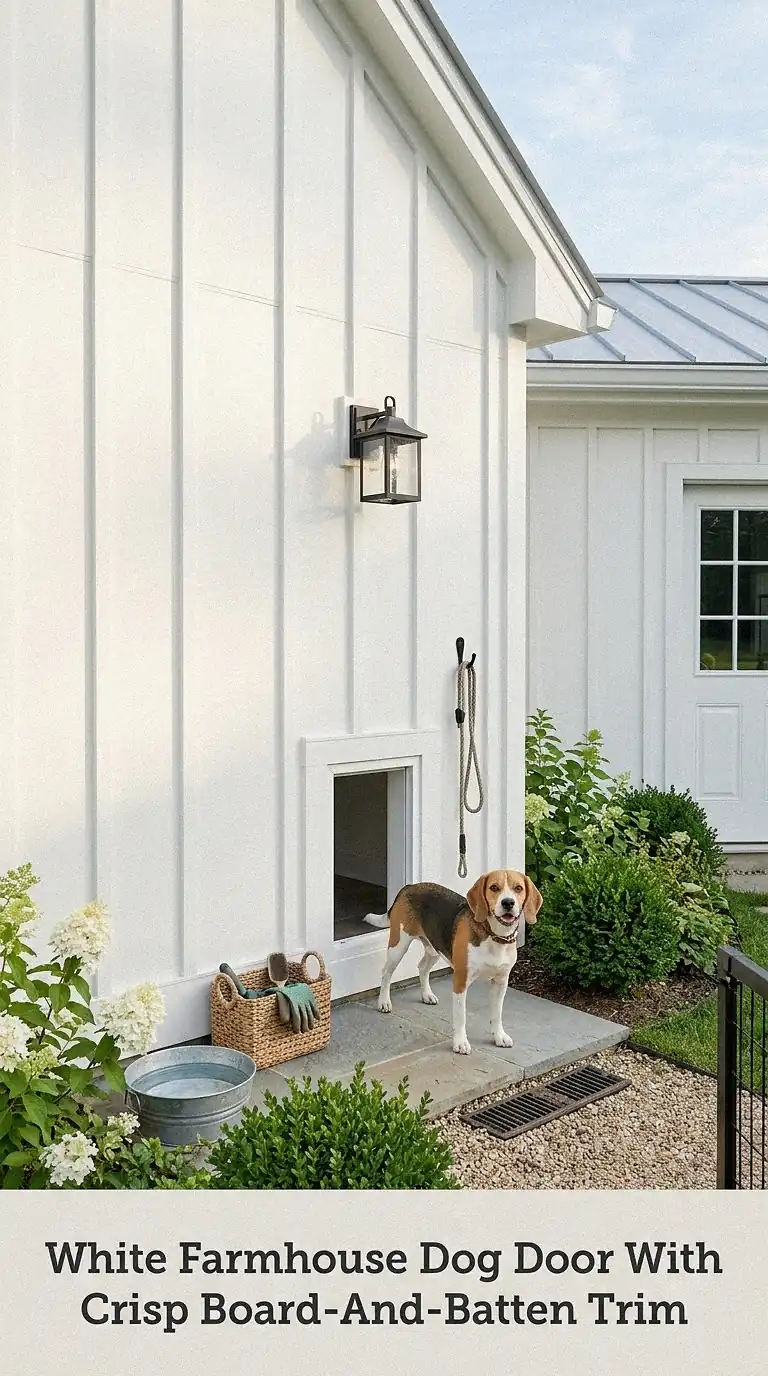
A pet entrance can look surprisingly polished against classic white board-and-batten siding. Frame the opening with simple white exterior trim so it visually matches nearby windows and doors.
For contrast, use black hardware, lantern-style exterior lighting, and perhaps a black or dark gray pet-door frame. The result feels intentional rather than overly decorative.
Continue the farmhouse look with pea gravel, stepping stones, galvanized planters, or a simple wooden bench nearby. A covered location beneath an eave or porch is especially practical because it offers your dog some protection when moving between indoors and outdoors during wet weather.
If the dog door sits close to muddy lawn, create a short gravel or paved landing outside it. This small detail can reduce the amount of dirt carried directly through the opening and into the house.
Cottage-Style Dog Door With Tiny Shutters And Flower Boxes
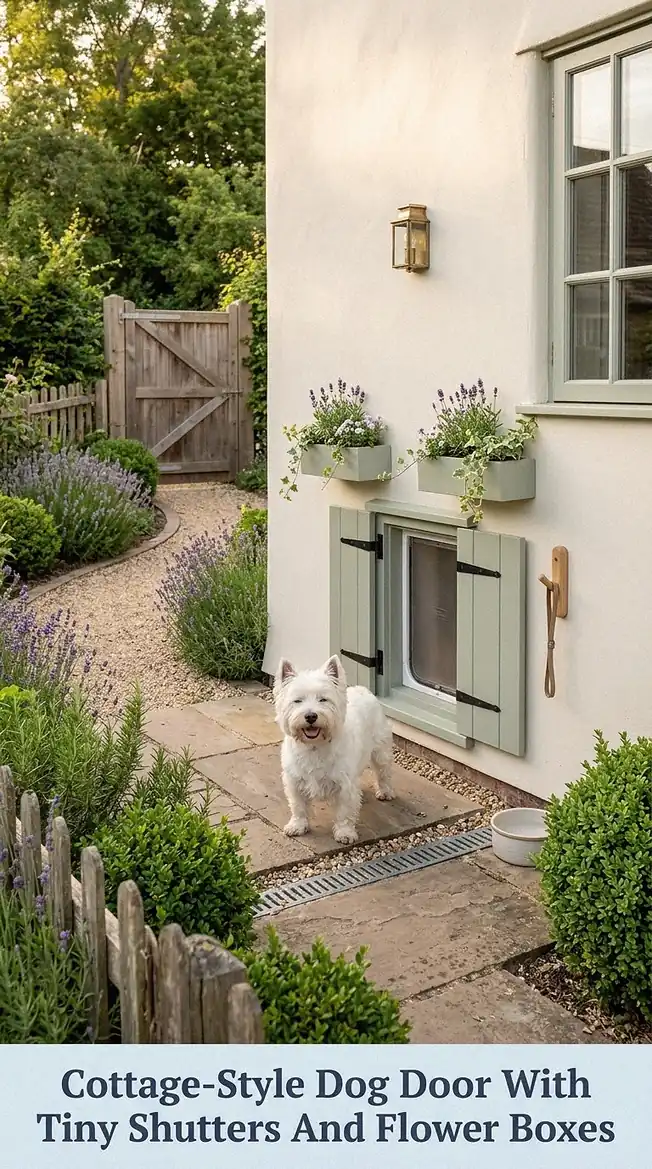
For a playful cottage exterior, transform your dog’s doorway into a miniature version of your own home. Add small decorative shutters beside the opening and a narrow flower box positioned safely above it.
Paint the trim in a cheerful but coordinated color such as dusty blue, muted green, soft terracotta, or warm cream. Matching the miniature trim to your home’s front door is an easy way to make everything feel connected.
Keep decorative pieces securely attached and well outside your dog’s travel path. Flowers should also be chosen with pets in mind, especially if your dog likes investigating leaves and soil.
This idea works particularly well on garden sheds connected to enclosed runs, rear mudrooms, cottage-style houses, and colorful backyard spaces. It brings personality to a practical feature without requiring a major renovation.
Brick Exterior Dog Door With Simple Stone-Look Surround
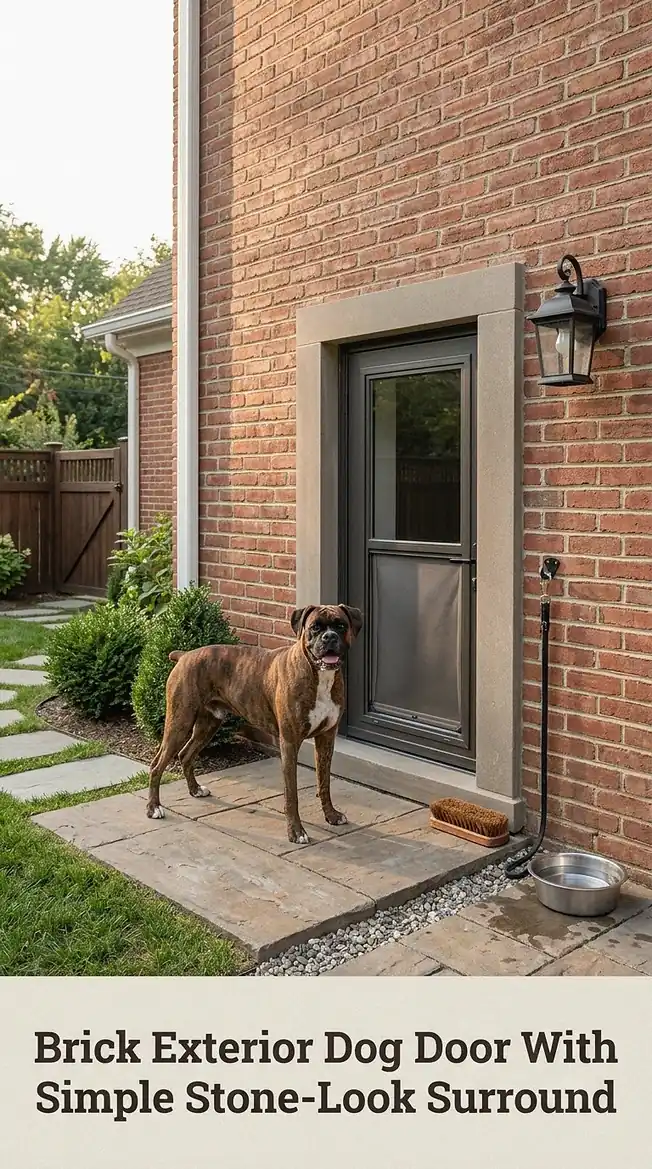
A dog door installed through brick can feel beautifully integrated when the surrounding finish complements the masonry instead of fighting against it.
Consider framing the exterior opening with a restrained stone-look or masonry surround that resembles a miniature architectural portal. Warm limestone tones pair beautifully with traditional red brick, while charcoal edging can suit darker contemporary brick.
Keep the design straightforward because brick already provides plenty of texture. Nearby lanterns, gravel pathways, and neatly clipped greenery can complete the look.
Cutting through masonry and constructing a weather-resistant wall opening is considerably more involved than installing a flap in a wooden door, so this is one situation where professional installation can be worthwhile. The finished result, however, can look exceptionally permanent and polished.
Covered Porch Dog Door With A Dry Landing Zone
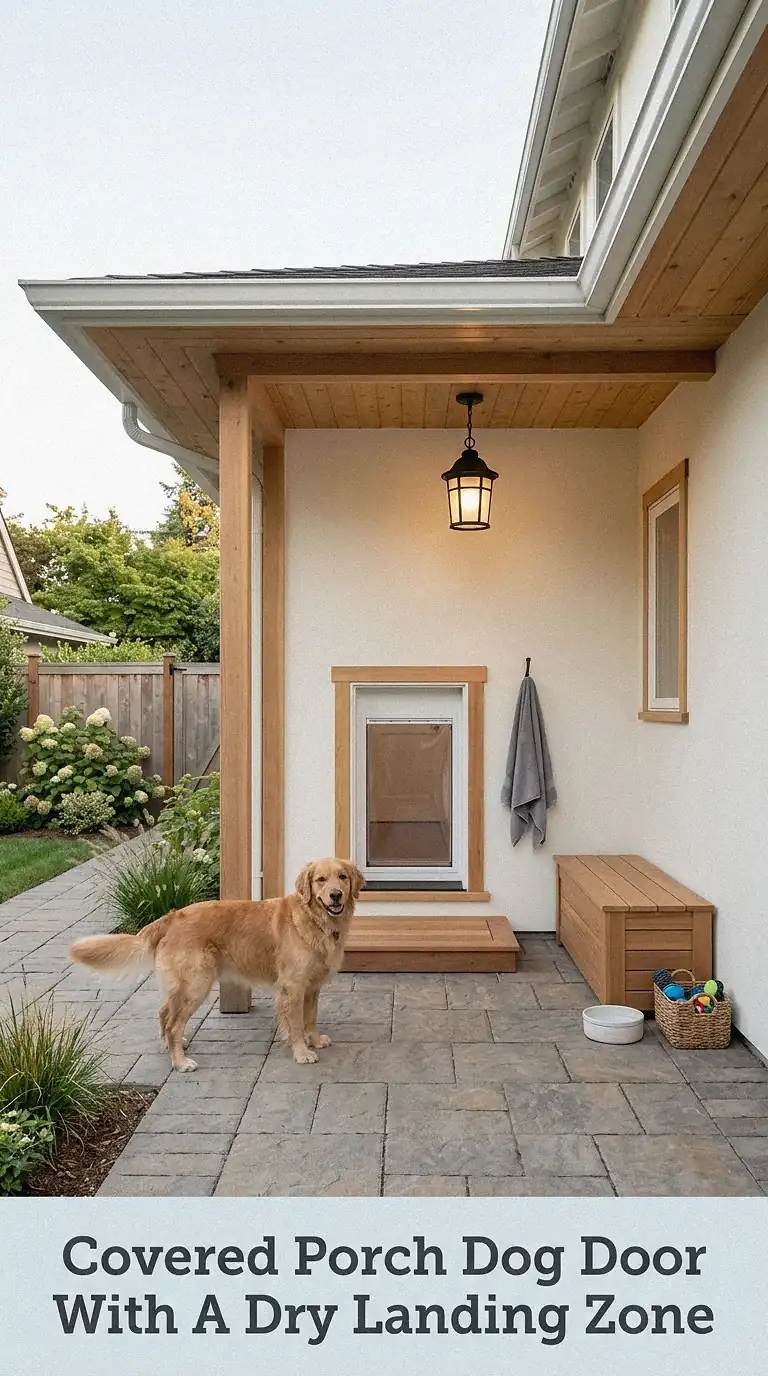
One of the most practical locations for an exterior dog door is beneath a covered porch. The roof provides natural protection from rain while the porch floor creates a cleaner transition between the house and yard.
Install the opening along a wall leading directly onto the porch, then create a small landing with an outdoor mat or washable runner. Place a lidded storage basket nearby for towels, paw wipes, leashes, or outdoor toys.
A simple wall hook can hold a drying towel after rainy walks, while a bench offers convenient seating when putting on harnesses.
Because the opening is protected from direct weather exposure, the entire setup can feel more like a thoughtful pet station than a standalone dog door. It is especially appealing for families that already use their porch as an everyday backyard entrance.
Rustic Stone Dog Door Beside A Gravel Garden Path
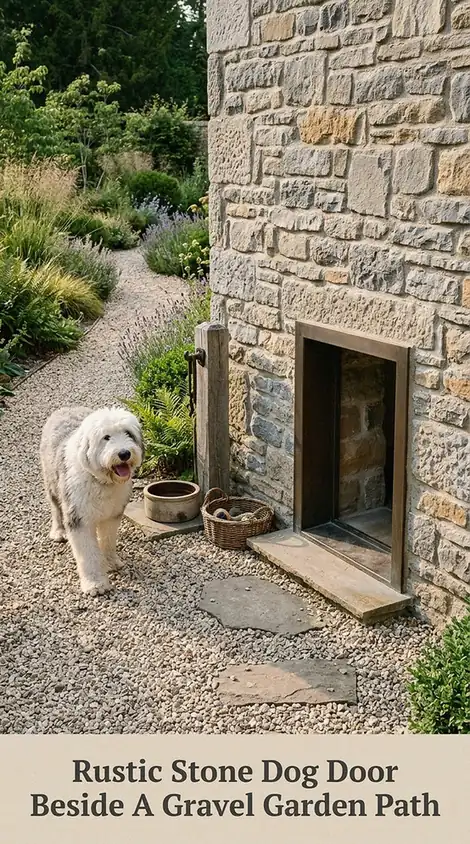
Homes with stone veneers, natural landscaping, or rustic architecture can turn a pet entrance into a beautiful garden feature.
Position the dog door near a gravel or decomposed-granite pathway that leads toward your dog’s favorite part of the yard. Continue the natural palette with timber edging, large stones, and low-growing pet-friendly plants.
Choose a frame in bronze, brown, black, or another neutral shade that visually recedes against the stone wall.
The path is not only decorative. A hard, well-draining surface immediately outside the opening can help keep paws away from muddy soil during wet weather.
Read more : 19 Dog Shower Tile Ideas For A Beautiful And Practical Pet-Washing Space
Make the pathway wide enough for comfortable movement and avoid placing sharp gravel, thorny vegetation, or unstable stepping stones directly where your dog lands.
Sage Green Dog Door With Natural Wood Trim
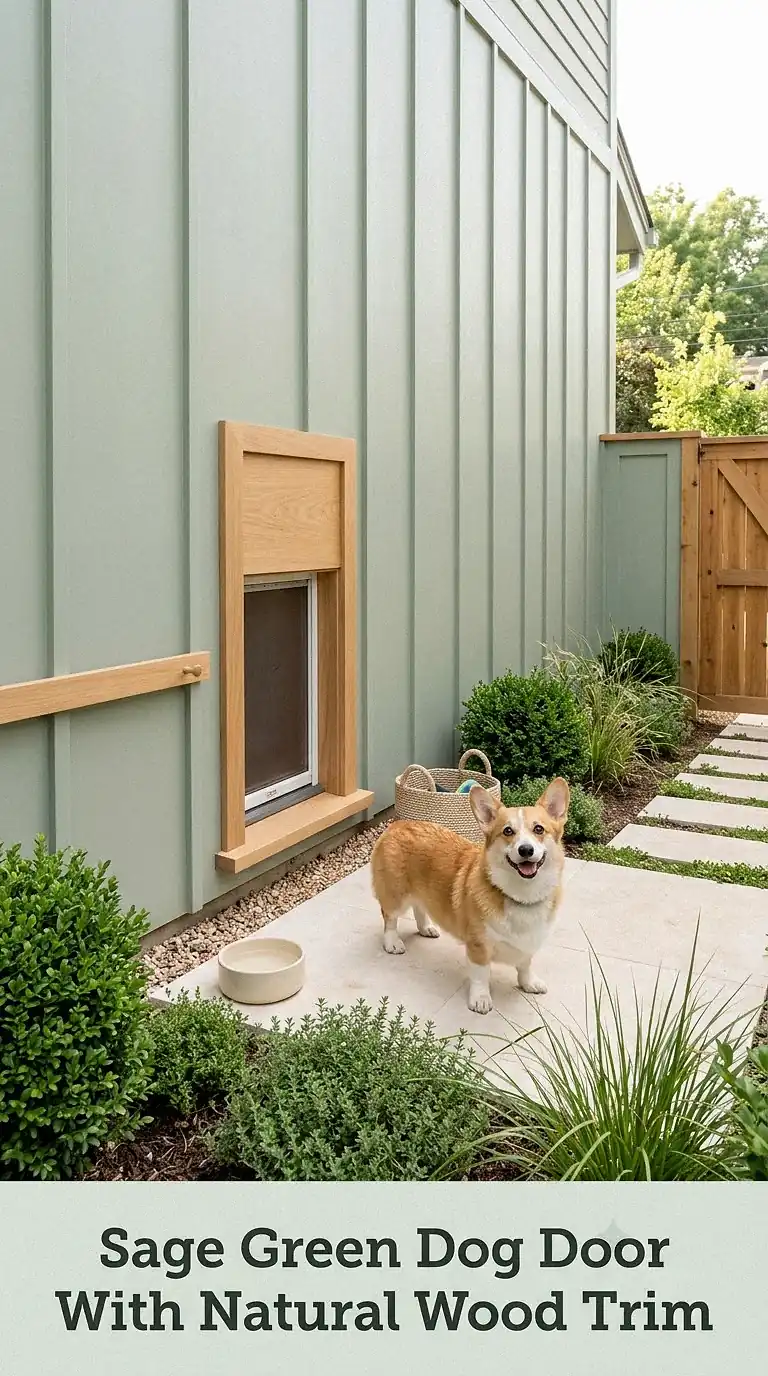
Soft sage green is especially lovely for garden-facing exteriors because it blends easily with surrounding plants. Pair sage siding with natural oak-toned or cedar trim around the pet door for a calm, organic look.
A small black or brass-toned exterior fixture above the area can introduce contrast without making the setup feel busy.
Complete the space with terracotta planters, woven-look outdoor baskets, and a pale stone pathway. If you have a small backyard, keeping all the materials within the same muted palette can make the area feel larger and more cohesive.
This concept suits cottage, Scandinavian-inspired, farmhouse, and relaxed contemporary homes. The combination of green and warm wood also photographs beautifully while still feeling realistic enough for an everyday family backyard.
Minimalist Stucco Dog Door With A Recessed Exterior Opening
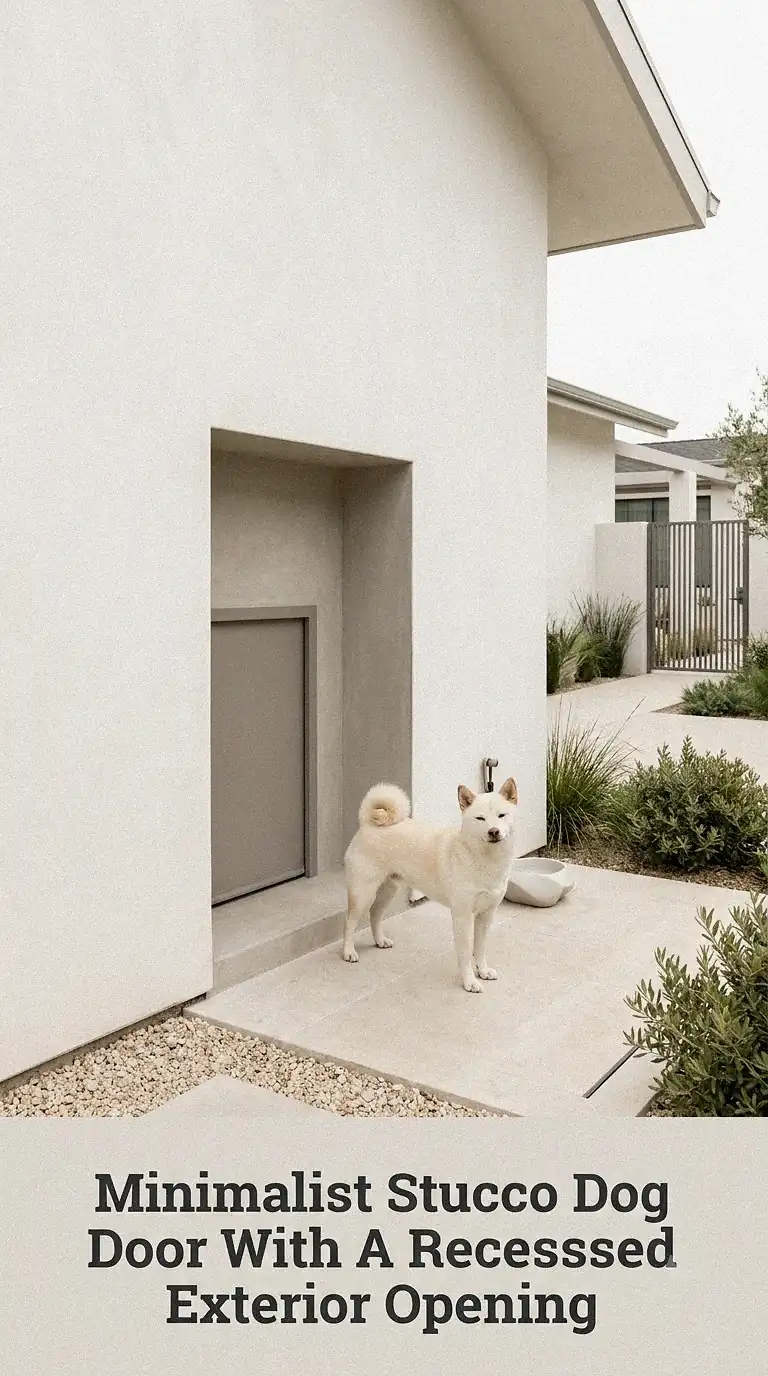
If your home has smooth stucco walls, consider a pet entrance with as little visible framing as possible. A recessed opening finished in a tone close to the surrounding wall can create a clean architectural appearance.
Warm white, sandy beige, terracotta, and pale greige all work beautifully for Mediterranean and Southwestern-inspired homes.
Pair the dog entrance with large-format pavers and one or two sculptural planters rather than lots of small decorations. A simple overhead ledge can provide weather protection while preserving the minimalist aesthetic.
Because stucco walls involve multiple exterior layers, careful sealing and water management are important. The opening should feel integrated into the wall rather than simply cut through it.
The result can be remarkably sophisticated, particularly along a private courtyard or enclosed patio.
Side-Yard Dog Door With A Dedicated Potty Path
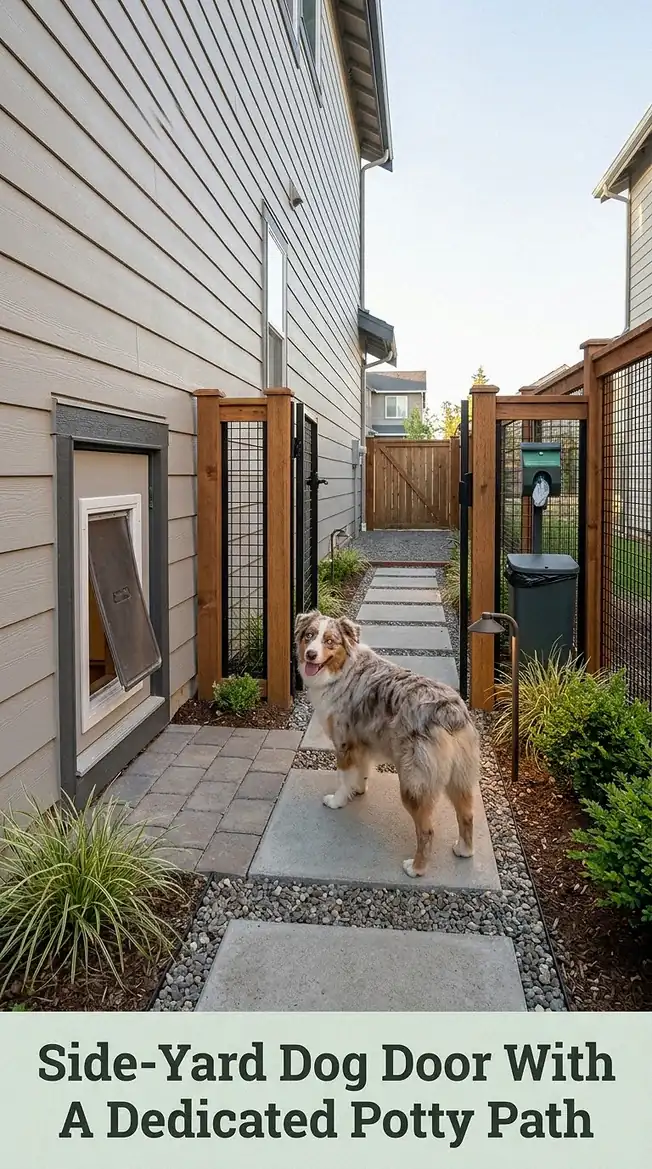
A narrow side yard is often an excellent place for a discreet dog entrance. Instead of sending your dog directly into the main entertaining area, create a purposeful path leading from the pet door to a designated potty zone.
Use durable pavers, artificial turf designed for pets, gravel, or another easy-clean surface depending on your climate and preferences. Add slim fencing if necessary to keep your dog contained.
Wall-mounted lighting makes nighttime trips easier, while a compact hose reel or outdoor cleaning station can simplify maintenance.
This arrangement is especially useful for small urban yards where every square foot needs a clear purpose. Keeping the route simple and uncluttered also makes it easier for older dogs to navigate.
The dog door itself can be finished to match your siding so the functional setup remains visually quiet.
Dog Door Beneath A Backyard Deck With Weather Protection
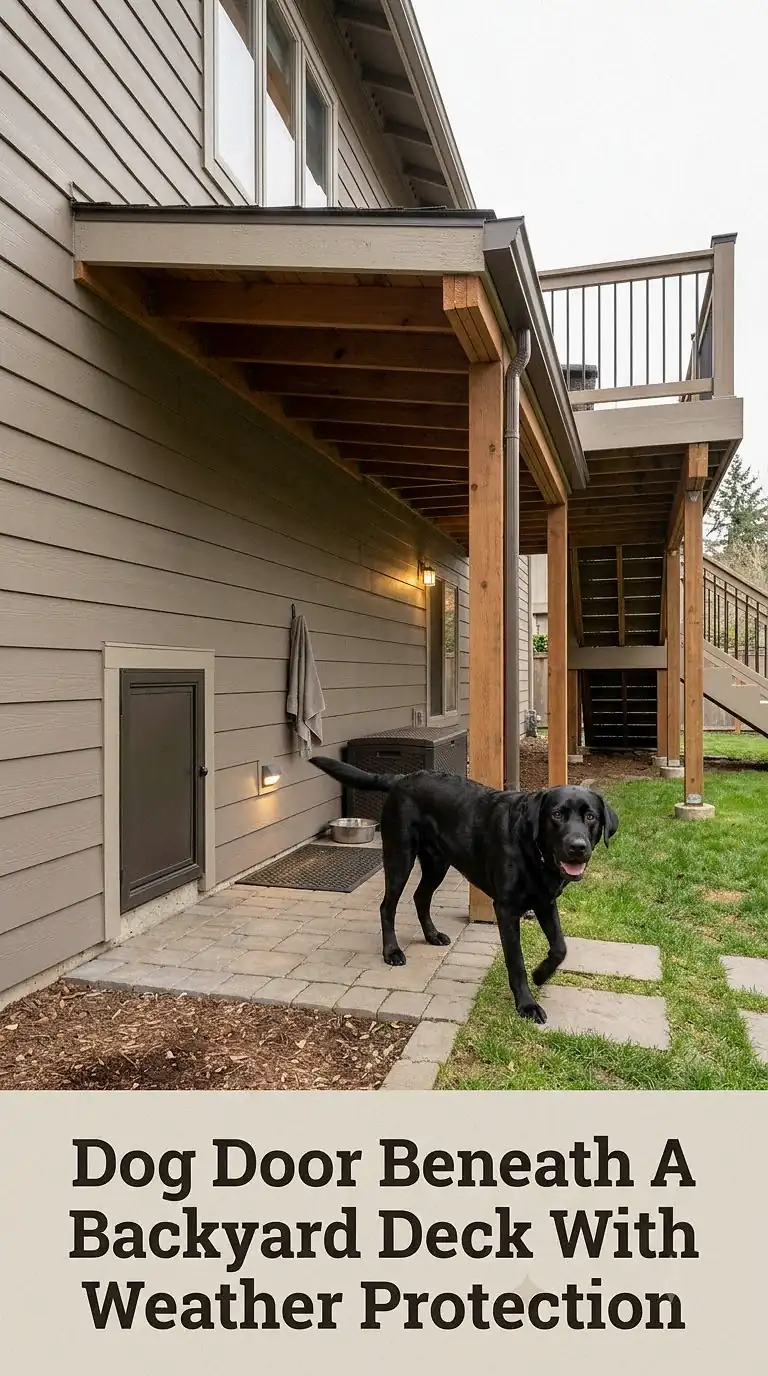
If your home’s lower wall opens beneath an elevated deck, the sheltered space can provide a useful location for a dog door.
The deck above naturally reduces direct rainfall, while the area underneath can become a comfortable transition zone. Add pavers or a small concrete pad outside the opening so your dog does not immediately step into wet soil.
For a finished look, screen unattractive structural elements with matching timber slats while maintaining adequate airflow and access for maintenance.
This can also be a smart place for an outdoor toy basket, leash hook, or paw-cleaning station. Just keep your dog’s route completely clear.
Before choosing the location, check that water does not collect beneath the deck during storms. Good drainage matters more than decorative styling when creating a dependable pet entrance.
Tiny Dog Porch With Wood Platform And Petite Roof
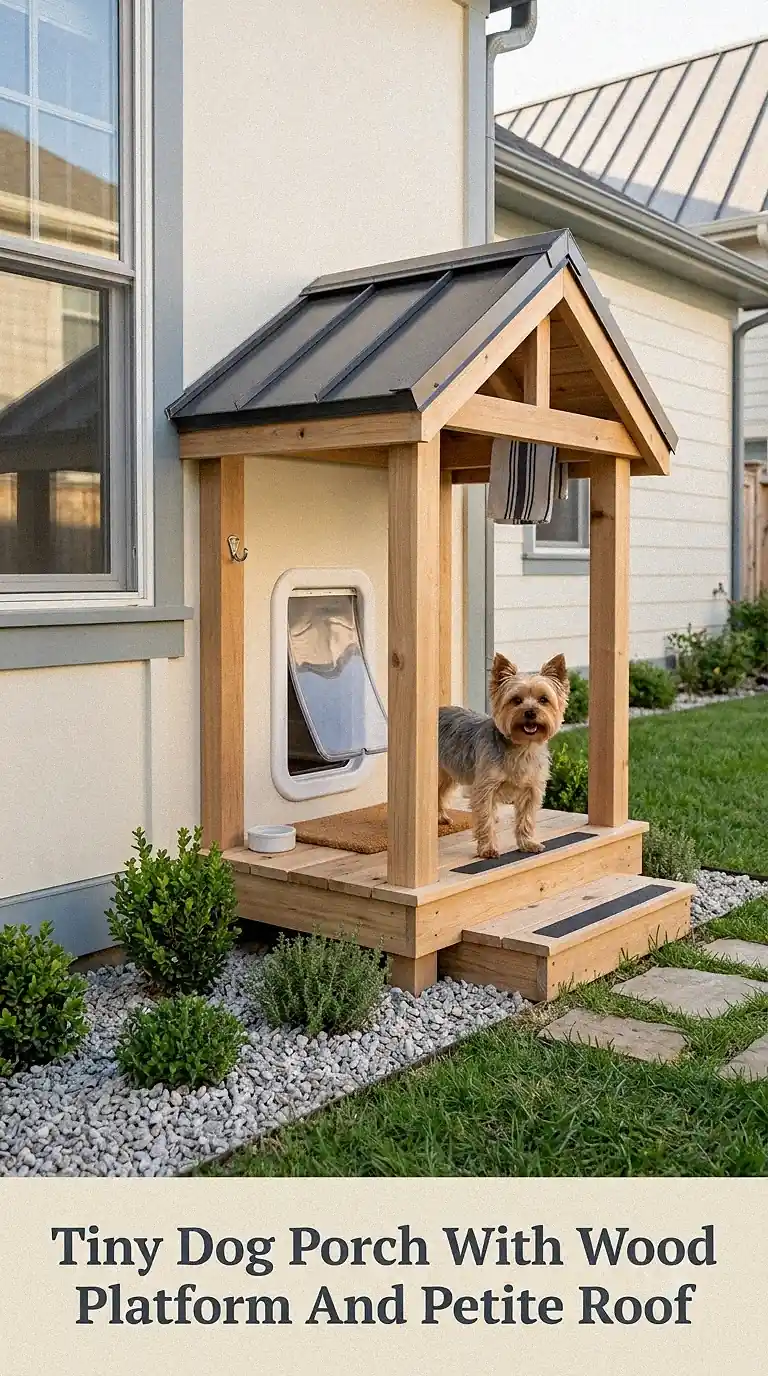
Give your pup a front porch of their own by building a small platform directly outside the dog door.
Use weather-resistant decking boards and create a low, stable landing large enough for your dog to stand comfortably before entering or exiting. Above it, add a simple petite roof that coordinates with your house.
The finished structure can look adorable on cottage, farmhouse, and cabin-style homes. Paint the trim to match your exterior or leave natural wood exposed for a rustic appearance.
Avoid unnecessary steps for small, senior, or mobility-challenged dogs. A level platform or gentle ramp is usually more practical.
This little porch can be decorative, but its main purpose should remain functional. It provides a cleaner landing area, helps define the entrance, and offers additional shelter during light rain.
Exterior Dog Door With A Gentle Senior-Dog Ramp
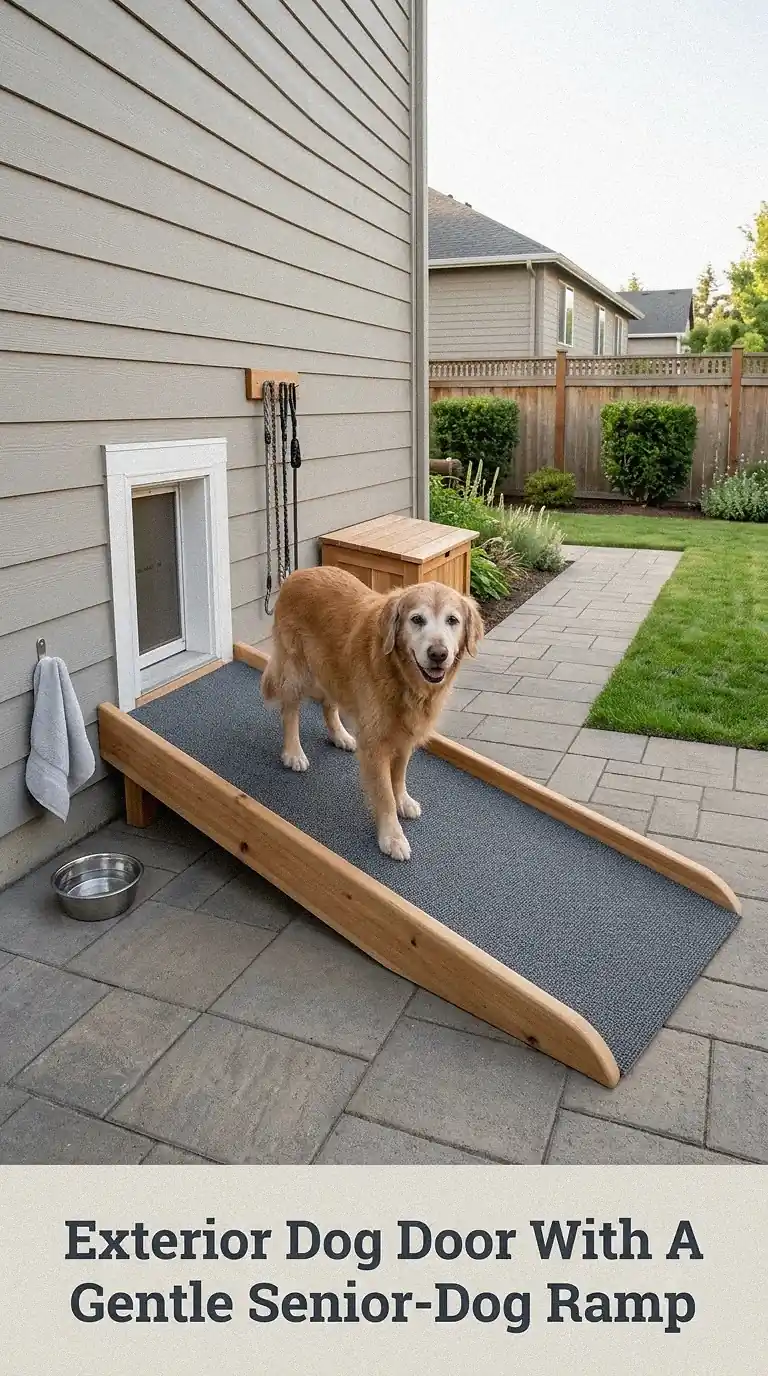
A dog door may work perfectly for a young energetic pet but become harder to use as your dog ages. If the opening sits above ground level, add a broad, gently sloped ramp instead of expecting your dog to jump.
Cover the ramp with a textured, weather-resistant surface that offers reliable traction. Raised edges can help guide movement without creating an enclosed feeling.
Choose wood, composite decking, or another outdoor-rated material that coordinates with your house. Painting the ramp the same color as your siding or deck can make it feel built-in rather than medical or temporary.
Keep the approach well lit and free from slippery leaves or standing water.
This thoughtful modification can also help smaller dogs and breeds that are less comfortable navigating tall thresholds.
Double-Flap Dog Door With A Clean Insulated Exterior Frame
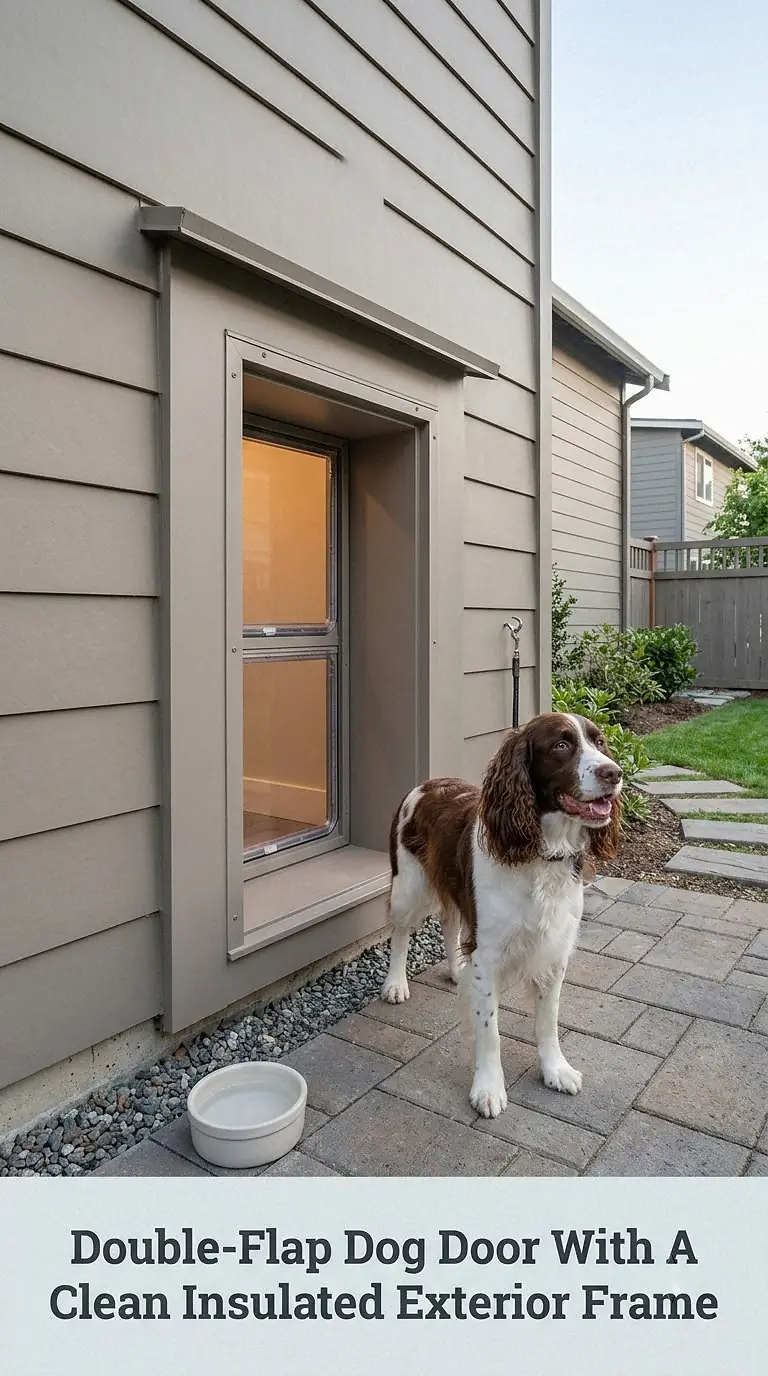
In climates with very hot summers, cold winters, or strong winds, prioritize thermal performance as part of the design.
Choose a well-sealed pet-door system designed for exterior exposure and surround it with a simple trim frame that visually matches your home. Neutral white, black, bronze, and gray are easy to coordinate with existing doors and windows.
Read more : Why Is My Dog Holding His Pee?
Keep the decorative treatment restrained so you can periodically inspect the perimeter of the frame and maintain exterior seals when needed.
A sheltered installation beneath an eave can further reduce direct exposure to rain.
Inside, you might connect the opening to a mudroom or laundry space rather than a formal living room. This creates a practical buffer where wet paws, shedding fur, and outdoor debris are easier to manage.
Smart Electronic Dog Door In A Modern Mudroom Exterior
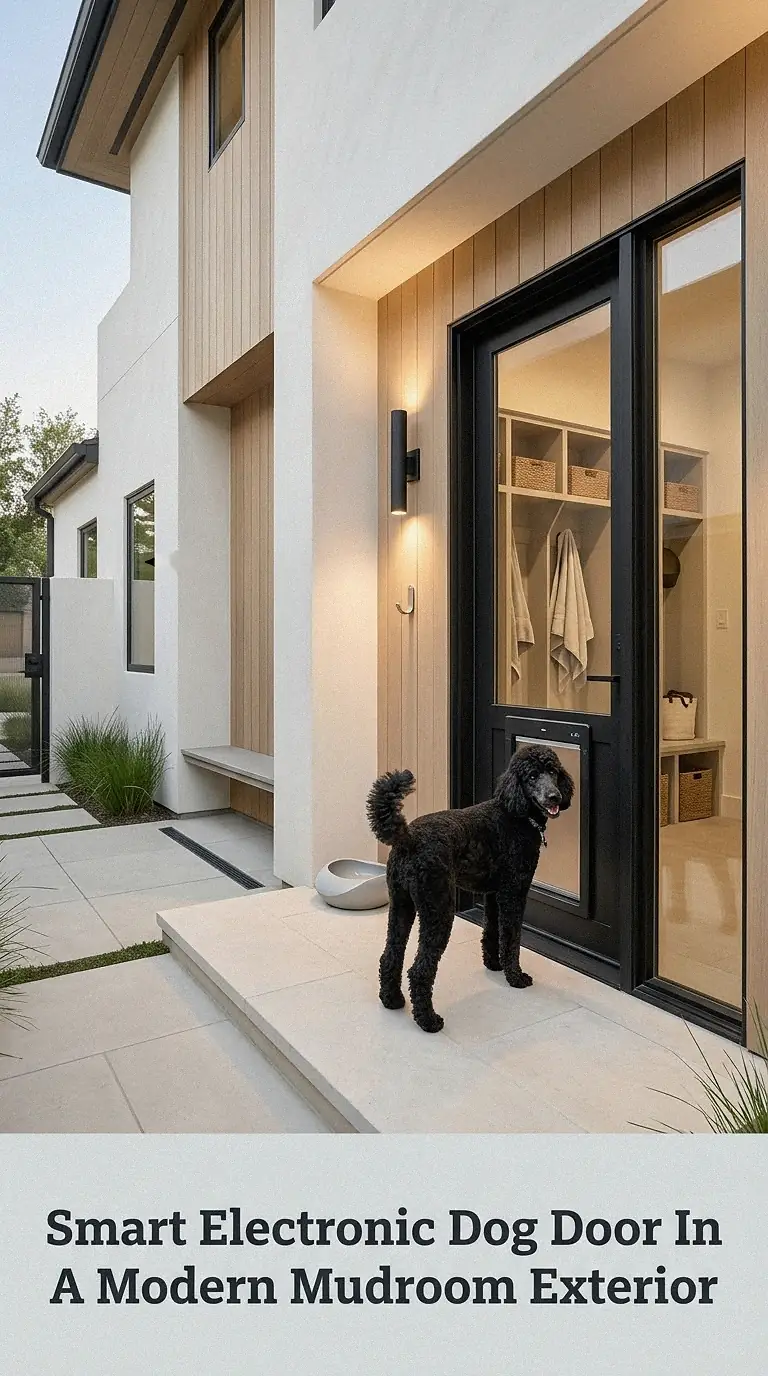
For households wanting more control over when pets can enter or leave, an electronic pet door can create a sleek, modern setup.
Install it in an exterior wall connected to a mudroom, utility room, or other easy-clean space. Outside, keep the appearance minimal with dark trim, modern siding, and a paved landing.
Controlled-access models can be particularly appealing when you want the pet entrance unavailable at certain times. They can also help create a more intentional routine rather than leaving a flap continuously accessible.
The surrounding outdoor area still needs to be secure and pet-safe. Technology does not replace appropriate fencing or supervision where required.
Visually, this concept works wonderfully with contemporary homes because the streamlined entrance looks more like a purposeful piece of home technology than a traditional pet flap.
Hidden Dog Door Integrated Into A Backyard Utility Wall
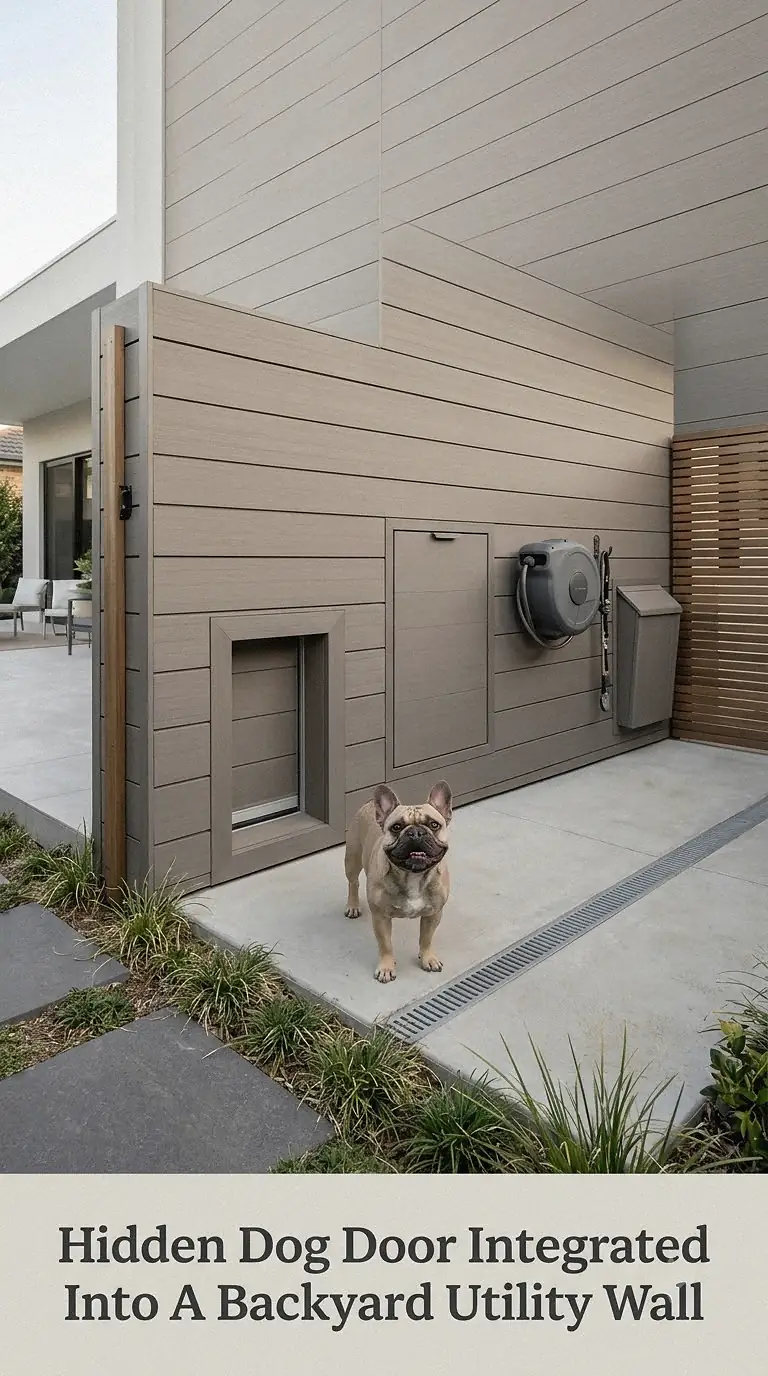
Not every dog door needs to become a decorative focal point. Sometimes the most attractive option is one you barely notice.
Choose a quiet section of a backyard or utility wall and coordinate the pet-door frame closely with the siding. Nearby HVAC equipment, bins, or garden utilities can be screened with slatted panels positioned far enough away to preserve safe access and airflow.
Create a simple paved route from the opening into the yard so your dog’s movement remains predictable and clean.
This solution is ideal for homeowners who prefer their patio and entertaining areas to remain visually uninterrupted.
It also works nicely for minimal architecture where ornamental shutters or miniature awnings would feel out of character. Thoughtful concealment can be every bit as stylish as decorative detailing.
Mud-Friendly Dog Door With A Paver And Paw-Cleaning Station
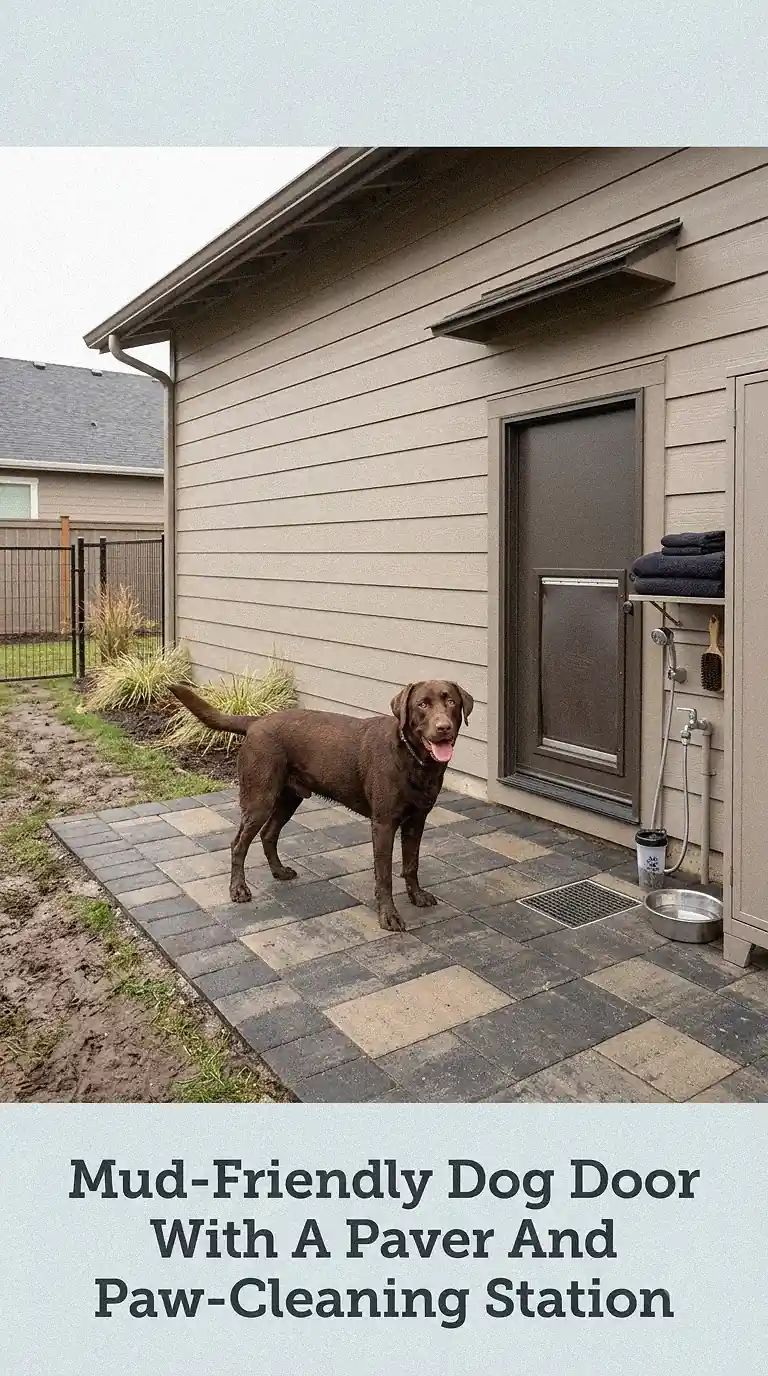
If your dog regularly returns from the yard with muddy feet, design the exterior landing specifically around cleanup.
Lay several large pavers outside the dog door so there is no exposed soil immediately around the opening. Add a compact hose connection or paw-rinsing area nearby, along with a weatherproof container for towels.
Inside, position the opening near washable flooring whenever possible. Tile, sealed concrete, or another easy-clean surface is much easier to manage than delicate rugs beside a high-traffic pet entrance.
For the exterior design, combine practical materials with attractive details such as cedar screening, black hooks, and simple greenery.
This idea is less about disguising the dog door and more about designing an entire transition zone around the reality of rainy-day dog ownership.
Garden Dog Door With Stepping Stones And Pet-Safe Greenery
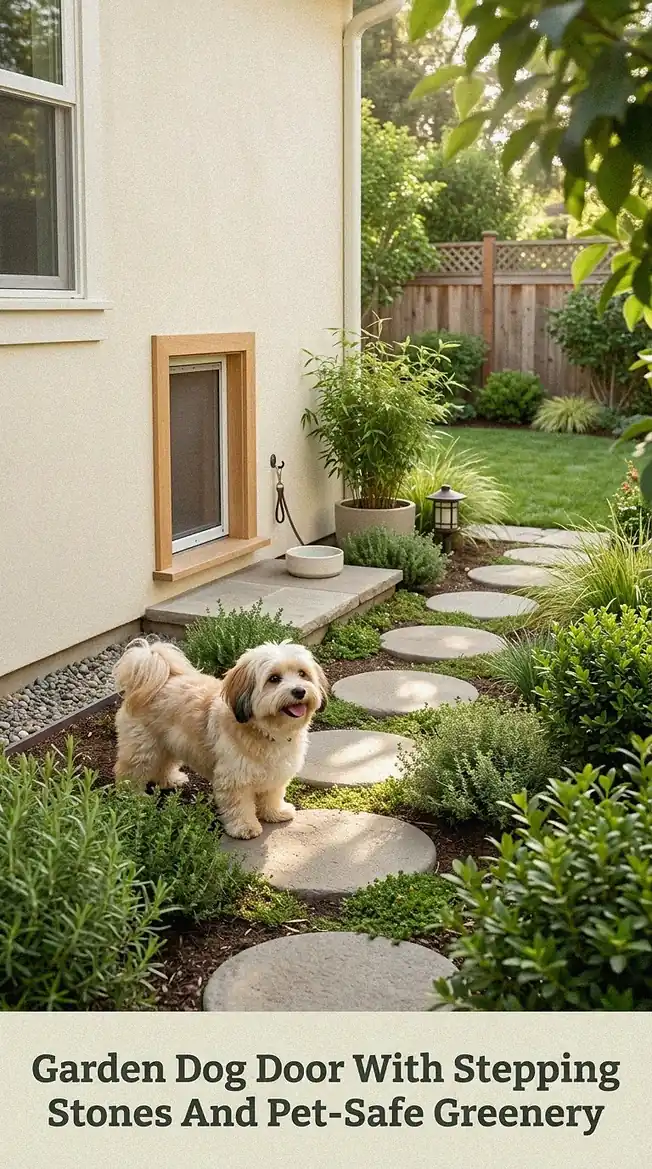
Create a softer, more whimsical entrance by connecting your exterior dog door to a landscaped garden pathway.
Use broad, stable stepping stones surrounded by groundcover or smooth gravel. Position low greenery along the edges while keeping the dog’s actual route wide and unobstructed.
A wooden or painted trim frame around the opening can tie the dog door into the garden palette. Warm cedar feels natural, while soft cream or sage gives the area a cottage character.
Avoid plants that may be unsafe if chewed, and do not allow dense shrubs to conceal the doorway or restrict visibility.
This arrangement looks particularly charming beside garden rooms, sunrooms, and rear kitchen extensions, where the transition from home to landscape is already an important part of the exterior design.
Luxury Dog Entrance With Stone Pavers And Custom Architectural Trim
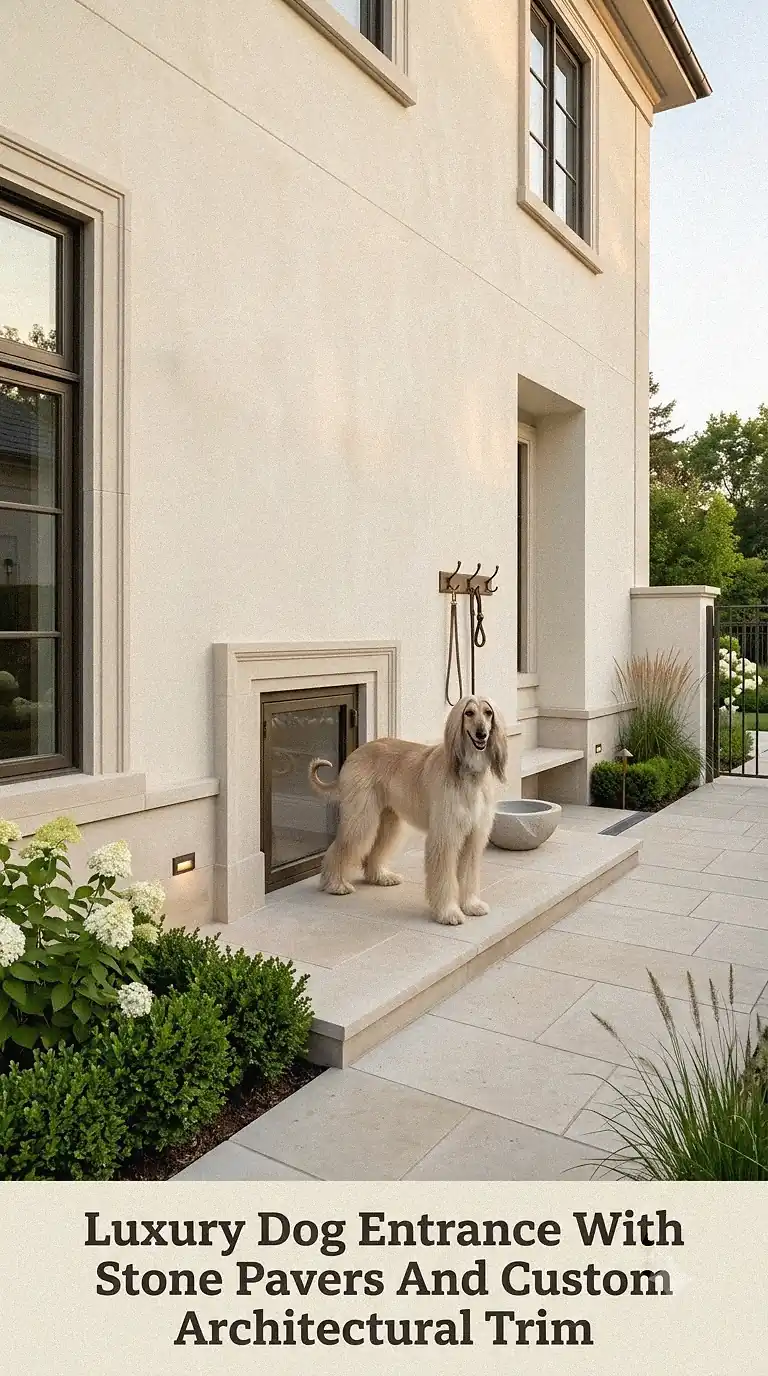
For a high-end exterior, treat the dog door like a permanent architectural feature rather than pet equipment.
Surround the opening with custom trim that echoes details elsewhere on the house. This might include painted millwork, smooth stone, dark metal edging, or beautifully finished hardwood.
Continue the luxurious feel outside with large stone pavers, subtle landscape lighting, manicured greenery, and a carefully designed drainage area.
The goal is not to make the opening flashy. Instead, use excellent proportions and materials so it feels like something that was considered when the house was designed.
A premium weather-resistant or controlled-access pet door can complete the setup.
This approach is especially effective during larger renovations because the pet entrance, pathway, landscaping, and indoor flooring can all be planned together instead of added separately later.
Choosing Exterior Dog Door Ideas That Fit Your Home
A beautiful pet-friendly home does not require hiding every practical feature. Sometimes the best design is simply one that treats your dog’s needs with the same care you would give a porch, garden path, mudroom, or entryway.
Your ideal setup might be a discreet black dog door disappearing into modern siding, a sweet cottage opening surrounded by painted trim, or a hardworking mud station designed for rainy paws. Consider where your dog naturally wants to enter and exit, how protected the location is from the weather, and what kind of outdoor surface will be easiest to keep clean.
Comfort and safety should guide the final design. Choose an opening that suits your dog’s body and mobility, provide a secure outdoor destination, and make sure wall-mounted installations are properly framed, sealed, and protected from water. A locking or controlled-access option can provide additional flexibility when you do not want your dog moving freely between indoors and outdoors.
Most importantly, adapt these exterior dog door ideas to the way you actually live. Even a small improvement, such as adding a dry landing, coordinating the trim with your siding, or building a gentle ramp for an older pup, can turn an ordinary pet door into a thoughtful part of your home that feels comfortable, attractive, and genuinely useful every day.
Source: https://petstutorial.com
Category: DOGS
