
A dog muzzle does not have to feel intimidating, clinical, or uncomfortable. With the right approach, it can become a thoughtfully fitted piece of safety equipment that your dog learns to wear calmly and confidently. A few simple DIY touches can also make a well-designed muzzle softer against the face, easier to recognize, more practical for everyday walks, and much more pleasant to keep organized at home.
The most important distinction is between customizing a properly fitted basket muzzle and improvising a muzzle from household materials. For regular walks, training, scavenging prevention, or situations involving a known bite risk, a purpose-made basket muzzle is usually the safest starting point because it gives the dog room to open the mouth. Homemade fabric restraints that hold the mouth closed belong only in genuine short-term emergencies.
You are reading: 18 DIY Dog Muzzle Ideas For Safer, More Comfortable Pet Care
Think of the following DIY dog muzzle ideas as inspiration for improving fit, adding comfort, creating attractive accessories, organizing your gear, or preparing for unexpected situations. Any modification should preserve the muzzle’s strength, ventilation, and ability to stay securely fitted. Never cover breathing openings, remove structural pieces, or make the muzzle tighter simply to stop your dog from panting.
Creative DIY Dog Muzzle Ideas For Comfort, Safety, And Style
Soft Felt Nose Bridge Pad On A Black Basket Muzzle
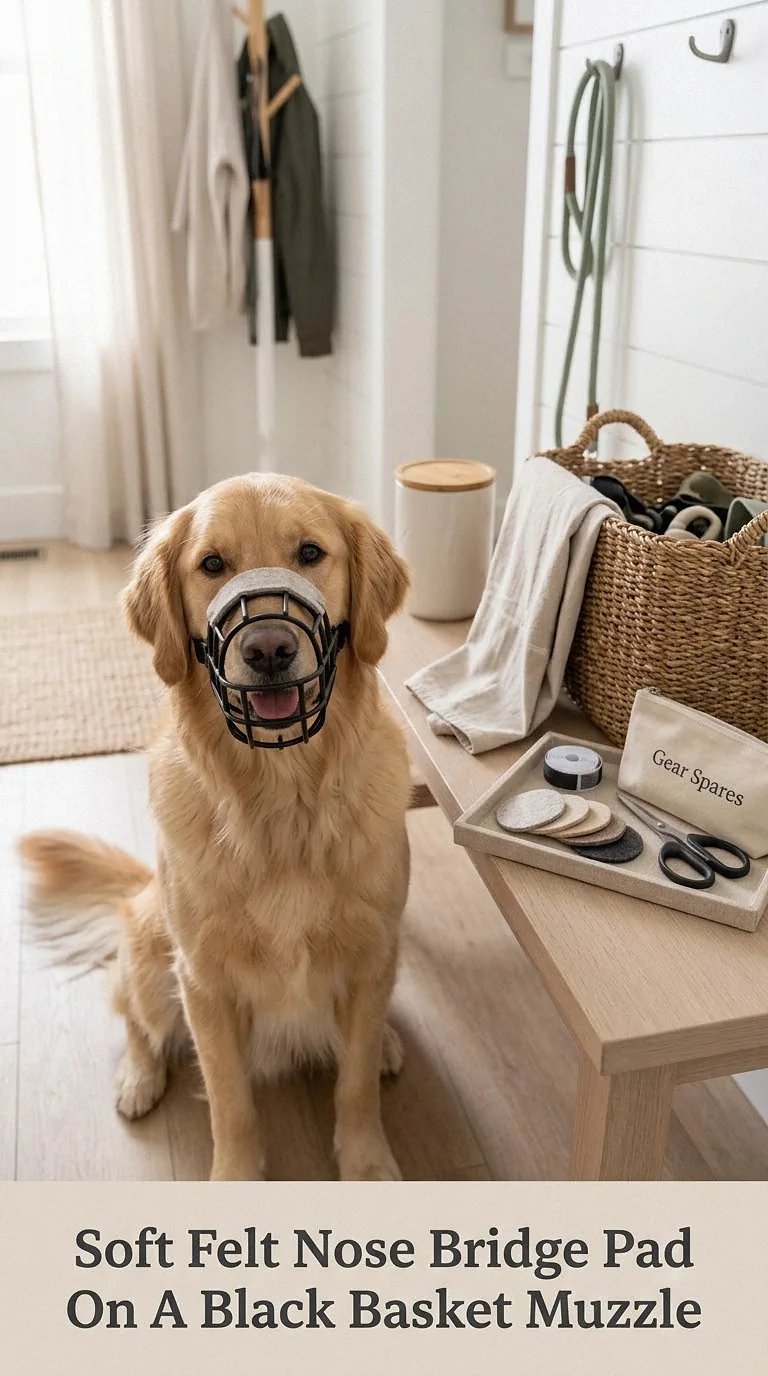
A simple nose bridge pad is one of the most practical upgrades for a basket muzzle that fits correctly but occasionally rubs a sensitive area. Start with a professionally manufactured basket muzzle and add a small removable layer of soft felt, fleece, or neoprene where the upper section rests against the bridge of the nose.
For a clean look, choose charcoal fleece for a black muzzle or warm beige material for a tan or brown dog. The padding should remain thin enough that it does not noticeably change the fit.
Sewing the pad into a removable sleeve is preferable to permanently gluing thick material to the muzzle. Removable pieces can be washed regularly and replaced when they become worn.
Watch the padded area during use. If you notice redness, pressure marks, rubbing near the eyes, or persistent pawing at the muzzle, the underlying fit may need professional adjustment rather than additional padding.
Pastel Biothane Strap Upgrade On A Neutral Basket Muzzle
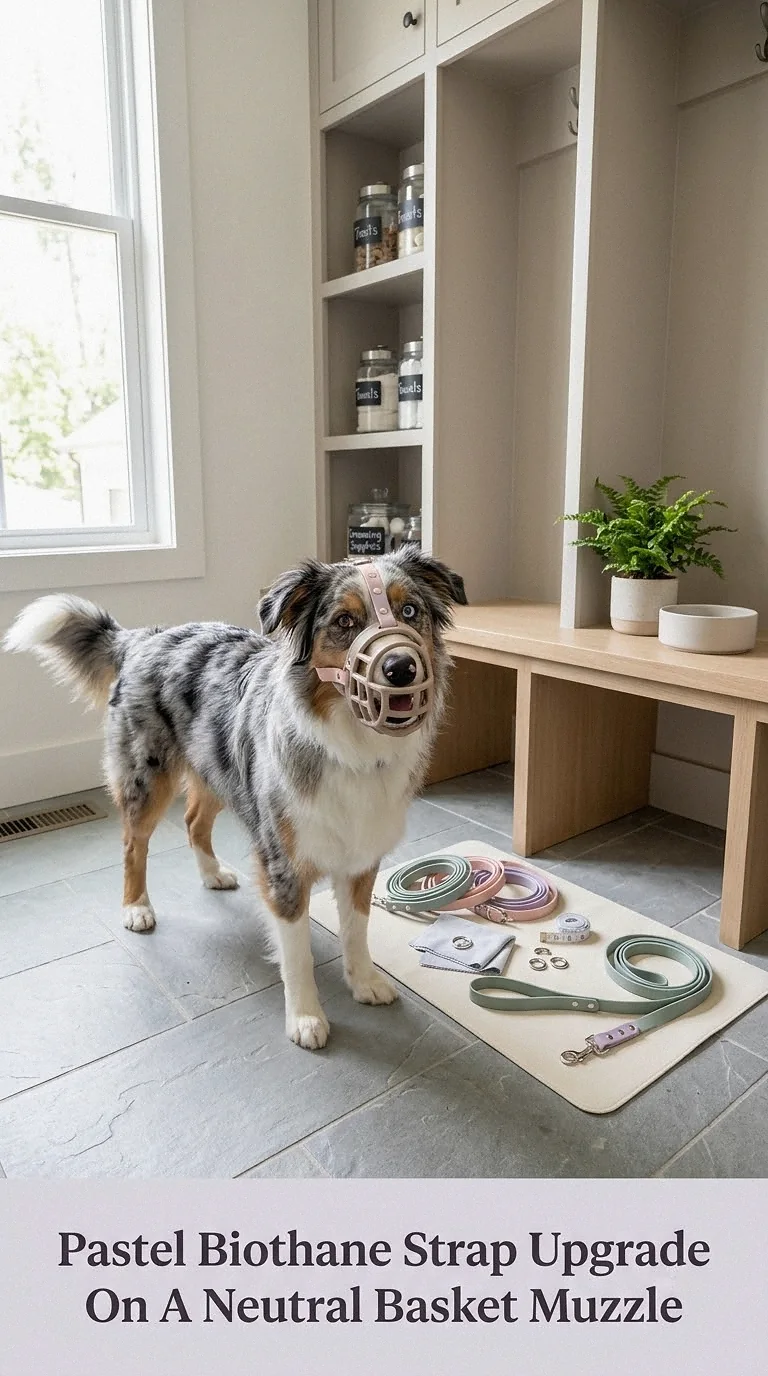
Changing the straps can give a practical muzzle a much softer visual personality. A neutral basket paired with sage green, dusty rose, lavender, or warm caramel straps feels far less medical than an all-black setup.
For this project, use durable waterproof strapping designed for pet gear rather than ribbon or decorative fabric alone. Biothane-style material works particularly well because it is smooth, easy to wipe clean, and available in many colors.
The original strap placement and security system should remain unchanged. Measure existing straps carefully before replacing anything, and use hardware strong enough for your dog’s size and strength.
A colorful strap upgrade works beautifully for dogs already comfortable wearing a basket muzzle. You can even coordinate the strap with a matching collar and leash for a polished walking set.
Washable Floral Strap Sleeves For A Basket Muzzle
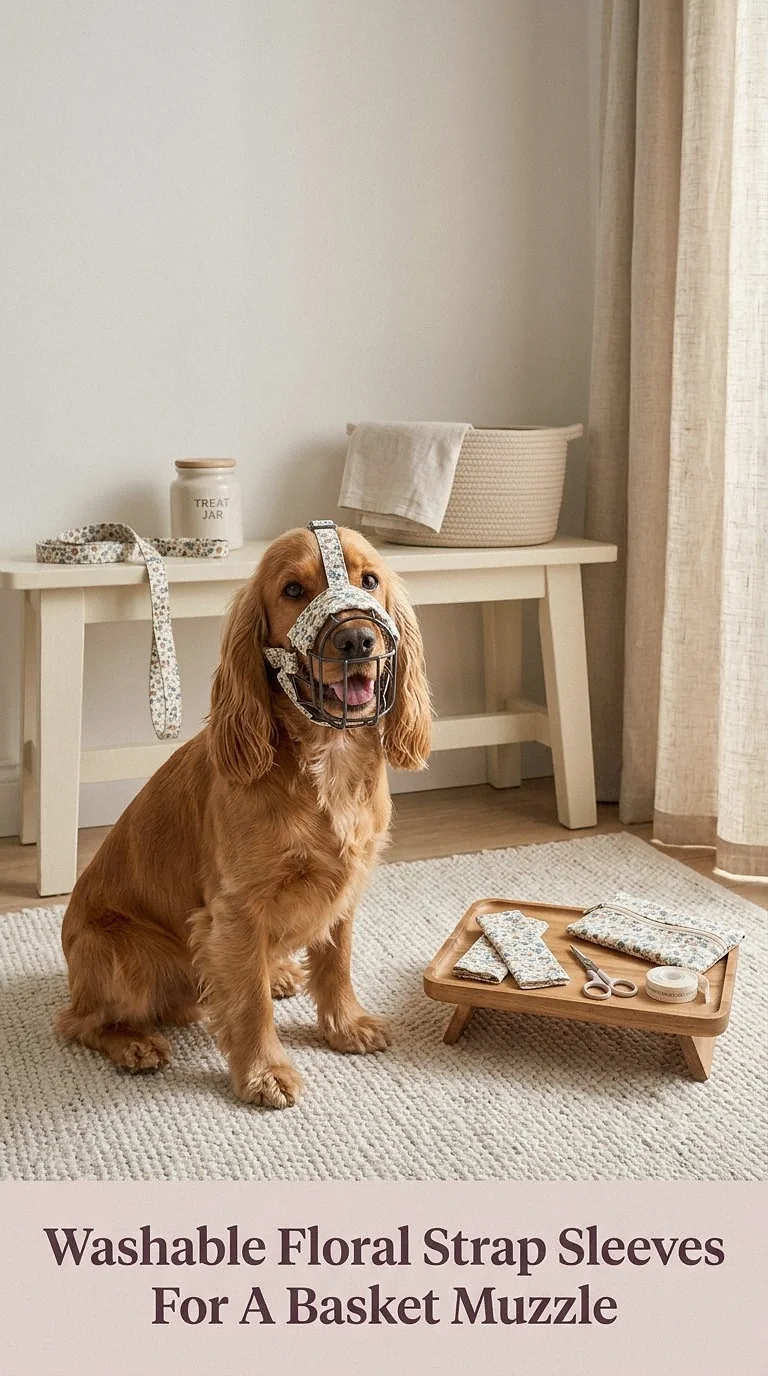
If you want decorative detail without altering the actual safety straps, make removable fabric sleeves instead.
Choose lightweight cotton printed with tiny florals, gingham, botanical leaves, or another cheerful pattern. Sew narrow tubes that slide over sections of the existing straps while leaving buckles, adjustment points, and attachment hardware completely uncovered.
Because the decorative pieces are removable, you can wash them separately whenever they collect dirt or drool. Having two or three sets also makes it easy to change the look seasonally.
Keep the sleeves fitted closely enough that they cannot bunch around the dog’s face. This is decoration rather than structure, so the original manufacturer-approved straps still handle all of the actual restraint.
Reflective Trim Basket Muzzle For Evening Walks
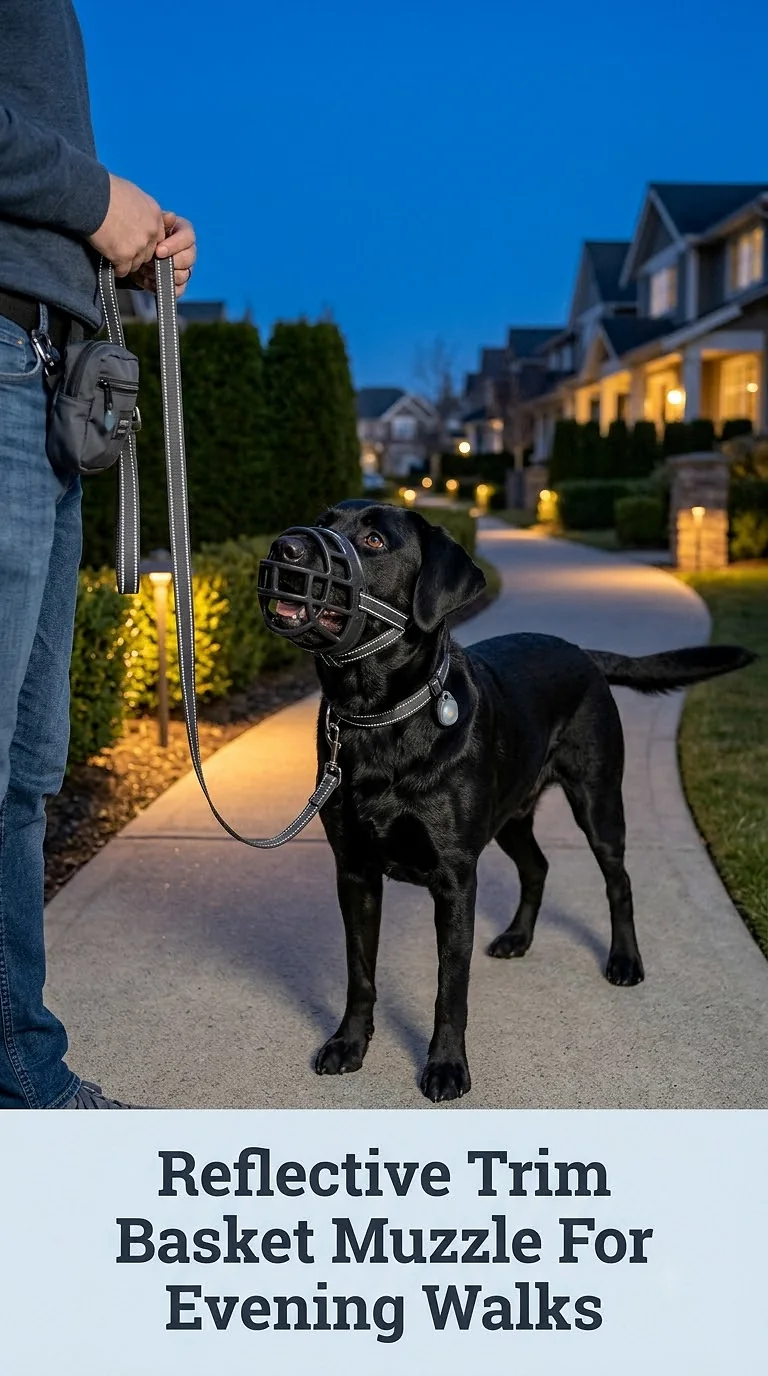
A few reflective details can make evening equipment easier to see while creating a sporty, modern look.
Instead of wrapping the basket itself, attach reflective accents to existing exterior straps or make removable reflective strap covers. Silver-gray reflective material looks particularly sleek against black equipment, while neon yellow or coral creates a brighter outdoor style.
Keep reflective additions away from the dog’s eyes and never cover ventilation openings.
Pair the muzzle with a reflective leash, harness, and small rechargeable safety light for a coordinated nighttime walking kit. The result feels purposeful rather than improvised while adding visibility when walking after sunset.
Minimalist Cream Basket Muzzle With Tan Comfort Padding
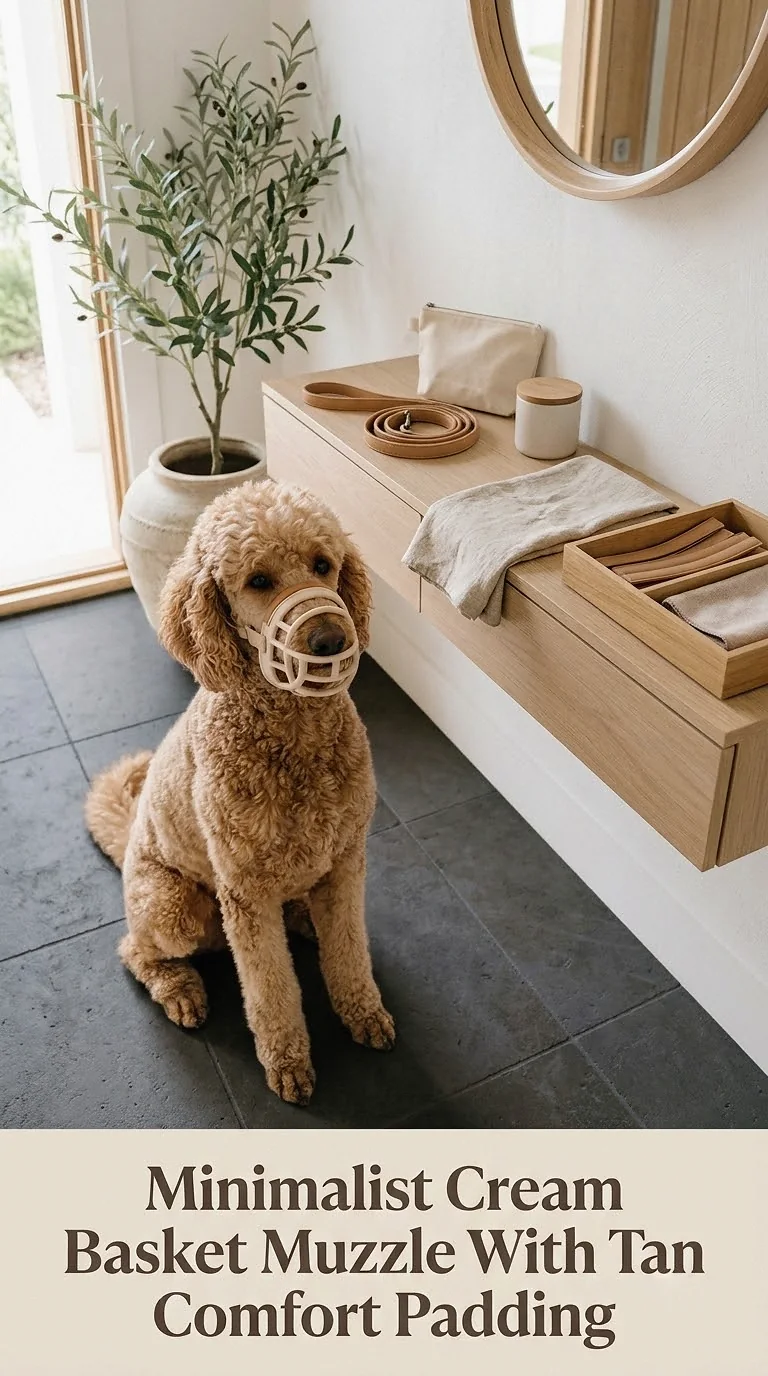
For dog owners who love soft neutral colors, a cream or light beige basket muzzle can be styled with tan padding and warm brown straps.
The design is understated and particularly attractive on dogs with golden, chocolate, black, or reddish coats. Add a thin washable fleece pad only at confirmed pressure points, keeping the basket itself open and unobstructed.
This type of setup also makes dirt easy to spot, which can be useful as a reminder that the equipment needs cleaning.
Store the muzzle in a breathable cotton pouch beside the leash rather than throwing it into a crowded drawer. A simple neutral palette can turn practical dog gear into something that blends naturally with a calm, organized entryway.
Small-Dog Lightweight Basket Muzzle With Tiny Treat Access
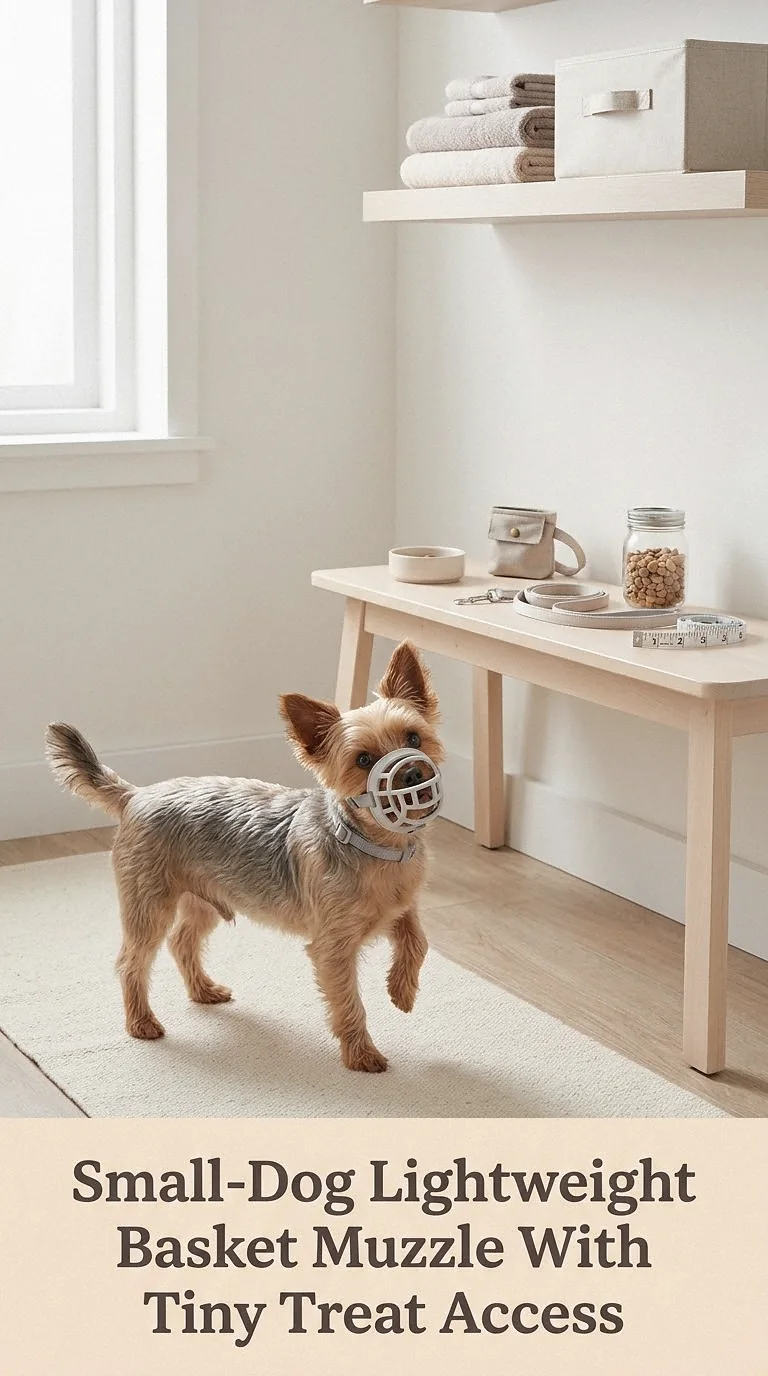
Small dogs need proportionately lightweight equipment. A bulky basket that might seem insignificant on a large Labrador can feel cumbersome on a tiny terrier.
Choose the lightest properly fitting basket you can find and focus DIY modifications on comfort rather than structure. A narrow fleece bridge pad, lightweight strap sleeve, and small treat pouch attached to your walking bag may be all you need.
The basket should provide enough room for comfortable mouth movement rather than sitting tightly around the closed jaw.
During muzzle training, use appropriately tiny treats that can be delivered through the basket without forcing the dog’s face or pushing food against the nose. Keeping everything delicate and lightweight makes the setup feel more suitable for a petite dog.
Long-Snout Basket Muzzle With Custom Nose Padding
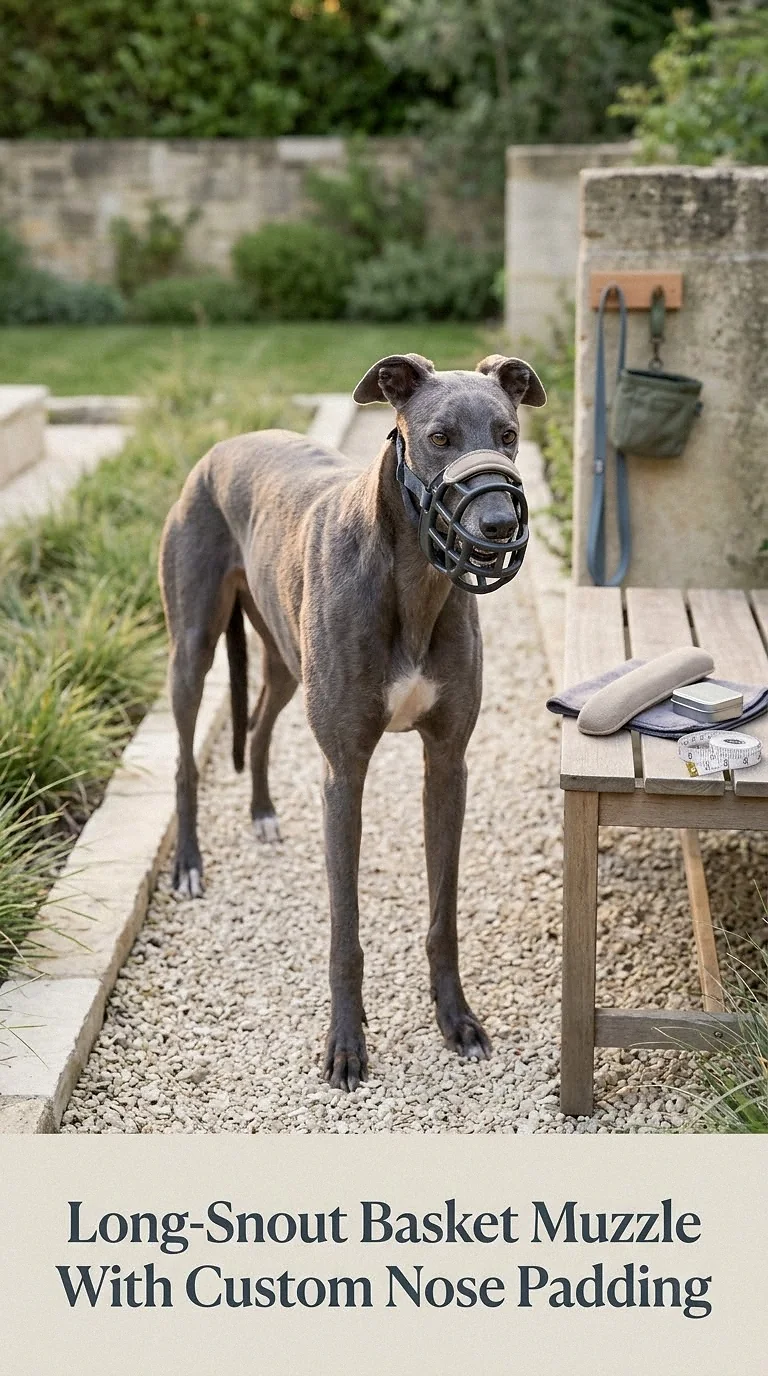
Greyhounds, collies, sighthounds, and other dogs with long narrow muzzles can be challenging to fit with generic equipment.
Read more : 19 Charming Dog Grooming Ideas That Make Every Pup Look and Feel Amazing
A long basket with appropriate depth is the starting point. Once the shape is correct, thin custom padding can help protect areas where the muzzle rests against a narrow nose.
Cut a soft piece of fleece or neoprene to match the contact point and create a removable sleeve rather than covering large portions of the basket. A beautiful combination is a charcoal basket with camel-colored padding and matching brown leash hardware.
Check frequently that the basket is not riding toward the eyes. If several standard sizes fail to sit correctly, a custom-made professional muzzle is a much better solution than heavily altering an unsuitable model.
Broad-Snout Basket Muzzle With Adjustable Crown Straps
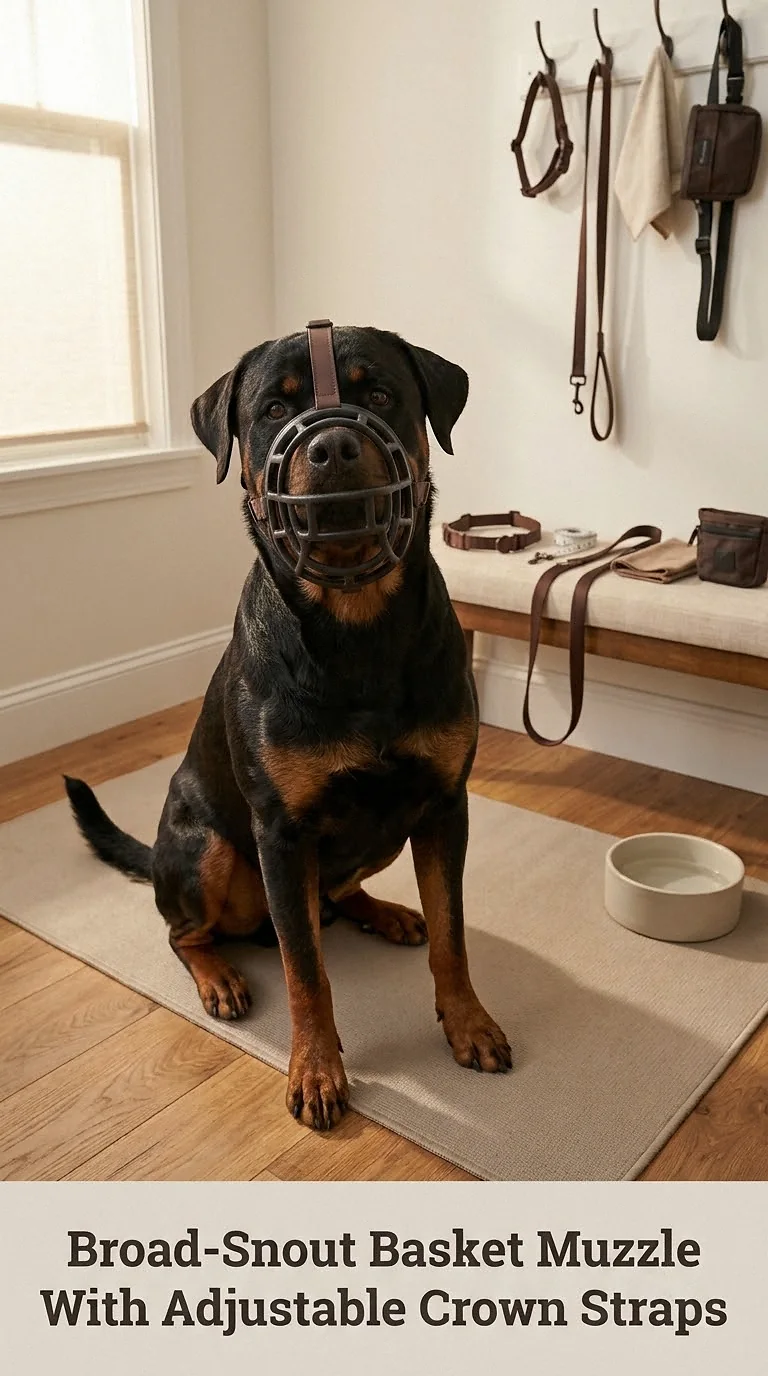
Dogs with broad, powerful heads often need a completely different shape from long-nosed breeds. The goal is generous interior space combined with secure straps that prevent the muzzle from shifting.
Look for a purpose-made wide basket and customize only nonstructural details. You might add a washable crown strap sleeve, a small identification tag, or thin padding at a known contact point.
Avoid trying to create additional width by cutting structural bars or permanently stretching materials unless the manufacturer specifically approves reshaping that model.
A matte black basket paired with deep forest green straps creates a handsome, modern look that suits broad-headed dogs without making the equipment overly decorative.
Professionally Fitted Short-Snout Muzzle With DIY Strap Details
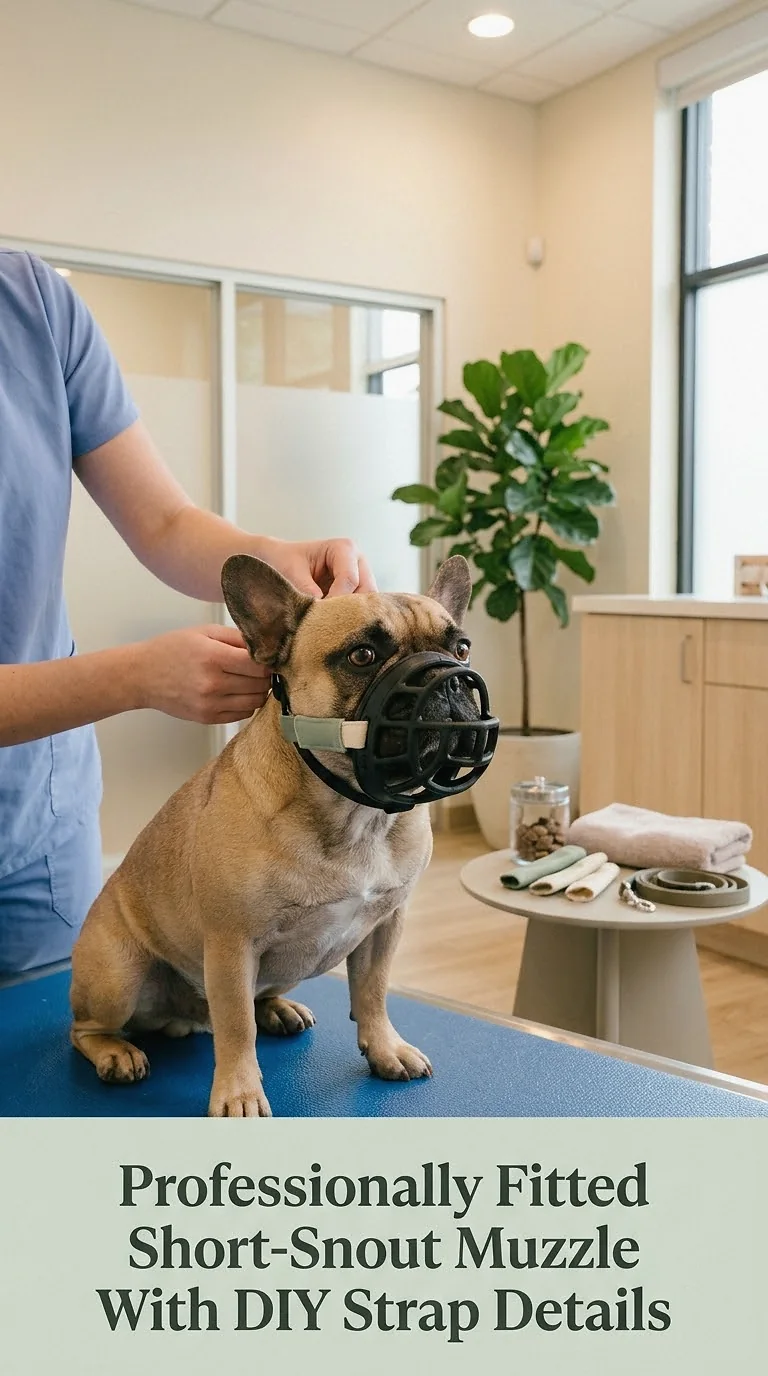
Flat-faced dogs require special care because their facial structure does not suit conventional long basket muzzles. Instead of trying to invent a homemade solution, begin with equipment specifically designed for short-nosed anatomy or obtain professional fitting advice.
The DIY element can come afterward.
Add lightweight removable strap sleeves, a personalized storage pouch, or color-coded accessories that do not interfere with breathing or the dog’s eyes.
Keep everything exceptionally light and monitor the dog closely, particularly in warm conditions. A French Bulldog, Pug, or similar dog should never have its airflow compromised for the sake of a cute homemade design.
For this category, customization should always be decorative or organizational rather than structural.
Treat-Friendly Basket Muzzle With A Matching Reward Pouch
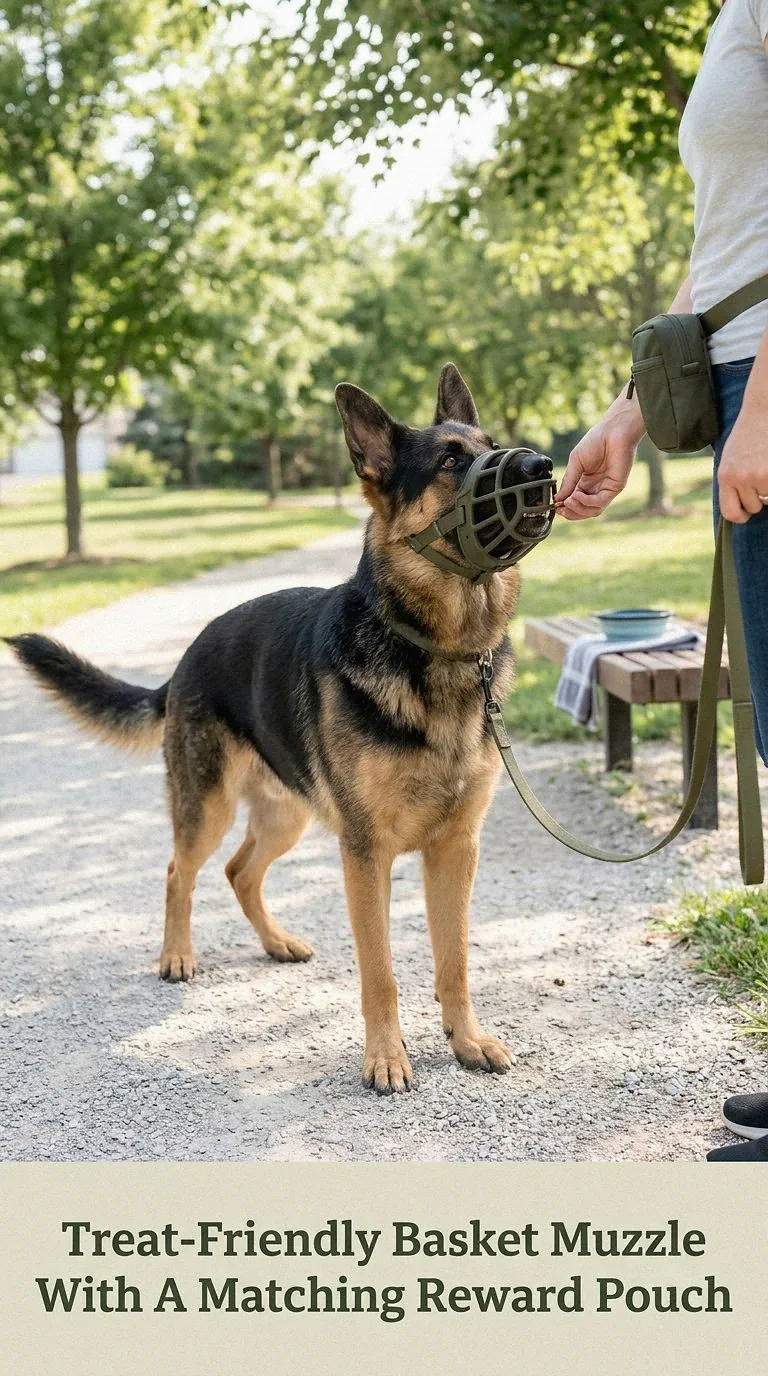
Muzzle training becomes much more inviting when treats are part of the routine.
Create a small washable reward pouch that clips to your leash bag or belt. Coordinate it with the muzzle straps using matching fabric, canvas, or waterproof material.
Choose a basket design that already provides suitable access for delivering treats instead of cutting new holes into the structure. The original basket should remain intact.
At home, practice presenting the muzzle as an object associated with good experiences. Allow your dog to voluntarily place its nose inside while receiving rewards, gradually building comfort before fastening the straps.
A pretty little training station with the muzzle, treat pouch, and leash stored together can make consistency much easier.
Removable Scavenging Guard On A Deep Basket Muzzle
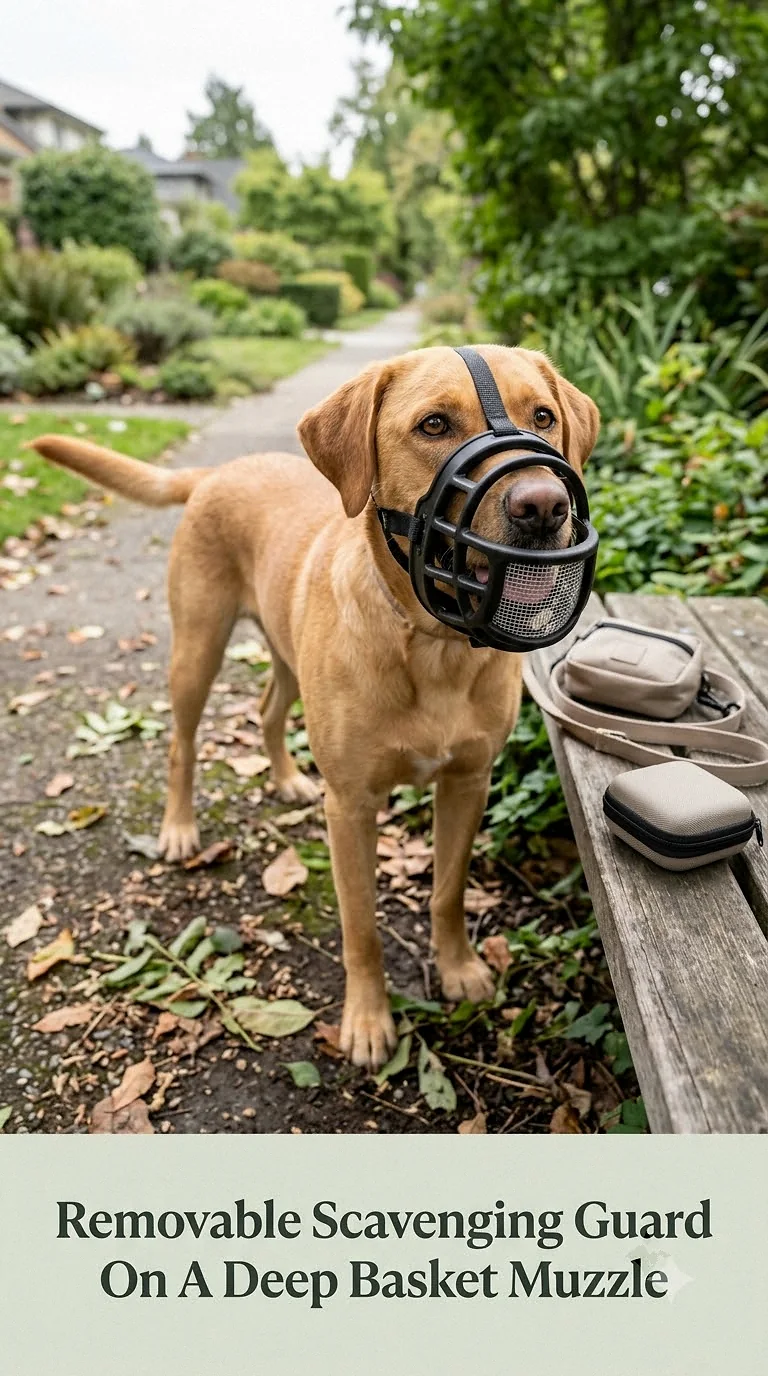
Some dogs wear basket muzzles because they constantly attempt to pick up stones, food scraps, or other objects during walks.
For these dogs, a deeper basket paired with a purpose-designed removable scavenging guard can create a practical walking setup. Rather than improvising a solid homemade barrier, begin with a guard made for the specific muzzle or use manufacturer-compatible materials and attachment points.
The front should never become an airtight panel.
Choose a contrasting guard color such as warm tan against a dark basket so it is easy to inspect before each walk. Remove and wash it regularly, especially after muddy outings.
Because scavenging can have behavioral or medical causes, the muzzle works best as management while the reason for the behavior is addressed separately.
Quick-Dry Basket Muzzle Setup For Rainy Walks
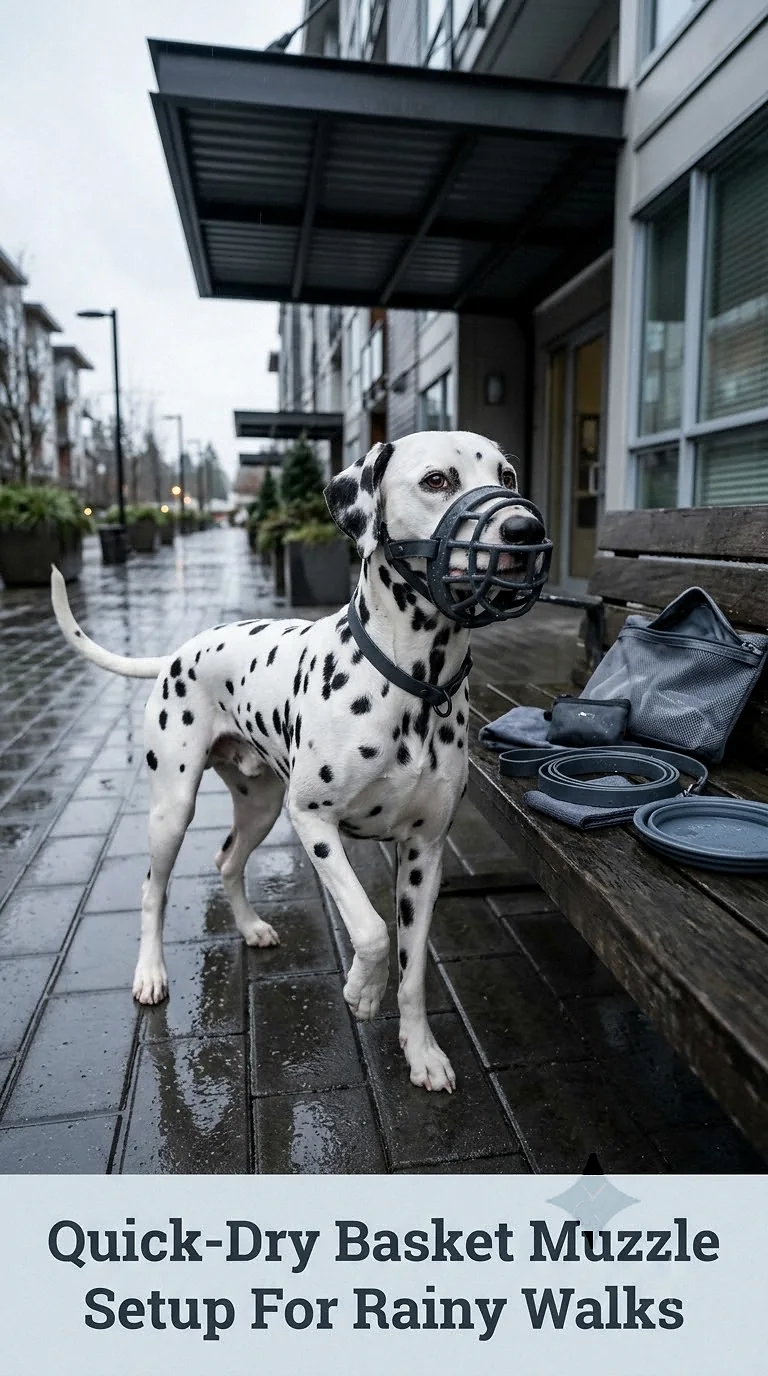
Wet straps and thick fabric padding can become unpleasant quickly, making a rainy-day setup worthwhile.
Choose a basket made from water-resistant material and keep DIY padding minimal. Removable neoprene pieces are generally easier to clean and dry than heavily layered cotton.
Create a small entryway drying station with a wall hook for the muzzle, another for the leash, and a washable tray below for wet equipment. A sage green wall, pale wood hooks, and woven towel basket can make even practical pet gear look beautifully organized.
After muddy walks, rinse off dirt and allow every component to dry thoroughly before putting the muzzle into an enclosed storage container.
Warm Fleece Strap Covers For Cold-Weather Walks
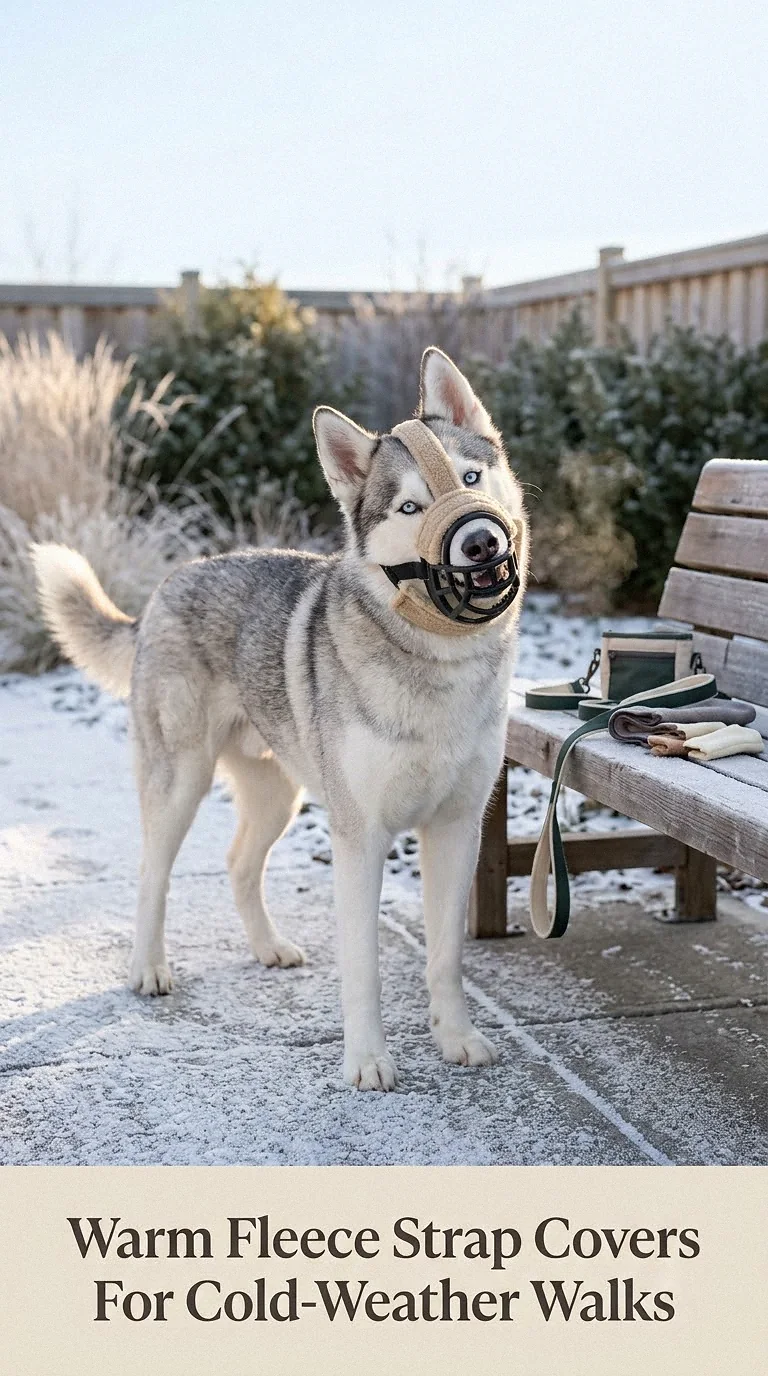
Winter customization should focus on contact points rather than covering the basket.
Make narrow removable fleece sleeves for straps that touch exposed skin, choosing soft colors such as oatmeal, rust, or muted plaid. The basket opening should remain completely free so normal mouth movement and airflow are not restricted.
Avoid thick fluffy fabric near the eyes or nostrils. Small additions are usually enough to soften cold hardware against the dog’s face.
Read more : Discover The Top 9 Largest Husky Breeds
A matching fleece-lined leash handle can create a coordinated winter walking set for the human side of the leash too.
After snowy or wet walks, remove the sleeves and let them dry fully rather than leaving damp fabric pressed against the muzzle.
Wall-Hung Muzzle Training Station With Treat Jar And Leash Hooks
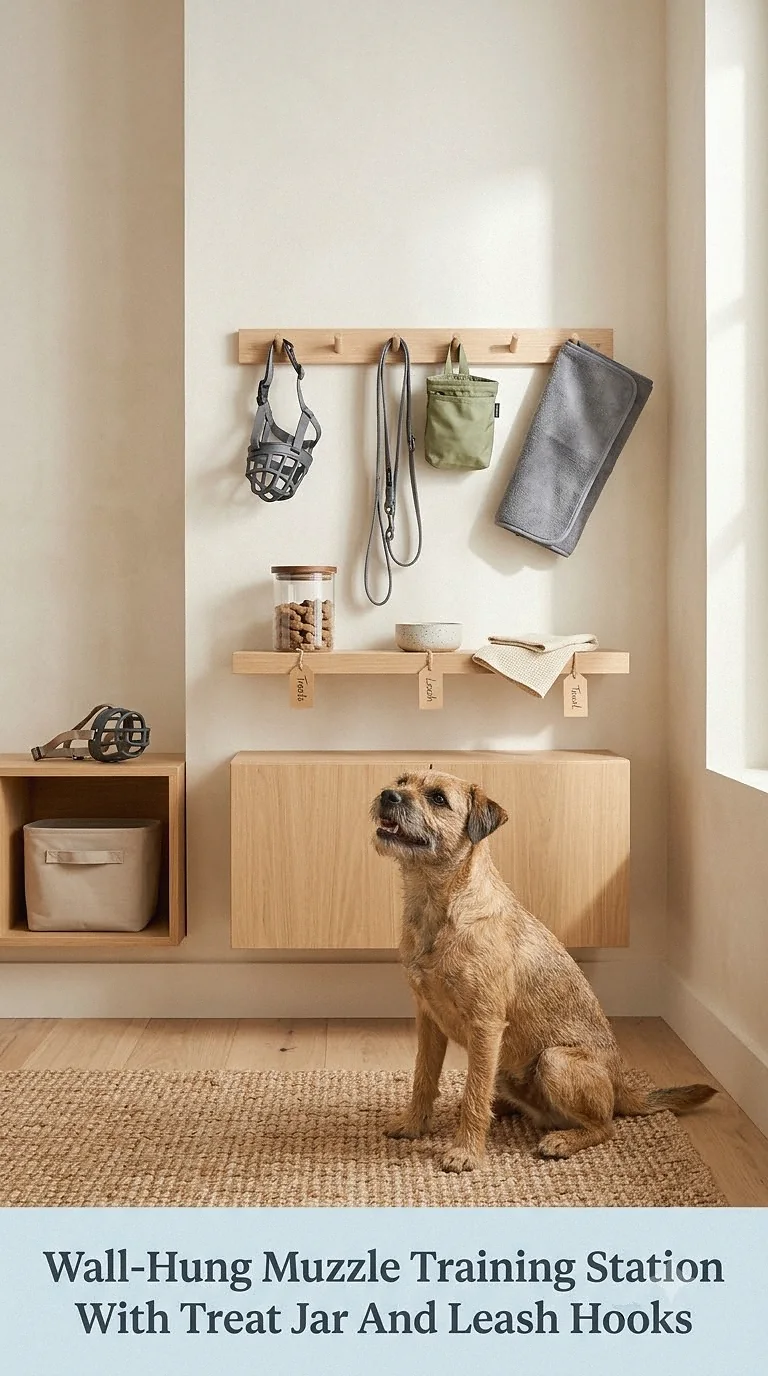
Not every useful DIY dog muzzle idea involves modifying the muzzle itself.
Create a dedicated training station in your mudroom, hallway, or entryway with a small wooden peg rail. Hang the basket muzzle beside the dog’s leash and harness, then place a sealed treat jar on a narrow shelf above.
A warm oak rail against soft sage paint creates a cozy look, while labeled woven baskets underneath can hold towels and walking accessories.
Keeping the muzzle visible and accessible also makes short positive training sessions easier to remember. Instead of appearing only during stressful events, the muzzle becomes an ordinary object that your dog sees during relaxed everyday routines.
Neutral Canvas Muzzle Storage Pouch With Ventilated Mesh Panel
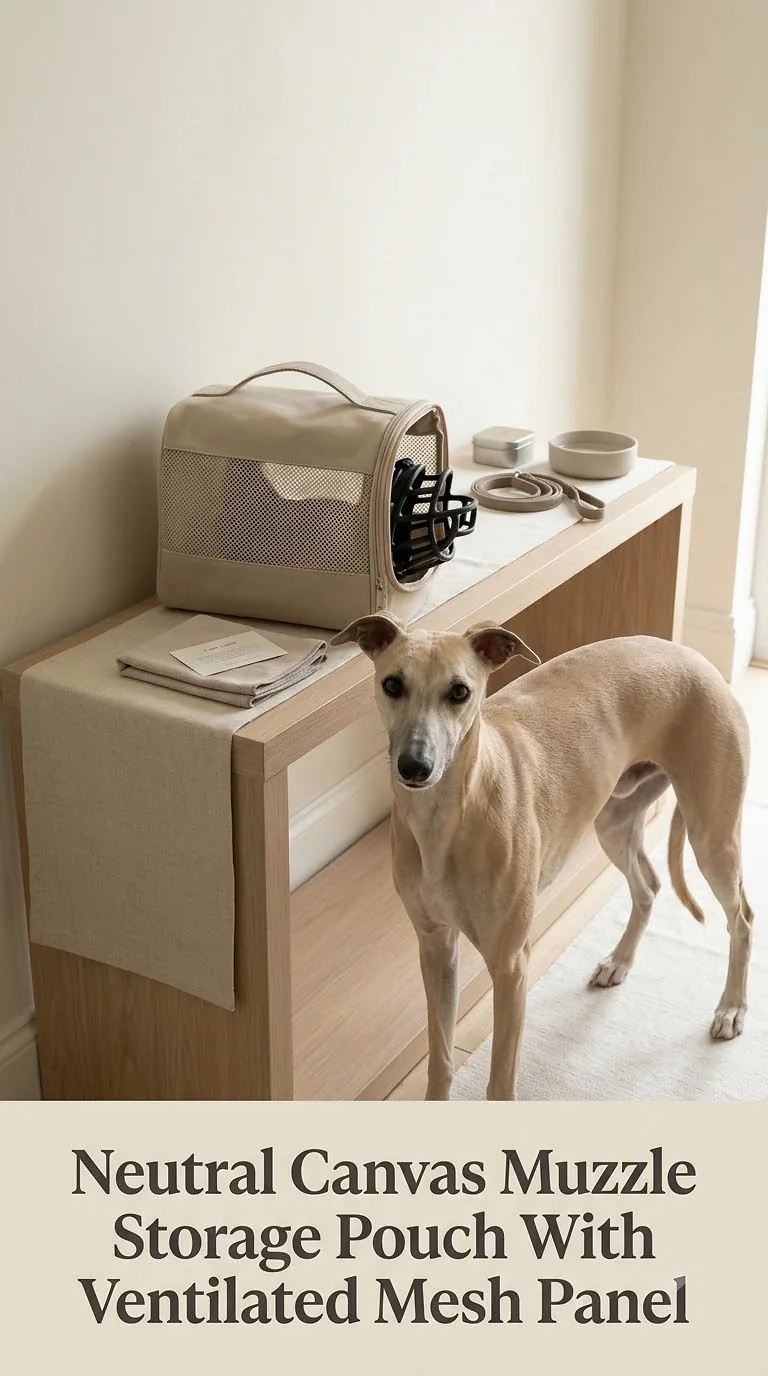
A washable storage pouch protects a clean muzzle from becoming tangled with leads, toys, and grooming tools.
Sew one from sturdy canvas with a large breathable mesh section so residual moisture can escape. An oatmeal canvas body with black trim gives the pouch a simple modern appearance.
Add a small fabric label reading “muzzle” or your dog’s name, particularly if your household has multiple pets.
Never pack a wet muzzle directly into the bag after washing. Allow it to dry completely first.
This project is particularly useful for travel because the entire setup can move from an entryway hook to a car or suitcase without losing small accessories.
Color-Coded Multi-Dog Muzzle Organizer With Individual Hooks
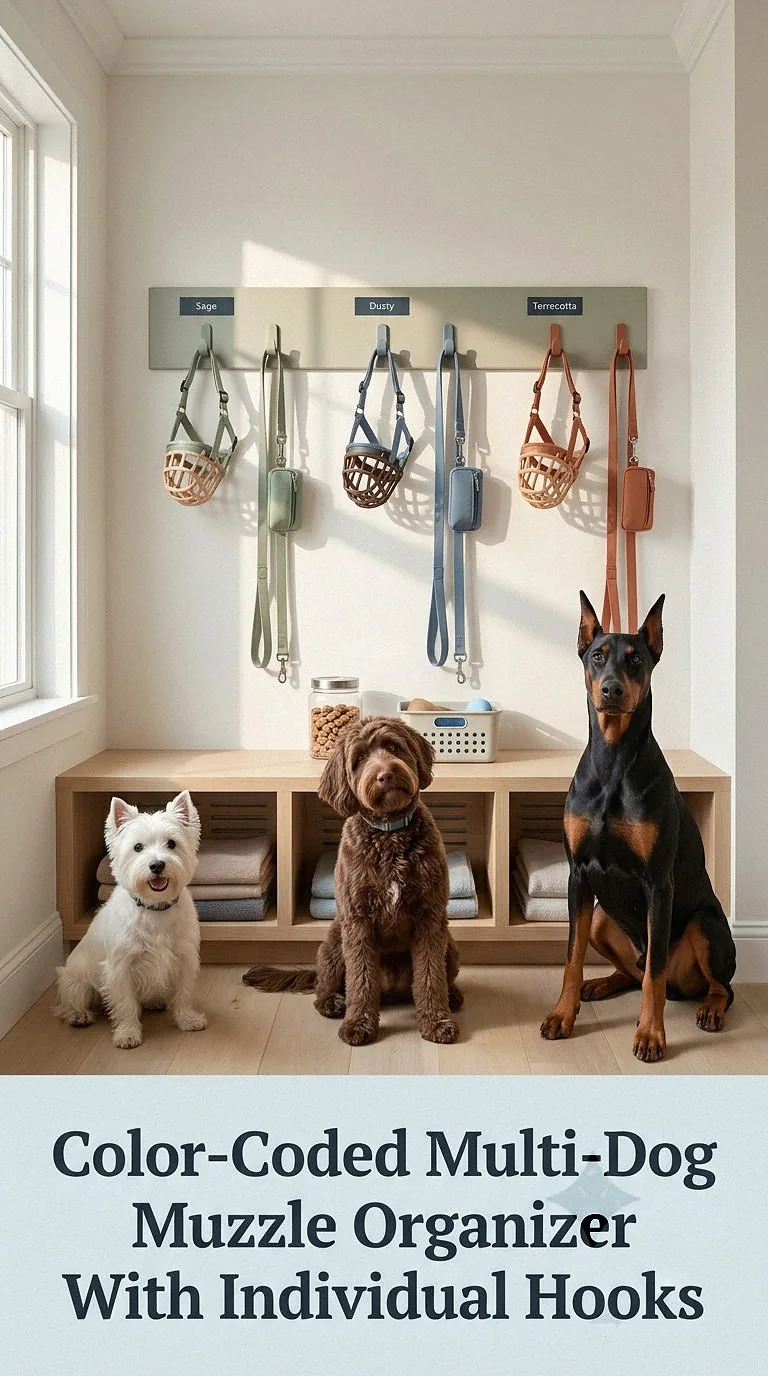
Homes with several dogs can become confusing when similar-looking gear belongs to different animals.
Install a row of individual hooks and assign each dog a color. One might have sage accessories, another terracotta, and another dusty blue. Add matching storage pouches or strap sleeves so the correct equipment is immediately recognizable.
Label each section with the dog’s name and keep any measurement or fitting information nearby.
The system is useful because dogs with similar body sizes may still require completely different muzzle dimensions. Equipment should not be shared simply because it looks approximately the right size.
A dedicated organizer turns an otherwise cluttered pile of pet equipment into an attractive, functional feature.
Emergency Gauze Muzzle Kit For Veterinary Transport
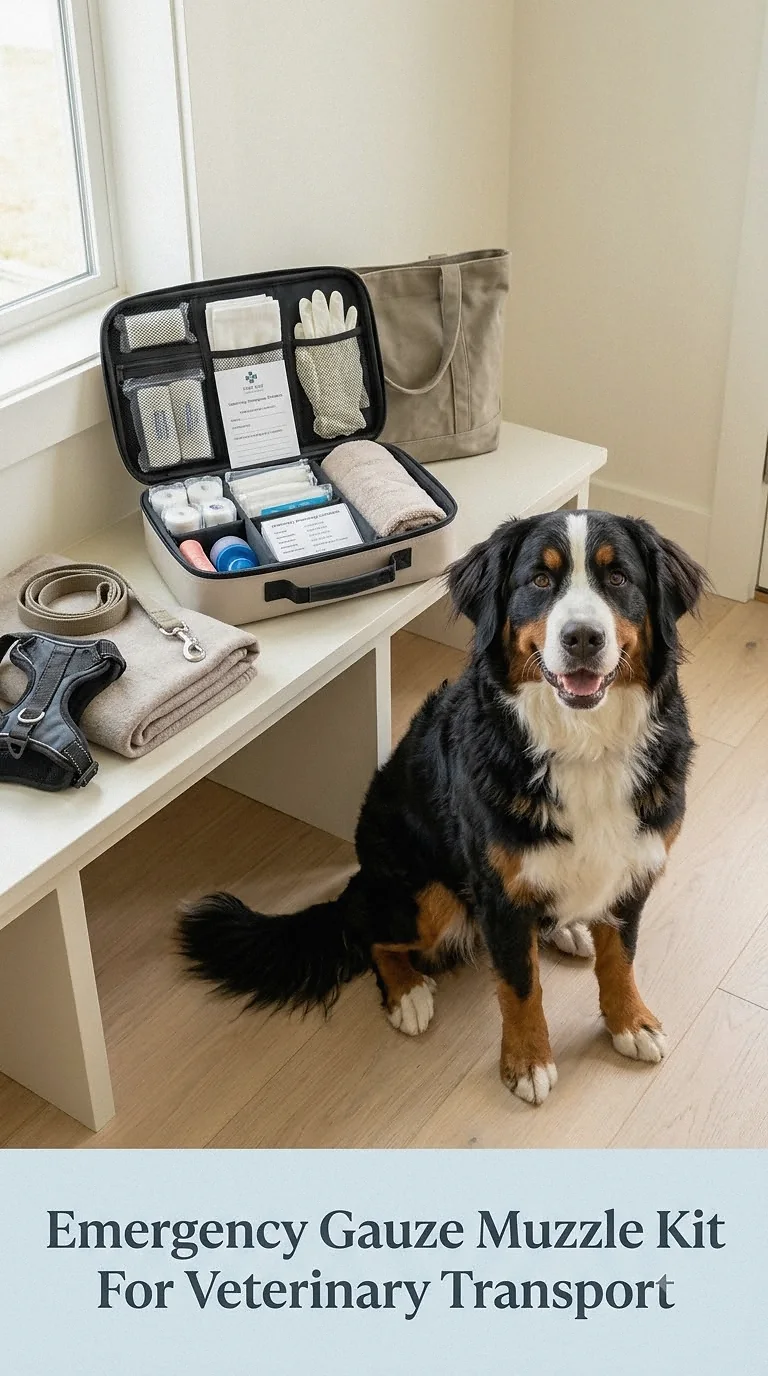
A homemade gauze muzzle belongs in a very different category from the customized basket ideas above. It should be considered emergency equipment rather than everyday dog gear.
An injured or frightened dog may bite even when normally gentle, so keeping a long roll of clean gauze in a pet first-aid kit can be useful when professional equipment is unavailable.
Store the gauze beside disposable gloves, bandaging supplies, your veterinarian’s contact details, and a proper basket muzzle whenever possible. A clearly labeled zippered pouch prevents you from searching through drawers during a stressful moment.
An emergency mouth-closing muzzle should only remain on for the shortest necessary period. Never use this type of restraint on a dog that is vomiting, struggling to breathe, overheating, unconscious, experiencing facial or chest trauma, or unable to tolerate having the mouth restricted. Short-nosed dogs require particular caution and should not be improvised into this type of muzzle.
Clean Cloth Emergency Muzzle Stored In A Car First-Aid Bag
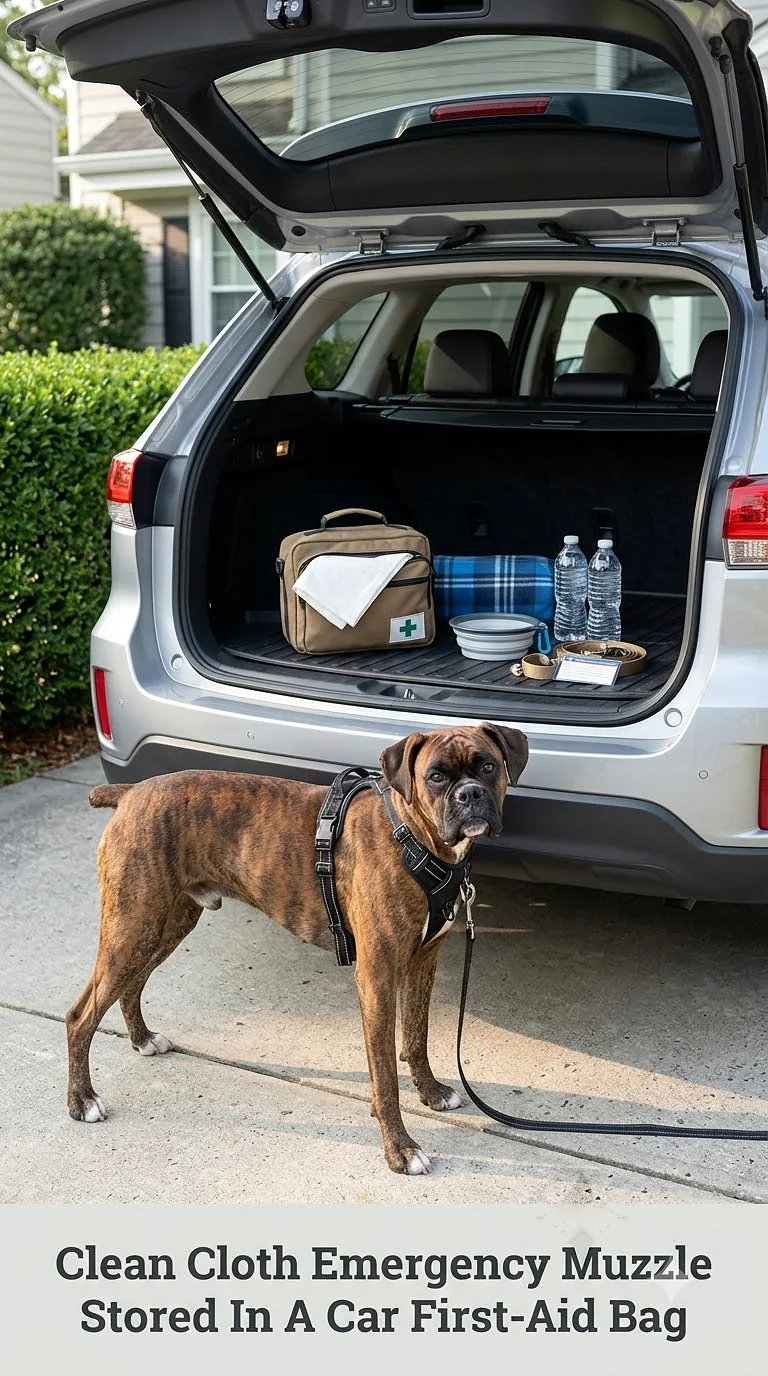
A clean strip of strong, soft cloth can serve as another last-resort emergency option when an injured dog must be handled and no normal muzzle is available.
Instead of treating this as an everyday DIY project, create a thoughtfully organized car emergency kit. Use a bright waterproof pouch containing clean cloth strips, gauze, gloves, a spare leash, absorbent towels, and your veterinary emergency information.
A proper commercial muzzle should still be included whenever possible. The cloth is backup equipment for an unexpected situation, not a substitute for a basket muzzle.
Never leave an improvised muzzle on an unattended dog. Remove it as soon as safe restraint is no longer necessary, and prioritize veterinary care whenever the dog is injured enough that emergency restraint becomes necessary.
Choosing The Right DIY Dog Muzzle Ideas For Your Pet
The best DIY dog muzzle ideas are usually not about building a bite-prevention device from random household materials. They are about starting with appropriately designed equipment and making thoughtful improvements that suit your dog’s individual needs.
A simple fleece bridge pad may solve a minor rubbing problem. Colorful straps can make everyday gear feel friendlier. A wall-mounted training station can encourage positive practice, while a labeled first-aid pouch can prepare you for the situations nobody hopes to encounter.
Whatever style you choose, comfort and safety should guide every decision. Your dog should have appropriate room for normal mouth movement in a basket muzzle, and straps should remain secure without rubbing sensitive areas. Check the fit regularly as equipment wears or your dog’s body changes.
Most importantly, allow your dog time to build a positive relationship with the muzzle. Pairing it with rewards and introducing it gradually can transform it from an unfamiliar object into another normal part of walks, training, travel, or veterinary care.
A beautiful DIY touch can make the equipment feel more personal, but the safest design will always be the one that respects your dog’s breathing, comfort, anatomy, and emotional well-being.
Source: https://petstutorial.com
Category: DOGS
