
Sharing your home with both a dog and a cat usually means sharing your cabinets, pantry shelves, and kitchen corners with quite a collection of kibble bags, cans, pouches, treats, supplements, scoops, and feeding accessories. Without a thoughtful system, even a beautiful kitchen can quickly develop a slightly chaotic pet-food corner.
The best dog and cat food storage ideas make everyday feeding easier while protecting food from excess air, moisture, heat, pests, and curious paws. They can also help prevent accidentally reaching for the cat food when filling the dog’s bowl, which becomes especially important when pets eat different formulas or prescription diets.
You are reading: 19 Dog and Cat Food Storage Ideas for a Fresh, Organized Pet Pantry
You do not need a huge walk-in pantry to create an organized system. A slim cabinet, unused kitchen drawer, small rolling cart, mudroom bench, or compact section of shelving can become a surprisingly functional feeding station.
The key is combining attractive storage with sensible food-handling habits. Whenever possible, keep dry food inside its original packaging and place the bag inside a clean container with a secure lid. This preserves important product information while giving the food an additional layer of protection. Opened wet foods belong in the refrigerator, while storage containers and scoops should be kept clean and completely dry.
Whether your style is cozy farmhouse, clean contemporary, warm minimalist, or practical and budget-friendly, these ideas can help turn everyday pet supplies into an organized part of your home.
Beautiful And Practical Dog And Cat Food Storage Ideas
Warm White Pantry Cabinet With Separate Dog And Cat Food Bins
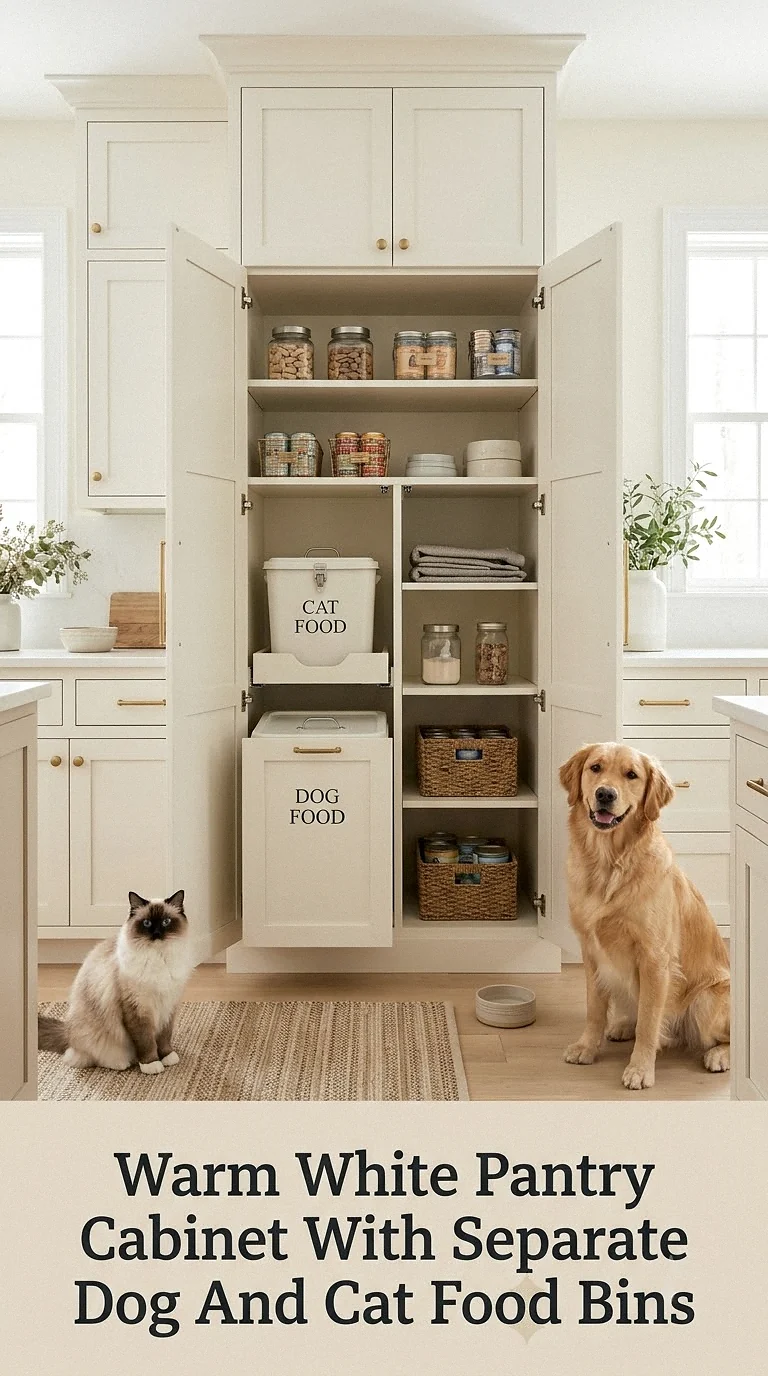
Turn one section of a pantry into a dedicated pet-food zone using warm white cabinetry and two large matching bins labeled specifically for the dog and cat.
Instead of emptying kibble directly into decorative containers, place each original food bag inside its corresponding bin. Choose containers with secure lids that close firmly, particularly if your pets have discovered how entertaining pantry exploration can be.
Position everyday foods around waist height so feeding does not require constant bending. Canned foods, unopened pouches, and treat packages can occupy shallow shelves above them.
For a polished appearance, use understated labels such as “DOG” and “CAT” in black lettering. A small wooden or ceramic tray can hold measuring cups and scoops nearby.
This arrangement works especially well in homes where pets eat different formulas because each feeding category remains visually obvious.
Modern White Oak Pull-Out Drawers With Hidden Pet Food Storage
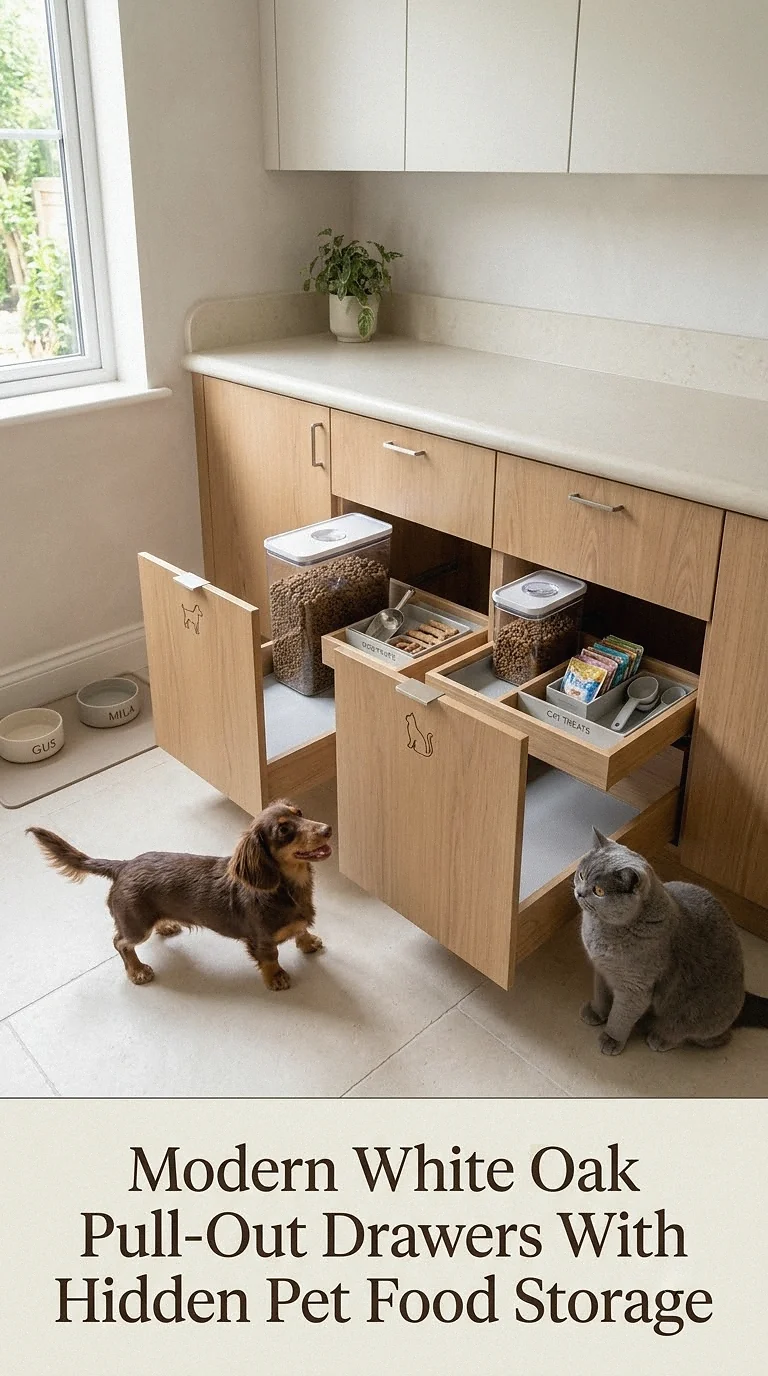
A bank of deep white oak drawers can conceal bulky pet-food bags while maintaining the clean lines of a modern kitchen.
Create one large pull-out compartment for dog food and another for cat food. Inside each drawer, place a lidded container large enough to hold the original bag. Full-extension drawer hardware makes it easier to reach food without lifting heavy containers from deep cabinets.
The beautiful part of this approach is that nothing about the kitchen needs to look like pet storage. Once the drawers close, the kibble, scoops, packages, and feeding supplies disappear completely.
Consider adding a narrow upper drawer for measuring cups, medication organizers, can lids, and feeding accessories.
White oak brings natural warmth to white, cream, charcoal, and soft beige kitchens, making this an especially attractive option for homeowners planning custom cabinetry or a kitchen renovation.
Soft Sage Mudroom Bench With Built-In Dog And Cat Food Compartments
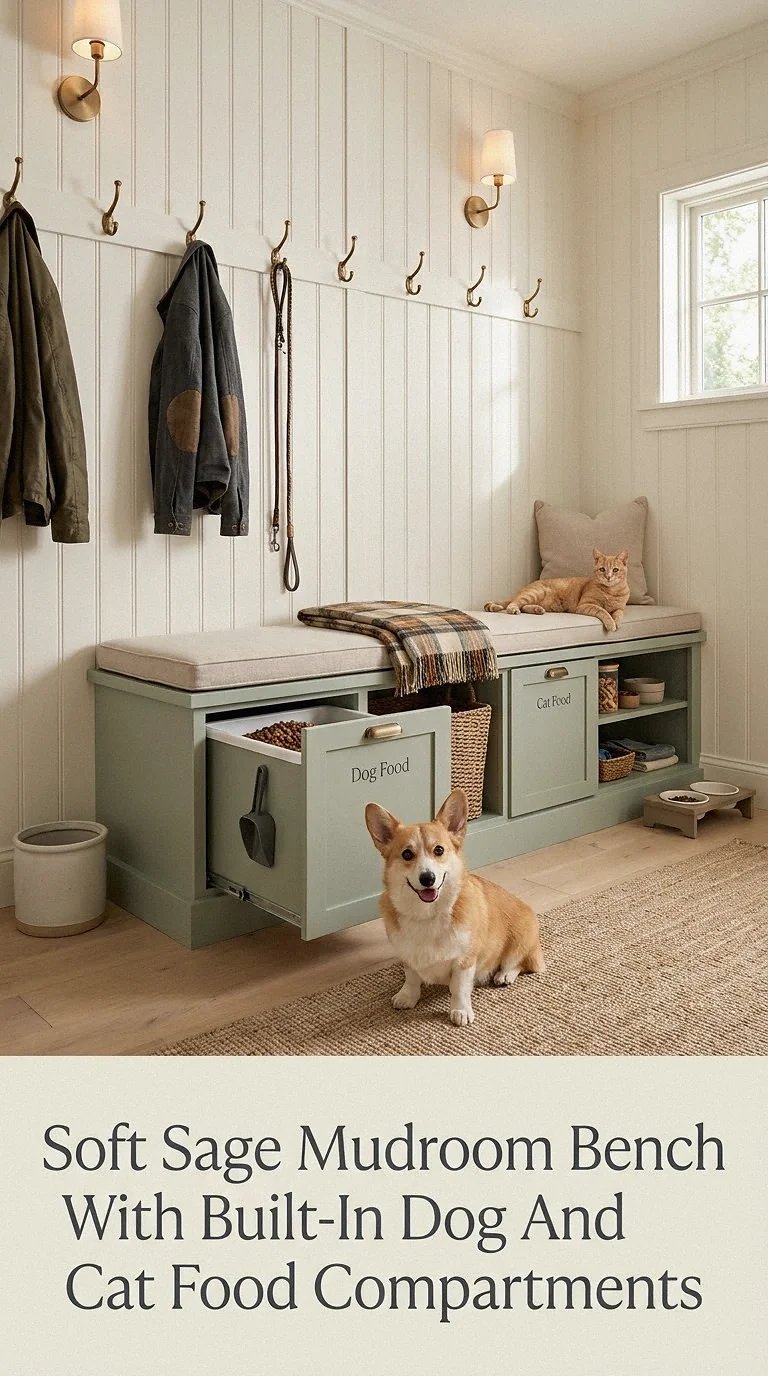
A mudroom already handles many pet-related necessities, making it a natural location for an organized feeding station.
Picture a soft sage green bench with two deep lower compartments. One contains the dog’s food bin, while the other holds the cat’s food and unopened wet-food packages. Woven baskets above the bench can organize leashes, towels, grooming supplies, and treats.
Keep food containers elevated rather than sitting directly on a damp mudroom floor, and choose a location away from exterior doors where temperature and humidity fluctuate significantly.
A washable tile or luxury vinyl floor makes cleanup simple when kibble inevitably escapes during enthusiastic mealtimes.
Add brass hooks, warm wood accents, and a neutral cushion to make the station feel like intentional furniture rather than utility storage.
Slim Rolling Pet Food Cart For Small Apartments
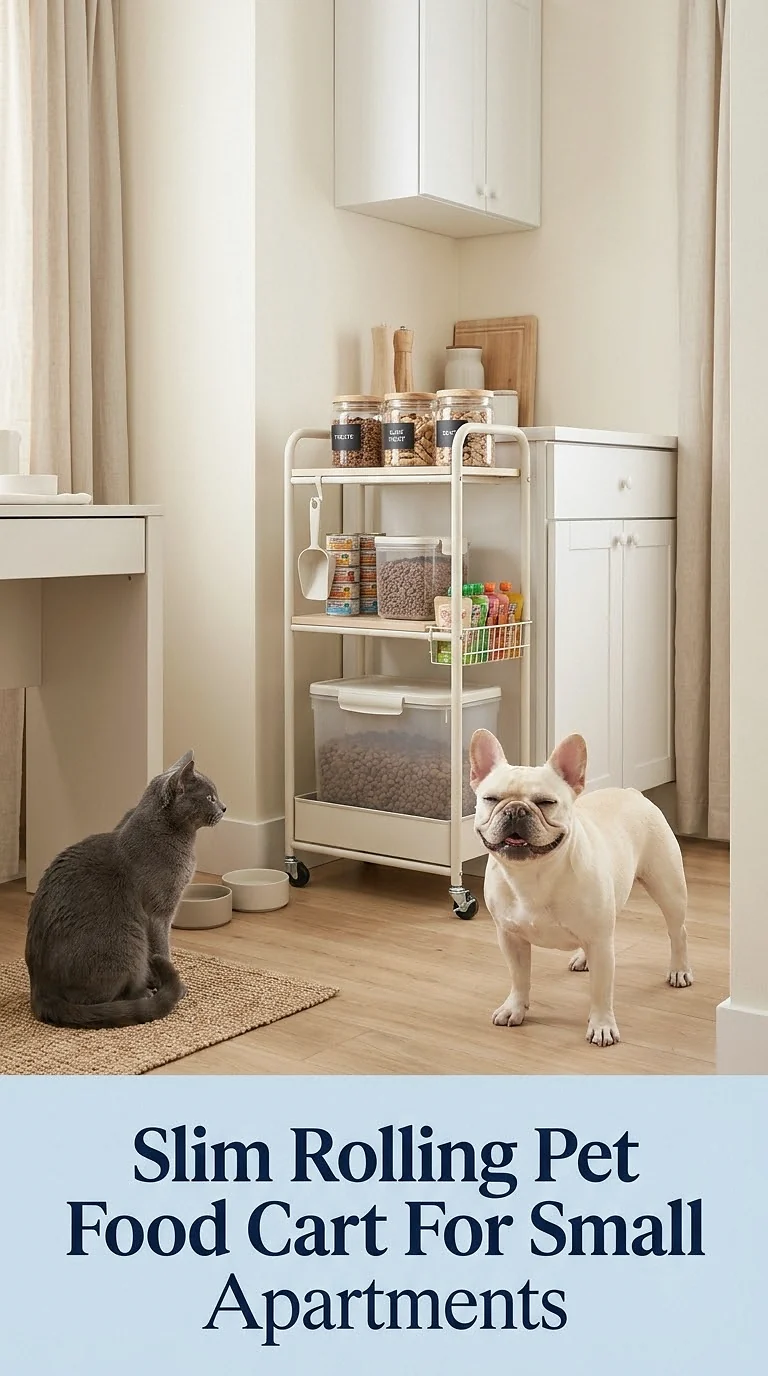
When cabinet space is limited, a slim rolling cart can create a complete feeding station using only a narrow strip of floor space.
Choose a sturdy three-tier cart that fits beside a refrigerator, kitchen cabinet, or utility shelving unit. Place the heavier dry-food containers on the lowest shelf for stability. Reserve the middle level for canned food and pouches, and use the top for lightweight accessories such as measuring cups, feeding mats, and sealed treats.
Keep food securely covered rather than storing open kibble directly in the cart baskets.
Matching containers can make even an inexpensive cart look intentional. Try cream containers with black labels, translucent bins with bamboo-colored lids, or simple white containers paired with natural woven accessories.
Because the cart moves easily, you can roll it toward the feeding area during meals and tuck it away afterward.
Clear Stackable Pantry Bins With Coordinated Pet Labels
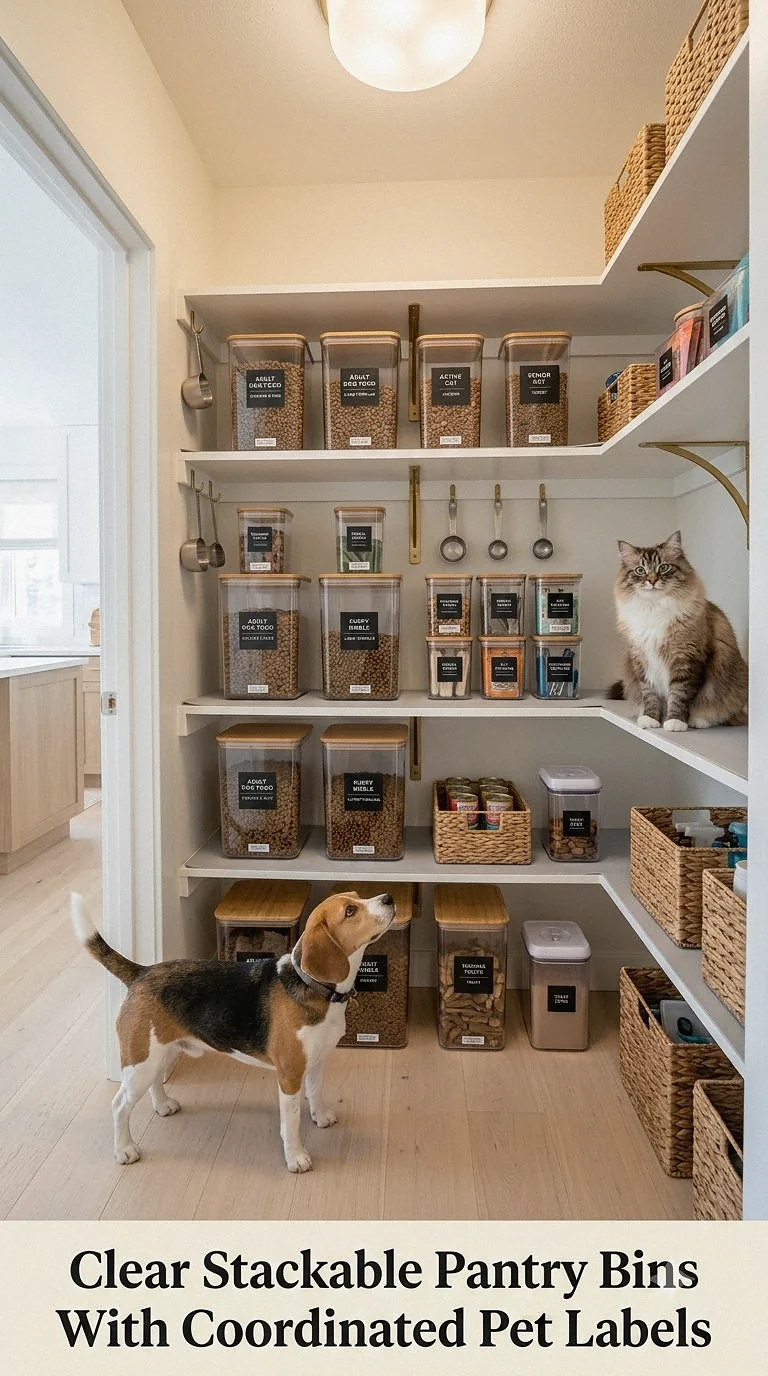
Clear storage bins are ideal when you want to see your inventory without opening every container.
Create separate stacks for dog food accessories, cat food accessories, canned meals, pouches, dental treats, and unopened specialty foods. Use coordinated labels so everyone in the household knows where things belong.
For kibble, select a large lidded container that can accommodate the original bag instead of filling open pantry bins with loose food.
Clear bins are particularly useful for cans and pouches because you can immediately see when supplies are running low. Smaller containers can organize toppers and individually packaged treats.
Keep the arrangement visually calm by using containers from the same collection. A pantry filled with matching transparent bins and understated white labels feels far more organized than shelves crowded with colorful commercial packaging.
Rustic Farmhouse Metal Food Bins With Natural Wood Accents
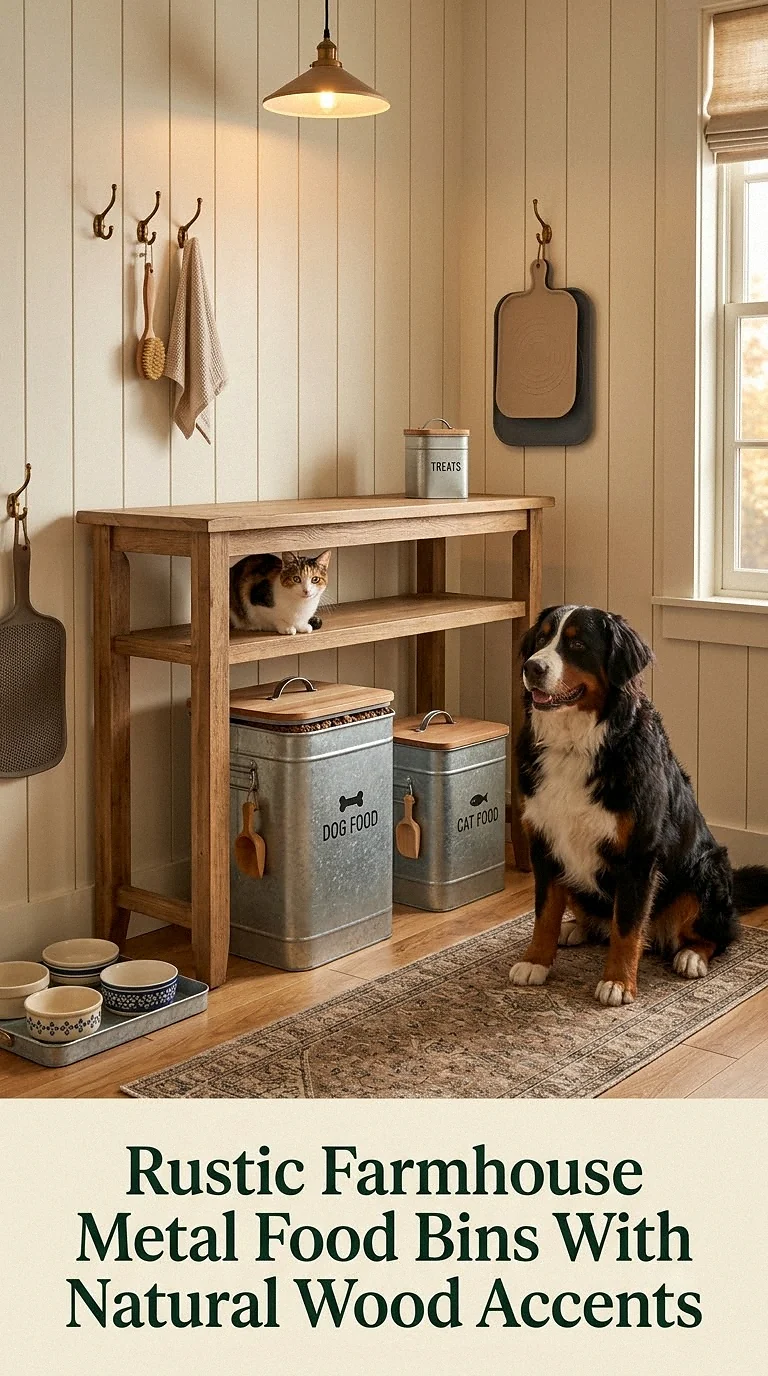
A pair of sturdy metal bins can turn pet-food storage into part of a farmhouse-style room rather than something that needs to be hidden.
Choose cream, matte black, or galvanized finishes and pair them with simple wooden labels marked for dog and cat food. For the most practical setup, select bins large enough to hold the original food bags.
Position the containers beneath a reclaimed wood shelf where smaller baskets can store canned food, treats, and feeding accessories.
Metal containers are especially useful when you want something durable and difficult for determined pets to chew through. Whatever container you choose, it should be clean, dry, and securely closed.
A washable vintage-style runner, wooden scoop holder, and ceramic water bowls nearby can complete the cozy farmhouse look without making the area feel overly themed.
Cozy Under-Stair Pet Pantry With Warm Wood Shelving
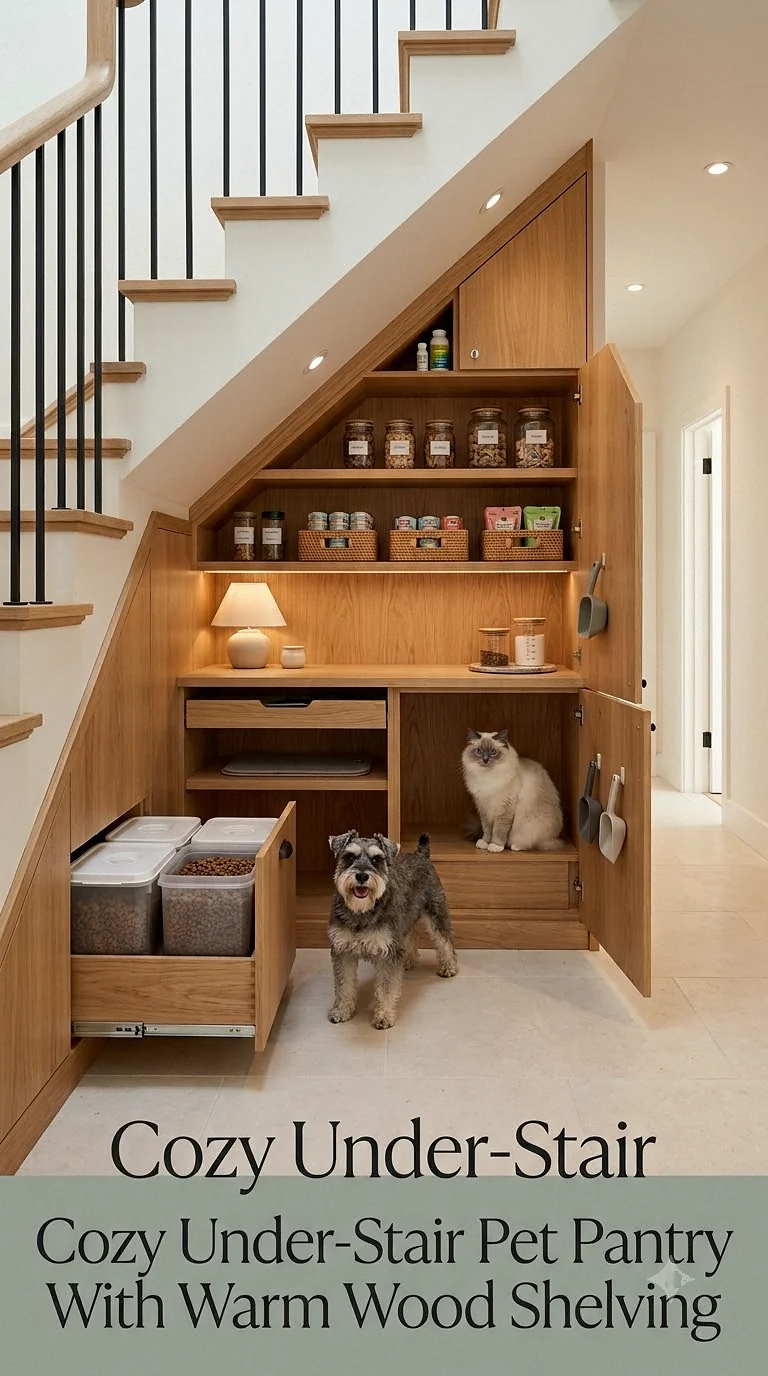
An awkward under-stair closet can become one of the most charming dog and cat food storage areas in the house.
Install warm wood shelves along the back wall and place larger dry-food bins at floor level. Give the dog and cat their own clearly labeled sections, with canned foods arranged above and lightweight supplies placed on higher shelves.
Read more : 18 Beautiful Service Dog Patch Ideas For A Clear, Stylish And Heartfelt Vest
Battery-powered or wired LED lighting can make a deep closet far easier to use during early morning feeding.
Because under-stair spaces can have limited ventilation, make sure the area stays dry and does not become unusually warm.
Soft cream walls combined with oak shelves create an inviting look, while matching baskets keep miscellaneous supplies hidden. Even a very small closet can hold an impressive amount when shelving uses the full vertical height.
Minimalist Kitchen Cabinet With Matching Airtight Outer Containers
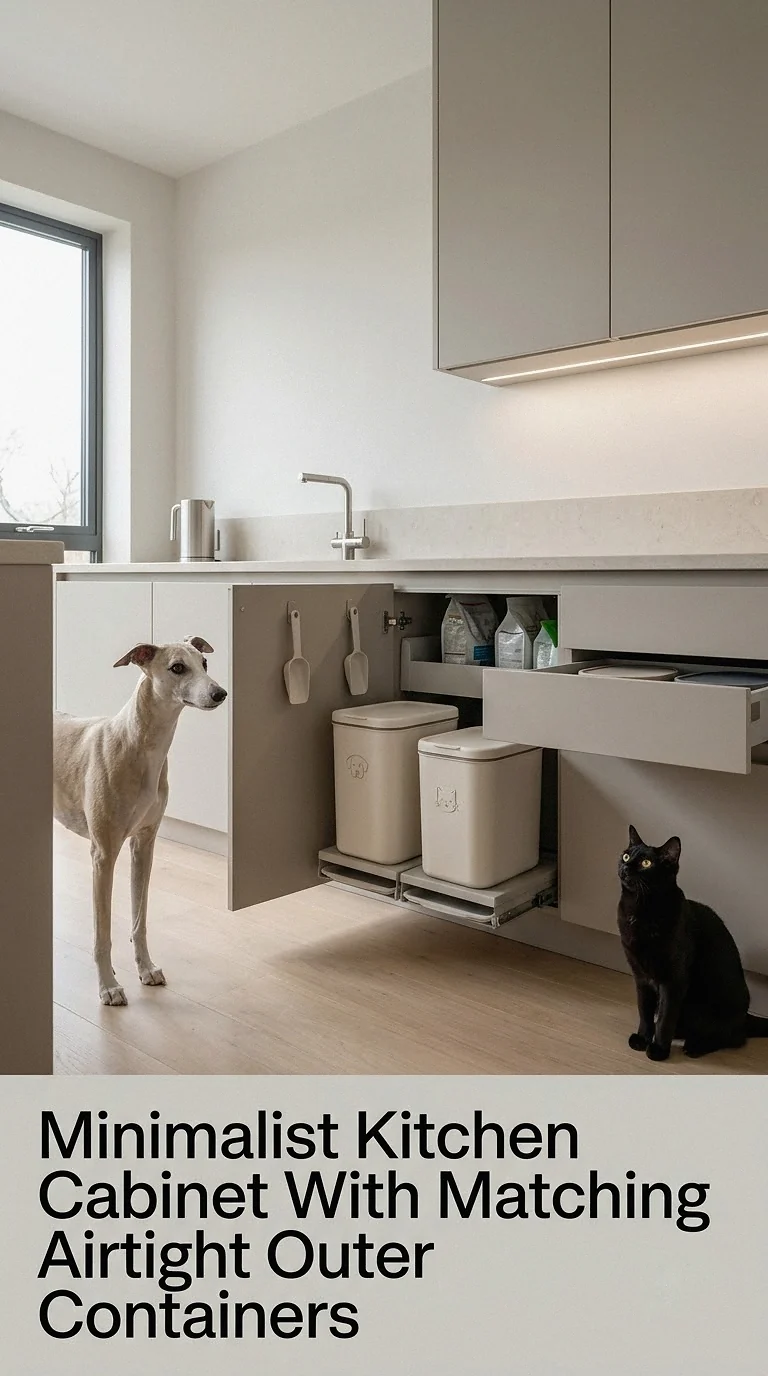
For a kitchen where visual simplicity matters, dedicate one lower cabinet to two matching pet-food containers.
Choose a clean design in white, charcoal, or translucent neutral plastic with snug-fitting lids. One holds the bag of dog kibble and the other holds the cat-food bag. Simple removable labels prevent mix-ups without introducing unnecessary decoration.
A shallow basket beside the containers can hold dedicated measuring scoops so they do not become mixed with human kitchen utensils.
Avoid topping new food over remnants of an old bag. When a storage container becomes empty, wash it, remove oily residue or crumbs, and allow it to dry thoroughly before adding another bag.
This understated approach works beautifully in contemporary apartments because it requires no custom construction and keeps colorful packaging out of sight.
Kitchen Island Pull-Out Pet Feeding Station With Food Storage
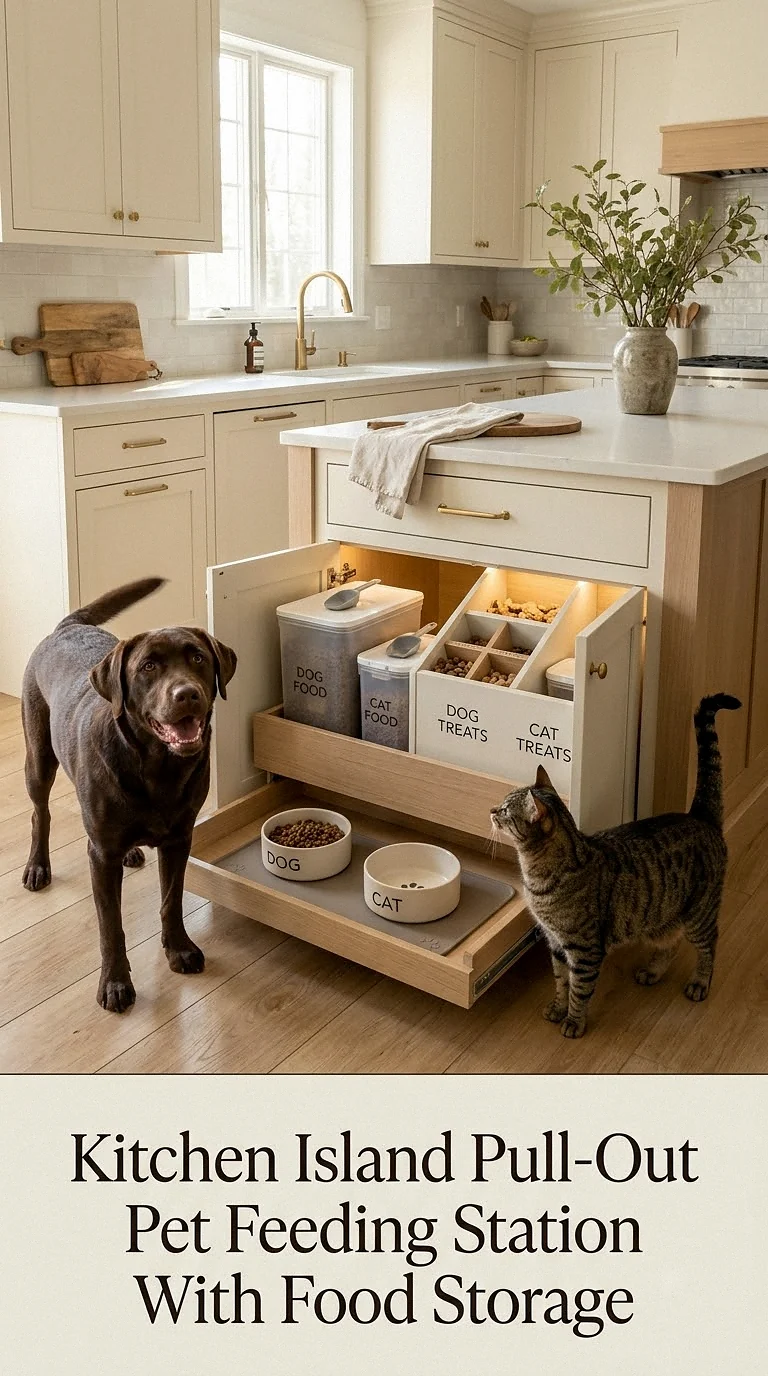
A large kitchen island can hide an entire pet-feeding system behind one cabinet door.
Install deep pull-out storage at the bottom for dog and cat food containers, then use an upper drawer for measuring tools, can covers, supplements, and feeding accessories.
A nearby feeding mat allows meals to be prepared without carrying food across the kitchen.
For an especially streamlined design, match the pull-out cabinetry to the island so the pet station becomes almost invisible when closed. Matte white, warm walnut, painted sage, or natural oak all work beautifully.
This design is convenient for families who prepare pet meals alongside their own breakfast or dinner. Keep pet utensils dedicated exclusively to pet food and wash them regularly rather than sharing measuring tools with household cooking.
Multi-Pet Feeding Cabinet With Color-Coded Dog And Cat Storage
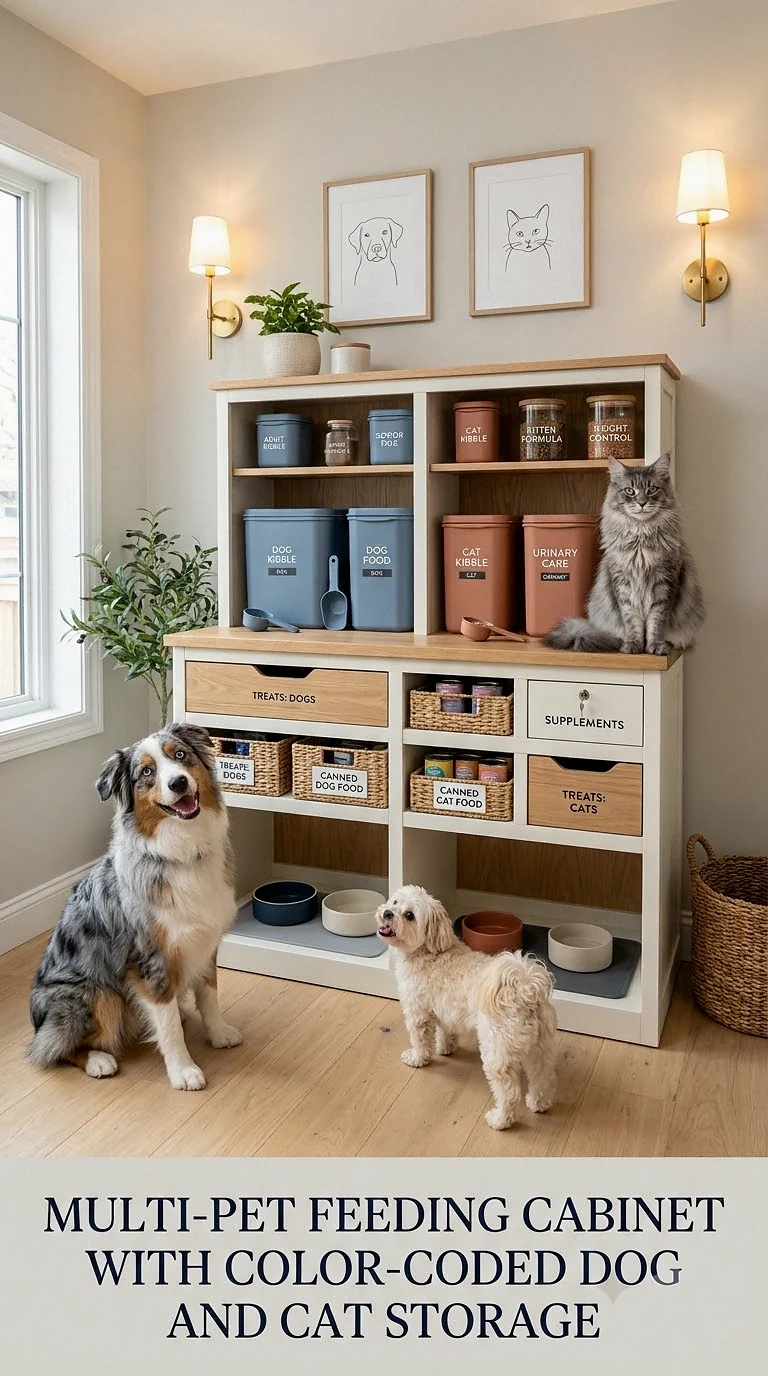
Color coding can make a shared pet-food cabinet both attractive and surprisingly useful.
Give the dog one subtle accent color and the cat another. For example, use soft blue labels for dog supplies and muted terracotta labels for cat supplies. Matching dots, handles, or label borders can carry the color system across food containers, measuring cups, treat jars, and medication organizers.
This makes feeding easier for family members, pet sitters, and anyone helping with the pets.
The concept is particularly helpful when one animal eats prescription or restricted food that should never be confused with another pet’s meal.
You do not need brightly colored containers. Keeping the cabinet itself neutral while adding small color-coded details preserves a sophisticated appearance while providing clear visual organization.
Narrow Entryway Console With Hidden Pet Food Storage
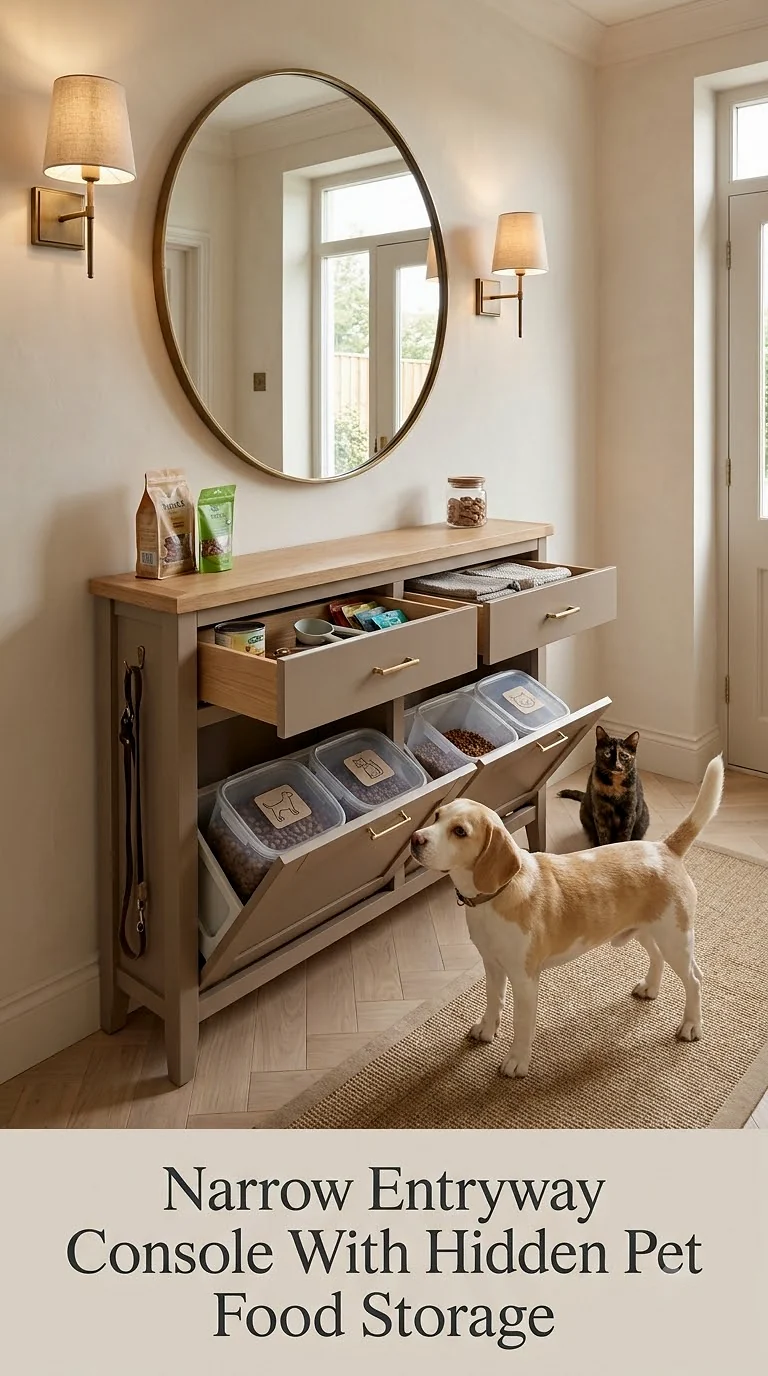
A narrow console cabinet can provide surprisingly generous food storage without occupying precious kitchen space.
Choose furniture with deep lower doors rather than open legs. Inside, dedicate one side to dog food and the other to cat food. Smaller shelves can hold cans, pouches, and sealed treats.
A console finished in natural oak, creamy white, or muted green can blend beautifully into an entryway or dining area. Style the top with a lamp, framed artwork, and a small decorative bowl so there is no obvious indication that several weeks of pet meals are stored underneath.
Secure the doors if either pet is skilled at opening cabinets.
This idea works particularly well in smaller apartments where adding another piece of furniture is more realistic than finding unused pantry space.
Wall-Mounted Pet Pantry With Canned Food Baskets And Dry Food Below
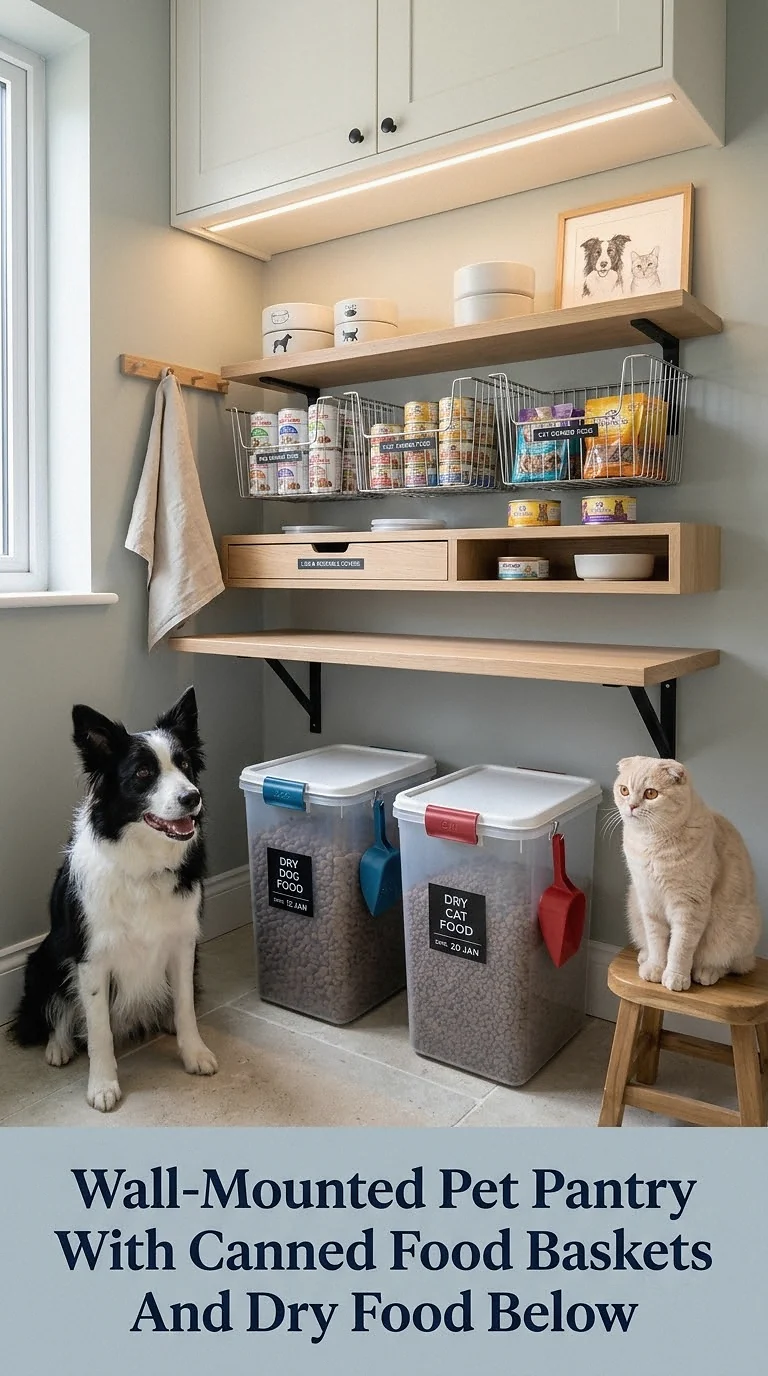
Use vertical wall space when floor space is limited.
Mount two or three sturdy shelves above the main dry-food storage area. Arrange unopened cans and pouches in labeled baskets such as “Dog Meals,” “Cat Meals,” and “Extras.”
Below the shelves, position two securely lidded containers containing the original dry-food bags.
Choose baskets with low fronts so you can quickly check inventory. Wire baskets create a practical utility-room look, while woven rectangular baskets offer a warmer decorative style.
Keep heavy food cans on shelves that are properly anchored rather than relying on lightweight decorative shelving.
A small framed feeding chart can also be mounted nearby, which is especially useful in homes with several people sharing feeding responsibilities.
Organized Refrigerator Bin For Opened Wet Dog And Cat Food
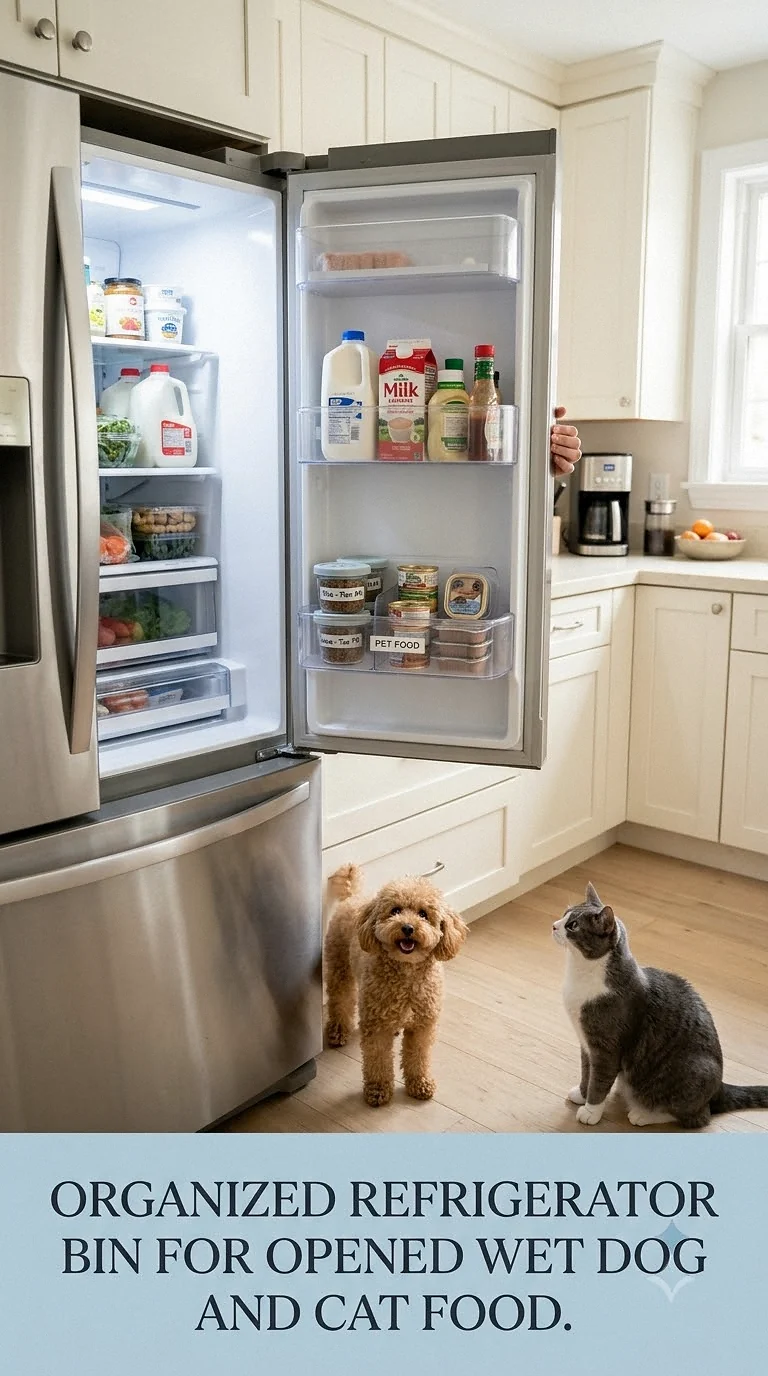
Wet food needs a different system from shelf-stable kibble, and a dedicated refrigerator bin keeps opened packages from becoming lost among groceries.
Choose a washable clear bin that fits comfortably on one refrigerator shelf. Use separate sections for dog and cat food, particularly when they eat different formulas.
Opened cans should be covered securely, while partially used pouches can be transferred or sealed according to the product instructions. Refrigerate leftovers promptly and follow the manufacturer’s storage recommendations.
A small erasable label can record the date a package was opened so there is less guessing later.
Keep the refrigerator at 40°F, or about 4°C, or below. Cleaning the pet-food bin regularly also helps contain spills and odors.
It is a simple organizational upgrade that makes wet-food feeding noticeably easier.
Built-In Breakfast Nook Cabinet With Pet Food And Bowl Storage
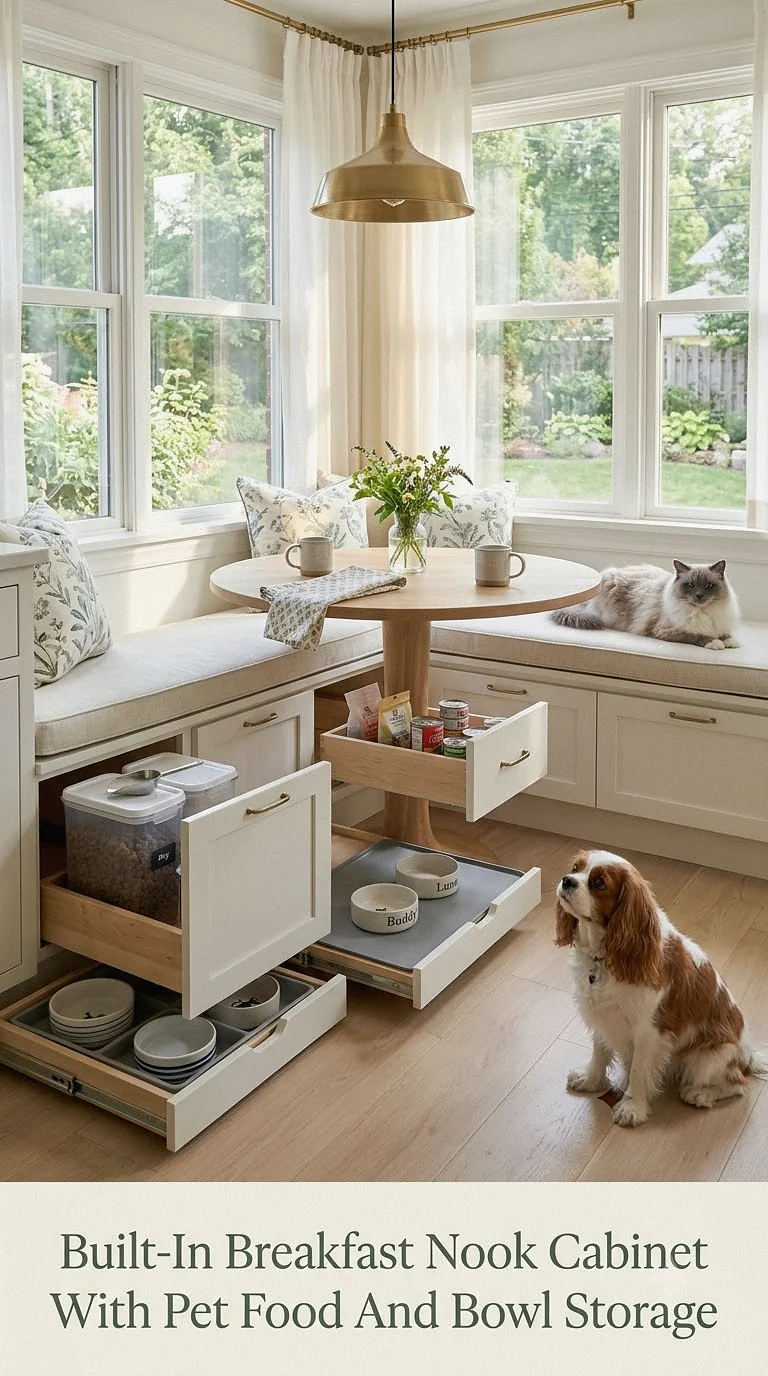
A breakfast nook with bench seating can perform double duty as hidden pet storage.
Design lift-up bench compartments or deep drawers beneath the seating to accommodate food containers, unopened cans, feeding mats, and backup bowls.
Read more : Can Dog Eat Beef Jerky?
Choose a section that remains cool and dry rather than one positioned beside a heating vent or strong afternoon sunlight.
An upholstered cream bench paired with warm oak drawers can look completely residential while hiding an impressive amount of pet gear underneath.
Dividers are useful inside larger drawers so the cat’s supplies do not disappear behind oversized dog-food bags.
This approach is particularly appealing when you want to organize pet supplies without adding visible storage containers to a beautifully styled kitchen or dining room.
DIY Utility Room Shelving With Budget-Friendly Lidded Bins
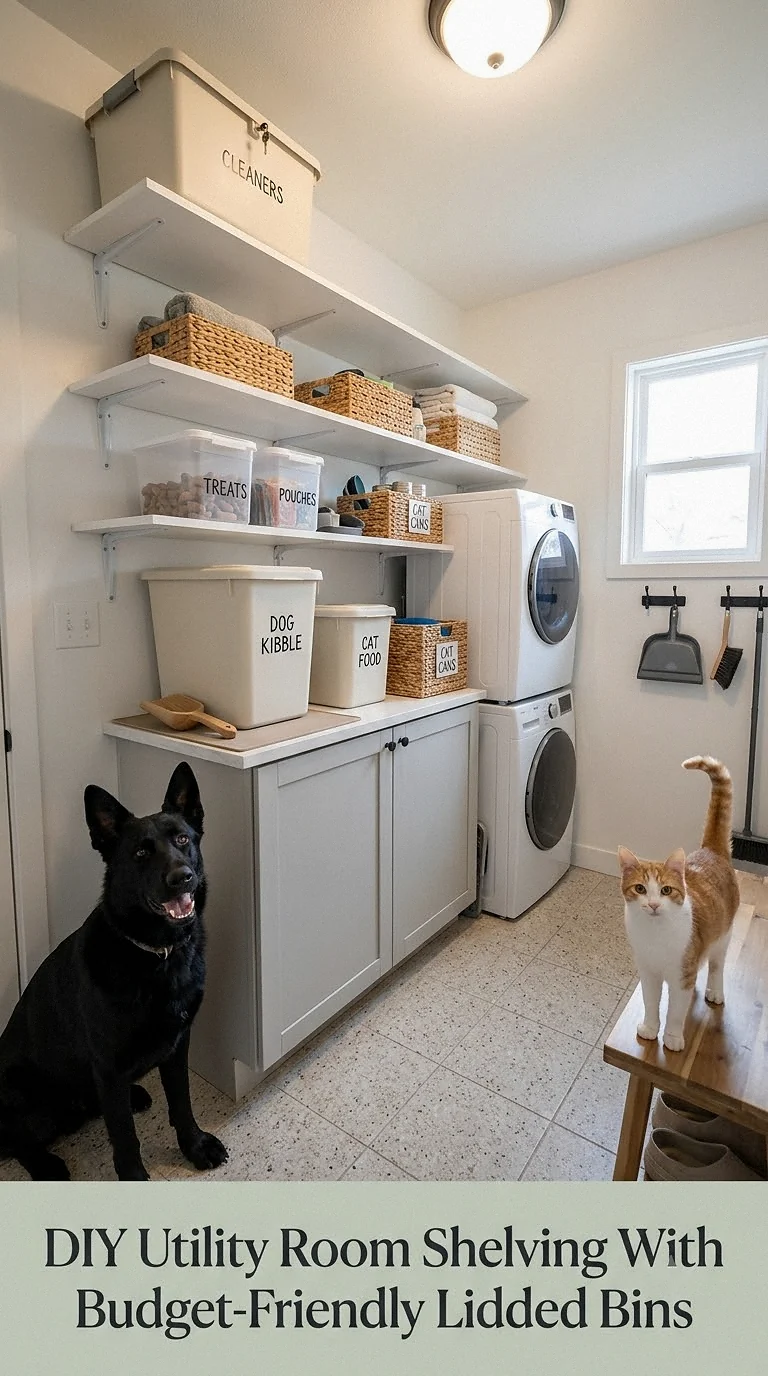
A functional dog and cat feeding station does not require custom cabinetry.
Use inexpensive heavy-duty shelving in a laundry or utility room and combine it with matching lidded bins. Place heavy dry food on the lower shelves, canned foods at comfortable reaching height, and lightweight supplies higher up.
Keep food away from leaking plumbing, damp floors, dryers that generate excessive heat, and household chemicals.
Simple printed labels can instantly make budget containers look coordinated. Add a small waterproof mat below the feeding supplies to catch escaped kibble.
If you transfer food out of its package, use a container intended for food storage, keep important package information, and wash and completely dry the container before adding a new batch.
The result can be remarkably polished for very little money.
Luxury Walk-In Pet Pantry With Stone Counter And Custom Cabinetry
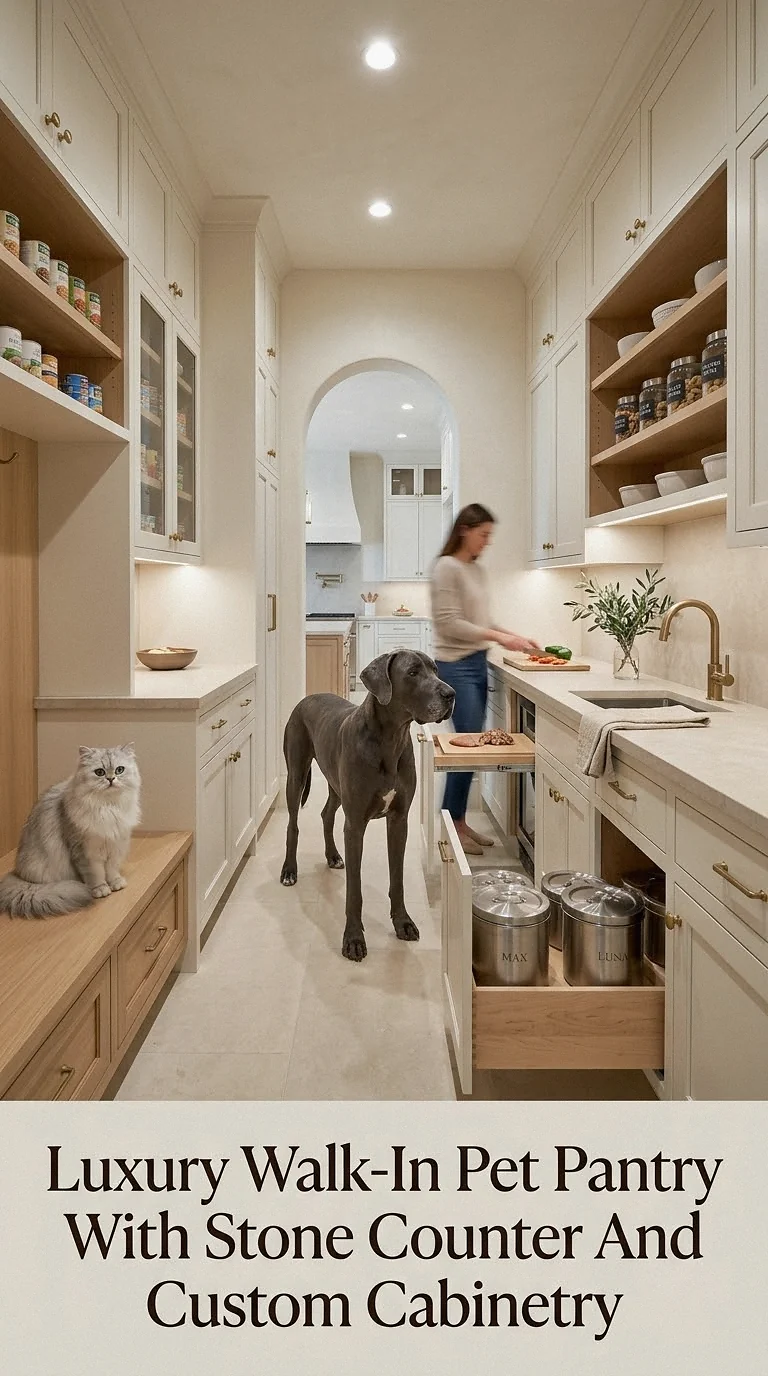
For a dream-home approach, create a small dedicated pet pantry with built-in cabinetry, a washable preparation counter, drawers, and separate dog and cat food zones.
Use warm walnut or white oak cabinetry paired with pale stone-look surfaces for an elevated but welcoming atmosphere. Deep lower drawers can conceal large food containers, while upper cabinets organize treats, canned food, supplements, and grooming necessities.
A dedicated drawer for scoops and measuring tools keeps feeding supplies away from household utensils.
Include easy-to-clean flooring and good lighting so spills can be spotted immediately.
The luxury comes less from decorative accessories and more from having a precise place for everything. Even if a full pet pantry is unrealistic, elements of this design can inspire a smaller cabinet or closet makeover.
Compact Corner Cabinet With Rotating Shelves For Pet Food
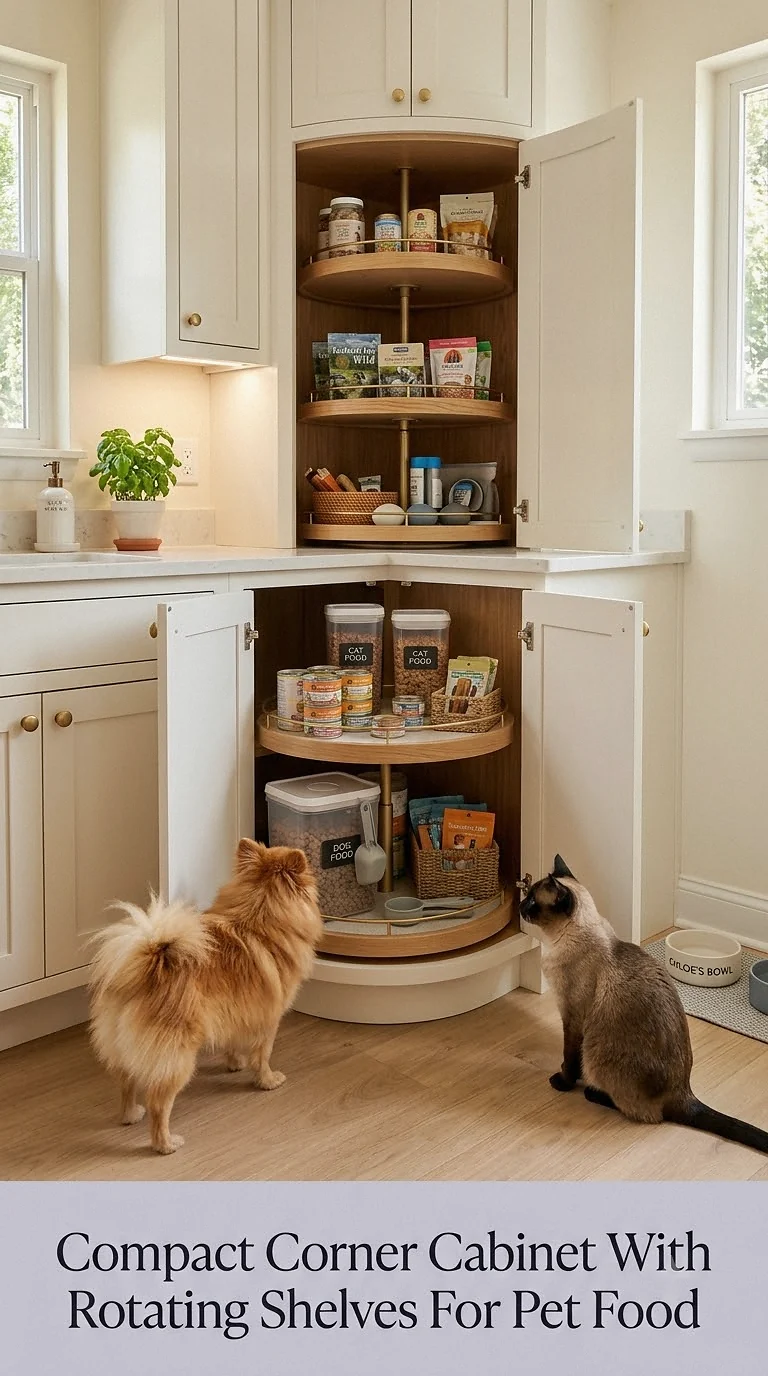
A deep corner cabinet often becomes wasted kitchen space because supplies disappear into the back. Rotating shelves can transform it into an efficient pet-food station.
Use sturdy turntables for cans, pouches, small treat packages, and feeding accessories. Keep larger dry-food bags secured inside appropriate containers on the lowest level.
Assign one rotating shelf to the dog and another to the cat so products remain separate.
Clear containers work particularly well because labels and inventory remain visible even in a darker corner cabinet.
Before installing rotating organizers, measure both cabinet depth and door clearance carefully. Large containers should never prevent the mechanism from turning smoothly.
This is a smart solution for kitchens where every cabinet counts but adding freestanding storage would make the room feel crowded.
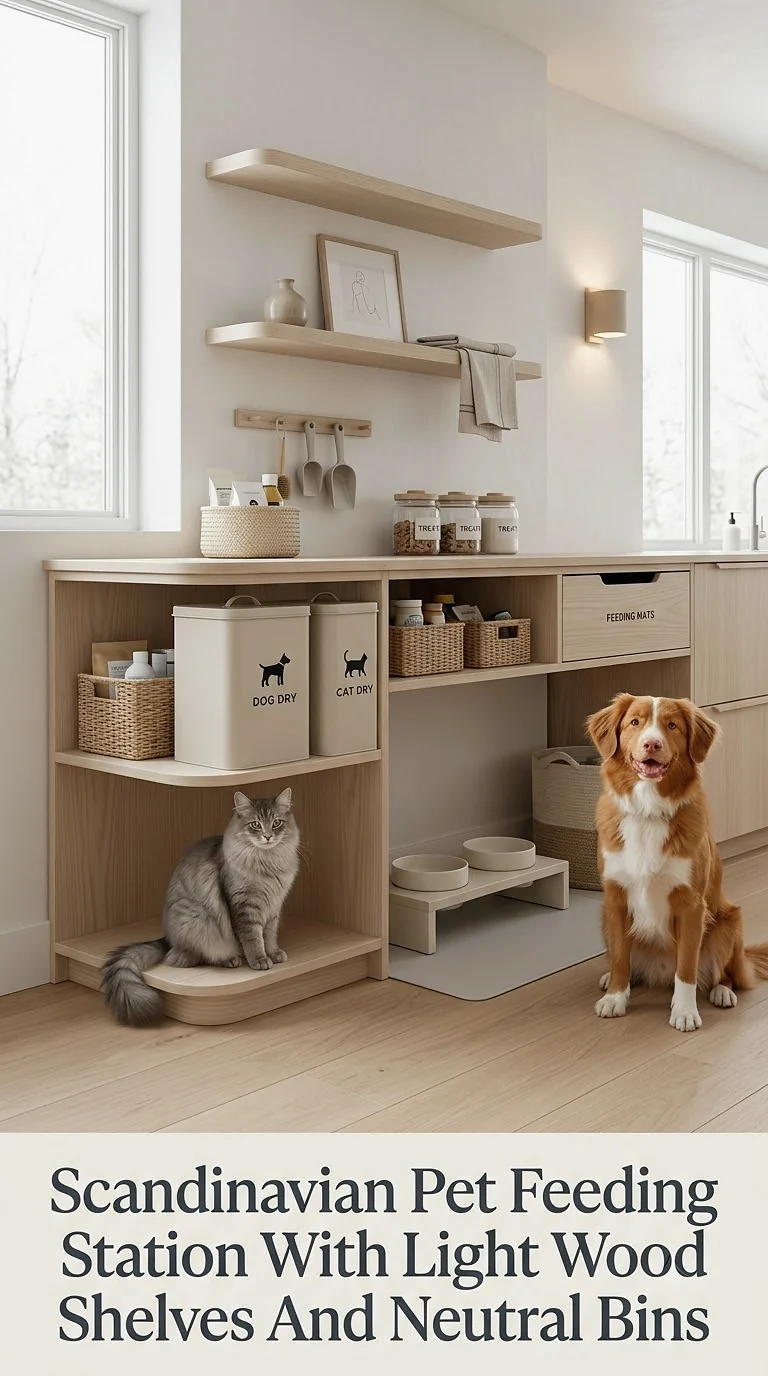
For a softer minimalist look, combine pale wood shelving, creamy walls, and warm neutral storage containers.
Place matching dog and cat food bins beneath an open birch or white oak shelf. Above them, use a few simple boxes for cans, feeding accessories, and unopened treats.
Avoid filling the area with decorative objects. The appeal of Scandinavian-inspired organization comes from functionality, natural materials, and visual breathing room.
A beige washable mat, simple ceramic bowls, and subtle black labels provide enough contrast without making the feeding station visually busy.
This arrangement works beautifully in kitchens, utility rooms, and apartment dining areas because it feels like a small piece of intentional furniture.
Most importantly, keep the beautiful exterior secondary to practical requirements: secure lids, dry surroundings, clean containers, and food that remains protected from curious pets.
Hidden Laundry Cabinet With Dog And Cat Food Zones And Cleaning Supplies
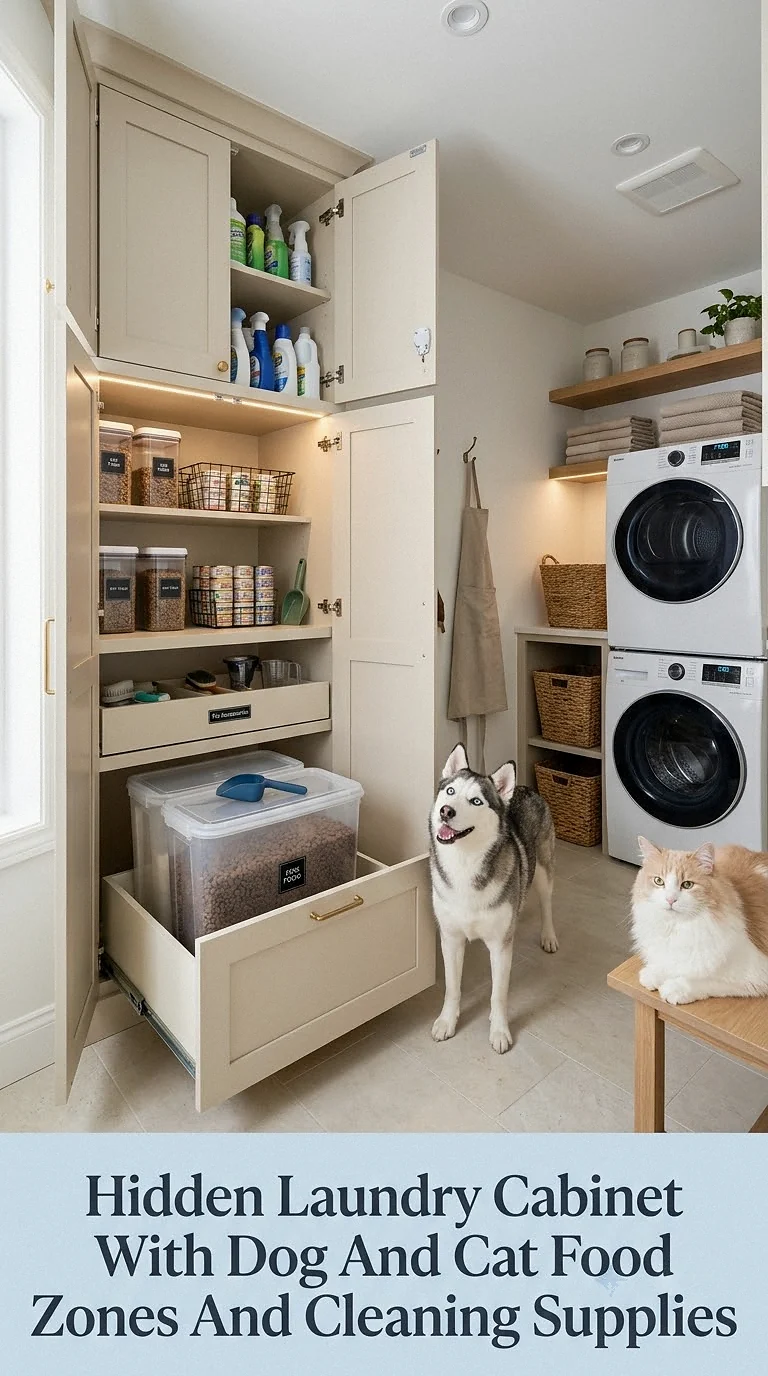
If your laundry room stays cool and dry, a tall closed cabinet can create an efficient all-in-one pet-care station.
Reserve the lower half for food, separating dog and cat supplies with labeled shelves or containers. Use the center shelves for feeding mats, clean bowls, and sealed treats.
Household cleaners should remain completely separate from pet food, preferably in another locked cabinet rather than sharing shelves.
Choose moisture-resistant shelving and wipeable surfaces because laundry rooms can experience occasional splashes and humidity.
A muted cabinet color such as warm gray, dusty blue, or soft mushroom creates a calm background, while simple wood labels add warmth.
This arrangement keeps bulky pet-food supplies out of the main kitchen while still making them convenient enough for everyday feeding.
Creating Dog And Cat Food Storage That Works For Your Home
The most successful dog and cat food storage ideas balance beauty with everyday practicality. A gorgeous container is only useful if it keeps food protected, is easy to clean, fits the food you actually buy, and prevents pets from helping themselves when nobody is looking.
Start with the space you already have. A single pantry shelf might need only two secure containers and several labeled baskets. A tiny apartment may benefit from a rolling cart or narrow console. If you are renovating, pull-out cabinetry or a dedicated pet pantry can turn feeding supplies into a seamless part of the room.
Whatever style you choose, keep dry food cool and dry, retain original packaging whenever practical, clean storage containers between bags, and refrigerate opened wet foods promptly. Separating dog and cat supplies can also make feeding routines simpler, particularly when your pets have different dietary needs.
With a thoughtful system in place, feeding time feels less cluttered and more enjoyable. Even a modest corner can become a beautiful little station that works naturally with your home while keeping everything your pets need close at hand.
Source: https://petstutorial.com
Category: DOGS
