
A dog pool can turn an ordinary summer afternoon into your pet’s favorite part of the day. Picture a cool place to paddle, a shady spot to recover afterward, and a backyard that still feels like the welcoming outdoor room you love.
You are reading: 17 dog swimming pool ideas for a Beautiful, Splash-Friendly Backyard
The best dog swimming pool ideas start with your dog, not the pool. A gentle wader needs something different from a confident retriever, and a small patio calls for a different solution than a spacious lawn. These ideas range from affordable, pack-away pools to thoughtfully designed permanent features, with plenty of ways to make the surrounding space attractive, comfortable, and easier to clean. Whatever you choose, plan for supervision, secure access, a dependable way out of the water, and a dry place to rest.
Dog Swimming Pool Ideas for Every Yard and Water-Loving Pup
Foldable Blue Dog Pool on a Small Patio
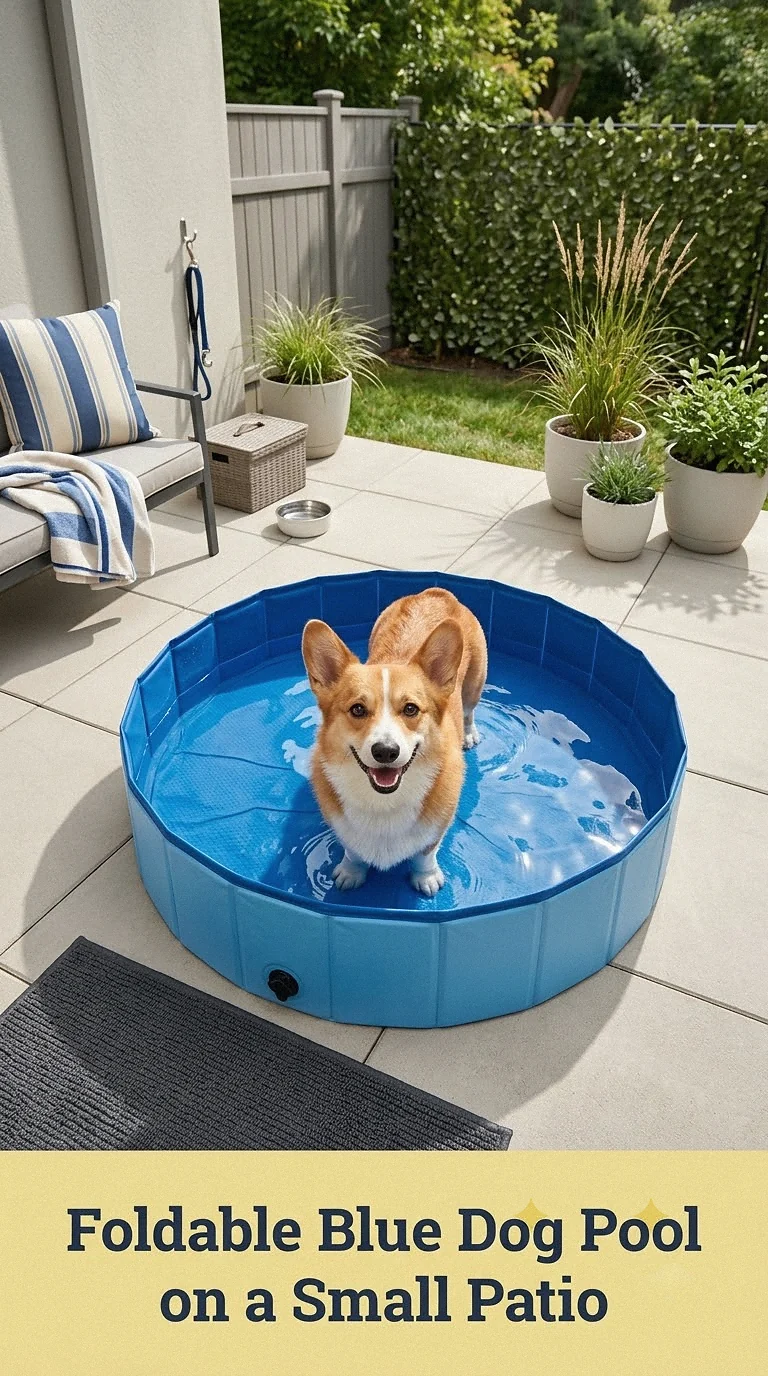
A foldable dog pool is one of the easiest ways to give a compact patio a cheerful summer refresh. Choose a sturdy, pet-oriented model with a textured floor and a drain, then place it on a level surface away from sharp stones or rough concrete edges. A blue pool looks especially fresh beside pale pavers, a striped outdoor cushion, and a few planters set safely beyond tail-sweeping distance.
Keep the water shallow enough for your dog to stand comfortably while you learn how they feel about it. A washable outdoor mat at the entrance catches splashes and gives wet paws better traction. Empty and clean the pool as needed rather than leaving warm, stagnant water sitting between sessions. When playtime ends, let it dry fully before folding it away. That simple routine makes this an appealing option for renters, seasonal use, and homes where every square foot has another job.
Galvanized Stock Tank Pool With a Gravel Garden Border
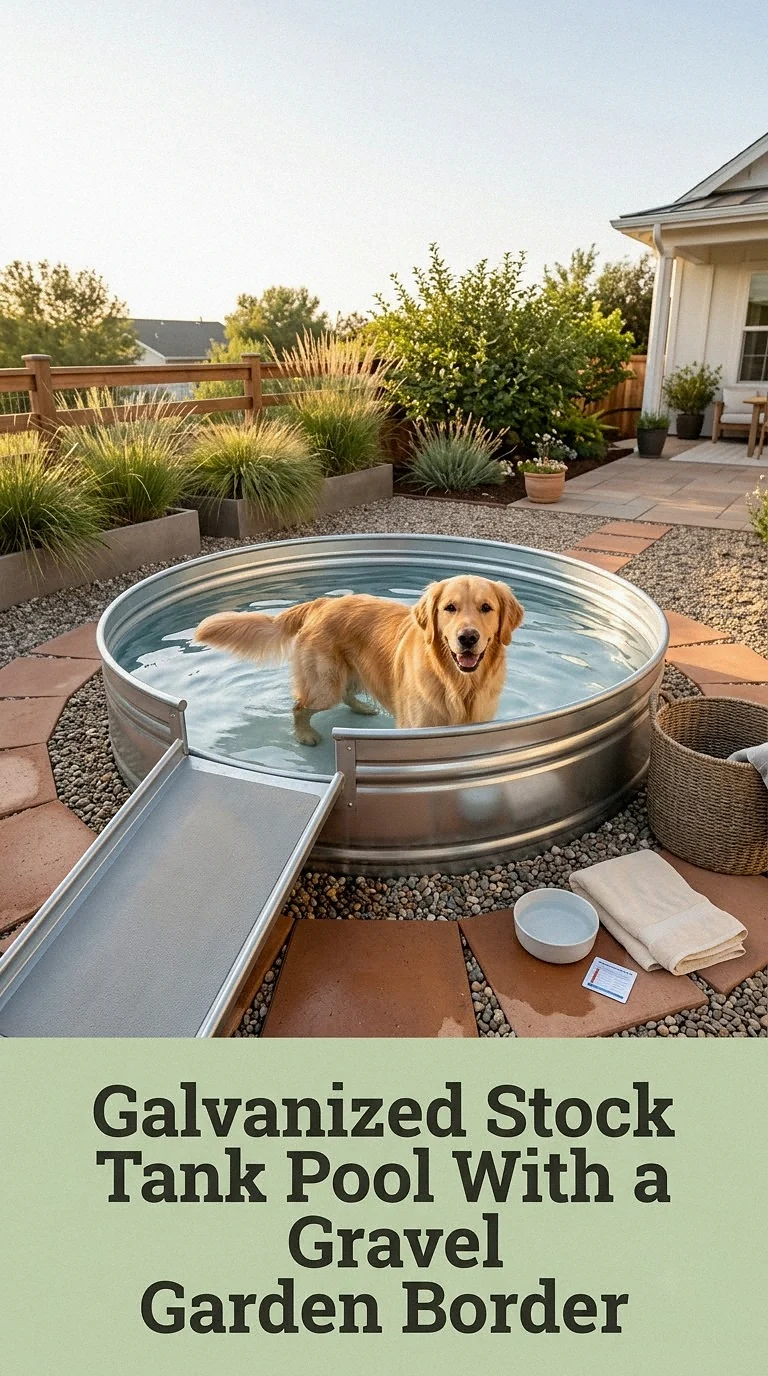
A galvanized stock tank brings a relaxed farmhouse look to the yard without requiring a custom build. Nestle an appropriately sized tank into a level gravel area, leaving enough room to walk around it and reach the drain. Soft grasses in protected planters, warm-toned pavers, and a weatherproof towel basket can make the utilitarian metal feel like part of a deliberate garden design.
The sides of a stock tank are often too high and smooth for a dog to exit safely, so provide a secure, non-slip ramp or stable steps designed for the tank’s height. Check that the rim and fittings have no sharp edges, and choose a size that lets your dog turn around easily. Gravel helps manage splashes, but use larger, stable paving at the entrance so paws have a firm landing. In a sunny yard, check the water temperature before every session; metal and shallow water can heat up.
Recessed Wading Pool With Flush Stone Edging
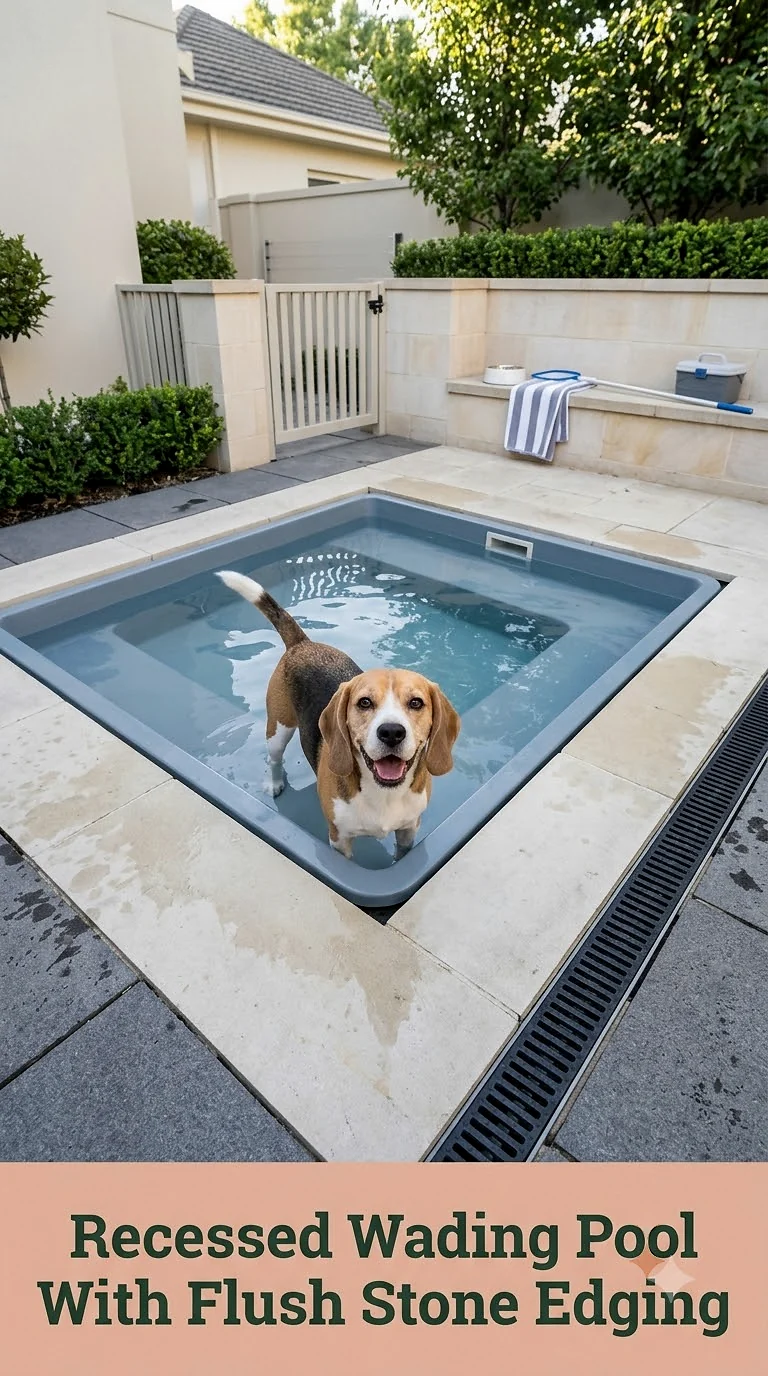
For a cleaner, more built-in look, sink a rigid, removable wading pool into a prepared area and finish its surroundings with flat stone or textured pavers. Keeping the rim close to ground level creates a calm garden feature rather than a bright tub sitting on the lawn. It can also make entry less intimidating for a dog who prefers to step into water instead of climbing over a side.
The hidden work matters most here. The base needs to be level and supportive, and the surrounding area needs drainage so splashed or emptied water does not collect against the house or turn the soil muddy. Leave a practical way to lift out the pool for scrubbing and to inspect the space beneath it. A flush edge is not a safety barrier: fence the area or otherwise prevent unsupervised access, especially if children or other pets share the yard.
Beach-Entry Pool With Pale Sand-Colored Decking
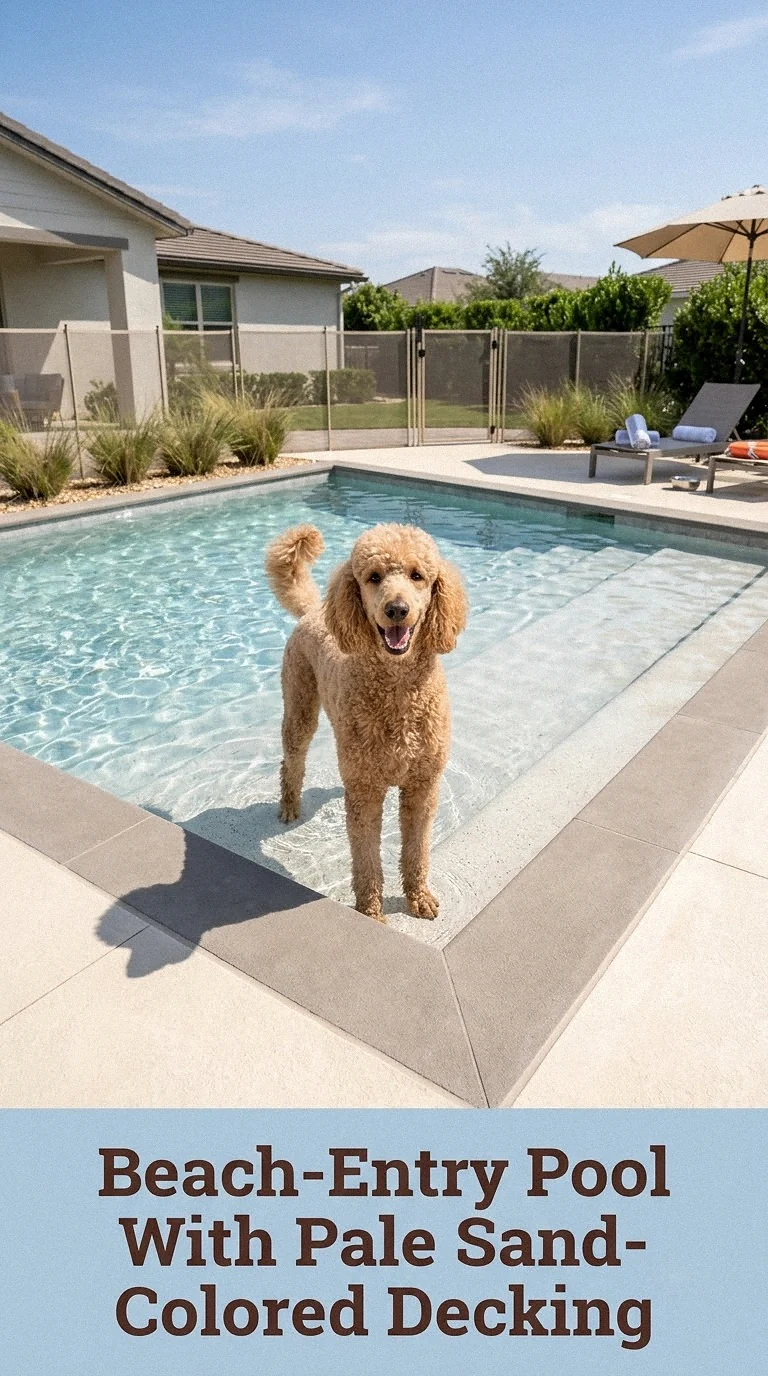
If you are planning a permanent pool, a gently sloped beach entry can make the water feel welcoming to dogs who dislike an abrupt step down. Pair the gradual approach with sand-colored, slip-resistant decking and a restrained planting scheme for the look of a tiny private resort. The shallow edge offers a place to pause before swimming and a clear route back onto dry ground.
Talk through the slope, surface traction, drainage, and your dog’s size with a qualified pool designer. A beach entry should be easy for paws to grip when wet, not merely beautiful in photographs. Mark the primary exit visually with a contrasting border and practice using it with your dog while you stay close. Even an experienced swimmer can become tired or disoriented, so a gentle entrance complements rather than replaces supervision and a secure barrier when the pool is not in use.
Modern Rectangular Lap Pool With a Wide Dog Ramp
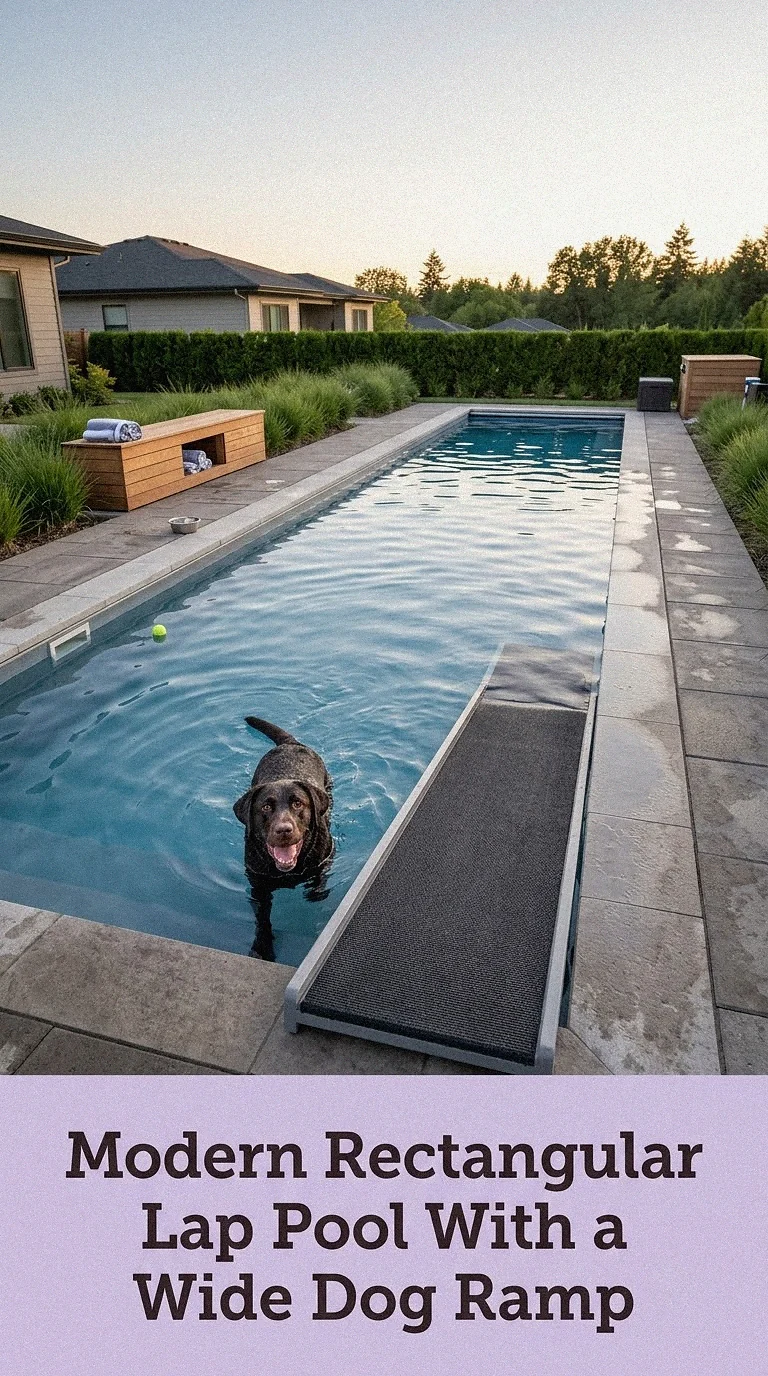
A long, simple rectangle suits a modern backyard and gives an enthusiastic swimmer room to paddle without constantly turning. Frame it with large-format, textured pavers, clipped planting, and a low-profile storage bench for towels and floating toys. The crisp lines keep the space feeling composed even after a lively game of fetch.
Read more : 9 Best Types Of Designer Dog Breed
Make the exit part of the design from the start. A wide, firmly anchored dog ramp with a grippy surface is easier to recognize and use than a slippery pool wall. Place it where your dog naturally swims and keep the route free of furniture. For a new build or resurfacing project, ask about finishes that tolerate claws and are practical to clean; a delicate liner may not suit frequent canine use. Check skimmers and filters more often when a shedding dog swims, and give your pet regular breaks rather than assuming a long pool calls for a long swim.
Shallow Splash Pad With a Gentle Fountain
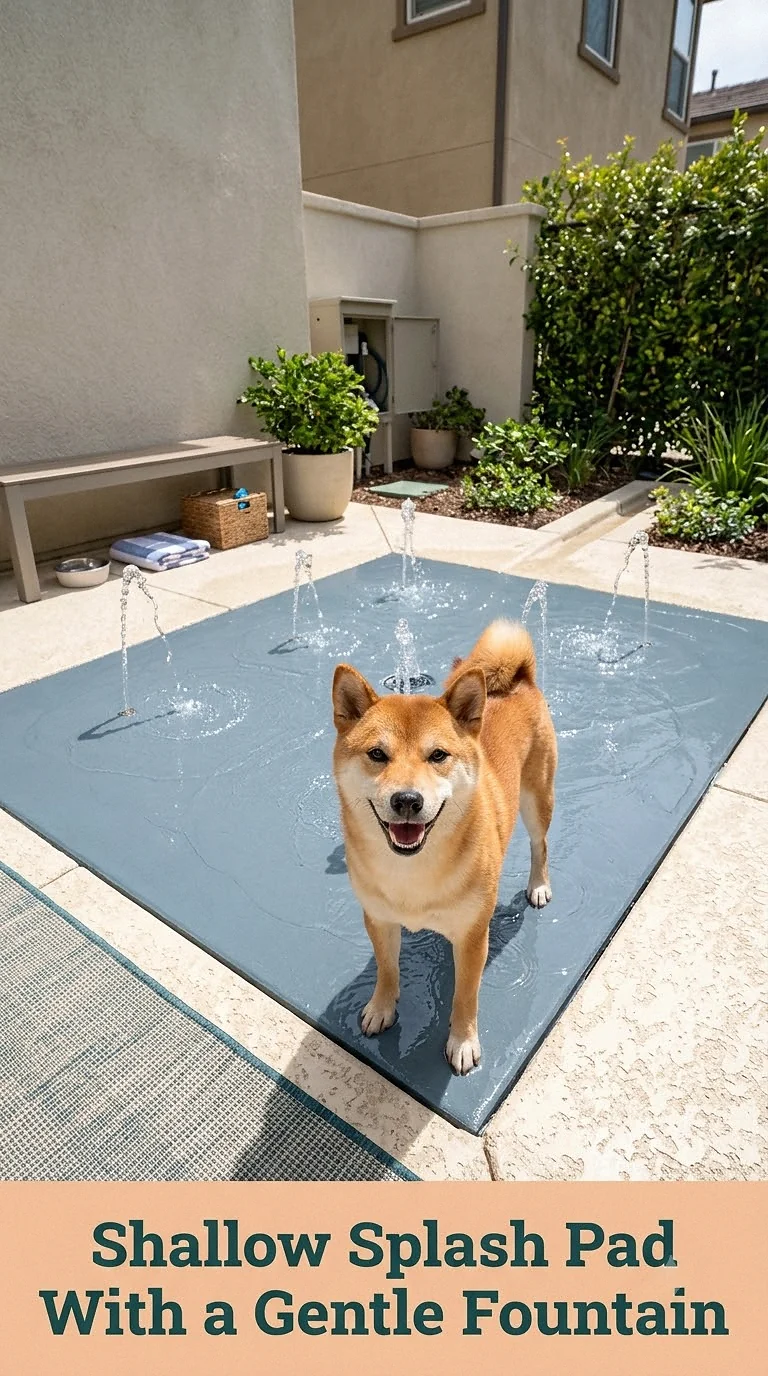
Not every dog wants to swim. A shallow splash pad with low, playful streams gives a water-curious pup somewhere to investigate, cool their paws, and chase splashes without stepping into deep water. In a small courtyard, its flat shape can feel lighter than a pool. Surround it with textured paving and a nearby shaded resting spot to create a neat, easy-to-use play corner.
Choose a setup intended for pets or outdoor play, and start with the fountain on its gentlest setting. Some dogs love moving water; others prefer to watch it from a distance. Keep hoses, cords, and pump components secured and inaccessible to curious mouths. Direct runoff away from foundations and seating areas, and clean the pad according to its design rather than letting residue build up. Because a splash pad is for play rather than swimming, it is a useful alternative for dogs who enjoy water but do not enjoy floating.
Wood-Framed Pool With a Removable Plastic Basin
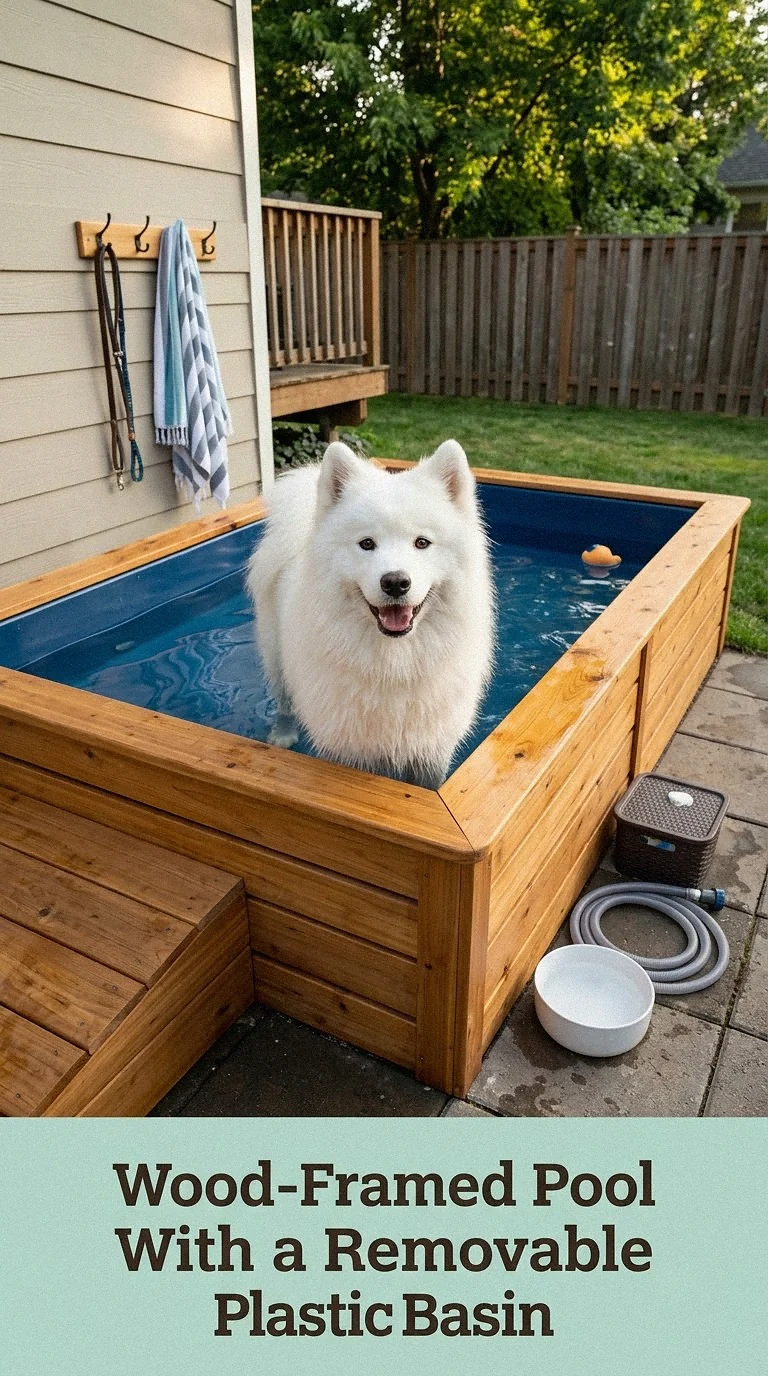
A wood surround can turn a plain rigid dog pool into a charming backyard feature. Build a low, tidy frame around a removable plastic basin, then finish the wood in a tone that complements your deck or fence. A narrow ledge gives the setup a polished appearance, while a nearby hook rail holds the leash, towel, and favorite water toy.
Treat the basin as the watertight part of the project; the wood should support or conceal it, not depend on an improvised tarp to contain water. Leave ventilation around the frame, smooth every exposed edge, and avoid creating a tempting but unstable perch. The basin must still be easy to lift out, drain, and wash. Add a low, non-slip entry if the finished surround raises the edge. This is a satisfying DIY option for a confident builder, provided the structure stays sturdy when the ground is wet and a lively dog leans against it.
Pergola-Shaded Dog Pool With Cream Curtains
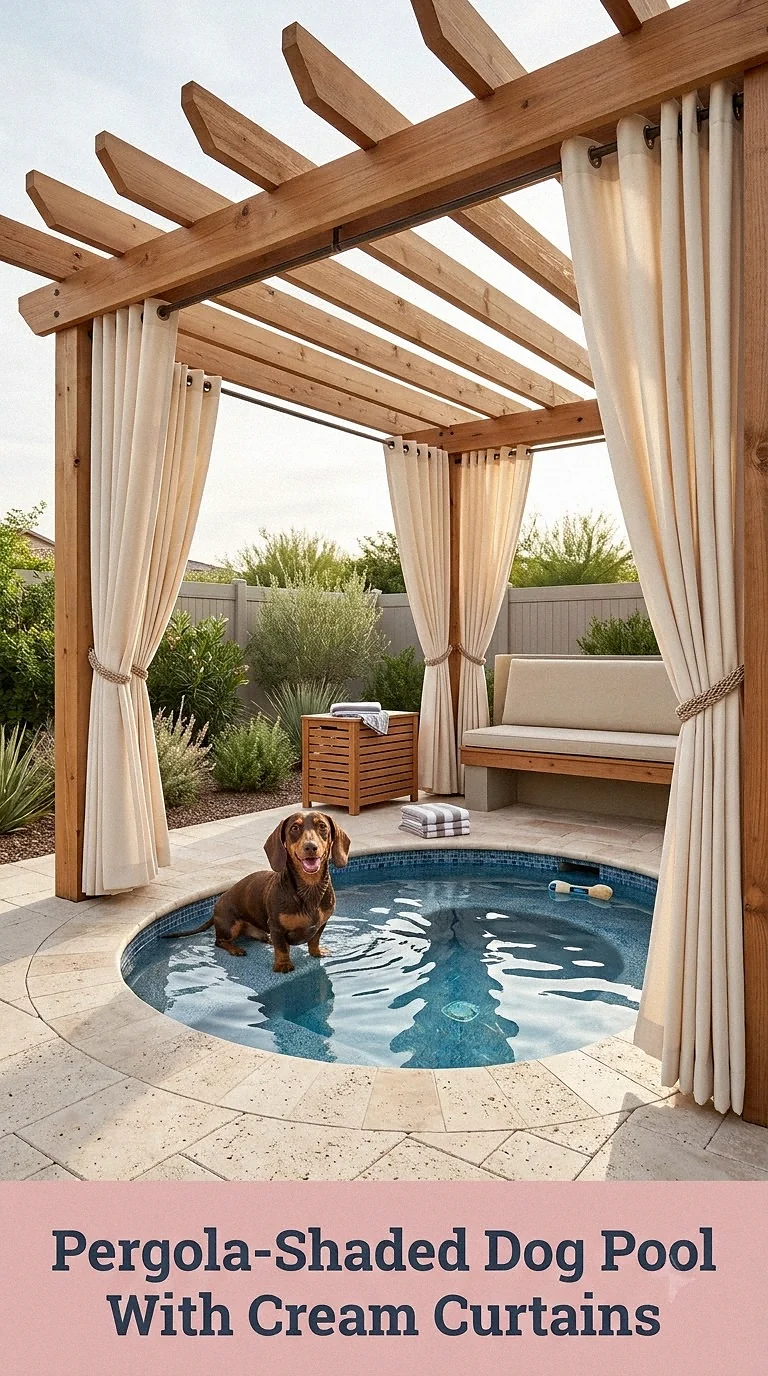
A pergola turns a dog pool into a comfortable outdoor destination for both of you. Imagine filtered light across the water, cream outdoor curtains drawn back at the posts, and a washable bench cushion where you can sit while your dog plays. Set the pool beneath reliable shade, leaving clear space around its edge so you can supervise and help quickly if needed.
Use outdoor fabrics that dry readily, and secure curtains so they cannot blow into the water or tangle around paws. A light-colored, slip-resistant surface underfoot stays visually airy and makes wet spots easier to notice. Add a lidded bin for towels and pool supplies, but store chemicals securely elsewhere according to their labels. Shade makes breaks more pleasant and can help reduce direct sun on the water, yet it does not guarantee cool water. Feel it before your dog gets in, especially on very hot days.
Cottage Garden Pool With Brick Pavers and Safe Planting
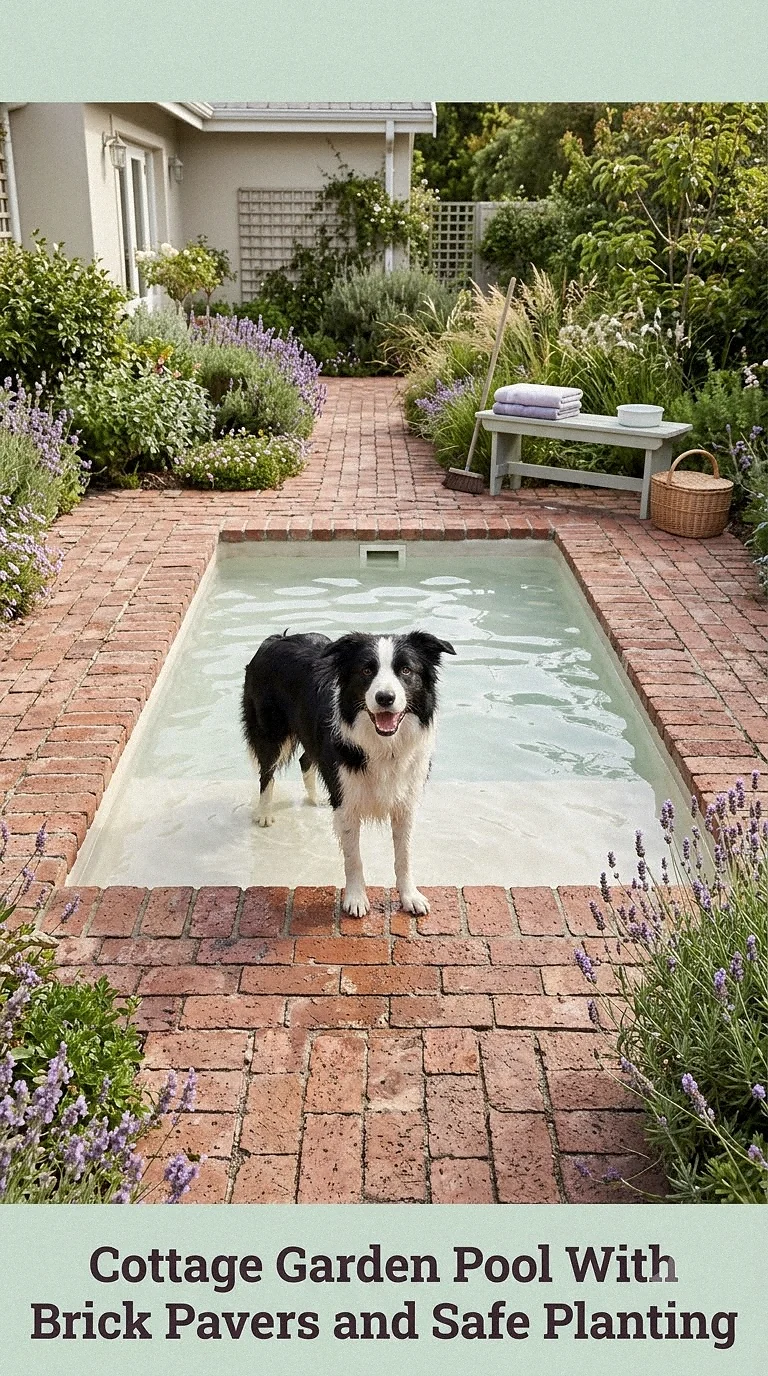
For a softer, storybook feel, set a modest dog pool among weathered brick pavers and layered garden beds. A pale basin or simple stone-colored surround sits comfortably beside lavender-toned blooms, leafy shrubs, and a small bench. The effect is lush without turning the swimming area into an obstacle course.
Choose each plant with dogs in mind rather than assuming a cottage-garden favorite is pet-safe. Keep thorny stems, loose mulch, and plants your dog might chew away from the water’s edge. Brick should offer dependable traction; avoid slick finishes and watch for uneven joints that could catch a paw. A defined path between the door and pool helps keep soil out of the water and muddy prints out of the house. Leave access for sweeping leaves and cleaning the basin, because the prettiest planting scheme quickly becomes frustrating if it crowds the drain or sheds heavily into the pool.
Minimalist Plunge Pool With Textured Concrete Steps
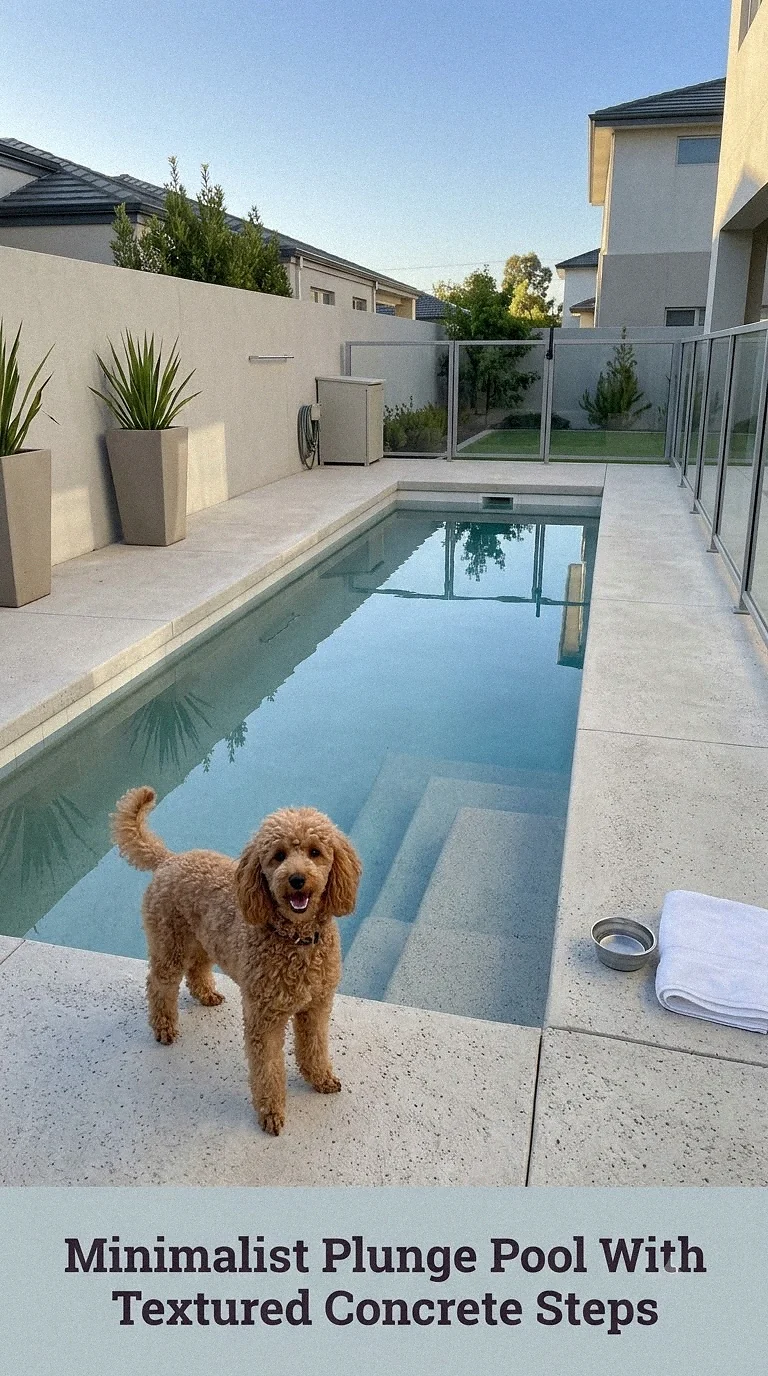
A compact plunge-style pool can look beautifully quiet in a minimalist yard. Think pale textured concrete, a simple rectangular waterline, and just a few architectural planters beyond the splash zone. The restrained palette lets the water provide the movement and color, while a small footprint preserves room for dining or lounging.
With dogs, compact should not mean difficult to leave. Include broad, grippy steps that your dog can reach from the water, and consider an additional ramp if the steps are too steep for their size or mobility. Smooth-looking finishes still need wet-paw traction. For a permanent installation, involve a qualified professional in the structure, drainage, filtration, and barrier design. Keep accessories simple but useful: a concealed hose point, a skimmer, and a place to hang towels will do more for daily enjoyment than decorative clutter. Fence or secure the pool whenever it is not actively supervised.
Above-Ground Pool With a Low Composite Deck
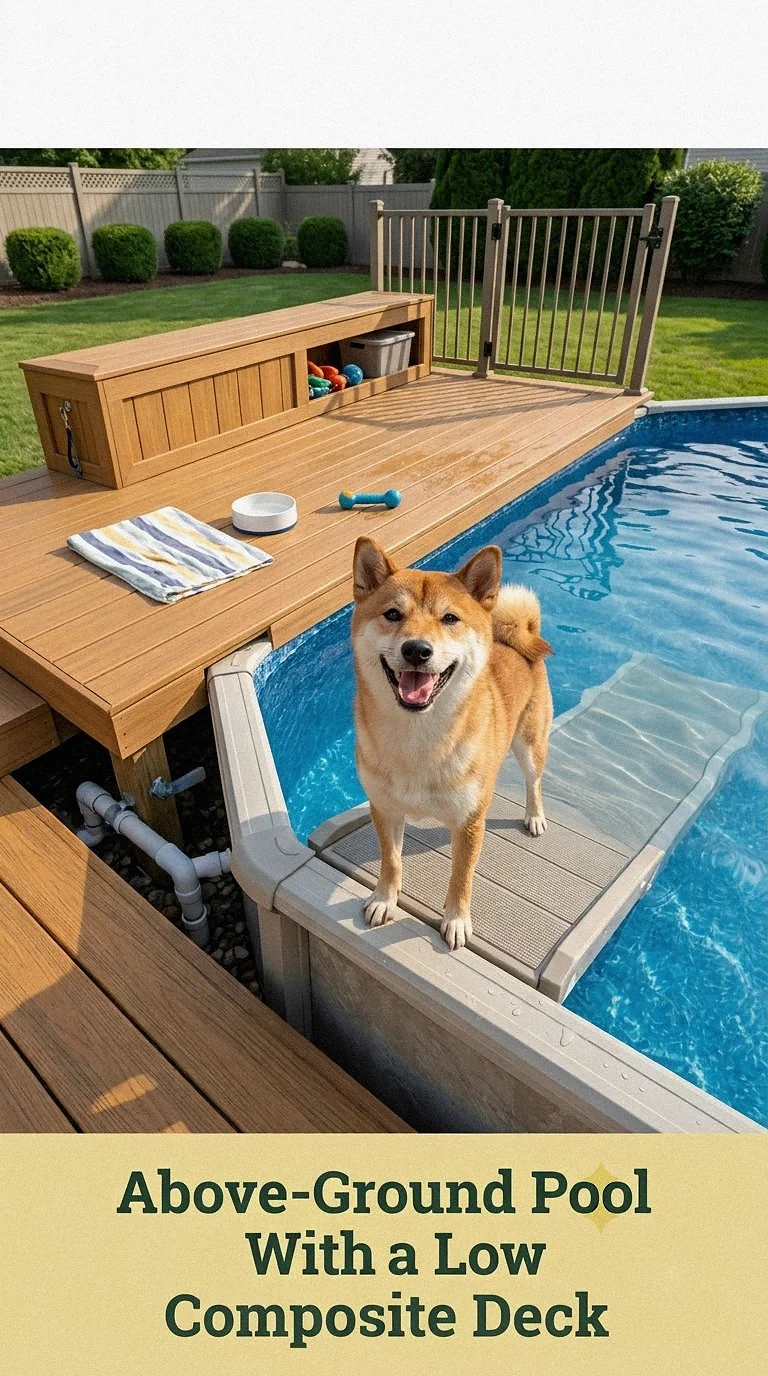
An above-ground pool becomes much easier to integrate into the yard when a low deck meets it on one side. Composite boards in a warm wood tone can give the space a finished look, while a small deck offers a stable place to towel off your dog. Add a bench with enclosed storage for dry toys and a hook for the post-swim leash.
Plan access carefully: a deck that helps a dog get in also needs a reliable way for them to get out. Fit a stable, non-slip ramp or suitable steps inside the pool, and show your dog the exit before play begins. Use slip-resistant decking and leave room to inspect pool walls, plumbing, and the area beneath the platform. An above-ground edge is not a substitute for a proper barrier; keep access controlled when you are not there. Choose the pool’s size and depth for your dog’s abilities, not just the available deck footprint.
Rustic Stone-Edged Wading Pool Beneath a Tree
Read more : 19 Fun Dog Backyard Ideas For A Playful And Beautiful Outdoor Space
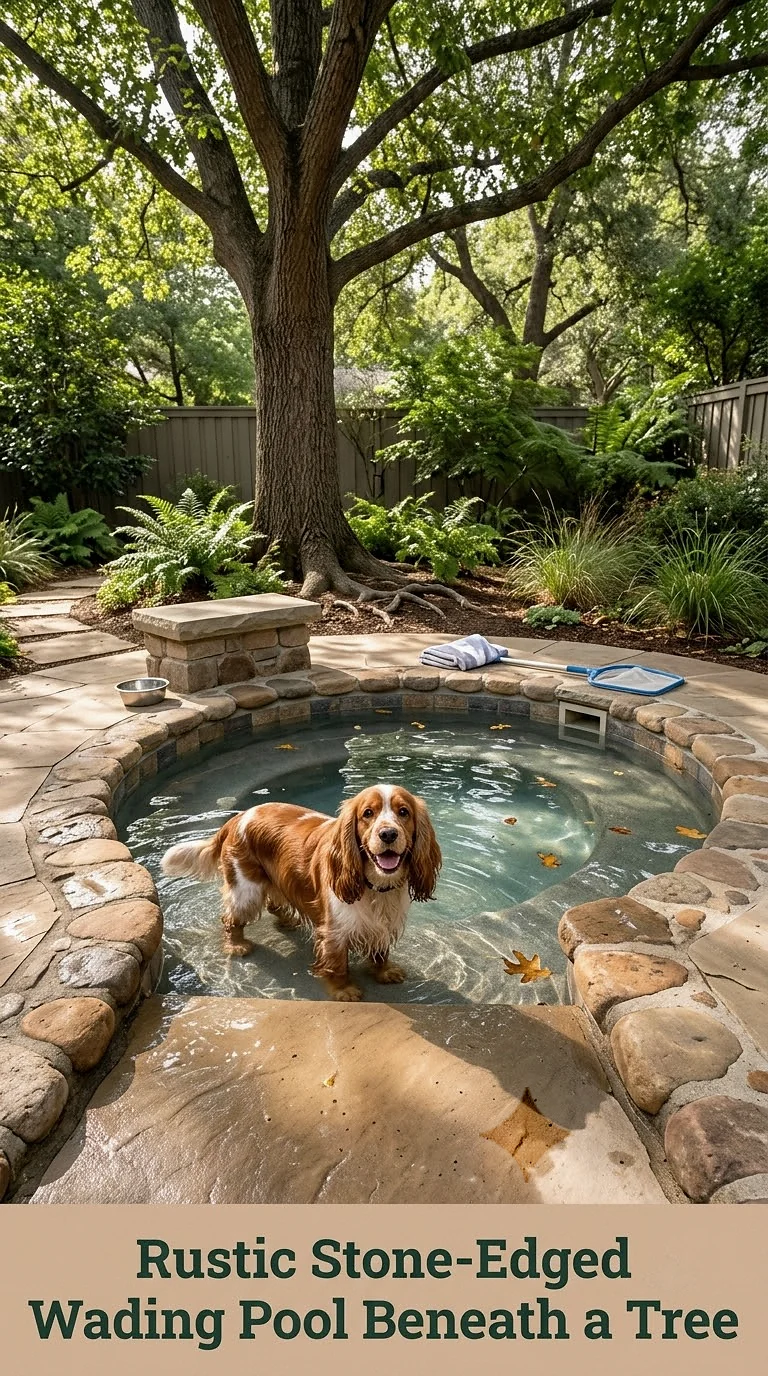
A shallow, stone-edged pool can feel as though it belongs to the landscape. Set it beneath open, dappled shade, with rounded-looking stonework, natural-toned paving, and a clear path through the garden. It is especially appealing for a dog who likes to stand, paddle, and cool off rather than swim laps.
Keep the actual entry smooth and stable: decorative rocks should not create a slippery scramble or hide gaps where a paw could catch. A permanent masonry pool calls for sound construction, a manageable way to empty or circulate the water, and surfaces you can scrub. Trees provide welcome shade but also drop leaves and debris, so expect frequent skimming. Avoid placing the pool directly over roots or where excavation could harm a tree. With enough clear deck space to sit beside your dog, the result can feel wonderfully natural without sacrificing visibility or easy cleaning.
Dog Pool and Outdoor Rinse Station With Matching Tile
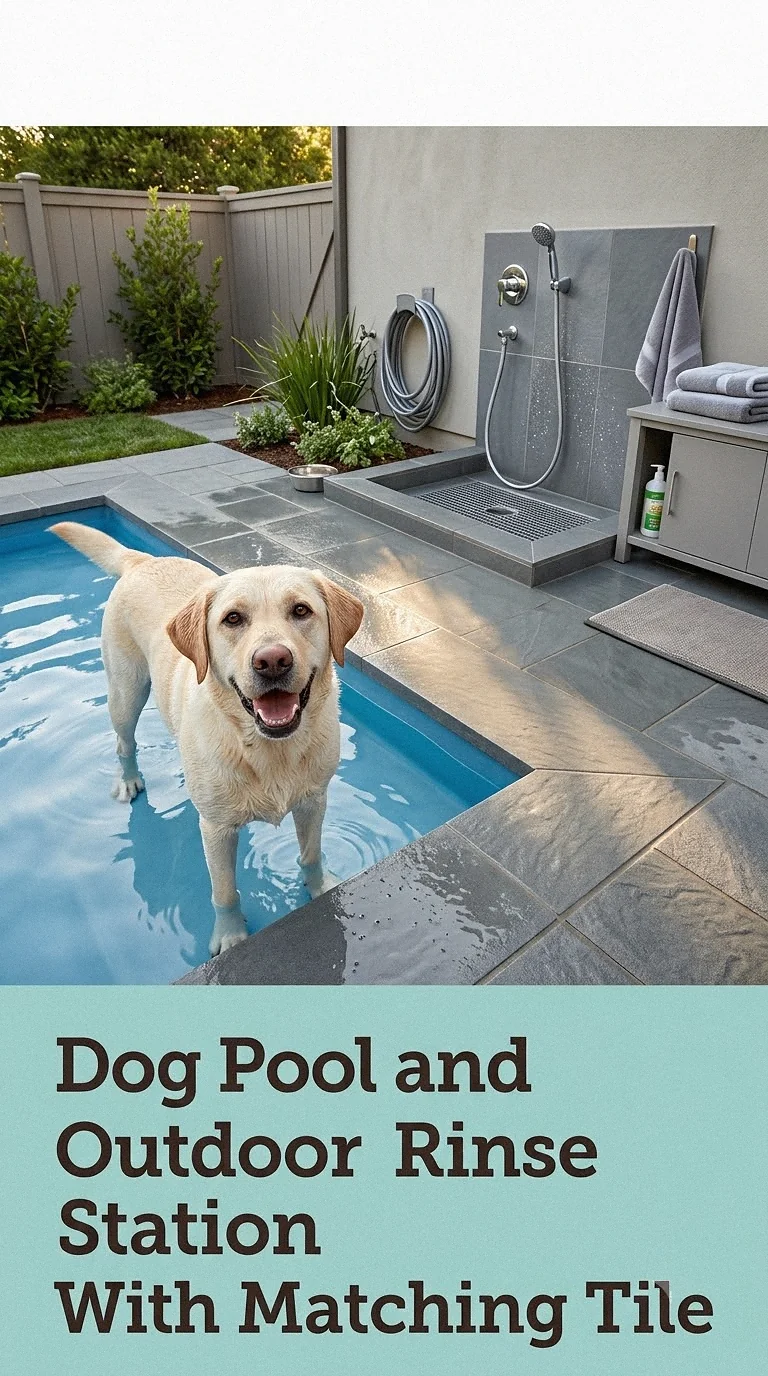
If your dog comes home sandy, muddy, or covered in garden dust, place a pool beside a dedicated rinse station. Matching non-slip tile or textured pavers visually connect the two zones, while a handheld sprayer, a simple towel hook, and a drainable standing area make the routine feel effortless. The pool is for play; the rinse station handles cleanup before your dog heads indoors.
Choose a sprayer with a gentle flow and check the water temperature before using it. Position the hose where it will not trail across the walking route, and plan drainage so rinse water does not run straight into the pool. A small waterproof cabinet can hold shampoo and grooming supplies out of your dog’s reach. After swimming, a fresh-water rinse may be useful, particularly after time in a treated pool; dry your dog comfortably, paying attention to areas that stay damp. This practical pairing helps protect both your floors and the pool water.
Colorful Dog Play Yard With a Pool and Toy Station
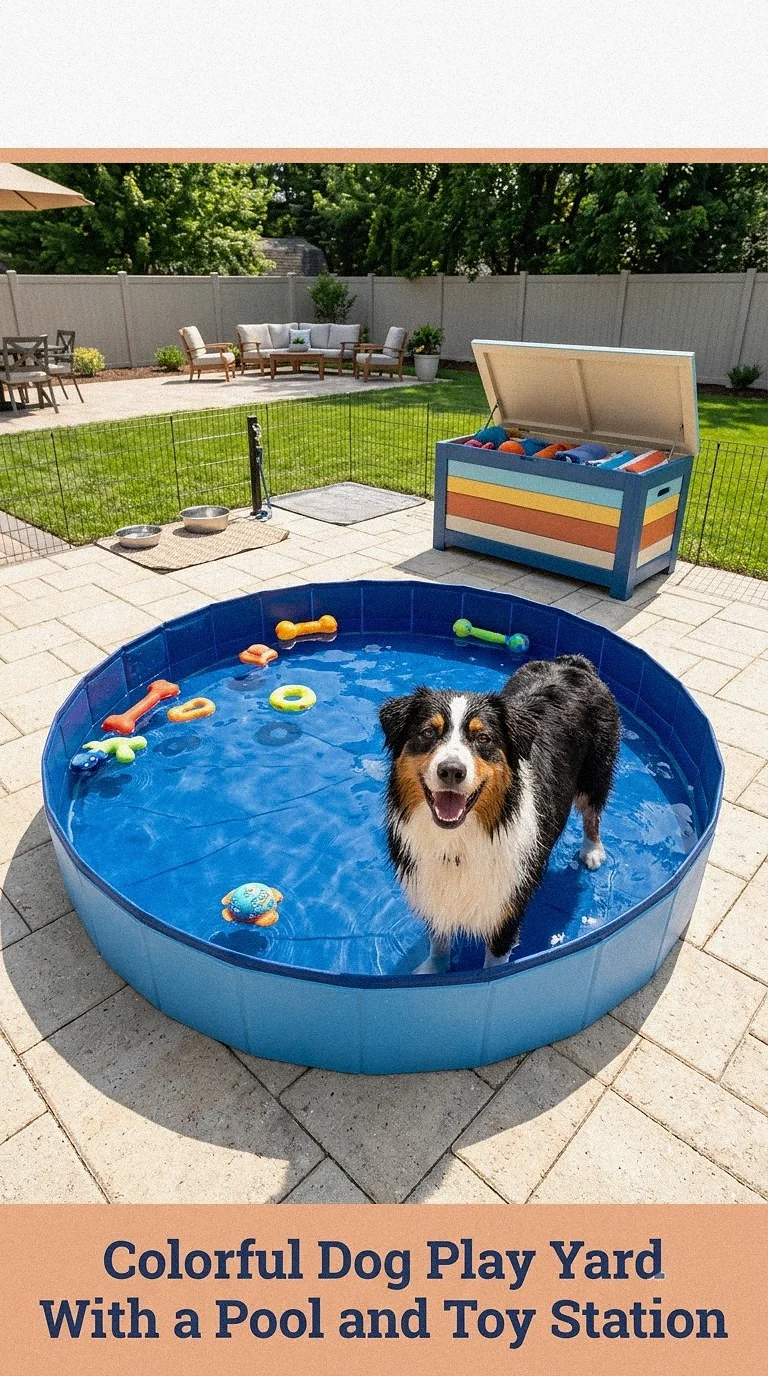
For a dog who treats water time as playtime, give the pool its own lively corner of the yard. A sturdy blue basin, a few bright floating toys, and a painted weatherproof storage box create a cheerful scene without requiring elaborate equipment. Keep the palette focused—perhaps blue, terracotta, and cream—so the play zone still feels at home beside your patio furniture.
Place the toy station several steps from the water to leave an uncluttered route around the pool. Choose toys designed to float and inspect them for damage before each session. Gentle retrieves from the shallow end can be fun, but avoid repeatedly throwing toys so far that your dog becomes exhausted. Store toys dry after washing them, and swap out anything that traps water or starts to deteriorate. If multiple dogs use the space, give each enough room and watch their interactions closely around the pool’s entry and exit.
Slim Side-Yard Pool With Stepping-Stone Access
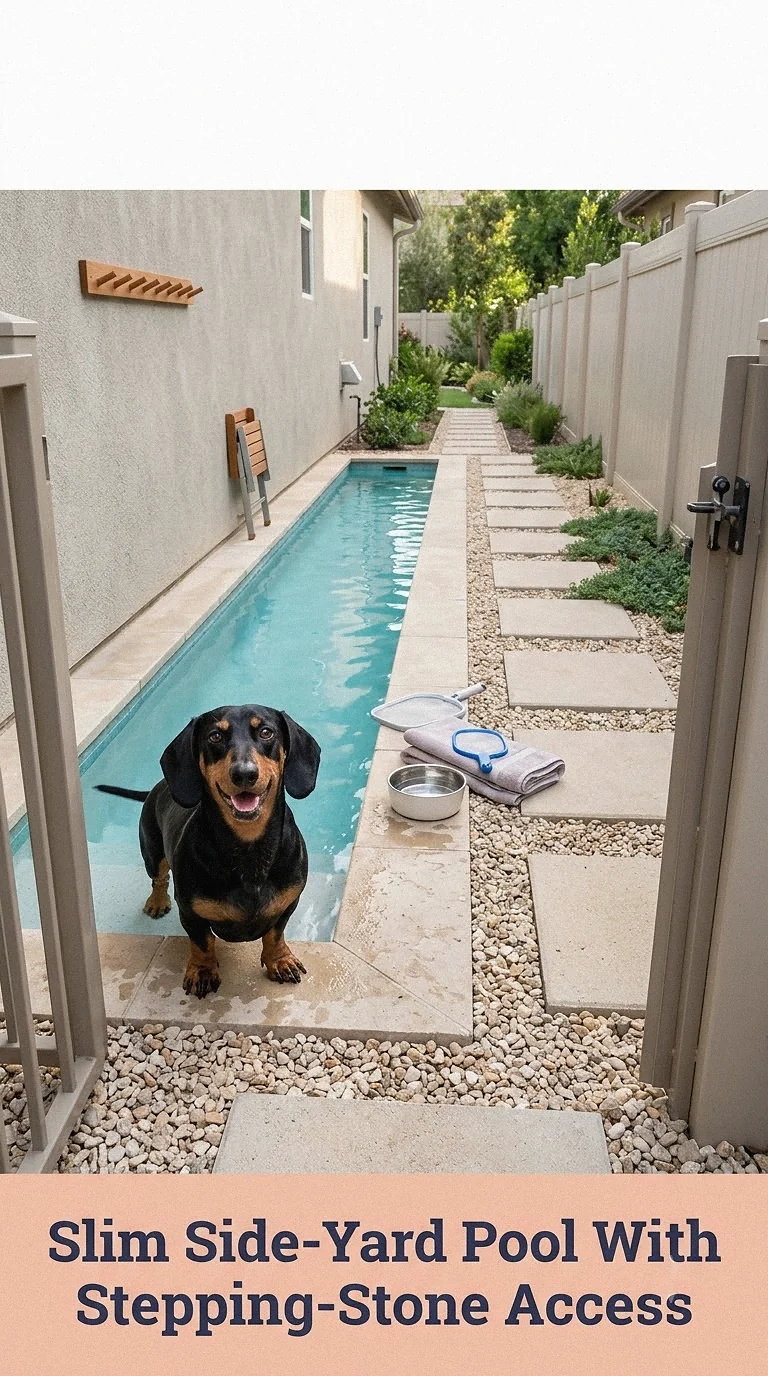
A side yard can become a useful little water retreat instead of a forgotten passage. Choose a narrow, shallow pool that leaves a comfortable walking route, then lead to it with large, stable stepping stones set into gravel or low-maintenance groundcover. A wall-mounted towel hook and a folding seat add function without taking up precious floor space.
Measure the route before buying a pool: you need space to supervise, clean, drain, and move around your dog, not just enough room for the basin itself. Avoid placing the pool beneath a dryer vent or where runoff will head toward the house. Side yards may get uneven sun and poor airflow, so check water temperature and empty a small unfiltered pool promptly after use. A simple gate can control access when the area is unattended, provided it latches securely and suits your dog’s jumping or climbing habits.
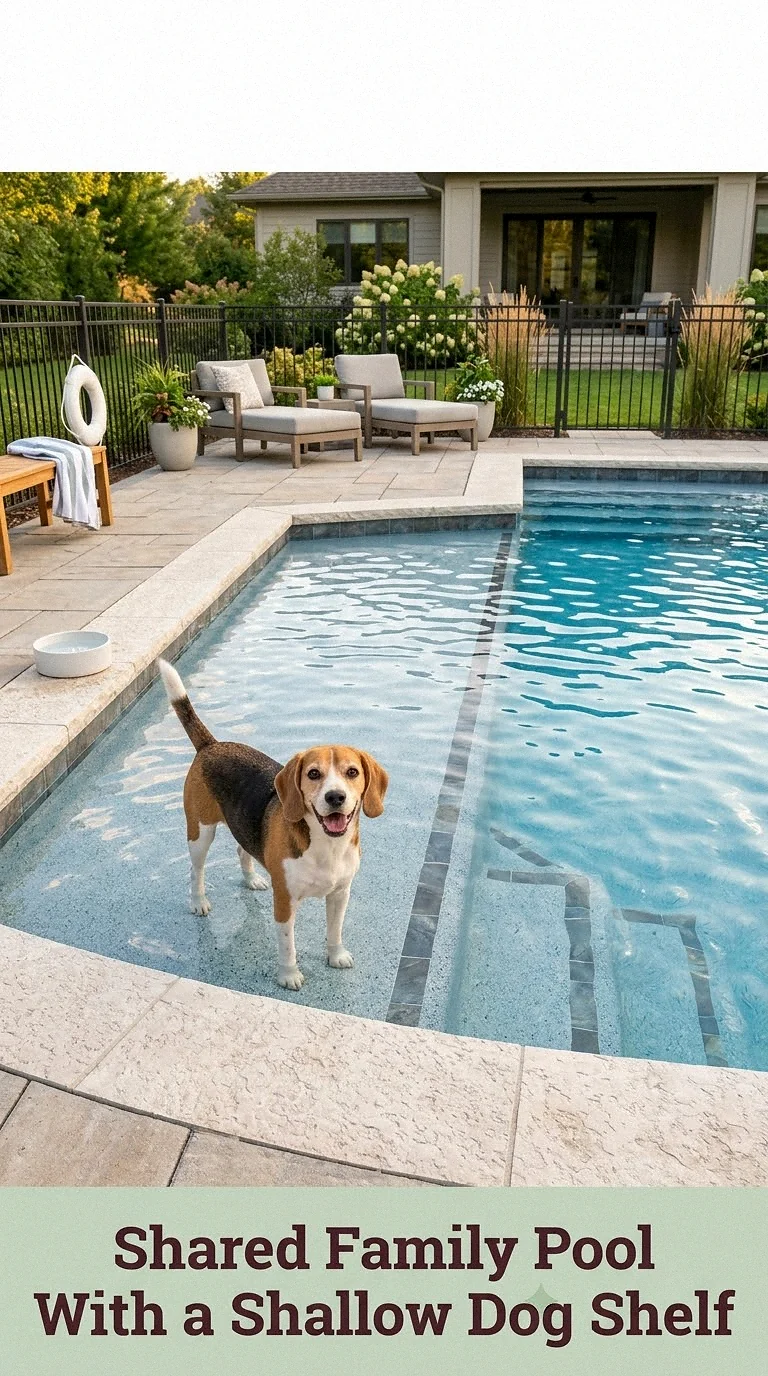
In a household where people and pets already enjoy the pool, a broad shallow shelf can give your dog a clear place to enter and pause. Carry the poolside design through with textured coping, comfortable seating set back from the edge, and a contrasting detail that makes the steps easy to spot. The result feels cohesive rather than like a separate pet feature added afterward.
Introduce your dog to the shelf and the main exit calmly before expecting them to swim. A shelf is a resting point, not a guarantee that every dog can stand safely on it at every water level. Maintain the pool’s sanitizer and water balance according to professional guidance; saltwater pools still require proper maintenance and are not automatically safer to drink. Keep fresh drinking water nearby, discourage your dog from drinking pool water, and check the filter more often during heavy shedding seasons. Secure the pool area between supervised swims.
Shaded Senior-Dog Wading Pool With a Gentle Ramp
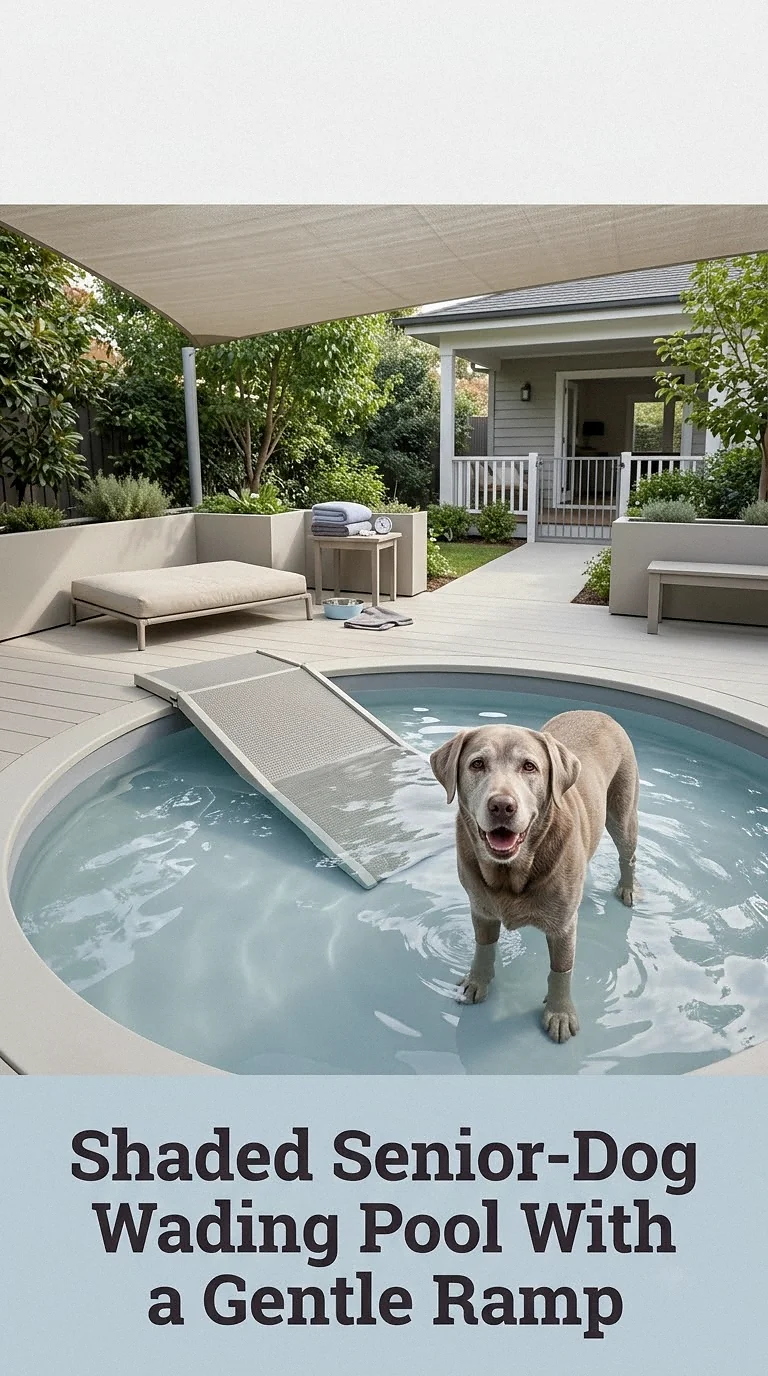
A quieter pool corner can make water time more inviting for an older dog or one who is less steady on their feet. Choose a shallow basin with room to turn, add a firmly secured ramp with a grippy surface, and place the setup close to a shaded resting spot. Soft neutral colors, a washable outdoor bed, and a small table for towels create a calm space that feels caring rather than clinical.
Keep sessions short and let your dog set the pace; standing comfortably in cool water may be all they want. Check that the ramp does not shift under their weight and that wet paws can grip both the ramp and surrounding surface. If your dog has pain, mobility limitations, or a medical condition, ask your veterinarian what kind of water activity is appropriate before making it part of a routine. Dry off thoroughly afterward and offer an easy, obstacle-free path back indoors.
The loveliest dog pool is the one your pet can enjoy comfortably and you can realistically maintain. Start with their confidence in water, then choose a size, entry, shade, and cleaning routine that suit your home. Whether that means a foldable patio pool or a permanent backyard feature, a safe exit, close supervision, and a cozy place to dry off will make every splash feel a little more special.
Source: https://petstutorial.com
Category: DOGS
