
Living with a big dog often means making a few thoughtful adjustments around the house. Oversized beds take up more floor space, sturdy storage becomes essential, and opening the back door every time your pup wants to explore the yard can quickly become part of your daily routine. A well-designed dog door can make that routine much easier while still looking like it belongs in a beautiful home.
The best large dog door ideas go far beyond a basic plastic flap cut into a back door. Today’s options can be integrated into walls, mudrooms, patio doors, covered porches, cabinetry, or even small architectural extensions. You can choose designs that complement farmhouse interiors, clean modern homes, cozy cottages, or polished contemporary spaces.
You are reading: 19 Large Dog Door Ideas That Blend Comfort, Style, And Everyday Convenience
Function matters just as much as appearance. Large dogs need enough width and height to pass through naturally without squeezing, ducking excessively, or stepping over an unnecessarily tall threshold. Weather protection, locking features, durable materials, and safe access to a securely enclosed outdoor area also deserve careful consideration.
Whether you are renovating your home, tackling a weekend DIY project, or simply gathering inspiration for a future upgrade, these ideas show how a large dog door can feel intentional, attractive, and wonderfully practical.
Large Dog Door Ideas For Stylish And Practical Homes
Modern Matte Black Wall-Entry Dog Door With Warm Wood Trim
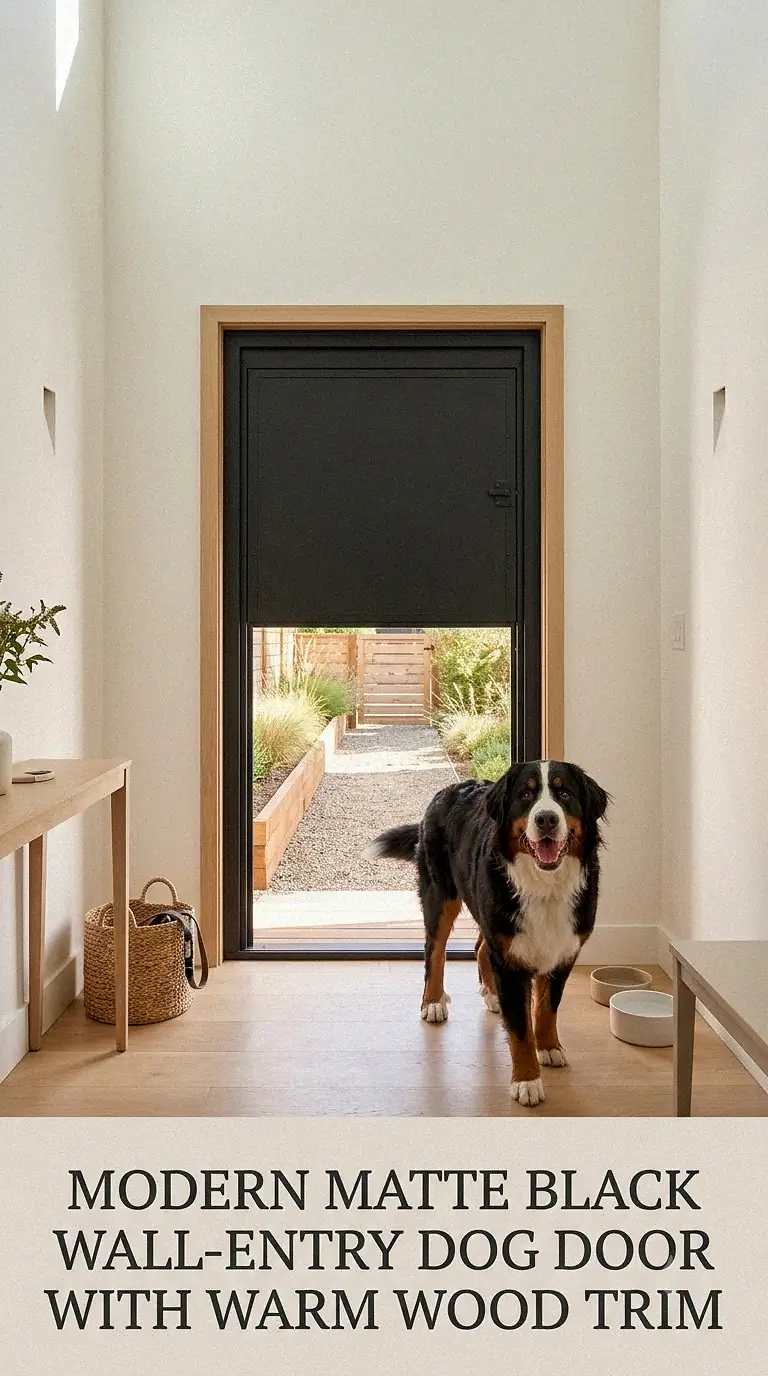
A through-the-wall dog door can look surprisingly polished when you treat it like an architectural detail rather than an afterthought. Pair a matte black frame with warm oak or walnut trim to create a modern contrast that works beautifully in neutral interiors.
This setup is especially helpful when your exterior doors are made from expensive glass, decorative panels, or materials you would rather not cut. A wall installation also gives you more freedom to choose the exact location and height that works for your dog.
Keep the surrounding area simple with a washable runner, small hook rail for leashes, and perhaps a basket for towels. The outdoor side can open onto a fenced patio or secure dog run.
Wall installations are more involved than door-mounted versions because electrical wiring, plumbing, framing, insulation, and exterior waterproofing may be hidden inside the wall. When those elements are uncertain, professional installation is worth considering.
Bright White Mudroom Dog Door With Built-In Bench Storage
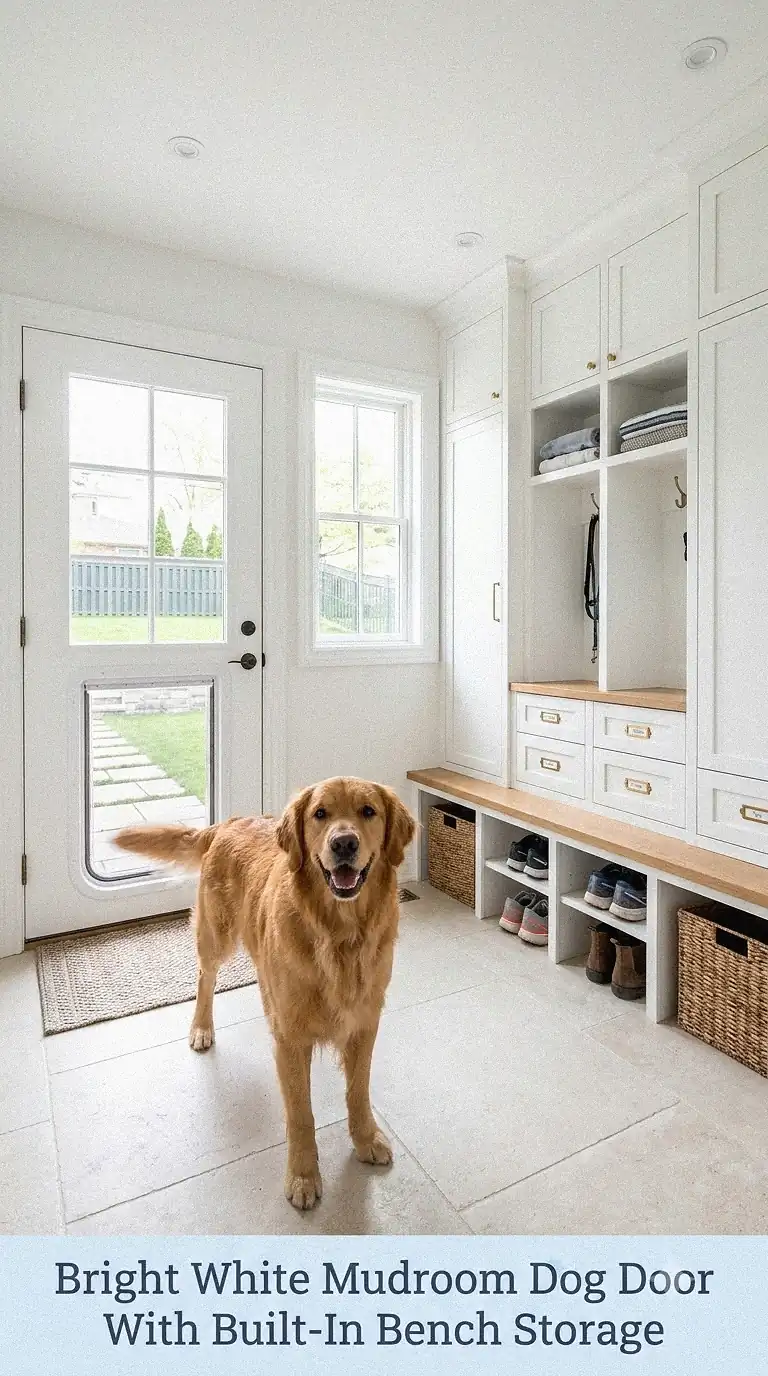
A mudroom is one of the most practical places to add a large dog door because muddy paws, wet coats, leashes, and outdoor gear are already concentrated in one hardworking space.
Create a cheerful setup with white cabinetry, pale wood flooring, a built-in bench, and an oversized dog door positioned beneath or beside a window. Add deep drawers under the bench for towels, grooming supplies, toys, and spare collars.
A washable indoor mat directly inside the opening helps catch water and dirt before your dog walks farther into the house. Outdoors, consider a covered landing with a textured, slip-resistant surface.
This arrangement works particularly well for active families because the transition from yard to home becomes its own miniature cleaning station rather than sending your dog directly into the kitchen or living room.
Weatherproof Double-Flap Dog Door For Cold Or Windy Homes
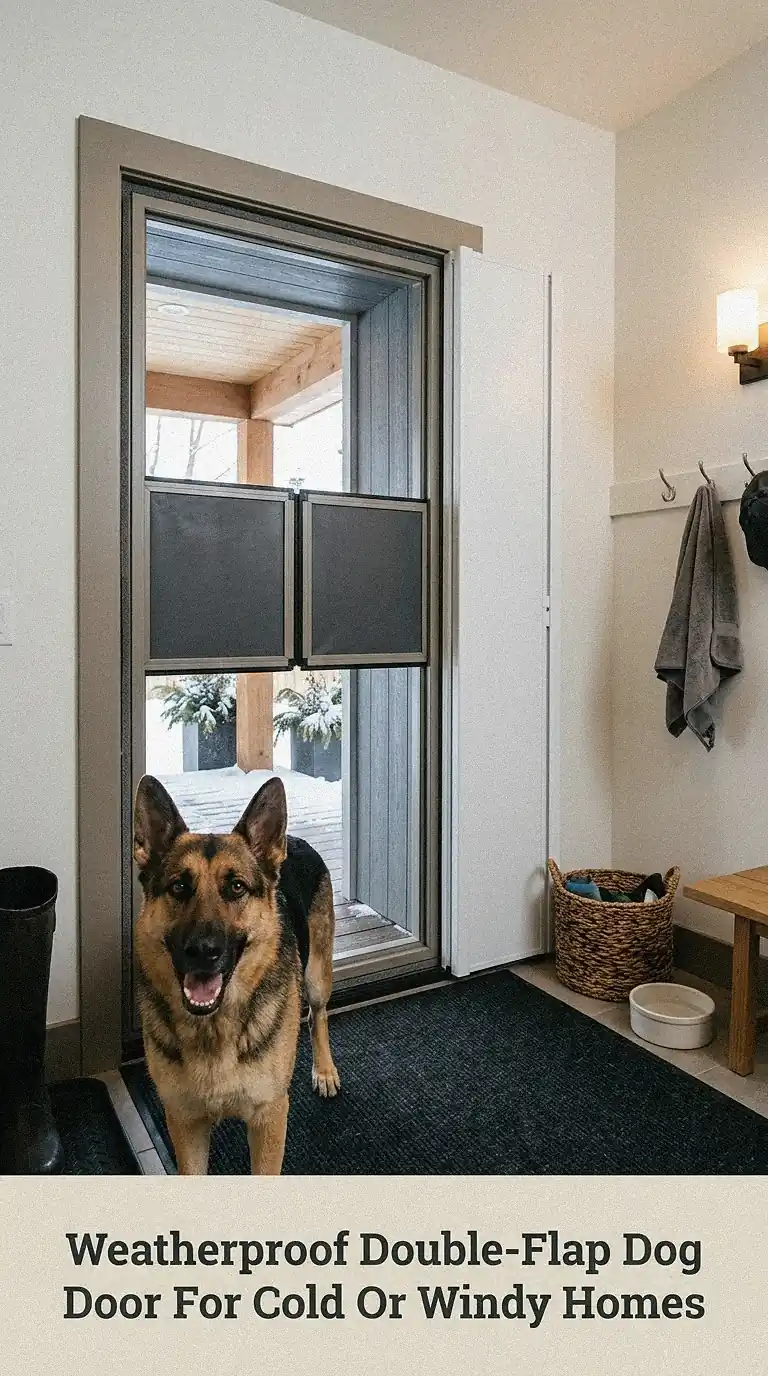
A large opening can allow more outdoor air into the house, so homes in cold, windy, or highly variable climates benefit from a more insulated design.
A double-flap system creates an additional air space between indoors and outdoors and can reduce the drafty feeling associated with a simple single flap. Pair it with magnetic seals, good weatherstripping, exterior-grade caulk, and a secure locking panel.
Visually, the dog door can still feel elegant. Choose a frame that coordinates with your existing door hardware, such as black, brushed metal, or white.
Place a narrow washable rug indoors and keep the exterior approach protected from direct rain whenever possible. A small awning or covered porch makes the entrance more comfortable for your dog while also reducing the amount of weather hitting the flap.
Smart Electronic Large Dog Door With Controlled Access
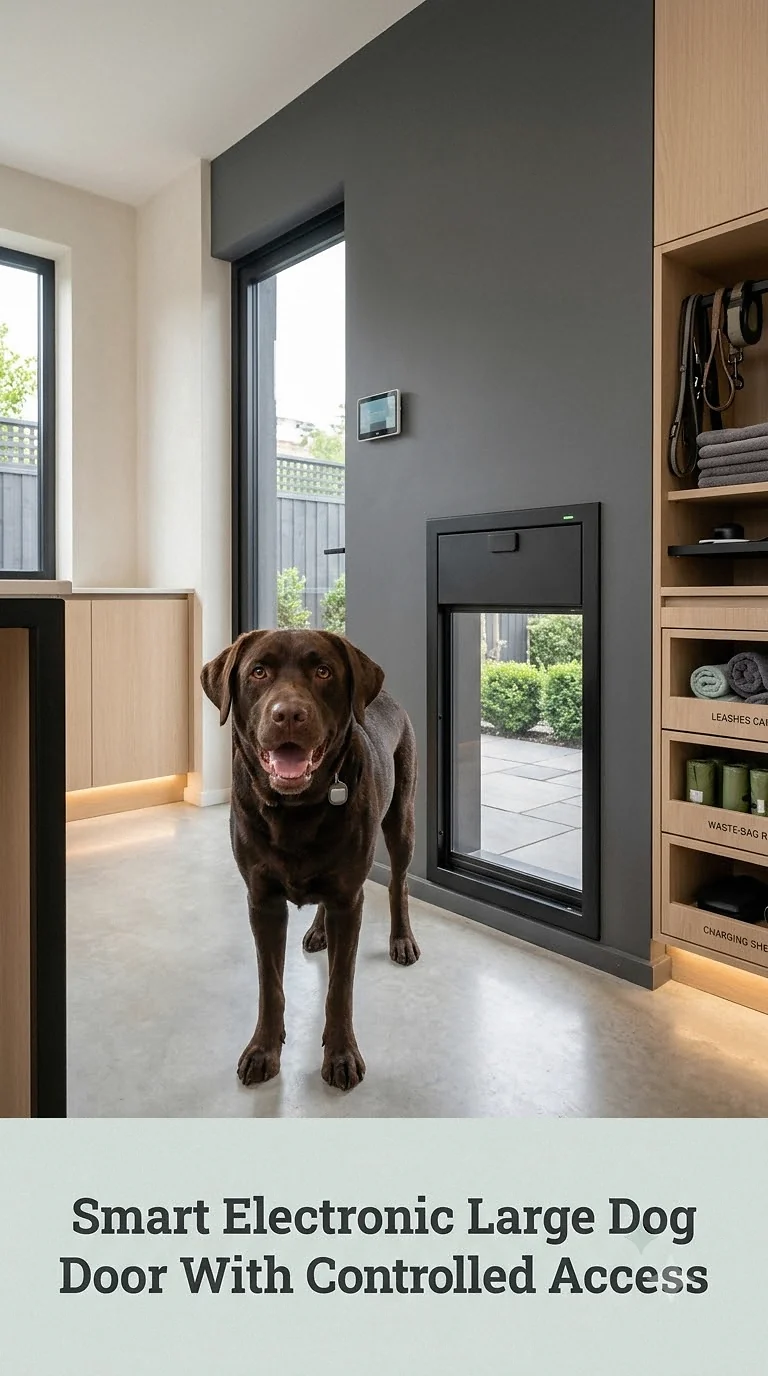
For a more high-tech solution, consider an electronic dog door that responds to a compatible collar key or microchip system.
Instead of leaving the entrance freely accessible all day, selected systems can control which pets are allowed through and when. Some connected models can also provide usage notifications or scheduled access.
This can be particularly attractive in homes where the opening required for a large dog is substantial. Pair the technology with a clean wall installation, white trim, discreet wiring or battery access, and a nearby charging or smart-home station if appropriate.
Electronic access does not replace basic home security, but it can add another layer of control compared with an unrestricted flap.
Always choose a model specifically rated for the size of your dog and confirm that the opening itself, not simply the manufacturer’s weight category, provides comfortable clearance.
Sliding Glass Patio Door Insert For Renters And Flexible Homes
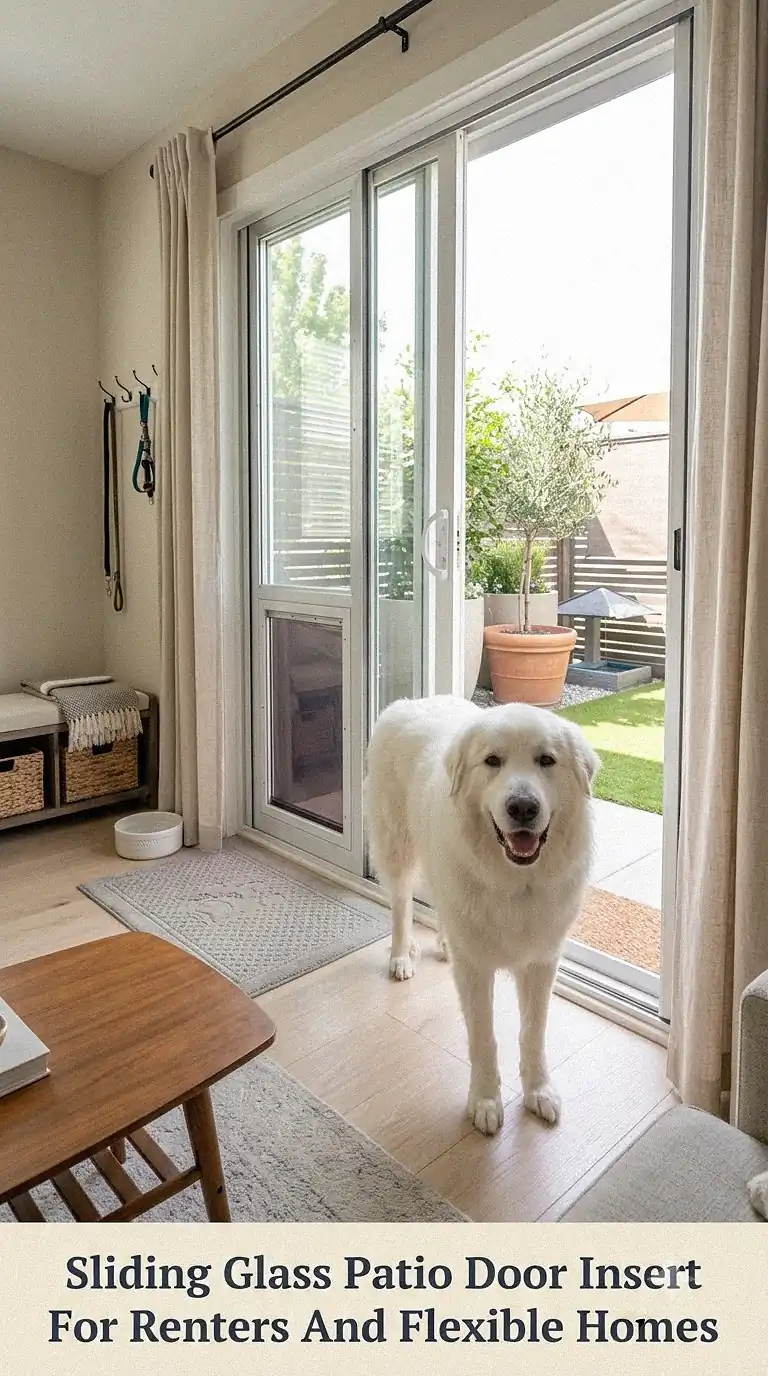
If cutting into a wall or exterior door is not appealing, a patio-door insert offers a more flexible option.
These tall vertical panels fit into the track of certain sliding glass doors and include a pet opening near the bottom. For large dogs, look for versions with appropriately tall and wide openings rather than relying solely on labels such as “large” or “extra large.”
The biggest advantage is flexibility. The system may be easier to remove or replace later than a permanent wall opening, making it especially appealing for renters or homeowners who expect to remodel.
Style the area with outdoor curtains, large planters, a washable indoor rug, and coordinated patio furniture so the pet entrance becomes part of the overall room rather than a visual interruption.
Check the resulting human doorway width too, since the insert will occupy part of the sliding-door opening.
Rustic Farmhouse Dog Door With Natural Wood And Black Hardware
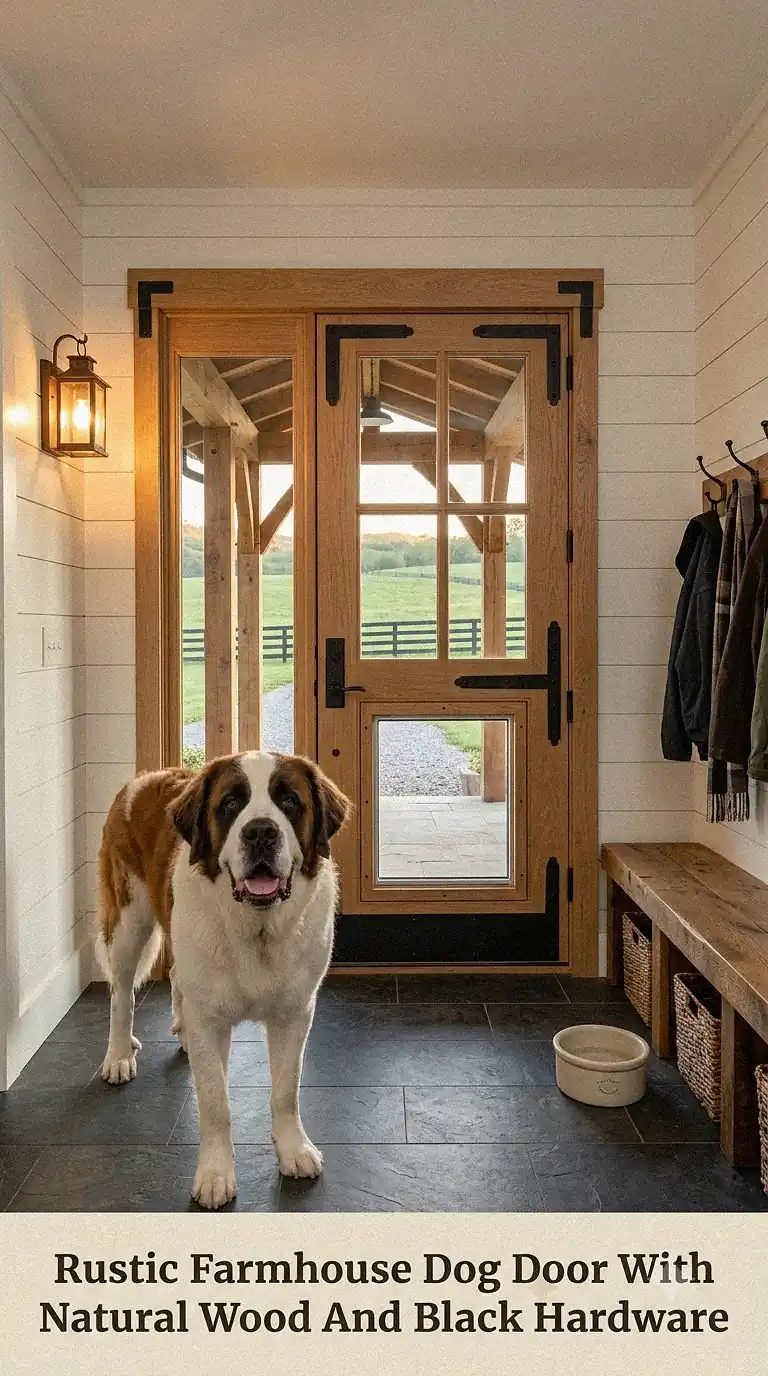
A dog door can fit beautifully into farmhouse interiors when the surrounding materials feel deliberate.
Imagine a cream or muted sage back door with a substantial pet opening framed in natural wood. Add black hinges, a black lever handle, woven baskets, vintage-style hooks, and a striped washable runner.
For a more cohesive look, repeat the same wood tone on a nearby bench or floating shelf. A small wooden sign or framed dog portrait can give the area personality without making it overly themed.
Choose durable finishes rather than delicate raw wood around the actual opening because muddy paws, moisture, and repeated contact will quickly test the surface.
Outside, continue the farmhouse look with gravel, brick, or stone pavers leading toward a secure fenced section of the yard.
Hidden Dog Door Tunnel Inside Built-In Cabinetry
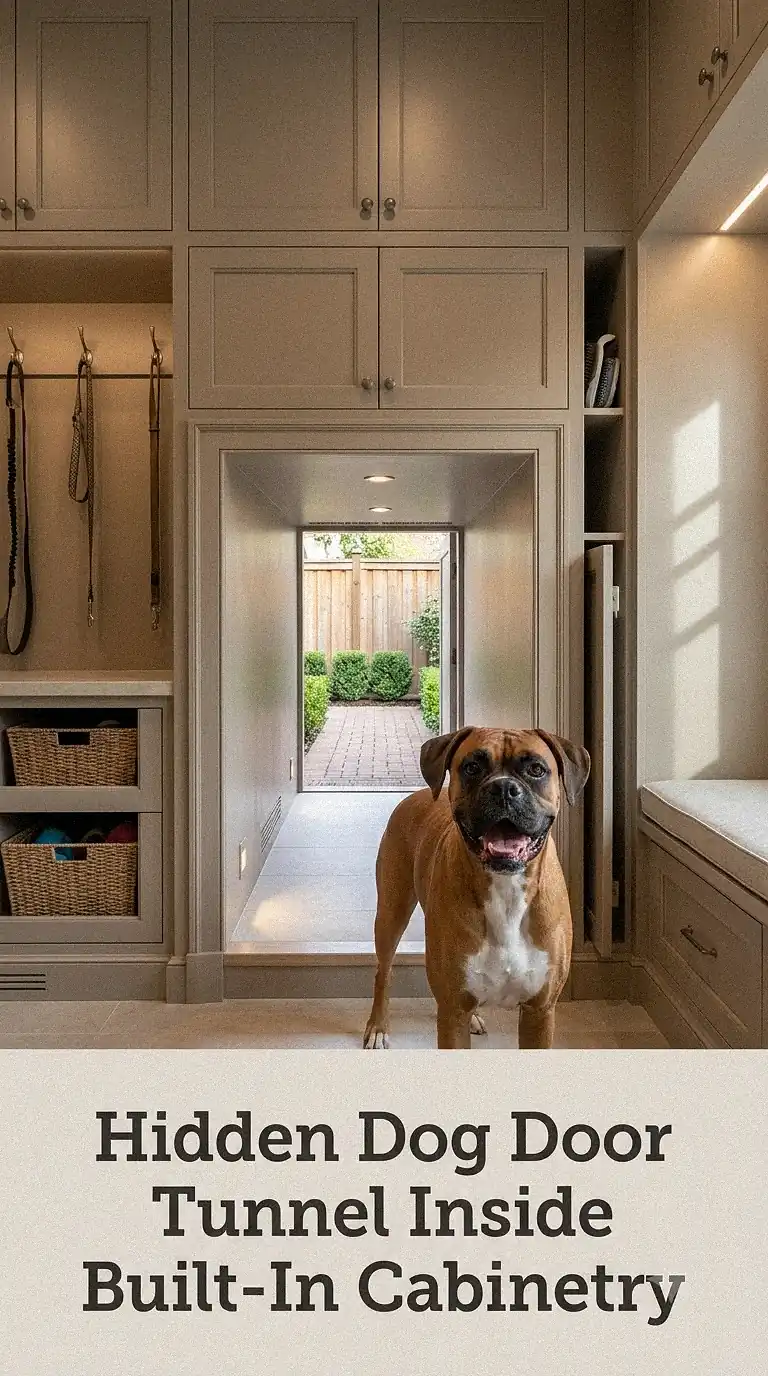
For homeowners who dislike the appearance of a traditional pet flap, cabinetry offers a clever way to disguise the entrance.
A lower cabinet can conceal a short passage that connects to a wall-mounted dog door. From inside the room, the opening appears integrated into the millwork rather than floating awkwardly on an empty wall.
This concept works especially well in large kitchens, utility rooms, and mudrooms where cabinetry already lines an exterior wall. Paint the cabinet exterior to match the room and protect the interior tunnel with durable washable panels.
Read more : 18 Dog Pampering Ideas For A Happier, Cozier Pup
The passage needs to be generous enough for your dog to move comfortably without turning awkwardly or rubbing against sharp corners.
A removable access panel can also make cleaning much easier, especially for long-haired dogs that carry leaves, dust, and moisture indoors.
Covered Porch Dog Door With A Dry Paw Landing
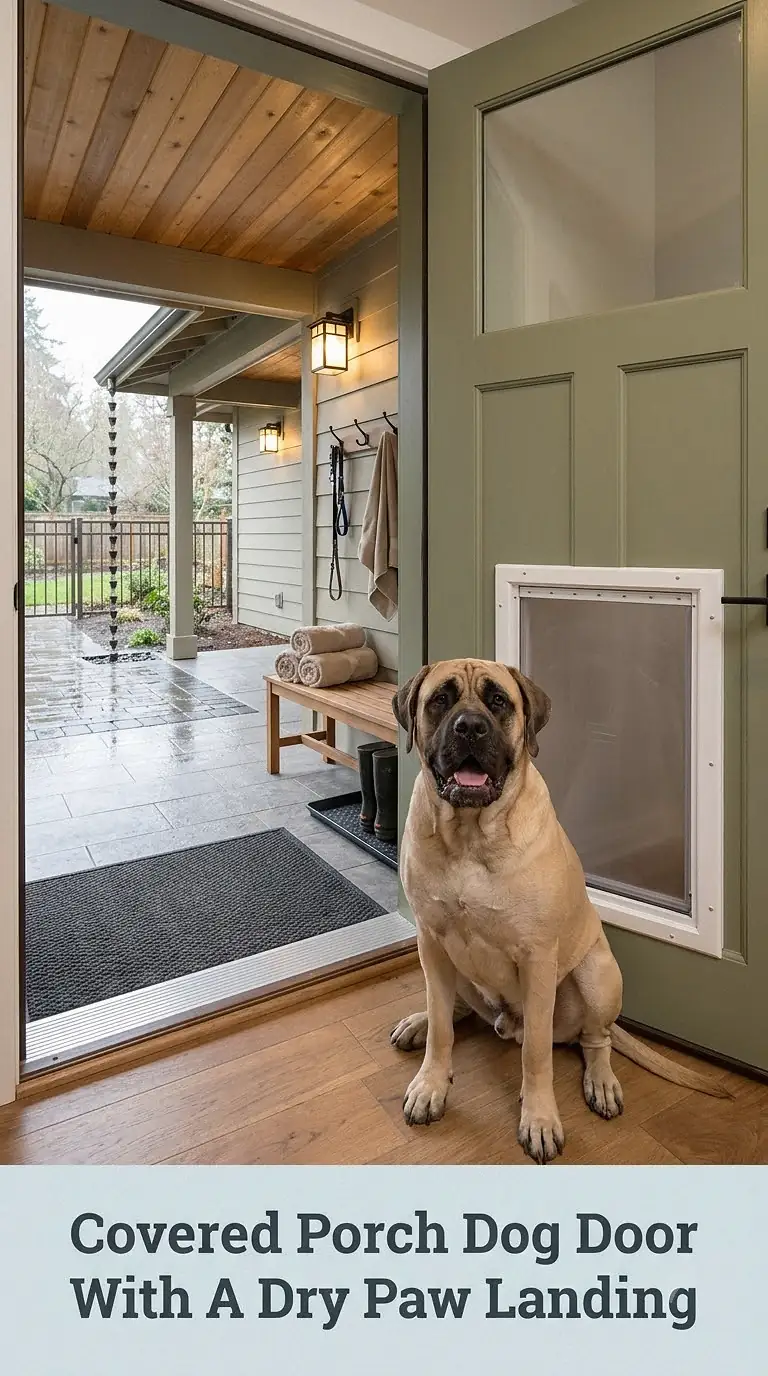
If your dog loves the backyard but frequently comes inside wet, creating a covered transition zone can make a major difference.
Position the large dog door beneath a roofed porch, then add a generous landing area with outdoor tile, sealed concrete, or textured decking. Place a washable mat outside and another just inside the door.
The covered area helps protect the flap from direct rain while giving your dog somewhere sheltered to pause before entering.
For a cozy look, decorate the porch with oversized planters, warm outdoor lighting, a storage bench, and a neutral outdoor rug positioned away from the immediate muddy-paw route.
This idea is particularly useful in rainy climates where simply adding a dog door without considering drainage can create a surprisingly messy interior.
Low-Threshold Dog Door For Senior Large Dogs
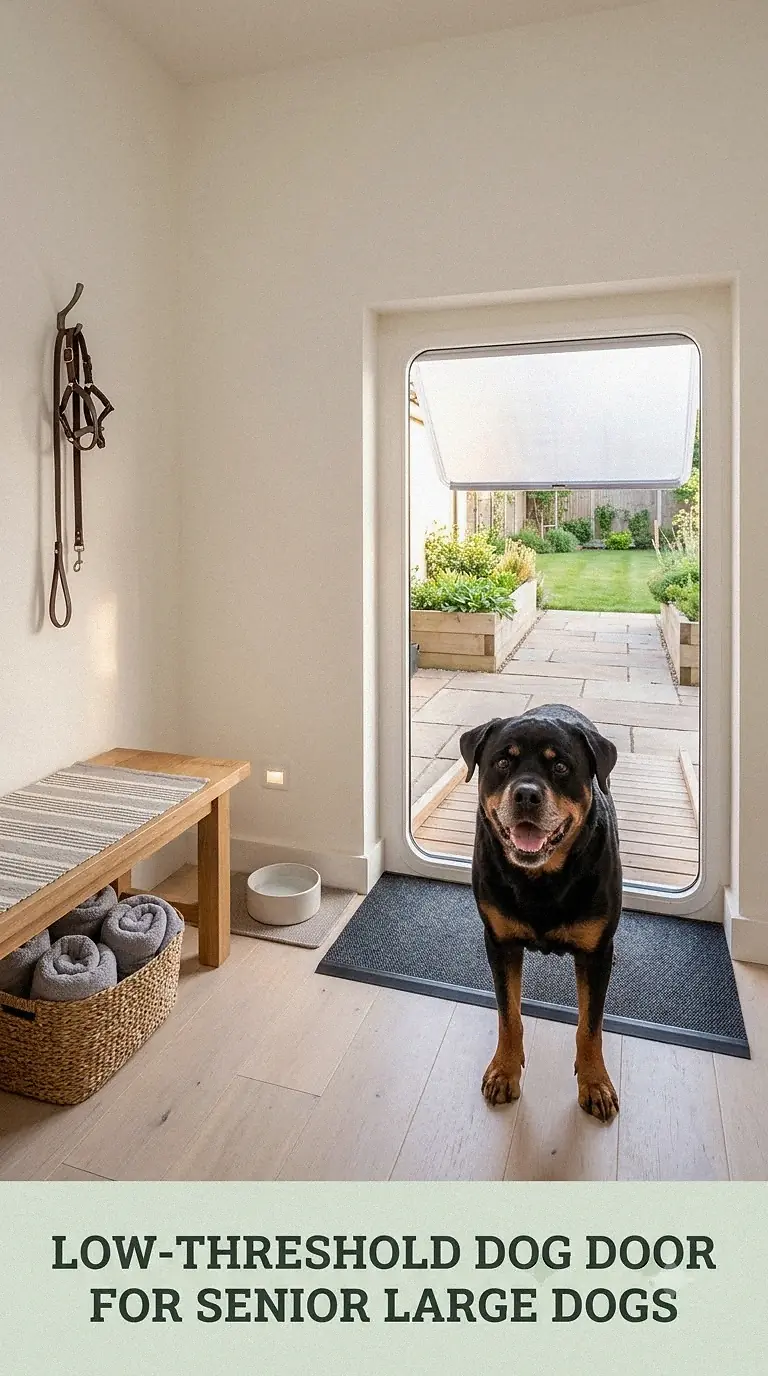
Older large dogs may find high step-over thresholds increasingly uncomfortable, even if the opening itself is wide enough.
A thoughtfully positioned dog door should allow your dog to move through naturally without lifting their legs higher than necessary. This becomes especially important for senior dogs or pets with reduced mobility.
Choose an installation location where the floor levels inside and outside are reasonably close. If the exterior ground is lower, add a broad, stable platform or gently sloped approach rather than a narrow step.
Keep surfaces slip resistant and avoid slick polished tiles immediately around the opening.
A soft neutral palette with warm flooring, simple trim, and a padded resting spot nearby can turn the area into a comfortable everyday transition rather than an obstacle your older dog hesitates to use.
Extra-Wide Dog Door For Giant Breeds With Spacious Clearance
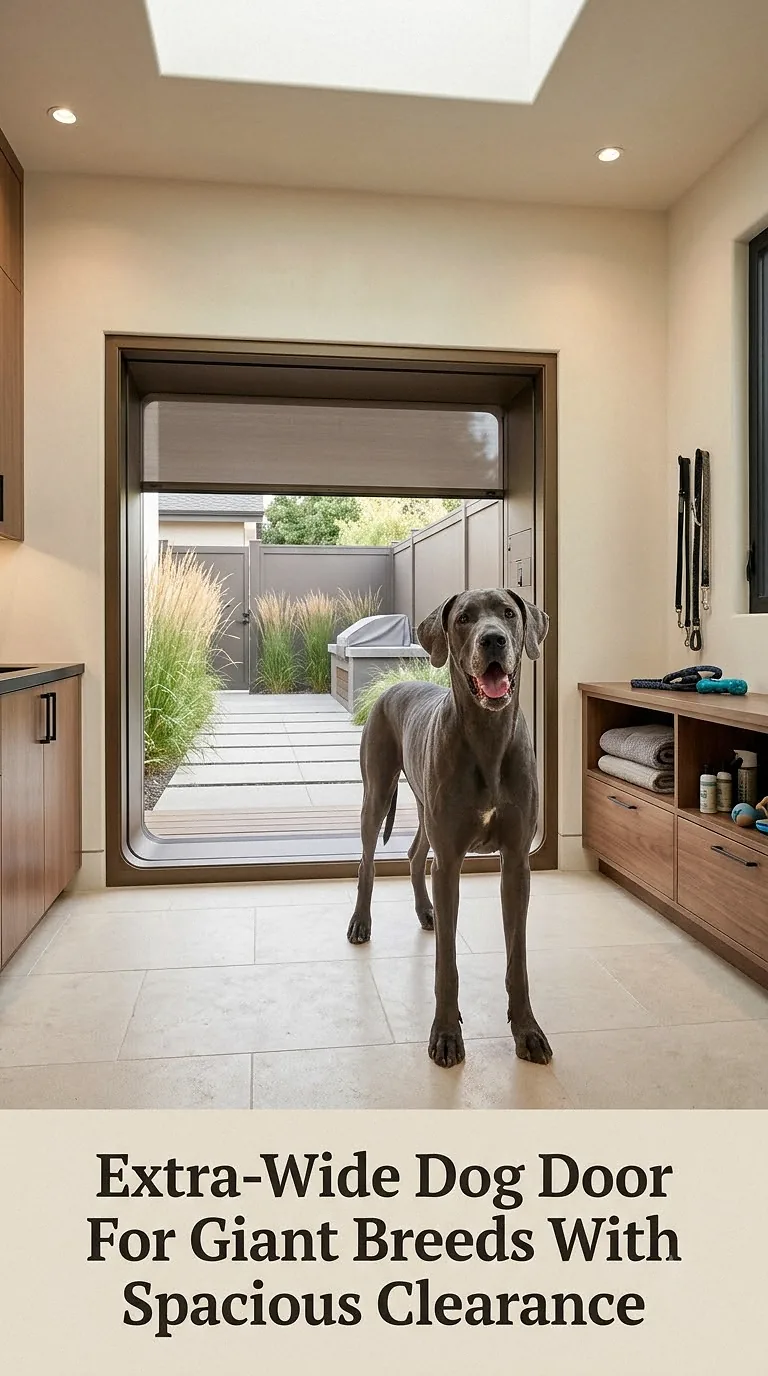
Giant dogs require more careful measuring than simply purchasing whatever product carries the largest label.
Measure your dog while standing naturally, paying attention to back height and the widest part of the body. The opening should allow comfortable movement without squeezing through the sides or scraping along the top.
For breeds with broad shoulders and deep chests, an extra-wide opening paired with a relatively low step-over can feel much more natural.
Visually, large openings tend to look better when centered intentionally within a wall or door panel. Wide trim around the frame can make the feature feel architectural.
Because an extra-large opening also has greater security implications, use a sturdy locking cover when access is not needed and avoid placing the door where someone could reach nearby handles or locks.
Minimalist White Flush-Mount Dog Door In A Neutral Hallway
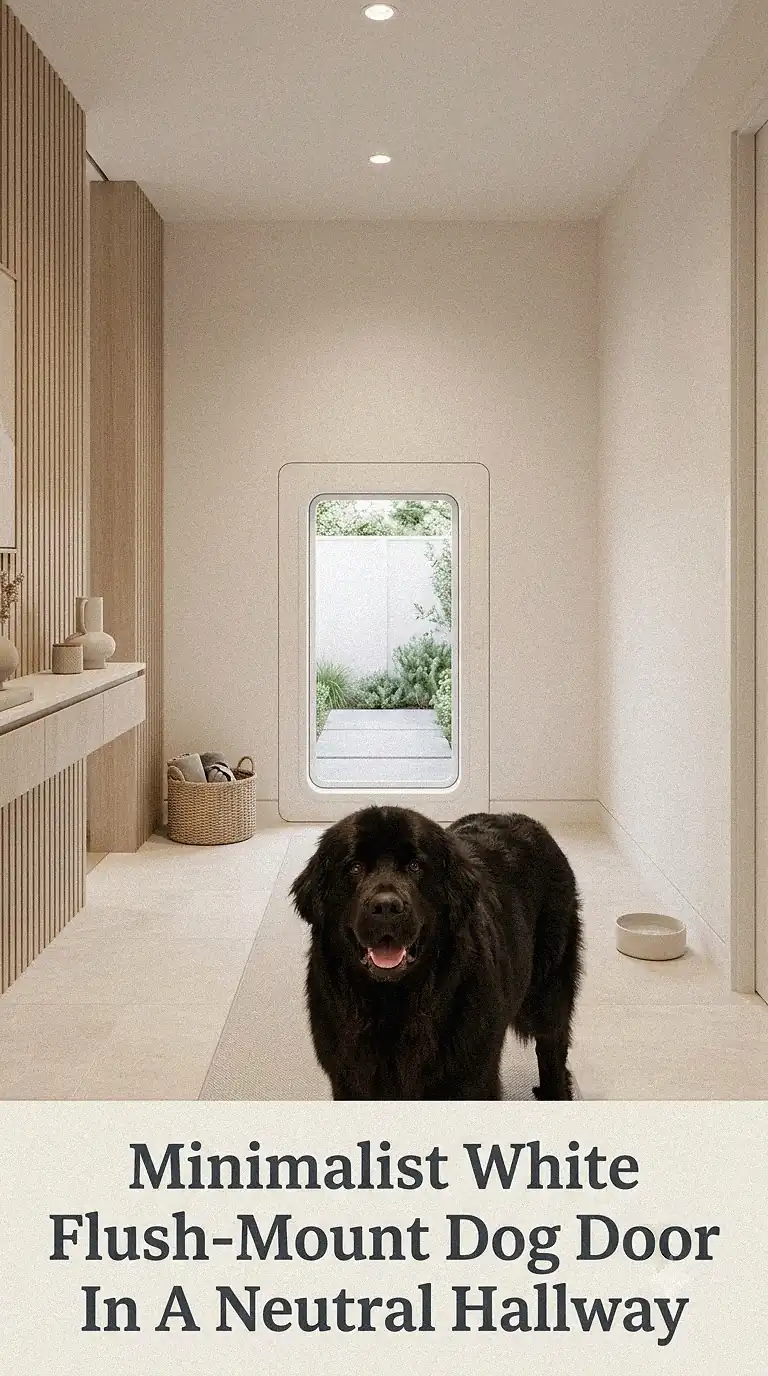
Minimalist homes do not have to sacrifice practicality for clean lines.
Choose a pet door with a simple white or paintable frame and install it against a similarly colored wall or door. When the frame, trim, and surrounding surface share the same shade, the entrance becomes much less visually dominant.
Continue the understated aesthetic with pale oak flooring, a cream washable runner, simple wall hooks, and one streamlined storage cabinet.
Avoid excessive decorative accessories around the opening. Instead, focus on quality materials, balanced proportions, and easy-to-clean surfaces.
A locking panel that sits neatly against the frame is particularly useful in minimalist interiors because bulky accessories and loose covers can quickly create visual clutter.
French Door Side Panel Dog Entrance With Elegant Trim
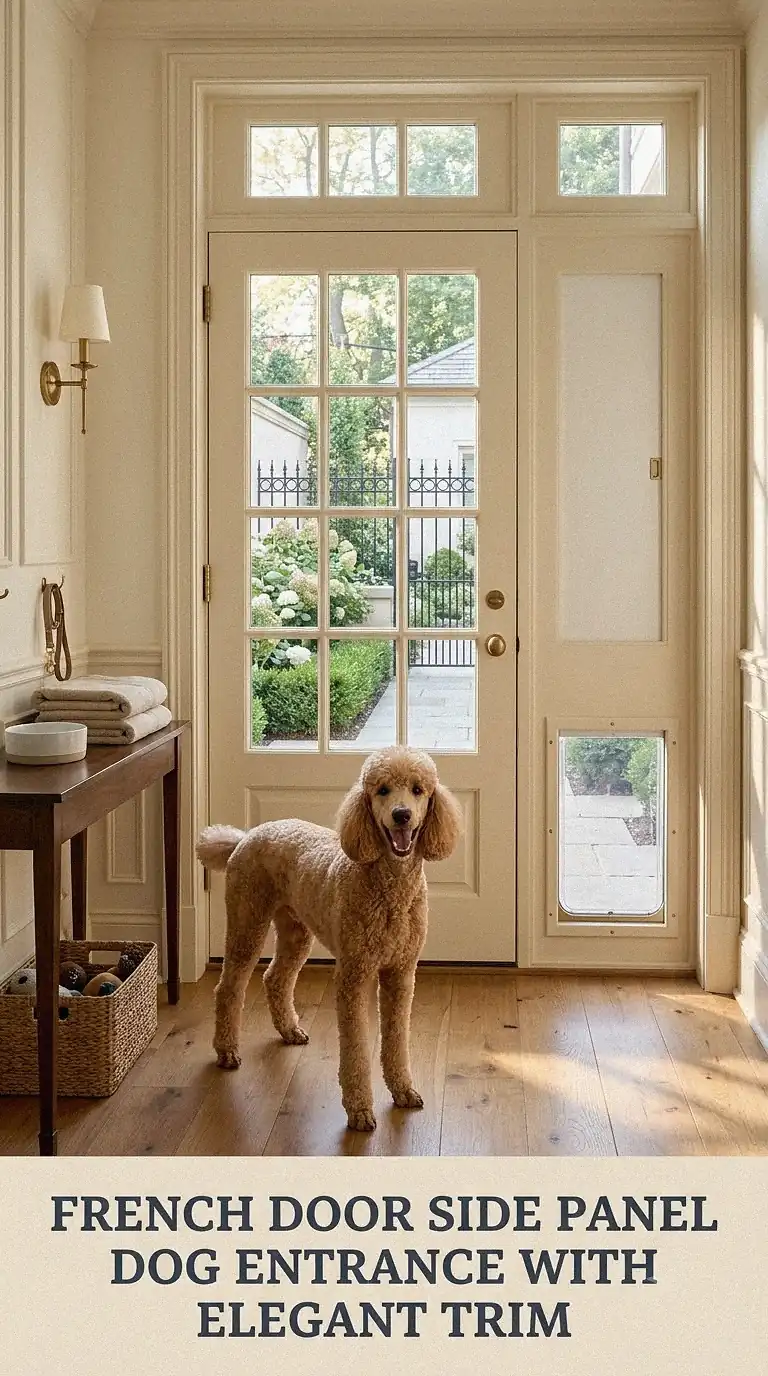
French doors are beautiful, but cutting a giant opening directly into decorative glass is rarely the most attractive approach.
If your layout allows it, position the dog entrance in an adjacent wall section or solid side panel instead. Frame the opening with trim that matches the French doors so both elements feel like one coordinated architectural composition.
White molding suits classic interiors, while black framing creates a dramatic contemporary look.
A nearby console table, woven basket, and soft patterned runner can help blend the dog zone into the rest of the room.
Glass modifications usually require specialist knowledge, so a side-wall solution may also offer more flexibility when you want to preserve existing doors.
Side-Yard Dog Run Door With Secure Fenced Access
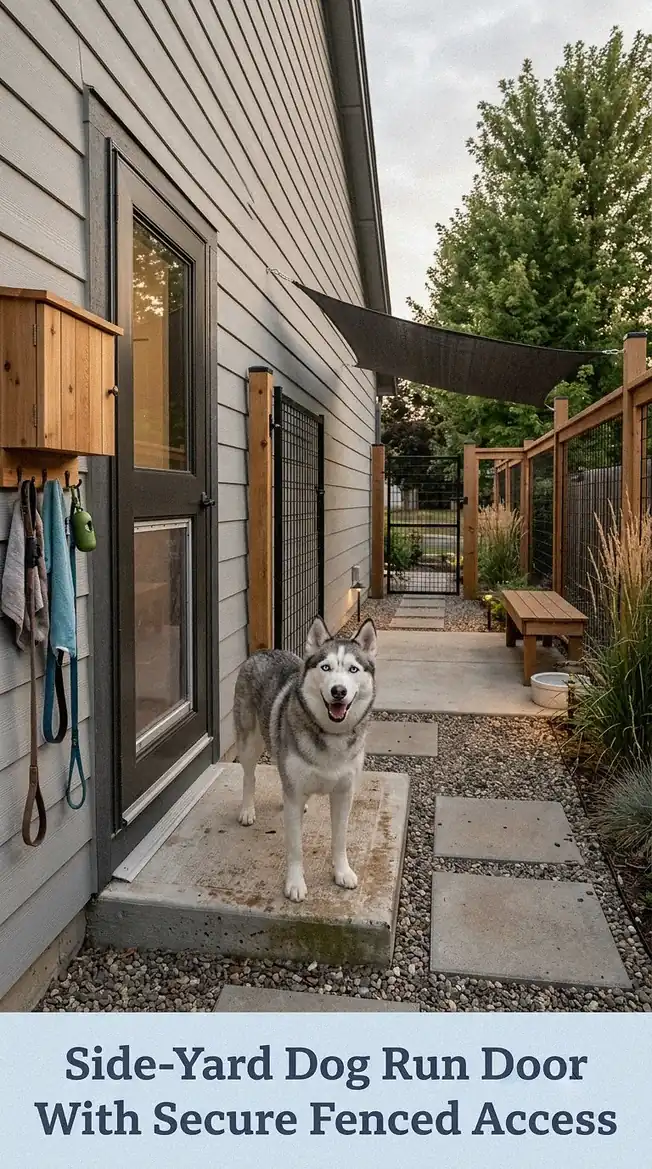
Not every dog needs access to the entire backyard.
A large dog door that opens directly into a dedicated side-yard run can create a more controlled outdoor area, especially on large properties where supervising every corner is difficult.
Use tall secure fencing appropriate for your dog, then create a comfortable pathway with artificial turf, pet-friendly ground cover, pavers, or gravel suited to your climate and maintenance preferences.
Add shade, fresh water, and a sheltered resting area. Avoid leaving hazardous garden supplies, toxic plants, sharp tools, or climbable objects inside the run.
From indoors, the entrance can be integrated into a mudroom or utility room with towel storage and washable flooring.
This arrangement combines the convenience of independent bathroom breaks with a more manageable outdoor zone.
Insulated Doghouse-Style Entry Tunnel With Double Doors
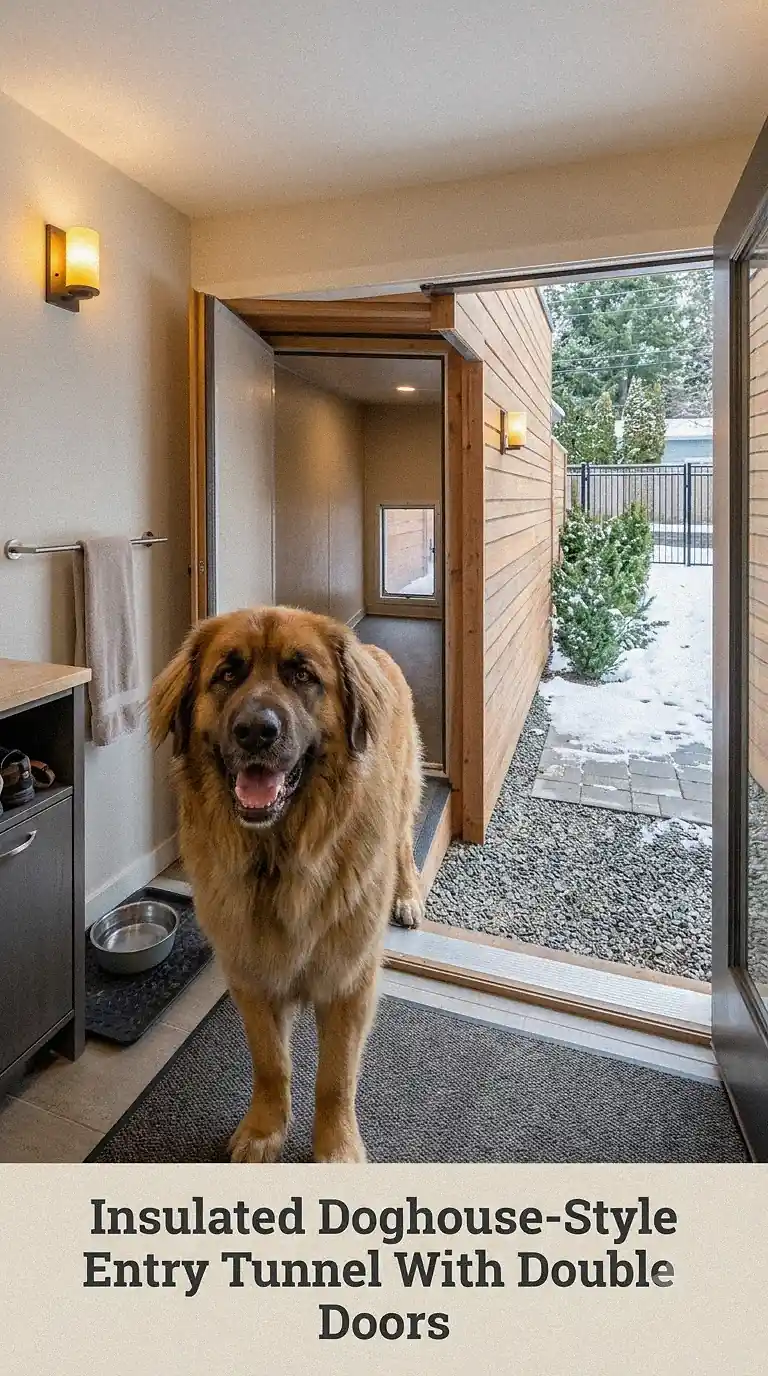
For a truly custom solution, create a short doghouse-style extension outside the home that acts as a transition chamber.
Read more : Why Grain Free Dog Food
Instead of one flap opening directly from indoors to outdoors, the dog moves through a small enclosed passage with an entrance at each end. The covered space creates a buffer between the house and the weather.
Match the structure to your home’s siding, roof material, and trim so it resembles a miniature architectural feature rather than a detached pet accessory.
Inside the tunnel, use smooth washable surfaces and avoid exposed nails, screws, rough wood edges, or tight corners.
This design requires more construction than a standard dog door, but it can be an attractive option for homeowners who want strong weather protection and a custom built-in appearance.
Storm Door With Integrated Large Pet Entrance
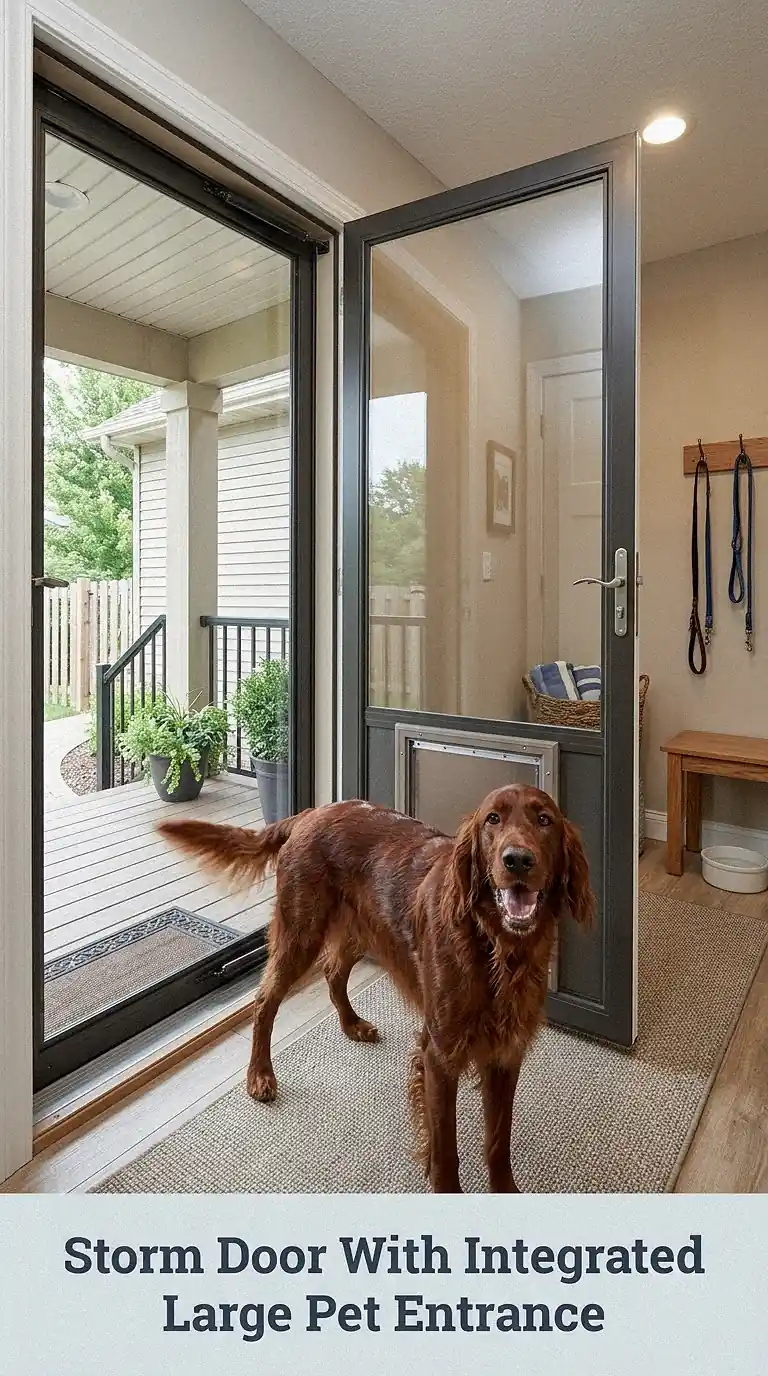
Replacing a storm door with one that already includes a large pet opening can produce a cleaner result than cutting into an existing finished door.
The integrated design keeps the proportions looking intentional and may provide an additional layer between your home’s main entrance and the outdoors.
Choose a frame finish that coordinates with your windows and exterior trim. Black works beautifully on modern houses, while white or bronze can complement more traditional architecture.
Weatherstripping, an adjustable bottom sweep, and proper caulking around the storm-door frame help keep the installation comfortable.
Because available sizes vary considerably, verify the actual pet opening dimensions before purchasing. Your dog’s body measurements matter more than general breed or weight recommendations.
Brick Or Stucco Wall Dog Door With Custom Exterior Frame
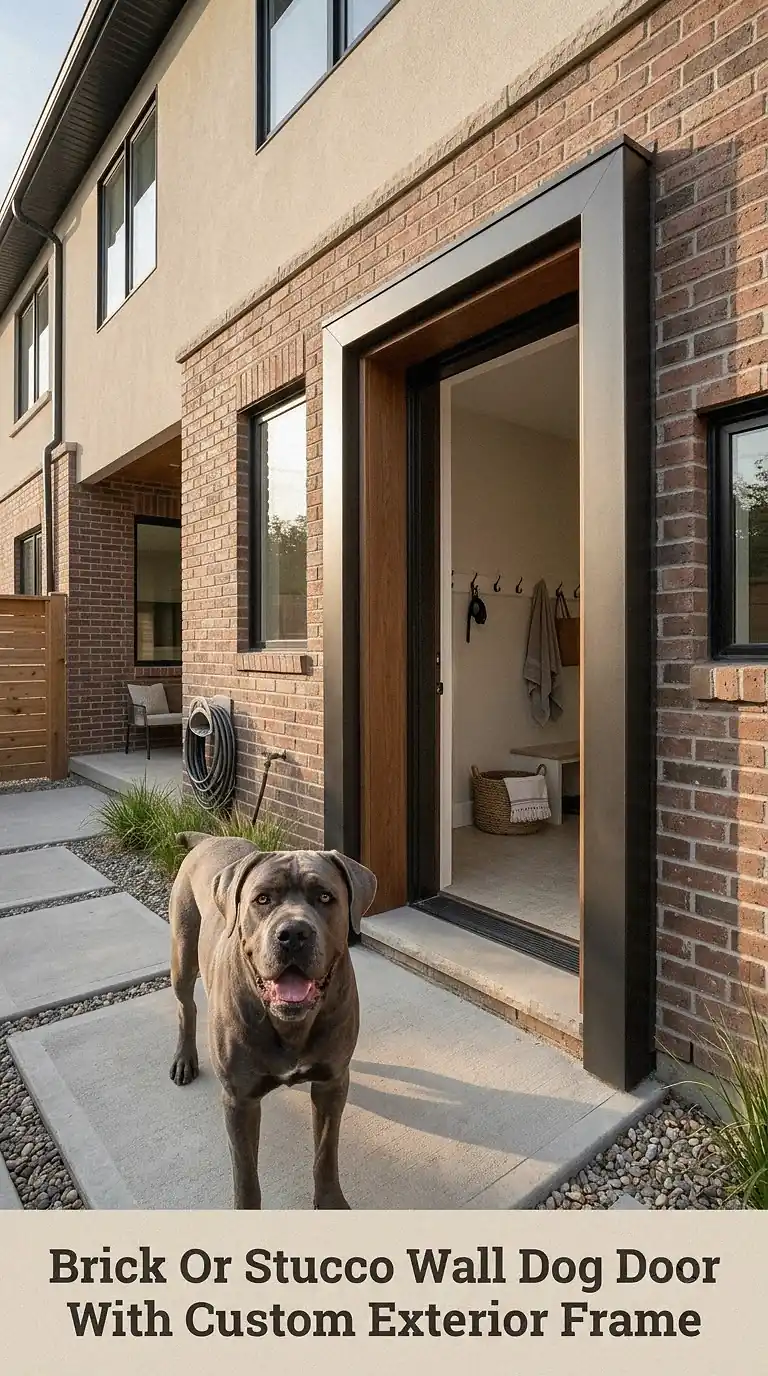
Homes with brick, stone, stucco, or masonry exteriors can still accommodate a large dog door, but the installation requires more planning.
A professionally framed wall opening can look exceptionally polished when the exterior surround matches the home’s architecture. For example, use dark metal trim against pale stucco or a simple neutral frame within red brick.
Position the opening beneath a small awning or roof overhang when possible. This provides additional rain protection and creates an attractive visual focal point.
Inside, keep the transition simple with durable tile flooring and an easy-to-wash mat.
Because cutting masonry can involve structural considerations, waterproofing details, wiring, and specialized tools, this is one project where experienced professional help can be particularly valuable.
Warm-Climate Screen Door With Reinforced Pet Entrance
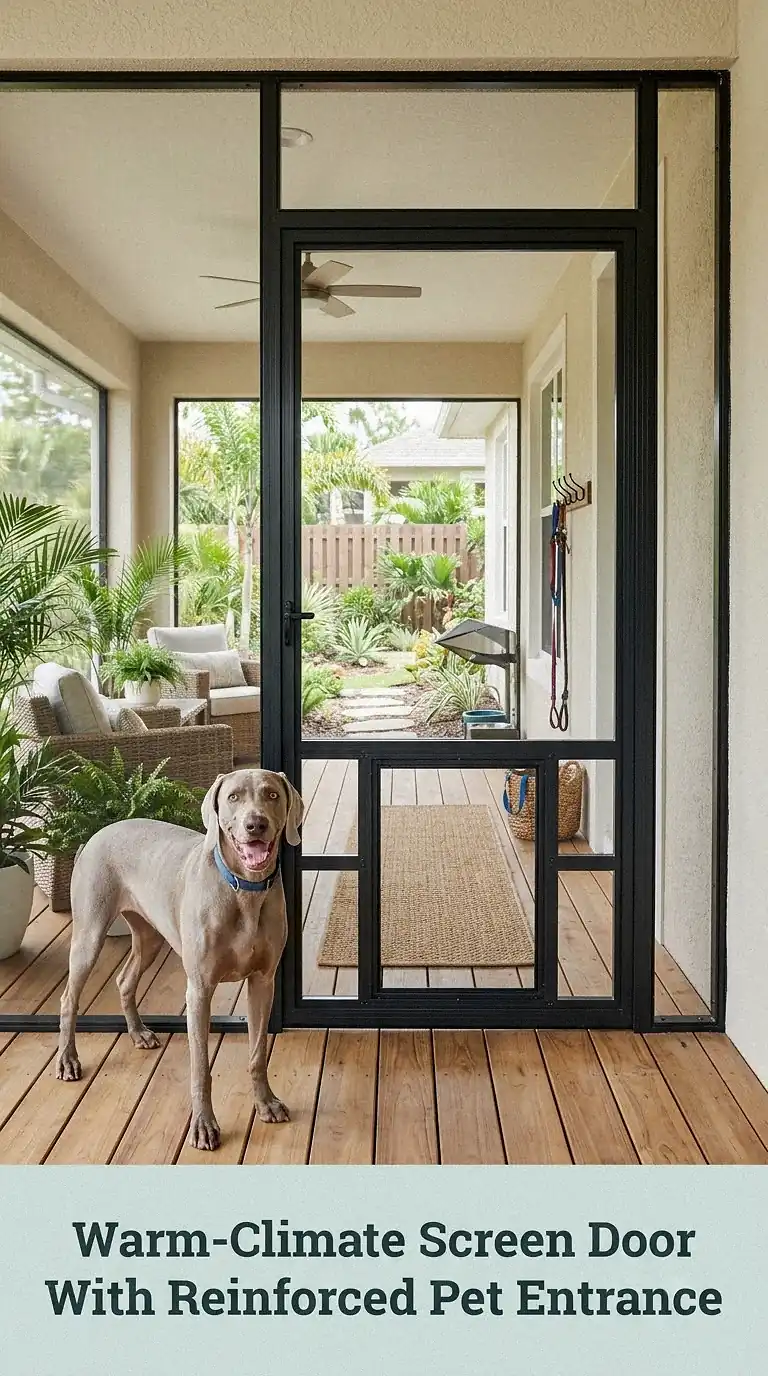
In mild climates, a reinforced screen door can provide a breezy option for dogs that frequently move between indoor and outdoor living areas.
Choose sturdy pet-resistant screening and a dog door designed specifically for screen installations. Large dogs can put considerable pressure on lightweight materials, so durability matters.
This idea looks especially appealing on covered patios, sunrooms, and screened porches with natural rattan furniture, linen cushions, terracotta planters, and light wood accents.
Treat it as a supervised warm-weather access solution rather than the home’s primary security barrier.
When the house is closed for the night or left unattended, use the main exterior door and secure locking systems normally.
Custom Exterior Door With Factory-Integrated Large Dog Door
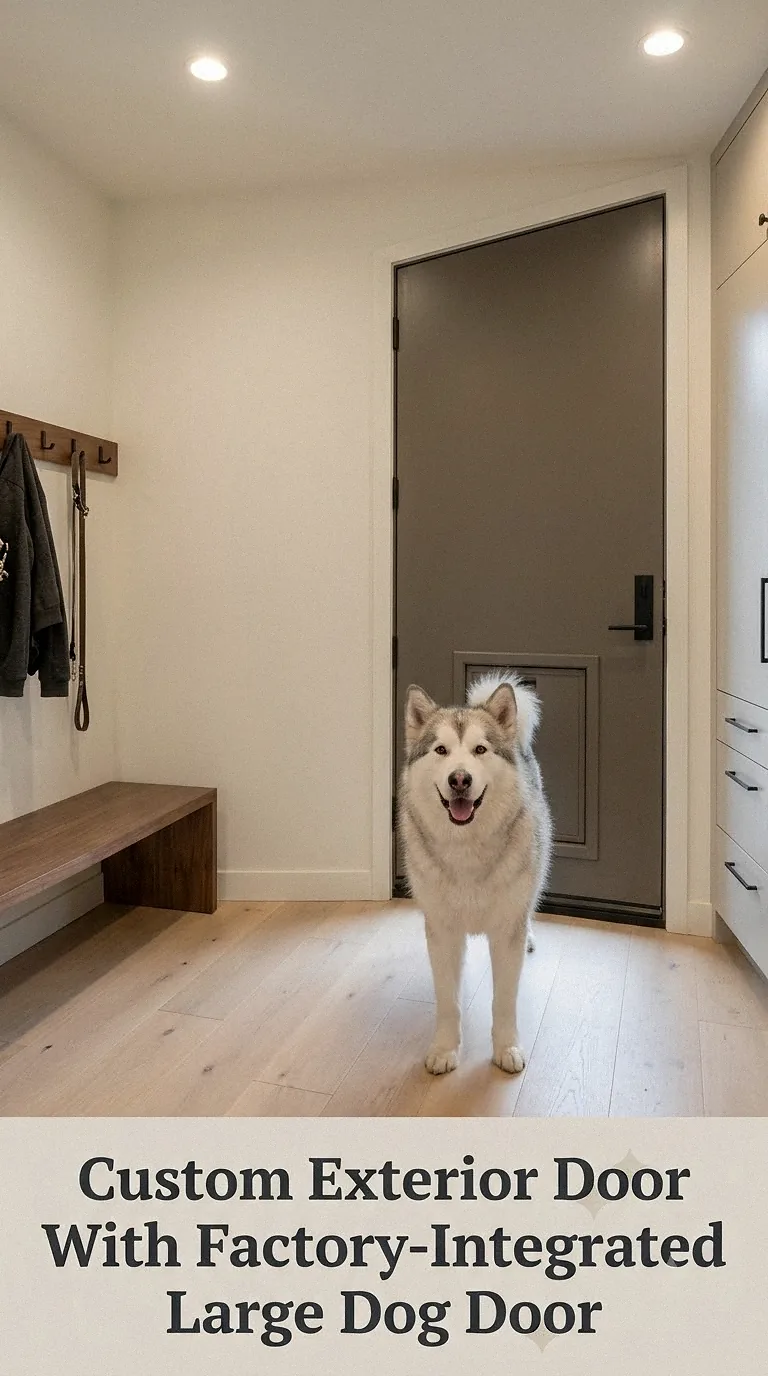
For the most seamless appearance, consider replacing an exterior door with a new model designed from the beginning to include pet access.
A factory-integrated opening often looks cleaner because the proportions, panel layout, and pet door placement can be considered together rather than retrofitted afterward.
Choose a color that suits your home, such as charcoal for a modern exterior, deep green for a cottage look, natural wood for warmth, or crisp white for a classic finish.
Inside, pair the entrance with built-in leash hooks, a washable runner, and a slim storage bench.
Although replacing an entire exterior door costs more than installing a basic flap, it can be worthwhile during a renovation when you already plan to upgrade old doors, improve weather sealing, or refresh the home’s exterior.
Multi-Dog Entry Station With Washable Floors And Organized Storage
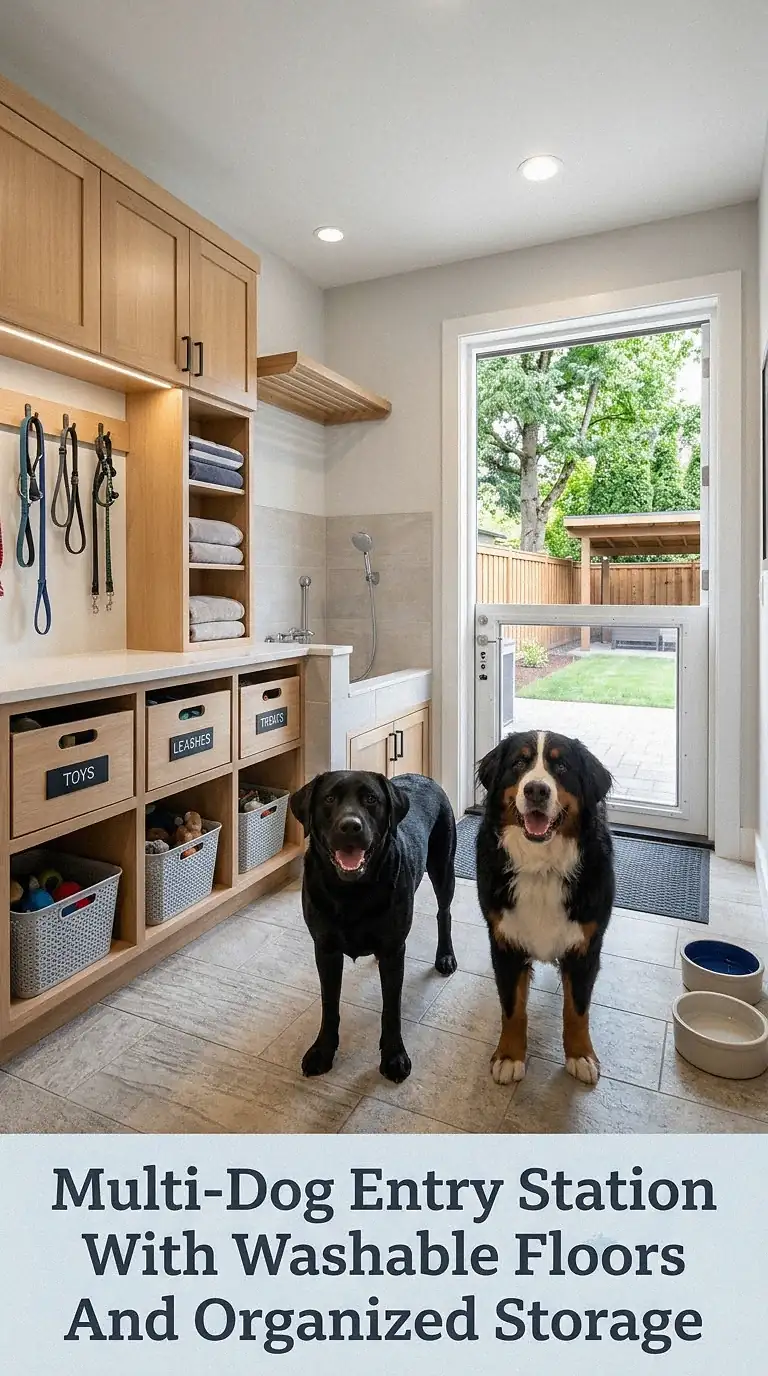
Households with several large dogs can turn the pet entrance into a complete entry station.
Start with one generously sized dog door that comfortably accommodates the largest dog. Surround it with durable tile or waterproof flooring, then add hooks for individual leashes, labeled baskets, towel storage, and a bench for putting on harnesses.
Use cabinetry or wall-mounted shelves to keep treats, waste bags, brushes, and outdoor toys organized but safely out of reach.
A wide washable runner helps manage the steady traffic of multiple paws.
For added control, consider a locking or electronic system that allows you to close outdoor access when necessary.
The result feels less like a random pet opening and more like a thoughtfully designed command center for life with big dogs.
Choosing The Right Large Dog Door Ideas For Your Home
The most successful large dog door is one that works naturally for both your home and your dog. A beautiful frame or clever built-in design is wonderful, but comfort, safe sizing, secure outdoor access, weather protection, and easy maintenance should always guide the final decision.
Measure your dog rather than relying only on breed or weight categories, and think about how those needs might change as your pet grows older. Consider where wet paws will land, how much weather the opening receives, whether the outdoor area is securely enclosed, and how you will lock the entrance when it is not being used.
From cozy farmhouse mudrooms and discreet cabinet tunnels to electronic doors and custom architectural entries, there are plenty of ways to make a large dog door feel like an intentional part of your home.
Choose the idea that fits your space, climate, decorating style, and daily routine, then adapt the details around your dog’s comfort. A small change to your home’s layout can make everyday life with a big, beloved dog feel noticeably easier.
Source: https://petstutorial.com
Category: DOGS
