
A private dog park can turn an ordinary yard into a place where your dog can run freely, investigate interesting scents, practice new skills, and relax beside you. It also gives you more control over fencing, cleanliness, playmates, and stimulation than a busy public park. Whether you have a narrow side yard, a generous country garden, or a covered patio, thoughtful planning can make everyday outdoor time safer and more rewarding.
You are reading: 18 Private Dog Park Ideas For A Beautiful And Pet-Friendly Backyard
The best private dog park ideas balance beauty with practical details. Secure gates, comfortable surfaces, reliable drainage, shade, fresh water, and clear sightlines should shape the layout before decorative features are added. From there, you can choose the elements that suit your dog’s size, age, energy level, and favorite activities, creating a space that feels like a natural extension of your home.
Beautiful And Practical Private Dog Park Ideas
Modern Cedar Dog Park With A Secure Double-Gate Entrance
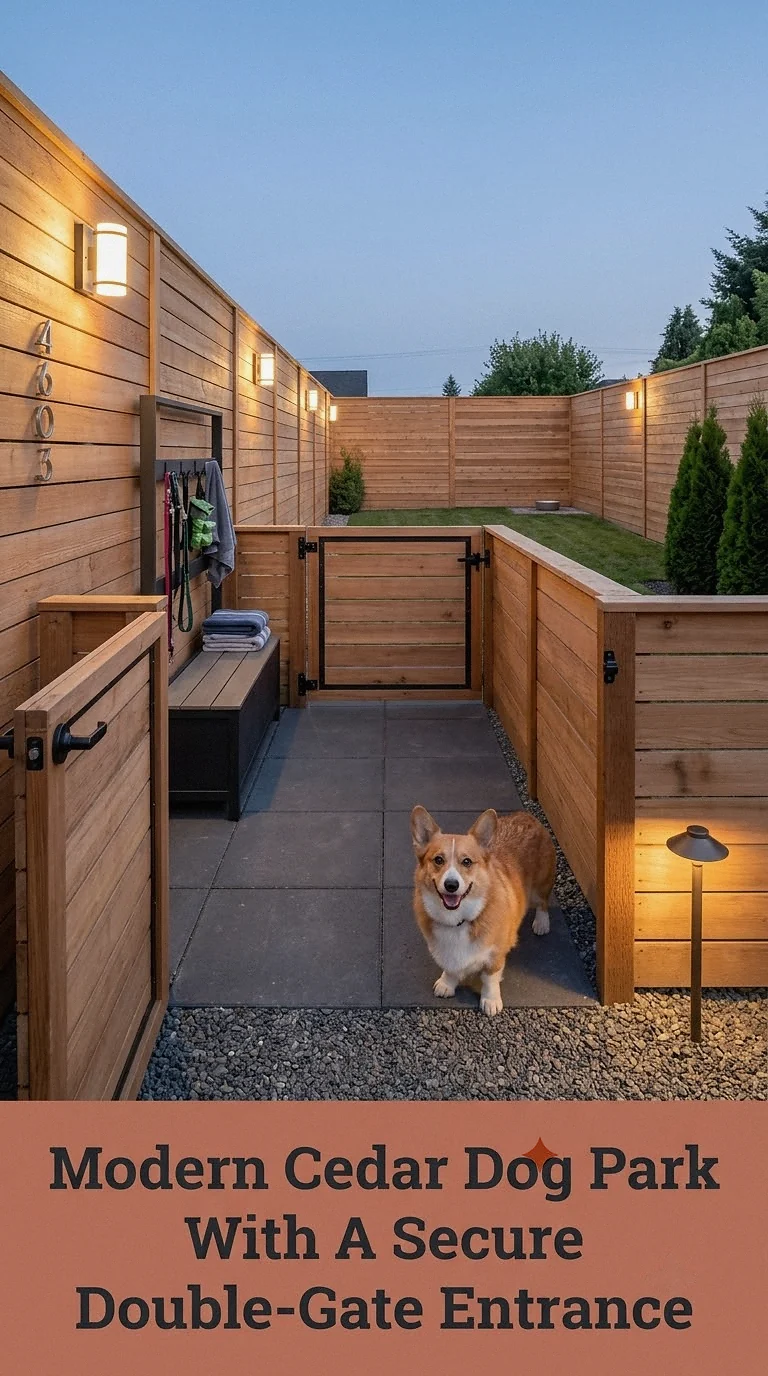
Create a polished private park by enclosing the yard with warm cedar fencing and adding a double-gate entrance. The small space between the two gates acts as a safety vestibule, giving you somewhere to attach or remove a leash without opening the play area directly to the street. Gates should close automatically or latch securely, while gaps and fence height must suit your dog’s size, jumping ability, and determination to escape.
Pair the cedar with black metal hardware, simple house numbers, and charcoal planters for a contemporary look. A gravel or paved entry pad prevents the gate area from turning muddy, and a narrow storage bench can hold leads, waste bags, towels, and outdoor toys.
Inspect the perimeter regularly for loose boards, sharp edges, widening gaps, and holes beneath the fence. Dogs that dig along boundaries may need a buried barrier or inward-facing ground apron. Keep bins, furniture, and planters away from the fence so an athletic dog cannot use them as steps.
Narrow Side-Yard Dog Run With Stepping Stones And Soft Groundcover
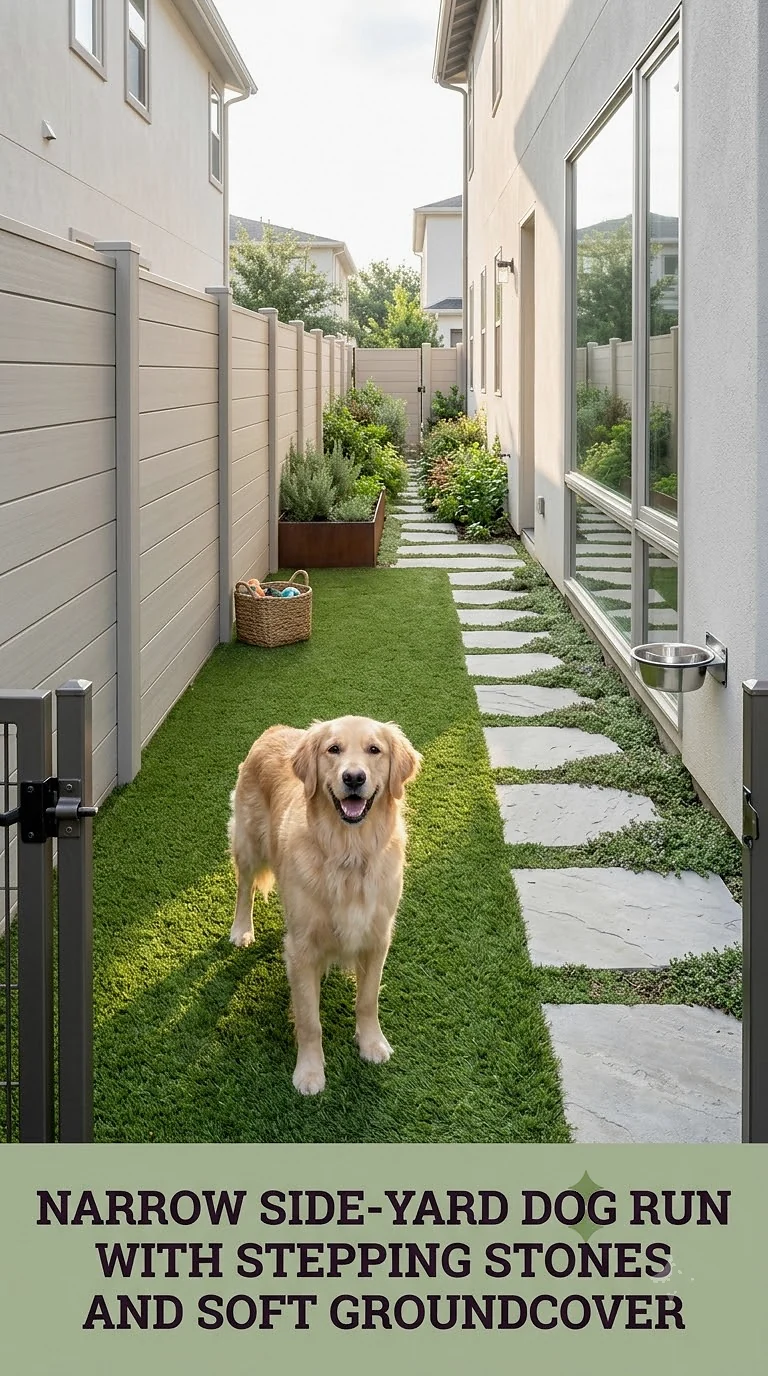
A slim side yard can become a useful exercise lane instead of forgotten space. Lay a winding row of large, stable stepping stones for people and leave a wider running strip beside them. A pale fence, clipped greenery, and a simple gate at each end will make the corridor feel intentional and connected to the house.
Choose a durable surface based on drainage and use. Healthy grass is soft but may struggle in shade and heavy traffic, while pet-appropriate artificial turf can stay neat if it is installed over a properly draining base and cleaned routinely. Smooth, compacted fine gravel is another option, although the particle size should be comfortable for your dog’s paws and too large to tempt swallowing.
Avoid crowding the run with obstacles. A wall-mounted water bowl, one low sniffing planter, and a weatherproof toy basket provide function without reducing movement space. Check that outdoor utilities, toxic plants, fertilizers, and pest-control products are inaccessible before allowing unsupervised exploration.
Rustic Meadow Park With A Curving Mown Running Track
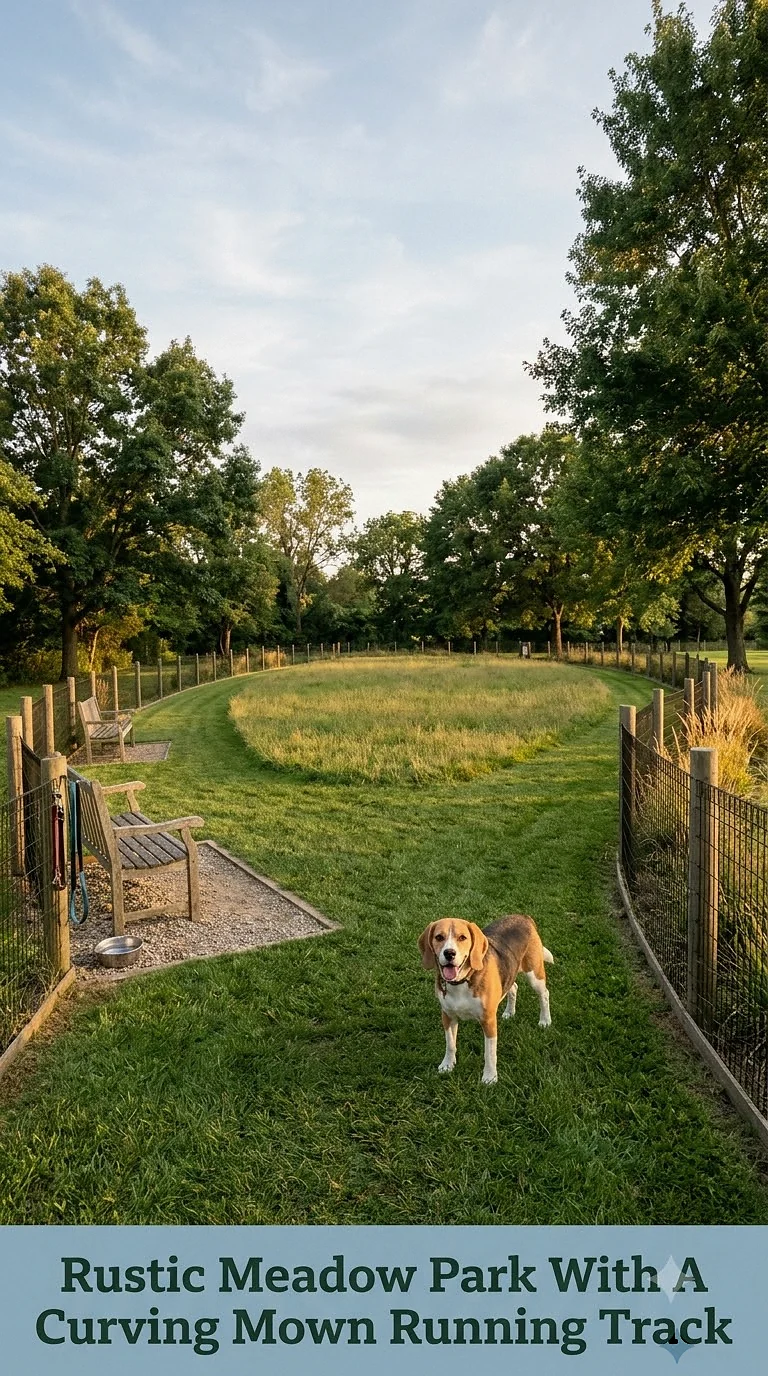
For a larger property, frame an open meadow with a curving mown track around the perimeter. The contrast between the short path and slightly longer central grass creates a relaxed country-garden look while giving energetic dogs a clear circuit for running. Preserve mature shade trees where possible, provided they are healthy and the species is safe around pets.
Use post-and-wire fencing with small, secure openings, or add dark welded mesh behind a decorative timber fence. The mesh should reach the ground without sharp cut ends. A pair of simple timber benches can face the field, allowing you to supervise the entire route while enjoying the landscape.
Mow the running track frequently, remove seed heads that could lodge in fur or paws, and check long grass for ticks, burrs, holes, and wildlife. Avoid creating a hidden pond or dense corner where you cannot see your dog. For a lower-cost version, define the route through regular mowing rather than installing a permanent hardscape.
Colorful Agility Garden With Adjustable Jumps And Tunnels
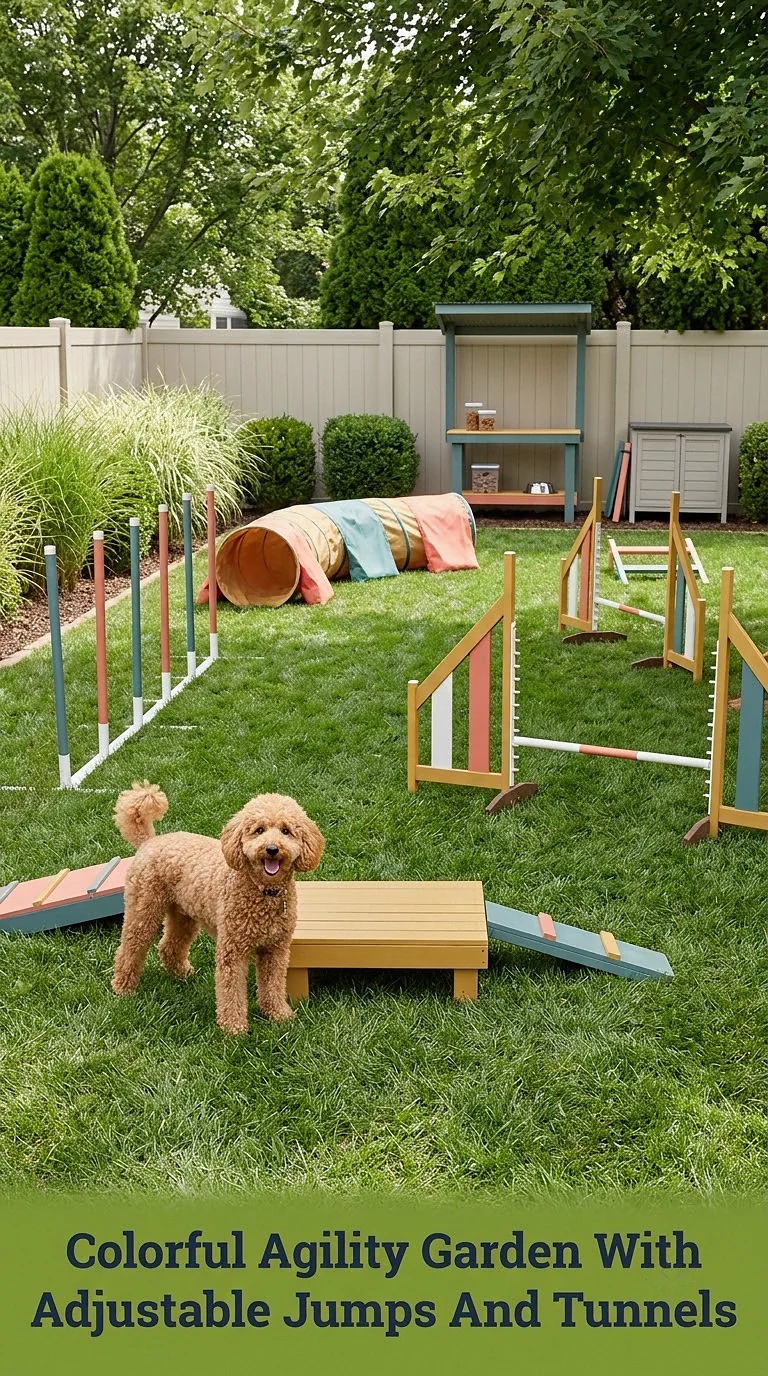
Transform part of the yard into a cheerful training circuit with weave poles, a broad tunnel, a low platform, and adjustable jumps. Arrange the equipment in a loose loop with generous space between activities, leaving a clear escape route around every obstacle. Muted coral, teal, mustard, and white can add playful color without making the garden look like a commercial facility.
Select equipment intended for canine use, with stable bases, smooth edges, and jump bars that release rather than trapping a leg. Keep heights appropriate for your dog’s age, build, fitness, and training experience. Puppies, senior dogs, and dogs with orthopedic concerns need especially conservative activities guided by veterinary advice.
DIY weave poles and low jumps can reduce costs, but they must be firmly secured and free from splinters or protruding hardware. Store lightweight pieces during high winds and inspect tunnels for tears. Short, reward-based sessions are more useful than leaving equipment out and expecting a dog to navigate it alone.
Cottage Sensory Garden With Dog-Safe Herbs And Winding Paths
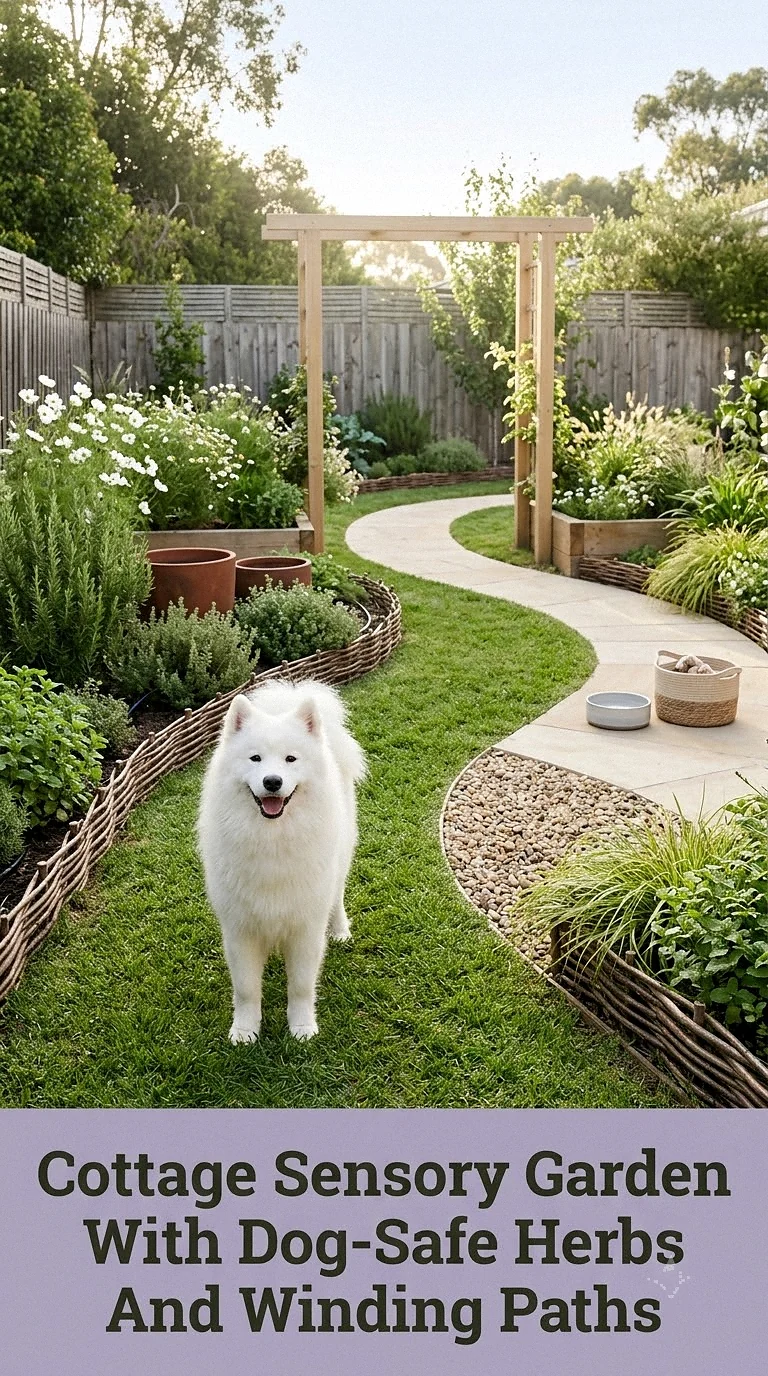
Design a gentle sensory garden using curving paths, raised planters, rustling grasses, and fragrant herbs. Rosemary, thyme, and mint can provide interesting scents, but every plant should be checked against a reliable pet-toxicity resource before planting. Because individual dogs chew and forage differently, even a generally dog-friendly planting scheme benefits from supervision.
Place robust plants behind low woven edging so your dog can sniff without repeatedly trampling roots. Vary the path textures with lawn, smooth pavers, and a small patch of comfortable gravel, creating subtle sensory changes underfoot. Soft green foliage, white flowers, terracotta pots, and natural timber will give the area a romantic cottage character.
Avoid cocoa mulch, sharp gravel, thorny plants, poisonous bulbs, and chemical lawn treatments. Choose organic-looking finishes for style, but prioritize washable, splinter-free materials near nose height. A narrow irrigation line can keep plants healthy without leaving hoses across the path as trip or chewing hazards.
Blue-Tiled Splash Zone With Gentle Ground-Level Water Jets
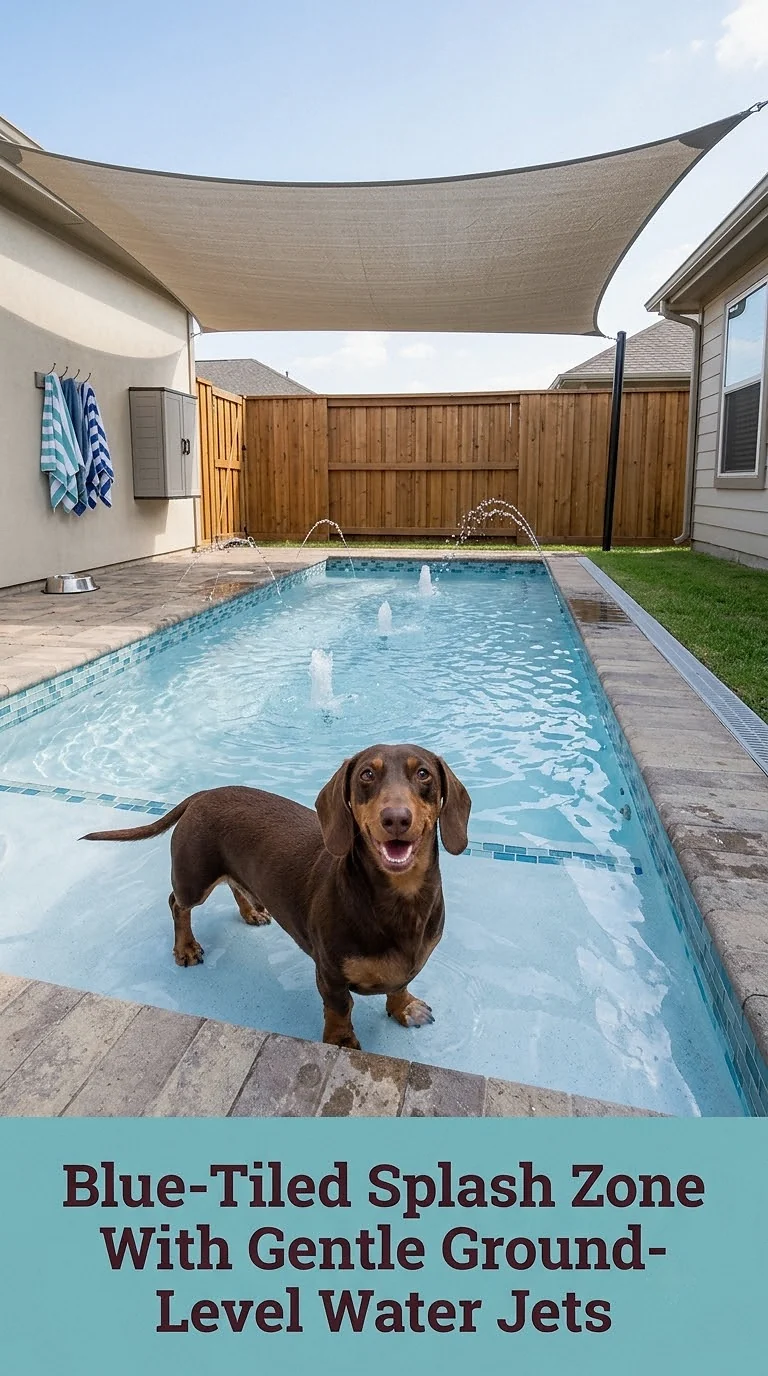
Water-loving dogs may enjoy a shallow splash zone finished with blue tile accents and gentle ground-level jets. Position it away from the main entrance and lounging area so wet paws do not make every surface slippery. A gradual edge or completely level splash pad is easier to enter than a deep pool and allows nervous dogs to approach at their own pace.
Read more : Top 10 Cheapest Dogs
The walking surface must remain slip resistant when wet, and the surrounding grade should direct water toward an appropriate drain rather than the lawn or foundation. Provide a nearby hook for towels, but never tether a dog beside active water. A wide shade sail can help keep both the splash pad and supervising owner more comfortable.
Use clean water and follow the maintenance requirements for the chosen system. Drain small portable pools after use, scrub away residue, and prevent stagnant water from becoming a hygiene problem. Water play still requires close supervision, especially for puppies, flat-faced breeds, older dogs, and dogs that tire quickly.
Coastal Digging Beach With A Timber-Framed Sand Pit
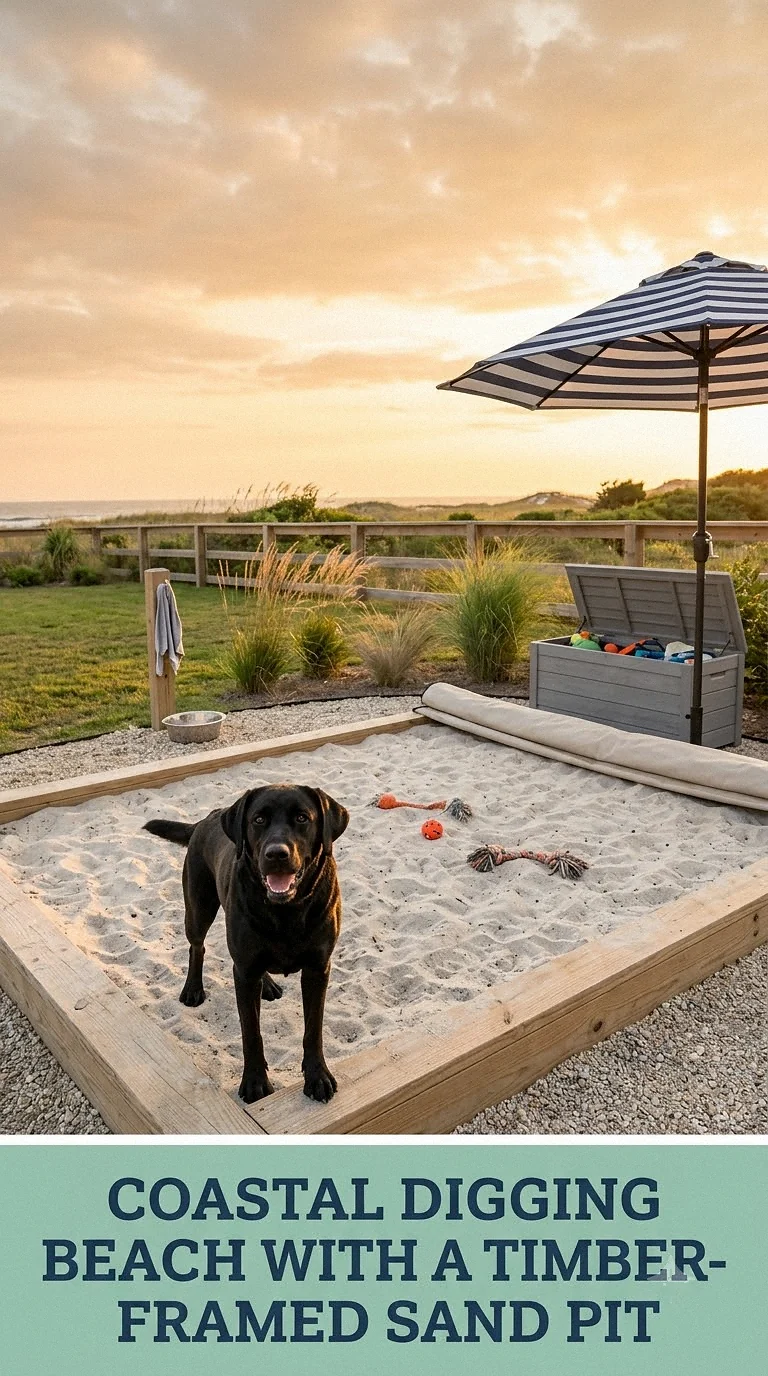
Give enthusiastic diggers an approved destination with a timber-framed sand pit that resembles a tiny coastal beach. Place it in a visible corner and use clean play sand rather than construction sand or unknown fill. Pale timber, ornamental grasses set safely out of reach, and a striped outdoor umbrella can make the feature feel charming instead of improvised.
Bury a few washable toys near the surface and reward your dog for digging there. A broad, low border is easier to step over than a deep box, while a removable cover keeps out rain, debris, and visiting wildlife when the pit is not in use. Make sure the frame is smooth, stable, and free of treated surfaces that are not suitable for pet contact.
Rake the sand regularly to uncover waste, sharp objects, and damp areas. Replace contaminated material rather than trying to disguise odors. Position the pit away from drainage runoff and supervise dogs that tend to eat sand, since swallowing significant amounts can be dangerous.
Rolling Green Play Yard With Grassy Mounds And Wide Tunnels
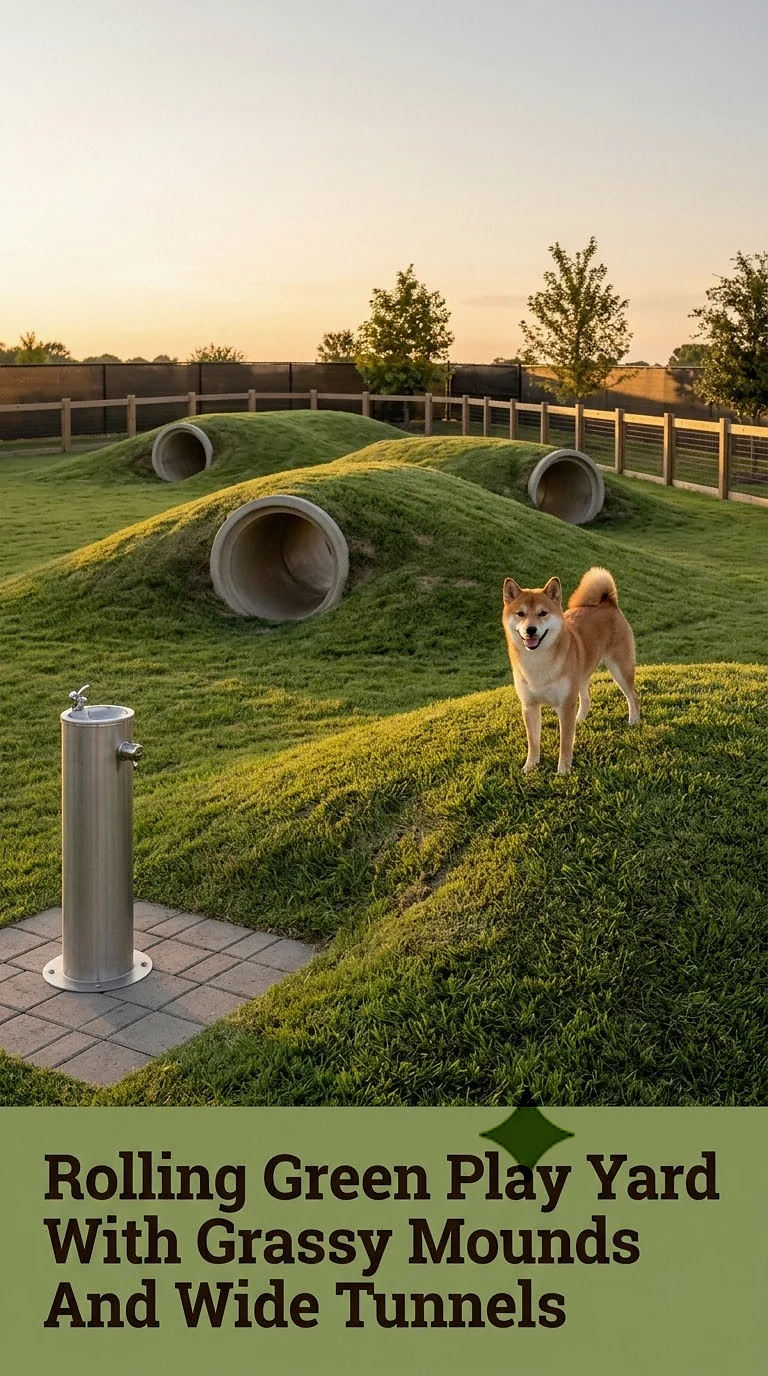
A flat lawn becomes much more engaging when shaped into low grassy mounds with broad tunnels running through or between them. The changes in elevation create lookout points, chase routes, and gentle climbing opportunities without filling the garden with brightly colored equipment. Rounded forms covered in tough grass or securely fitted turf blend naturally into a contemporary landscape.
Use professionally designed drainage and compacted foundations so the mounds do not erode or collapse. Tunnels need smooth interiors, adequate width, good ventilation, and more than one open end so a dog cannot feel cornered. Keep the overall height modest enough to preserve sightlines across the park.
This idea is easiest to include during a larger landscaping project, although a freestanding, dog-safe play tunnel offers an affordable alternative. Check slopes for holes and worn patches, particularly after rain. Avoid encouraging fast, uncontrolled play on slick grass or steep banks.
Quiet Zen Retreat With Bamboo Screens And A Shaded Daybed
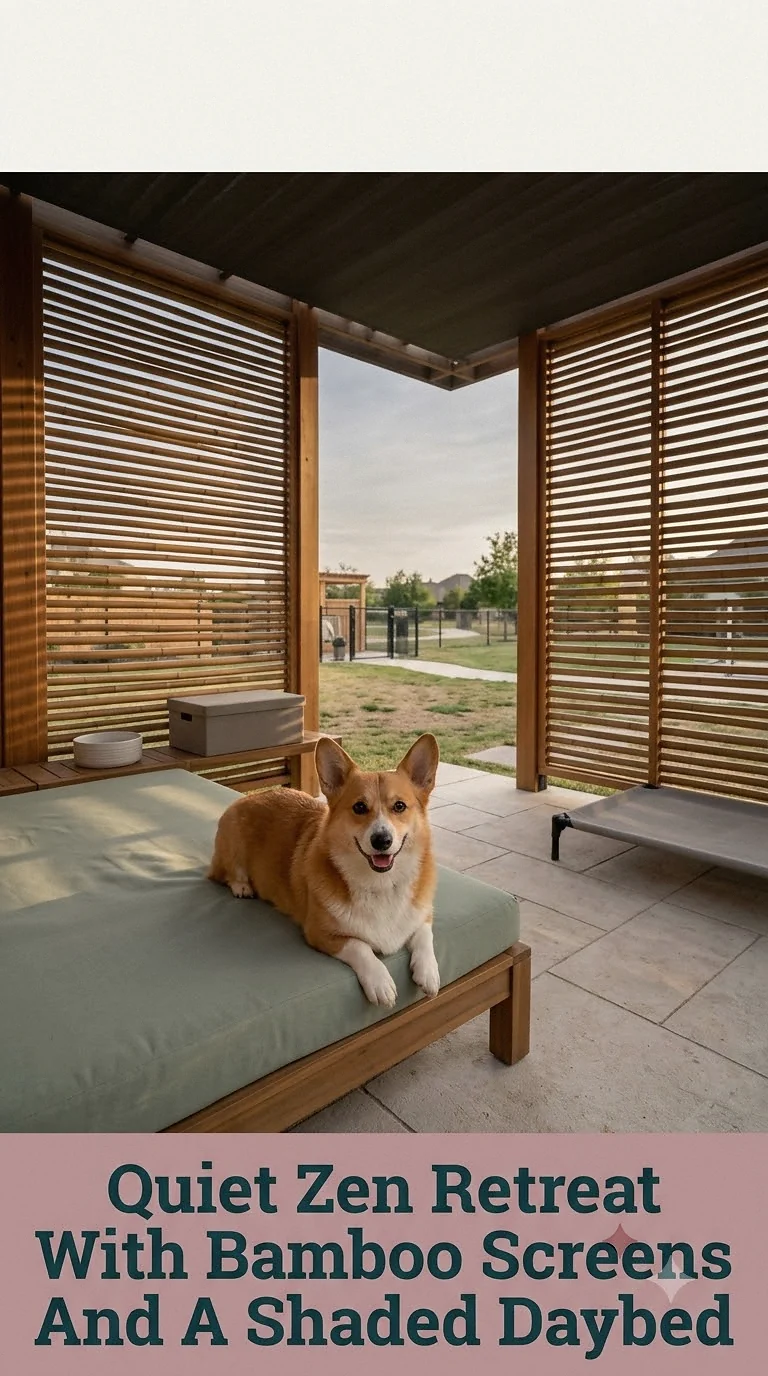
Not every dog wants constant running. Create a calm retreat at the edge of the park with slatted bamboo-style screens, a low weatherproof daybed, and soft planting outside the dog’s immediate reach. The enclosure should feel sheltered without becoming an isolated box, allowing a shy or older dog to watch activity from a comfortable distance.
Use neutral stone, sage green fabric, and warm timber for a restful palette. A covered roof or pergola provides shade, while an elevated, washable mattress keeps joints away from cold or damp ground. Leave ample airflow and confirm that the shade moves appropriately throughout the hottest part of the day.
Position this zone away from gates, splash features, and high-speed running routes. Wash bedding frequently and choose removable covers that resist moisture and odor. If several dogs use the yard, provide more than one resting place so no dog has to guard or compete for the only comfortable bed.
Small-Dog Courtyard With Low Platforms And Miniature Tunnels
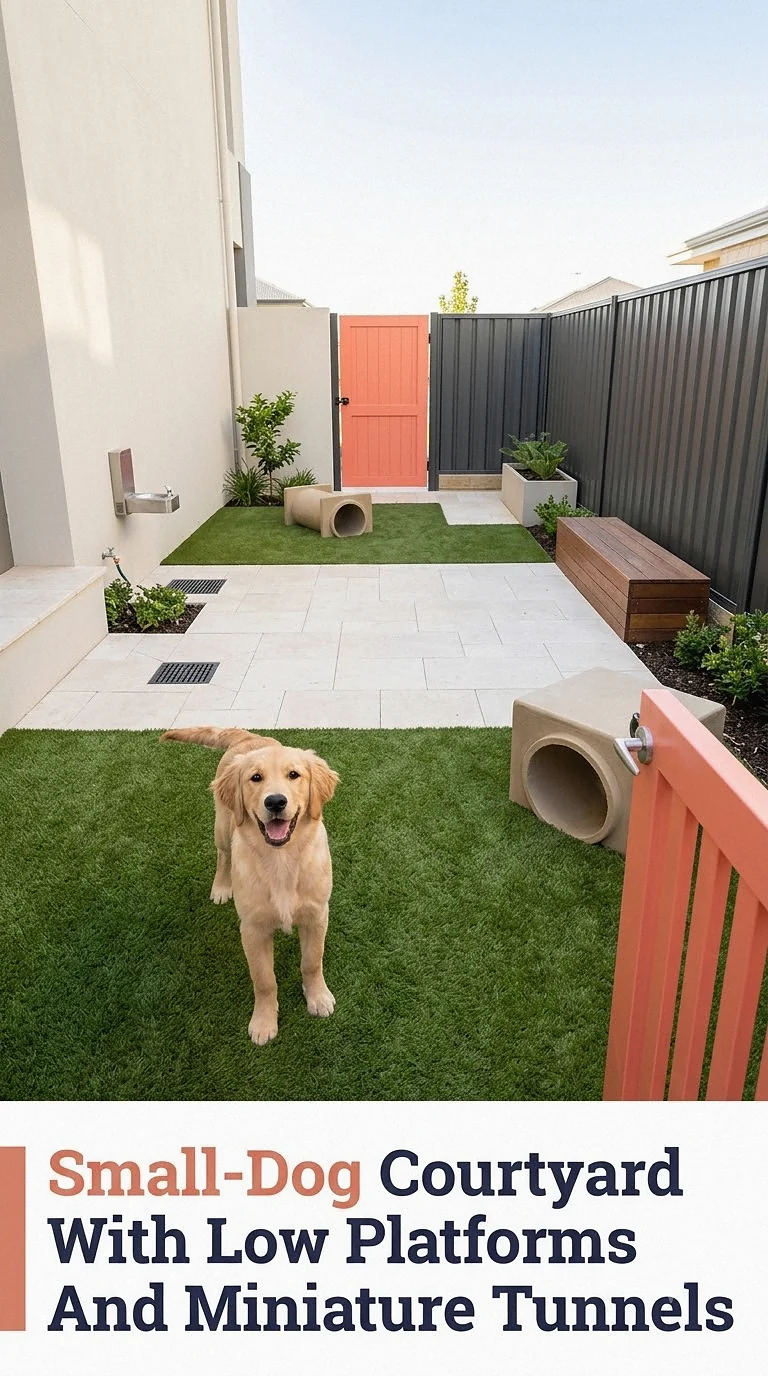
A compact courtyard can be scaled specifically for a small dog, using low platforms, short tunnels, and petite planting beds. Pale pavers paired with patches of soft turf create a tidy geometric floor, while a coral gate or painted bench adds a joyful accent. Keep enough open space for turning and short bursts of play rather than filling every corner.
Small dogs can slip through surprisingly narrow gaps, so examine fence panels, gates, drains, and spaces beneath furniture carefully. A covered drain, tightly fitted boundary, and secure double gate are more important than tall obstacles. Avoid deep water features and heavy toys that could roll or fall onto a little dog.
Wall-mounted storage preserves precious floor space. Include a low drinking station and a sunny lounging ledge with a shaded alternative, since paving can become hot. Test the surface with your hand during warm weather and rinse urine-prone areas before odors build up.
Senior Dog Garden With Level Paths And Resting Platforms
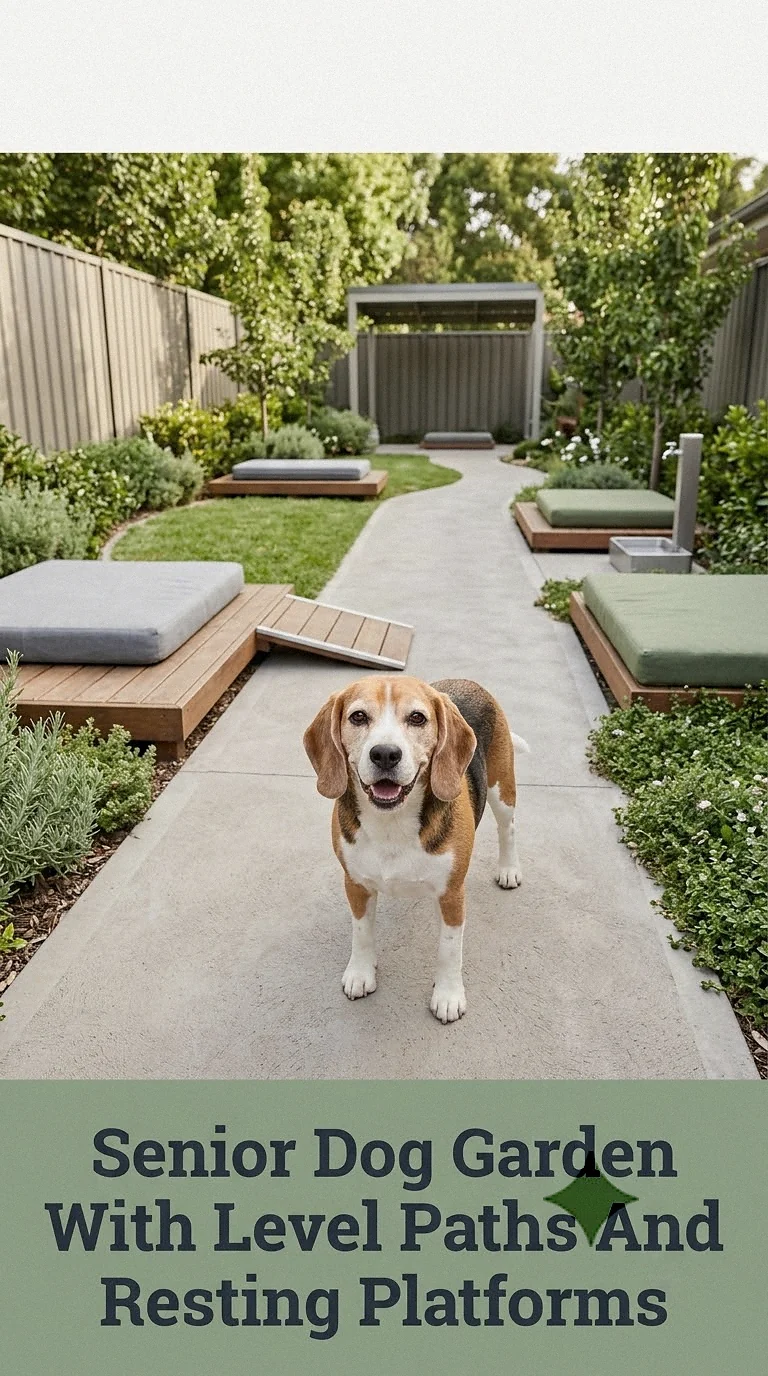
Plan a serene park for an older dog around broad, level paths and frequent resting points. Use a simple loop so there are no dead ends, with smooth transitions between grass, paving, and covered areas. Soft gray, moss green, and natural wood create a quiet garden that feels sophisticated beside the home.
Choose firm, high-traction surfaces instead of loose stones or slick tiles. Low resting platforms with supportive outdoor beds can help keep a senior dog dry without requiring a large step. Place fresh water and shade within easy reach, and consider a ramp wherever the landscape changes level.
Keep play equipment gentle: scent stations, hidden treats, and slow exploration may be more suitable than jumping. Maintain nails, paths, and groundcover so footing remains reliable, and remove fallen leaves before they become slippery. Adapt the layout with your veterinarian’s guidance if your dog has arthritis, impaired vision, or other mobility needs.
All-Weather Barn Dog Park With Indoor And Outdoor Play Zones
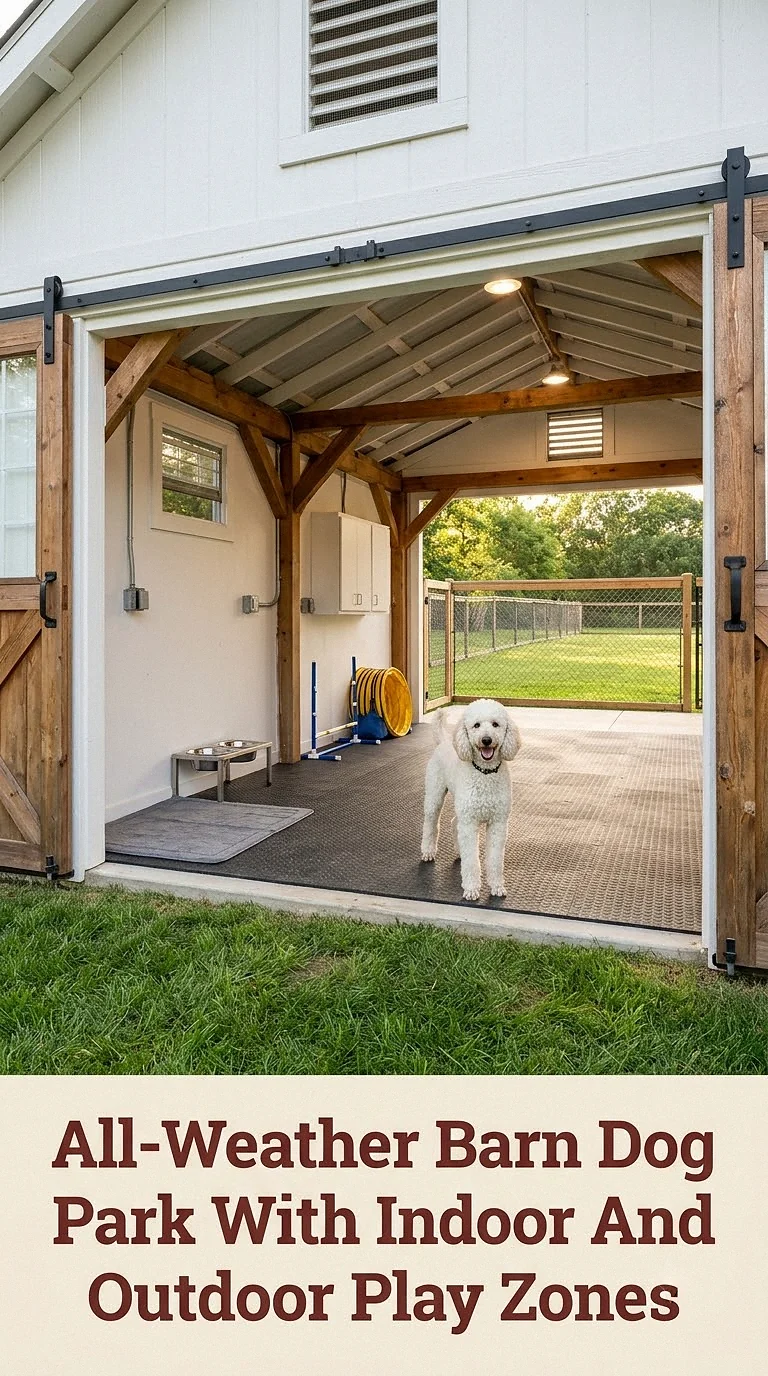
A converted barn, large shed, or covered outbuilding can support year-round play when it opens directly into a securely fenced yard. Use wide doors to create an easy indoor-outdoor route, with rubberized, high-traction flooring inside and grass or draining turf outside. White walls, exposed timber beams, and black hardware give the space a bright modern-farmhouse character.
Ventilation, temperature control, and lighting are essential in an enclosed space. Protect electrical outlets and cords, lock away tools and chemicals, and avoid loose insulation or wall materials that can be chewed. Doors should latch securely, and windows need safe screens or barriers.
Add washable mats, a water station, and a few movable training pieces rather than permanent clutter. Sweep hair and debris frequently, clean accidents promptly, and allow wet areas to dry fully. A simpler version can use a roofed patio connected to a small fenced run, provided it remains cool and well ventilated.
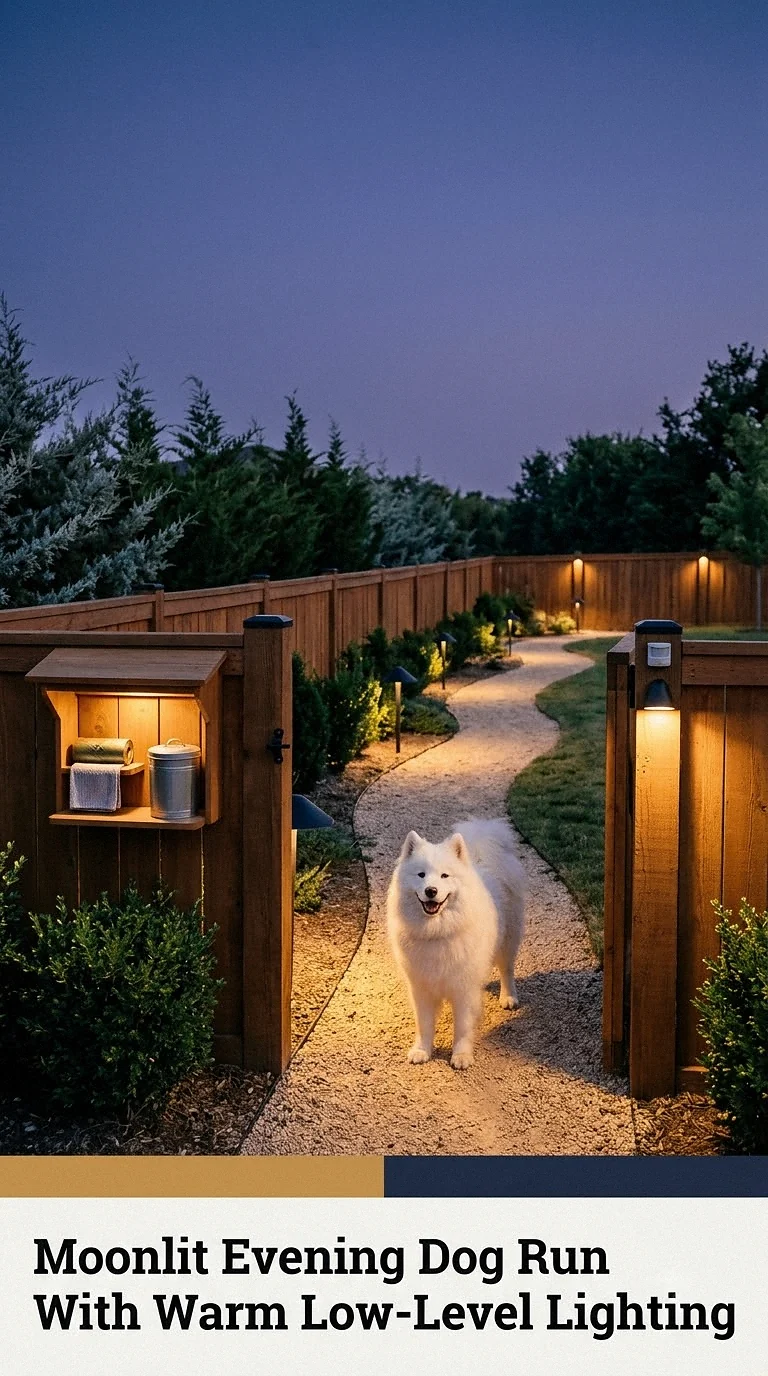
Moonlit Evening Dog Run With Warm Low-Level Lighting
Read more : Why Does My Dog Click His Teeth?
For families who use the yard before sunrise or after work, add warm low-level lighting along paths, gates, and cleanup stations. Shielded bollards and downward-facing fixtures illuminate the ground without producing harsh glare. Combine matte black lights with pale gravel, evergreen borders, and a timber fence for an elegant evening garden.
Light the entire route consistently so sudden dark patches do not hide holes, waste, or obstacles. Gates and steps deserve extra illumination, while bright decorative strings should stay securely overhead and out of chewing range. Motion lighting can be useful at the entrance, but abrupt activation may startle sensitive dogs.
Choose outdoor-rated fixtures and have permanent electrical work installed correctly. Solar markers offer a budget-friendly option, though their output can vary with weather and season. Walk the park regularly with a flashlight as well, checking the fence and ground rather than relying on lighting alone for safety.
Mud-Free Exit Station With A Raised Dog Wash And Towel Storage
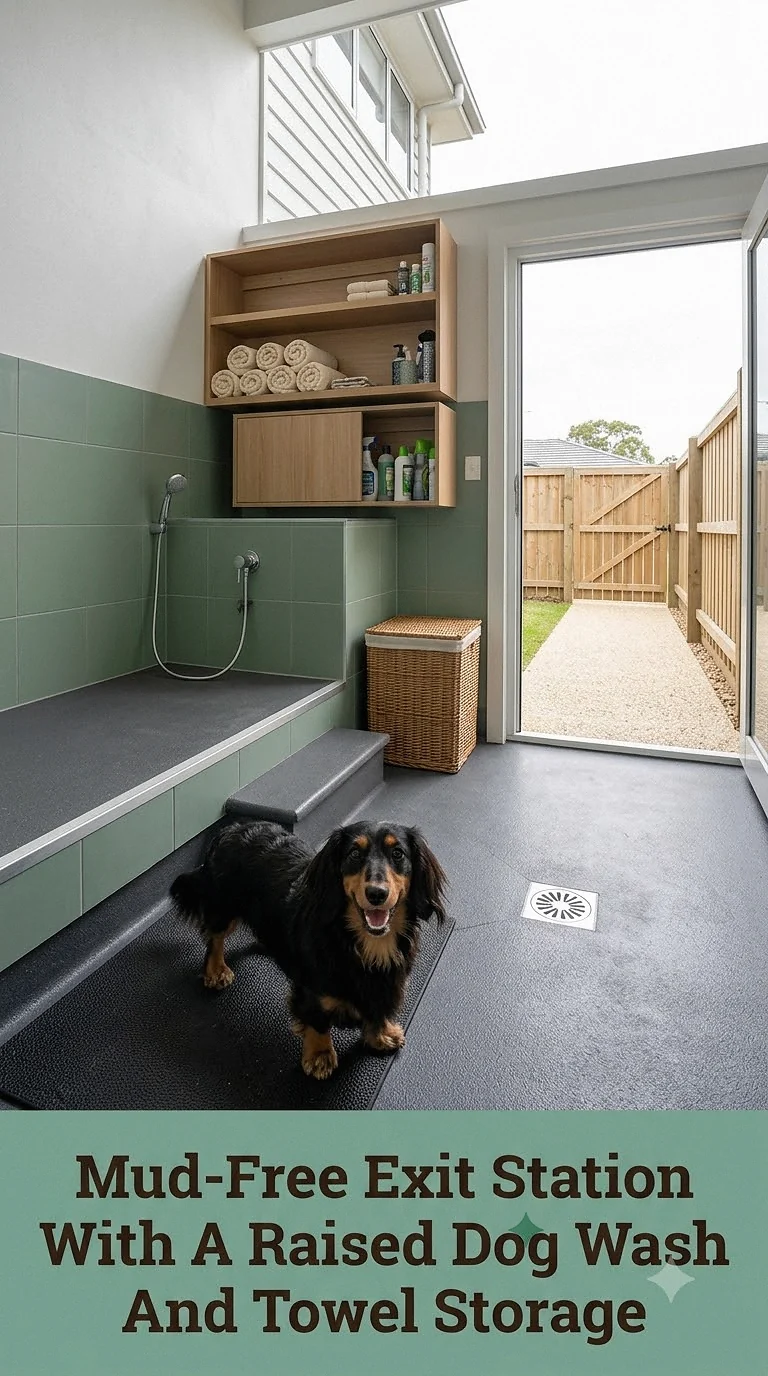
Place a compact cleanup station between the dog park and the house so mud stops at the door. A raised wash platform with a handheld sprayer, slip-resistant floor, and nearby drain makes rinsing paws easier. Finish the wall with washable green tile or sealed paneling, then add oak shelves for neatly rolled towels and grooming supplies.
The platform height should suit both the dog and the person washing, and any restraint point must be sturdy, correctly placed, and used only with close supervision. Provide warm water where practical, but control the temperature carefully. A lower ground-level sprayer may be safer and more comfortable for very large, elderly, or nervous dogs.
Store shampoos and cleaners in a closed cabinet rather than at nose level. Flush the drain, launder damp towels, and disinfect the surface with pet-appropriate products. For a modest DIY version, use a stable rubber mat, hose attachment, towel hooks, and a lidded basket beside an outdoor tap.
Pergola Lounge With Built-In Benches And Hidden Pet Storage
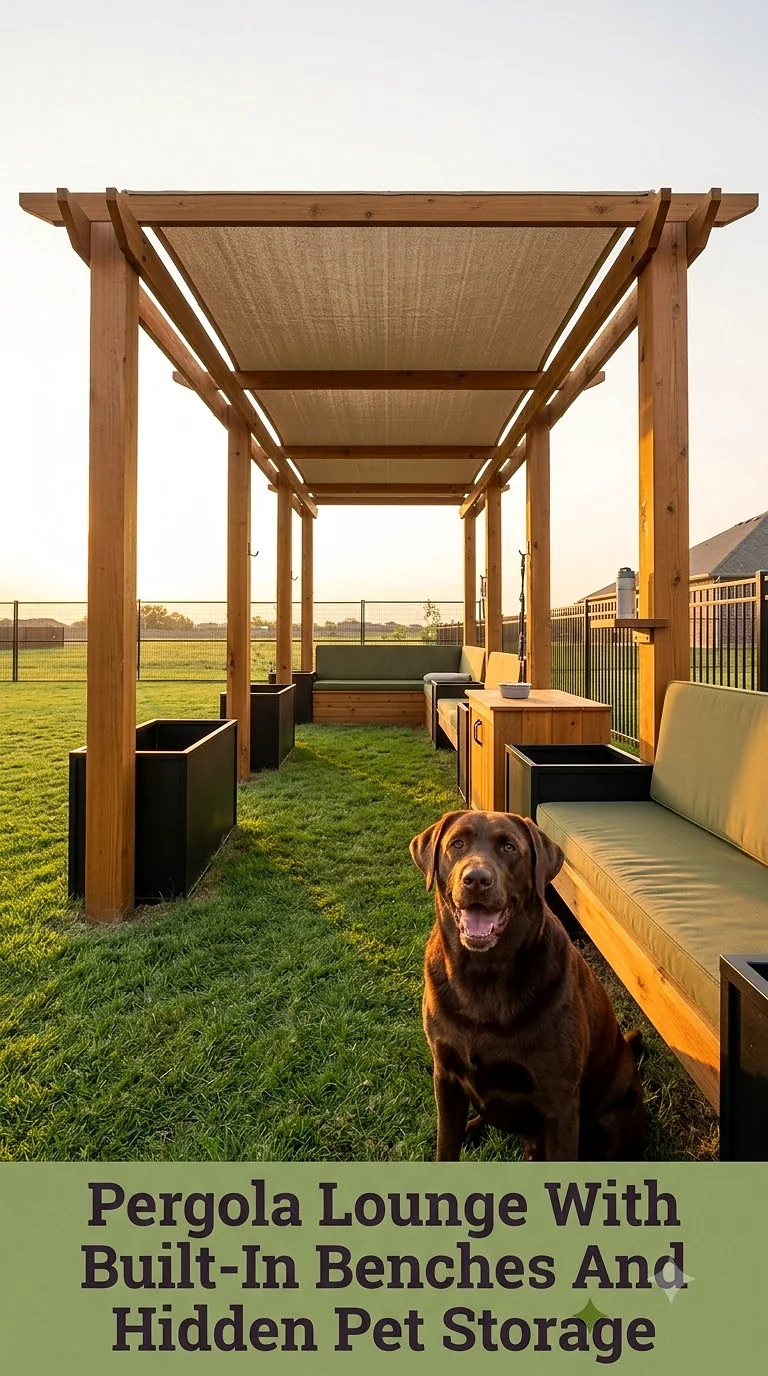
A private dog park should be comfortable for its human caretaker too. Build a slim pergola along one side of the play area with built-in benches that face the entire yard. Warm wood, washable olive cushions, and black metal planters create an inviting outdoor-room atmosphere without obstructing supervision.
Use lift-up bench seats or closed cabinets for balls, training cones, towels, and waste bags. Storage should be weather resistant and inaccessible to curious dogs, especially if it contains treats or cleaning products. Add hooks for leashes and a small shelf for water bottles, keeping both away from active running routes.
Shade fabric or a solid roof can make the lounge useful in strong sun and light rain, but it must be securely installed for local weather. Keep decorative pillows to a practical minimum and choose removable, washable covers. A freestanding bench under an existing tree offers much of the same function on a smaller budget.
Minimalist Artificial-Turf Yard With Graphic Concrete Pavers
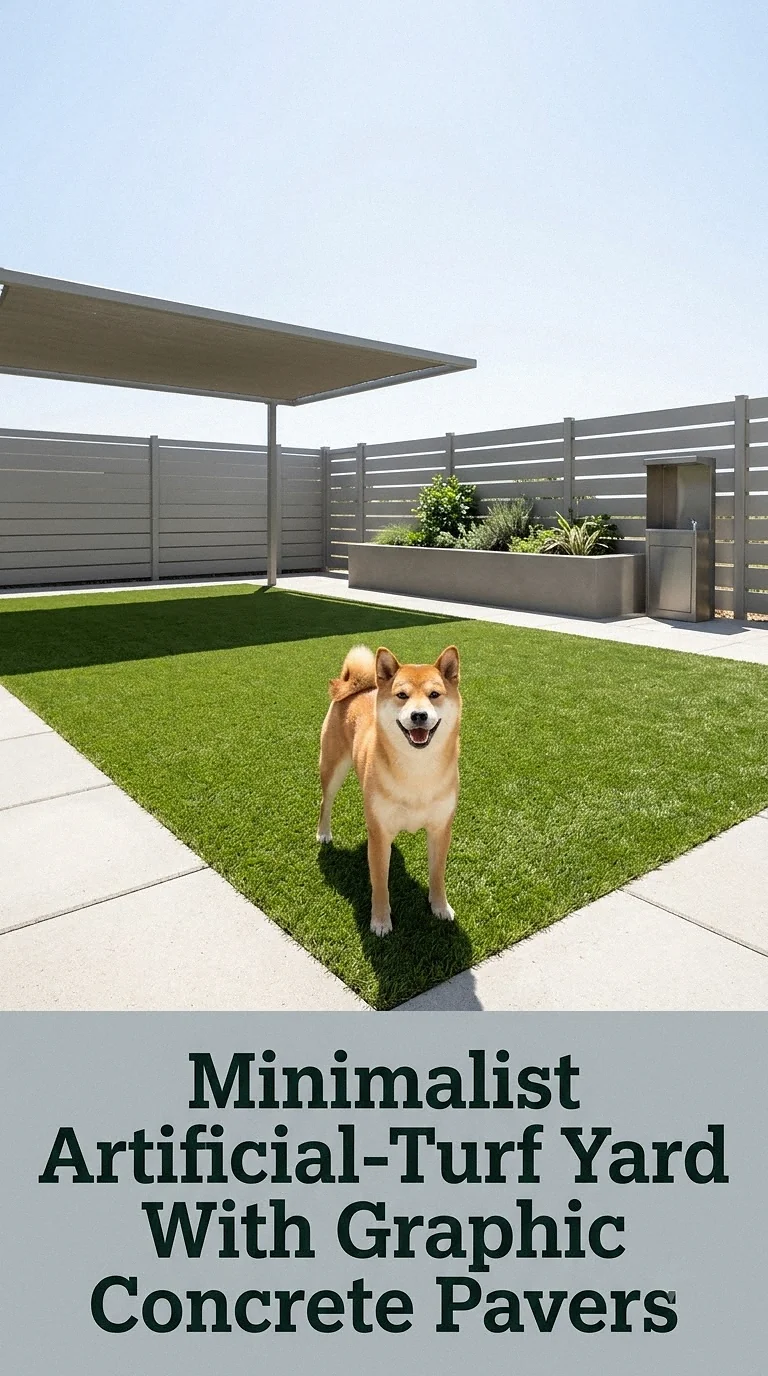
For a crisp urban look, combine professionally installed pet-appropriate artificial turf with broad rectangular concrete pavers. The graphic pattern makes a small yard feel organized, while a restrained palette of green, white, and charcoal complements modern architecture. Leave a generous uninterrupted turf section for movement rather than scattering furniture across it.
Artificial turf is not maintenance free. It needs a draining base, secure edges, routine waste removal, rinsing, and periodic cleaning according to the manufacturer’s guidance. It can also become hot in direct sun, so include shade and check the surface temperature before play.
Choose permeable construction where local conditions allow and direct drainage away from the house. Avoid exposed joins or lifted corners that could catch claws. To soften the hard lines, add one raised planter containing verified dog-safe plants and a compact shaded water station.
Woodland Adventure Trail With Logs, Stumps And Sniffing Clearings
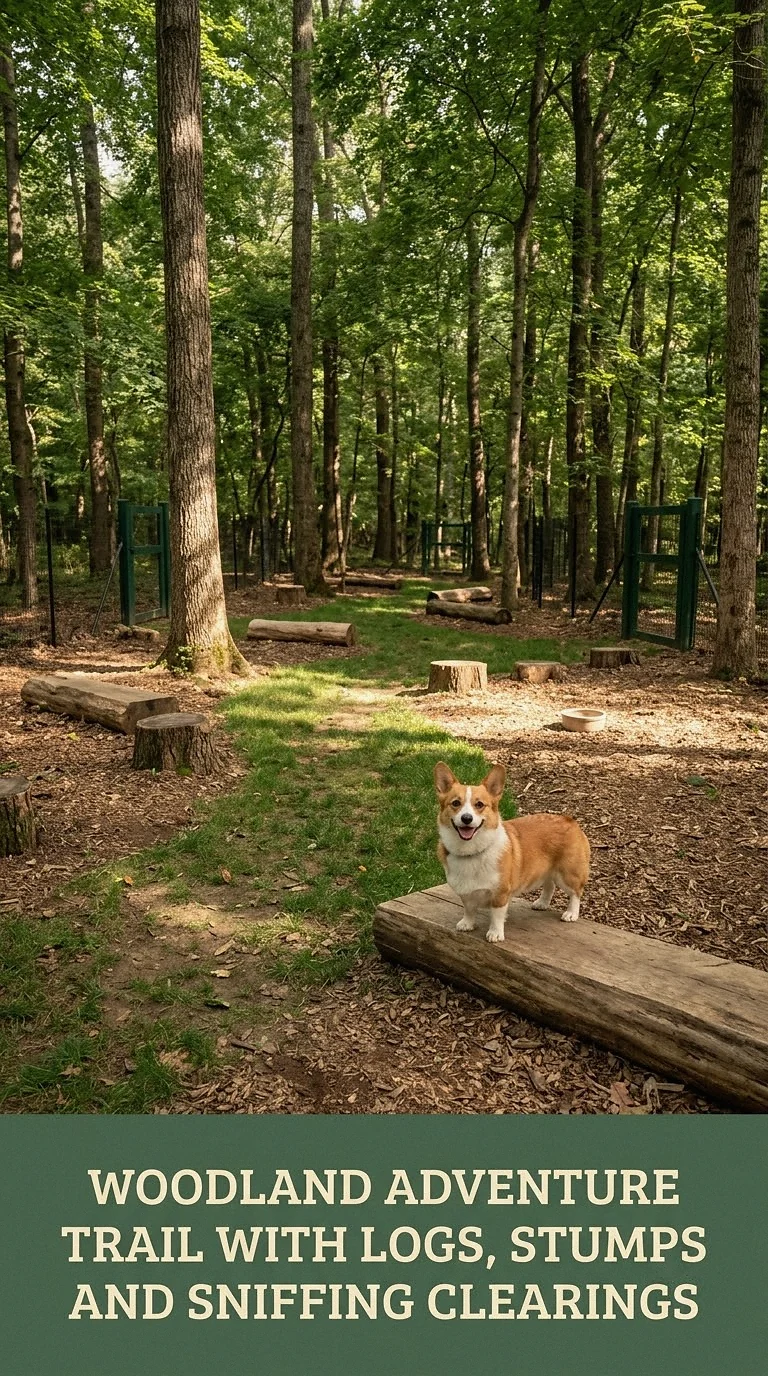
A shady, tree-filled yard can become a woodland adventure park with a looping trail, open sniffing clearings, and carefully placed natural obstacles. Stable logs laid flat and broad, low stumps offer opportunities to step, balance, or simply investigate. Use forest green gates, dark mesh fencing, and natural wood chips intended for pet areas to preserve the woodland mood.
Inspect all timber for splinters, rot, sharp branches, and unstable movement. Avoid encouraging dogs to jump from tall stumps, and keep enough space between features for safe navigation. Check every existing plant and mushroom-prone area, removing anything potentially toxic rather than assuming a natural landscape is harmless.
Leaf litter can conceal waste and holes, so rake paths and inspect the ground frequently. Maintain a clearly visible boundary even where shrubs are dense. A few log sections and a simple mown route can create the effect inexpensively without disturbing established tree roots.
Elegant Divided Dog Yard With Coordinated Play And Rest Zones
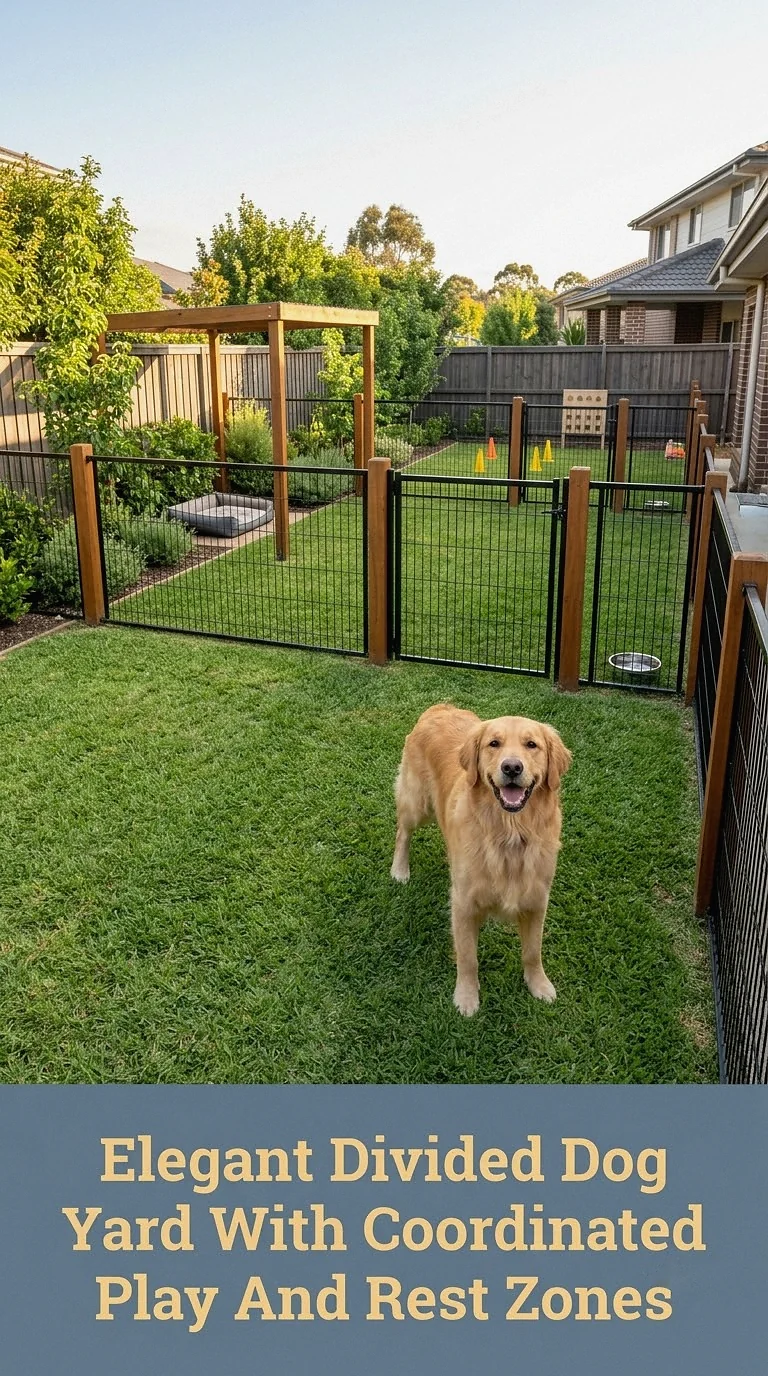
For a multi-dog household, divide the park into coordinated zones using low internal fencing and secure gates. One section can hold an open running lawn, another a quiet resting garden, and a third a training or enrichment area. Repeating the same black fencing, warm timber, and soft green planting throughout keeps the separate spaces visually unified.
Divisions allow dogs with different sizes, energy levels, or play styles to enjoy the yard more comfortably. They can also make introductions and individual training sessions easier to manage. Internal barriers must be as thoughtfully designed as the outer fence, with safe gaps, sturdy latches, and no narrow corners where a dog could become trapped.
Place water and shade in every zone rather than expecting dogs to share one resource. If play becomes tense, use the sections for calm separation instead of allowing dogs to crowd at the dividing fence. Regularly rotate toys, sanitize shared bowls, and supervise interactions even when the physical layout feels secure.
Creating A Private Dog Park That Feels Like Home
The most successful private dog park ideas begin with your dog’s real needs rather than a long list of features. A secure fence, comfortable footing, shade, water, drainage, and easy cleanup create the foundation; sensory planting, agility pieces, splash zones, and stylish seating can then add personality.
Choose one or two ideas that match your available space and daily routine, and build the park gradually. A compact run with a shady bed can be just as meaningful as an elaborate meadow. When the layout supports safe movement, comfortable rest, and time together, it becomes a beautiful part of home for both you and your dog.
Source: https://petstutorial.com
Category: DOGS
