
A dog door may be one of the most practical upgrades you can add to a pet-friendly home, but practical does not have to mean plain. Instead of treating the opening as an awkward plastic flap that interrupts an otherwise beautiful room, you can make it feel like a thoughtful part of the architecture.
The best creative dog door ideas combine freedom for your dog with materials, colors, and details that complement your home. A simple opening can be framed in warm oak, tucked beneath a mudroom bench, surrounded by cottage-style trim, connected to a covered outdoor landing, or upgraded with smart access controls.
You are reading: 19 Creative Dog Door Ideas For A Stylish, Pet-Friendly Home
Function matters just as much as appearance. Your dog should be able to move through the opening comfortably without squeezing, jumping excessively, or struggling with a heavy flap. Exterior access should ideally lead to a secure area, while weather-resistant seals and lockable panels can make the setup more practical throughout the year.
Whether you live in a cozy cottage, modern apartment, farmhouse, suburban family home, or renovated bungalow, these ideas offer plenty of inspiration for creating an entrance designed especially for your four-legged family member.
Creative Dog Door Ideas For Every Home Style And Space
Warm White Oak Dog Door Built Into A Minimalist Wall
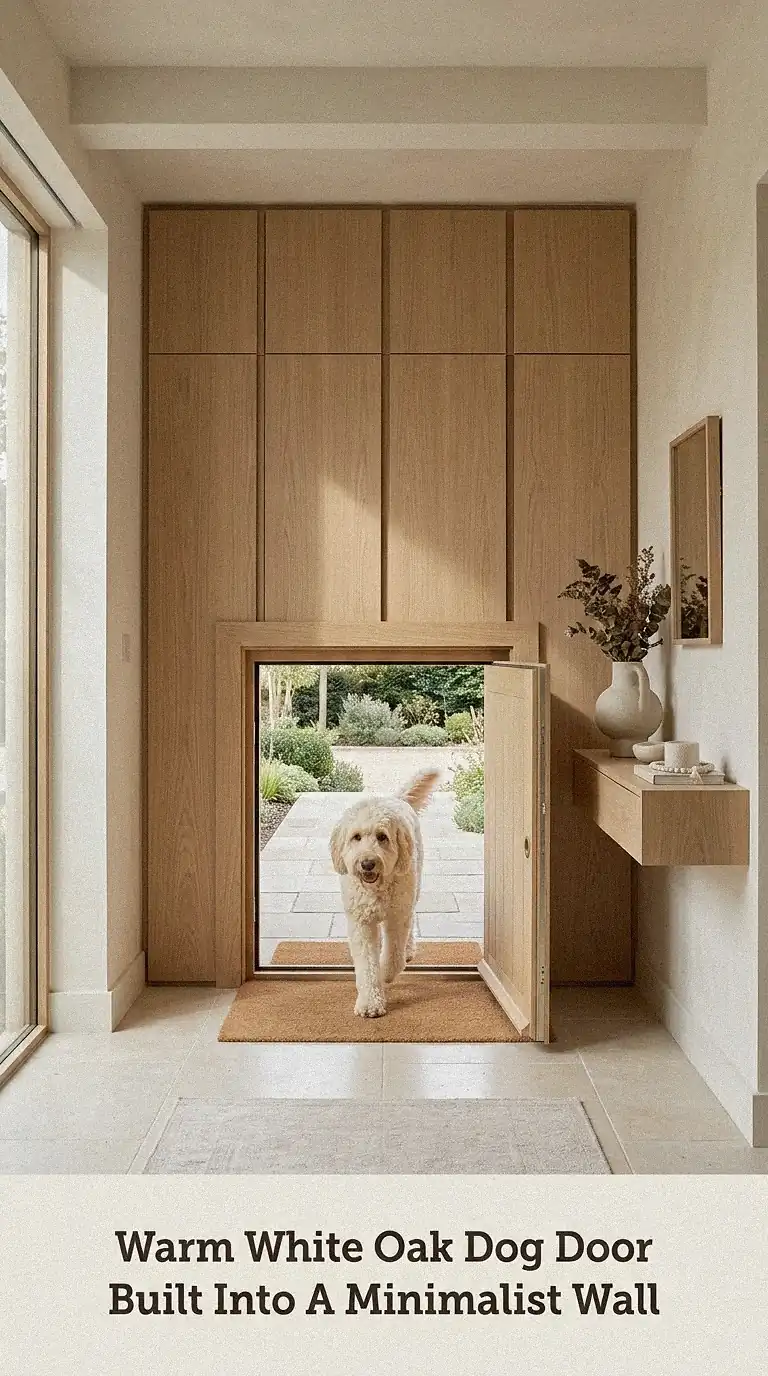
For a dog door that almost disappears into a modern interior, surround the opening with warm white oak trim and keep the rest of the wall simple. The natural wood adds enough visual interest to make the entrance feel intentional without turning it into a decorative focal point.
This look works beautifully with creamy walls, pale flooring, woven baskets, and other soft neutral finishes. A slim oak frame can also coordinate with nearby shelving, cabinetry, or furniture.
Choose a pet door with a clean, low-profile frame rather than a bulky plastic surround. Matching or painting the interior frame to blend with the wood creates an even more polished appearance.
For easy maintenance, use a durable clear finish on the wood surrounding the opening. Dogs can bring moisture and dirt through the doorway, so washable finishes are much easier to live with than unfinished timber.
Sage Green Mudroom Bench With A Hidden Dog Door
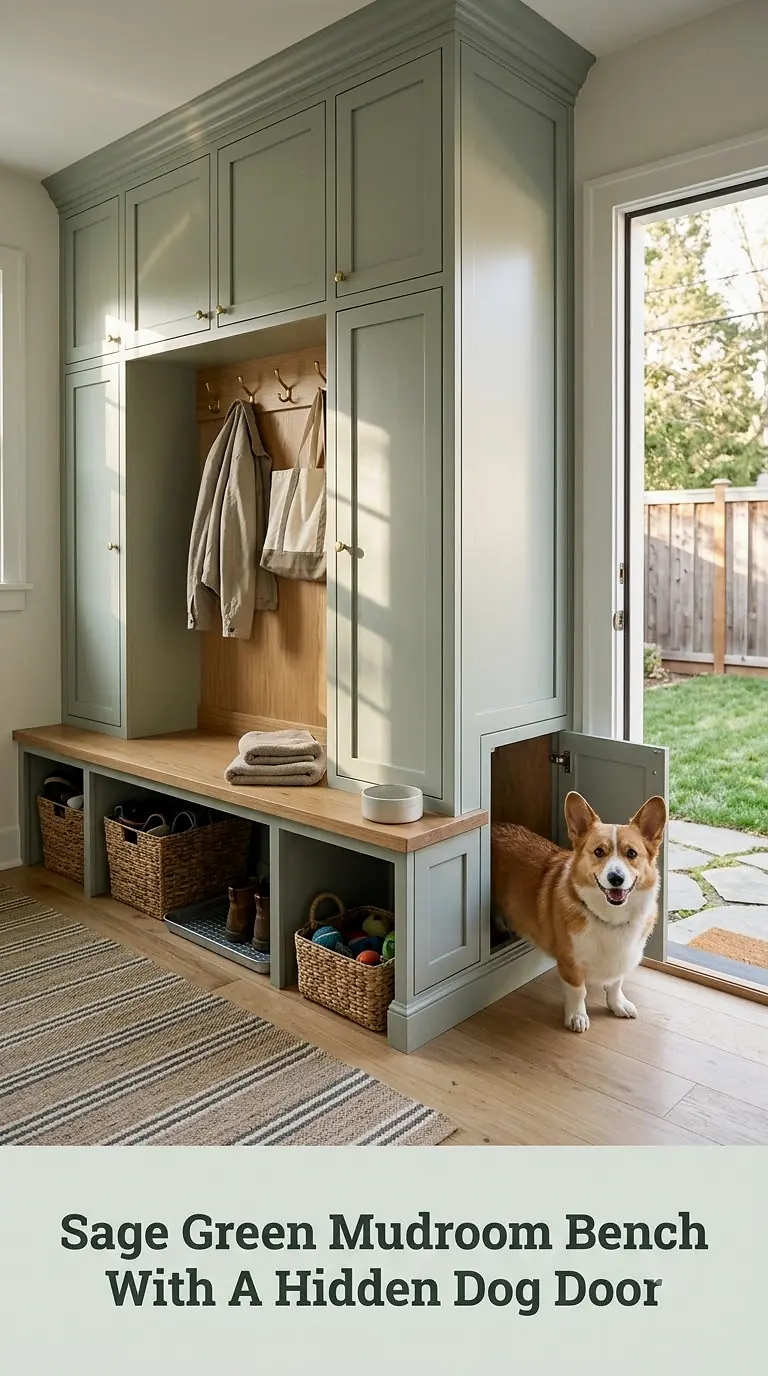
A mudroom is one of the most practical locations for a dog door because muddy paws can be managed before your pet reaches the rest of the house.
Create a built-in bench painted soft sage green, then position the dog door underneath or beside the seating area. Above the bench, add hooks for leashes, harnesses, towels, and lightweight jackets. Woven baskets can hold toys and grooming supplies.
The result feels more like a complete dog station than a random opening in the wall.
Choose washable flooring such as tile or another moisture-resistant surface near the entrance. A small indoor mat can catch dirt as your dog comes inside, while an outdoor mat provides a second layer of protection.
The muted green cabinetry, warm wood bench top, brass hooks, and natural baskets create a cozy look that feels equally at home in farmhouse and transitional interiors.
Arched Cottage Dog Door With Cream Trim And Floral Landscaping
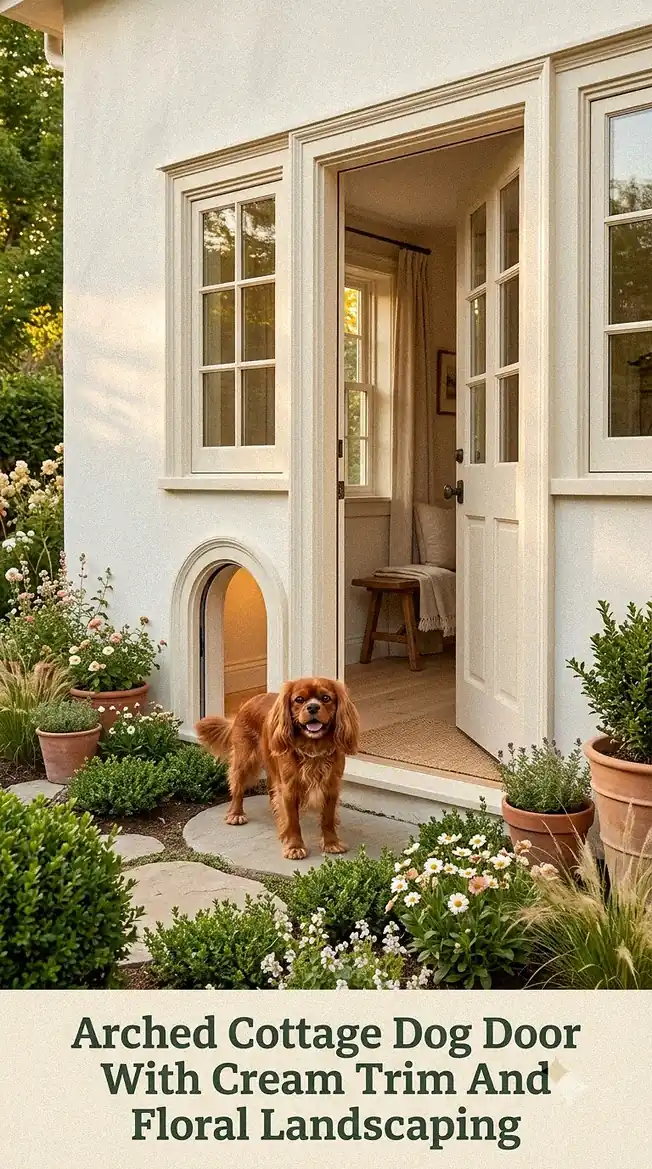
Give a basic pet entrance storybook charm by creating a small arched surround around the opening.
The pet door itself can remain rectangular, but decorative trim around it can form a graceful arch that visually transforms the entrance. Paint the surround warm cream, muted blue, soft green, or another color that coordinates with your home’s exterior.
Outside, complete the cottage look with stepping stones and low-growing plants positioned safely away from the actual opening. Lavender-style planting, ornamental grasses, small shrubs, or pet-safe flowering plants can soften the transition between the house and garden.
Keep enough clear space immediately outside the opening so your dog can comfortably look around before stepping into the yard.
A tiny overhead awning can make the design even more charming while offering some protection from rain.
Modern Black Dog Door With Matching Matte Black Hardware
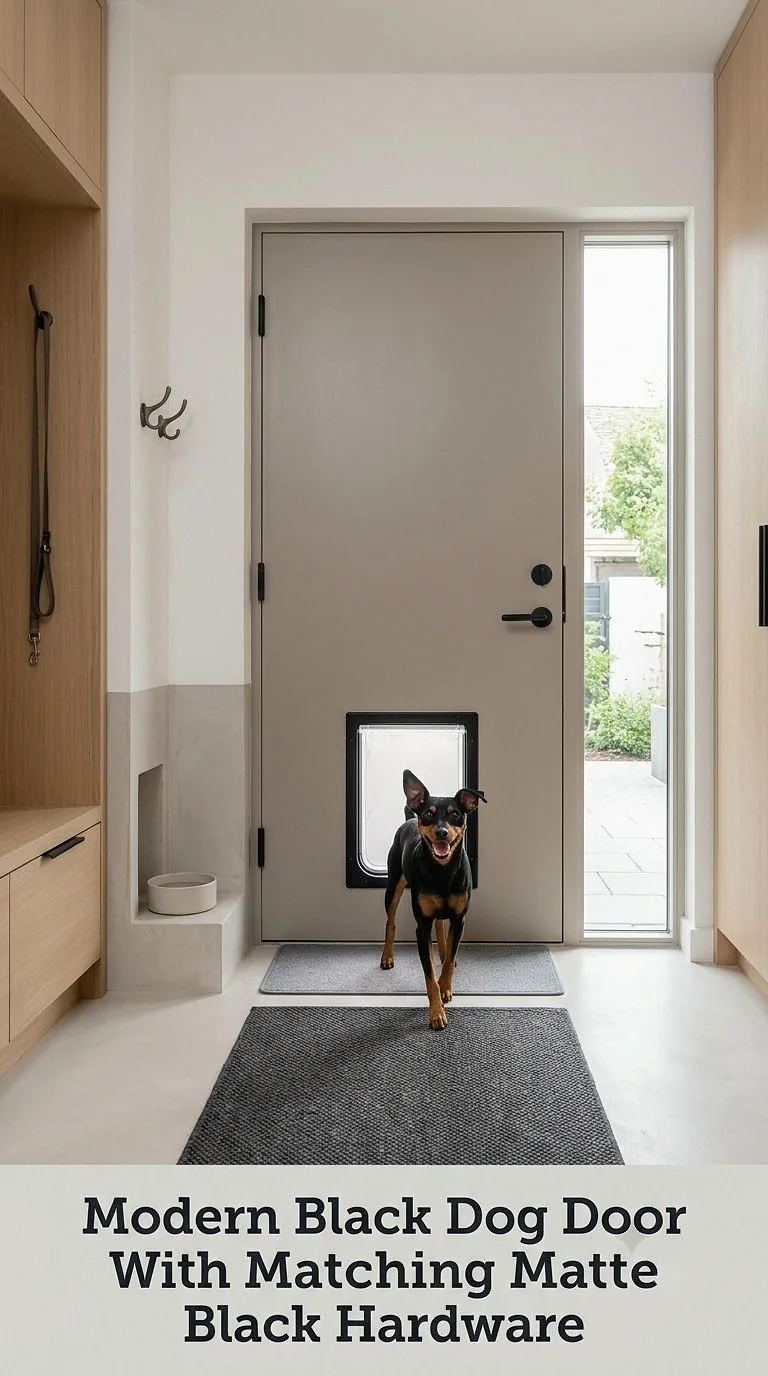
If your home features black window frames, black door hardware, or contemporary lighting, continue the same finish around the dog door.
A matte black pet-door frame placed in a white, charcoal, beige, or warm wood wall creates a crisp architectural look. Instead of trying to hide the opening, this approach makes it part of the home’s modern design language.
Keep surrounding decoration minimal. One streamlined wall hook, a neutral washable runner, and a simple storage basket may be all you need.
For an exterior installation, black hardware looks particularly attractive against cedar siding, pale stucco, or painted brick.
Because dark frames can show dust and nose marks, choose a surface that wipes clean easily. The simplicity of the design makes maintenance easy while giving even an inexpensive pet door a much more custom appearance.
Farmhouse Dog Door Built Into A Paneled Back Door
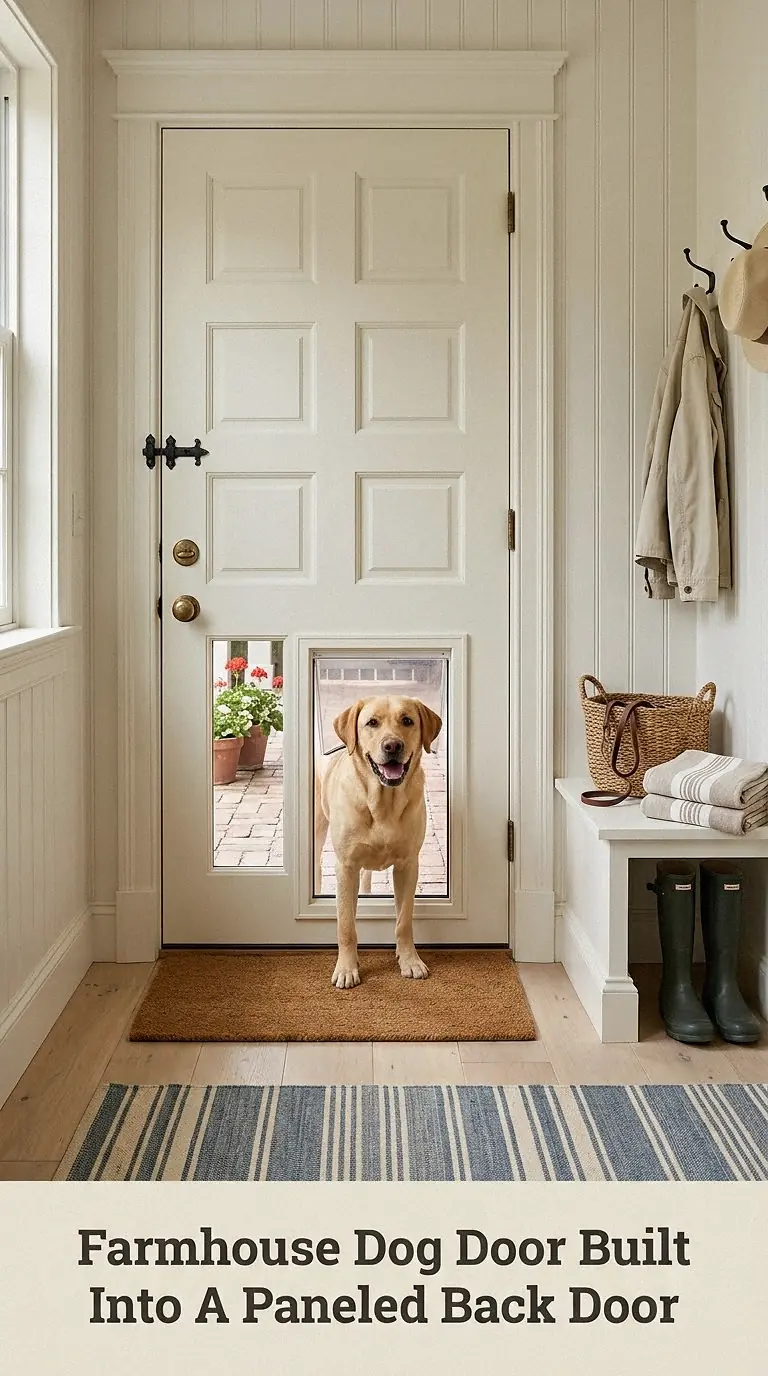
A paneled back door provides the perfect opportunity to make a dog entrance feel like an original architectural feature.
Choose a pet door that fits neatly within one of the lower door panels rather than interrupting decorative molding. Paint the pet-door frame the same color as the main door so the pieces visually blend together.
Soft white, deep navy, charcoal, dusty green, and warm greige all work beautifully with farmhouse interiors.
Inside, place a washable striped runner or natural-look mat near the doorway. A wall-mounted leash hook and a small basket for towels create a practical landing area without requiring an entire mudroom.
Before cutting into any exterior door, check its construction and installation requirements carefully. Some doors are easier to modify than others, and certain fire-rated doors should not be altered.
Glass French Door With A Discreet Lower Pet Entrance
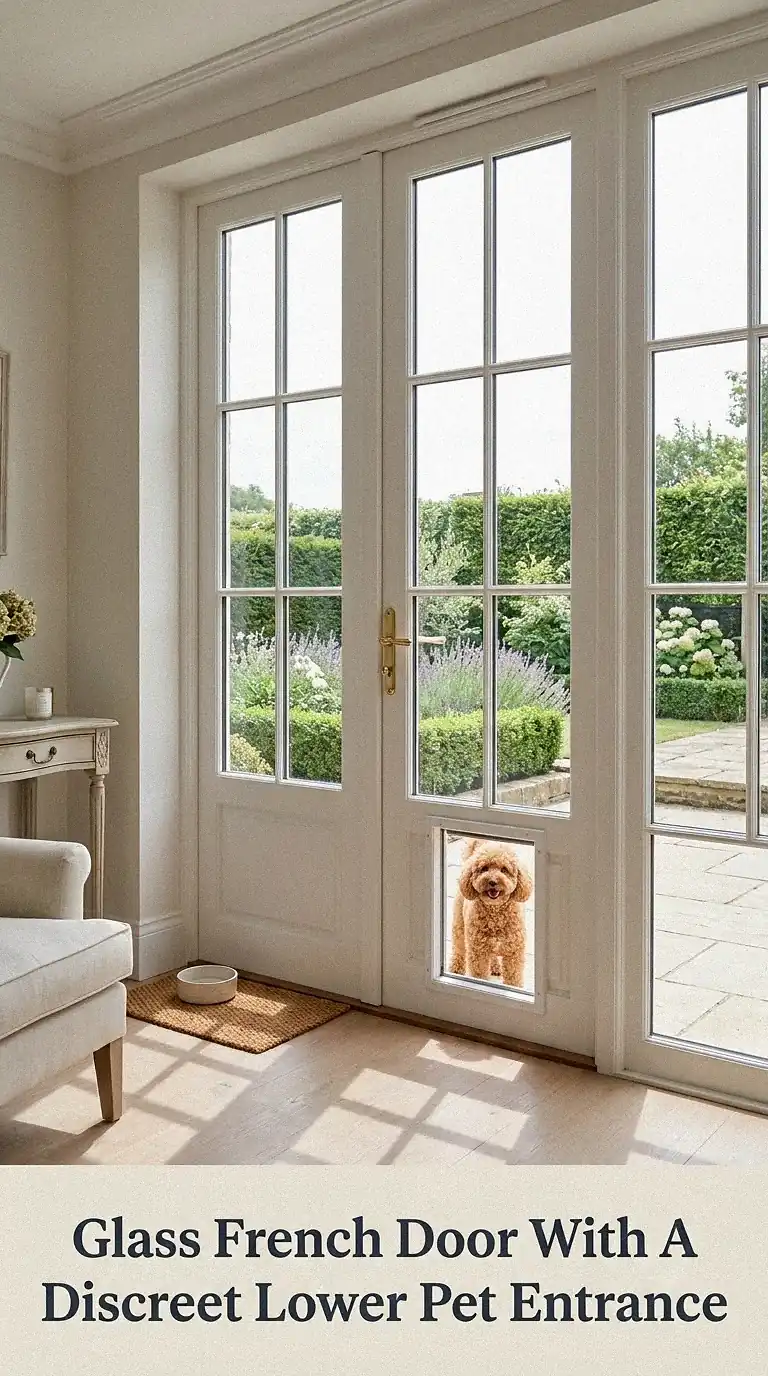
Dog doors do not have to ruin the elegant appearance of French doors.
When replacing or professionally modifying a glass door, consider a design where the pet entrance is integrated neatly into a lower solid panel or compatible glazed section. Keeping the frame color consistent with the main door helps the opening blend into the overall design.
This concept works especially well for patios, sunrooms, breakfast rooms, and bright kitchens where you want to preserve natural light.
Black French doors with a matching dark pet-door frame create a dramatic modern look, while white frames feel airy and traditional.
Because modifying glass requires the correct type of panel and professional knowledge, this is usually better treated as a planned renovation rather than a casual DIY cutting project.
Removable Sliding Glass Door Insert For A Renter-Friendly Setup
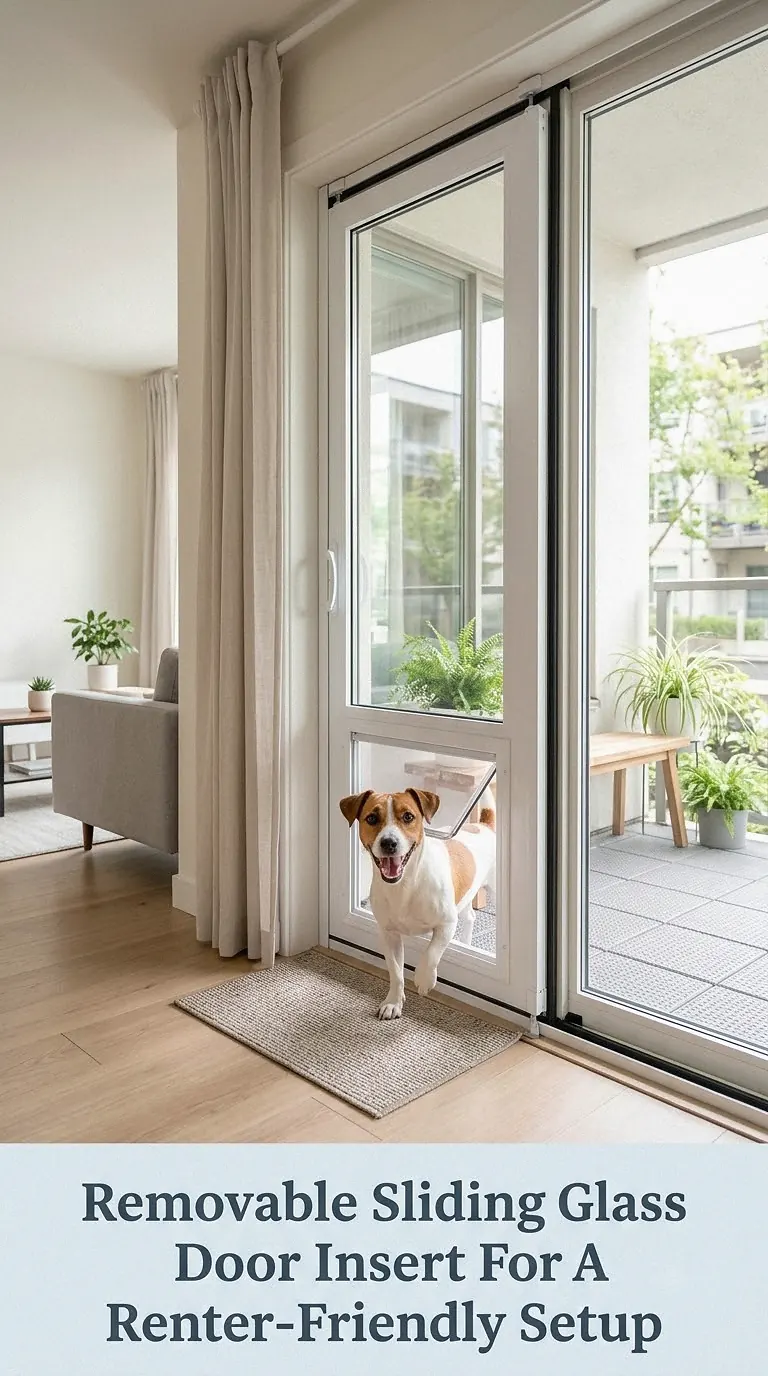
Renters and homeowners who dislike permanent alterations can use a removable pet-door panel designed to fit into a sliding patio-door track.
The tall narrow insert sits alongside the existing glass panel, creating a dedicated pet entrance without requiring a large hole in the wall or door.
Read more : Why Does My Dog Choke After Drinking Water?
To make the setup visually appealing, choose a frame finish that matches the existing patio door. Black frames look sleek in contemporary rooms, while white or aluminum finishes can disappear into lighter spaces.
Place a small indoor runner beside the entrance and create an attractive outdoor landing with a weather-resistant mat and a few well-positioned planters.
Remember that the insert reduces the usable width of the sliding doorway, so check that people can still pass through comfortably. A suitable track-security solution is also worth considering.
Built-In Laundry Room Dog Door With Towel Storage
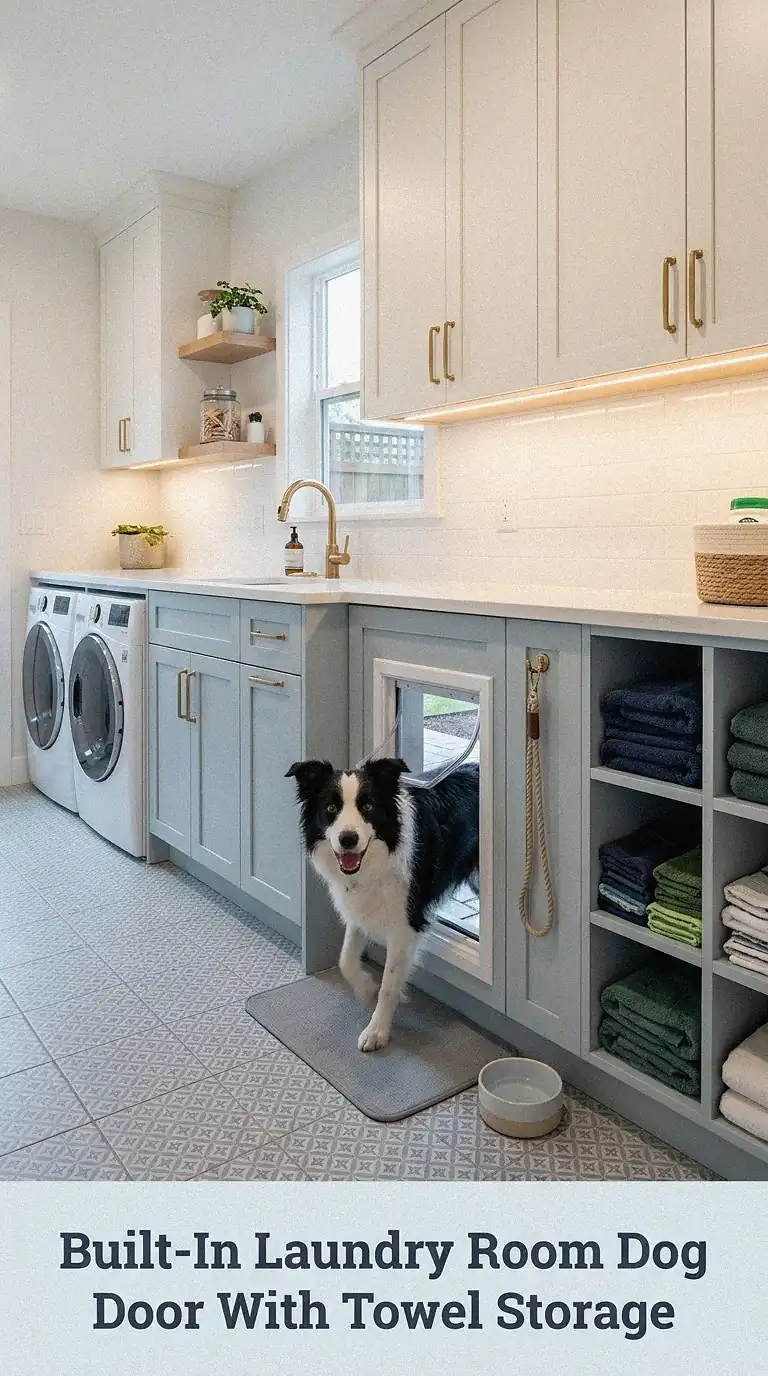
Turn your laundry room into an organized dog entry zone by placing the pet door near cabinetry designed for cleaning supplies and dog gear.
Install open cubbies or hooks for towels above the entrance, along with a basket for paw wipes, leashes, and waste bags. Closed cabinetry can hide less attractive supplies.
This setup is especially useful for dogs that love muddy gardens, rainy walks, or backyard play.
Use durable flooring and washable wall paint around the doorway. A low-pile mat can catch moisture without becoming difficult to vacuum.
For a polished look, coordinate the dog-door frame with the cabinetry. Cream cabinets and warm wood feel cozy, while navy cabinetry and brass hardware create a more sophisticated utility-room design.
The goal is to create a transition zone where mess can be handled before your dog continues into the main living areas.
Smart Electronic Dog Door With A Clean Contemporary Frame
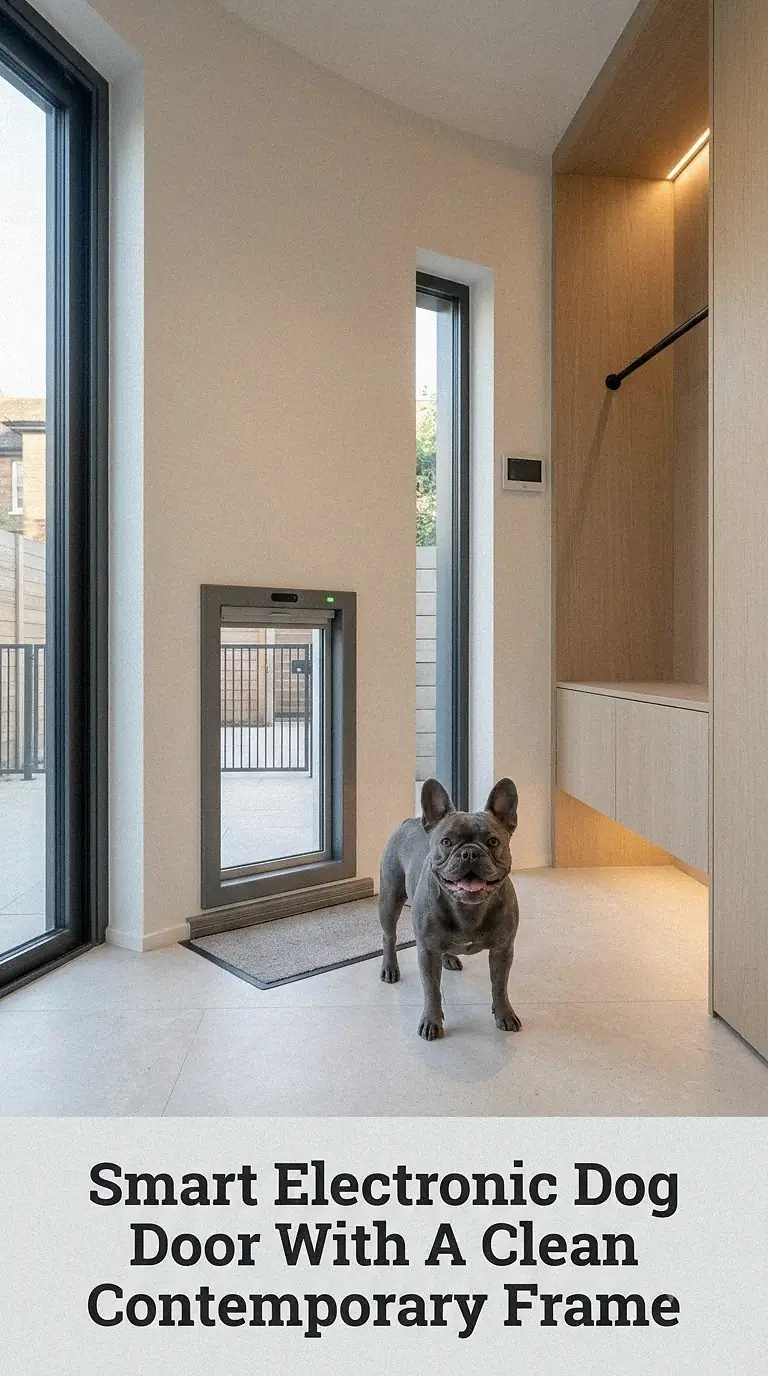
A smart pet door can be an attractive option when you want greater control over when and which pets can use the entrance.
Depending on the system, access may be linked to a compatible collar device or another electronic mechanism that allows the door to operate for approved pets.
Visually, these doors work best when treated like a modern appliance. Install the unit neatly into a simple wall and avoid excessive trim around it. White, black, or neutral frames can coordinate with surrounding interiors.
This style suits contemporary kitchens, utility rooms, and minimalist homes especially well.
Because electronic doors rely on power or batteries, make battery checks part of your regular home-maintenance routine. It is also important to teach your dog gradually so that the movement or sound of the mechanism does not make the entrance intimidating.
Weatherproof Double-Flap Dog Door With A Cozy Interior Landing
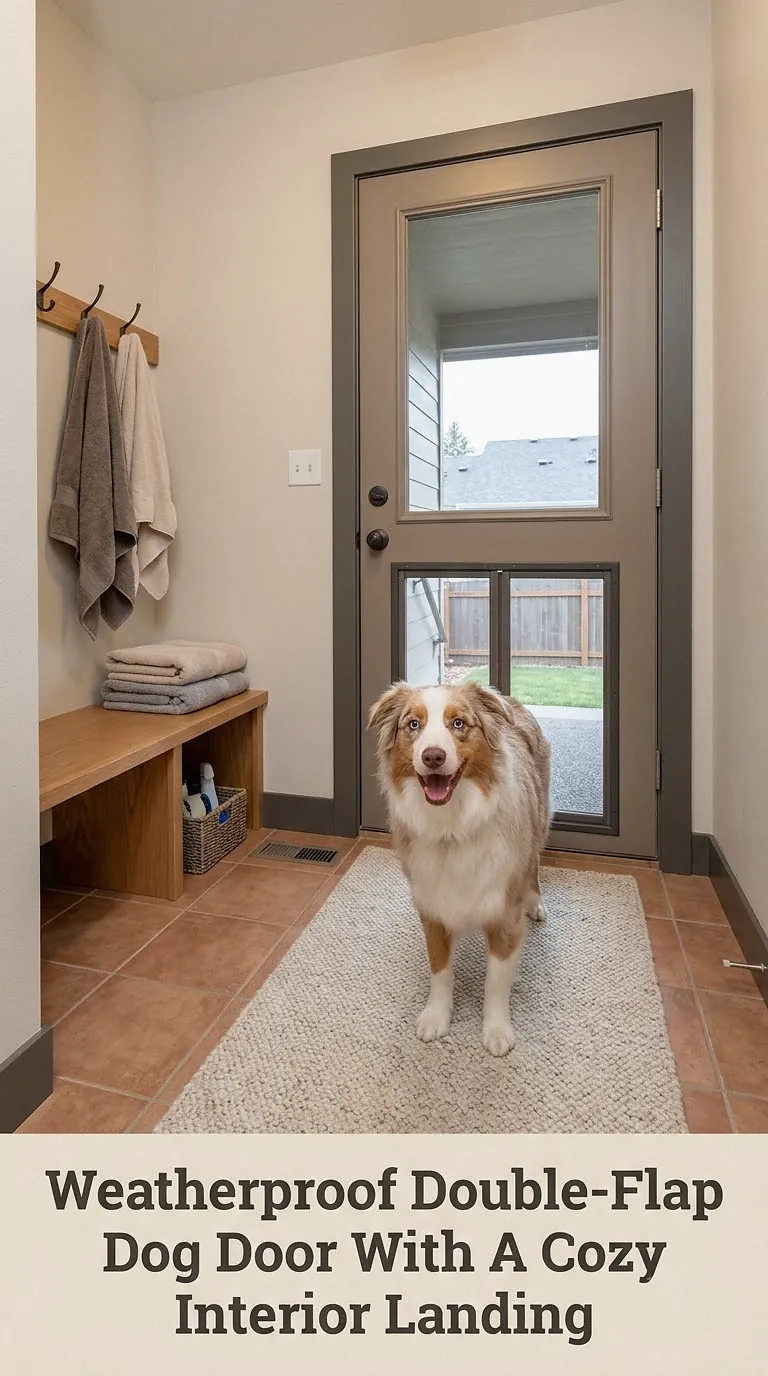
Homes exposed to strong heat, cold, wind, or rain may benefit from a pet entrance designed with better weather protection.
Look for a well-sealed system and create an indoor landing area that makes the entrance feel cozy rather than drafty. A washable rug, narrow bench, and wall hooks can visually anchor the space.
Double-flap designs or insulated systems can provide more separation between indoor and outdoor conditions than a basic thin flap.
Check the flap periodically to make sure it closes properly and that dirt or debris is not interfering with the seal.
For visual warmth, surround the opening with natural wood trim or paint it to match the wall. Function may be the priority here, but thoughtful styling keeps the dog door from looking overly utilitarian.
Covered Mini Dog Porch With Cedar Trim
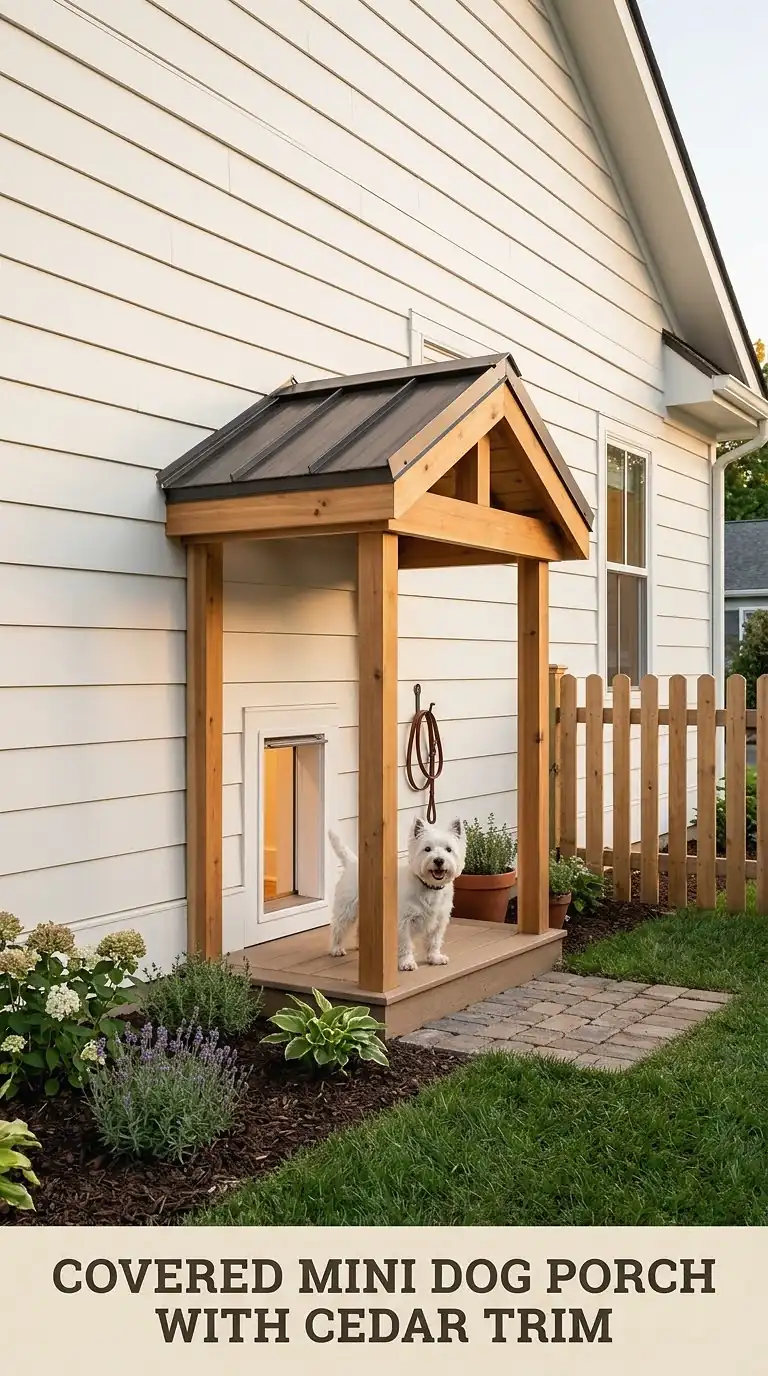
Transform the exterior side of a dog door into a tiny covered porch.
A shallow cedar canopy above the entrance can provide a charming architectural detail while helping shield the immediate doorway from rain. Add a small landing made from stone, brick, composite decking, or another weather-resistant material.
Keep the scale simple so your dog has plenty of room to enter and exit freely.
A black exterior light positioned nearby can make the area more visible after dark, while a washable outdoor mat helps control muddy paws.
Cedar looks especially beautiful against white siding, black siding, painted brick, and neutral stucco. For an extra-custom appearance, coordinate the miniature canopy with the home’s main porch roof or exterior trim.
The final result can resemble a tiny entrance built especially for your dog.
Garden Dog Door Framed With Pet-Safe Greenery
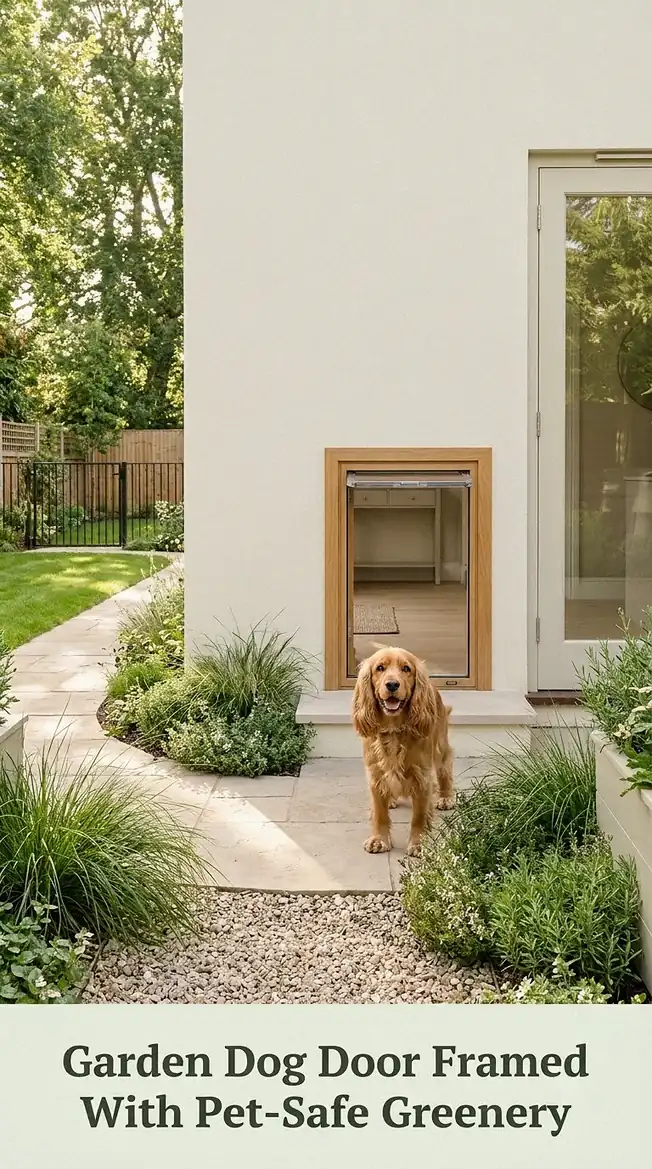
Instead of allowing the exterior dog door to sit alone on a blank wall, integrate it into the surrounding landscape.
Create a simple path leading from the entrance into the yard using gravel, stepping stones, brick, or pavers. Position greenery along the edges while maintaining a clear, unobstructed zone directly around the opening.
Choose plants appropriate for a dog-friendly garden and avoid anything that could create a hazard if chewed or brushed against repeatedly.
A pair of sturdy planters placed farther from the doorway can create attractive symmetry without narrowing your dog’s path.
This idea works particularly well when the dog door leads into a secure garden. The landscaping makes the entrance feel like an intentional part of the backyard instead of an afterthought attached to the house.
Screened Porch Dog Door With A Relaxed Coastal Look
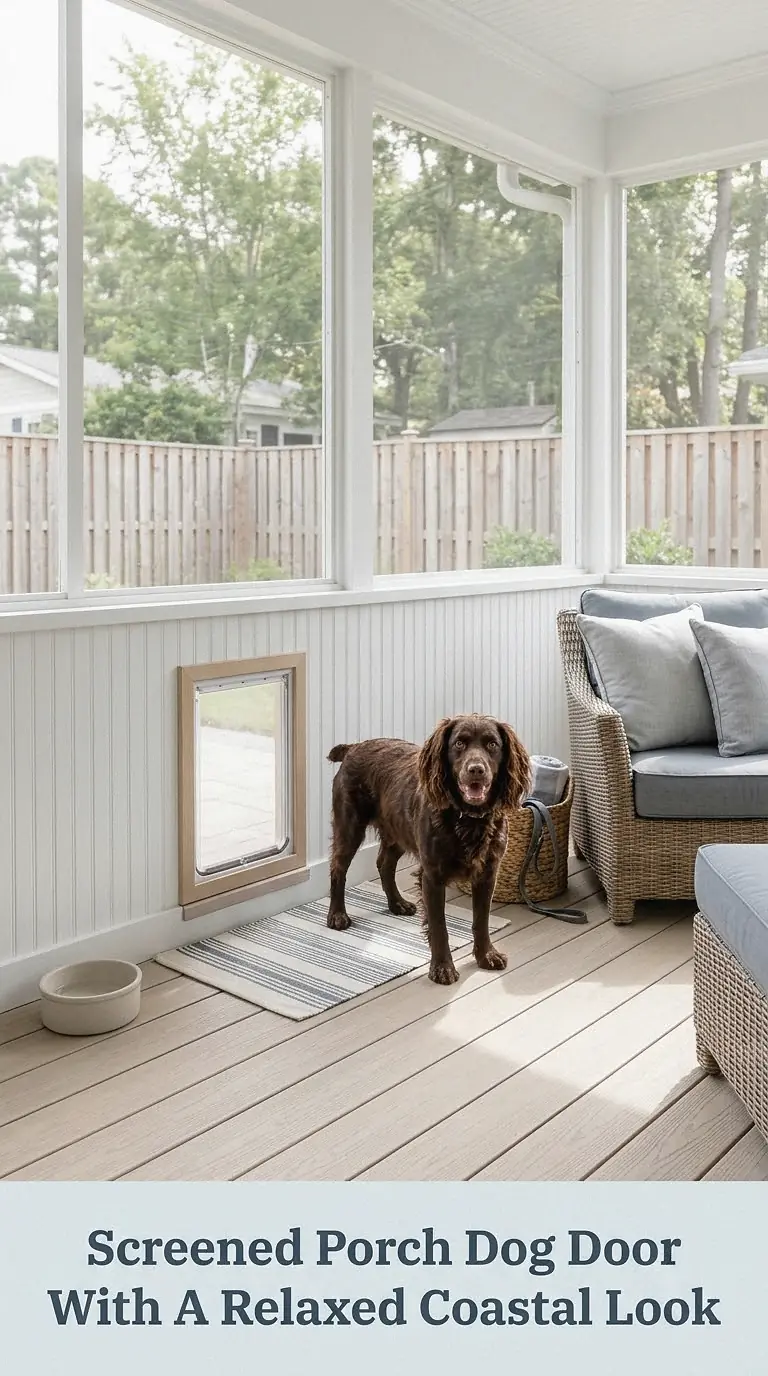
A screened porch can act as a wonderful transitional space between the house and backyard.
Install a suitable pet door in the porch enclosure so your dog can move between the protected porch and a secure outdoor area. Inside the porch, use washable indoor-outdoor rugs, woven furniture, pale woods, and soft blue or sandy beige accents.
The entire setup feels especially inviting in coastal, cottage, or casual homes.
A water bowl station and storage basket for outdoor toys can sit nearby without cluttering the entrance itself.
Because screens and lightweight materials vary significantly in strength, choose an installation method appropriate for your dog’s size and energy level. A powerful large dog may need a sturdier framed opening than a small, calm companion.
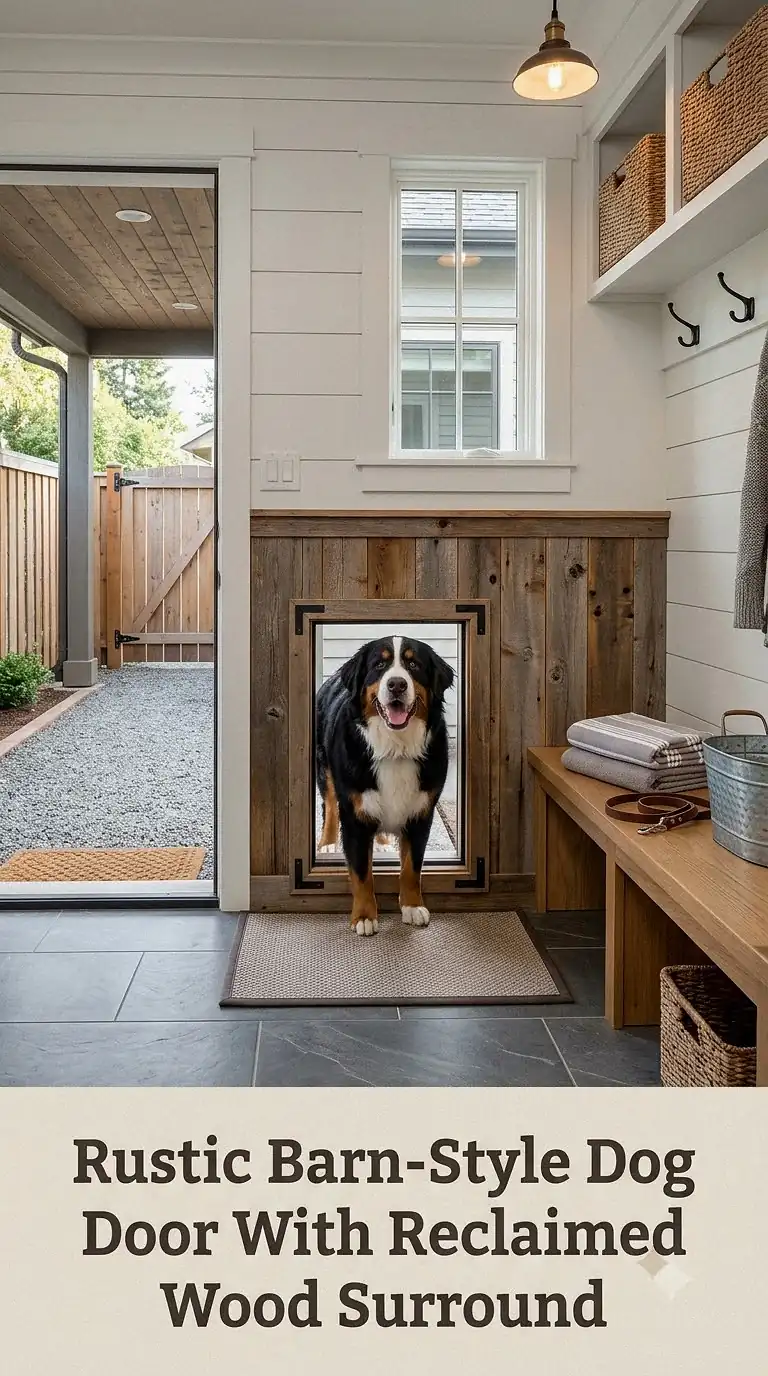
Rustic Barn-Style Dog Door With Reclaimed Wood Surround
Read more : 18 Dog Date Ideas For Sweet, Fun, And Memorable Days Together
For a farmhouse, cabin, or rustic interior, frame the dog door with reclaimed-looking wood to create a warm, handcrafted appearance.
Use narrow wood planks around the opening rather than oversized decorative elements that could interfere with movement. Medium brown, weathered oak, or lightly distressed finishes pair beautifully with cream walls and black hardware.
A vintage-style wall hook nearby can hold a leash, while a galvanized or woven basket provides convenient toy storage.
You can achieve the reclaimed appearance without using genuinely rough old boards. Smooth new wood with a rustic stain is often easier to clean and reduces the chance of splinters.
The finished design provides plenty of character while remaining practical enough for everyday pet traffic.
Color-Blocked Dog Door That Blends Into The Wall
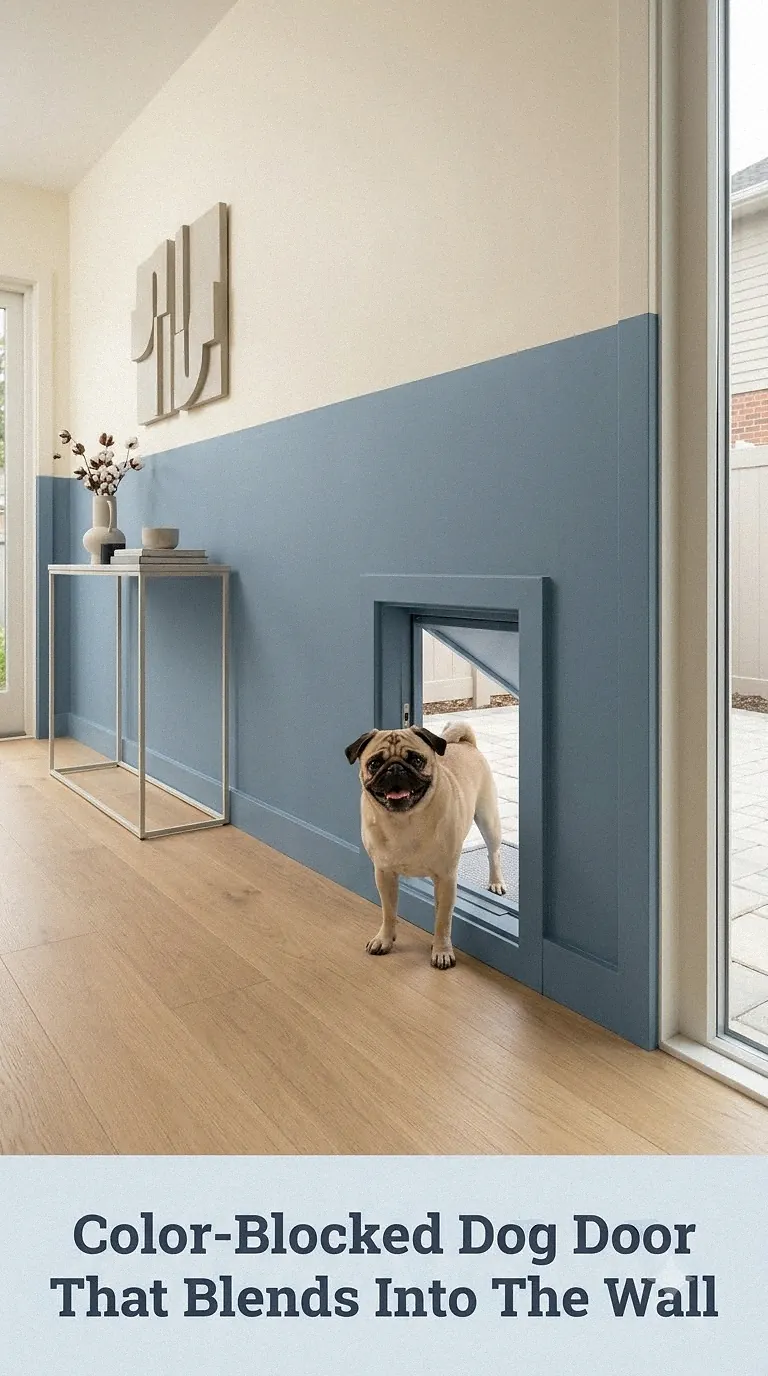
One of the easiest budget-friendly transformations is simply using paint strategically.
Paint the pet-door frame the same shade as the surrounding wall so the entire opening visually recedes. Deep green, navy, terracotta, charcoal, and warm taupe can all make a basic frame look more sophisticated.
Alternatively, create a deliberate color-blocked section around the entrance. A rectangular painted zone extending from the baseboard upward can turn the dog door into a small design feature.
Coordinate the color with a nearby dog bed, cabinet, runner, or storage basket to make the room feel cohesive.
Choose durable washable paint around high-contact areas. Dogs naturally brush against walls as they move through narrow spaces, so easy cleaning matters more here than in many other parts of the room.
Large Dog Door With A Wide Opening And Low Entry Step
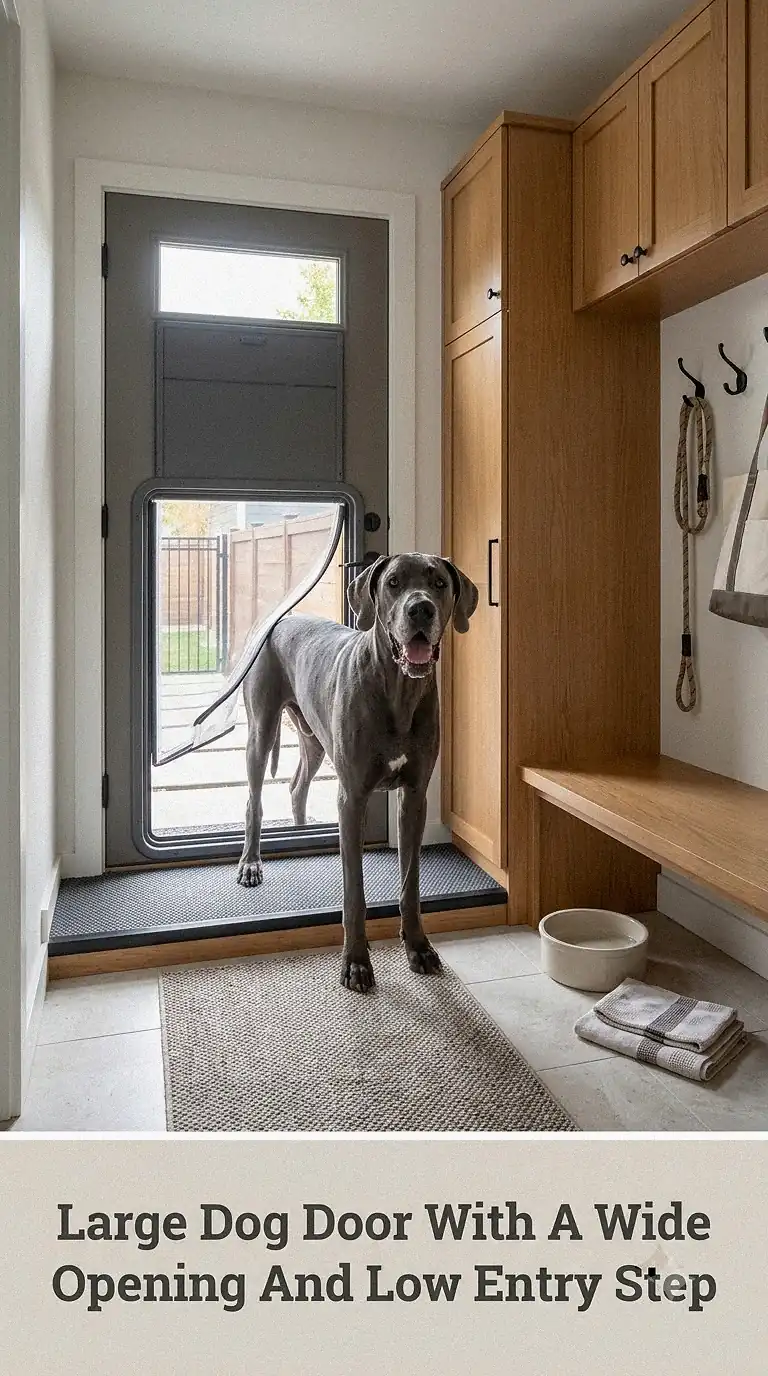
Large dogs need more than simply a bigger version of a small pet door. The proportions and installation height should allow comfortable movement without unnecessary crouching or awkward stepping.
Create a wide, clean opening with a sturdy frame that visually suits the scale of the dog. Black metal-look trim, natural oak, or a frame painted to match the wall can keep the larger opening from appearing bulky.
Outside, provide a stable, level landing rather than expecting the dog to jump immediately onto uneven ground.
This design can also work well for older large dogs when the transition is kept gentle and easy to navigate.
Measure your individual dog carefully before selecting the door. Comfort is more important than making the opening as small and unobtrusive as possible.
Senior-Friendly Dog Door With A Gentle Exterior Ramp
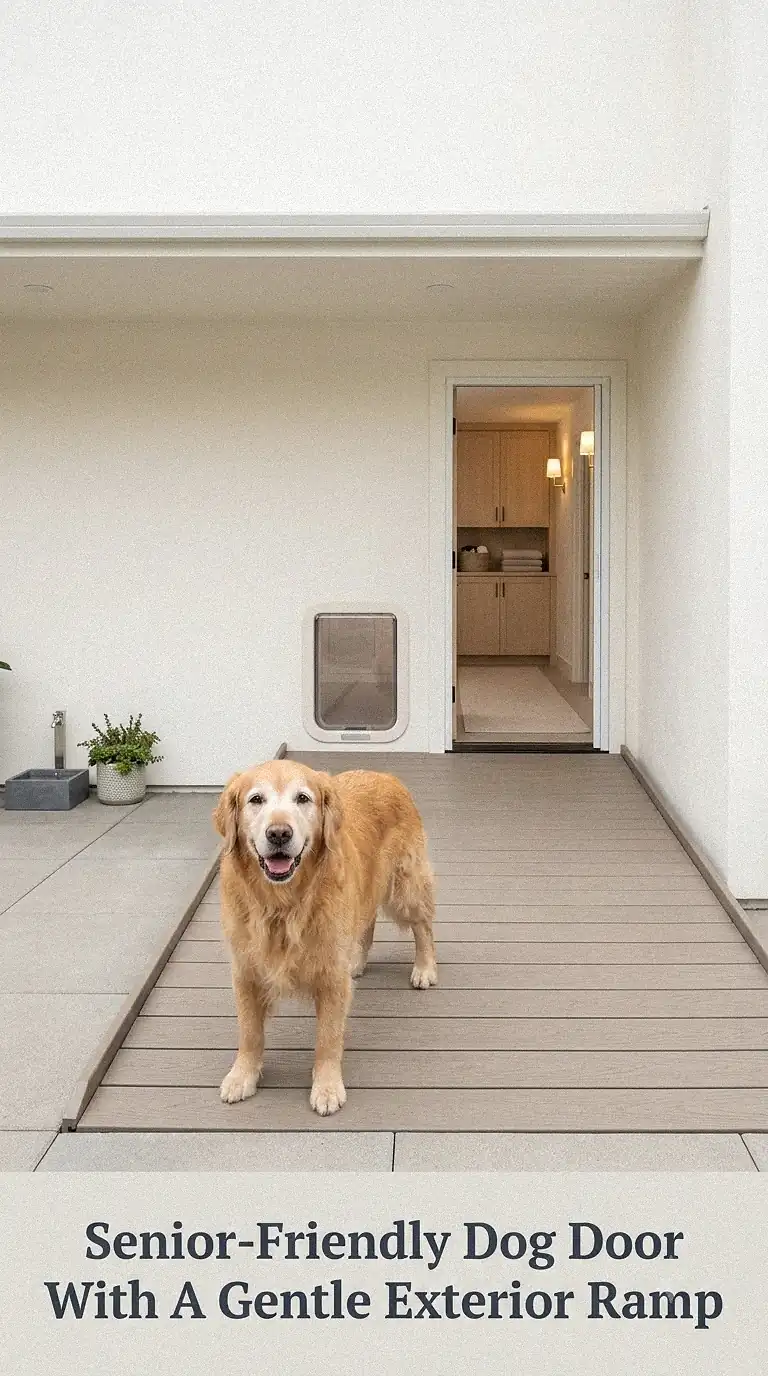
For an older dog or a pet that finds large steps uncomfortable, design the area around the dog door with easier movement in mind.
Position the entrance at an appropriate height and add a broad, gently sloped ramp outside if there is a significant difference between the interior floor and yard level.
Choose a textured, slip-resistant surface and include stable side edges if needed. The ramp can be finished in composite decking, sealed wood, or another outdoor material that coordinates with the home.
Inside, avoid slippery rugs that slide when your dog pushes through the flap.
A senior-friendly setup can still be beautiful. Pale wood, simple black rail details, neutral outdoor mats, and subtle landscaping create an elegant entrance while prioritizing accessibility.
Dog Door Leading Into A Private Fenced Potty Courtyard
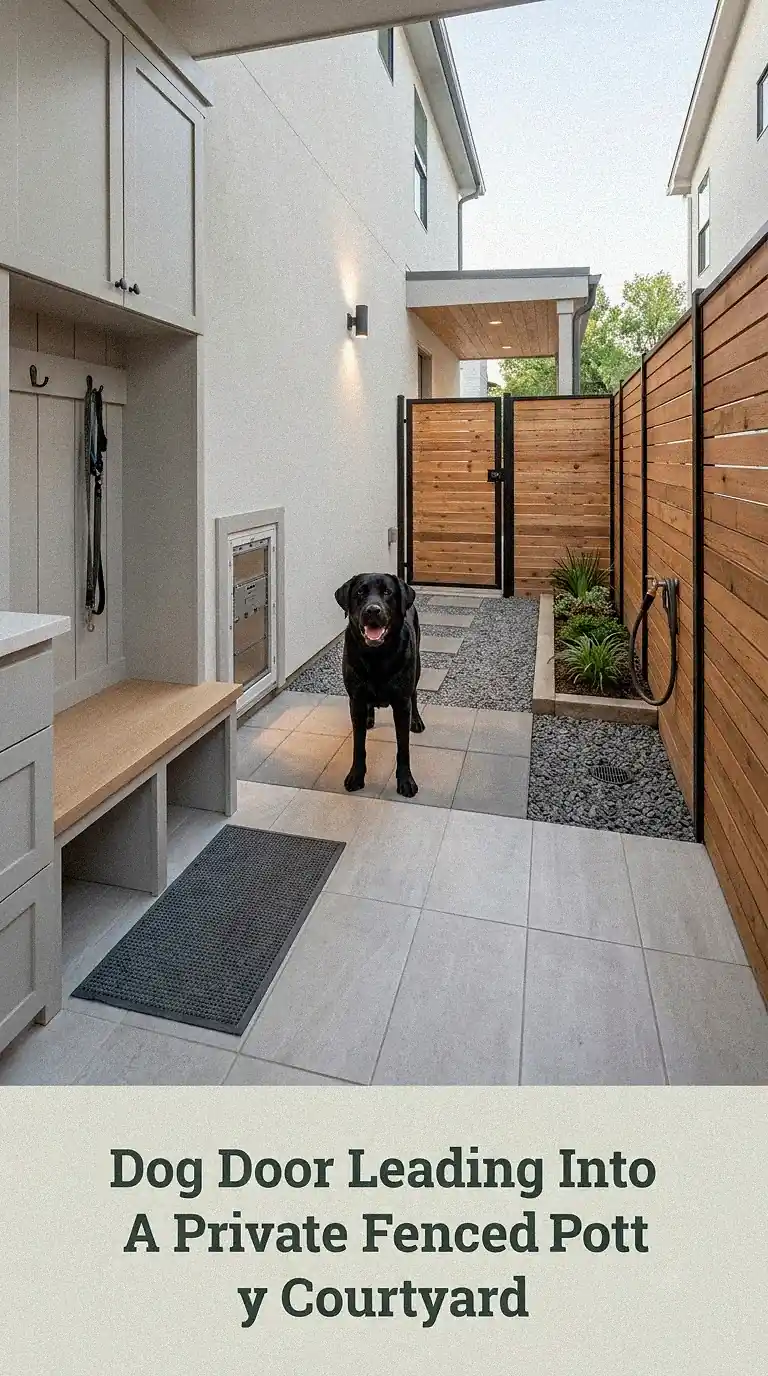
Not every dog door needs to open into the entire backyard.
Create a small enclosed courtyard directly outside the entrance, giving your dog a dedicated area for quick bathroom breaks. This can be particularly useful when the main yard is large or when you want a more controlled outdoor zone.
Use attractive fencing that coordinates with your home, such as black metal, cedar slats, or painted wood. Add an easy-to-clean ground surface, a simple path, and a small amount of dog-safe landscaping.
Keep the space large enough for comfortable movement rather than treating it like a tiny enclosure.
A gate allows you to access the courtyard for cleaning and maintenance.
Visually, the area can resemble a miniature garden room while giving your dog’s entrance a clear destination.
Hidden Cabinet-Style Dog Door In A Custom Mudroom Wall
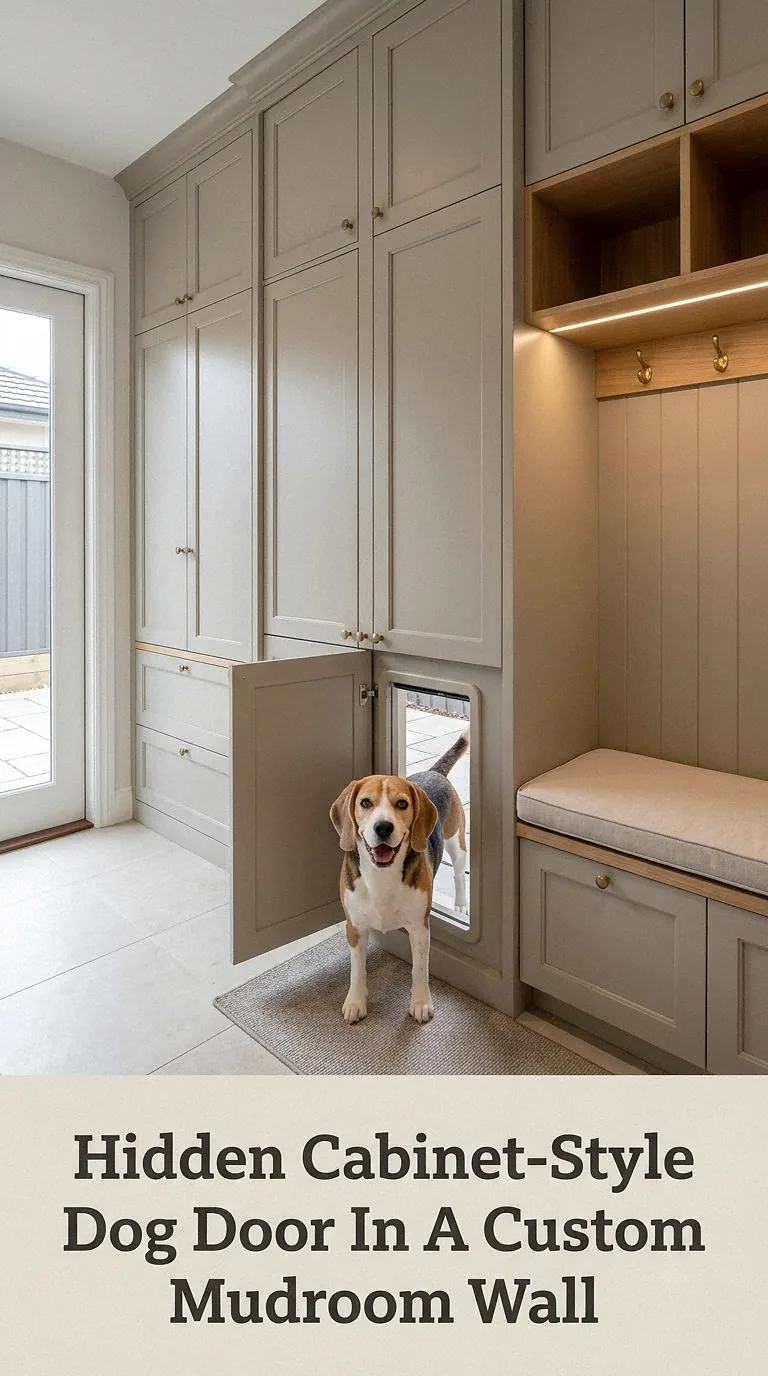
For a truly built-in appearance, design the dog door as part of a larger wall of mudroom cabinetry.
Imagine tall storage cabinets on each side, overhead cupboards above, and a low central opening finished in the same color and trim as the cabinetry. From across the room, the dog entrance looks like another intentional component of the millwork.
Use the cabinets for food containers, grooming supplies, towels, toys, and walking accessories.
The dog door itself should remain completely clear of cabinet doors, drawers, and anything that could interfere with movement.
This idea works especially well during a renovation because the cabinetry and exterior opening can be planned together rather than added separately later.
Soft gray-green cabinets, warm oak accents, brass hardware, and stone-look flooring create an especially polished version of this practical dog zone.
Choosing The Right Creative Dog Door Idea For Your Home
The most successful creative dog door ideas do more than provide an opening to the backyard. They consider how your dog moves, where muddy paws will land, how the entrance affects the room visually, and how safely your pet can use the outdoor space beyond it.
Start with your dog’s comfort and the practical requirements of your home, then build the style around those needs. A removable sliding insert may be ideal for a rental, while a custom mudroom installation can become a beautiful long-term feature. Cottage trim can add charm, minimalist oak can quietly blend into modern interiors, and a tiny covered porch can make an ordinary backyard entrance feel surprisingly special.
You do not need a major renovation to make a dog door attractive. Sometimes matching the frame to the wall, adding a washable runner, improving the outdoor landing, or surrounding the area with thoughtful storage is enough.
Choose the idea that works naturally with your space, lifestyle, climate, and dog, then adapt the colors and materials until the entrance feels like it truly belongs in your home.
Source: https://petstutorial.com
Category: DOGS
