
A dog door can give your pup wonderful independence, but that freedom becomes a little more complicated when the opening sits several inches above a patio, deck, porch, or yard. Small dogs may hesitate at the drop, older dogs may struggle with stiff joints, and even energetic pups can slip when jumping through a doorway onto a wet surface. That is where a thoughtfully designed ramp can make a surprisingly big difference.
The best dog door ramp ideas combine easy movement with a design that feels like a natural part of the home. A ramp can disappear into modern landscaping, become a charming feature on a farmhouse porch, tuck neatly beside a deck, or even fold away when you need the space back.
You are reading: 19 Dog Door Ramp Ideas That Make Outdoor Access Safer And More Stylish
Safety should always guide the design. A comfortable ramp needs secure footing, dependable traction, enough width for your dog to turn and walk confidently, and a stable connection at both ends. Raised edges or rails can also help dogs who are older, nervous, or less steady on their feet.
From affordable DIY builds to polished permanent installations, these ideas show just how attractive practical pet access can be.
Beautiful And Practical Dog Door Ramp Ideas For Every Home
Warm Cedar Ramp With Black Non-Slip Treads
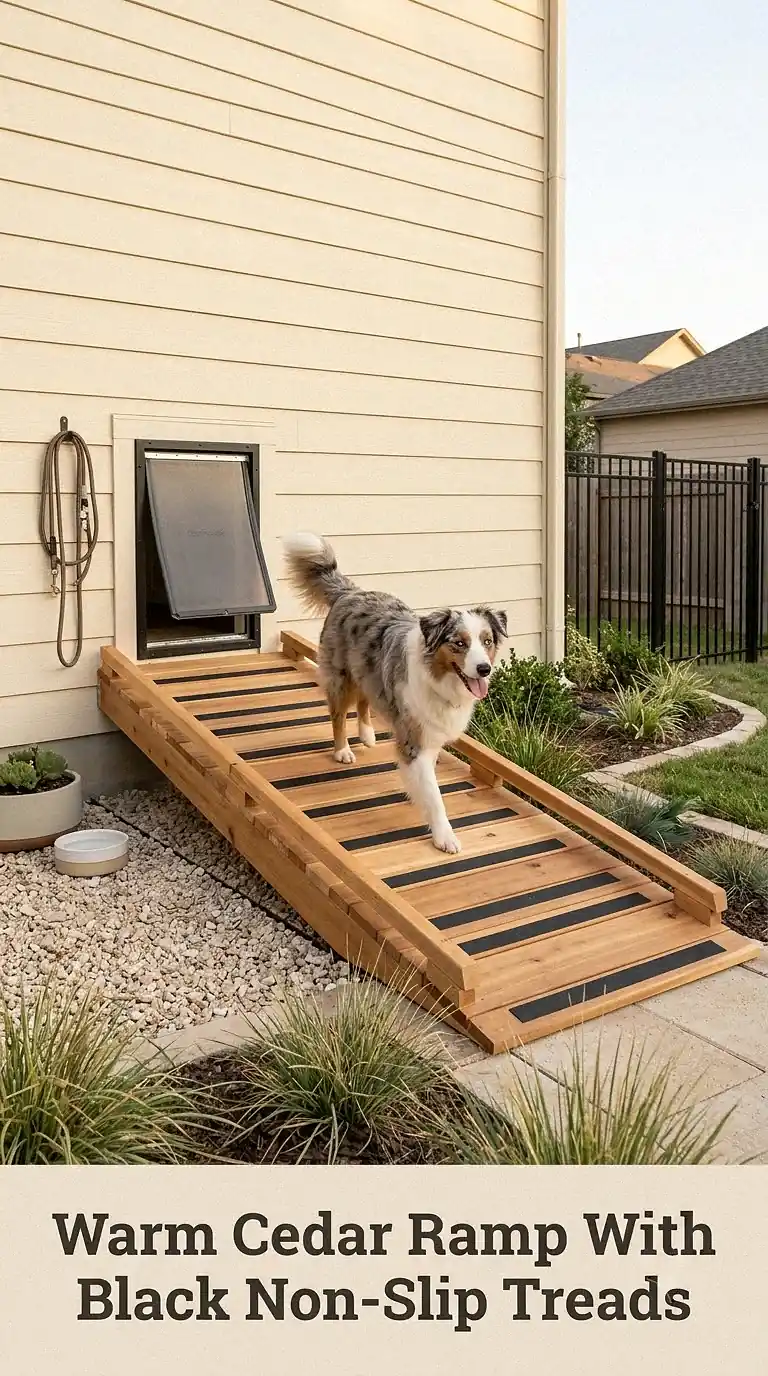
A cedar ramp is a lovely choice when your dog door opens onto a porch, deck, or natural backyard. The warm wood grain blends beautifully with landscaping while giving the pet entrance a more intentional, built-in appearance.
Build the ramp long enough to create a gradual incline rather than a short, steep drop. Across the walking surface, add narrow black rubber traction strips or outdoor anti-slip tape. The contrast looks modern against the cedar while helping paws grip the surface during wet weather.
Low wooden borders along both sides can make the ramp feel more secure without visually closing it in. Seal outdoor lumber with a pet-safe exterior finish and inspect the surface regularly for splinters, loose screws, or worn traction.
This style works especially well beside rustic houses, cabins, farmhouse porches, and warm contemporary exteriors.
Modern White Ramp With Minimalist Side Rails
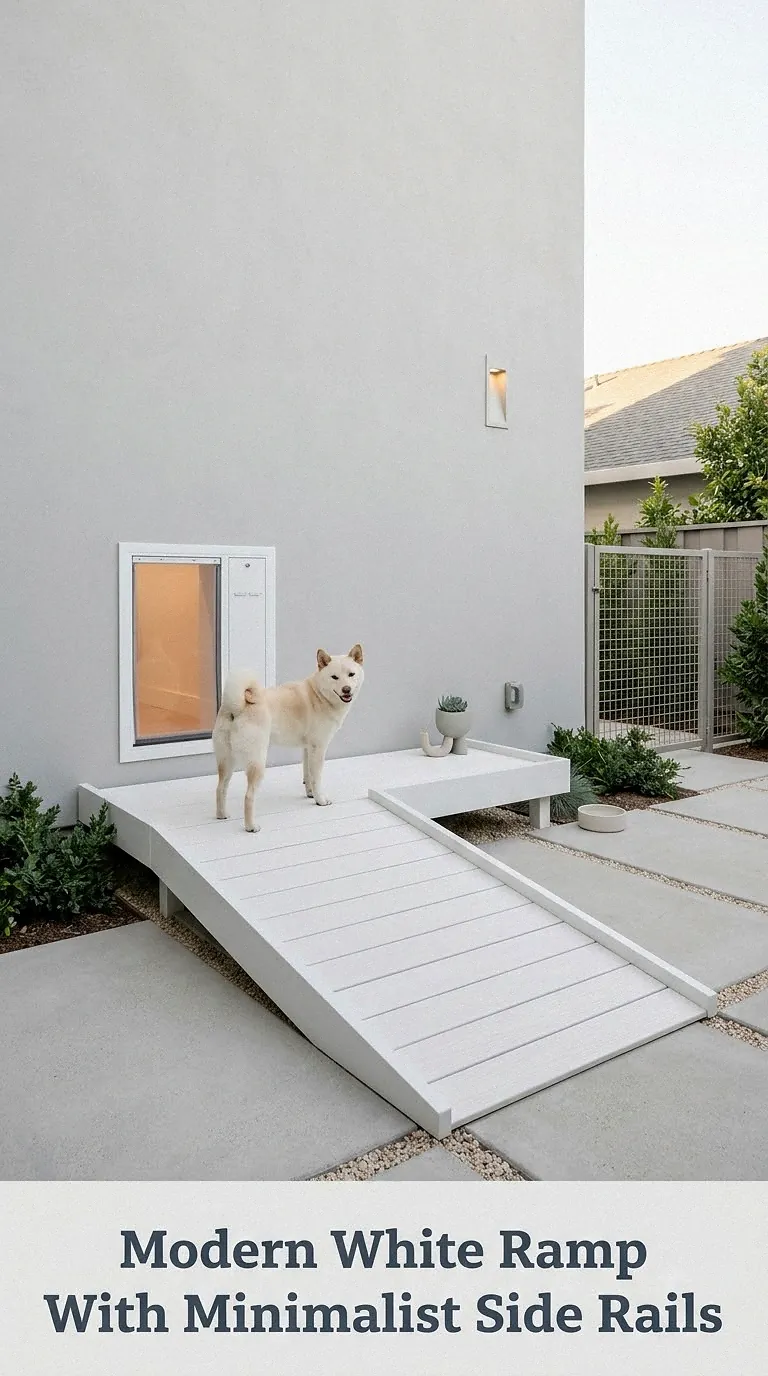
For a clean contemporary exterior, create a streamlined white ramp that visually connects with white siding, trim, or patio furniture.
Use exterior-grade lumber or a durable composite material for the structure, then keep the side rails simple and low. Instead of traditional balusters, solid narrow borders can create a sleek architectural look while still giving the dog a visual boundary.
A pale ramp can become slippery if the finish is too smooth, so incorporate textured outdoor strips, rubber matting, or a weather-resistant grip coating along the walking path.
The design becomes particularly attractive when paired with black hardware and a black-framed dog door. The contrast gives the whole setup a polished appearance rather than making it feel like an afterthought.
Keep decorative objects away from the ramp entrance so your dog always has a clear, predictable route through the door.
Grass-Covered Backyard Ramp That Blends Into The Lawn
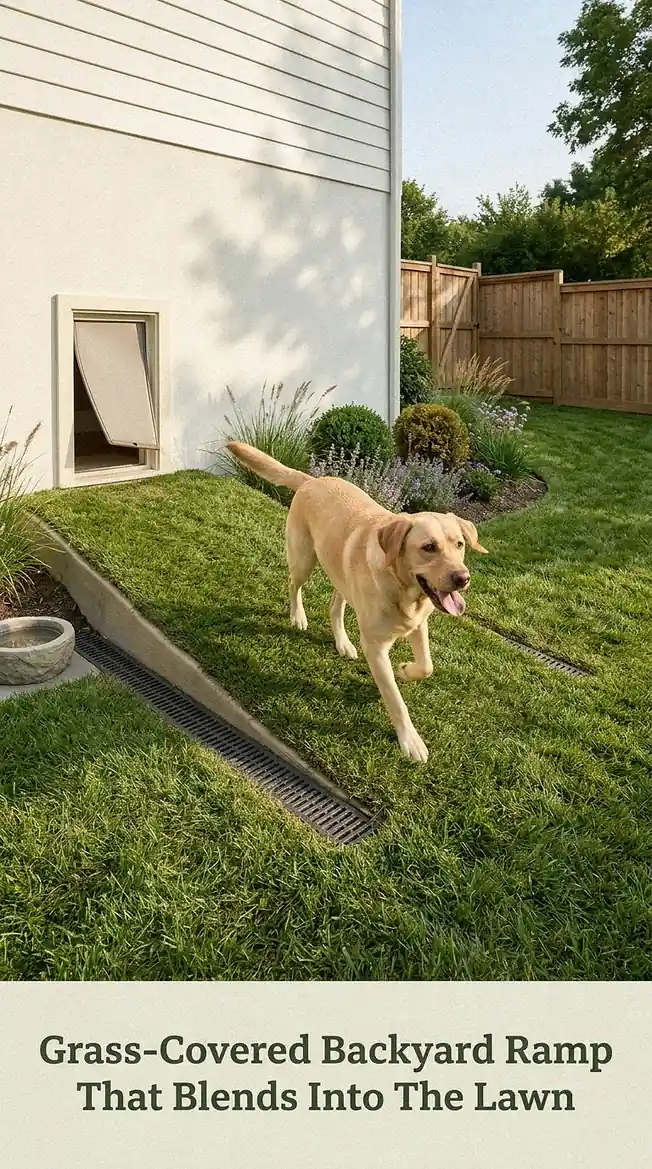
A grass-style ramp can make a dog door transition almost disappear into the backyard.
Build a sturdy waterproof base and cover the upper surface with durable artificial turf designed for outdoor drainage. The green texture visually extends the lawn toward the dog door while providing more paw grip than a smooth painted board.
This solution is especially attractive when the dog door opens slightly above a garden or landscaped yard rather than onto a formal deck.
Choose turf with relatively short fibers so claws do not become tangled. The material should also be removable or easy to rinse because outdoor ramps inevitably collect dirt, hair, leaves, and muddy paw prints.
For a finished look, frame the turf with natural timber edging. Small landscaped beds beside the ramp can make it feel like part of the garden, but leave enough open space that plants never obstruct your dog’s path.
Farmhouse Dog Door Ramp With Weathered Wood And Rope Rails
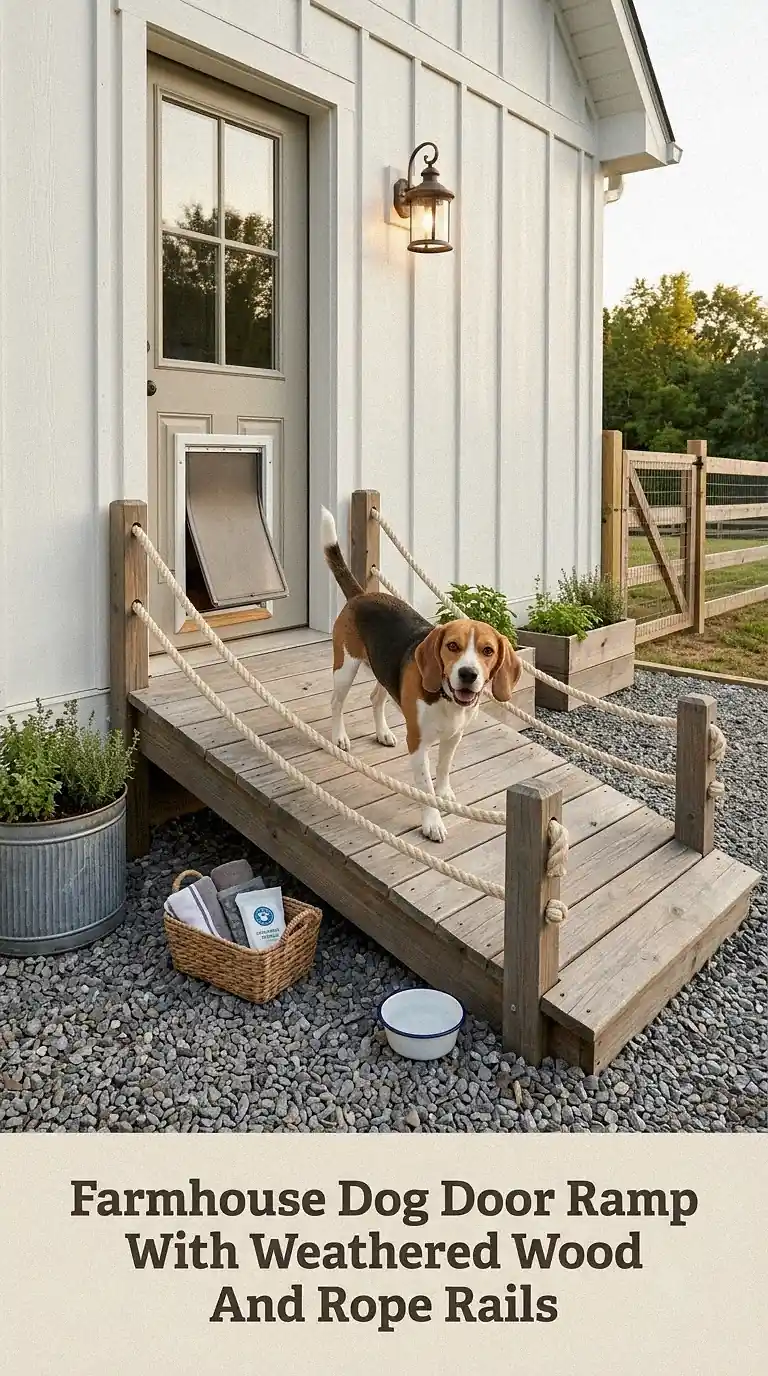
A farmhouse-inspired ramp can turn a practical pet feature into something genuinely charming.
Start with warm stained or lightly weathered wood and add simple rope rails along the sides. The rope introduces texture without making the ramp feel heavy or overly constructed. Use sturdy posts and keep any rope securely tensioned so it functions as a visual guide rather than a loose object your dog could become tangled in.
For traction, attach narrow outdoor carpet strips or textured rubber in a neutral tan, charcoal, or brown.
A small black dog door frame pairs beautifully with this look, especially against white board-and-batten siding.
This design is best for a sheltered porch or covered outdoor area where the wood will not remain constantly wet. Use exterior-rated hardware and finishes so the ramp remains structurally sound through changing seasons.
Low Profile Ramp For Small Dog Doors
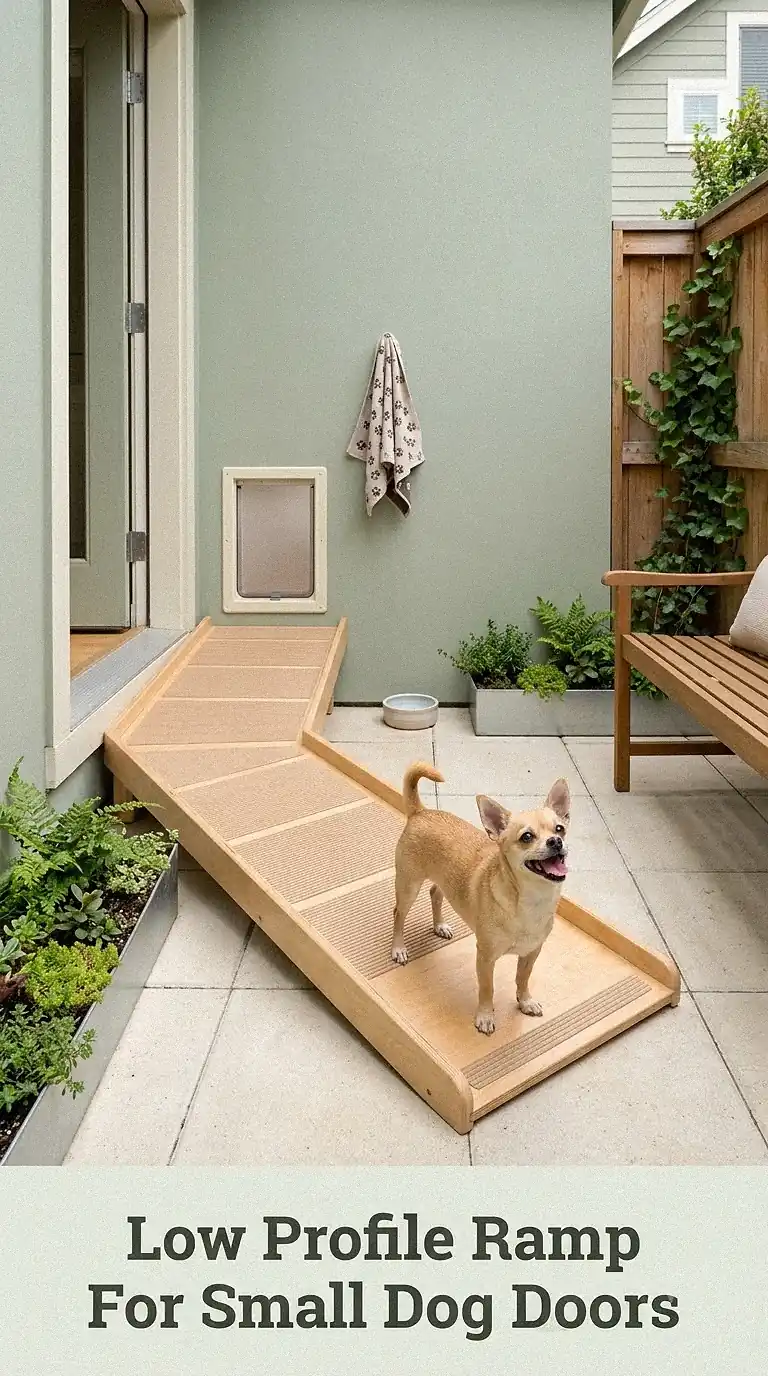
When the dog door sits only a few inches above the ground, you may not need a large structure at all.
A low-profile wedge ramp provides a simple transition without taking over the patio. It works particularly well for Chihuahuas, Yorkies, Pomeranians, senior toy breeds, and other dogs that may find even a modest threshold uncomfortable.
Create a broad wedge with a textured surface rather than a narrow plank. The wider landing makes approaching and exiting the dog door easier because the dog does not have to line up perfectly before stepping onto the ramp.
Composite decking, sealed plywood, or molded rubber can all work depending on whether the ramp is permanent or removable.
Choose a finish close to the surrounding flooring so the ramp visually disappears. This is one of the easiest dog door ramp ideas to incorporate into small patios and compact outdoor spaces.
Wide Senior Dog Ramp With Raised Safety Edges
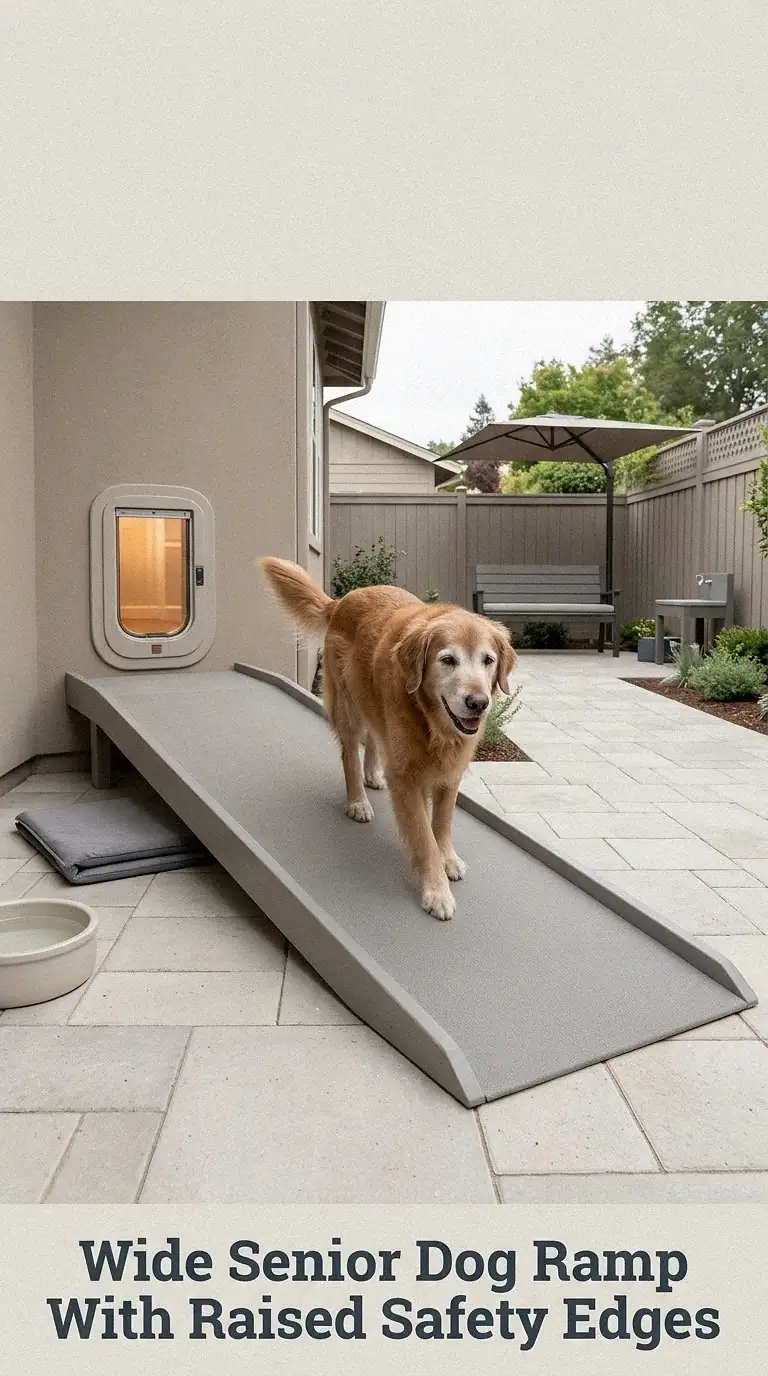
Older dogs often benefit from a ramp that feels especially stable and predictable.
Instead of designing the narrowest ramp possible, create a generous walking surface with room for your dog to place all four paws comfortably. Add raised edges on both sides so there is a clear boundary between the ramp and the surrounding area.
The surface should have strong traction without being rough on paw pads. Rubber runners, textured outdoor matting, or closely spaced traction strips can work well.
A longer ramp also allows you to create a gentler incline, which may be easier for dogs dealing with reduced mobility.
Keep the route between the dog door and the yard free from clutter, pots, hoses, and furniture. For dogs recovering from an injury or experiencing significant mobility changes, coordinate environmental modifications with guidance from your veterinarian.
Deck-Integrated Ramp With Matching Timber Boards
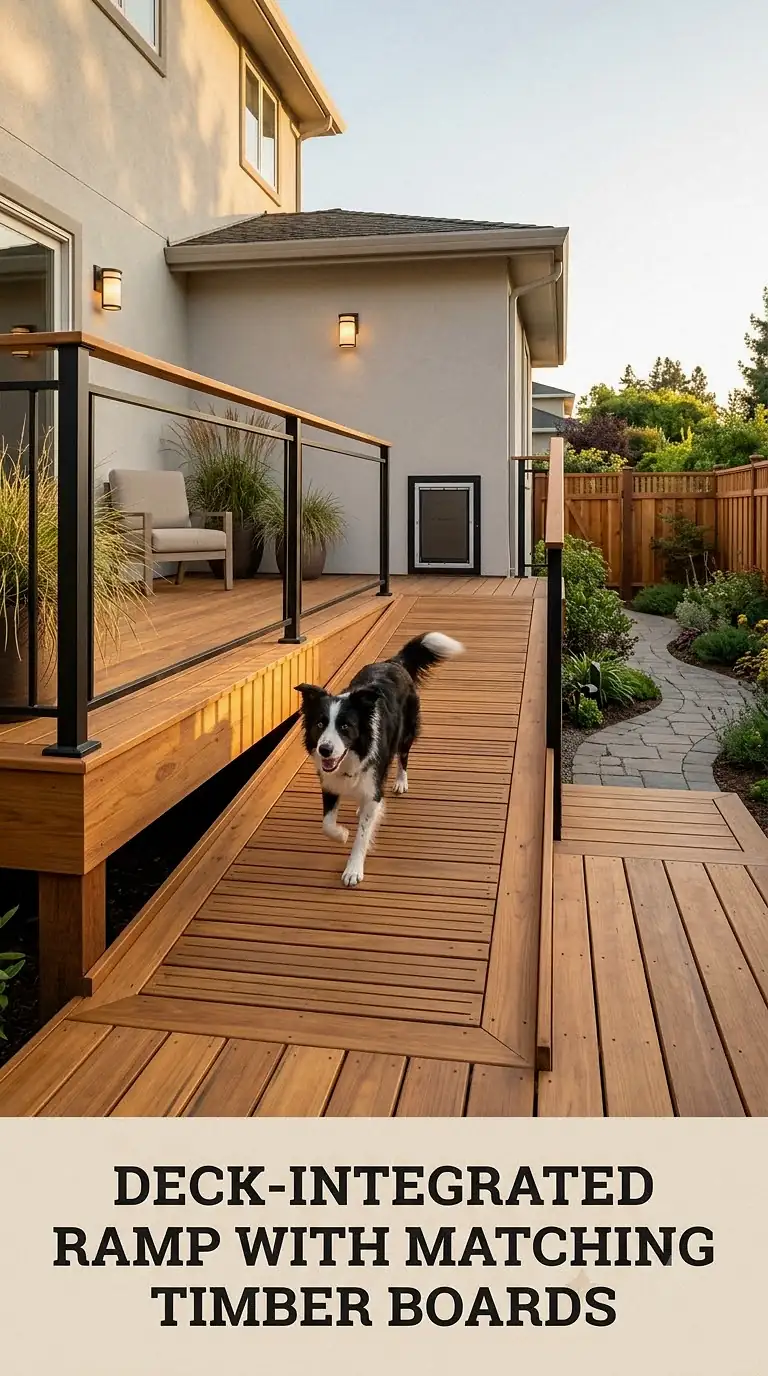
One of the most polished solutions is building the ramp from the same material as the surrounding deck.
Instead of attaching a visibly separate pet ramp, extend matching deck boards downward from the dog door landing. The result looks almost like a miniature architectural walkway designed as part of the original deck.
Run the boards across the ramp rather than creating a completely smooth lengthwise surface. Depending on the material, the joints can add subtle texture, although additional non-slip treatment may still be necessary.
Matching trim around the sides makes the installation feel even more cohesive.
This approach is particularly useful during a deck renovation because the ramp framing can be planned alongside the main structure. It can also accommodate larger dogs by using heavier framing and wider dimensions.
Read more : 14 Cutest Types Of Feist Dog
The final result is practical without advertising itself as pet equipment.
Black Composite Ramp For A Modern Patio
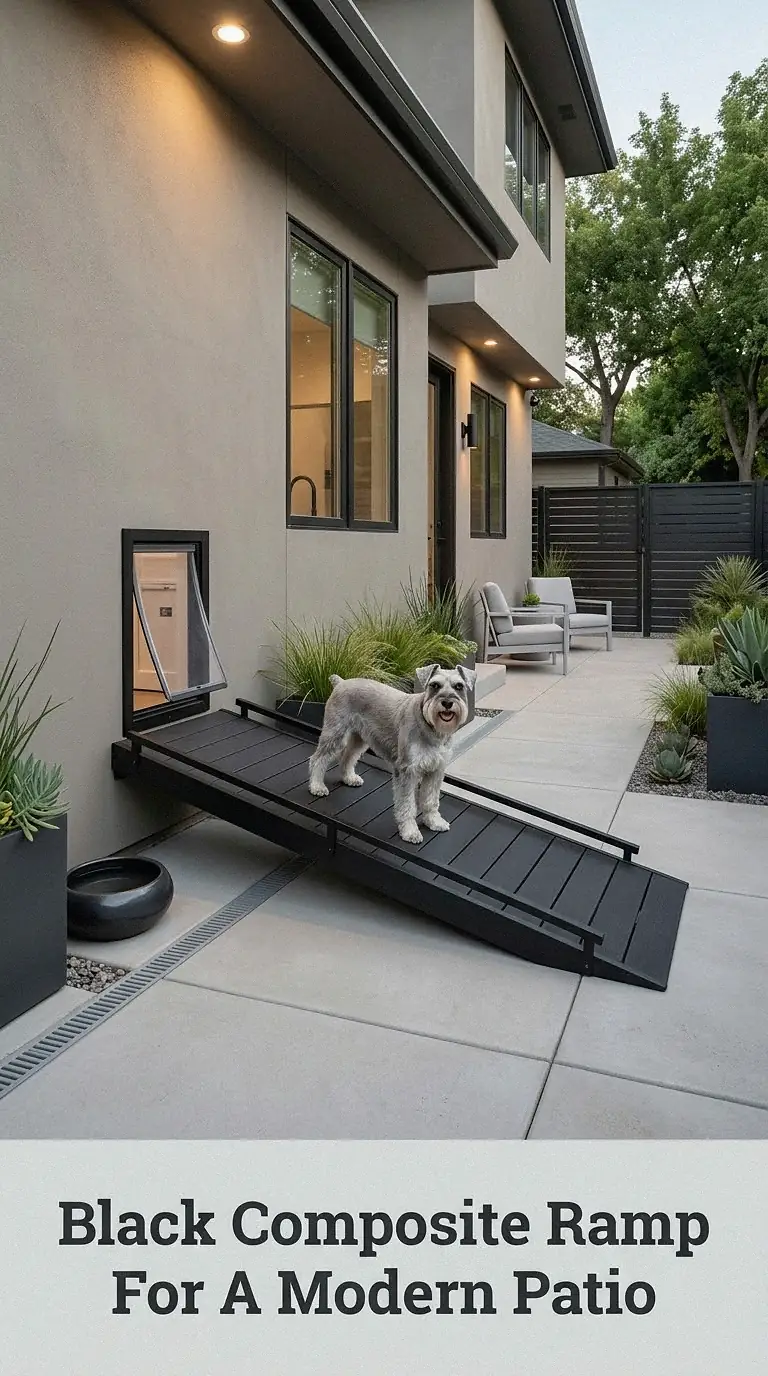
Black and charcoal exterior materials can create an unexpectedly sophisticated dog ramp.
A dark composite ramp looks beautiful beside concrete patios, black-framed doors, contemporary siding, and minimalist landscaping. Composite boards also offer a clean, consistent appearance without requiring the same visual maintenance as unfinished wood.
Keep the design simple with straight lines and low matching side borders.
Because surface temperature can become uncomfortable in strong direct sun, consider the ramp’s location before committing to a very dark material. A covered patio or shaded side of the house is ideal.
Traction still matters even when composite boards have some texture. Test the surface when wet and add grip strips or an outdoor runner if needed.
This design works particularly well when you want the dog door area to look intentional, architectural, and coordinated with a modern exterior.
Gentle Switchback Ramp For A High Dog Door
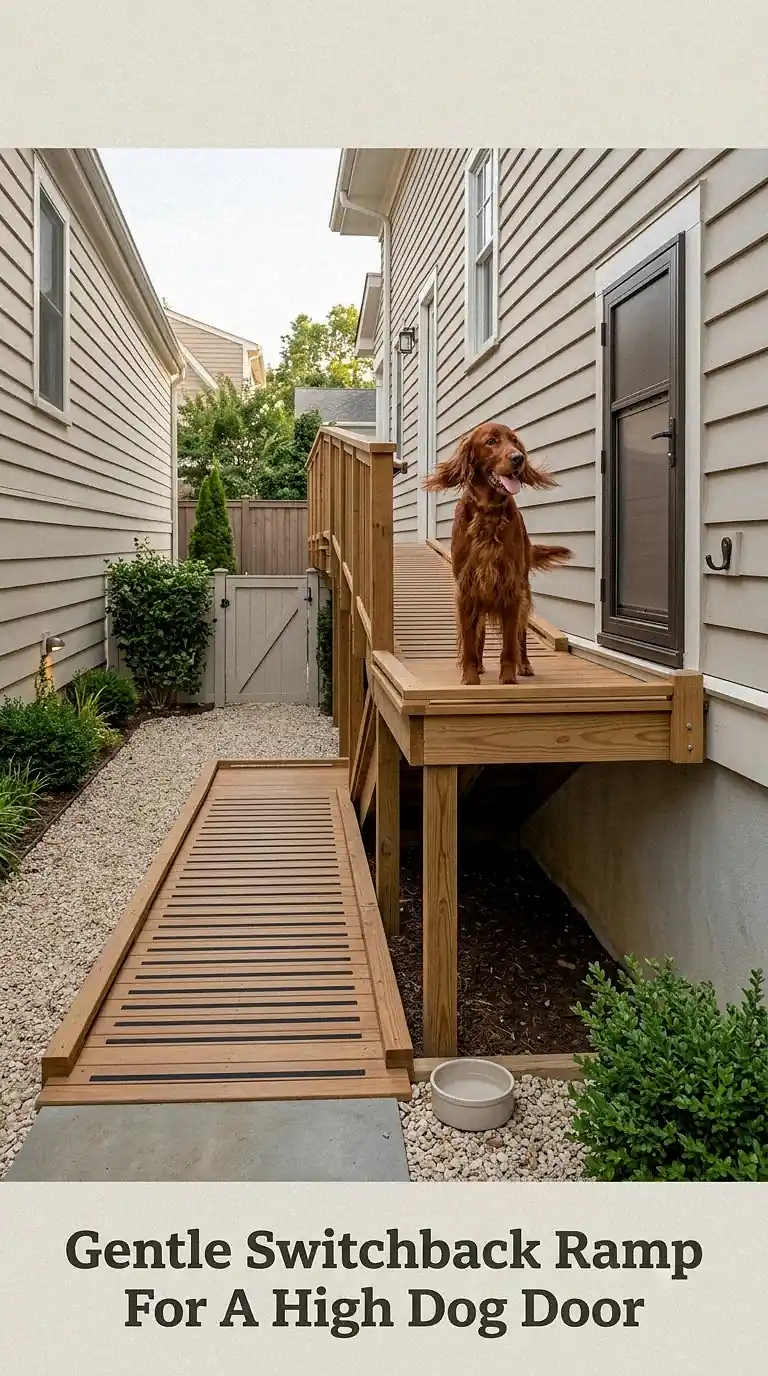
Sometimes the height difference is too large to create a comfortable straight ramp without extending far into the yard.
A switchback layout solves the problem by allowing the path to change direction. The dog exits through the door onto a secure landing, walks down one section, turns on another broad landing, and continues toward ground level.
This design needs more construction than a simple ramp but can create a gentler overall route within a relatively compact footprint.
The turning platform should be roomy enough for your particular dog to change direction without backing up or balancing near an edge. Add sturdy rails or enclosed sides where the structure is elevated.
Matching the materials to an existing deck can make the switchback look like a small architectural feature rather than accessibility equipment.
It is an especially useful concept for raised porches and homes with elevated floor levels.
Covered Dog Door Ramp With A Tiny Roof
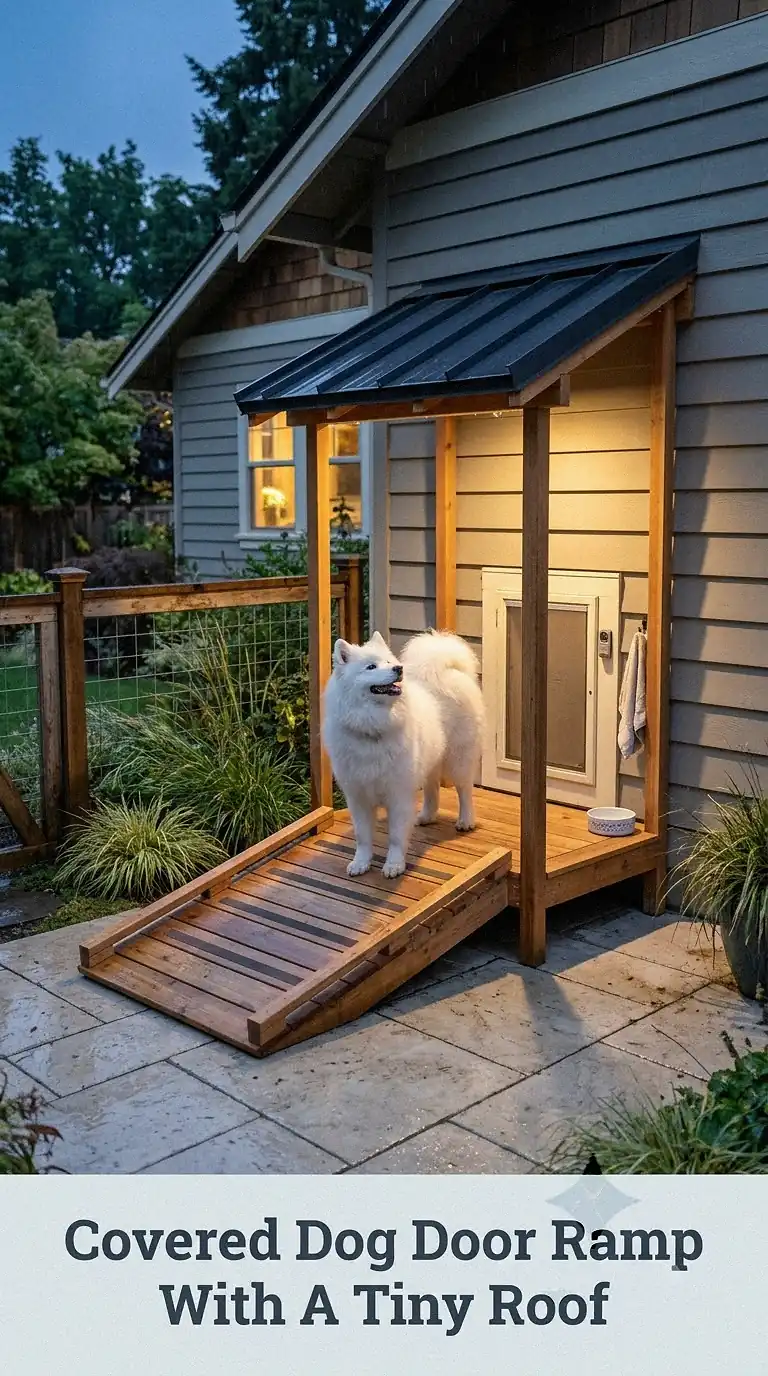
A little covered walkway can be both adorable and practical.
Extend a narrow roof or awning above the dog door and ramp to shelter the pathway from rain, snow, and intense sunlight. The design can resemble a miniature porch, complete with matching siding, trim, and roofing materials.
A covered ramp does not eliminate the need for traction, but it can help keep the walking surface cleaner and drier.
For a cottage-inspired look, use white posts, warm timber decking, and a small pitched roof. Modern homes can use slim black supports and a simple flat canopy instead.
Make sure the covering is tall and open enough that your dog never feels enclosed while entering or exiting.
This concept works particularly well in climates where wet weather frequently leaves exposed ramps slippery or muddy.
Budget-Friendly Plywood Ramp With Outdoor Carpet
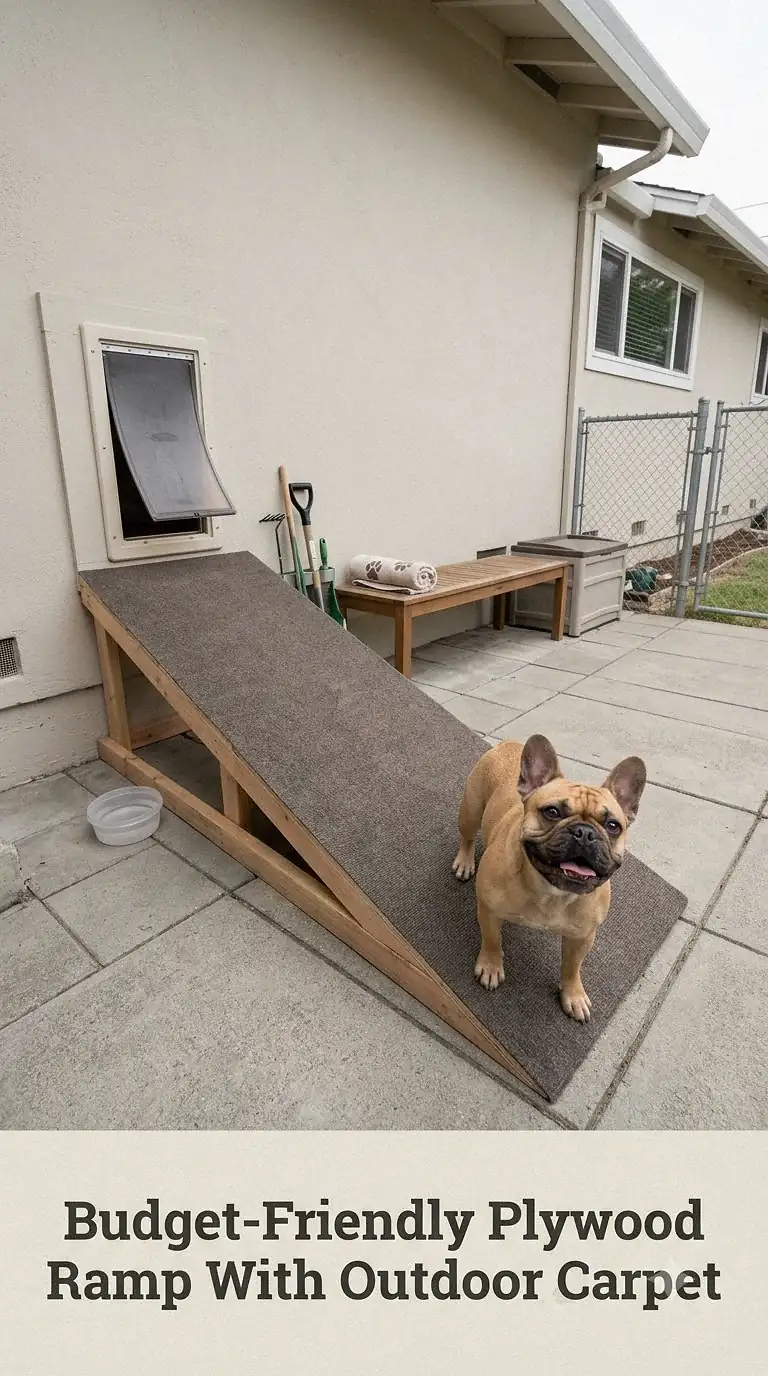
You do not need custom carpentry or expensive materials to create useful pet access.
A simple plywood ramp can become a practical weekend project when it is properly supported and protected from moisture. Add a sturdy frame underneath so the board does not bounce or flex when your dog walks across it.
Cover the walking area with outdoor carpet or another securely attached non-slip material. Neutral gray, beige, or brown carpet helps the project look tidy without drawing too much attention.
Finish exposed wood with an appropriate exterior coating and make sure staples, screws, and fasteners cannot contact paws.
This is especially useful as a temporary solution while you determine the best ramp length and placement for your dog.
Once your dog has comfortably used the layout for a while, you can recreate it later with more permanent materials if desired.
Brick And Paver Ramp Blended Into The Landscaping
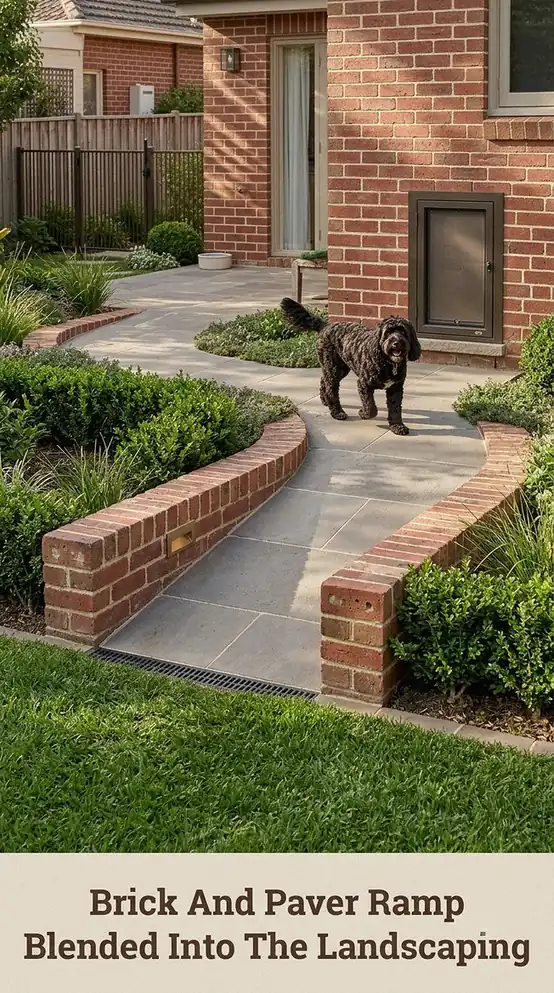
A dog ramp does not necessarily need to look like a traditional wooden ramp.
If your dog door is fairly close to ground level, a gradual paved path can create an elegant permanent transition. Carefully arranged bricks or textured outdoor pavers can rise gently toward the opening, visually connecting the dog door with an existing patio or garden walkway.
The surrounding soil can be shaped around the structure so the ramp feels integrated into the landscape.
Choose textured materials that offer dependable grip, especially when wet. Smooth polished stone may look beautiful but can be difficult for dogs to navigate safely.
Proper drainage is also important. Water should move away from the house rather than collecting beside the pet door.
This concept looks particularly attractive in traditional gardens, Mediterranean-inspired courtyards, and homes already featuring brick pathways.
Compact Corner Ramp Along An Exterior Wall
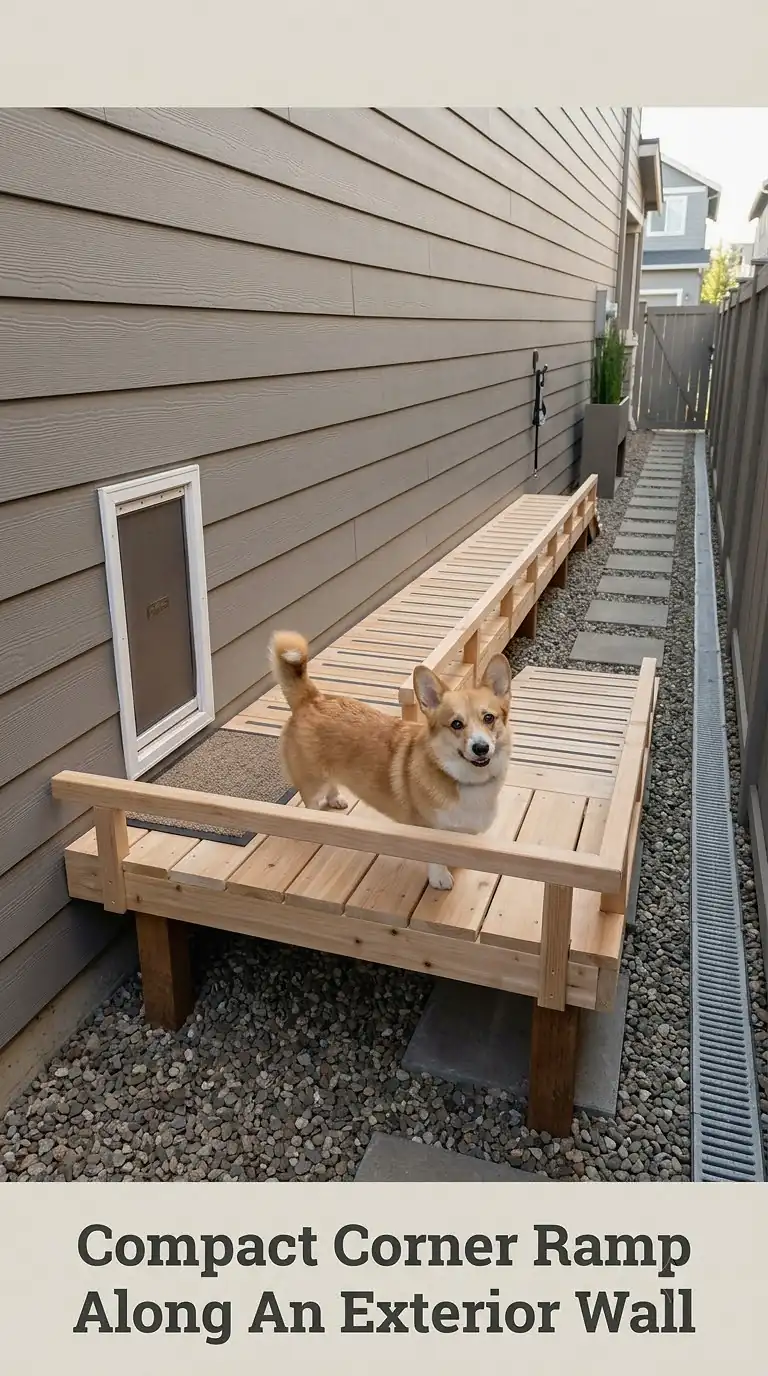
A narrow patio does not always have room for a ramp projecting directly into the outdoor living area.
Instead, position the ramp parallel to the house. Your dog can step through the door onto a small landing, turn, and walk gently downward alongside the exterior wall.
This keeps most of the patio open for people, furniture, and entertaining.
The wall itself provides a reassuring boundary on one side, while a raised edge or rail can protect the exposed side. Make the landing large enough for the dog to complete the turn comfortably rather than forcing an awkward pivot immediately after passing through the flap.
Match the ramp finish to either the exterior siding or patio surface for a more integrated appearance.
This is one of the most practical dog door ramp ideas for townhomes, side yards, narrow decks, and compact urban backyards.
Removable Ramp With Hidden Storage Hooks
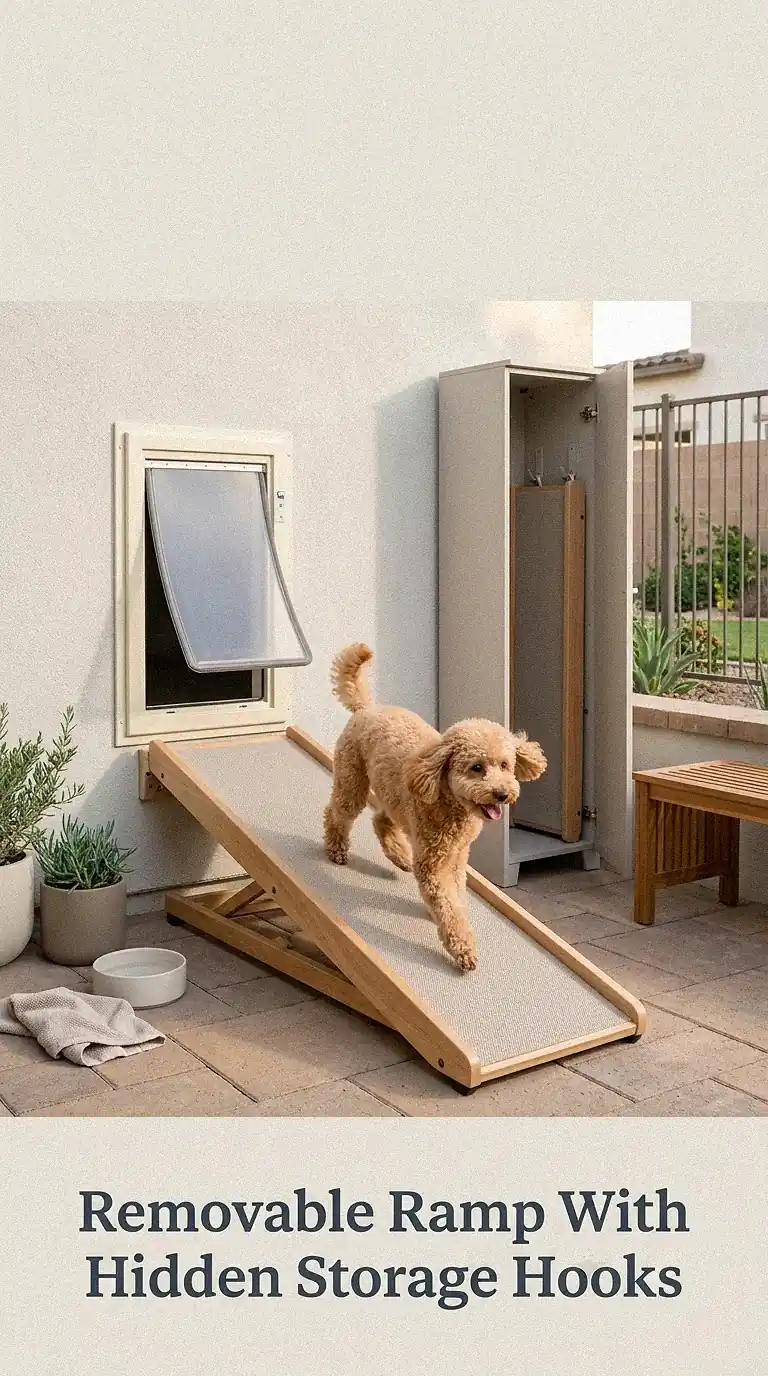
A permanent ramp is not always necessary.
If the dog door is used only during certain seasons or times of day, a lightweight removable ramp can keep the area more flexible. Build a sturdy ramp that hooks securely onto a small landing beneath the dog door, then lifts away when you want the patio clear.
Read more : How Long Can A Dog Have Worms Before It Dies
Install discreet wall-mounted storage brackets nearby so the ramp can hang vertically rather than taking up garage or shed space.
Use handles along the sides to make moving it easier, but position them where they cannot catch a collar or paw during use.
The ramp must lock firmly into its operating position. A removable design should never shift when the dog steps onto it.
This setup can work particularly well for renters or homeowners who prefer flexible outdoor arrangements.
Cottage Garden Ramp With Planter Borders
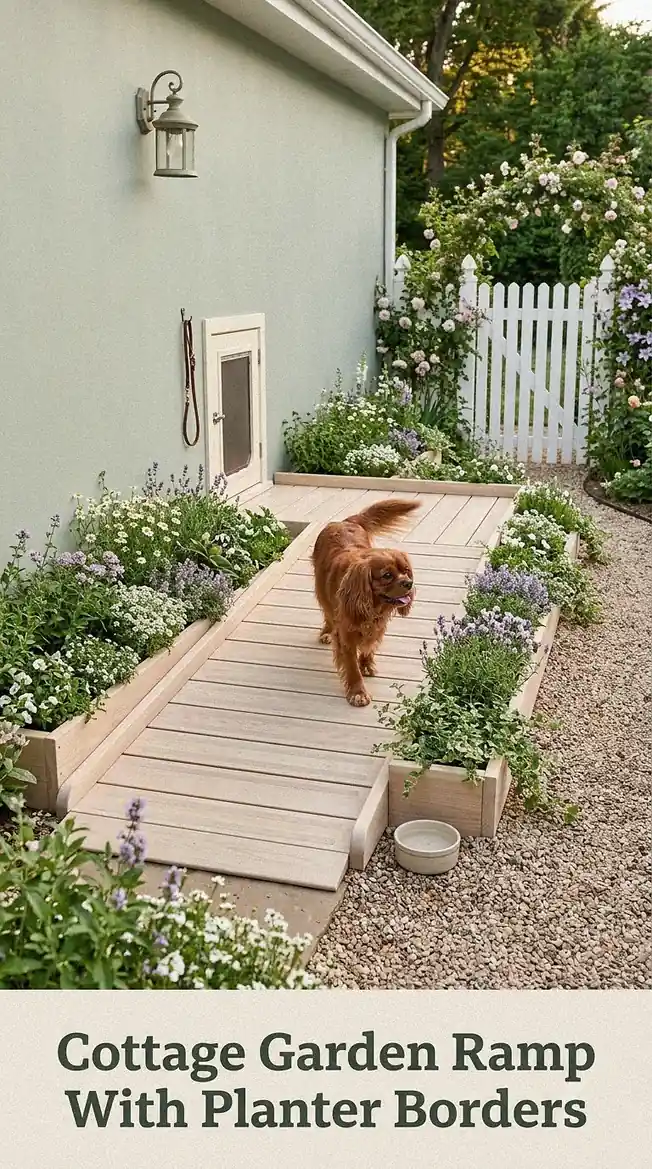
Turn the dog entrance into a sweet garden feature by framing the ramp with greenery.
A warm wooden ramp surrounded by low planter beds can look surprisingly charming beside a cottage-style house. Choose soft foliage, ornamental grasses, or pet-safe plants that stay below the ramp edges rather than spilling into the walking path.
The plants can visually soften the sides of the structure while leaving the ramp itself open and easy to navigate.
Consider gravel or decorative stone beneath the ramp to simplify drainage and reduce mud near the entrance.
A pale wood stain, soft sage trim, or muted cream railing can complement the garden beautifully.
Avoid placing thorny plants, toxic species, or heavy pots close enough that your dog could bump into them. The goal is to create a pretty frame around the route without compromising a clear, safe path.
Enclosed Ramp Tunnel For Rainy Weather
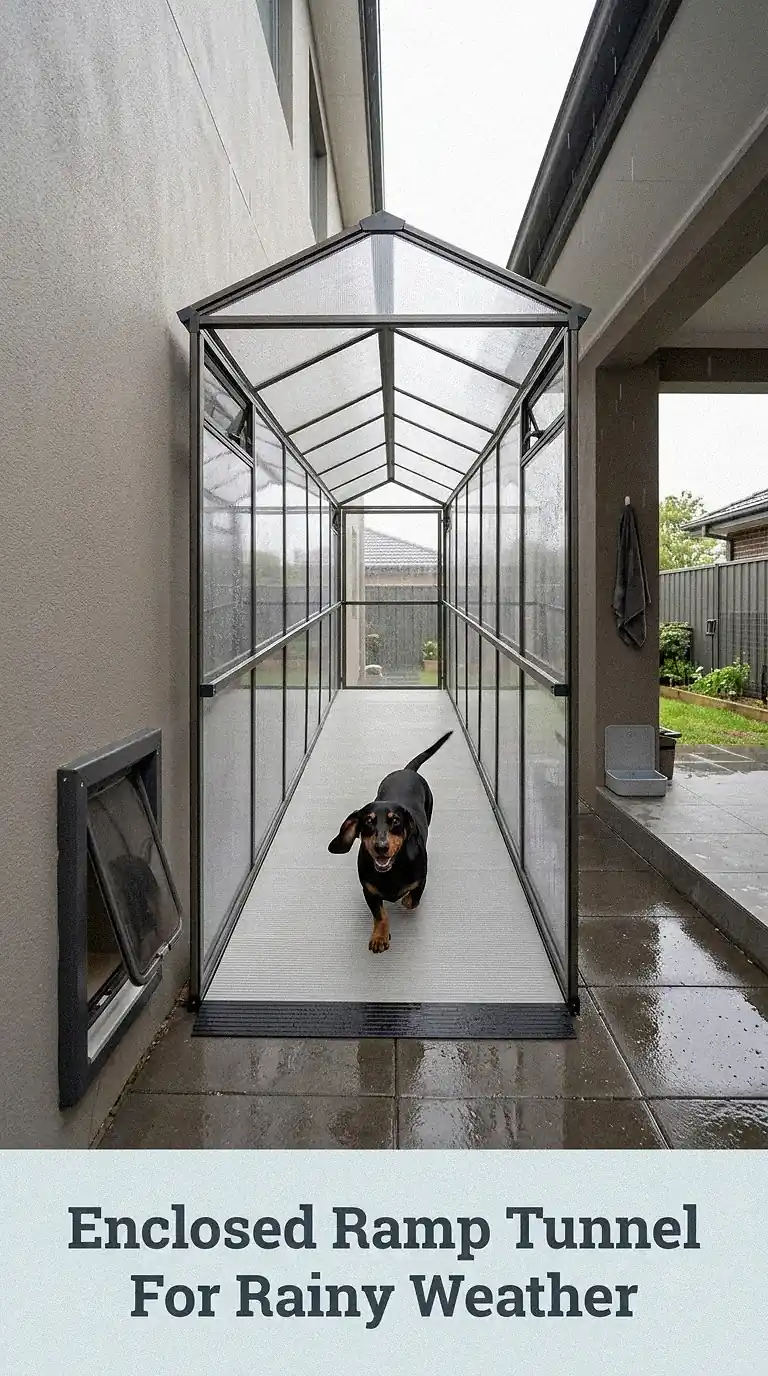
Dogs that dislike rain may appreciate a more protected route from the house into a covered potty area or sheltered section of the yard.
An enclosed ramp tunnel can use solid lower walls with an open or translucent upper section. A clear polycarbonate roof lets natural light enter while protecting the pathway from rain.
Keep the design airy rather than creating a dark, narrow tunnel. Your dog should be able to see the destination easily from the doorway.
This type of structure is more involved to build, but it can be useful when the pet door is positioned above a wet courtyard or exposed side yard.
Add washable traction flooring and provide excellent drainage around the bottom.
For an attractive finish, coordinate the framing with fences, pergolas, or other outdoor structures so the dog pathway looks like part of the landscape design.
Extra-Wide Ramp For Large Dogs
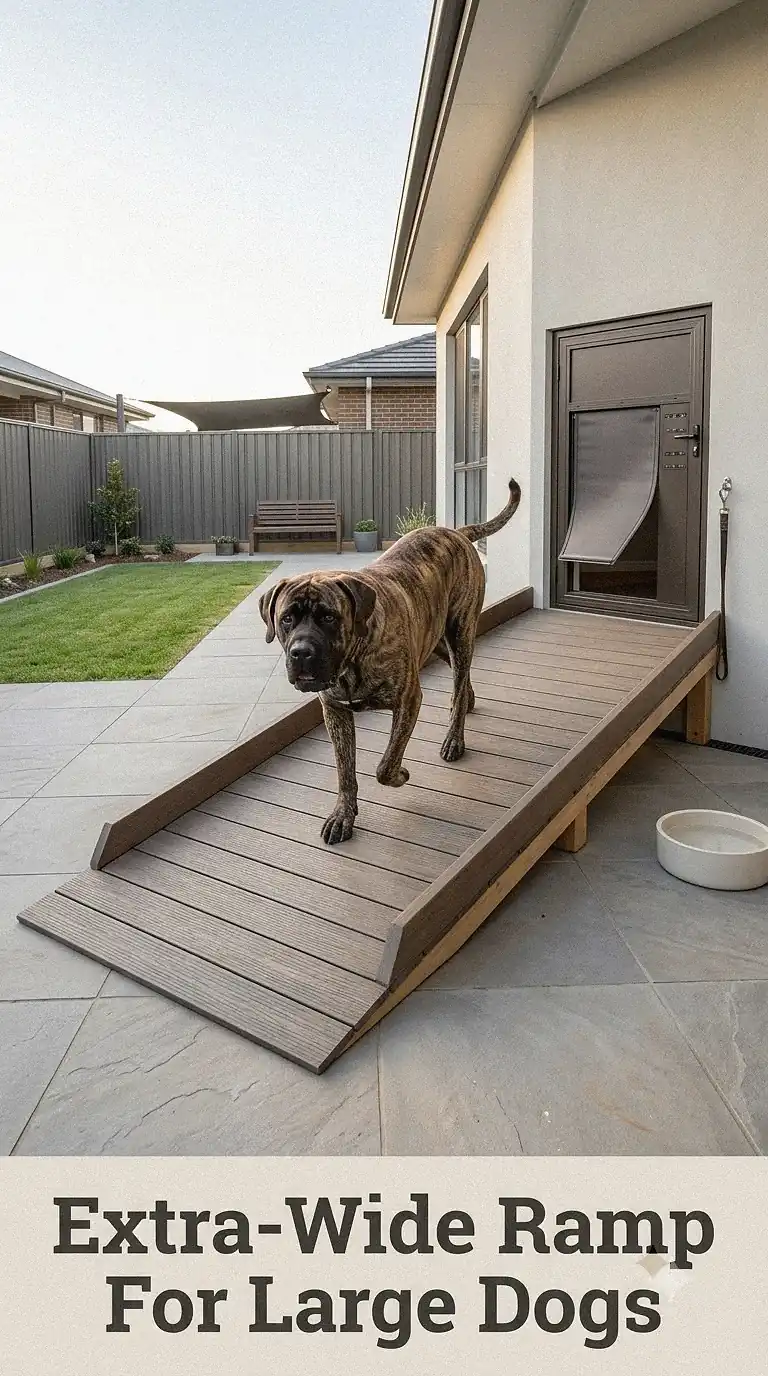
Large dogs need more than a scaled-up version of a tiny pet ramp.
Create a broad, heavily supported structure that feels solid under every step. The ramp should accommodate the dog’s full body width with extra room on each side so a large Labrador, German Shepherd, Great Dane, or similar breed does not feel like it is balancing on a narrow board.
Use framing and hardware rated appropriately for the load rather than relying on thin plywood alone.
Low side rails can help define the walking path, while a durable textured surface improves paw grip.
Pay particular attention to the transition where the ramp meets the dog door. The dog should be able to step naturally through the opening without immediately encountering a sharp drop or unstable edge.
A substantial ramp can still look attractive when finished to match the deck or house.
Side-By-Side Dog Ramp And Human Steps
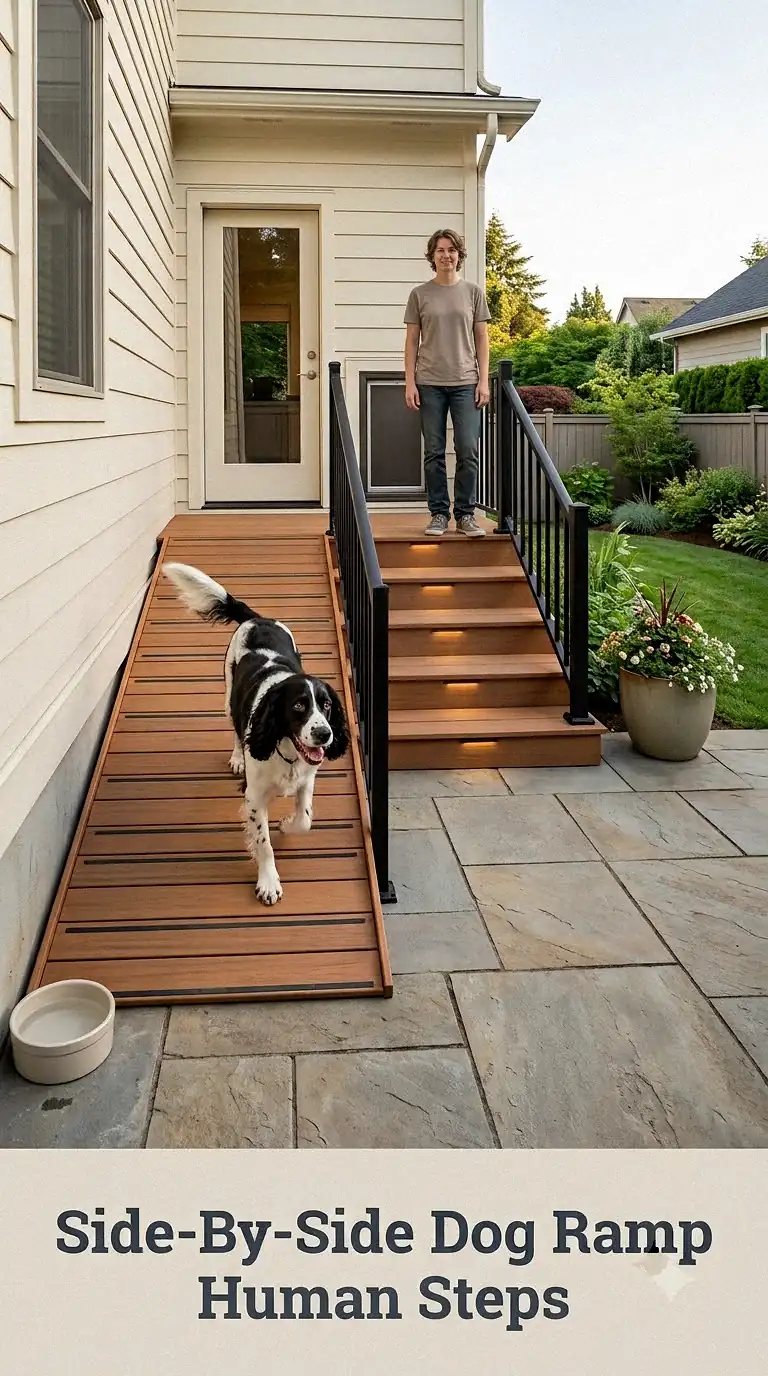
Sometimes the cleanest solution is to design pet access and human access together.
Place a gently sloped dog ramp beside a short set of porch or deck steps. Use the same lumber, railing style, trim, and finish for both so they appear to be one coordinated structure.
The dog door can open directly toward the ramp while the nearby human door leads naturally to the stairs.
This layout is especially useful during a porch rebuild or backyard renovation because both circulation paths can be planned at the same time.
A shared landing at the top creates visual continuity, but keep enough separation that people do not accidentally step onto the ramp while the dog is coming through the flap.
The finished area feels much more deliberate than adding a freestanding pet ramp after the rest of the exterior is complete.
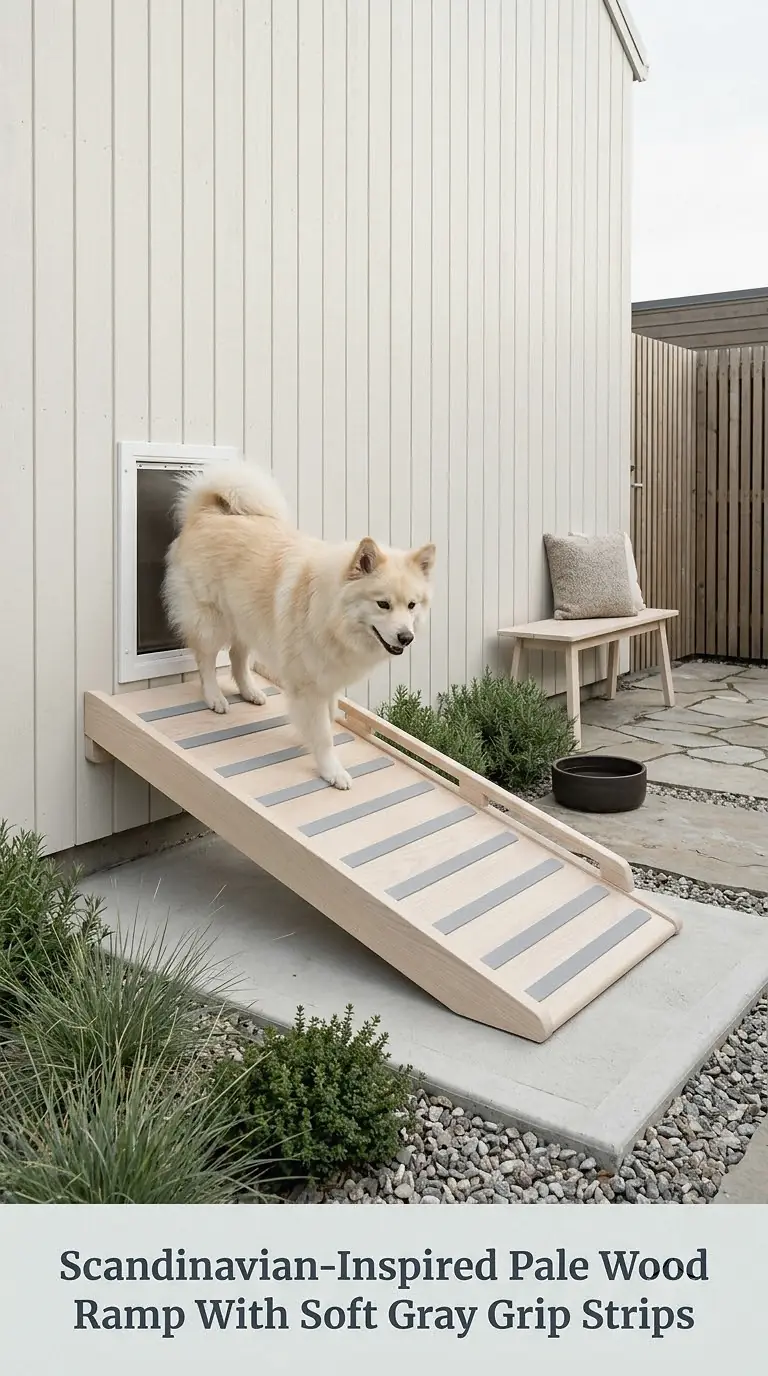
For something understated and beautifully simple, combine pale wood with subtle gray traction.
The clean palette suits Scandinavian, Japandi, minimalist, and light contemporary homes. Use smooth-looking timber for the frame while keeping the actual walking surface textured enough for secure footing.
Thin gray grip strips can run across the ramp at regular intervals, creating a quiet graphic detail without overwhelming the design.
Keep side edges low and streamlined. Instead of decorative rails, focus on precise proportions and uncluttered construction.
This concept works especially well beneath a dog door positioned near a light wood deck, cream exterior wall, or neutral concrete patio.
A nearby woven outdoor basket for towels can also be useful for wiping muddy paws, as long as it sits safely away from the ramp itself.
The result feels calm, stylish, and completely integrated into a thoughtfully designed home.
Choosing The Right Dog Door Ramp Idea For Your Pup
A dog ramp may be a small addition to your home, but it can make everyday outdoor access feel far easier and more comfortable for your pet. The right design depends on the height of your dog door, available space, your dog’s size and mobility, local weather, and the style of your home.
You might need nothing more than a simple low-profile wedge, or your space may benefit from a beautiful built-in cedar ramp, compact corner layout, landscaped paver path, or covered walkway.
Whatever style you choose, put stability, gentle transitions, secure traction, clear pathways, and appropriate edge protection ahead of decoration. Then use materials, colors, and landscaping to make those practical features feel intentional.
A thoughtfully designed ramp gives your dog an easier path between two of their favorite places: a cozy home with you and an inviting backyard waiting just outside the door.
Source: https://petstutorial.com
Category: DOGS
