
Training your dog doesn’t have to mean expensive classes, complicated equipment, or endless repetitions of the same commands. With a little creativity, everyday spaces around your home can become wonderful places to teach useful skills, encourage good manners, and enjoy quality time with your furry best friend.
The best dog training ideas combine practical lessons with playful activities that feel rewarding for both you and your pup. Whether you’re working with an energetic puppy, a curious rescue dog, or an older companion learning something new, simple positive reinforcement techniques can make training an enjoyable part of your routine.
You are reading: 18 Dog Training Ideas That Make Learning Fun, Easy, And Rewarding
From cozy indoor training corners to colorful backyard activities, these ideas offer something for nearly every personality, budget, and living space. You can create most of them with treats, favorite toys, and a few supplies you probably already own.
Ready to make everyday learning more exciting? These creative activities will help you build useful skills while keeping your dog’s comfort, confidence, and happiness at the center of every session.
Creative Dog Training Ideas For Happy And Well-Behaved Pups
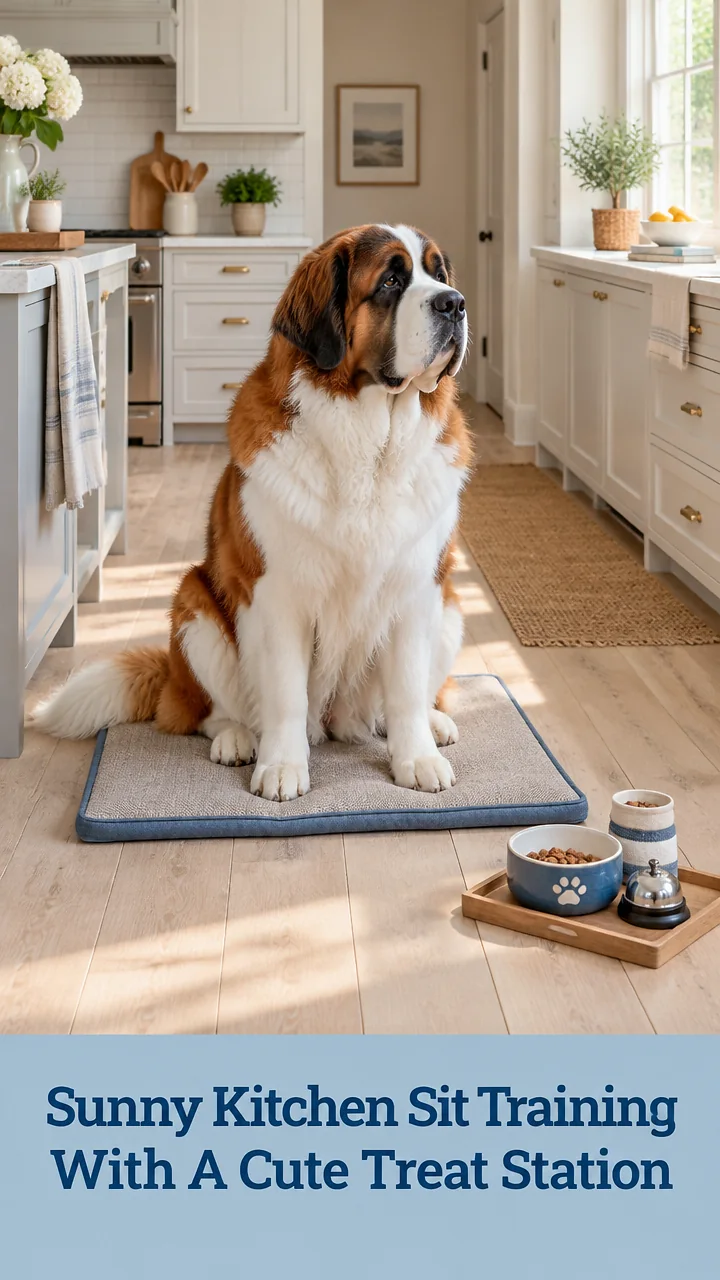
Sunny Kitchen Sit Training With A Cute Treat Station
Training Scene
Transform a bright kitchen corner into a cheerful training spot with warm wooden floors, white cabinets, and a small ceramic treat jar. Your dog sits attentively beside you while sunlight fills the room. This clean, familiar setting makes an ordinary obedience lesson feel like a sweet daily bonding ritual.
What You Need
- Small, soft training treats your dog enjoys.
- A treat pouch or easy-access container.
- A quiet kitchen area with nonslip flooring.
- A consistent verbal marker such as “yes.”
- A few minutes without household distractions.
How To Practice
- Hold a treat near your dog’s nose and slowly move it upward and slightly backward.
- When your dog’s bottom naturally touches the floor, mark the behavior and reward immediately.
- Once your dog understands the movement, introduce the verbal cue “sit” before asking.
- Practice in several rooms, keeping sessions short and cheerful.
Never push your dog’s hips downward. If sitting appears uncomfortable, choose another behavior and consult your veterinarian.
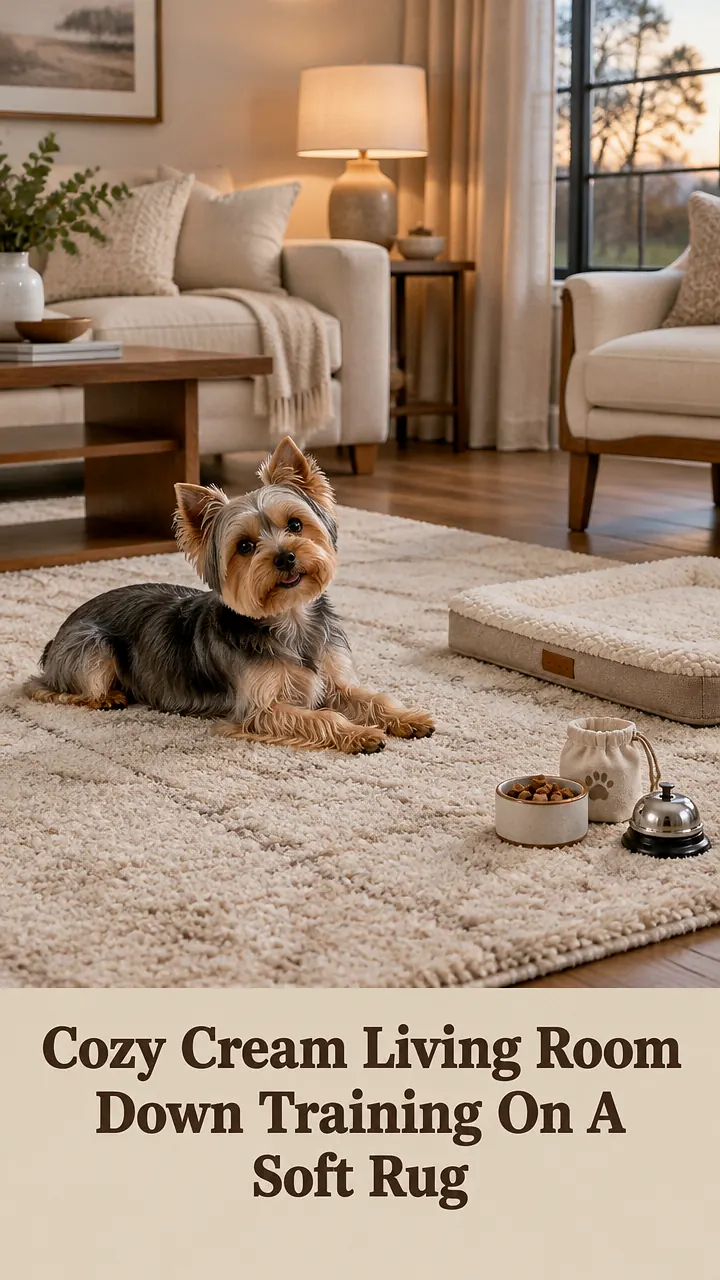
Cozy Cream Living Room Down Training On A Soft Rug
Training Scene
Picture a peaceful living room with a plush cream rug, oatmeal-colored sofa, and woven basket filled with dog toys. Your pup comfortably lies on the floor while you kneel nearby with tiny rewards. The neutral textures and gentle lighting create a relaxed environment for practicing a useful everyday behavior.
What You Need
- A comfortable, nonslip rug or mat.
- Bite-sized treats for frequent rewards.
- Enough open space for stretching out.
- A quiet room away from exciting activity.
- A favorite toy for a playful finish.
How To Practice
- Begin with your dog standing or sitting comfortably on the rug.
- Guide a treat toward the floor, then slowly forward as your dog follows.
- Reward when their elbows and body settle into a comfortable lying position.
- Add the cue “down” once the movement becomes familiar.
Avoid forcing the position. Dogs with joint discomfort may prefer resting on their side or choosing a different activity.
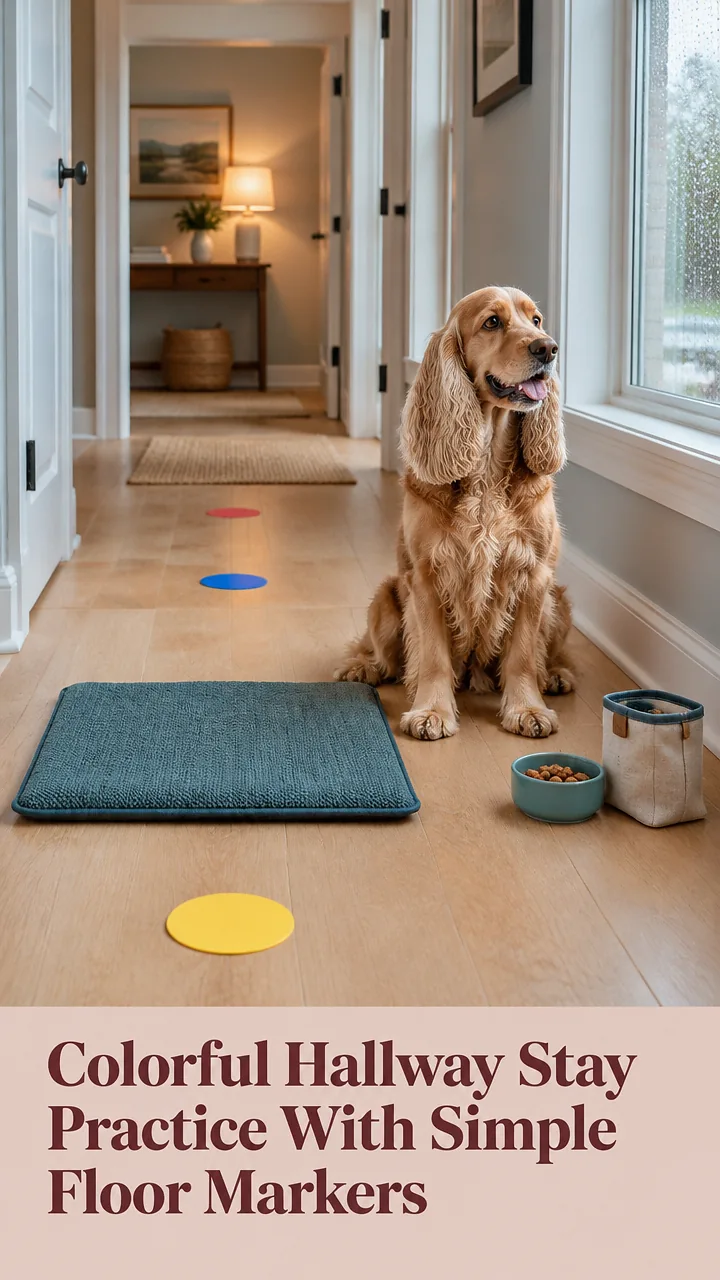
Colorful Hallway Stay Practice With Simple Floor Markers
Training Scene
A bright hallway becomes a miniature training studio with removable blue floor markers, pale walls, and a small dog bed at one end. Your dog waits calmly on a designated spot while you stand a short distance away. The organized setup makes progress easy to observe without requiring expensive training equipment.
What You Need
- Removable floor markers or a small mat.
- High-value treats for successful repetitions.
- A quiet hallway with safe flooring.
- A clear release word such as “free.”
- Enough room to take a few steps.
How To Practice
- Ask your dog to sit or stand comfortably, then reward a brief pause.
- Introduce “stay,” reward after one second, and give your release cue.
- Gradually increase either duration or distance, but not both together.
- Return to your dog to reward success instead of repeatedly calling them away.
Keep the challenge easy enough that your dog succeeds frequently.
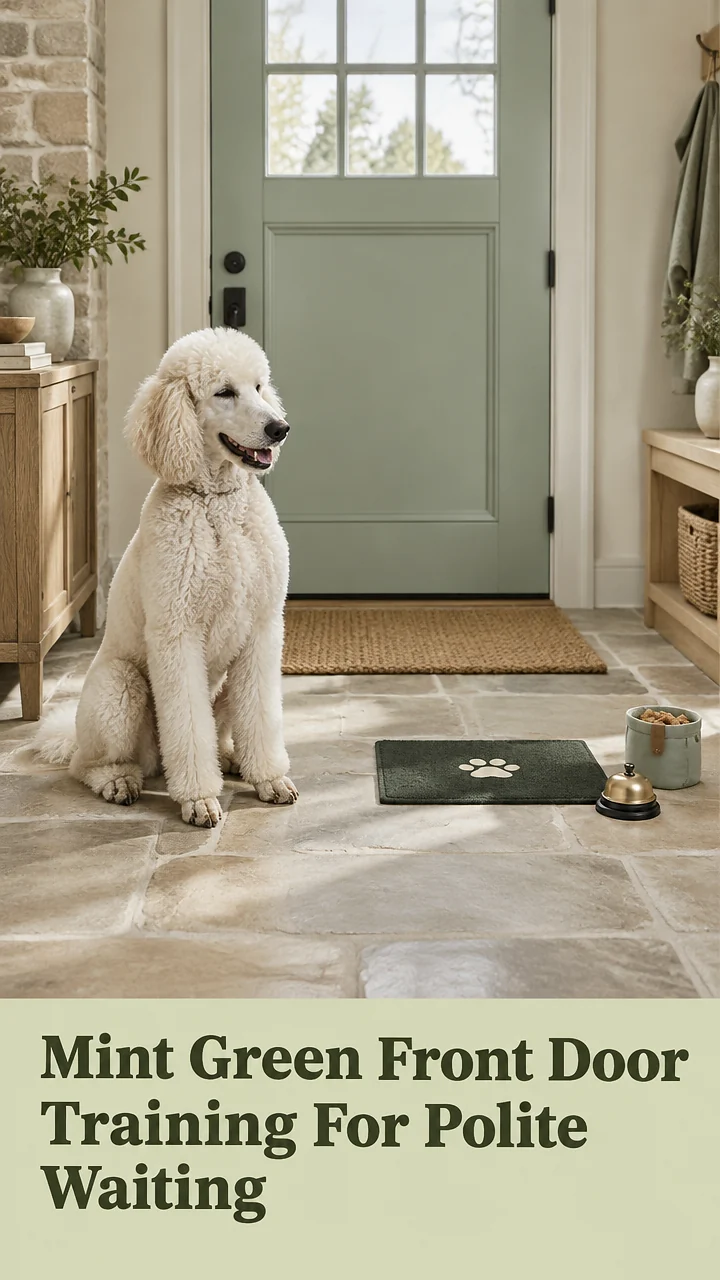
Mint Green Front Door Training For Polite Waiting
Training Scene
Create a welcoming entryway with a mint-green door, natural coir doormat, and neatly arranged shoes. Your dog stands calmly beside you while the closed door becomes part of a simple manners exercise. The attractive setup looks like an ordinary home entrance while teaching a skill that helps prevent excited doorway rushing.
What You Need
- A secure front door and quiet entrance.
- A comfortable harness and regular leash.
- Small rewards in a nearby treat pouch.
- A designated waiting spot away from the doorway.
- A consistent release cue.
How To Practice
- Begin indoors with your dog safely attached to a leash.
- Reward your dog for remaining behind the doorway while you touch the handle.
- Open the door slightly, then reward continued waiting.
- Gradually practice wider openings before giving permission to move forward.
Never rely on this skill alone to prevent escapes. Maintain physical control whenever an exterior door opens.
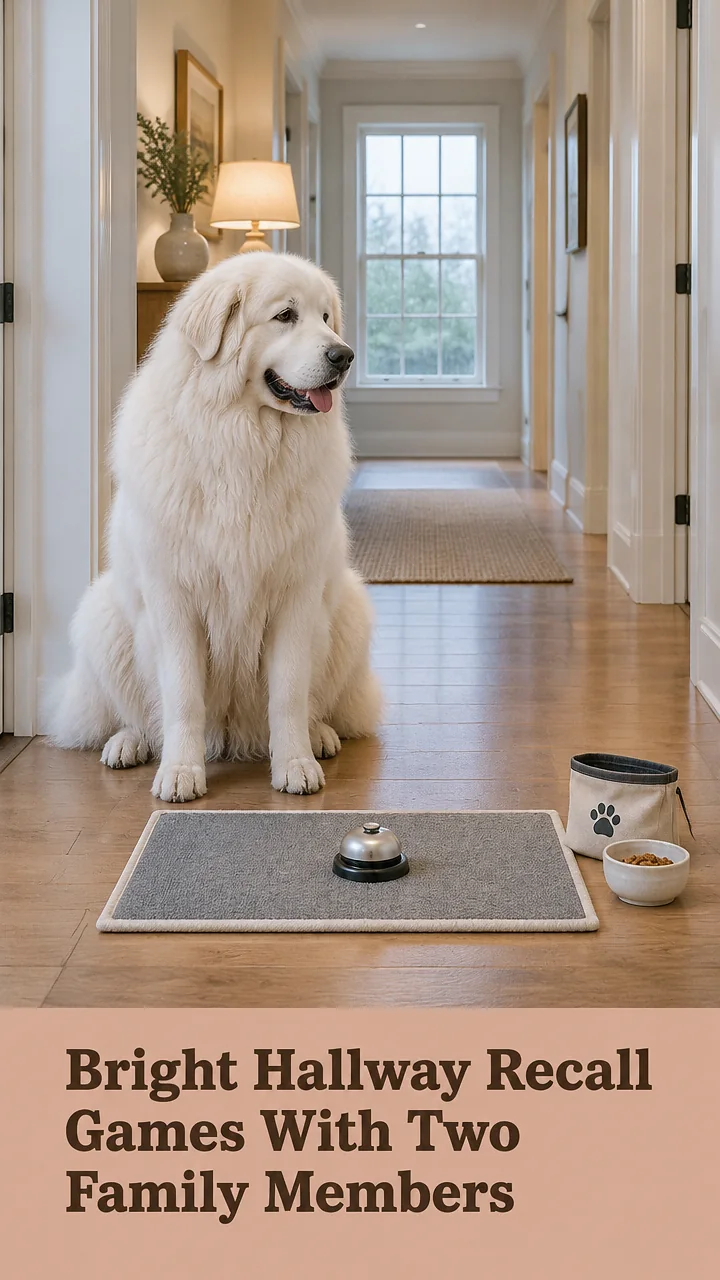
Bright Hallway Recall Games With Two Family Members
Training Scene
Turn a spacious hallway into a playful recall activity with two family members positioned at opposite ends. Colorful treat pouches, cheerful expressions, and a curious dog create an energetic scene. This simple indoor exercise transforms coming when called into a rewarding game that encourages your pup to move happily between familiar people.
What You Need
- Two willing family members or friends.
- Small, exciting treats or favorite toys.
- A clear hallway with no slipping hazards.
- One consistent recall cue, such as “come.”
- Plenty of enthusiastic verbal praise.
How To Practice
- Start only a few feet apart and let one person gently call the dog.
- Mark and reward immediately when your pup arrives.
- Have the second person call after the first reward is finished.
- Slowly increase the distance as your dog becomes confident.
Avoid repeating the cue when your dog is distracted. Make each successful arrival feel worthwhile.
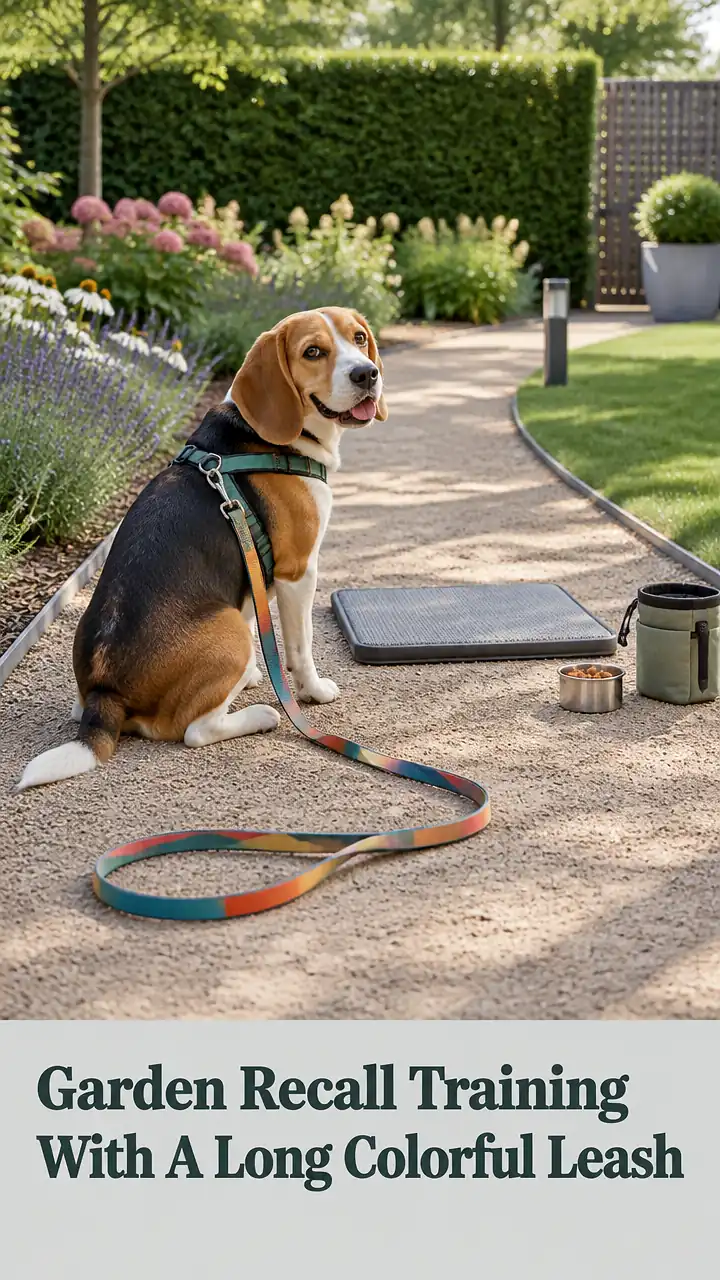
Garden Recall Training With A Long Colorful Leash
Training Scene
Read more : How Long After Applying K9 Advantix Can I Touch My Dog?
Imagine a sunny enclosed garden with green grass, lavender-colored flowers safely separated from the activity area, and a dog wearing a comfortable teal harness. A long training line trails toward its handler while the dog runs happily back for a reward. The outdoor setting introduces realistic distractions without sacrificing control.
What You Need
- A well-fitting harness with secure fastenings.
- A suitable long training line.
- High-value rewards reserved for recall.
- An open area away from roads and obstacles.
- Comfortable shoes for moving alongside your dog.
How To Practice
- Start with short distances where your dog already responds reliably.
- Call once in a happy voice, rewarding generously when they return.
- Occasionally release your dog to explore again after a successful recall.
- Increase distance gradually while maintaining a safe, untangled line.
Never attach a long line to a choke collar or allow it to wrap around people or pets.
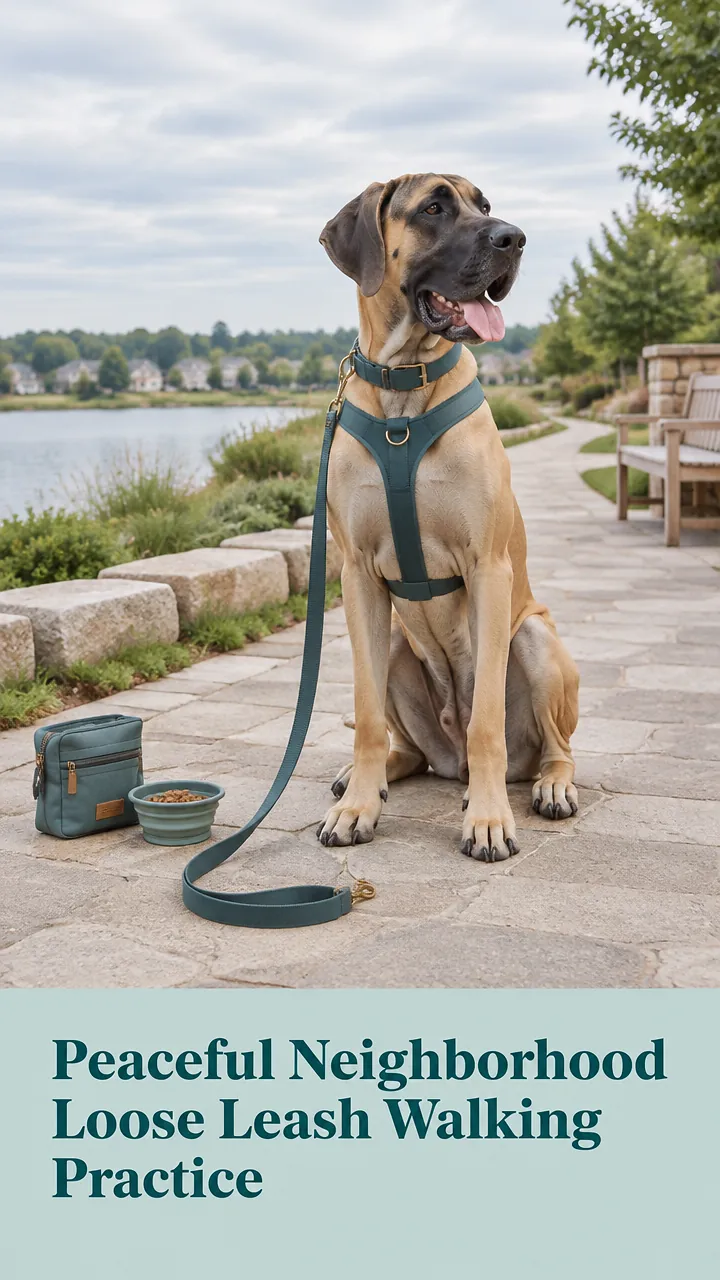
Peaceful Neighborhood Loose Leash Walking Practice
Training Scene
A quiet residential sidewalk lined with leafy trees becomes the perfect setting for leash training. Your dog walks beside you wearing a comfortable oatmeal-colored harness, while a relaxed leash forms a gentle curve between you. Soft morning light and tidy garden fences make the scene inviting, practical, and wonderfully realistic.
What You Need
- A comfortable, properly fitted walking harness.
- A standard nonretractable leash.
- Small treats carried in an accessible pouch.
- A quiet route with limited distractions.
- Comfortable walking shoes.
How To Practice
- Begin indoors by rewarding your dog for standing and walking near you.
- Move outside and reward frequently whenever the leash remains relaxed.
- Stop when pulling begins, then resume after the leash becomes loose.
- Add sniffing breaks so your dog can explore appropriately.
Avoid jerking the leash or demanding perfect heel positioning throughout every walk.
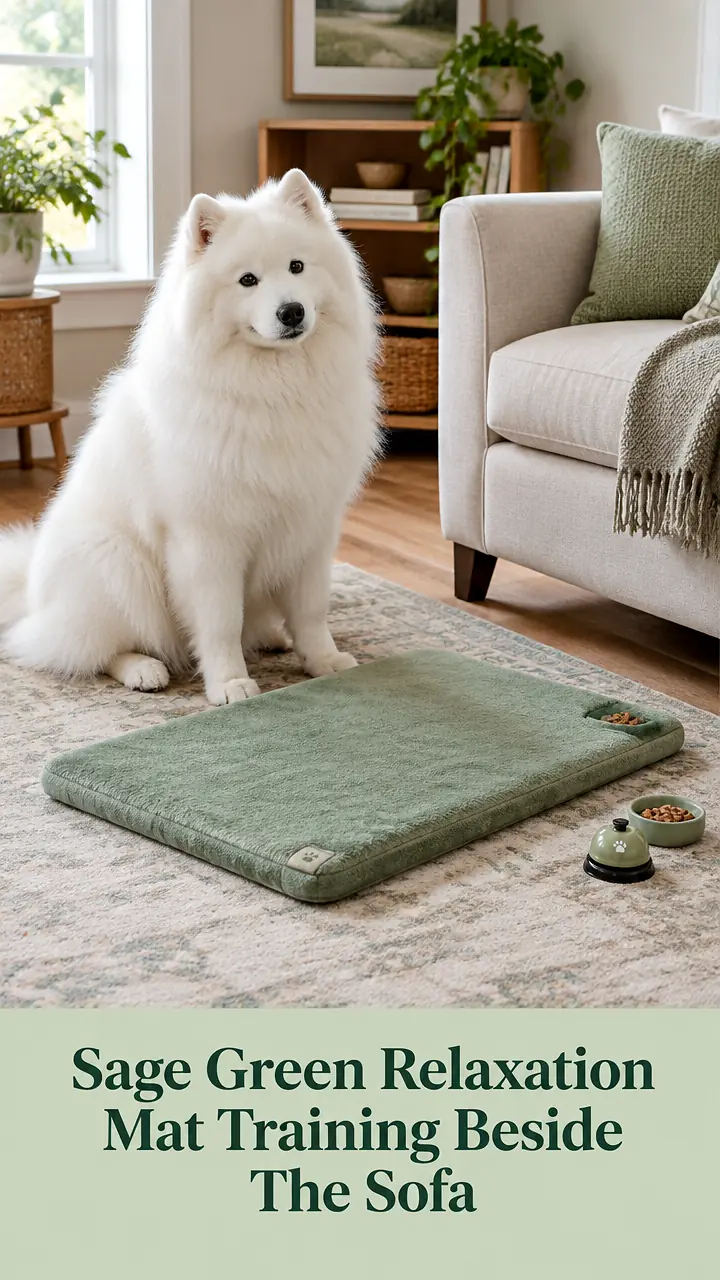
Sage Green Relaxation Mat Training Beside The Sofa
Training Scene
A sage-green quilted dog mat rests beside a soft beige sofa, creating an inviting relaxation corner. Your pup lies comfortably with a favorite stuffed toy nearby while you enjoy a quiet afternoon. The coordinated colors make the space feel intentionally styled, even though the main purpose is teaching calm behavior.
What You Need
- A washable mat large enough for your dog.
- Small treats that can be delivered quietly.
- A peaceful room without sudden interruptions.
- An optional comfortable chew or enrichment toy.
- A consistent cue such as “place.”
How To Practice
- Reward your dog for voluntarily stepping onto the mat.
- Gradually reward lying down and choosing relaxed body positions.
- Extend calm periods by only a few seconds at a time.
- Move the mat to another quiet location once your dog understands.
Allow your dog to leave freely during early lessons. The mat should represent comfort, not confinement.
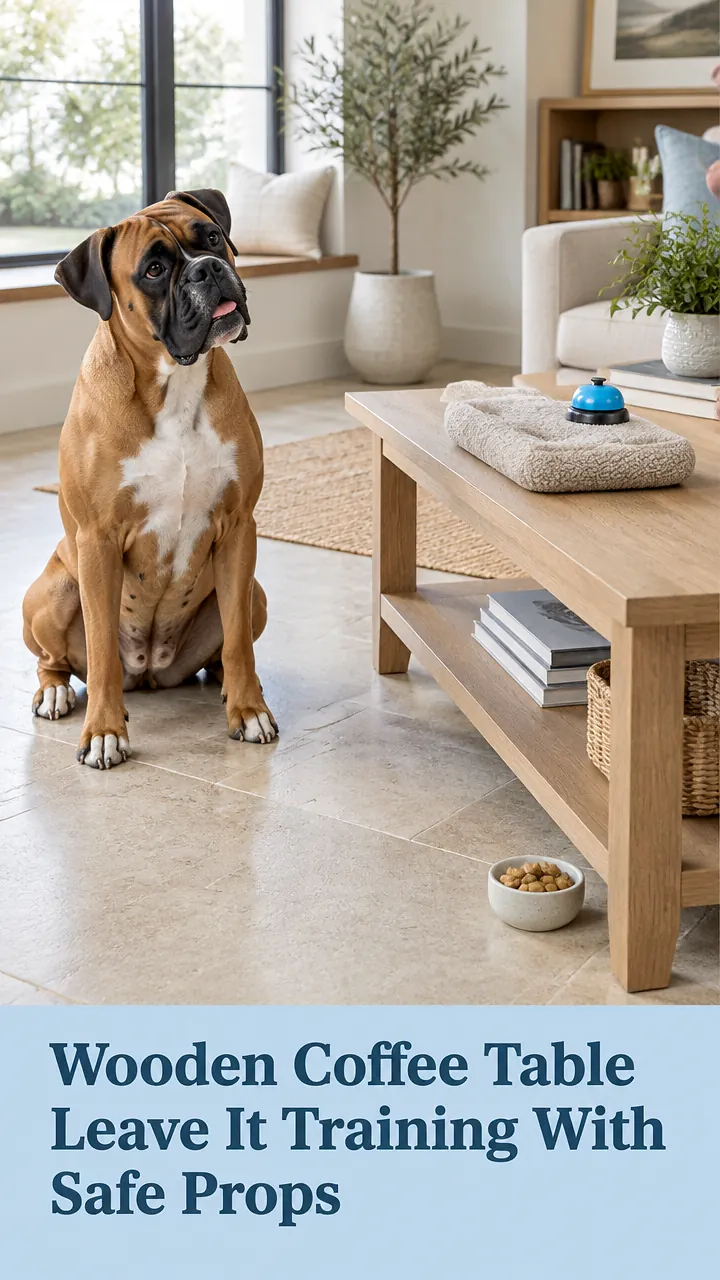
Wooden Coffee Table Leave It Training With Safe Props
Training Scene
A stylish living room features a walnut coffee table, cream carpet, and a few simple training props arranged on the floor. Your dog looks toward you instead of investigating a covered treat. The scene captures an important household safety lesson while maintaining a cozy, uncluttered atmosphere that feels easy to recreate.
What You Need
- Two types of small dog-safe treats.
- A closed hand or secure treat container.
- A quiet area without food distractions.
- A clear marker word.
- A safe practice object for later sessions.
How To Practice
- Hide a treat inside your closed hand and wait for your dog to disengage.
- Mark that choice and reward from your other hand.
- Introduce “leave it” once your dog understands the exercise.
- Practice with a covered treat on the floor, rewarding from a separate supply.
Never deliberately expose your dog to medication, toxic foods, or dangerous objects during training.
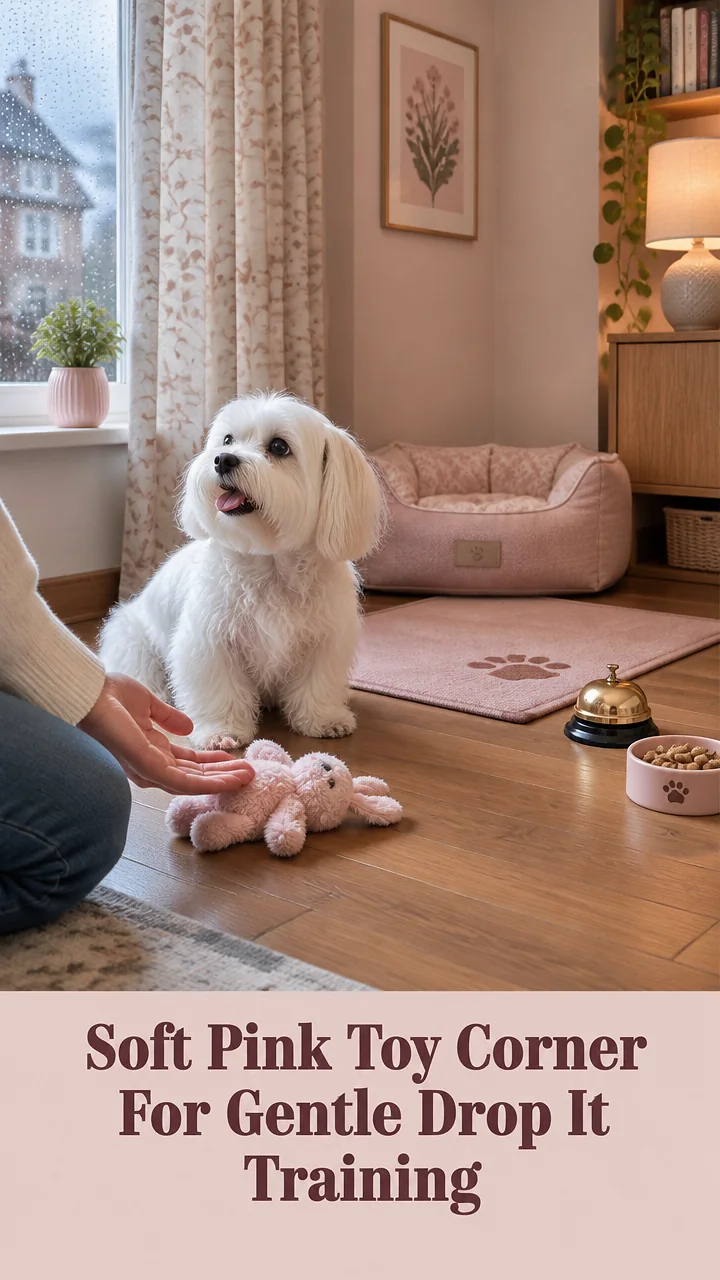
Soft Pink Toy Corner For Gentle Drop It Training
Training Scene
A playful corner filled with blush-pink storage baskets, a washable cotton rug, and colorful plush dog toys creates a cheerful training scene. Your pup holds a favorite soft toy while you offer a reward nearby. The comfortable setting makes learning to release objects feel like a cooperative game instead of a struggle.
What You Need
- Two dog-safe toys of similar value.
- Small, appealing training treats.
- A spacious area without delicate furniture.
- A verbal cue such as “drop.”
- A basket for storing practice toys.
How To Practice
- Offer a toy and allow your dog to hold it comfortably.
- Present a treat near their nose without pulling the toy.
- When they release it, mark the behavior and reward.
- Return the toy frequently so dropping does not always end the game.
Never chase your dog or forcibly remove objects during practice. Dangerous items require safe management and professional advice when necessary.
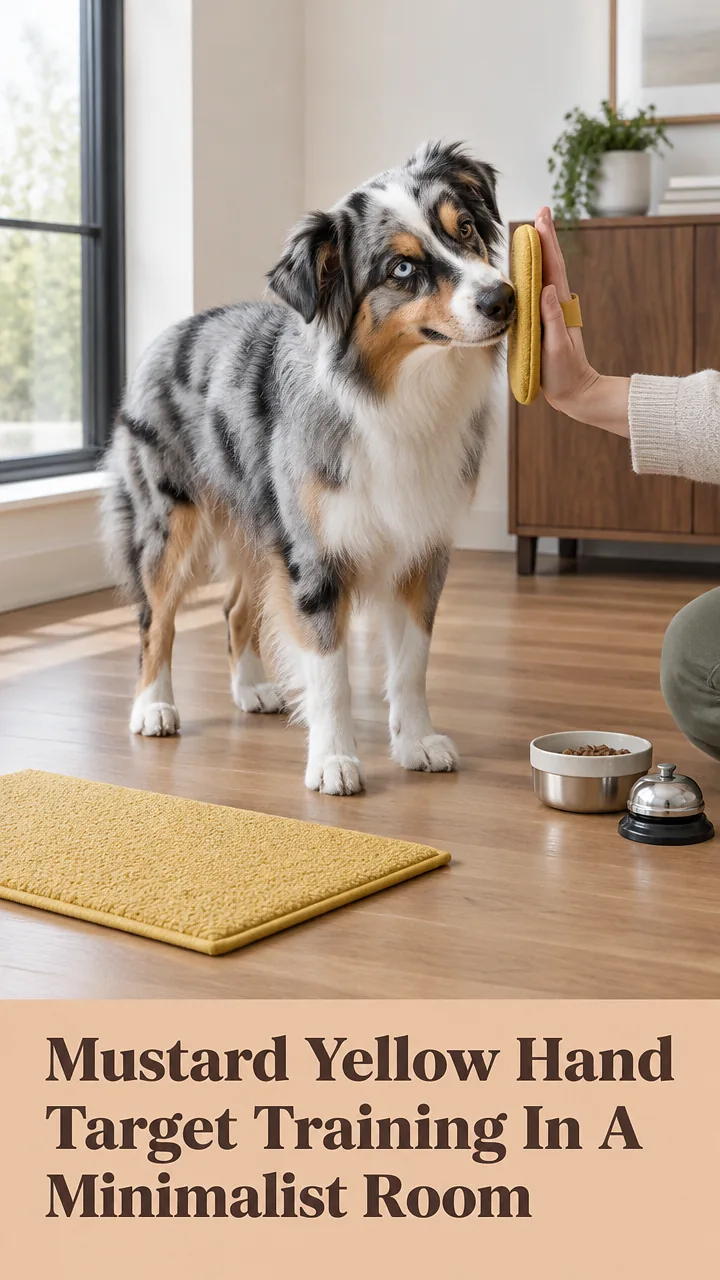
Mustard Yellow Hand Target Training In A Minimalist Room
Training Scene
A bright minimalist room with mustard-yellow cushions, pale oak furniture, and a soft gray rug provides an uncluttered backdrop for hand-target training. Your dog gently touches your open palm with their nose while watching you attentively. This simple, charming activity requires almost no equipment and works beautifully in small apartments.
What You Need
- Your open hand as the target.
- A few tiny training treats.
- A quiet area with comfortable flooring.
- A marker word or clicker.
- An optional target stick for later practice.
How To Practice
- Present your open palm a short distance from your dog’s nose.
- Mark and reward when they voluntarily investigate or touch it.
- Repeat until touching your palm becomes predictable.
- Add the cue “touch,” then gradually change your hand’s position.
This skill can help guide your dog into different positions without physically pushing or pulling them.
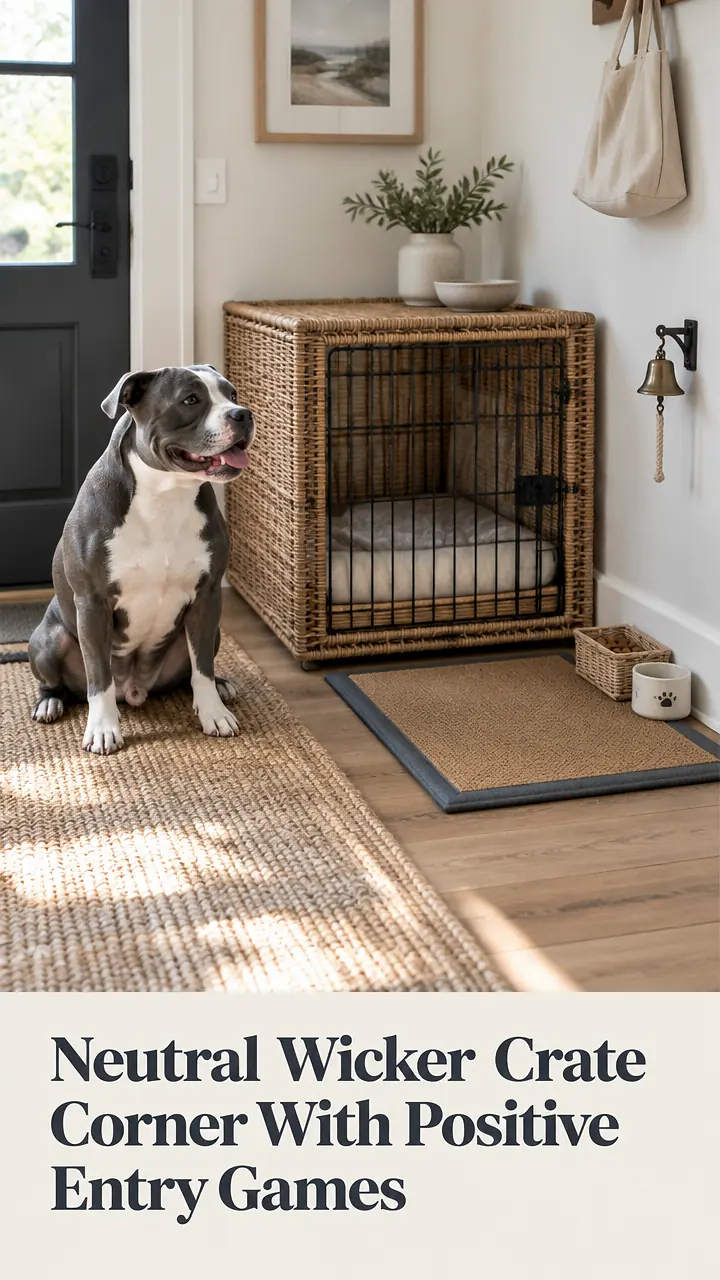
Neutral Wicker Crate Corner With Positive Entry Games
Training Scene
A wire dog crate sits in a peaceful bedroom corner, surrounded by cream curtains, a soft washable bed, and a wicker storage basket. The crate door remains open while your pup explores the entrance willingly. Warm lighting and simple accessories create a comfortable retreat rather than an intimidating training area.
What You Need
- A properly sized, well-ventilated dog crate.
- Comfortable, suitable bedding.
- Small treats for rewarding exploration.
- A favorite safe enrichment toy.
- A quiet location away from direct heat.
How To Practice
- Secure the crate door open and allow your dog to investigate freely.
- Reward looking inside, approaching, and eventually stepping in.
- Offer meals or suitable toys inside while keeping the door open.
- Introduce brief door closure only after your dog is completely comfortable.
Never use the crate as punishment. Progress slowly, and stop if your dog shows distress.
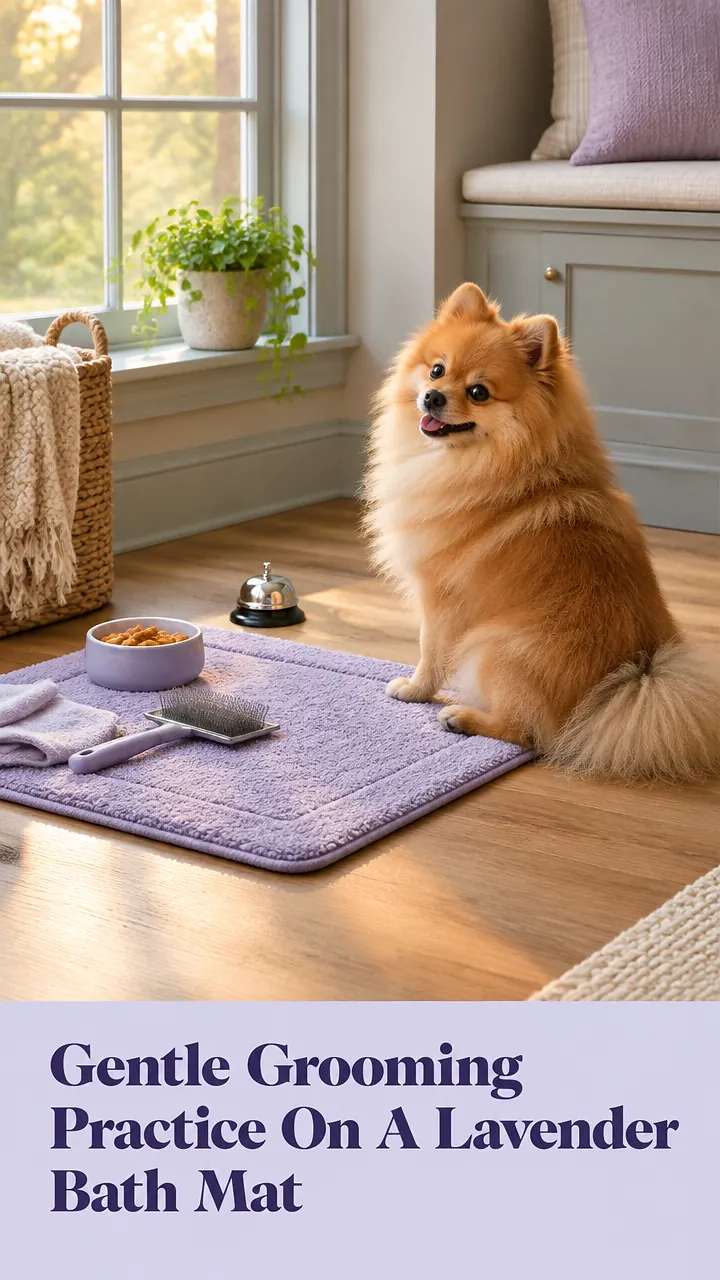
Gentle Grooming Practice On A Lavender Bath Mat
Training Scene
A soft lavender bath mat creates a pretty, nonslip grooming station in a bright bathroom. A gentle brush, neatly folded towel, and small treat container sit within easy reach. Your dog stands comfortably while you practice brief, positive handling exercises designed to make everyday grooming less stressful.
What You Need
- A secure, nonslip bath mat.
- A gentle brush suitable for your dog’s coat.
- Small rewards your dog loves.
- A clean, soft towel.
- A quiet environment without loud appliances.
How To Practice
- Reward your dog for approaching and standing on the mat voluntarily.
- Briefly touch their shoulder or leg, then reward relaxed acceptance.
- Introduce the brush gradually, beginning with one gentle stroke.
- Practice brief paw handling without restraining or forcing your dog.
Read more : 18 Dog Training Room Ideas for a Stylish and Functional Pet Space
Stop whenever your dog withdraws or becomes uncomfortable. Never force painful or frightening grooming procedures.
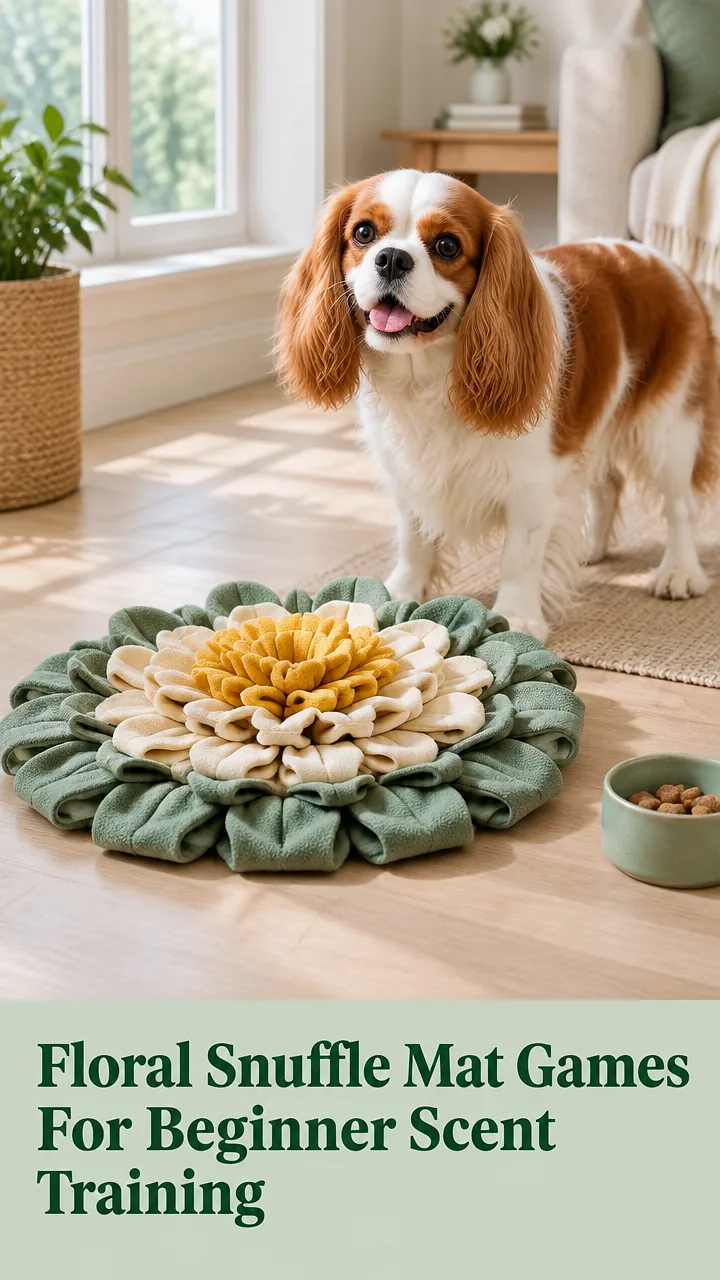
Floral Snuffle Mat Games For Beginner Scent Training
Training Scene
A handmade-looking snuffle mat filled with soft fabric strips in dusty rose, olive green, and cream rests on a wooden floor. Your dog enthusiastically investigates the folds, searching for hidden kibble. The colorful textures create an engaging indoor enrichment scene while encouraging natural sniffing and simple problem-solving.
What You Need
- A sturdy, dog-safe snuffle mat.
- Small pieces of your dog’s regular kibble.
- A clean, nonslip floor surface.
- A washable storage bag.
- Supervision during every activity.
How To Practice
- Scatter several pieces of kibble visibly across the mat.
- Encourage your dog to investigate using a cheerful “find it” cue.
- Gradually tuck food deeper into accessible fabric folds.
- Finish when your dog loses interest and put the mat away.
Inspect fabric regularly for loose pieces. Remove the mat if your dog begins chewing or swallowing its materials.
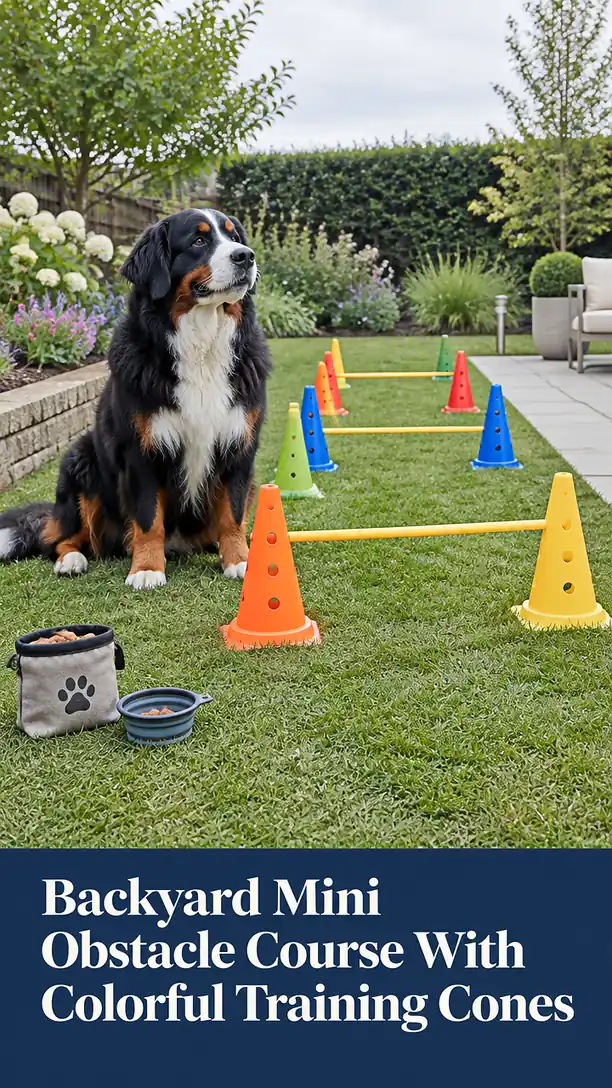
Backyard Mini Obstacle Course With Colorful Training Cones
Training Scene
Create a playful backyard activity area using turquoise training cones, orange ground markers, and a wide, flat walking path. Your dog follows you through gentle turns and around spaced obstacles. The grassy setting looks lively and organized without relying on high jumps or demanding agility equipment.
What You Need
- Lightweight plastic cones without sharp edges.
- Flat ground markers or nonslip mats.
- A secure, level practice area.
- Small treats or a favorite toy.
- Fresh drinking water nearby.
How To Practice
- Arrange three or four cones with generous walking space between them.
- Reward your dog for calmly approaching the first cone.
- Guide them around the cones using hand targets or treats.
- Introduce gentle curves and different routes as confidence improves.
Keep obstacles low-impact. Avoid tight turns, jumping, or strenuous movements for puppies, senior dogs, or dogs with mobility concerns.
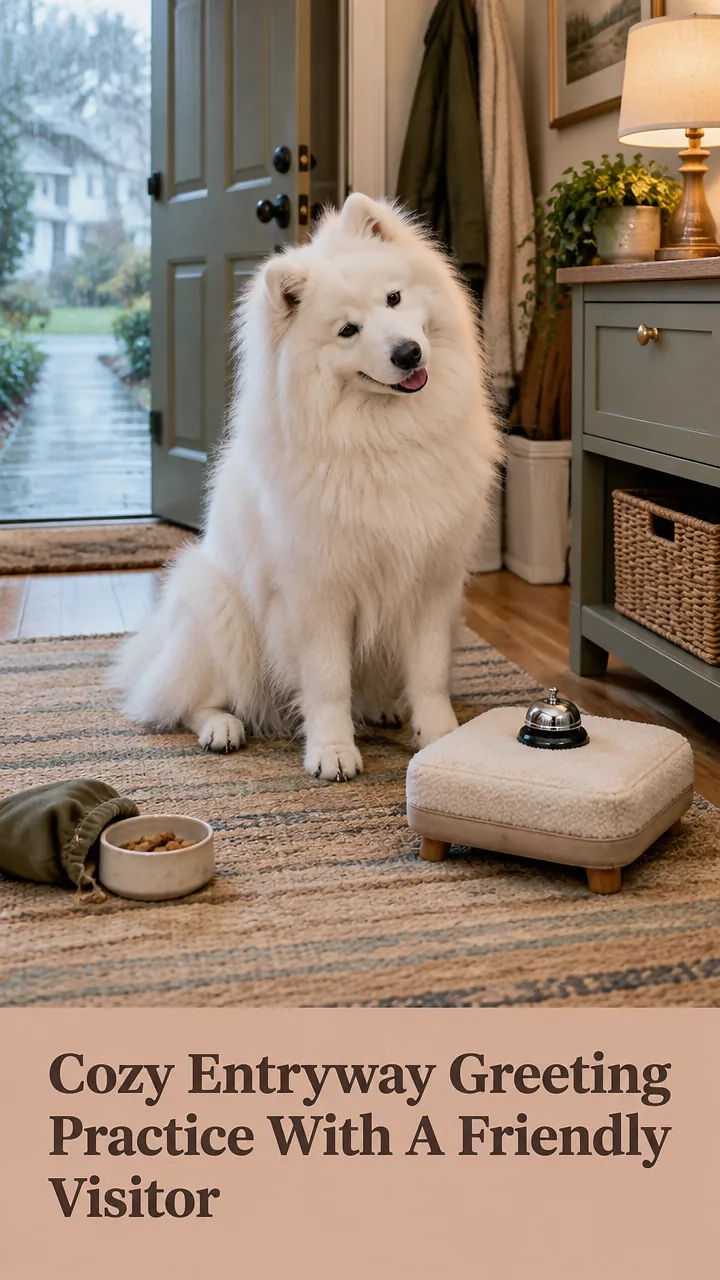
Cozy Entryway Greeting Practice With A Friendly Visitor
Training Scene
A welcoming foyer decorated with a natural woven rug, light wooden bench, and cheerful seasonal wreath becomes a polite greeting practice space. Your dog stands calmly near a designated mat while a familiar visitor enters. The scene offers a realistic way to practice household manners without overwhelming your pet.
What You Need
- A trusted helper who follows instructions.
- A comfortable harness and leash if needed.
- A nonslip greeting mat.
- Small, high-value treats.
- A quiet retreat area for breaks.
How To Practice
- Begin with your helper at a comfortable distance from your dog.
- Reward your dog for keeping four paws on the floor.
- Allow the helper to approach only while your dog remains comfortable.
- Encourage brief greetings, then reward your dog for returning to you.
Never force interactions. For fearful or reactive dogs, prioritize distance and seek help from a qualified reward-based professional.
Teal Harness Direction Change Training On A Garden Path
Training Scene
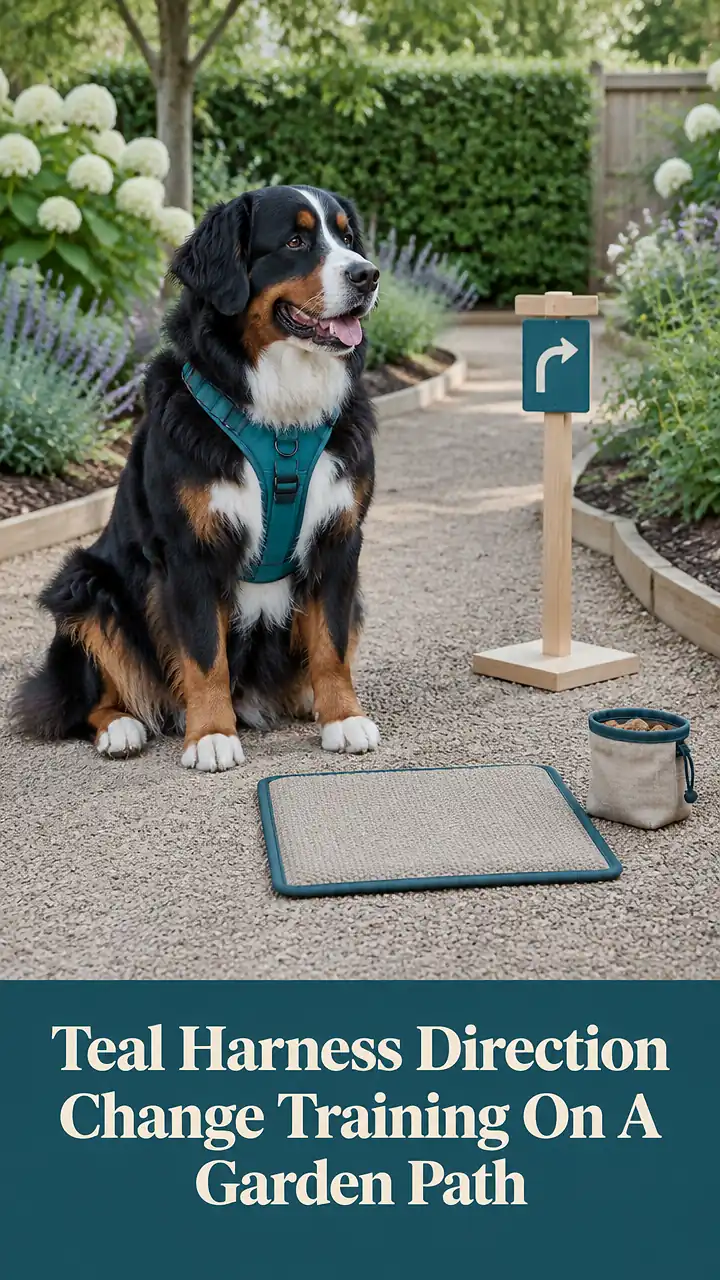
A winding garden pathway bordered by low greenery provides a beautiful setting for practicing direction changes. Your dog wears a comfortable teal harness while following you around a gentle curve. The loose leash, natural stone path, and relaxed body language create a practical scene for teaching walking flexibility.
What You Need
- A well-fitted harness and standard leash.
- Small treats for rewarding quick responses.
- A quiet walking route with good visibility.
- A cue such as “this way.”
- Comfortable footwear and an uncluttered path.
How To Practice
- Begin indoors by rewarding your dog for turning toward you.
- Say “this way,” guide a gentle turn with a treat, and reward.
- Practice following you in the opposite direction over short distances.
- Move outside and introduce the cue before approaching distractions.
This skill can help you create space from stressful situations without tugging or correcting your dog.
Natural Canvas Toy Basket Training For Easy Cleanup
Training Scene
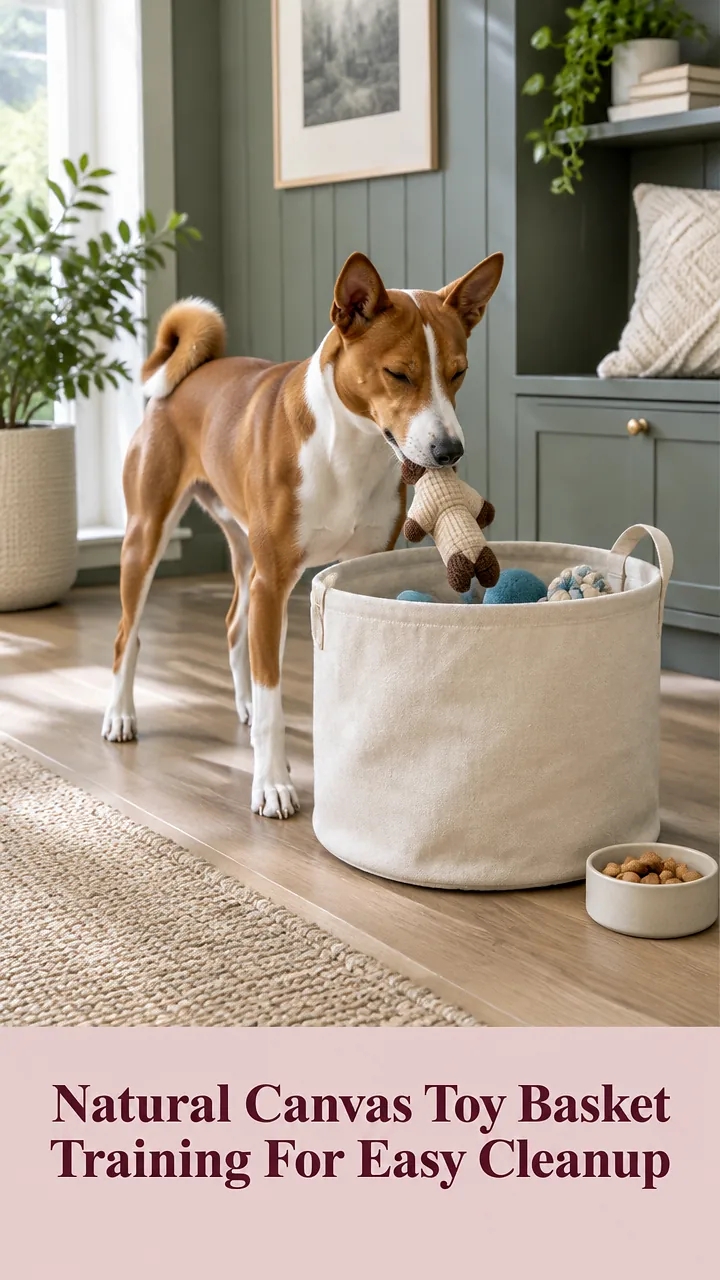
A cozy playroom features a natural canvas toy basket with a wooden frame, soft patterned rug, and several colorful dog toys scattered nearby. Your pup proudly carries a plush toy toward the open basket. The charming scene combines playful training with a useful household routine that can become part of daily cleanup.
What You Need
- A stable, wide-opening toy basket.
- Soft toys your dog already enjoys carrying.
- Small training treats.
- A marker word or clicker.
- A spacious area for practicing retrieves.
How To Practice
- First teach your dog to pick up and release a favorite toy.
- Place the basket directly beneath where the toy is released.
- Reward whenever the toy lands inside the basket.
- Gradually move the toy farther away and introduce “tidy up.”
Choose a basket without sharp edges or loose decorative pieces. Keep training playful rather than expecting perfect cleanup.
Make Everyday Dog Training A Happy Routine
The most effective dog training ideas are often the simplest ones. You don’t need a huge backyard, an expensive equipment collection, or hours of spare time to help your dog learn. A comfortable mat, a handful of treats, and a few minutes of focused attention can create meaningful learning opportunities.
Start with skills that suit your dog’s personality and your daily routine. Energetic pups may enjoy recall games, gentle obstacle courses, and scent activities. More relaxed companions might prefer mat training, hand targets, or quiet grooming exercises. If you live in a small apartment, indoor activities can be just as worthwhile as elaborate outdoor setups.
Remember to reward progress, allow plenty of breaks, and adjust each activity to your dog’s age, health, and comfort level. Short, consistent sessions are usually more productive than long lessons that leave your pup tired or frustrated.
Above all, make learning something your dog looks forward to. With patience, kindness, and a little creativity, these dog training ideas can turn ordinary moments into enjoyable experiences that strengthen your relationship and make everyday life together even better.
Source: https://petstutorial.com
Category: DOGS
