
A backyard can be so much more than a patch of grass where your dog takes a quick bathroom break. With a little planning, it can become an outdoor extension of your home, complete with shady lounging spots, room for zoomies, sensory areas to explore, and practical features that make muddy paws and daily cleanup far easier to manage.
The best dog yard ideas balance beauty with the way dogs actually use outdoor spaces. Some pups want an open lawn for chasing balls, while others would happily spend an afternoon following scents along a winding pathway. A determined digger may need a sandbox of their own, while an older dog might benefit most from gentle ramps, soft surfaces, and a comfortable place to rest in the shade.
You are reading: 18 Dog Yard Ideas For A Beautiful, Safe, And Playful Backyard
Safety matters just as much as style. Secure fencing, dependable access to fresh water, paw-friendly materials, non-toxic planting choices, and protected garden or pool areas should all be considered before adding decorative details.
Fortunately, a dog-friendly backyard does not need to look like a kennel or training facility. From polished modern courtyards to cozy farmhouse yards and affordable DIY play zones, there are plenty of ways to create a space that feels welcoming for both pets and people.
Dog Yard Ideas For A Safe, Stylish, And Enriching Outdoor Space
Warm Cedar Privacy Fence With A Secure Dig-Proof Border
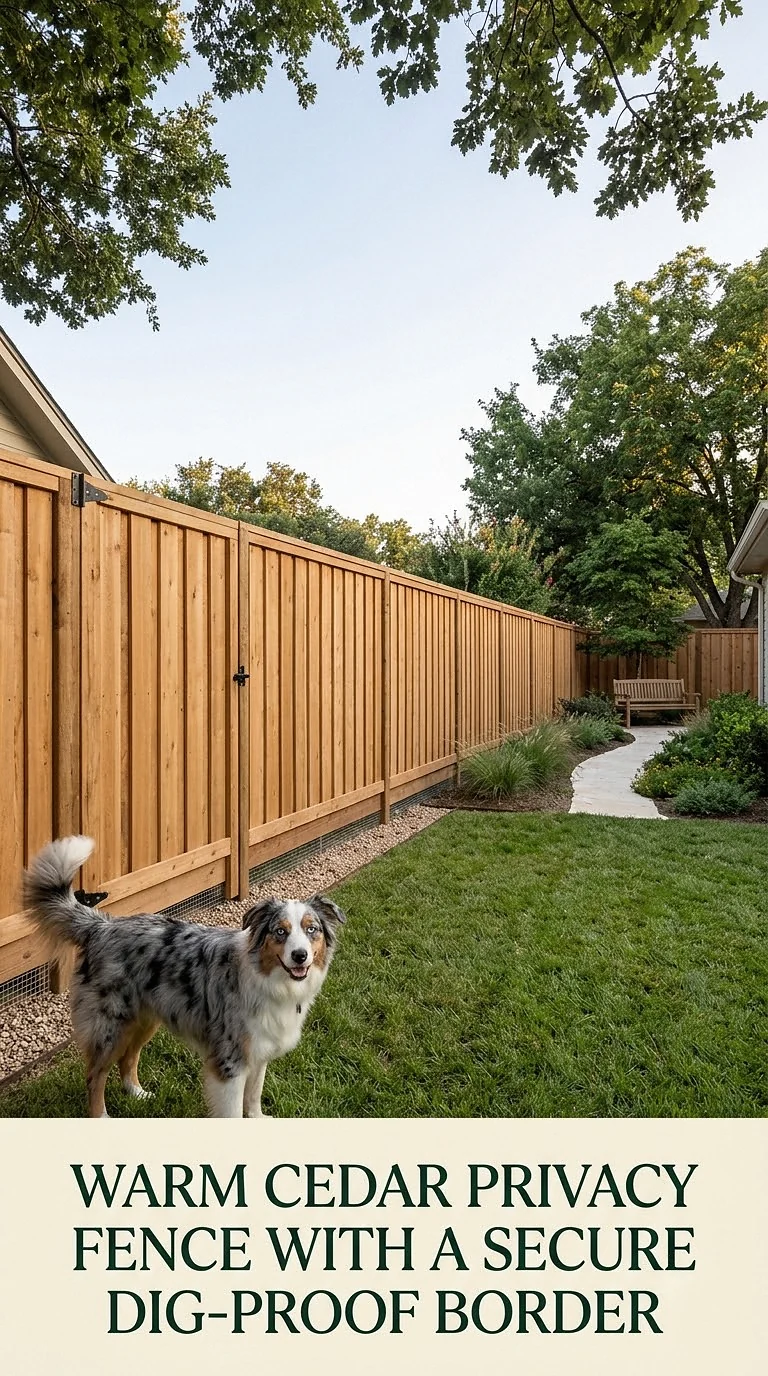
Start with the feature that makes every other backyard idea possible: a secure perimeter. A warm cedar privacy fence creates a beautiful architectural backdrop while giving your dog a clearly defined space to explore.
Choose a fence height that suits your individual dog, especially if you have a confident jumper or climber. Check carefully for gaps around gates, corners, and areas where landscaping changes the effective fence height.
For dogs that like excavating along the perimeter, consider extending an appropriate barrier below ground or installing a wide border of heavy pavers along the fence line. Any buried fencing material should be installed so sharp edges cannot become exposed.
A self-closing or securely latching gate adds another layer of protection.
Visually, cedar pairs beautifully with black gate hardware, pale stone borders, ornamental grasses, and warm outdoor lighting. The result feels intentional and sophisticated while quietly handling one of the most important parts of a dog-friendly yard.
Curved Dog Zoomie Path With Soft Lawn And Stone Edging
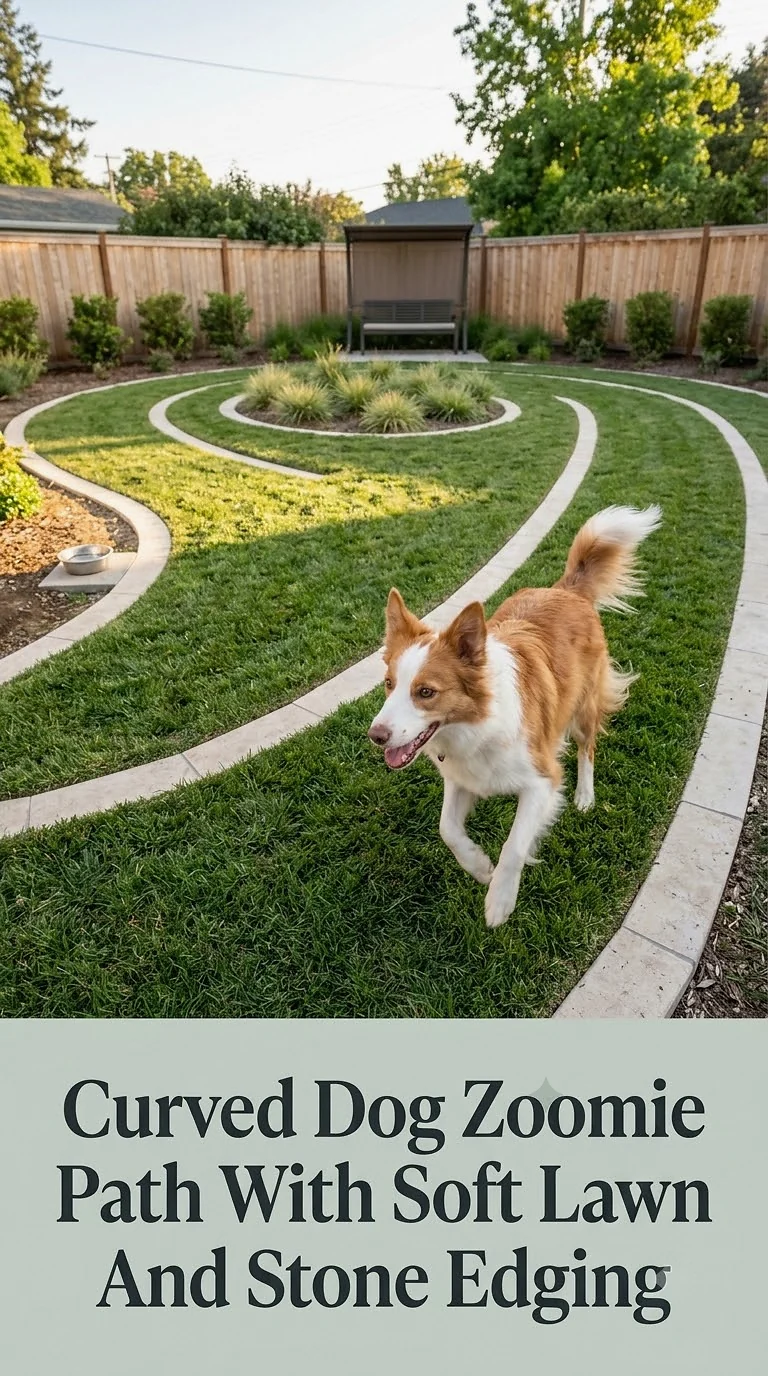
If your dog repeatedly races around the same section of the yard, work with that natural behavior instead of constantly repairing the worn path.
Create a curved running loop around the outer edge of the lawn using a durable, paw-friendly surface. Depending on your climate and drainage, this could include compacted fine gravel, decomposed granite, turf, or another comfortable landscape material.
Keep the path broad enough for easy turns rather than creating tight corners. Smooth stone edging can define the route while separating it from flower beds.
Planting should stay slightly back from the running zone so excited dogs do not crash into shrubs or delicate flowers.
This design is particularly attractive in larger suburban yards because the center remains available for a green lawn, seating area, or play space. From the patio, the curved pathway also creates a lovely landscaped look rather than appearing like a dedicated exercise track.
Lush Open Grass Play Lawn With Clean Stone Borders
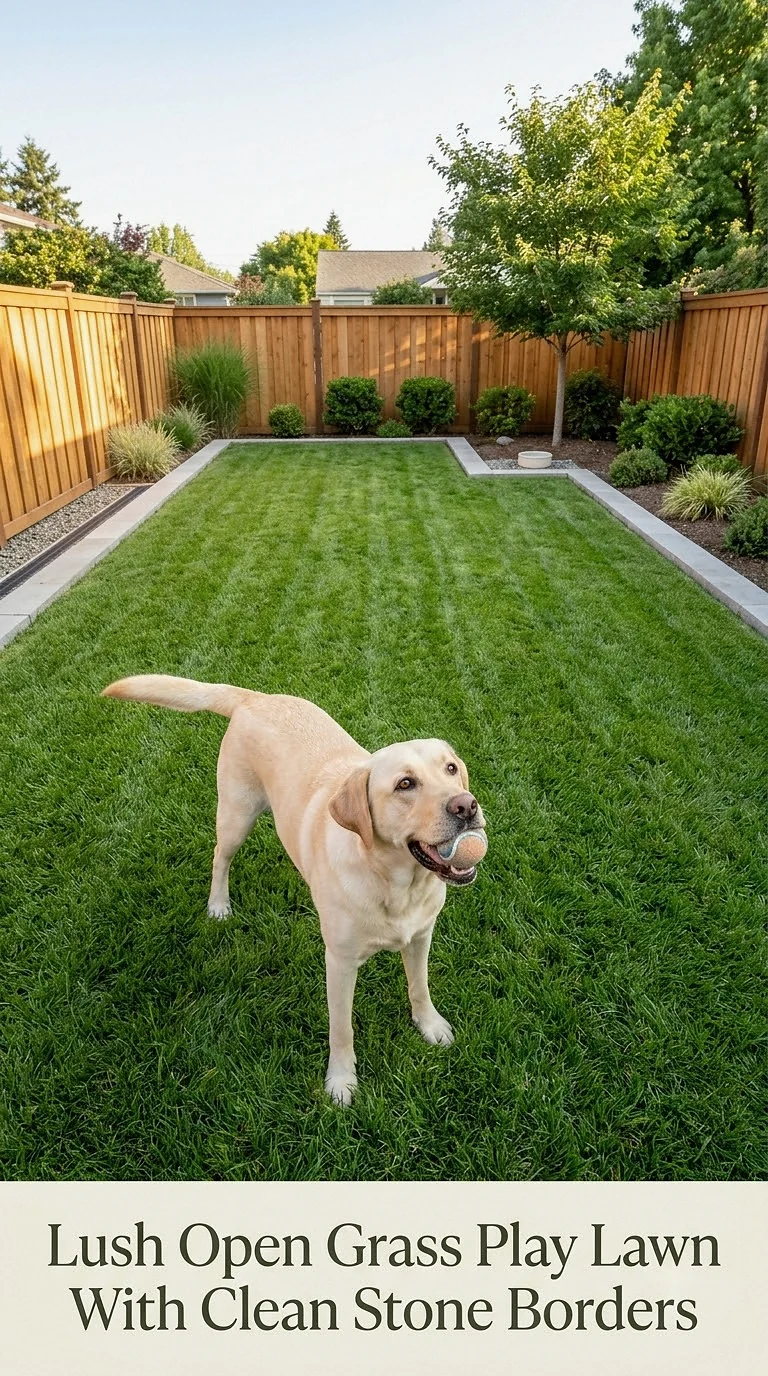
Sometimes the simplest dog yard is also one of the most useful. A generous rectangle or oval of open lawn provides room for fetch, gentle training sessions, tug games, and spontaneous running.
Instead of filling every corner with furniture and garden beds, preserve a clear central play area.
Define it with broad stone borders, raised planting zones, or low landscape edging. Keeping plants out of the primary running path reduces accidental trampling and gives the yard a cleaner appearance.
Choose grass varieties appropriate for your local climate and expected level of traffic. High-use sections may need occasional reseeding or repair.
A simple lawn is particularly practical for families who use the backyard together. Add comfortable chairs near one edge so you can relax while your dog plays.
For visual warmth, combine the green lawn with creamy paving, natural timber, and a few carefully positioned planters containing dog-safe plants.
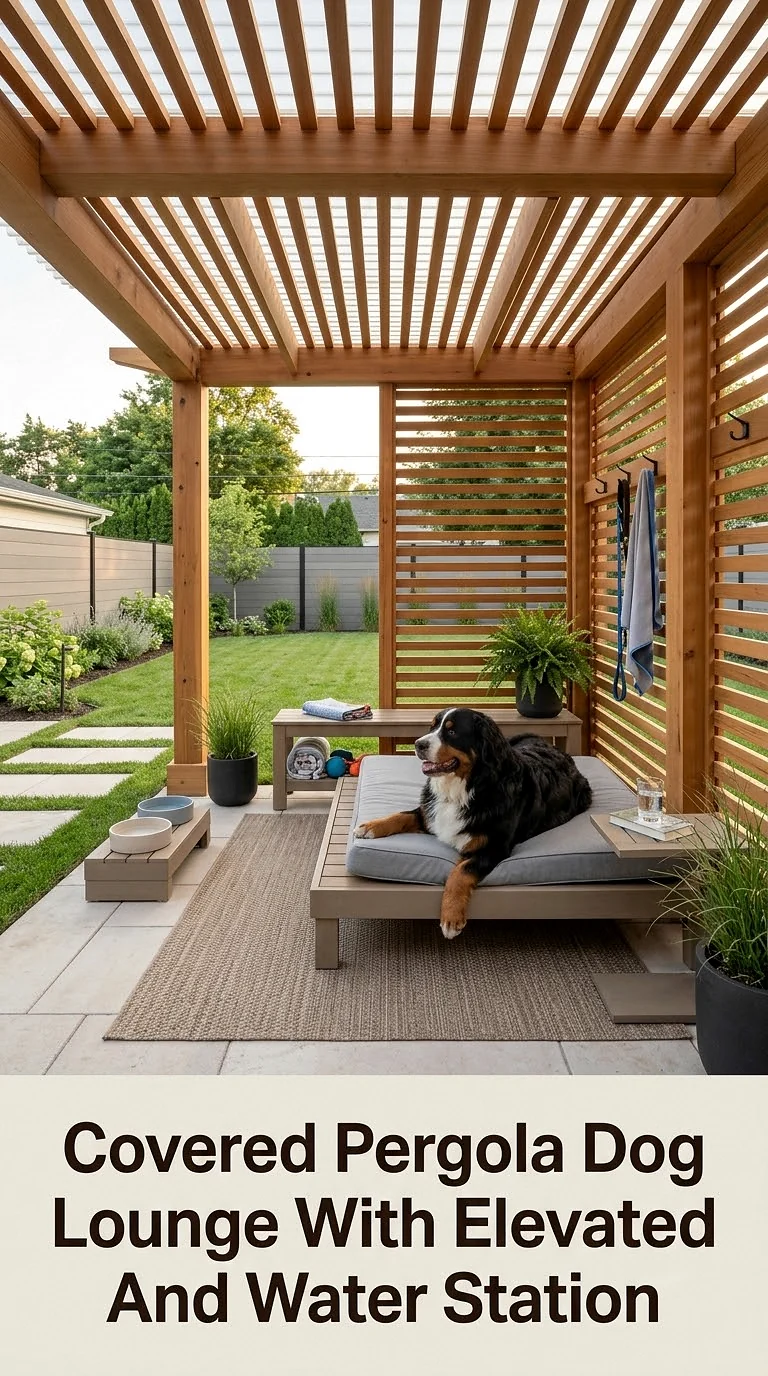
Covered Pergola Dog Lounge With Elevated Bed And Water Station
Every dog yard needs a reliable place to cool down and rest.
A timber pergola can turn an ordinary patio corner into a beautiful outdoor dog lounge while creating shade during sunny parts of the day. Because shade moves as the sun changes position, check the area at different times before deciding where to build.
Place a washable elevated dog bed beneath the structure so air can circulate around your pet. Add a sturdy bowl or outdoor water station that is easy to refill with fresh water.
A small storage bench nearby can hold outdoor toys, towels, brushes, and washable blankets.
For a soft, cozy look, use pale stone flooring, warm oak or cedar posts, neutral outdoor cushions, and large planters positioned beyond chewing reach.
This type of retreat also gives dogs somewhere peaceful to settle when people are eating outdoors or guests are visiting.
Modern Dog Splash Pad With Non-Slip Pavers And Drainage
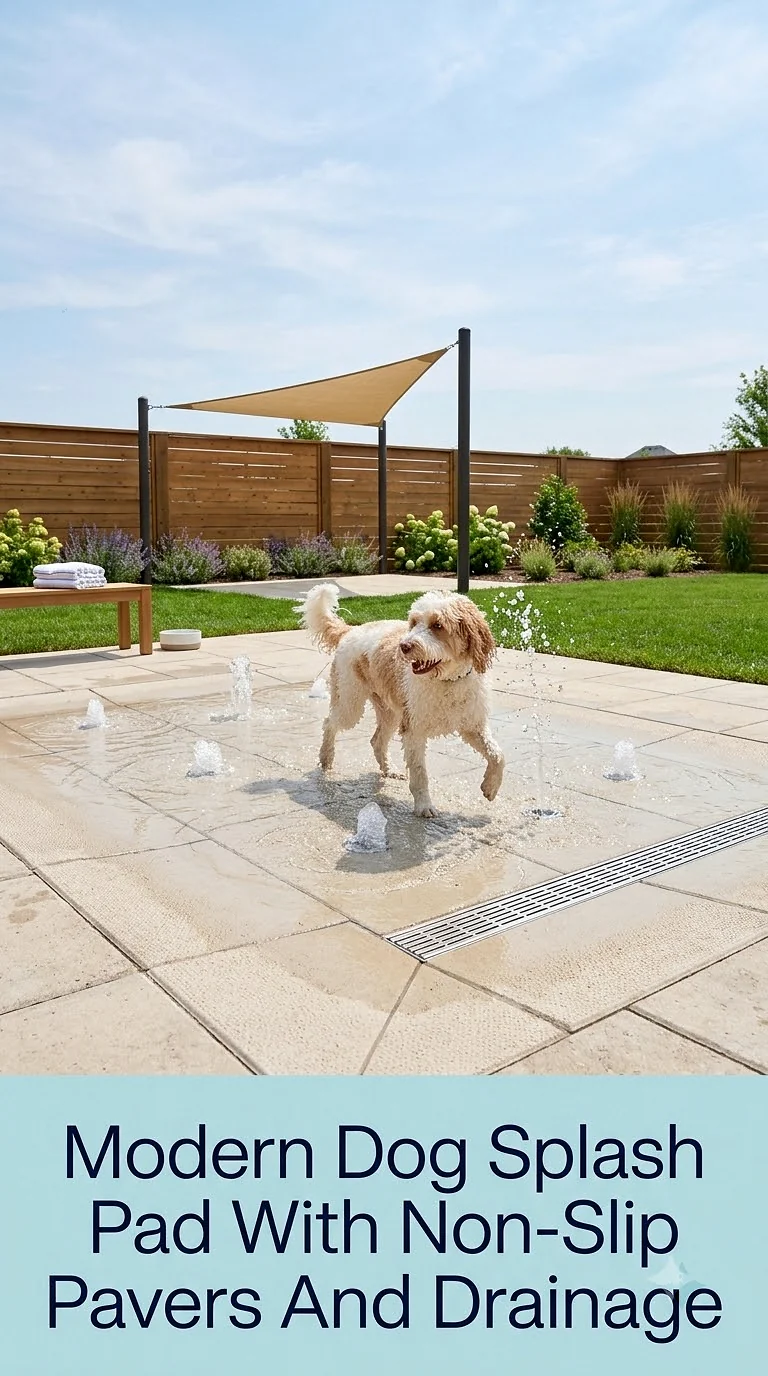
Water-loving dogs can have their own cooling area without requiring a full swimming pool.
Create a compact splash zone using textured, non-slip outdoor paving and a simple dog-friendly sprinkler or low water feature. Good drainage is important so the area does not turn into a permanently muddy patch.
Keep the design shallow and uncomplicated. Dogs should always be able to step away from the water easily.
Position the splash pad near a shaded section of the yard rather than surrounding it with heat-absorbing dark paving. Fresh drinking water should still be provided separately since play water can quickly become dirty.
A modern version could feature pale limestone-look pavers, a matte black outdoor faucet, a teak towel hook, and neatly clipped greenery.
After playtime, the hard surface makes rinsing paws easier before your dog heads back inside.
Shady Sand Digging Garden With Timber Edging
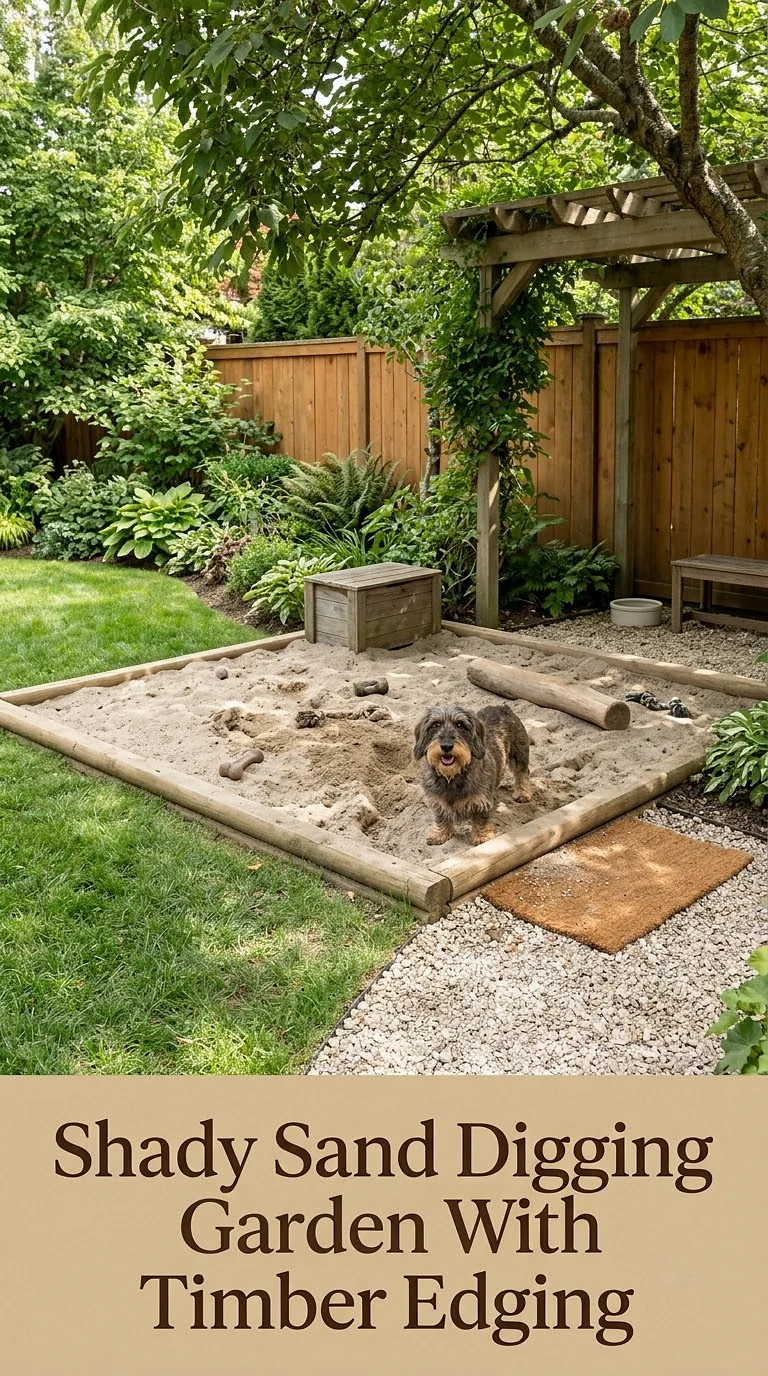
For dogs that genuinely love digging, trying to eliminate the behavior completely can become an endless battle.
Instead, create an approved digging garden.
Build a simple rectangular box using smooth timber boards or repurpose a sturdy shallow container. Fill it with clean sand and place it somewhere with dependable shade.
Encourage your dog to use the area by hiding durable toys or a few treats just beneath the surface. When digging begins elsewhere, calmly redirect them toward their special spot.
A removable cover can help keep leaves, rain, and visiting animals out when the sandbox is not being used.
Blend the digging garden into the landscape with timber edging, pale gravel paths, and nearby dog-safe grasses.
It becomes a playful backyard feature rather than an unattractive hole, while giving enthusiastic diggers an appropriate outlet for one of their natural behaviors.
Dog-Safe Sensory Garden With Herbs And Flowing Grasses
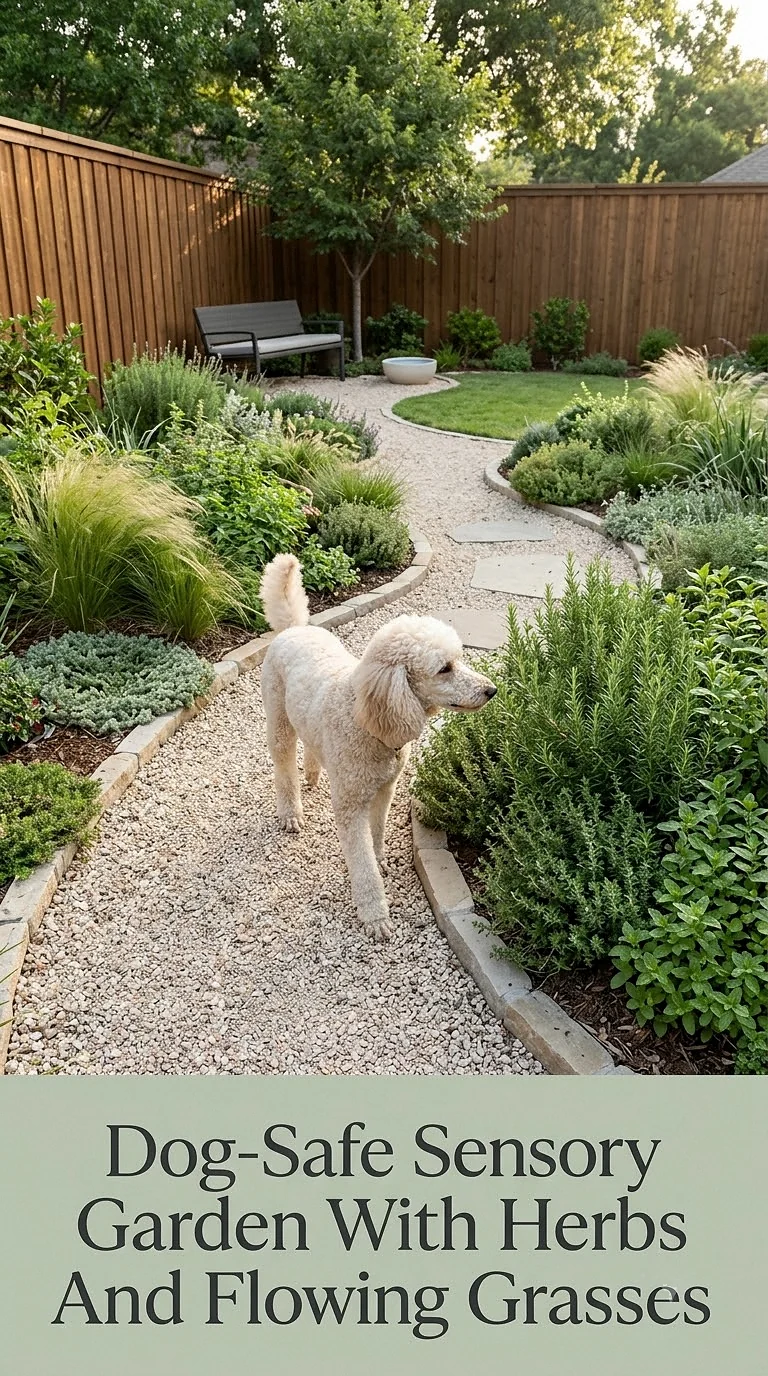
A beautiful yard can provide mental enrichment without adding complicated equipment.
Create a sensory garden filled with different textures and scents your dog can investigate during supervised outdoor time.
Read more : 19 Dog Door Ideas In Wall For A Stylish And Pet-Friendly Home
Arrange sturdy dog-safe plants in layered beds, leaving small paths between them for sniffing. Depending on your climate and the specific varieties available locally, suitable choices may include certain culinary herbs and pet-safe ornamental grasses.
Always verify individual plants before bringing them home. Common landscaping plants can vary dramatically in toxicity, so do not assume something is safe simply because it is widely sold.
Use raised beds or decorative edging to discourage chewing and trampling.
Add flat stepping stones, natural wood elements, and a small shaded resting spot nearby.
The resulting space looks like an elegant cottage garden while giving curious dogs a changing landscape of smells and surfaces to investigate.
Raised Vegetable Garden With Decorative Dog-Proof Fencing
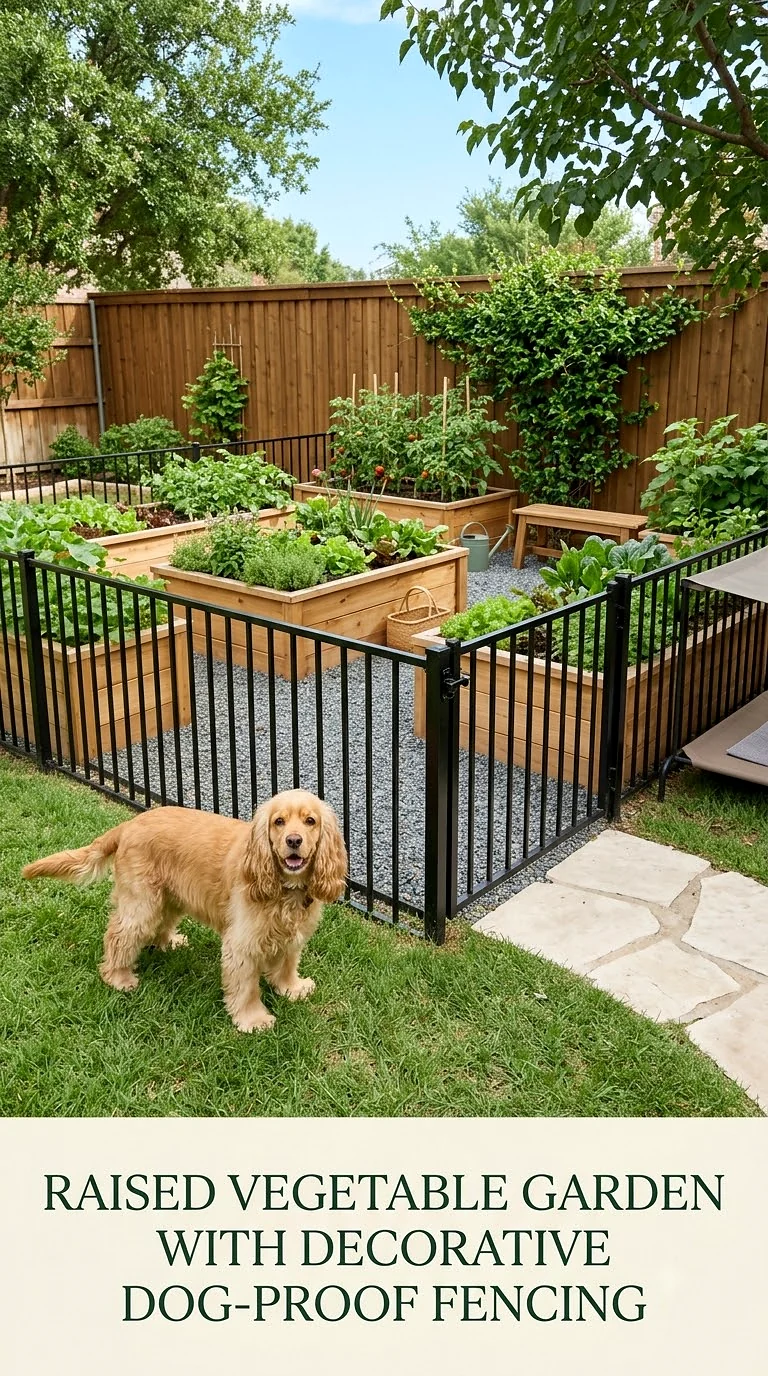
You do not have to choose between growing vegetables and giving your dog access to the backyard.
Separate the two spaces thoughtfully.
Build raised timber or metal garden beds and surround the growing area with attractive fencing or a small gate. This prevents curious dogs from digging through freshly planted soil, eating unsuitable plants, or coming into contact with garden products.
Keeping compost securely inaccessible is equally important. Decomposing material can contain foods, mold, and other substances that dogs should not investigate.
A fenced kitchen garden can become one of the prettiest features in the yard. Try warm cedar beds, narrow gravel paths, black metal fencing, and climbing structures along the back.
The rest of the backyard remains open for play, while your vegetables and herbs stay protected.
It is an especially practical layout for active dogs that view freshly turned soil as an invitation to excavate.
Minimal Gravel Potty Corner With Evergreen Screening
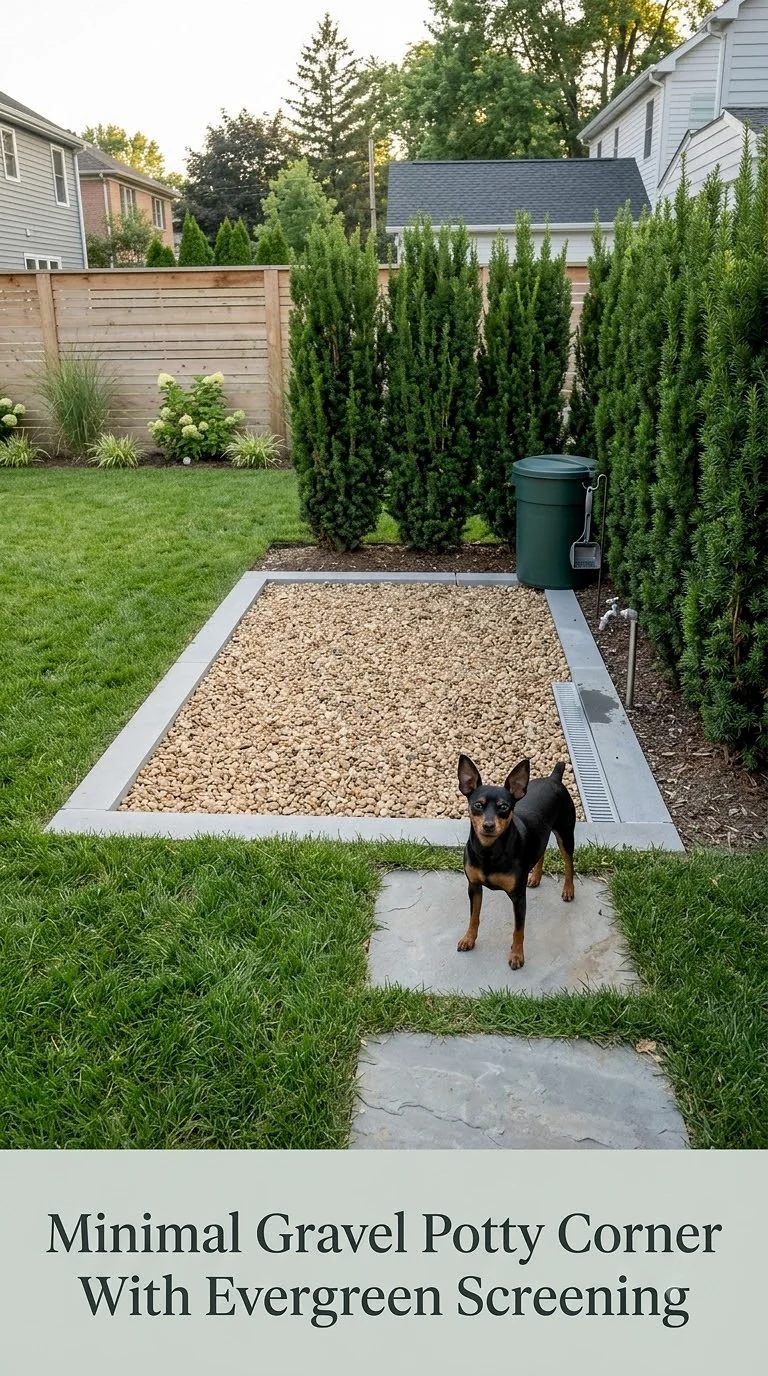
A designated bathroom zone can make an attractive backyard much easier to maintain.
Choose a quiet corner that your dog can reach easily and create a clearly defined surface using an appropriate smooth gravel or another easy-clean material. The area should drain well without creating puddles.
Border it with large pavers or landscape edging so the material stays contained.
For privacy and visual softness, add dog-safe evergreen planting outside the immediate potty area or install a small timber screen.
Consistent training is the important part. Bring your dog to the same area regularly and reward them when they use it.
Once the habit becomes established, waste cleanup is concentrated in one location rather than spread across the lawn.
This is particularly helpful for smaller yards, entertaining spaces, or homes where children frequently play on the grass.
Modern Artificial Turf Yard With Pale Paver Walkways
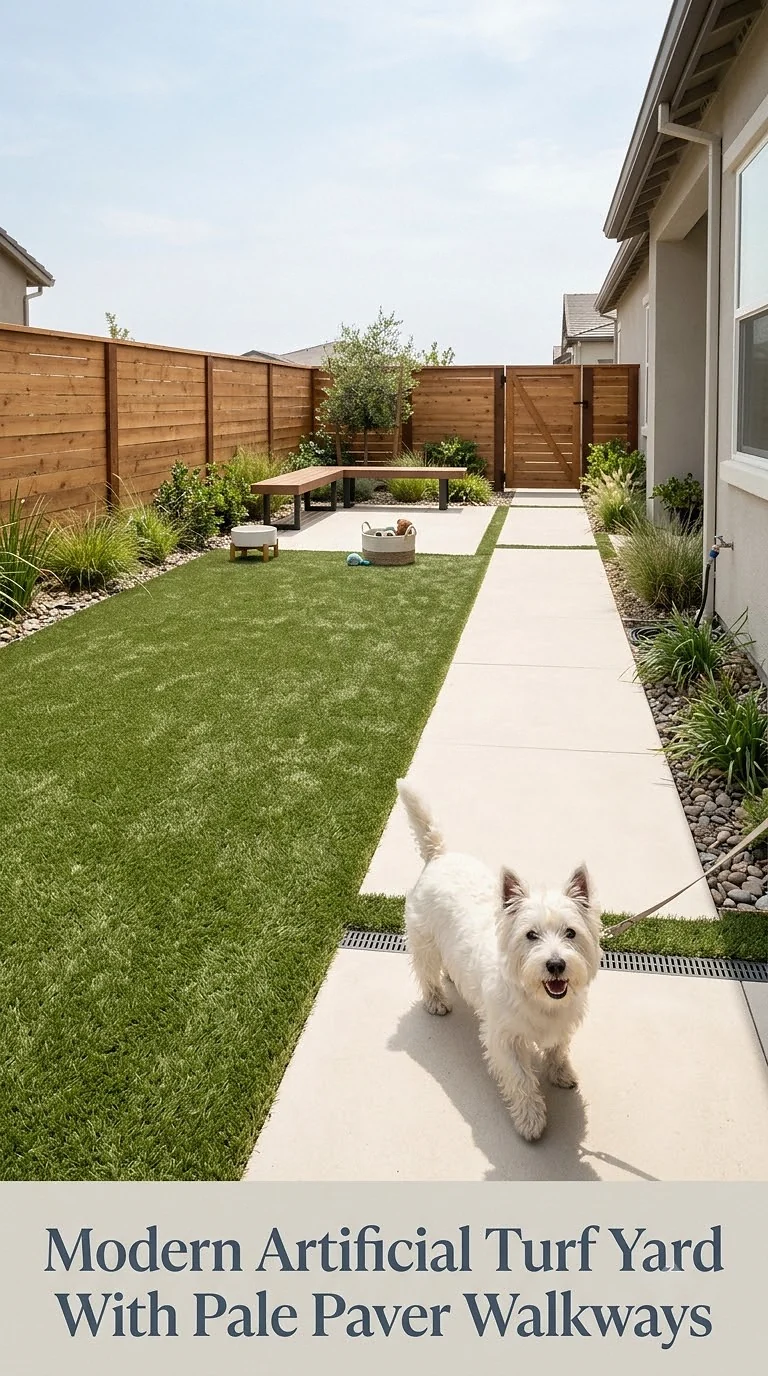
Artificial turf can create a neat, consistently green backyard where maintaining natural grass is difficult.
Pair a central turf area with pale concrete or porcelain pavers, raised planters, and a simple seating zone for a polished contemporary appearance.
Good installation matters. The base should provide effective drainage, particularly in areas used regularly for toileting.
The turf also needs routine rinsing and cleaning because urine and organic material can create odors when allowed to accumulate.
Heat deserves consideration as well. Synthetic surfaces and surrounding hardscape can become hot in direct sunshine. Provide shaded alternatives and check surface temperatures before encouraging dogs to play outdoors during warm weather.
Used thoughtfully, artificial turf can be especially practical in urban gardens where mud, heavy foot traffic, and limited lawn recovery make traditional grass difficult to maintain.
Covered Side-Yard Dog Run With Timber Slats And Shade Sail
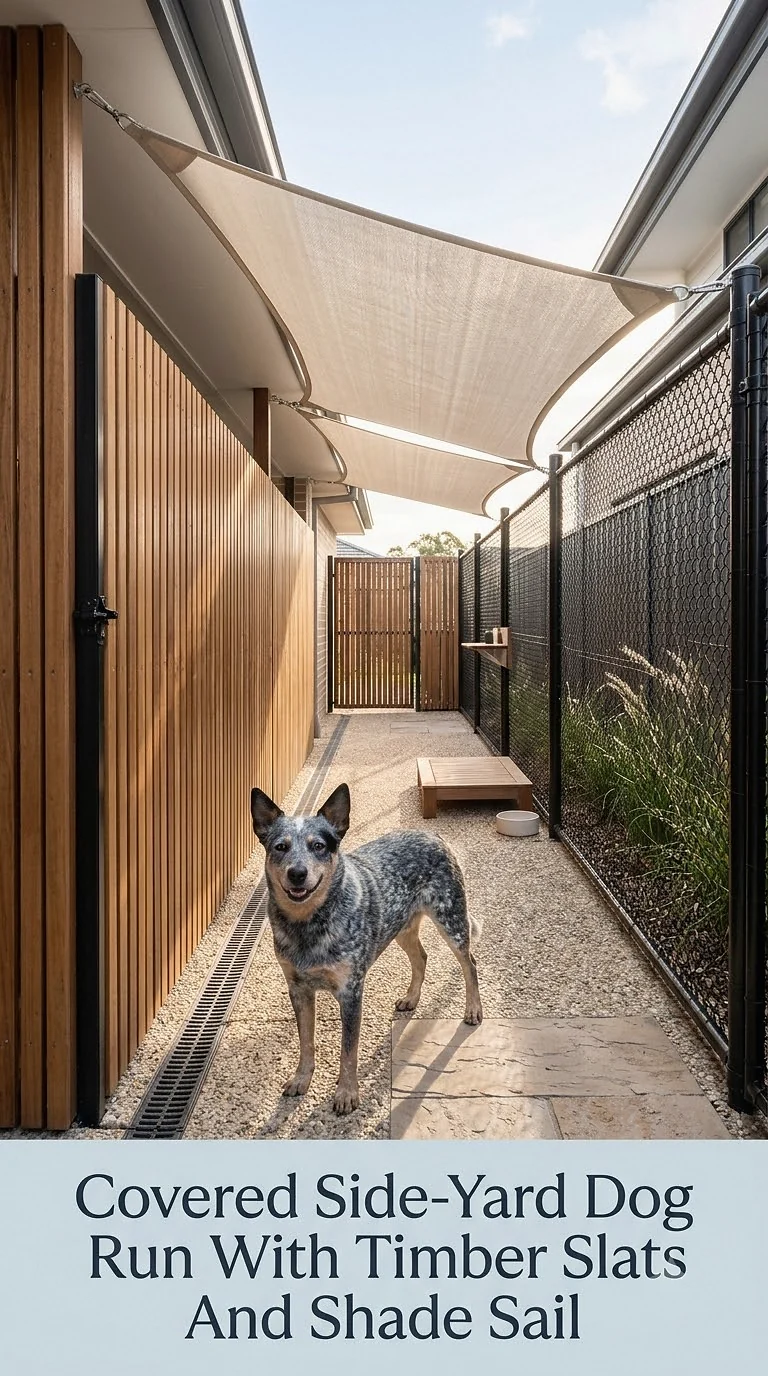
An unused side yard can become one of the most functional areas of your property.
Turn the long, narrow strip beside the house into a dedicated dog run using secure fencing, comfortable ground cover, and overhead shade.
Vertical timber slats give the area a warmer residential appearance than standard kennel panels. Add a secure gate at each necessary access point and inspect the bottom edge carefully for potential escape gaps.
A shade sail or partial roof can make the corridor more comfortable, but ventilation should remain open.
Instead of filling the run with equipment, keep enough clear space for walking and sniffing. A raised bed, fresh-water bowl, and a couple of sturdy toys may be all you need.
This design preserves the main backyard for gardening and entertaining while still providing a practical outdoor dog zone.
Gentle Deck Ramp With Wide Steps For Senior Dogs
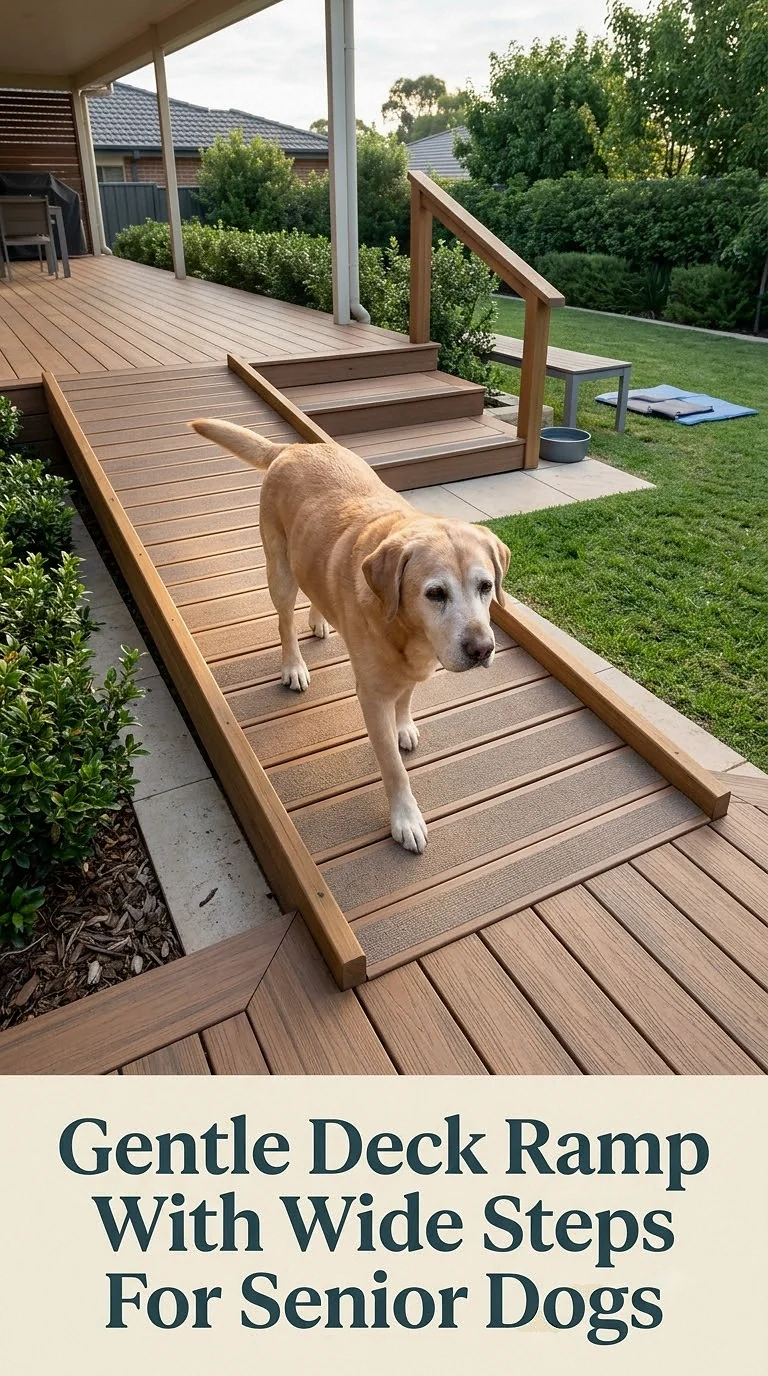
A beautiful dog yard should remain comfortable as your pet gets older.
If the back door opens onto a raised deck, consider adding a wide, gently sloped ramp alongside the stairs. This can also help smaller dogs that struggle with tall steps.
Choose weather-resistant decking with good traction rather than a slick surface. Side rails can make the route feel more secure, especially where the deck sits noticeably above ground level.
At the bottom, connect the ramp to a soft lawn or smooth pathway without an awkward gap or sudden drop.
Visually, the ramp can match the deck so it looks like an intentional architectural feature. Warm wood, black railings, and simple rectangular planters create a clean contemporary finish.
Even homes with young dogs can benefit because thoughtful access makes the backyard easier to navigate throughout different stages of life.
Backyard Dog Playground With Tunnel And Low Agility Features
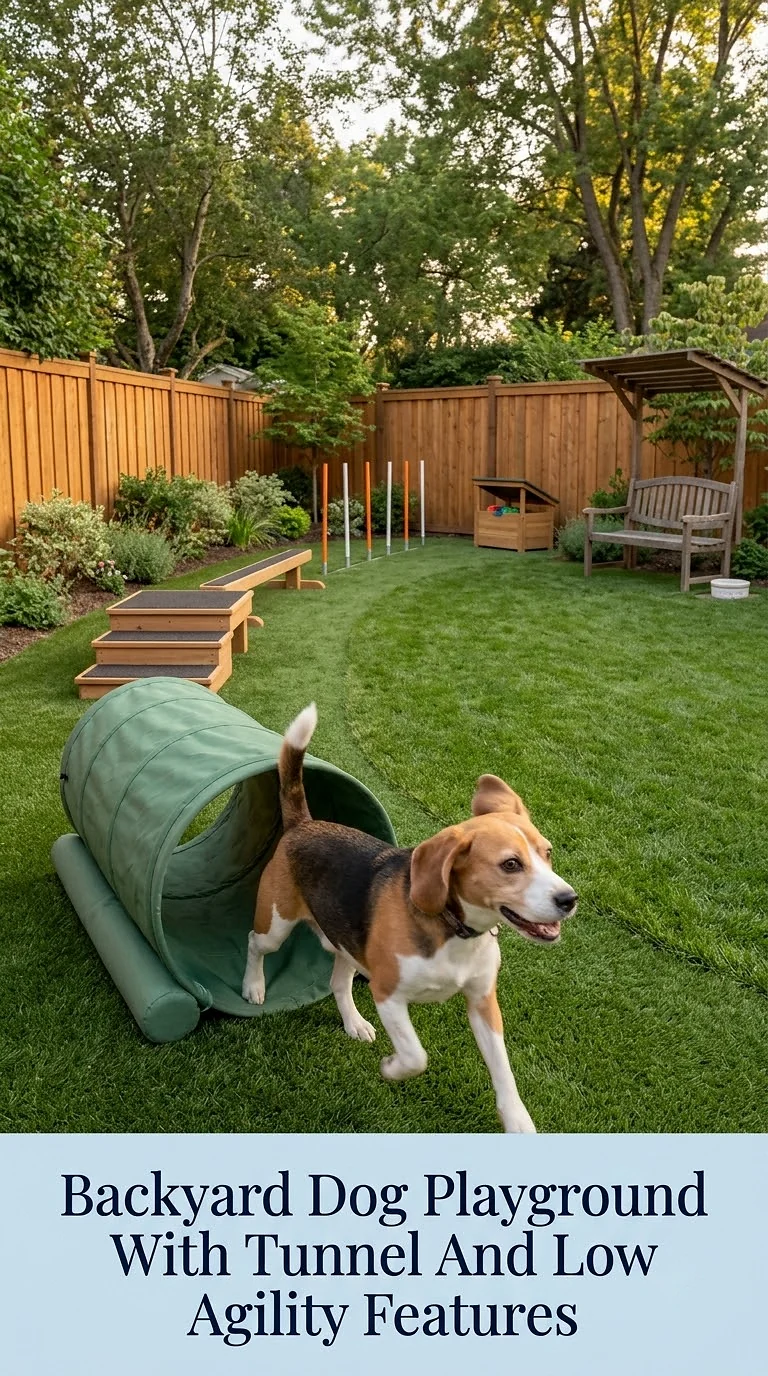
You do not need a professional agility course to make the backyard more interesting.
Create a playful activity zone with a few low, approachable features that can be rearranged as your dog becomes more confident.
A collapsible tunnel, low platform, weave-style markers, and simple ground-level obstacles can encourage movement and provide opportunities for short training sessions.
Keep equipment appropriate for your dog’s age, size, physical condition, and experience. Avoid forcing jumps or demanding movements that may be unsuitable for puppies, senior dogs, or dogs with mobility concerns.
Read more : 18 Acnh Dog Park Ideas For A Charming And Playful Island
Set everything on a comfortable, level surface with generous spacing.
For a more attractive look, choose equipment in muted natural colors rather than filling the yard with brightly colored plastic.
Store lightweight pieces in an outdoor bench when they are not in use, leaving your yard clean and uncluttered between play sessions.
Narrow Townhouse Dog Courtyard With Vertical Greenery
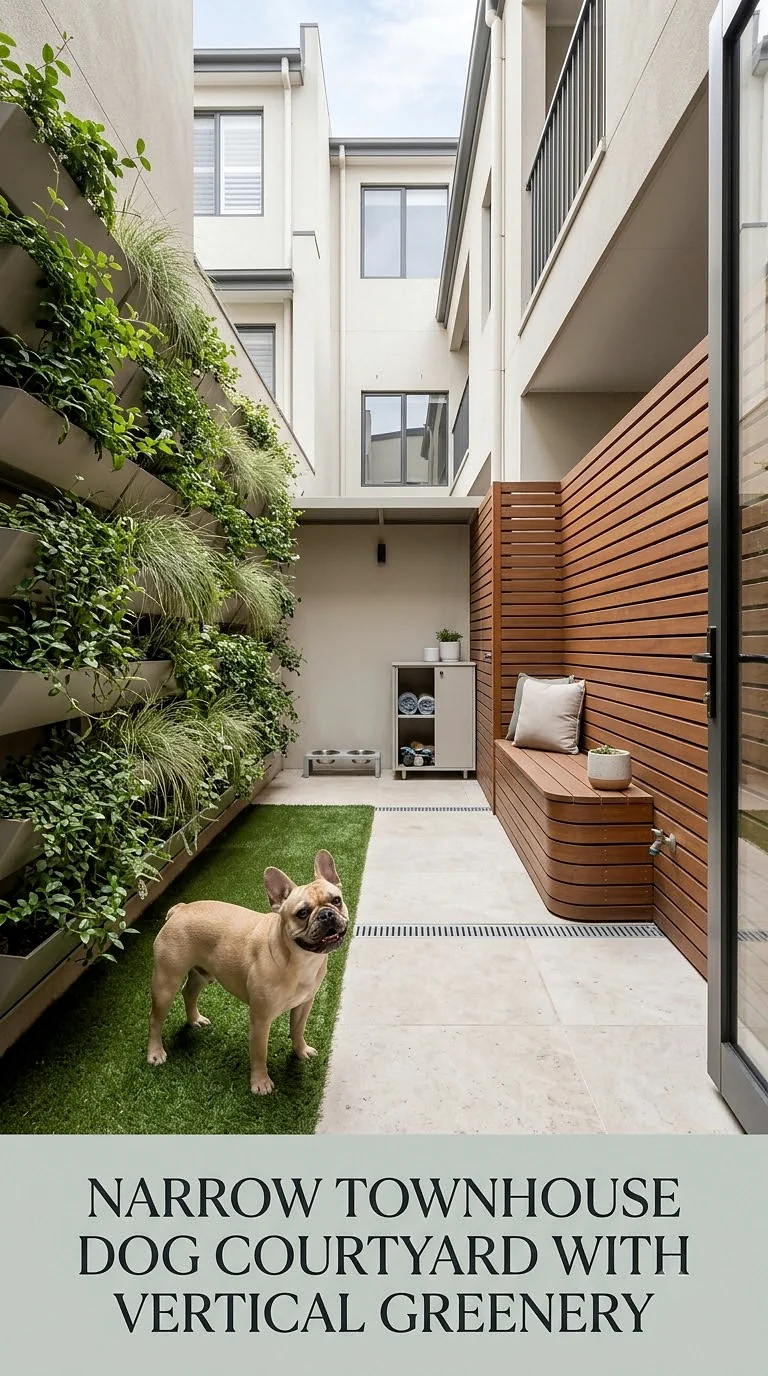
Even a tiny backyard can become a lovely dog retreat.
In a narrow townhouse courtyard, prioritize circulation rather than trying to squeeze in a full lawn.
Use large pale pavers with narrow drainage gaps and create one softer section using turf or another comfortable pet-friendly surface.
Install vertical planters along one wall, keeping potentially chewable plants safely out of reach and selecting species carefully for pet safety.
A slim storage bench can provide seating while hiding leashes, outdoor toys, towels, and cleaning supplies.
At the far end, create a shaded dog bed nook with a water bowl and perhaps a small wall-mounted light.
Keeping the color palette simple makes the courtyard feel larger. Warm white walls, light oak furniture, sage accents, and black hardware create an airy modern look without overwhelming the limited space.
Low-Maintenance Paver Yard With Dog-Safe Mulched Planting Beds
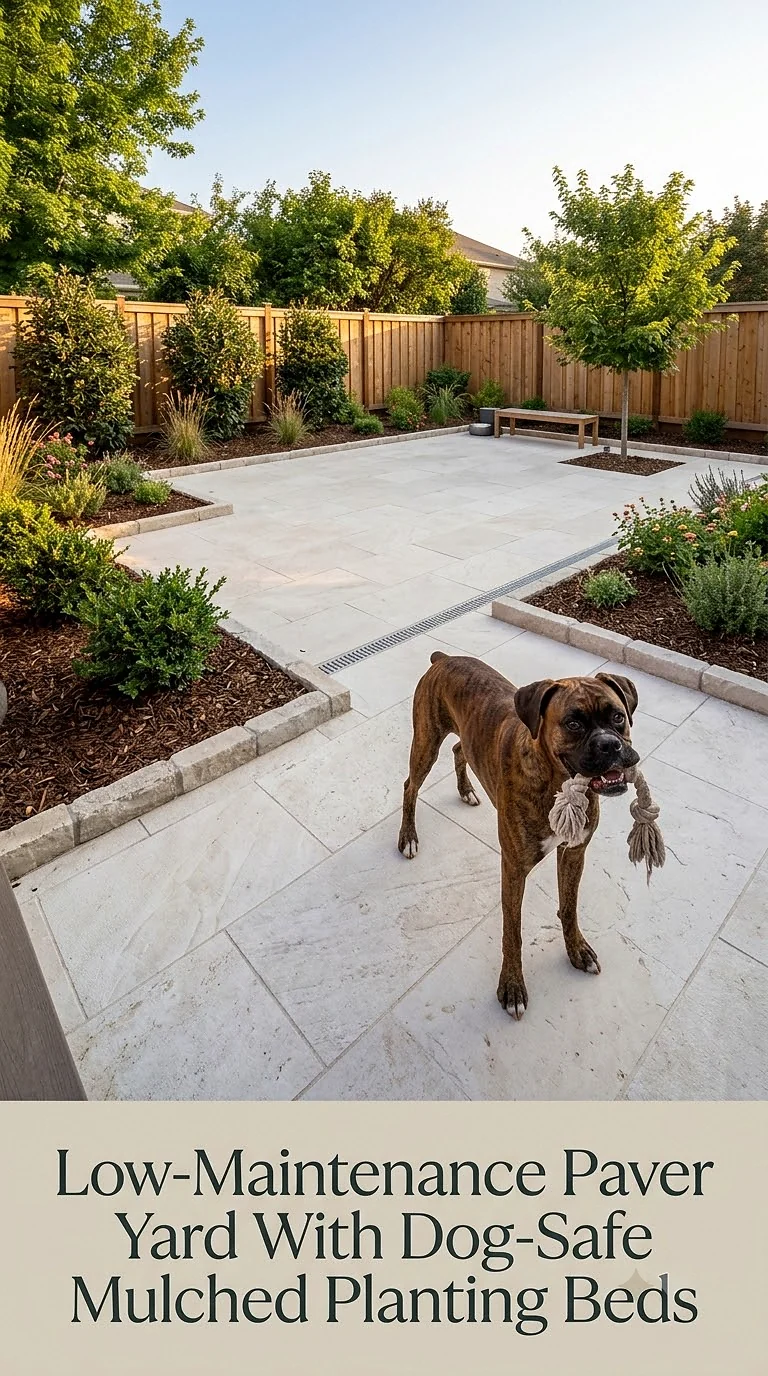
For anyone tired of muddy paws and damaged grass, a partially grassless landscape can dramatically simplify maintenance.
Use broad paving stones for the main walking and seating areas, then soften the design with planted borders and carefully selected mulch.
Mulch requires extra attention in dog households. Cocoa-based mulch should be avoided, and dogs that eat or chew landscape material may need another surface entirely. Even ordinary wood products can create problems if swallowed or if sharp pieces become lodged in paws.
Stone borders can help keep landscaping materials inside garden beds.
Choose light-colored paving where possible because darker hardscape can become uncomfortable in strong sun.
Add patches of softer ground where your dog can comfortably rest.
This layered approach gives you the neatness of hardscaping without turning the entire backyard into a hard, heat-absorbing patio.
Multi-Dog Backyard With Separate Play And Rest Zones
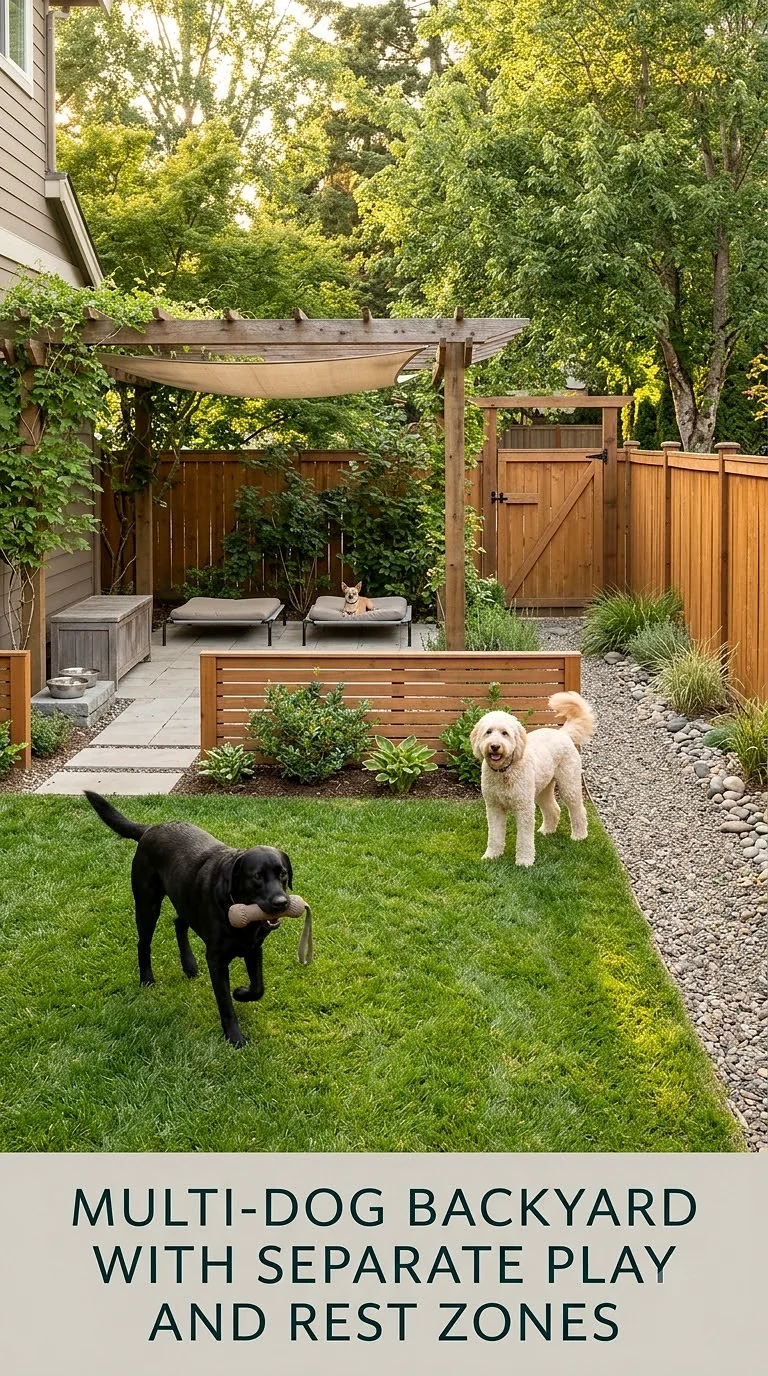
Households with several dogs often work better when the yard includes different types of spaces.
Instead of creating one large empty lawn, divide the backyard into subtle zones using paths, low fencing, planters, or changes in surface material.
Leave one open area for active play. Create another shaded section with multiple beds placed far enough apart that each dog can relax comfortably.
Position more than one water bowl around the yard so access is easy.
If certain dogs need occasional separation, a secure internal gate can divide the space temporarily without making the backyard feel like a kennel.
Storage also becomes more important in a multi-dog setup. A weatherproof bench can organize balls, training equipment, towels, and outdoor grooming supplies.
Using matching materials across every zone keeps the overall design calm and coordinated despite the extra functionality.
Outdoor Dog Wash Station With Stone Floor And Towel Storage
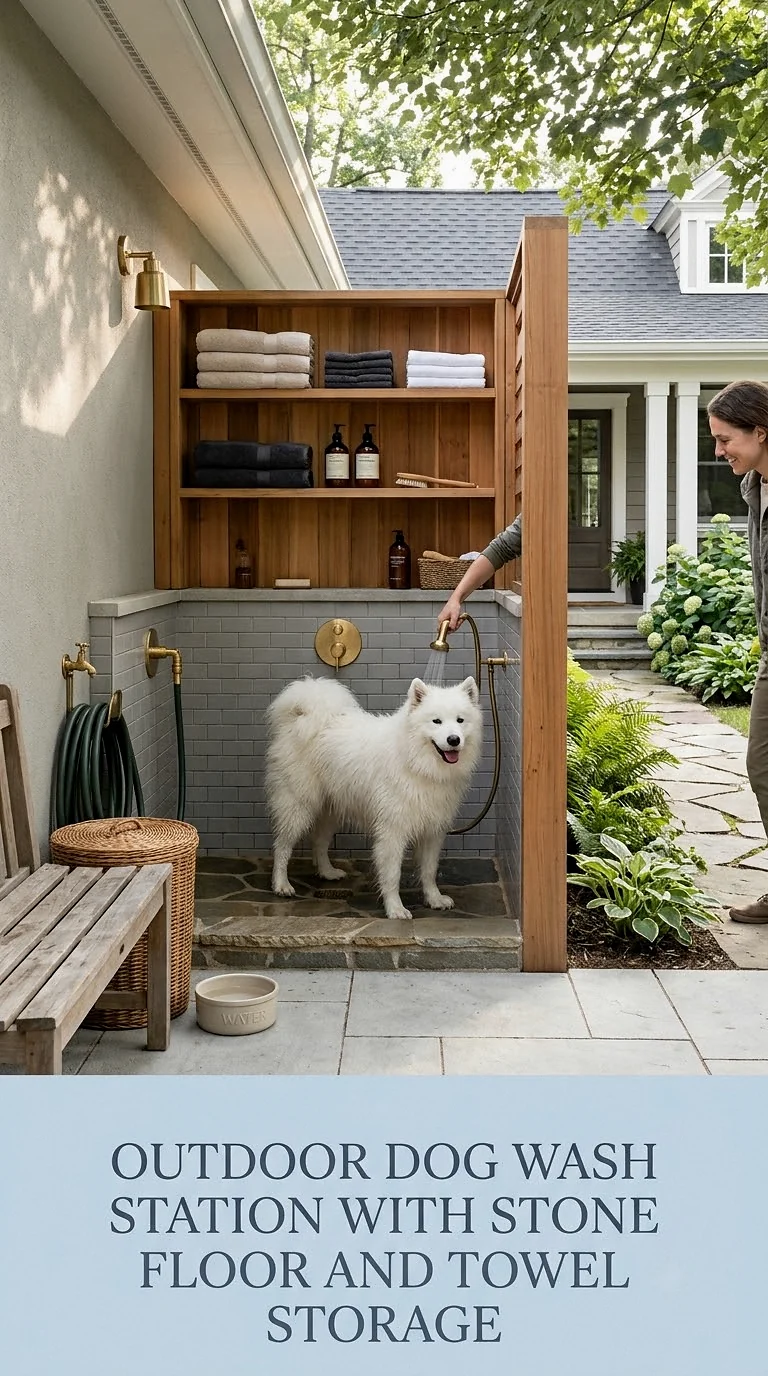
A backyard wash station can transform the messy transition between outdoor adventures and a clean house.
Place it near the back door or mudroom so dirty paws can be rinsed before your dog reaches indoor flooring.
Create a gently sloped, non-slip stone or tiled floor with suitable drainage. Add a handheld sprayer at a comfortable height and a hook or shelf for towels.
Warm climates may only require a simple open-air setup, while cooler regions might benefit from locating the washing area in a covered section beside the house.
Avoid creating a deep basin that a large dog has to climb awkwardly into. Easy step-in access is usually more convenient.
Finish the area with warm wood shelving, baskets for clean towels, and a small container for grooming supplies.
It is practical, attractive, and especially useful during rainy seasons.
Secure Dog Splash Pool With Shallow Entry And Gated Surround
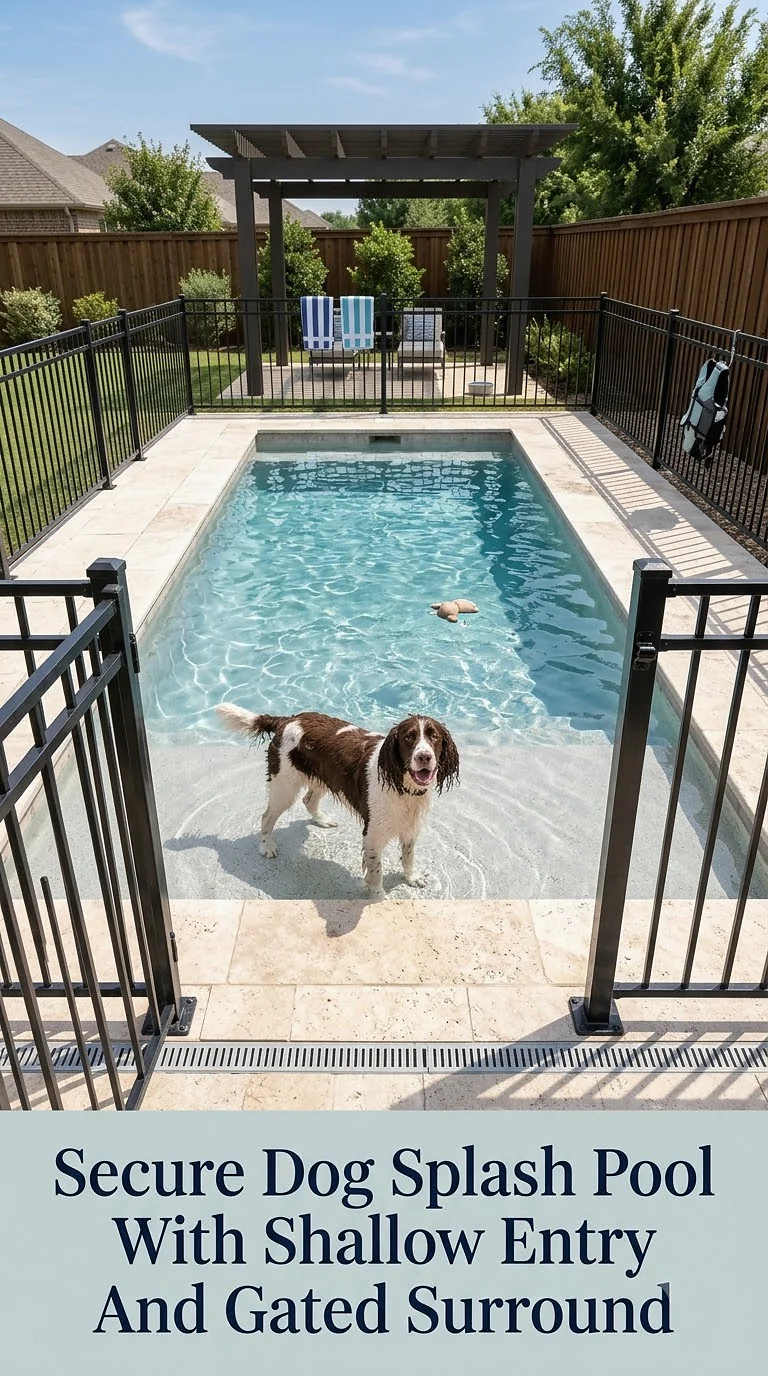
For dogs that truly love swimming, a thoughtfully designed backyard pool can become a wonderful shared feature.
Safety should shape the design from the beginning.
Choose a pool with an obvious, easy-to-reach exit such as broad shallow steps or a gently sloped entry. Dogs should be introduced to the exit location rather than expected to discover it accidentally.
When the pool is not being actively supervised, restrict access with secure fencing or another appropriate barrier.
Keep the water properly maintained and do not allow stagnant water features to develop algae. Fresh drinking water should always be available separately so your dog does not rely on pool water.
From a design perspective, a small rectangular pool surrounded by textured pale stone, a timber deck, comfortable loungers, and a shaded pergola can look beautifully resort-like while remaining functional for the entire family.
Creating Dog Yard Ideas That Work For Your Home
The most successful dog yard ideas do not come from filling a backyard with as many pet features as possible. They come from noticing how your dog naturally uses the space and designing around those habits.
A dog that loves running may appreciate an open lawn and looping pathway far more than an elaborate playground. A dedicated digging garden can be invaluable for a determined excavator, while an older dog may care most about shade, easy access, and a comfortable bed close to the family.
Start with safety and comfort first. Inspect fences and gates, identify potentially toxic plants, provide reliable shade and fresh water, keep hazardous garden products inaccessible, and choose surfaces that remain comfortable under your local weather conditions.
Then add the details that make the yard feel like home.
Whether you create a tiny townhouse courtyard, a rustic side-yard run, a modern turf garden, or a luxurious swimming space, even a few thoughtful changes can make outdoor time easier and more enjoyable. The goal is a backyard that looks beautiful to you while giving your dog a safe, interesting, and comfortable place to simply enjoy being outside.
Source: https://petstutorial.com
Category: DOGS
