
Creating a beautiful backyard when you have a dog does not mean you need a perfectly green lawn. In fact, skipping traditional grass can make an outdoor space easier to clean, less muddy, and much simpler to maintain, especially if your pup loves running the same path, digging favorite corners, or turning delicate turf into bare patches.
The best no grass backyard ideas on a budget dog friendly households can use often come from combining a few inexpensive materials instead of covering the entire yard with one costly surface. Gravel paths, reclaimed pavers, compacted stone, small artificial turf sections, mulch, shade structures, and simple DIY dog zones can work together to create a yard that looks intentional rather than unfinished.
You are reading: 18 No Grass Backyard Ideas On A Budget Dog Friendly Families Can Actually Create
The goal is to think about how your dog actually uses the backyard. A runner may need a durable path. A sun-loving pup may appreciate a shaded lounging platform nearby. A dog that gets muddy easily may benefit most from a washable patio and designated potty zone.
These ideas offer plenty of inspiration for turning a bare, worn, or grass-free yard into a cozy outdoor space that works beautifully for both you and your dog.
Beautiful No Grass Backyard Ideas On A Budget Dog Friendly Homes Can Try
Budget Gravel Courtyard With Large Pavers And A Shaded Dog Bed
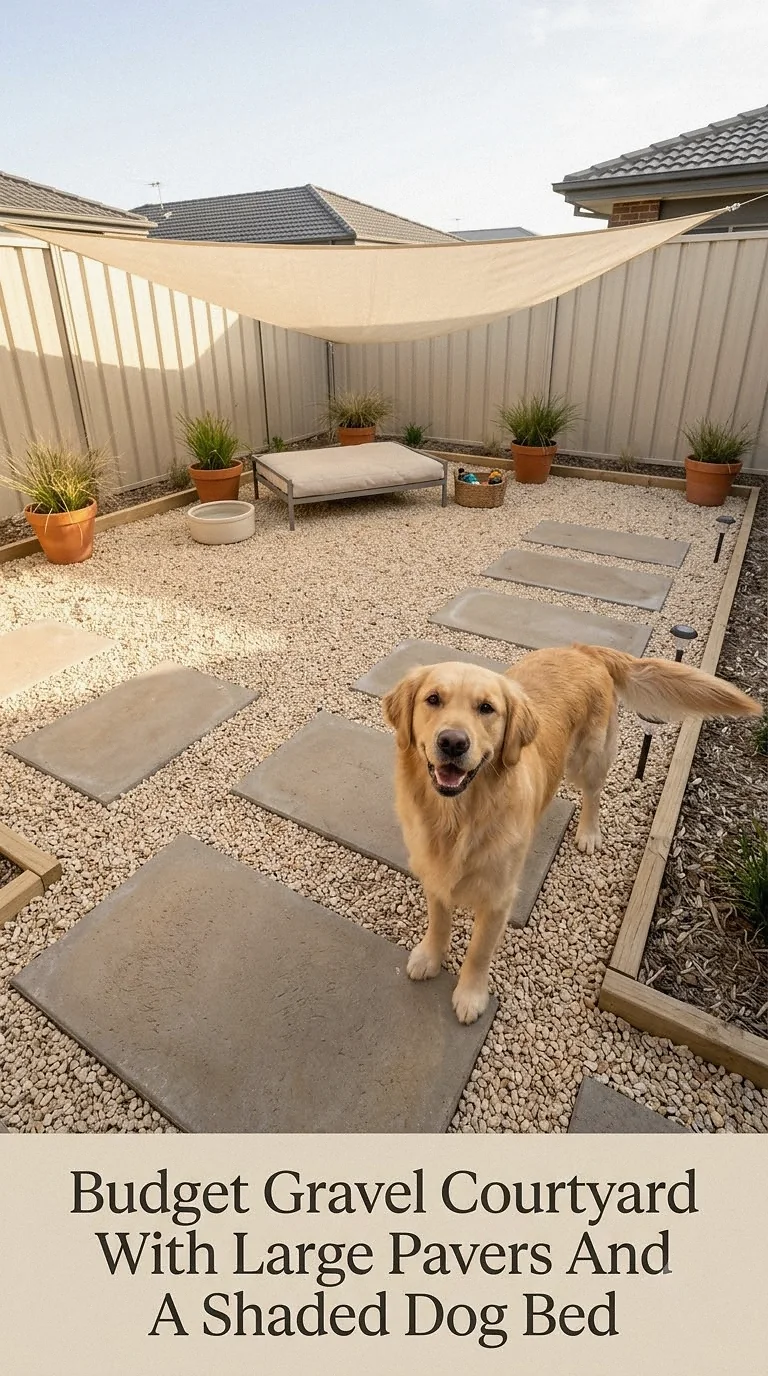
A simple combination of gravel and oversized concrete pavers can transform an unfinished dirt yard without requiring the cost of a completely paved patio. Create a stable base, spread gravel through the main area, and place inexpensive square pavers where people and pets walk most often.
Use smooth, paw-friendly material rather than sharp crushed stone, and watch dogs that enjoy picking up or swallowing rocks. Gravel can also become hot in direct summer sun, so add a large patio umbrella, shade sail, or covered corner.
A raised outdoor dog bed gives your pup somewhere comfortable to relax without lying directly on warm stone. Finish the space with inexpensive planters, a small bench, and neutral outdoor cushions for an effortlessly polished courtyard look.
DIY Decomposed Granite Dog Run With Simple Timber Edging
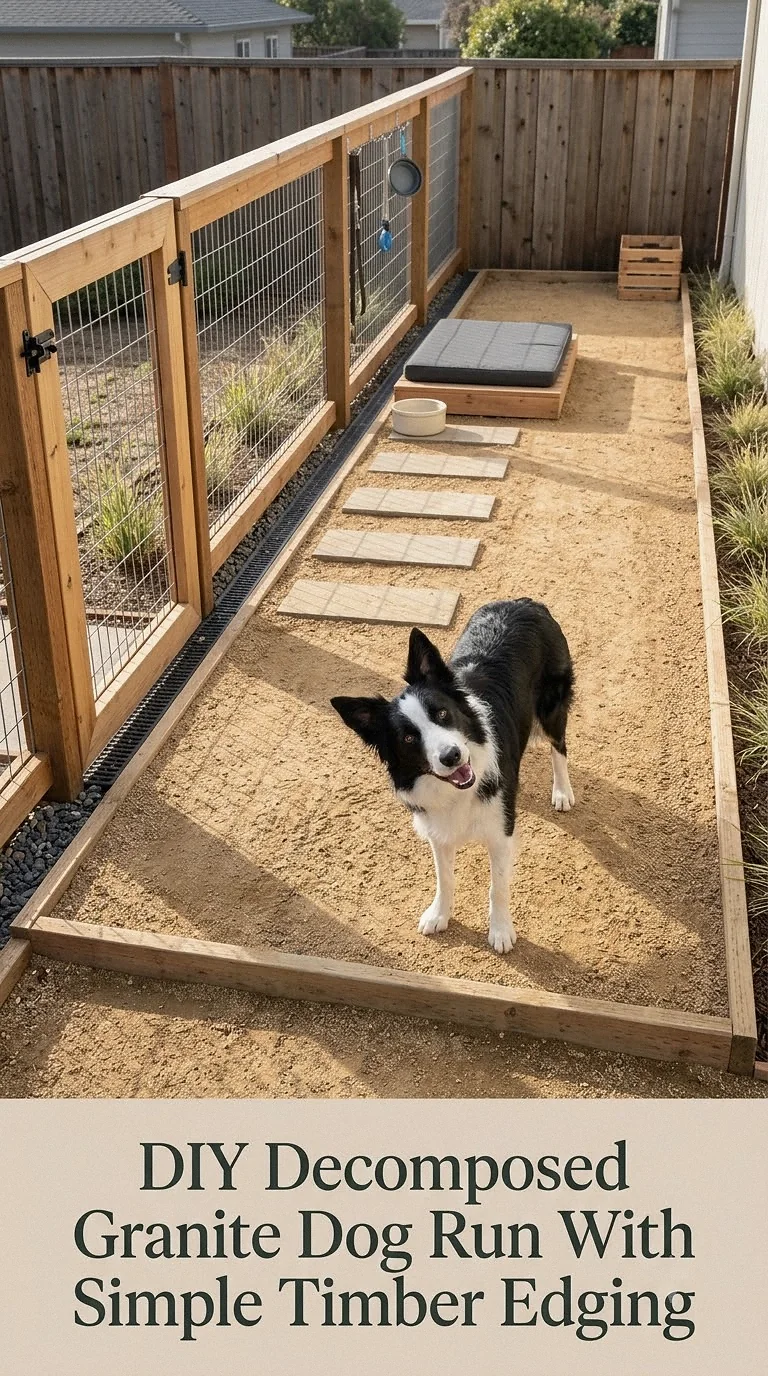
Decomposed granite can give a backyard the warm, natural appearance of a garden path without requiring grass. It works especially well for narrow running lanes along fences where dogs repeatedly wear down traditional lawns.
Prepare and grade the soil first so water drains away rather than collecting in low areas. Add edging made from landscape timbers, metal strips, bricks, or leftover pavers to help keep the material contained.
When properly installed and compacted, decomposed granite creates a firmer surface than loose gravel, although some fine material may still track indoors. Choose lighter shades when possible because dark stone can become uncomfortable in intense sunlight.
Plant dog-safe shrubs behind protective edging and add a water bowl station at one end. The finished space feels more like a landscaped garden path than a basic dog run.
Reclaimed Brick Patio With Pet-Safe Container Plants
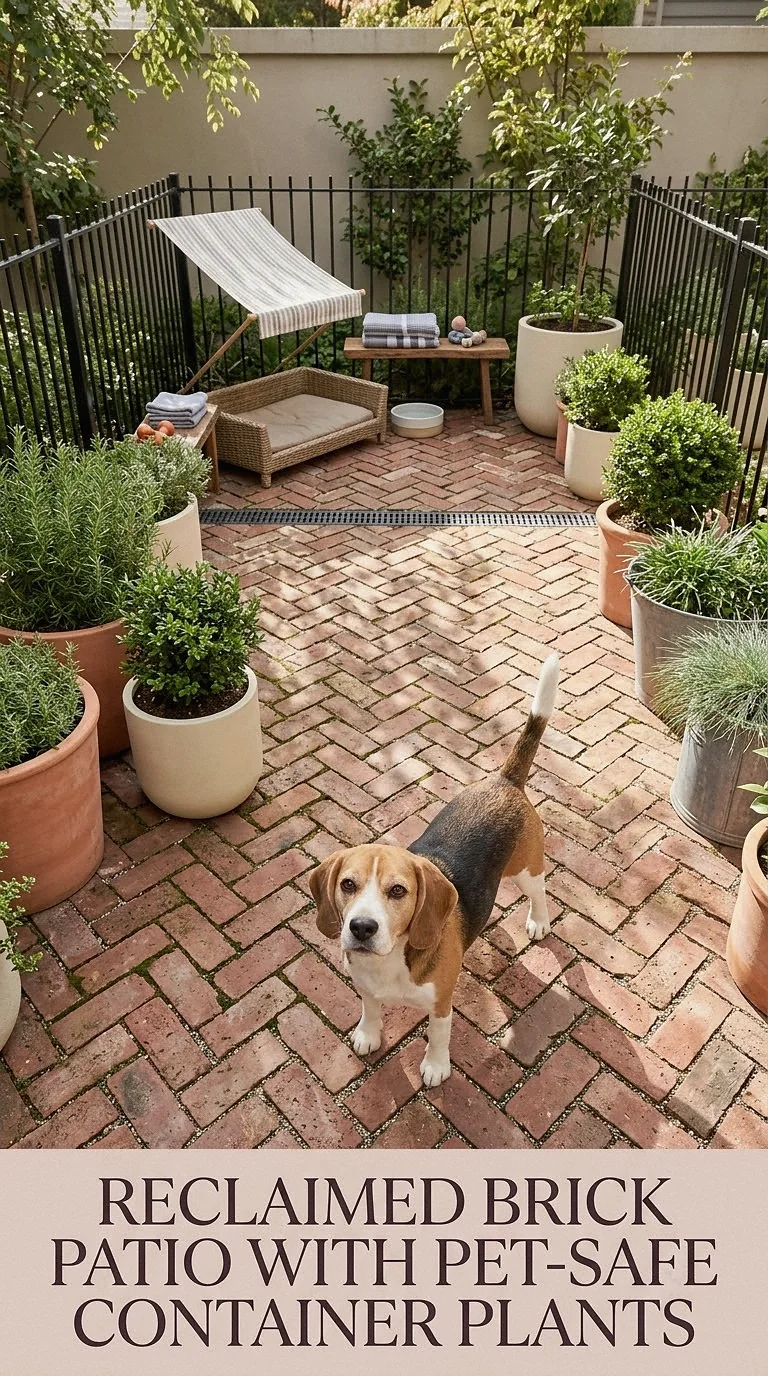
Secondhand bricks can turn an empty backyard into an inviting cottage-style patio while keeping material costs surprisingly reasonable. Search local reuse centers, demolition suppliers, neighborhood marketplaces, or leftover building material listings for reclaimed bricks and pavers.
Instead of covering every inch perfectly, embrace slight variations in color. Warm red, weathered terracotta, and faded brown tones create a charming collected-over-time appearance.
Arrange the bricks over a properly prepared level base and leave small drainage-friendly joints where appropriate. Around the patio, use large containers rather than traditional garden beds. This makes it easier to control exactly which plants your dog can reach.
Choose plants only after confirming that they are non-toxic to dogs. Add a washable outdoor rug, a weather-resistant dog bed, and a thrifted café table to create a cozy backyard retreat without installing any lawn.
Small Artificial Turf Potty Patch With Gravel Surround
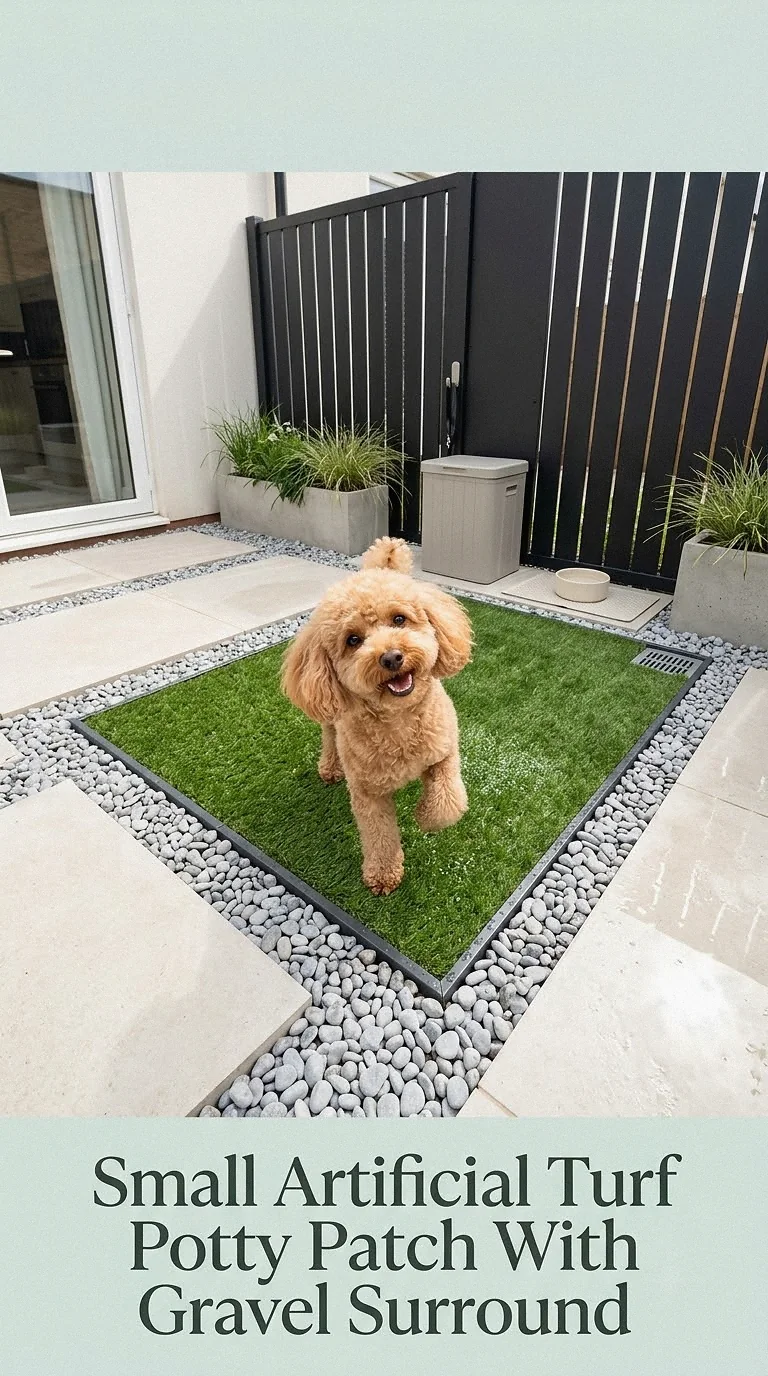
Covering an entire backyard with synthetic turf can become expensive, but using a small section strategically can be much more budget-friendly.
Create a defined artificial turf potty area near the edge of the yard and surround it with gravel, paving stones, or another inexpensive surface. Training your dog to use one designated location can make everyday cleanup easier while keeping the main entertaining area more pleasant.
Drainage underneath the turf is especially important. Urine needs somewhere to go rather than collecting beneath the surface and creating persistent odors. Rinse the area regularly and use cleaning products intended for pet environments when needed.
A simple border of concrete edging or inexpensive pavers makes the turf patch look intentional. Nearby, install a small hook for waste bags and a lidded outdoor bin for an organized dog station.
Rustic Pine Bark Yard With A Stepping Stone Walkway
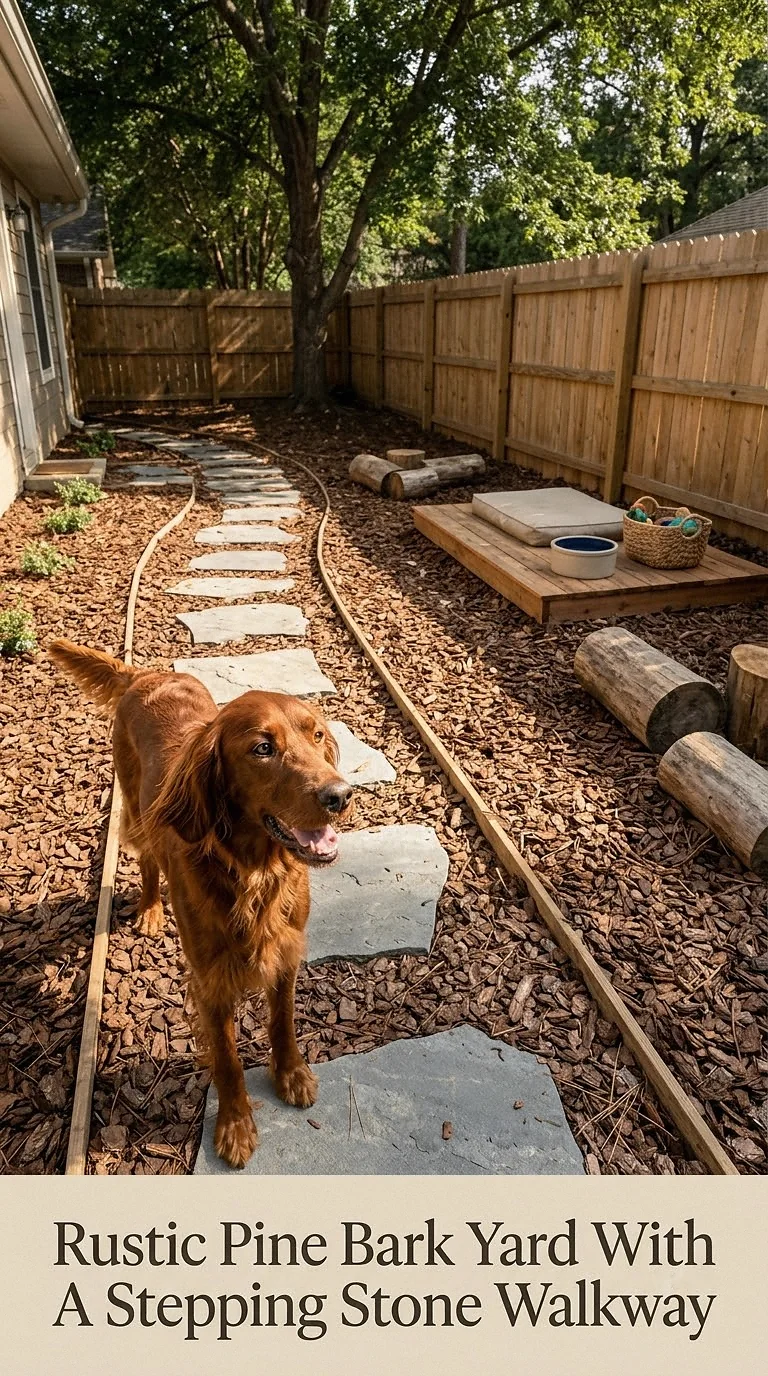
For dogs that do not chew or eat landscaping materials, a bark-covered backyard can provide a soft, casual alternative to grass.
Fine pine or similarly appropriate bark creates a woodland-inspired surface that pairs beautifully with stepping stones, rustic fencing, and natural wood furniture. Avoid cocoa bean mulch, and remember that any wood-based material can become problematic for dogs that chew pieces or swallow debris.
Instead of filling the entire yard deeply at once, begin with the highest-traffic zones. Add large flat stepping stones between the door, seating area, and gate so humans have a clean walking path even after rain.
A few inexpensive ceramic planters and solar lanterns can make the space feel intentionally designed. Replace scattered or deteriorated bark periodically and remove sharp pieces as part of routine maintenance.
Cozy Shade Sail Patio With A Raised Dog Lounging Corner
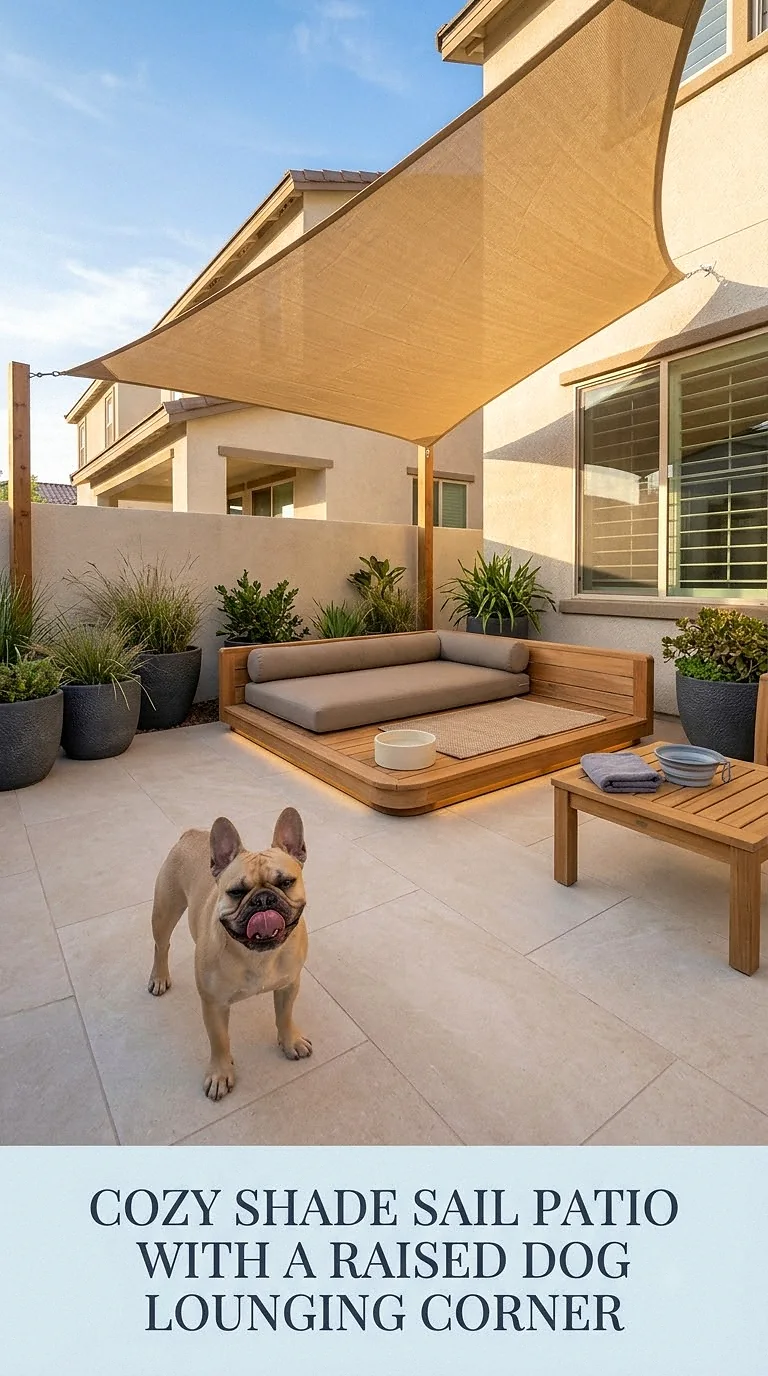
Sometimes the simplest no-grass backyard makeover starts with making an existing hard surface more comfortable rather than replacing it.
If you already have an old concrete patio, refresh it with a large shade sail stretched between sturdy posts or properly rated attachment points. Beneath the shade, create a dedicated dog corner using a raised cot-style bed, water station, and washable outdoor mat.
The elevated bed allows air to circulate underneath your dog while keeping fur away from dusty or damp ground. Surround the lounging area with oversized planters filled with verified dog-safe greenery for a softer look.
Concrete, stone, and pavers can become very hot in full sun, so observe how temperatures change throughout the day. Providing dependable shade and fresh drinking water is more important than adding decorative accessories.
Narrow Side Yard Dog Run With Pavers And A Drainage Strip
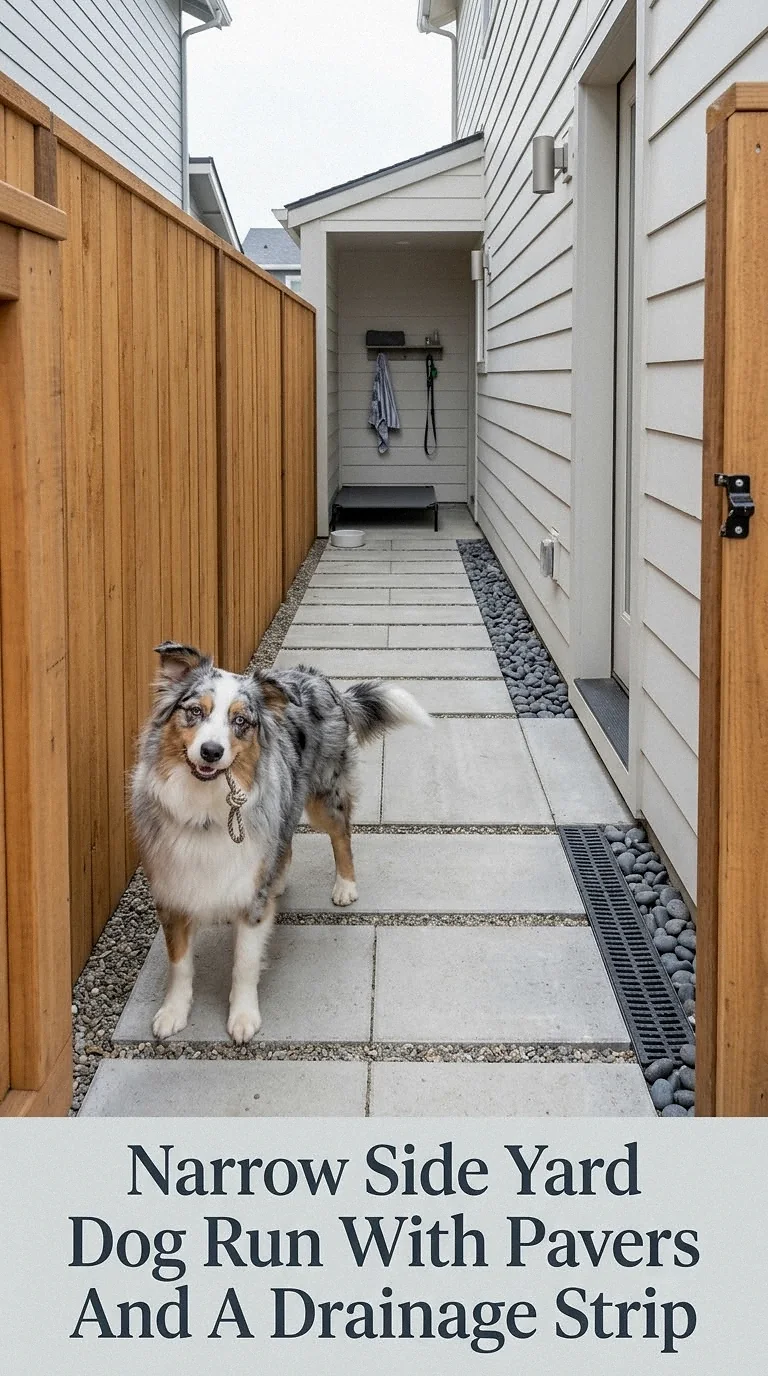
That awkward strip between your house and fence can become one of the most useful dog spaces in the entire backyard.
Lay inexpensive concrete pavers along the main walking route and create a narrow drainage strip beside them using suitable stone over a properly prepared base. This keeps the dog run more manageable during rainy weather and reduces the mud that gets carried into your home.
For privacy, attach reed screening or another secure outdoor privacy material to an existing fence where appropriate. Make sure everything is firmly attached so loose pieces cannot become chew toys.
Read more : 19 Cheap Dog Fence Ideas That Keep Your Yard Safe And Stylish
A small gate can separate the run from entertaining areas. Add a shaded bed at the wider end and keep water accessible whenever your dog is outside.
The streamlined design is especially useful for townhomes and small suburban lots where every square foot matters.
DIY Dog Digging Zone With Sand And Natural Log Edging
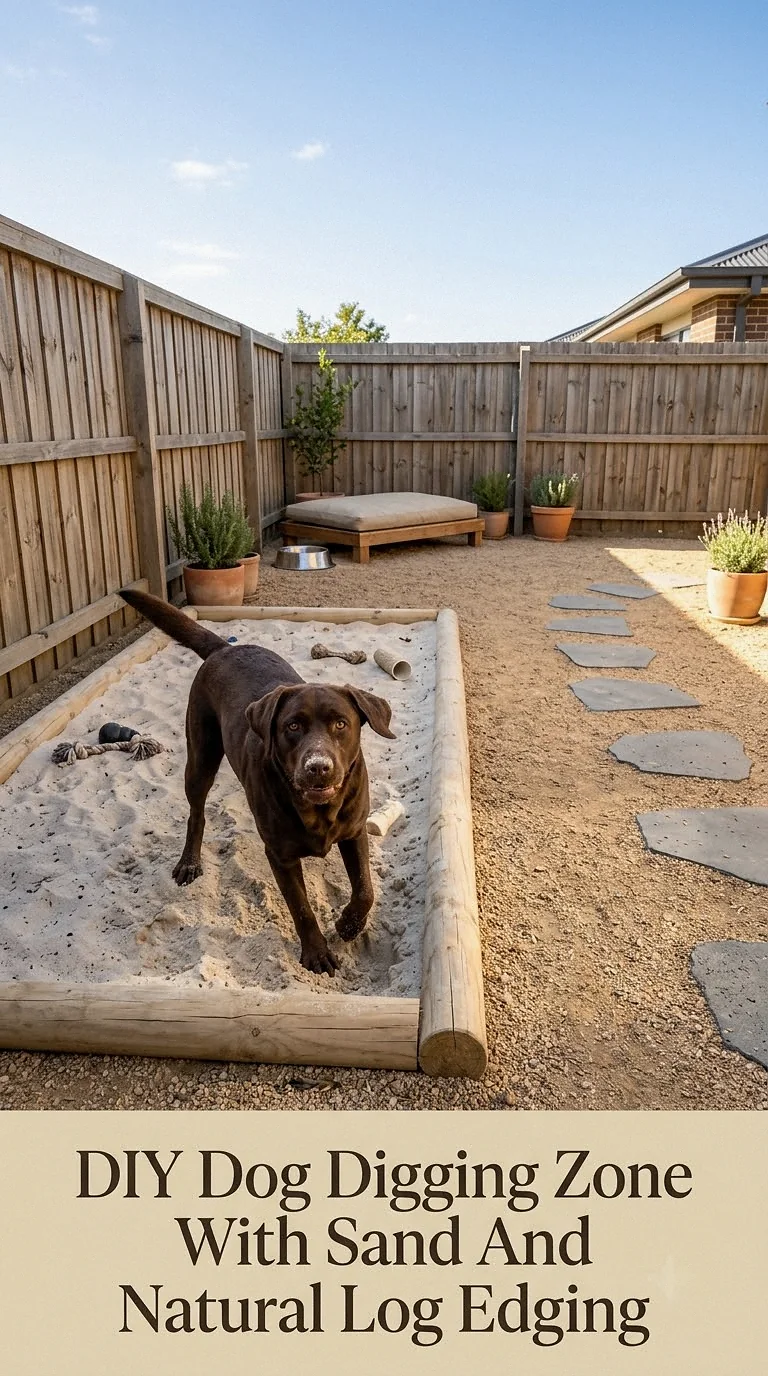
If your dog loves digging, designing a place where digging is actually allowed can be far more practical than constantly repairing the rest of the yard.
Choose a shady corner and create a shallow digging area bordered with smooth, untreated logs, sturdy timbers, or inexpensive landscape blocks. Fill it with clean play sand or another suitable digging medium.
Encourage your dog to explore the area by occasionally hiding favorite outdoor toys just beneath the surface. The surrounding backyard can then use tougher surfaces such as pavers, compacted stone, or mulch.
A rustic sign, weathered wooden border, and nearby bench can make the digging zone look like part of the landscape rather than a random sandbox.
Inspect the area frequently for waste, sharp objects, and excessive moisture, particularly if wildlife or neighborhood cats can access your yard.
Minimalist Concrete Paver Grid With Light-Colored Stone
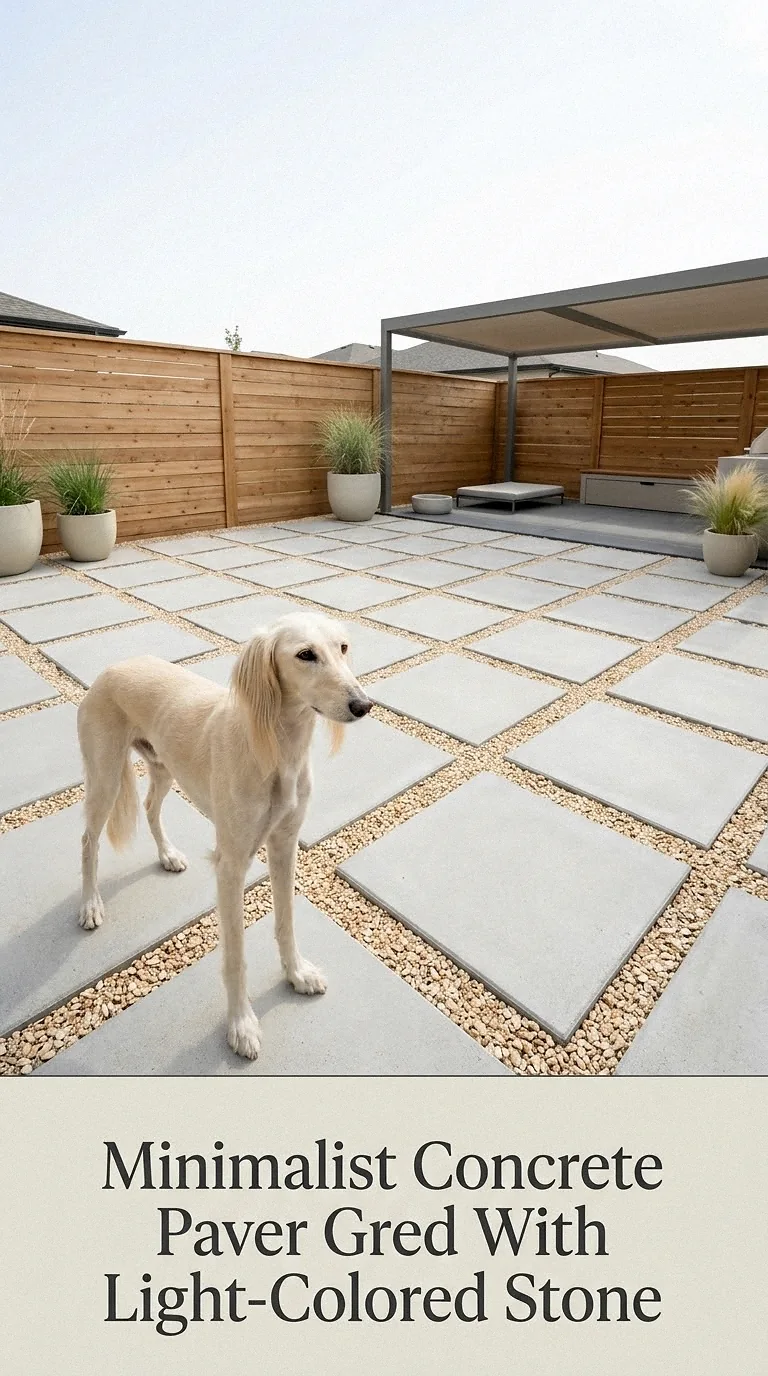
For a modern backyard that still feels achievable on a modest budget, create a simple grid using basic concrete pavers surrounded by light-colored decorative stone.
You do not need expensive architectural slabs. Standard square or rectangular pavers can look surprisingly upscale when installed in a clean repeating pattern.
Use the pavers throughout the highest-traffic areas so your dog has a stable walking surface. Stone can fill the less frequently used gaps while allowing the design to remain visually light.
Because loose rock can become hot and may tempt dogs that like chewing stones, include a shaded lounging zone and choose the surface based on your individual dog’s habits.
Keep the color palette simple with charcoal planters, warm wood seating, and cream outdoor textiles. The restrained combination creates an elegant contemporary yard without relying on grass or elaborate landscaping.
Farmhouse Mulch Courtyard With A Simple Paver Path
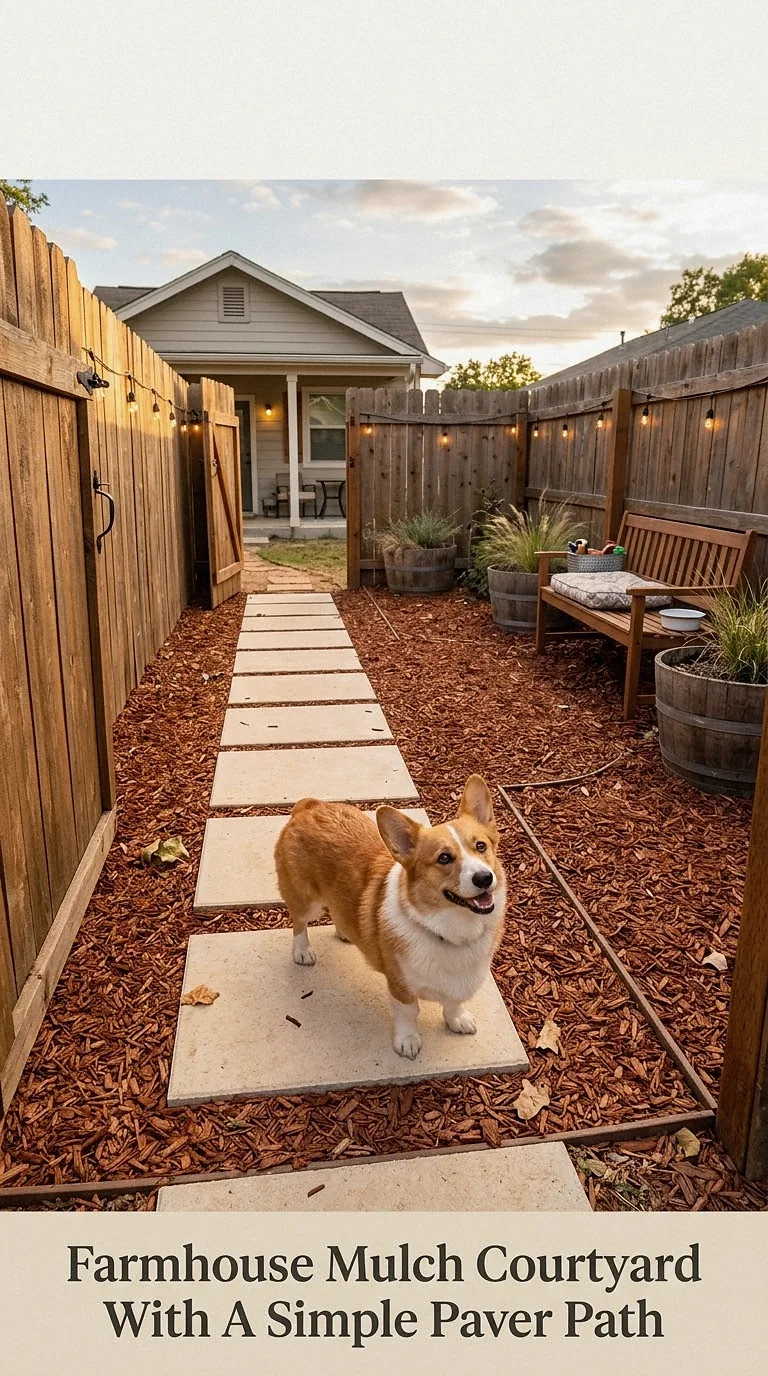
A farmhouse-inspired backyard can be wonderfully forgiving when you are working with inexpensive materials.
Cover appropriate low-traffic areas with dog-conscious mulch and add a winding path made from basic concrete stepping stones. Instead of trying to make every paver perfectly symmetrical, space them naturally for a relaxed cottage appearance.
A weathered wooden bench, galvanized-style containers, warm string lights, and a simple outdoor dog bed reinforce the cozy farmhouse atmosphere.
If your dog eats bark, sticks, or mulch, choose a different surface rather than hoping the habit disappears. Even less-toxic mulch materials can cause digestive or physical problems when swallowed.
Keep plants inside raised containers or protected beds until you know your dog will leave them alone. This approach works particularly well in older backyards where an informal style feels more natural than sleek hardscaping.
Budget Pea Gravel Potty Corner With Privacy Screening
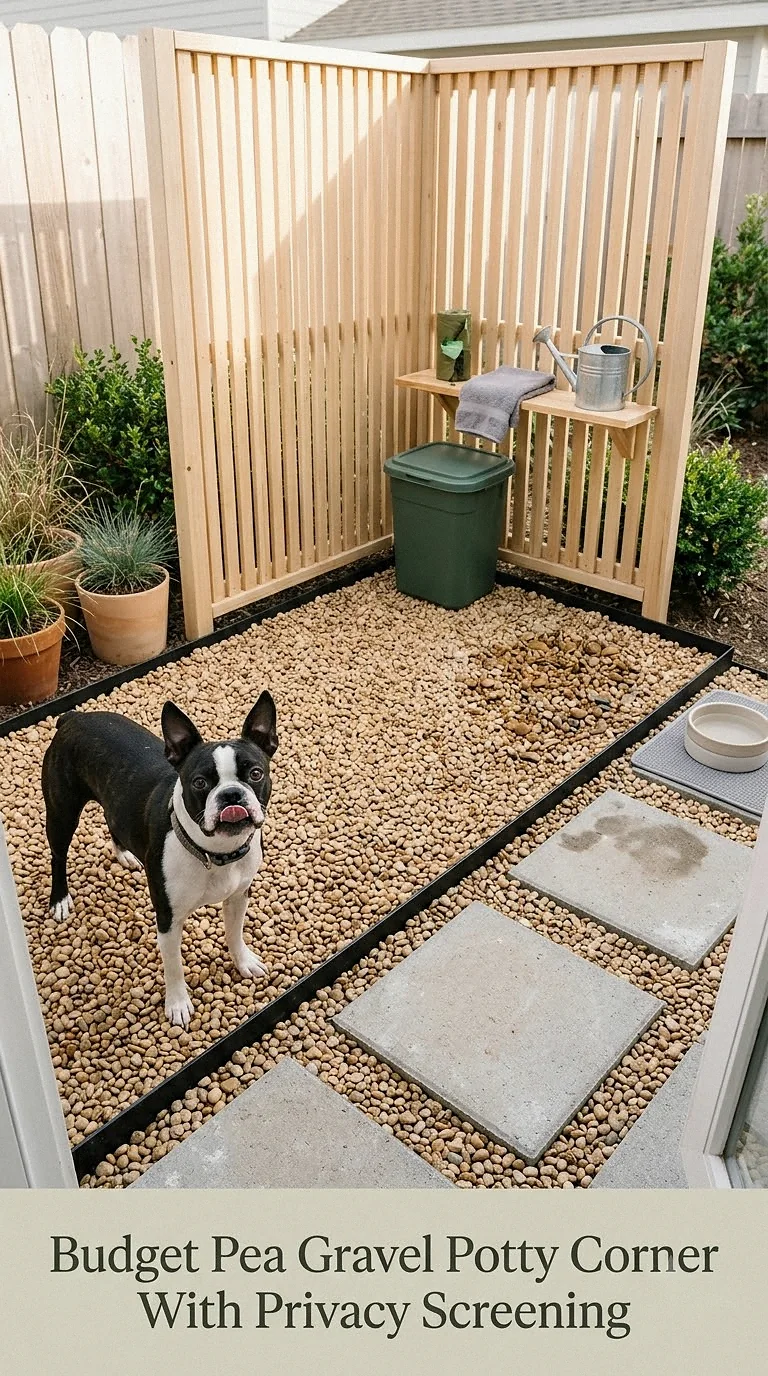
A dedicated potty corner can keep the rest of a grassless backyard much easier to enjoy.
Create a small defined zone along a fence using suitable smooth gravel over a drainage-friendly base. Add edging around the perimeter so stones do not migrate into adjacent patios or walkways.
Not every dog is a good candidate for loose gravel. Dogs that chew stones should use another surface, and small gravel can sometimes become caught around paws. Check your dog’s feet regularly and select materials carefully.
To make the area less visually prominent, place tall planters or secure privacy screening between the potty zone and your seating area. A nearby hose connection makes regular rinsing easier.
Keeping this practical function concentrated in one location allows the remainder of the yard to focus on relaxing, playing, and entertaining.
Warm Wood Deck Tile Lounge Over An Existing Patio
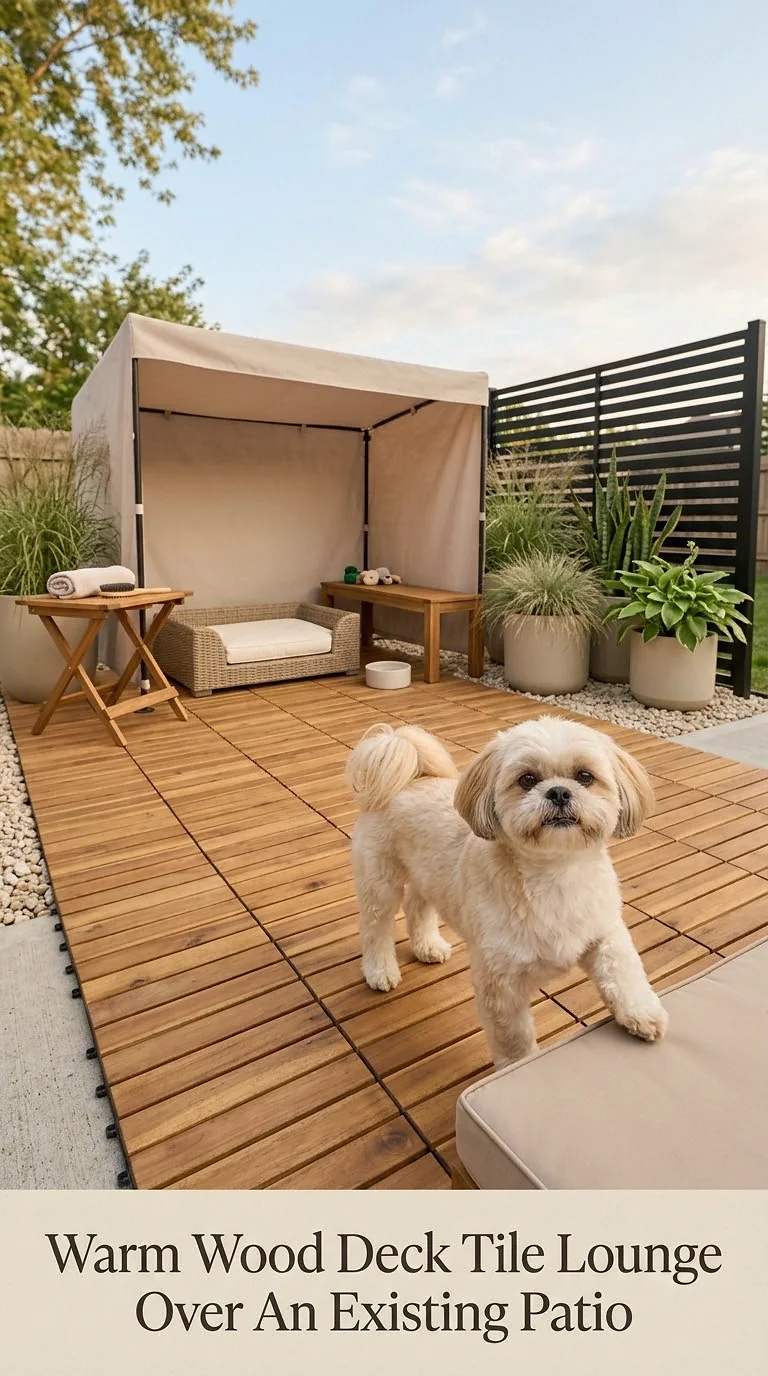
Interlocking outdoor deck tiles can provide a quick visual makeover when the existing surface is ugly but structurally usable.
Installed over an appropriate flat, well-drained patio, wood-look or outdoor-rated deck tiles create the appearance of a small deck without building a full raised structure. Use them only according to the manufacturer’s installation requirements and make sure the surface remains secure under active paws.
Create a cozy lounging area with a weather-resistant dog cushion, two outdoor chairs, and large planters around the perimeter.
Consider surface temperature before choosing dark materials. Wood-look composites and other outdoor products can still heat up in strong sun, so include shade.
This idea works especially well for renters or homeowners who want to improve one concentrated section instead of paying to renovate an entire backyard at once.
Large Flagstone Path Through A Natural Gravel Yard
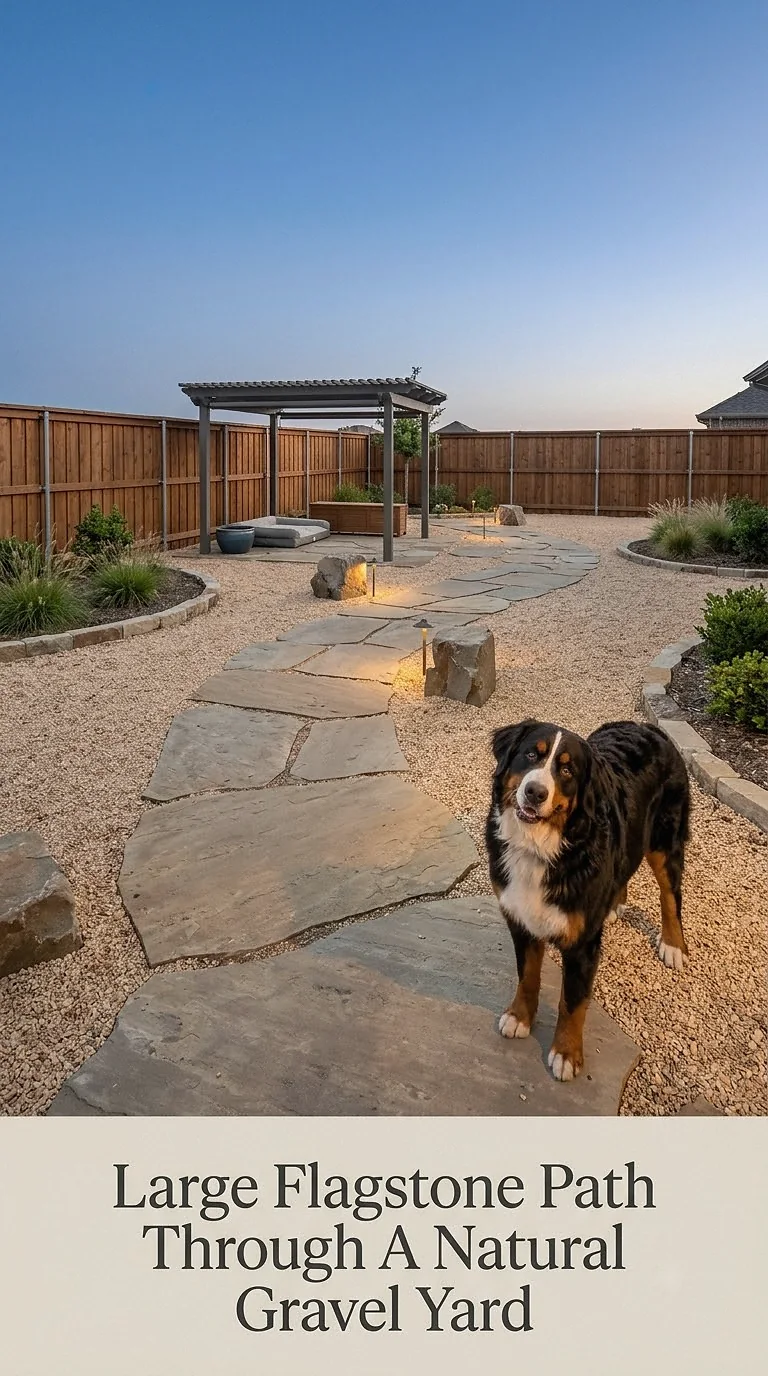
Large irregular stepping stones can create beautiful movement through a backyard while keeping the overall design simple.
Set wide pieces of flagstone or affordable local stone along the routes your dog naturally follows. Fill surrounding areas with compatible gravel or compacted aggregate rather than forcing your dog to follow a path that does not match their habits.
The combination gives the yard an organic garden style and helps reduce muddy tracks around doors and gates.
Read more : Why Does My Dog Make Grunting Noises?
Choose stones with relatively flat walking surfaces and avoid pieces with sharp edges. Stable placement matters because rocking stones can be uncomfortable or unsafe.
Complete the look with a wooden bench, terracotta pots, and clusters of verified dog-safe plants. Using stone selectively rather than creating a full flagstone patio keeps this design much more manageable for a budget-conscious makeover.
Permeable Paver Patio With A Rain-Friendly Dog Zone
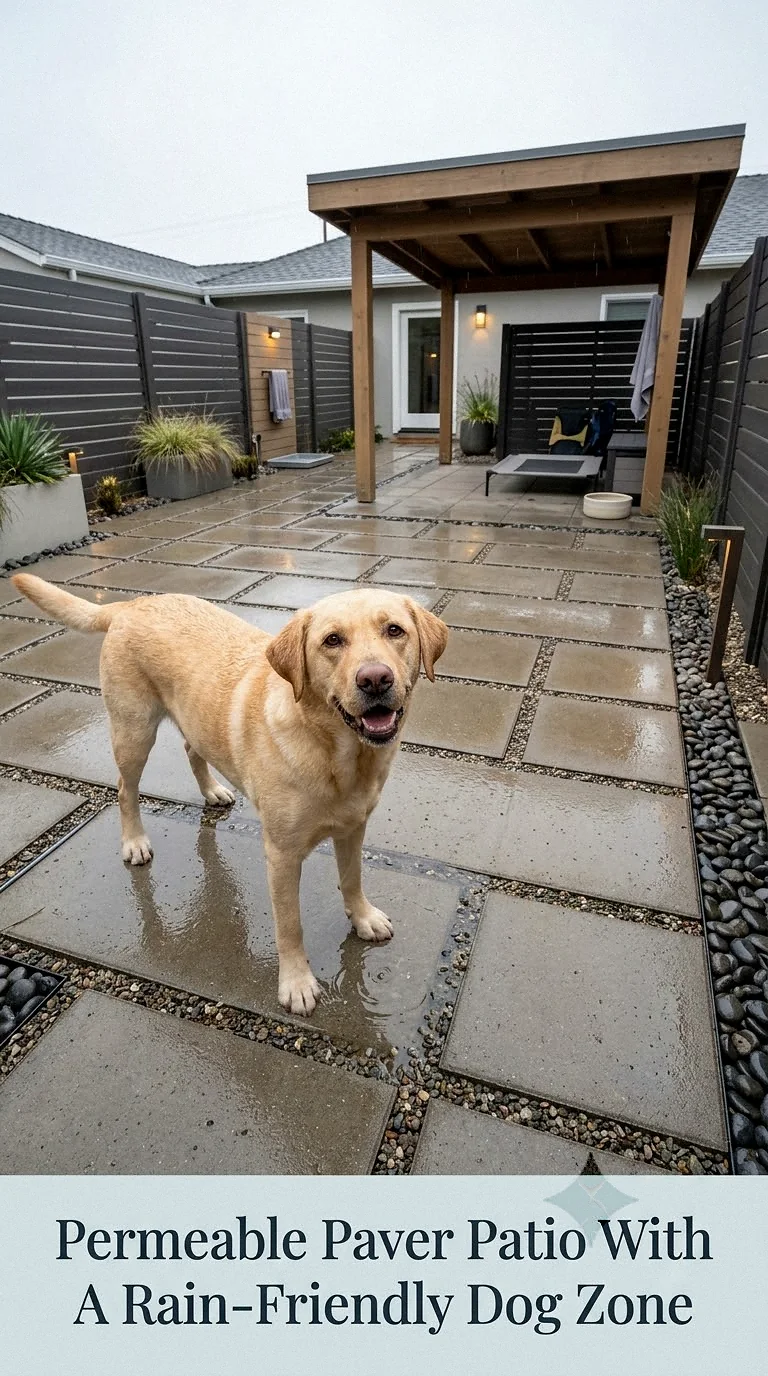
If your backyard becomes soggy after every storm, drainage deserves attention before decorative styling.
Permeable paving systems are designed to allow water to move through joints or porous surfaces into a prepared stone base below. Although professionally installed systems can cost more than simple gravel, you can use permeable hardscaping selectively in smaller problem areas rather than covering the whole yard.
Focus first on the space outside the back door, around gates, or along heavily traveled routes where mud is worst.
Use less expensive gravel or mulch in secondary areas to balance the budget. Add a small covered dog bed near the house so your pup has a dry place to rest.
Proper grading and base preparation are essential. If water consistently flows toward your foundation or creates serious flooding, consult a qualified local professional before installing new surfaces.
Modern Dog Wash Corner With Pavers And A Wall-Mounted Hose
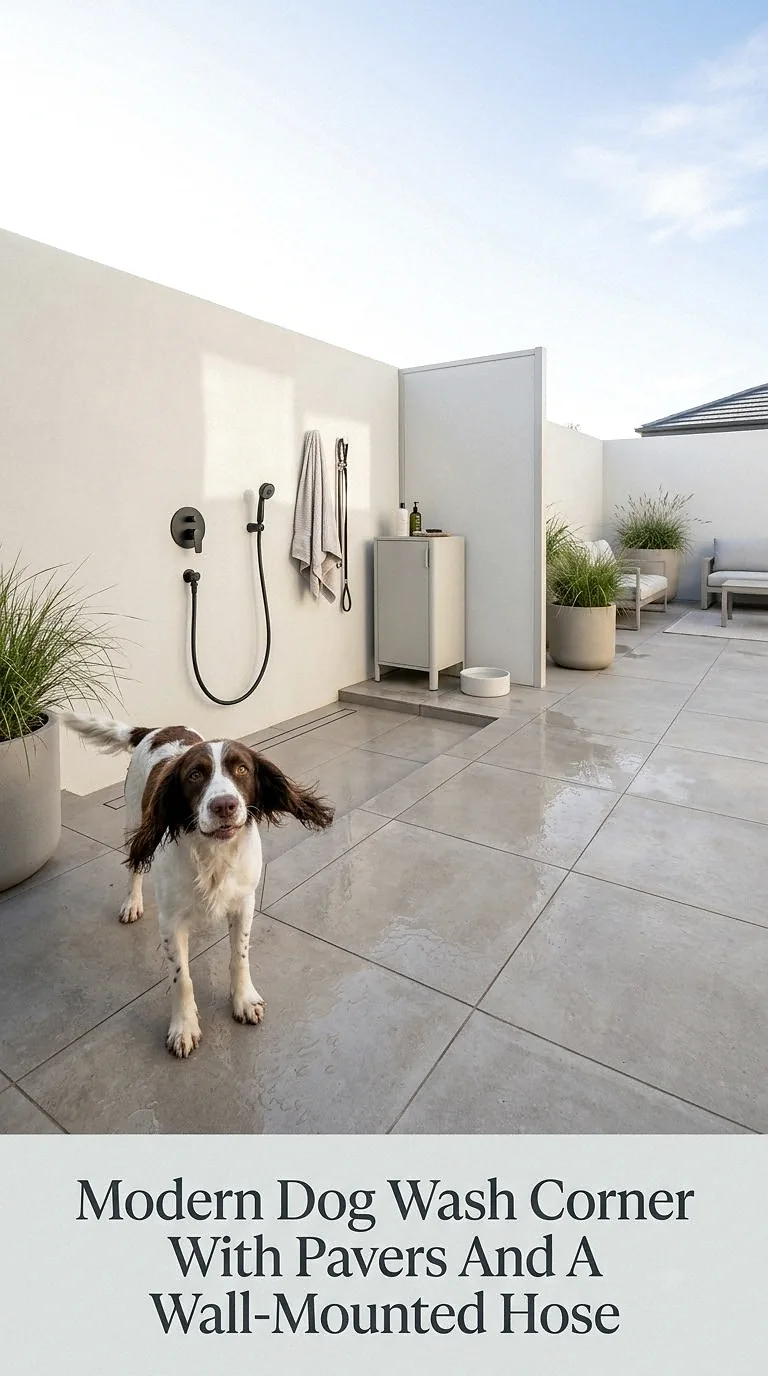
A compact outdoor washing station can be both practical and surprisingly attractive.
Choose a corner near an existing outdoor water connection and create a small pad using slip-resistant outdoor pavers. A wall-mounted hose holder keeps the area organized, while hooks can hold dog towels and a grooming brush.
Add a weather-resistant storage box for shampoo, paw wipes, toys, and other outdoor pet supplies, but keep anything that could be harmful safely secured.
Good drainage is essential because you do not want rinse water collecting around paws or flowing toward your home’s foundation.
For a modern aesthetic, combine pale pavers with warm wood accents and matte black hooks. A nearby gravel path gives muddy paws somewhere to shed loose dirt before reaching the wash station, making rainy-day cleanup noticeably easier.
Cozy Pergola Dog Lounge With Budget Hardscaping
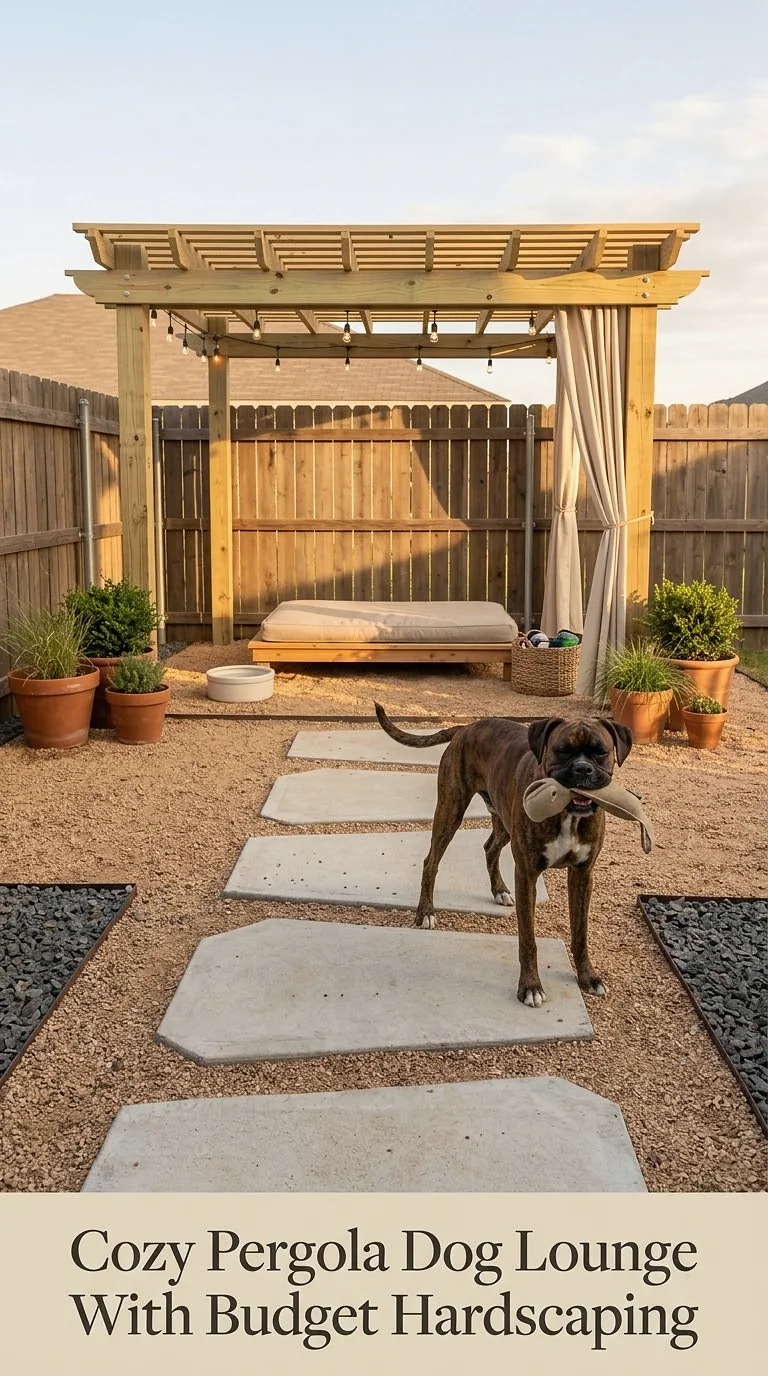
A backyard does not need grass to feel soft and welcoming. Shade, furniture, textiles, and warm materials often create more atmosphere than a lawn.
Build your dog-friendly retreat around a simple pergola, existing covered patio, or inexpensive shade structure. Underneath, use concrete pavers or another durable surface that can be swept and rinsed.
Add a washable outdoor rug, raised dog bed, comfortable chair, and a small table for your coffee. Solar lanterns or outdoor string lights can make the area especially inviting in the evening.
Keep electrical cords, fragile decorations, and chewable accessories outside your dog’s reach.
For a finished look, surround the lounge with large containers instead of digging traditional flower beds. This lets you move plants around easily while maintaining control over which varieties enter your pet’s environment.
Compact Urban Backyard With Bench Seating And Hidden Dog Storage
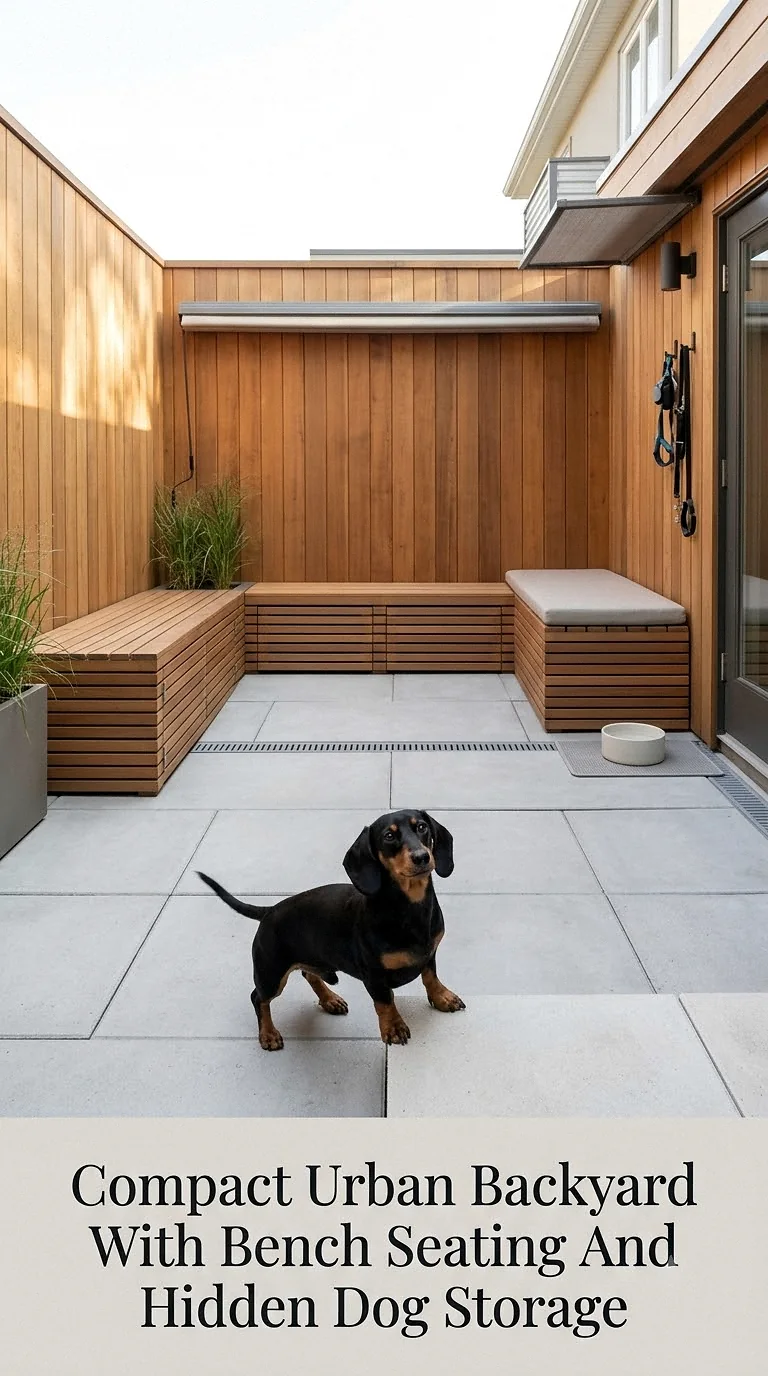
Small yards benefit from furniture that performs more than one job.
Place a simple storage bench against a fence or exterior wall and use the compartment for outdoor dog toys, washable blankets, spare leashes, and sealed cleanup supplies. Choose a design intended for outdoor use and keep anything unsafe securely inaccessible.
In front of the bench, install a small paver patio surrounded by compacted aggregate or another low-maintenance surface. One narrow artificial turf patch can serve as a designated dog area without consuming the entire yard.
Wall-mounted planters bring greenery upward rather than sacrificing floor space. Confirm that every plant is appropriate for households with pets, especially when curious dogs can reach hanging foliage.
This layout works beautifully for tiny courtyards because seating, pet storage, lounging space, and potty needs all fit within one organized design.
Mixed-Surface Backyard With Pavers, Turf And Mulch Zones
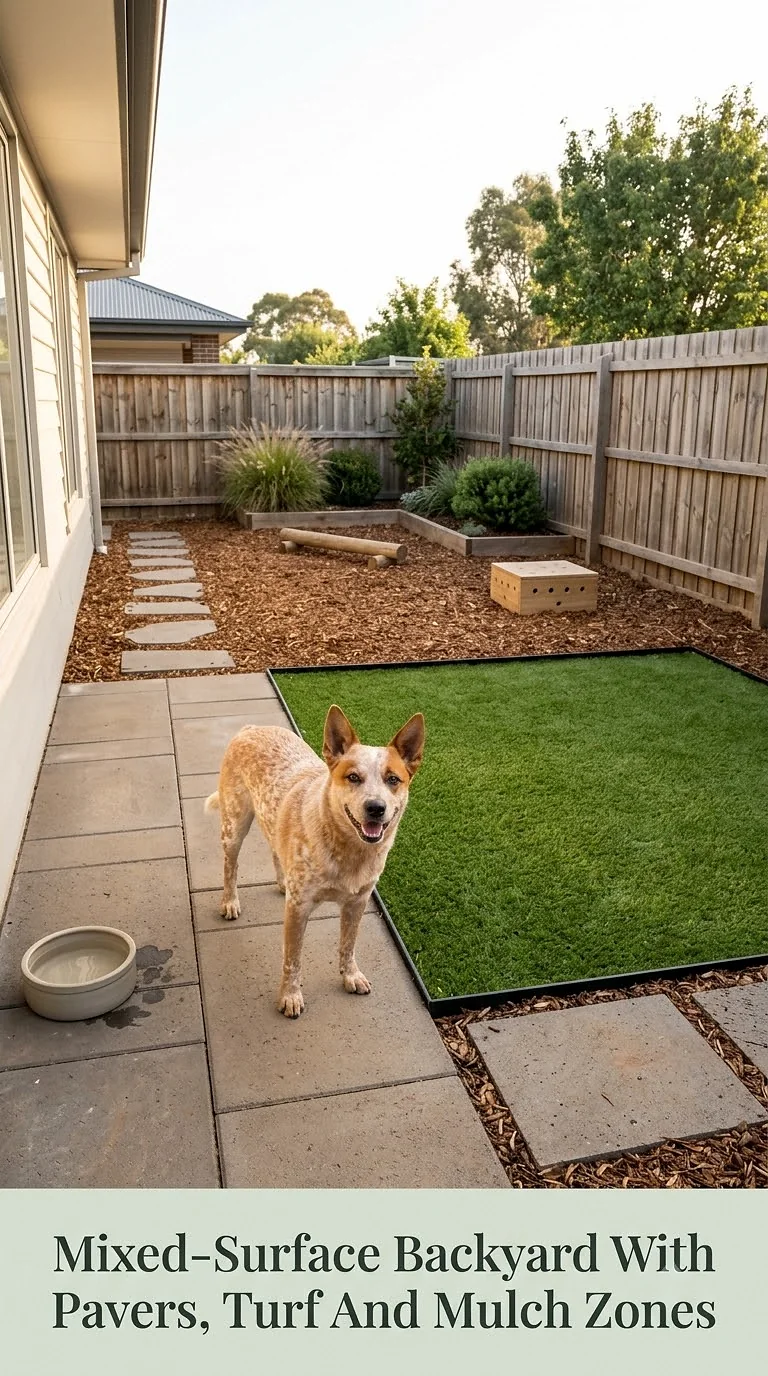
One of the smartest ways to create a budget-friendly grassless backyard is to stop looking for a single material that must do everything.
Instead, divide the yard according to function. Use inexpensive pavers around the back door and dining area, a small synthetic turf section for your dog’s potty routine, suitable mulch or bark in quieter decorative areas, and a durable path through high-traffic zones.
This approach lets you spend more on materials only where their specific benefits matter.
Create visual consistency by repeating the same edging, planter colors, or wood tones throughout the yard. Even inexpensive surfaces can feel cohesive when the overall palette is intentional.
Most importantly, consider your individual dog. A rock-chewing puppy, senior dog with sensitive joints, powerful digger, and energetic runner may each need a different combination of surfaces and boundaries.
Creating No Grass Backyard Ideas On A Budget Dog Friendly Homes Will Love
A grassless backyard does not have to look stark, expensive, or overly practical. With thoughtful zoning, even basic materials such as concrete pavers, gravel, compacted stone, bark, reclaimed bricks, and a small amount of artificial turf can create a backyard that feels warm and beautifully finished.
Start with the problems that affect daily life most. Improve muddy entrances, add reliable shade, create a comfortable resting place, plan for drainage, and give your dog a clear area for bathroom breaks or play. Decorative details can come gradually as your budget allows.
Most importantly, choose every material with your own dog’s behavior in mind. What works wonderfully for a calm senior may not suit a puppy that tries to swallow rocks or chew pieces of wood.
A few thoughtful changes can turn even a worn dirt yard into a welcoming outdoor room where you can relax while your dog explores, plays, and lounges comfortably beside you.
Source: https://petstutorial.com
Category: DOGS
